


Quick Facts:
- Hub tent price: $199.99 to $619.99 at Amazon in October 2026.
- Setup claim: 60 to 90 seconds for the tent body, according to the makers.
- Floor sizes covered: 82 by 76 inches up to 132 by 108 inches.
- Weight range covered: 21.4 to 40 pounds.
- Rooftop tent price: About $1,500 to more than $4,500, according to Roofnest.
- Rooftop tent weight: 121 and 165 pounds for the Yakima and iKamper tents cited, before the rack.
- Best for: Basecamp trips where the truck leaves camp each day.
8 min read
In This Guide
Overview
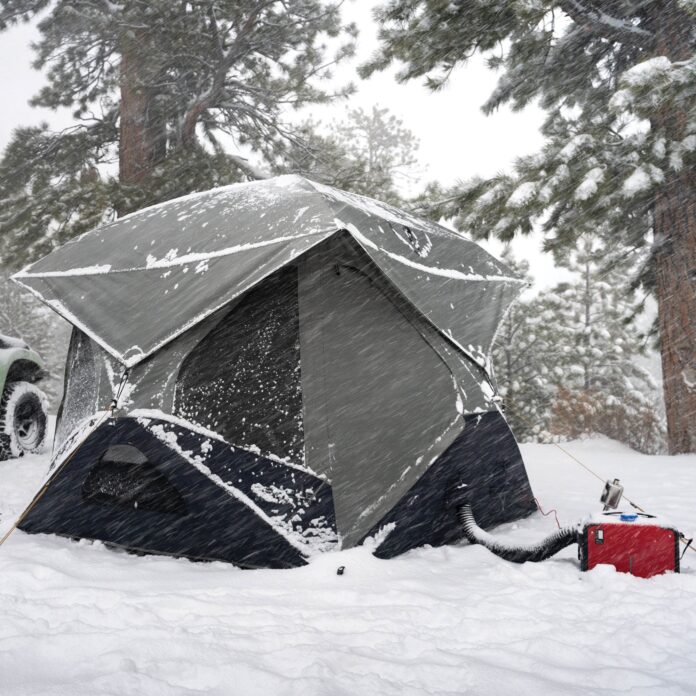
A hub tent is a ground-level shelter with the pole frame already attached. You unfold the frame, pop the walls and roof into place, and the tent stands in about a minute, according to the makers. However, speed alone does not settle the choice against a rooftop tent. The real question is where you sleep and what the truck does all day.
Coleman and CORE sell the same idea as an instant tent, while Gazelle uses the hub name. This guide compares five models using manufacturer numbers, then shows where a rooftop tent still wins. Because prices move, the figures here come from October 2026 listings.
If you stay put for several nights, an overland tent on the ground often costs less and frees the truck. It often makes a better basecamp tent than a rooftop model. Moving camp every day? Skip to the comparison section first.
Three of the five tents in the table are in the grid below. First, the Gazelle Tents T4 Hub Tent has a 94 by 94 inch floor and a 78 inch peak. The Coleman Skylodge Instant Tent packs down to 37.5 inches, so it fits smaller cargo areas. Next, the CORE 6 Person Instant Cabin Tent gives the most floor space, at 132 by 108 inches. The grid shows its full-rainfly version, which costs more than the base cabin. Check each listing for size options, because the pages cover several versions.
Instant tents from this guide


CORE 6 Person Instant Cabin Tent | Large Portable Pop Up Tent for F…
What a Hub Tent Is and What the Specs Say
The frame is the difference. A traditional dome tent needs you to thread poles through sleeves. In contrast, a hub tent folds on pre-attached poles, so setup becomes lifting, extending and staking. The table below lists five models from Gazelle, Coleman and CORE.
| Tent | Floor | Peak height | Packed length | Weight | Price |
|---|---|---|---|---|---|
| Gazelle T4 Overland EXP (sleeps 4) | 94 by 94 in | 78 in | 57 in | 40 lb | $619.99 |
| Gazelle T4 (sleeps 4) | 94 by 94 in | 78 in | 66.5 in | 30 lb | $377.93 |
| Gazelle T3X Overland Edition (sleeps 3) | 82 by 76 in | 68 in | 58 in | 30 lb | $419.99 |
| Coleman Skylodge 4-person | 90 by 90 in | About 65 in | 37.5 in | 21.4 lb | $213.99 |
| CORE 6-person Instant Cabin | 132 by 108 in | 72 in | 47 in | 23 lb | $199.99 |
Packed Length, Weight, Fabric and Floor Space
Four specs matter before you order. First, check the packed length against your cargo space. Owners describe the Gazelle bag as long, and the 66.5 inches Gazelle lists for the T4 supports the claim. The 57-inch EXP bag and the 37.5-inch Skylodge bag are easier to place.
Second, look at weight. The EXP is the heaviest at 40 pounds, and Gazelle includes a footprint, All-Terrain Stakes and a duffle with it. In contrast, the Skylodge weighs 21.4 pounds.
Fabric separates an overland tent such as the EXP from the budget cabins. Gazelle lists a 210D ripstop shell rated 2,000 mm hydrostatic head on its T4 Overland EXP product page, with a removable 300D Oxford floor rated 5,000 mm. CORE lists 68D polyester rated 1,200 mm for its 6-person cabin. A higher rating suggests a better rain shield, although seams and ventilation also decide how dry you stay.
Floor space deserves its own check. Gazelle lists 61 square feet for the EXP, and the T4 line is rated for four sleepers. T4 owners say the 94 by 94 inch floor fits a queen air mattress or one to two cots, although extra-long cots go in at an angle. Therefore, treat the sleeping number as a ceiling, not a target.
Setup Speed and Wind: Reading the 60-Second Claim
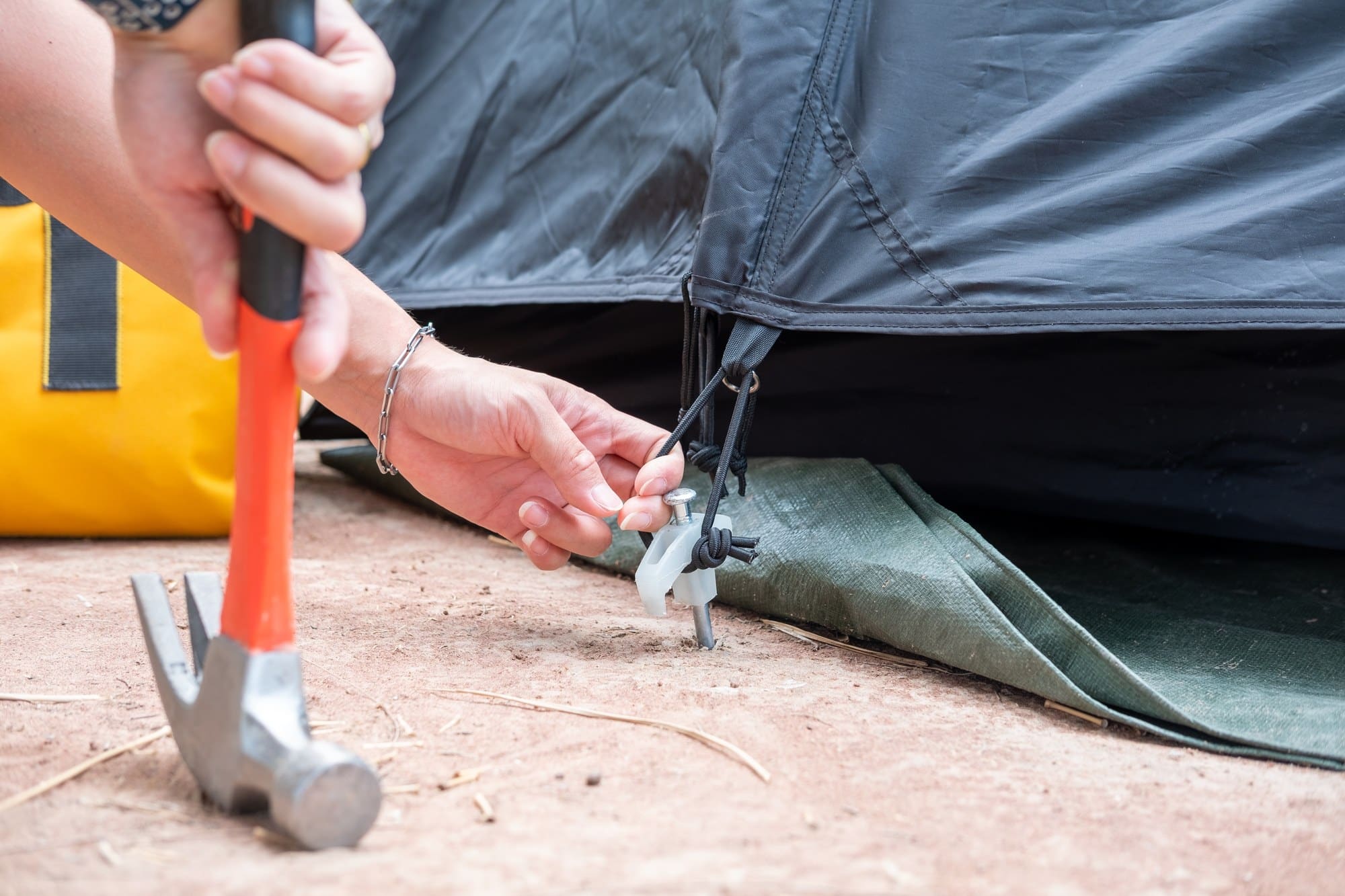
The specs table is only part of the pitch, because makers also publish short setup times. Gazelle says the T4 goes up in 90 seconds or less, and CORE claims as little as 60 seconds with two people. Coleman says about a minute for the Skylodge. Treat those as best-case times for the tent body on flat ground.
The first gap is what the claims leave out: staking, guy lines and the air mattress. Owners on Reddit describe about a minute for the body, and one owner says guy lines almost double the setup time. In the 2026 Bell Tent Shootout, I time setup on every tent, because box claims deserve a stopwatch.
Wind, Stakes and Moisture
Wind is the second gap. Coleman tests the Skylodge frame to 35 mph, and CORE rates its cabin to 35 mph when staked. Gazelle designs Foundation Feet so you stake directly through the footpads. The sibling T4 Overland Edition manual says to point a corner into the wind and stake it through its grommet. It also calls for extra tie-down ropes in excessive winds.
Owners agree on one point. A hub tent holds up when every stake and guy line is in, and it struggles when you skip them. Owners of the base T4 call the stock stakes weak, so budget for heavier ones. The EXP ships with upgraded All-Terrain Stakes. Also, our guide to campsite layout and tent placement covers how wind direction shapes tent placement.
Next, run a full dry run in the yard. Count the stakes, find any missing guy line, and time the teardown too. A fast pitch means little if the bag fights you.
Moisture is the third gap. The EXP has two closeable vents built for heater, AC or wire access. It also has a mesh roof with zippered panels, so open the roof panels on humid nights. Some owners report drips at seams during heavy rain, while many never see a leak. Condensation causes plenty of the damp feeling, and airflow helps you reduce condensation inside your tent.
Hub Tent vs. Rooftop Tent
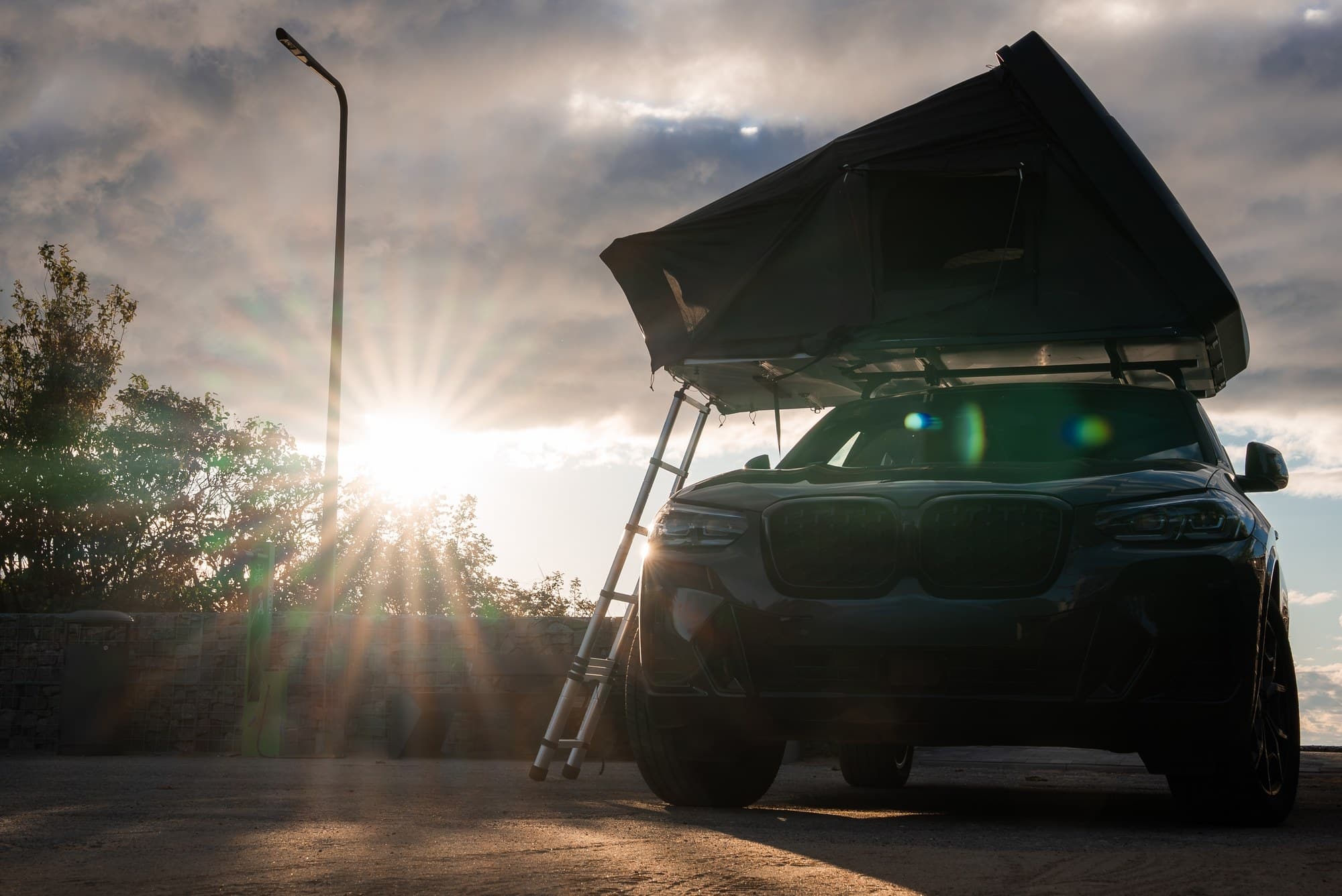
Now weigh it against a rooftop tent, starting with cost. Roofnest prices rooftop tents from $1,500 for an entry-level softshell to more than $4,500 for a premium hardshell. Specific models land in the middle of the range: the Yakima SkyRise SL lists at $2,499, the Thule Approach M at $2,699.95, and the iKamper Skycamp 3.0 at $3,425. The tents in the table run from $199.99 to $619.99.
Weight is next. The tents in the table weigh 21.4 to 40 pounds. Roofnest says rooftop tents weigh around 90 to 240 pounds. The Yakima SkyRise SL weighs 121 pounds, and the iKamper Skycamp 3.0 weighs 165 pounds. Now check your roof limit. The 2026 Toyota Land Cruiser brochure lists up to 165 pounds on the roof while on the go, and it sends buyers to the owner’s manual for limits. A 165-pound tent equals the limit before you add anything else. On the 2025 Subaru Outback, only the Wilderness trim lists 200 pounds moving on its roof rails, while the other trims list 150 pounds for the retractable cross bars. Check your own rating.
Setup claims are close. iKamper claims 60 seconds, Roofnest says its hardshells go up in under one minute, and Thule lists under 3 minutes for the Approach M. It does not win on speed against a hardshell.
Where a Hub Tent Wins and Where a Rooftop Tent Does
On the days the truck leaves, it wins. A rooftop tent must come down before you drive to a trailhead, and a ground tent stays pitched. At basecamp, I think this is the strongest argument for a hub tent. Our leave-behind basecamp setup guide builds on the same idea.
Storage cuts both ways. Owners say a rooftop tent either stays on the roof all year, which exposes it to weather, or needs two people to lift it off. A ground tent avoids both problems, although its bag takes cargo space.
Owners also mention fuel economy, wind noise and overhead clearance as rooftop tent costs. Carried inside the vehicle, it adds no roof load. However, a rooftop tent wins on uneven, muddy or crowded ground, because you sleep above the dirt. For a wider view, read our rooftop tent vs ground tent breakdown.
Footprint, Stakes and Mattress for a Ground Setup
Ground setups need a few extras. A footprint protects the floor, heavy stakes hold the corners, and a sleeping pad insulates you from the dirt.
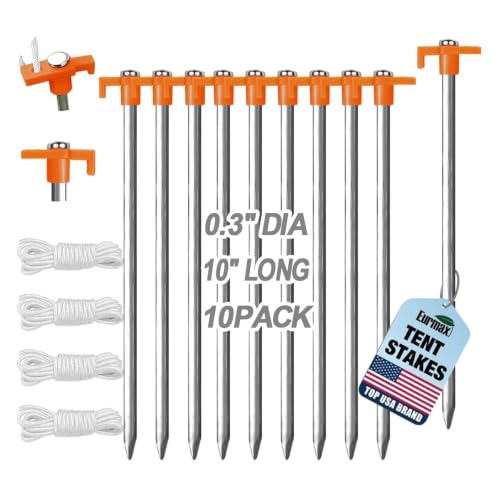
Three accessories fit the floor sizes in this guide. First, the Gazelle Tents T4 Tent Footprint measures 94 by 94 inches, so it matches the T4 floor. Fold the edges under for a 90 by 90 inch floor, because extra fabric collects rain. Next, the Eurmax USA 10-Pack Galvanized Tent Stakes are 10 inch steel pegs with ropes included. They are a sturdier choice than thin stock stakes, especially for the corners. Then add the Intex Dura-Beam Downy 10 Inch Queen Size Air Mattress, which has a built-in foot pump. A foot pump works at a campsite with no power source.
Ground setup extras


Eurmax USA 10-Pack Secure Protection Galvanized Tent Stakes
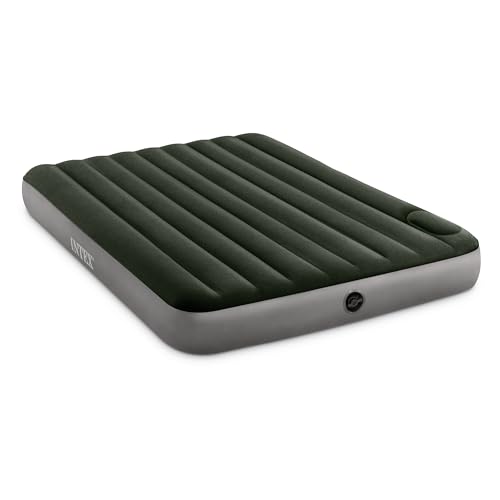
INTEX Dura-Beam Downy 10" Queen Size Air Mattress with Built-in Foo…
Who Should Choose a Hub Tent and Who Should Skip It
Use a hub tent as your basecamp tent when you camp several nights in one spot. It also fits a family with a flat site, a small budget and a vehicle with room inside. The standing room is the feature I would shop for first, because owners about 6 feet tall say they stand upright under the 78-inch peak.
Skip it if you move camp daily. Setup and teardown with stakes and guy lines takes longer than the box claims, so a rooftop tent saves effort on the road. Skip it as well if the packed bag will not fit inside your truck or SUV, since owners often end up strapping it to the roof. Weak ground, such as rock or deep sand, also makes staking hard.
If your trip mixes long stays and frequent moves, consider a bigger shelter. Our guide on living in a tent long term covers the next step up.
Final Thoughts
A hub tent earns its place at basecamp. You pitch it once, stake it down, and drive off for the day while it stays standing. For a stay of several nights, this one advantage outweighs the bulky bag.
The trade-offs are real, though. Specifically, the bag is long, the base T4 stakes draw complaints, and the 60-second claim covers only the tent body. I reviewed the Overlandish Base Camp on a Big Bear trip, and ground shelters like it are worth a look if a pop-up shelter does not suit your site.
Pick by the numbers in the table. The Gazelle T4 gives you a 78-inch peak and standing room. If bag size worries you, the Coleman Skylodge fits better, since its bag measures 37.5 inches. For the most floor at the lowest price, the CORE 6-person cabin offers 132 by 108 inches for $199.99. If you move camp every day, buy the rooftop tent and enjoy it.
FAQ
What is a hub-style tent?
A hub-style tent has its poles attached to hubs at the walls and roof, so the frame pops open without threading poles. You extend the frame, stake the corners and add the rainfly. Makers claim 60 to 90 seconds for the body, and Coleman and CORE sell the same design as an instant tent.
How long does a hub tent take to set up?
The body takes about a minute on flat ground, according to owners and makers. Guy lines add time, and one owner reports nearly double. Plan on several minutes for the full camp, including the mattress.
Are hub tents good in wind?
They hold up when every stake and guy line is used. Coleman tests the Skylodge frame to 35 mph, and CORE rates its cabin to 35 mph when staked. Skip the stakes, and the side panels sometimes fold in during a gust.
Is a hub tent cheaper than a rooftop tent?
Yes, by a wide margin. The five tents in this guide run from $199.99 to $619.99, while Roofnest puts entry-level rooftop tents near $1,500. You also avoid a rack and the roof load.
Does a hub tent fit in a truck or SUV?
It depends on the packed length. The Gazelle T4 bag measures 66.5 inches, the T4 Overland EXP bag measures 57 inches, and the Coleman Skylodge bag measures 37.5 inches. CORE’s 6-person cabin bag measures 47 inches. Measure your cargo area before you order.
Related Reading