


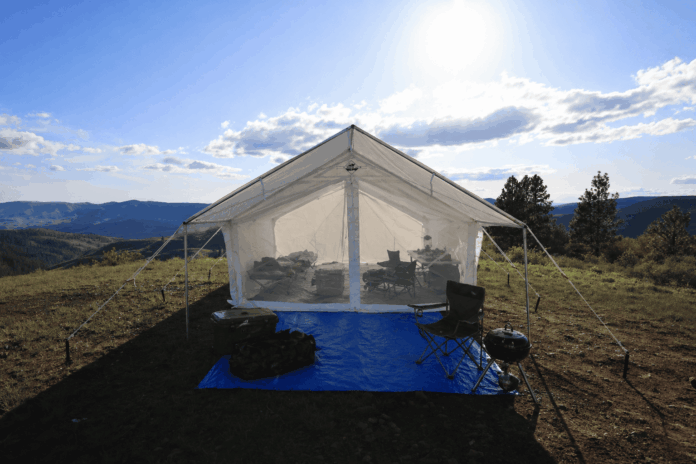

Quick Facts:
- Topic: Living in a tent long term from a vehicle-supported basecamp
- Trip length: 2 to 6 weeks, or a full season in one spot
- Shelter type: Heavy-duty synthetic canvas wall or bell tent
- Skill level: Beginner to intermediate
- Time to build camp: A few hours for the first full setup
- Heat source: Wood stove through a sewn-in stove jack
- Power: Portable power station or dual-battery box
- Cost range: Elk Mountain wall tents $1,050 to $1,749; Yukon bell tent from $1,074
- Best for: Overlanders running a home base while the rig explores trails
12 min read
In This Guide
- Living in a Tent Long Term: Why a Basecamp Beats Weekend Trips
- Basecamp Shelter Specs at a Glance
- The Real Challenges of Weeks in a Tent
- Why Your Shelter Choice Makes or Breaks the Camp
- What Living in a Tent Long Term Demands of a Tent
- Building Your Basecamp Around an Elk Mountain Tent
- Keeping Your Tent Alive Season After Season
- Three Long-Term Camp Scenarios
- Wall Tent vs. Bell Tent vs. Rooftop Tent
- Final Verdict
- Frequently Asked Questions
Living in a Tent Long Term: Why a Basecamp Beats Weekend Trips
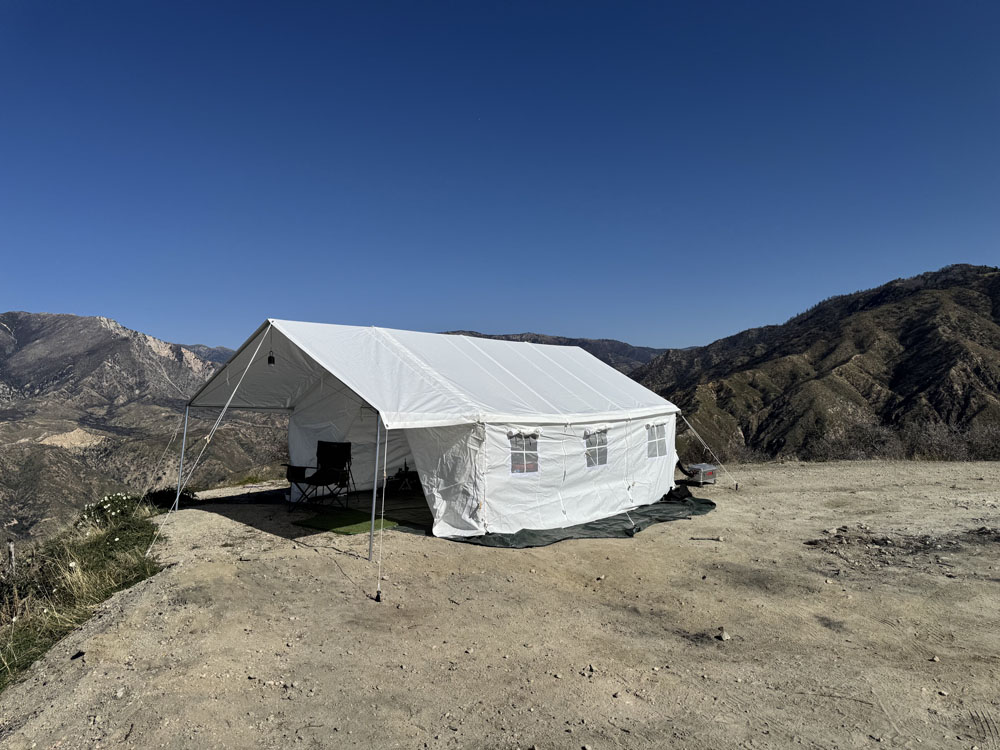
Living in a tent long term changes how you weigh every piece of gear. Instead of a Friday-to-Sunday sprint, you settle on public land for two to six weeks. Meanwhile, you explore trails and work remotely. Your rig becomes the day vehicle. The shelter becomes home. Because the tent stays pitched through sun, wind, and storms, it has to act like a small cabin. We have logged six months with Elk Mountain’s wall tent and Yukon bell tent, so the calls here come from real use.
Long-term camping usually means several weeks to several months in one spot. Weekend gear forgives a leak, since you pack out in two days. A multi-week camp does not. For this reason, smart campers build a basecamp on purpose. First, they choose a shelter designed for extended use. Then they add the systems around it.
Most guides on this topic target homesteaders or tiny-living fans. Still, few address a 4WD owner who wants a wall or bell tent as a home base. Heavy-duty canvas tents from Elk Mountain solve the durability, weather, and comfort problems lighter shelters face. The recommendations below lean on this hands-on time, not a spec sheet alone.
Basecamp Shelter Specs at a Glance
Before you plan a camp, study the shelter numbers. Elk Mountain publishes the figures below for its synthetic canvas wall and bell tents. Together, they frame what a long-stay tent should deliver.
| Specification | Details |
|---|---|
| Fabric | PolyShield synthetic canvas, 11 oz, fully sealed seams |
| Waterproof rating | 27-inch hydrostatic head; no rainfly required for normal use |
| Wall tent sizes | 13×13, 13×16, and 13×20 feet |
| Wall tent height (13×13) | 8 ft 4¾ in peak, 5 ft sidewalls |
| Bell tent sizes | 13, 16, and 20 ft diameter (133, 201, and 304 sq ft) |
| Stove jack | Included on wall and bell tents; cut to 4, 5, or 6 inches |
| Stakes | 18-inch steel stakes, 8 to 10 per wall tent |
| Wall tent price | $1,050 to $1,749 depending on size and options |
| Bell tent price | From $1,074 for the Yukon |
Buy Direct From Elk Mountain
Shop Elk Mountain Wall Tents
PolyShield synthetic canvas in 13×13, 13×16, and 13×20 footprints, built to stand for weeks of basecamp living.
The Real Challenges of Weeks in a Tent
A weekend hides a shelter’s weaknesses. Several weeks expose every one. Before you commit to a long stay, plan around four problems. Notably, each one grows worse the longer your tent stays pitched.
Sun and weather wear the fabric down
Daily UV, wind, and rain punish a tent over weeks. Ultralight nylon and many rooftop tent fabrics fade, weaken, and leak under constant exposure. Canvas-style synthetics resist UV far better. Because the shelter never comes down, the UV edge matters. As a result, you stop babysitting seams every afternoon.
Condensation and mildew turn camp damp
Constant occupancy, cooking, and swinging temperatures push moisture into the air. Cheap tents trap it. Soon the interior turns damp and musty. However, good ventilation and a mildew-resistant fabric keep the space livable. Because synthetic fibers cannot rot, they outlast cotton when humidity lingers for days.
Daily livability decides whether you stay sane
You need to stand, move, store gear, and run a small workstation or camp kitchen inside. A low dome forces a stoop. By day four, it kills morale. Instead, tall walls and real headroom let camp function like a room. For long stays, interior volume ranks alongside weather protection.
Maintenance time adds up
Fighting leaks or re-staking after every gust eats hours. You would rather spend them on the trail. A good shelter sheds water and holds its stakes, so the overhead drops to near zero. Therefore, durability is not a luxury on a multi-week trip. Instead, it buys back your time.
Why Your Shelter Choice Makes or Breaks the Camp
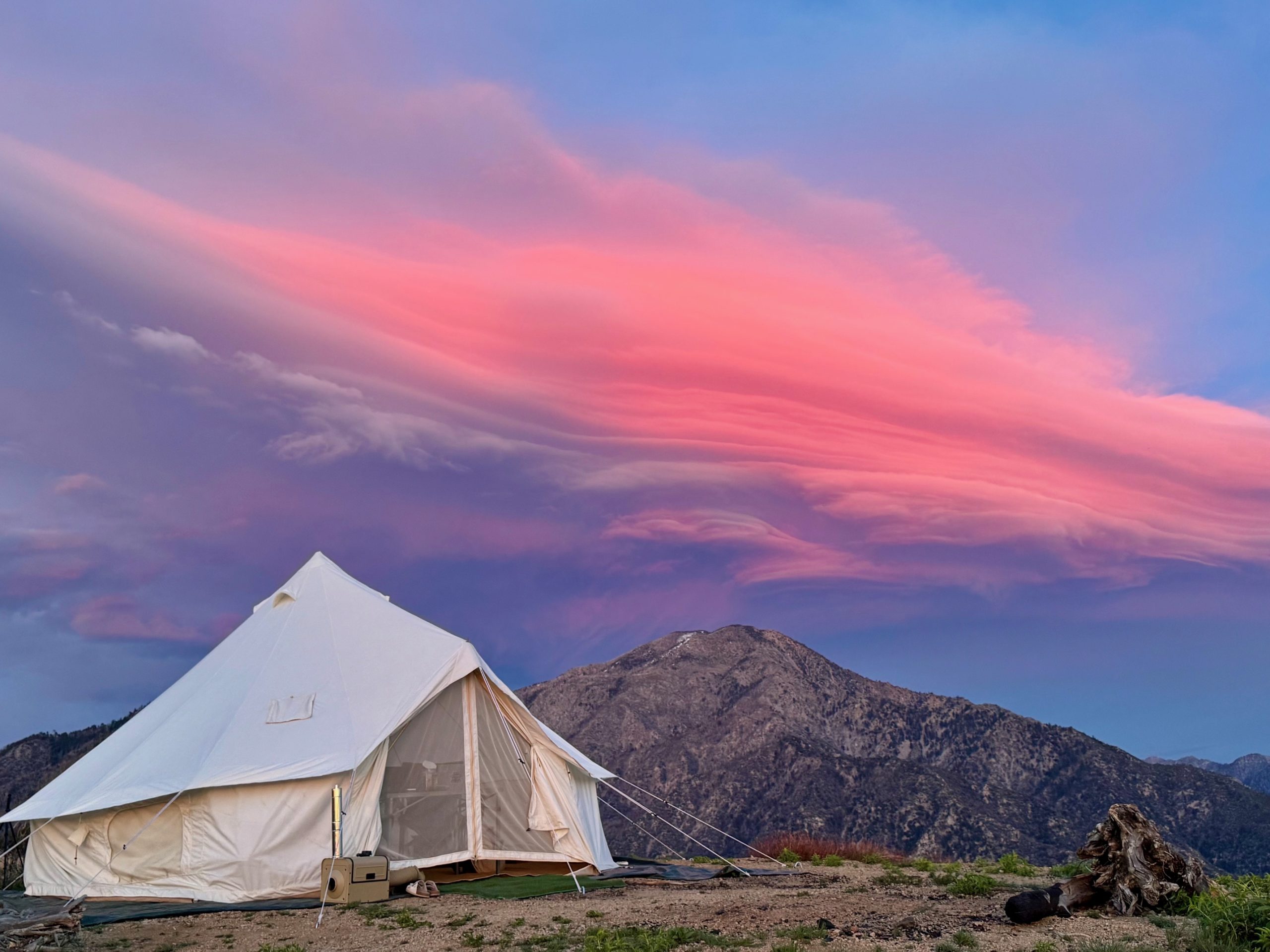
Every system in camp depends on the shelter holding up. Get the tent wrong, and power, kitchen, and sleep all suffer. Two popular options fall short for long stays. Yet one category fits the job.
Rooftop tents shine on travel days and short stops. They deploy in minutes and keep you off the ground. For a live-in camp, though, they cramp space. Moreover, they trap condensation when you sit for weeks. They also lock your sleeping quarters to the vehicle you want to drive. Nylon domes and budget cabins handle weekends fine. Still, their stitching, zippers, and thin fabric degrade under steady exposure.
Wall and bell tents answer the live-in problem. Tall walls, real doors, and stove compatibility give them a residential feel. Paired with a 4WD rig, a canvas tent becomes a fixed home base. Meanwhile, the truck handles daily exploration. For a deeper breakdown, our guide on canvas wall tents for long-term camping walks through the durability case.
What Living in a Tent Long Term Demands of a Tent
Spec sheets matter most when you commit to living in a tent long term. Five features separate a true long-stay shelter from a weekend tent. Elk Mountain’s design hits each one. Therefore, use the brand as a yardstick while you shop.
Material and durability
Robust canvas fabric beats ultralight nylon for UV, wind, and abrasion. Elk Mountain’s PolyShield is fully synthetic and naturally waterproof. Notably, it resists mold and mildew better than cotton canvas. Its tear strength runs about double the Sunforger canvas many makers use, per Elk Mountain’s published figures. As a result, a windy week brings fewer worries.
Weather resistance and waterproofing
Daily rain over weeks demands reliable waterproofing, stout guy-out points, and strong stakes. PolyShield carries sealed seams and a 27-inch hydrostatic head. For normal use, no extra treatment is needed. For prolonged exposure, though, Elk Mountain recommends running a rainfly and all the premium stakes the entire time. Independent testers at RECOIL OFFGRID rated their test tent “water-tight” across seasons.
Interior space and layout
Wall height and floor space decide whether cots, shelves, and a desk fit. A 13×13 wall tent stands 8 feet 4¾ inches at the peak. Its 5-foot sidewalls stay usable rather than sloped. Specifically, the footprint houses two to four people plus gear. The 20-foot Yukon bell tent opens up 304 square feet. For sizing help, see what makes a good base camp tent before you buy.
Ventilation and condensation control
Windows, ridge vents, and adjustable doors earn their keep. They matter when you cook, dry gear, or run a stove inside. Elk Mountain wall tents carry four or more screened windows plus ridge openings. Because the flaps adjust from outside, rain stays out. RECOIL OFFGRID noted the polyester blend resists condensation build-up. Likewise, canvas-style tents manage moisture better than nylon.
Long-term maintenance
Surfaces shed water and resist mildew, so you spend less time babying a tent. PolyShield does not absorb water and cannot rot. Therefore, a quick sweep and an occasional brush-down keep the interior fresh. This is the exact use case Elk Mountain built for. In short, a synthetic wall tent stands for months when needed.
Round Shelter, Fast Setup
Shop the Elk Mountain Yukon Bell Tent
Three diameters up to 304 square feet, with a stove jack and a zip-in floor for cold-weather comfort.
Building Your Basecamp Around an Elk Mountain Tent
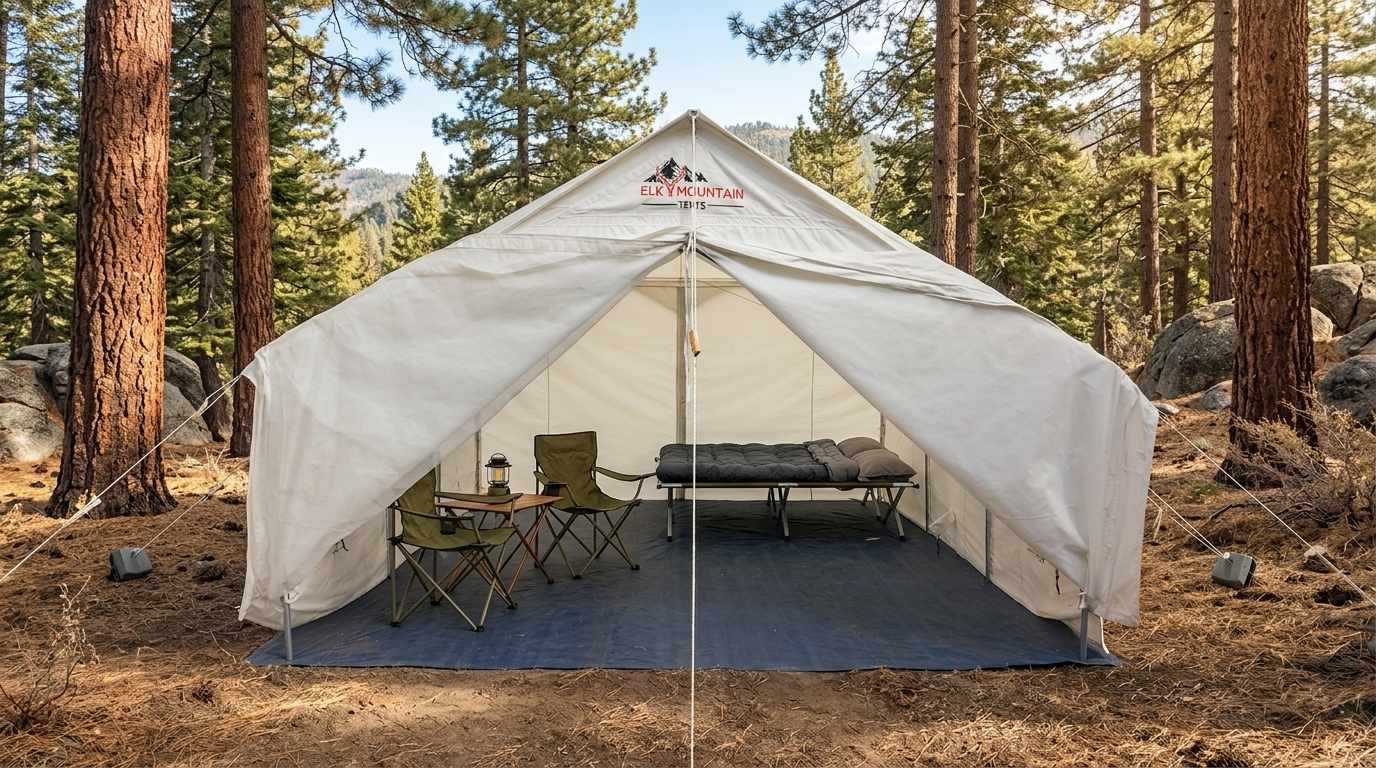
A great tent is the anchor, not the whole camp. Once the shelter is sorted, build the systems around it. Then the site supports weeks of comfortable living. If you want the build simplified, Elk Mountain sells complete basecamp packages from $1,993.50 with the frame, floor, fly, and stove included.
Pick the site for a long stay
Choose well-drained ground and a smart wind orientation. Balance sun and shade for temperature control. Because Elk Mountain tents handle a wide range of conditions, you get to prioritize views and trail access too. Still, check dispersed-camping rules first. Most BLM and Forest Service land caps a stay at 14 days in one spot. Therefore, plan a move or a second site for longer trips.
Pitch and arrange the tent for multi-week use
Use the full stake and guy-line system from day one. Long exposure finds every weak point. In addition, add the rainfly to cut UV and extend the tent’s life. For the interior, keep the layout simple. Put the sleeping zone at the back. Next, run a gear wall along one side. Finally, set the living or work area near the door. This keeps traffic away from your bed and the stove.
Heat and climate control
Cold-weather and shoulder-season camps lean on a wall tent with stove. Both the Elk Mountain wall tent and the Yukon bell tent ship with a stove jack. As a result, a compatible wood stove drops in cleanly. The tall interior volume also manages heat more safely than a cramped tent. Match stove output to tent size. Above all, confirm safe clearances before you run a fire inside fabric. In warm seasons, open the windows and ridge vents for cross-breezes. You also rig a reflective tarp above the fly for shade.
Daily systems for weeks of living
Storage, power, and cleaning routines turn a tent into a home. First, line one wall with bins or a shelving unit. Next, tuck a portable power station or battery box into a corner. Then manage the cords to avoid trip hazards. After wet days, sweep the floor and run the vents. Because these habits are small, campers skip them. Still, they prevent the damp, cluttered drift from ruining a long camp.
Keeping Your Tent Alive Season After Season
A long-term tent is an investment. Therefore, treat the care routine as part of the gear. A few habits keep an Elk Mountain tent performing for years.
Cleaning and drying cadence
During the trip, sweep often. Brush off dust, mud, and organic material before it sets. Also keep standing water away from the base. Before and after storage, set the tent up and remove debris. Then wash with mild soap, rinse, and dry it fully. Avoid bleach, fabric softeners, and abrasive scrubbers, since they harm the fabric. Above all, never store the tent damp.
Storage between trips
Fold the canvas along its original lines. Store it in a cool, dry, ventilated space inside a breathable bag. By contrast, a sealed tote traps humidity and invites surface mold. For this reason, skip the plastic bin. This one habit does more for tent lifespan than any other.
When you leave the tent up long term
Elk Mountain is direct about extended setups. In their words, “your tent will last for several years fully assembled, and much longer if it isn’t always up.” For prolonged standing, they recommend three steps. First, add a rainfly to shield against UV and rain. Second, place the tent on dry, well-ventilated ground. Third, use all the premium stakes all the time to fight wind fatigue. Synthetic canvas also draws less mold and fewer critters than cotton. Consequently, it suits multi-week camps and tents left standing between trips. For tents left up for weeks, the PolyShield+ upgrade adds factory mildew and wear resistance for $199.
Three Long-Term Camp Scenarios
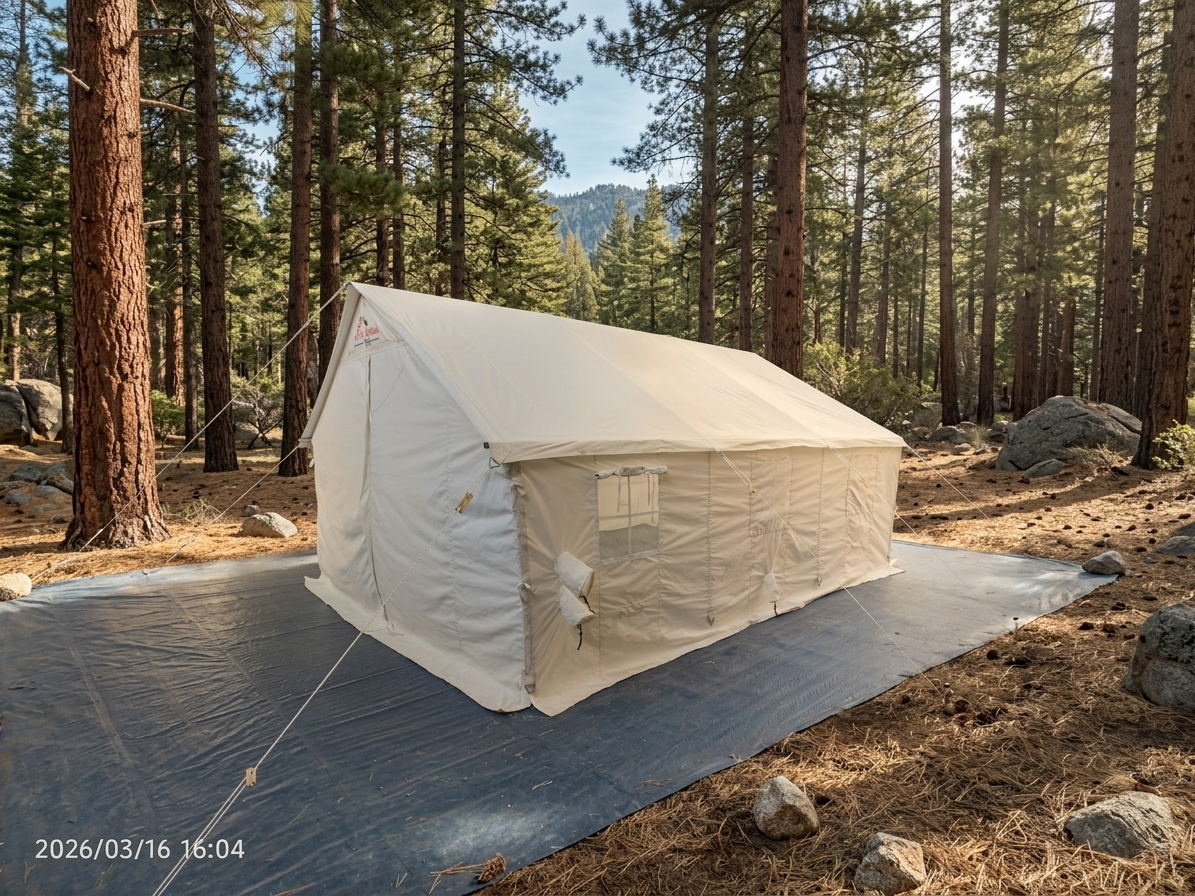
The same tent supports different trips. Here are three ways overlanders put a canvas shelter to work for living in a tent long term.
Two-week overland basecamp
You park the wall tent on public land. Each morning, you run the 4WD out to trails. Meanwhile, the tent stays home as a true base. Inside sit cots, a small desk, and a gear wall. Because the shelter handles wind and sun without fuss, you spend evenings around the stove. Instead of re-staking guy lines, you relax. This setup fits couples and small groups who want one fixed camp.
Month-long hunting camp
Cold mornings and long seasons reward a wall tent with stove. A 13×16 or 13×20 model gives room for gear, a drying line, and a processing area. Meanwhile, the wood stove keeps the space warm through freezing nights. Elk Mountain owners report comfortable below-freezing camps with the Yukon’s wood stove. Match the size to your party. Also keep the rainfly on for the full run.
Seasonal or work-remote camp
A wall or bell tent works as a semi-permanent home base for a season. Define an office corner near a window. Then run power to a small desk. In effect, you treat the shelter like a tiny home. This is semi-permanent tent living in practice. You get a sleeping zone, a work area, and a kitchen under one roof. For a camp host or remote worker chasing good weather, it beats a cramped trailer on space alone.
Wall Tent vs. Bell Tent vs. Rooftop Tent
Three shelter types compete for a long-term camp. Each suits a different camper. The wall tent wins on raw interior space and a flat floor plan. Its vertical walls fit cots, shelves, and a desk without wasted corners. As a result, it tops the list for hunting camps and multi-week basecamps. For the hands-on detail, see our Elk Mountain wall tent review.
The bell tent trades some squared-off space for fast setup. A single center pole and a staked perimeter raise it quickly. Still, the 16-foot Yukon delivers 201 square feet. For families who value quick pitching and a cozy feel, it fits. Our Elk Mountain Yukon bell tent review covers its wind and snow performance. Often the choice comes down to floor plan versus speed. We break it down in our wall tent vs bell tent guide.
The rooftop tent stays the odd one out for long stays. It deploys fast and sleeps you off the ground. However, it ties your bed to the vehicle and offers little living space. For a true live-in camp, a canvas ground shelter wins. Instead, reserve the rooftop tent for travel-heavy trips where you move most days.
Final Verdict
Long-term camping is about a basecamp you live in for weeks. It is not a temporary cover you tolerate. For the job, a heavy-duty wall or bell tent earns its price. Durability, weather resistance, and daily comfort set it apart from a low dome. Across six months of living in a tent long term with Elk Mountain’s wall tent and Yukon bell tent, the PolyShield fabric and tall walls held up to standing exposure.
The trade-offs are real. A canvas tent costs more upfront than a nylon family tent. It also weighs more to haul and asks for a care routine. If you camp only a weekend or two each year, the investment is hard to justify. In such a case, a lighter tent serves you fine. For weeks of off-grid living, though, the math flips fast.
Value comes from years of service. A long-term tent built for prolonged setup lasts many seasons. Cleaned and stored well, it pays for itself against repeated replacements of cheap gear. Add the stove compatibility and four-season range. As a result, one shelter covers summer basecamps and freezing hunting camps alike.
If you plan a two-week or longer camp this year, start with a shelter designed for long-term living. Elk Mountain’s wall tents fit serious basecamps. Still, the Yukon bell tent suits campers who want fast setup and a cozy round footprint. Either way, choose the tent first. Then build the camp around it.
Ready to Build Your Basecamp?
Check Today’s Price on Elk Mountain Wall Tents
Synthetic canvas shrugs off UV, rain, and mildew across long stays, so it holds up to weeks of standing in the field.
Frequently Asked Questions
How do you live in a tent long term?
Start with a durable shelter. Then build supporting systems around it. A canvas wall or bell tent handles weeks of exposure. Meanwhile, a portable power station, water storage, and a wood stove cover power, water, and heat. Choose well-drained ground, stake the tent fully, and keep a cleaning routine. With those pieces in place, living in a tent long term feels comfortable rather than a struggle.
Is tent living allowed on your own land?
Often yes, though local zoning and county rules set the limits. Some areas allow tent living on private land freely. Others cap the number of days or require permits and sanitation. Before a long stay, check county ordinances and any HOA rules. Because rules vary widely, confirm with your local planning office first.
Is it illegal to live in a tent?
Living in a tent is not illegal by itself. Still, where you do it matters. On public land, BLM and Forest Service sites usually limit dispersed camping to 14 days. Private land falls under local zoning, which governs long-term tent living. Always confirm the rules for your spot before you settle in for weeks.
Are wall tents waterproof?
Quality wall tents are highly water-resistant. Synthetic models like Elk Mountain’s PolyShield add sealed seams plus a 27-inch hydrostatic head. The maker notes this sits a bit shy of a lab “fully waterproof” mark. Even so, it sheds rain and storms in real use. For prolonged exposure, a rainfly adds protection. Independent testers at RECOIL OFFGRID rated their Elk Mountain tent water-tight across seasons.
What is a wall tent?
A wall tent is a canvas shelter with vertical sidewalls and a peaked roof, built around an internal frame. Those straight walls create far more usable space than a sloped dome. As a result, hunters, outfitters, and overlanders favor them for basecamps. They fit cots, stoves, and gear with room to stand. In fact, the design has anchored long-term camps for over a century.
How much does a wall tent weigh?
Weight depends on size and on whether you count the frame. Elk Mountain lists canvas-only weights near 55 pounds for the 13×13. Larger footprints add more. With poles, a floor, and a fly, a full 13×13 system runs close to 125 pounds packed. Therefore, plan to set up with a helper. Stage the frame near your site before you haul the canvas.