


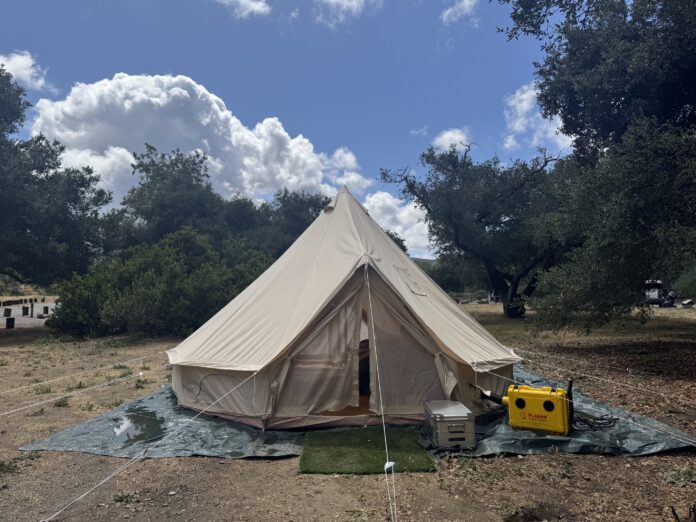

I’ve spent my fair share of time camping and overlanding throughout my lifetime. That includes the last six years running 4WDTalk from various rigs in various locations thoughout the U.S. Over the years, I’ve bought plenty of gear I regret. Some of it sat in a bin for years. Other pieces broke on the first real trip. Meanwhile, a handful of items have earned a spot on every trip I take.
This guide sorts gear into two piles: what’s worth your money and what isn’t. It comes from real trips across Wyoming, Utah, and the Southwest, not from spec sheets. Here’s what I’d tell a friend before they fill a cart.
Quick Facts:
- Topic: Camping gear worth buying vs. gear to skip
- Skill level: Beginner
- Time required: 15 minutes to audit your gear list
- Tools needed: Your current gear list and a budget
- Difficulty: Easy
- Cost: Saves $200 to $1,000 in avoided purchases
- Best for: New campers and anyone trimming a bloated gear closet
8 min read
In This Guide
- Camping Gear Overview
- Camping Gear at a Glance
- Shelter: Where Your Money Belongs
- Sleep Gear: Buy Comfort, Skip Gimmicks
- Camp Kitchen: Keep It Simple
- Lighting, Power, and Comfort
- Gear I’d Skip Every Time
- Budget Gear vs. Premium Gear: Where to Spend
- Pros and Cons of Buying Less Gear
- Final Verdict
- Frequently Asked Questions
Camping Gear Overview
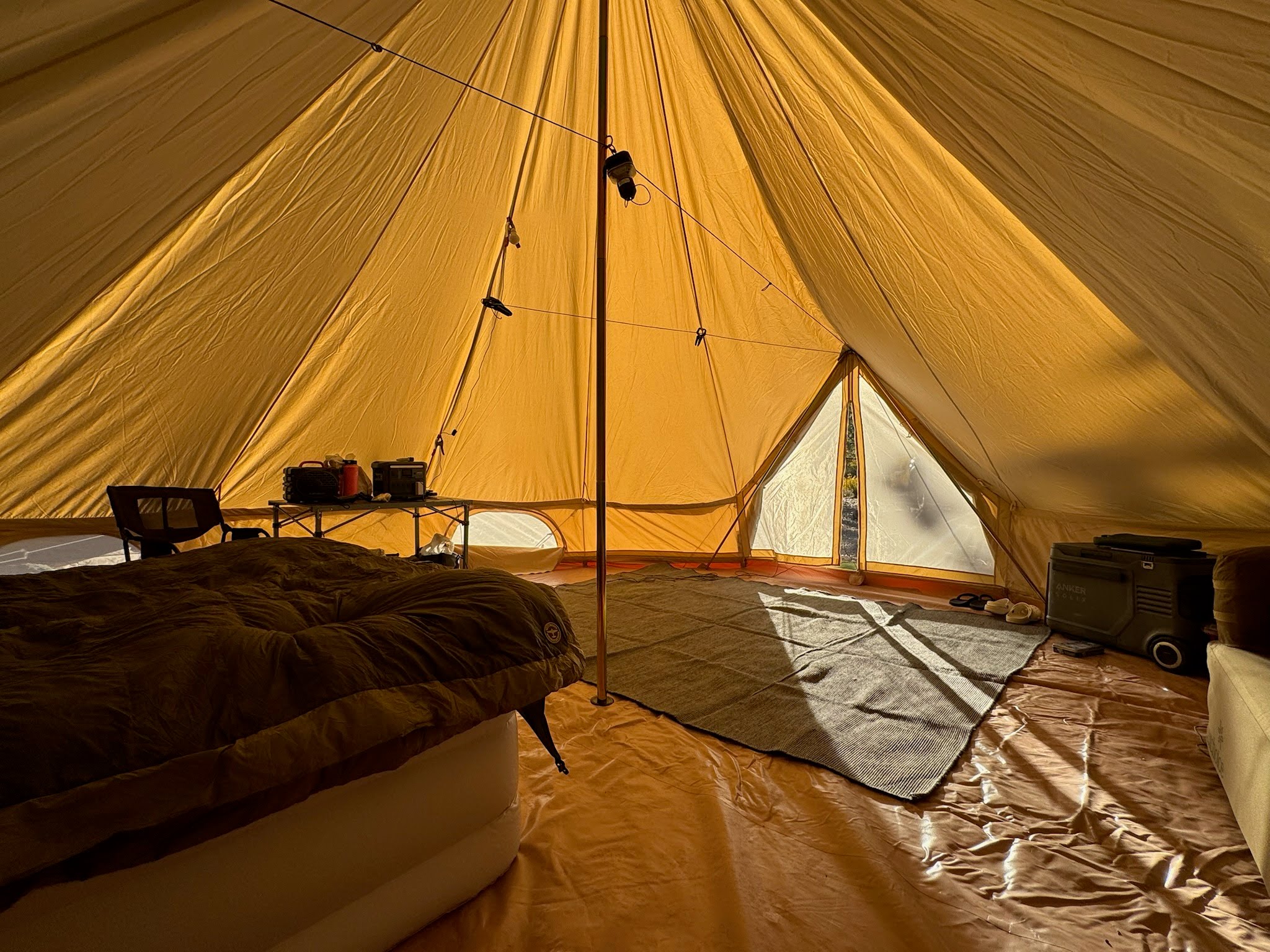
Most campers overspend in the wrong places. They buy a dozen small gadgets. Then they skimp on the few items deciding whether a trip goes well. Shelter, sleep, and a reliable way to cook matter most. Everything else is optional.
Because gear marketing is loud, it’s easy to confuse popular with useful. A product with ten thousand reviews isn’t always a good one. Instead, ask one question before you buy. Will I use this on most trips? If the answer is no, skip it.
For example, I’ve owned three camp showers. I’ve used each one twice. However, I’ve used the same cast iron skillet for over a decade. This pattern repeats in almost every gear category.
Camping Gear at a Glance
| Category | Worth Buying | Usually a Waste |
|---|---|---|
| Shelter | Durable tent sized for your group | Cheap tent rated for twice your group |
| Sleep | Insulated pad, bag rated for the cold | Ultralight bag for car camping |
| Kitchen | Two-burner stove, skillet, good cooler | Single-purpose gadgets, huge cookware sets |
| Light | Headlamp and one solid lantern | Novelty light strings and fire gadgets |
| Power | Small power bank | Oversized power station for weekends |
| Comfort | Sturdy camp chair, folding table | Portable showers, camp-branded everything |
Shop Stout Tent
Spend Your Gear Budget on the Tent First
The Pro Series pairs 340 gsm canvas with a stove jack, mesh double walls, and a PVC tub floor.
Shelter: Where Your Money Belongs
Your tent is the one piece of gear you rely on every night. A bad one ruins sleep, and bad sleep ruins the next day. Because of this, I put the biggest share of any gear budget into shelter.
Canvas costs more up front. However, it lasts. Our guide on how long bell tents last explains how care and climate affect lifespan. Since a good tent serves for years, the cost per night drops fast.
Size matters too. I’ve reviewed both the Stout 5M Pro edition and the Stout 6M bell tent in detail. The 5M suits most families. The 6M suits groups and long stays.
Don’t trust the sleep-count rating on the box. A tent rated for six often fits four with gear. Instead, buy for the space you’ll use. Then add a rug, since a washable floor makes every trip easier.
Sleep Gear: Buy Comfort, Skip Gimmicks
Good sleep is cheap compared to a ruined trip. First, buy an insulated sleeping pad. Cold ground steals more heat than cold air does. Next, pick a sleeping bag rated for the lowest temperature you’ll face, not the average.
For basecamp trips, a cot is worth every dollar. It keeps you off the ground and gives you storage underneath. Also, it makes getting up in the morning far easier.
On the other hand, skip ultralight sleeping bags if you car camp. They cost double and save weight you never carry. Likewise, skip fancy pillows. A stuff sack full of spare clothes works fine.
Camp Kitchen: Keep It Simple
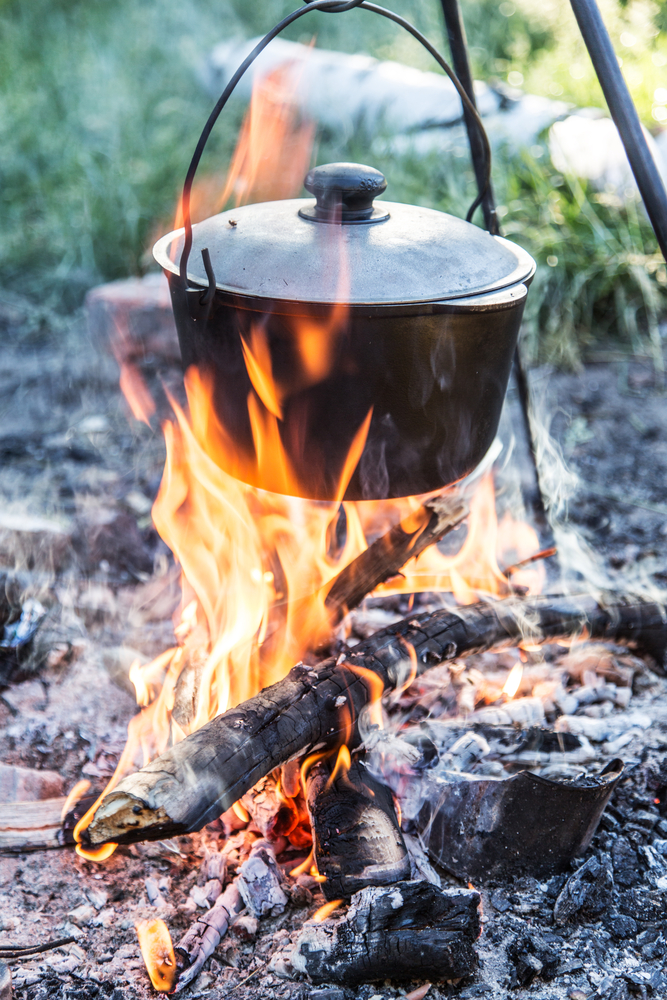
A camp kitchen needs five things. First, a two-burner propane stove. Second, a cast iron skillet. Third, one pot with a lid. Fourth, a sharp knife. Finally, a cooler or 12V fridge you trust.
The cooler deserves real money. A cheap one melts ice in a day, and spoiled food ends a trip early. Meanwhile, a quality cooler holds ice for days. It pays for itself within a season.
However, most cookware sets are a waste. They include pieces you’ll never touch. Single-purpose gadgets are worse. Hot dog roasters, pie irons, and egg cookers all fill space without earning it. Instead, one skillet and one pot handle almost every meal.
Lighting, Power, and Comfort
A headlamp is the best twenty dollars you’ll spend. It frees both hands for cooking, setup, and midnight trips outside. Add one solid lantern for the table, and you’re done with lighting.
Power works the same way. A small power bank charges phones for days. Since most weekend trips don’t need more, a large power station is overkill. However, for a week-long basecamp, a bigger battery makes sense.
For comfort, buy chairs you’d happily sit in for hours. Cheap chairs bend, tip, and fail by year two. Also, a folding table turns a messy camp into an organized one. Spend here, because you’ll use both every single day.
Gear I’d Skip Every Time

After 30 years, my regret pile follows a clear pattern. These items sound useful. They rarely earn their space.
- Portable camp showers taking longer to set up than they save
- Multi-tools with 40 functions when you use three
- Novelty fire starters, since a lighter and dry kindling work better
- Oversized cookware sets with pieces you’ll never open
- Camp-branded versions of everyday items, such as mugs and plates
- Cheap tents rated for twice your group size
Notice the theme. Each one adds cost without adding comfort. Before buying anything on this list, try your regular home gear first. Most of it works fine outdoors.
Gear Worth Its Space
Browse Bell Tents, Stoves, and Rugs
Everything in the Stout lineup ships free in the contiguous US with a lifetime warranty.
Budget Gear vs. Premium Gear: Where to Spend
Premium isn’t always better. Sometimes it’s only more expensive. The trick is knowing which items fail in ways hurting you.
Spend more on anything you use nightly or anything protecting you from weather. This means your tent, sleeping pad, and cooler. A failure there ends the trip. Since these items see daily use, the extra cost spreads across every night.
Save money on anything you use once in a while or anything easy to replace. This includes utensils, tarps, and storage bins. A budget version does the same job. Besides, a cheap bin won’t make you wince when it cracks.
When in doubt, buy once and buy well. Replacing a $60 item three times costs more than one $150 item. This rule saved me hundreds over the years.
Pros and Cons of Buying Less Gear
Pros
- Saves hundreds of dollars per year
- Faster packing and setup
- Less clutter in your vehicle and camp
- More budget for the items mattering most
- Easier to maintain and repair
Cons
- You’ll sometimes miss a gadget on a trip
- Quality pieces cost more up front
- Takes discipline to resist impulse buys
- Fewer backups if something breaks
Final Verdict
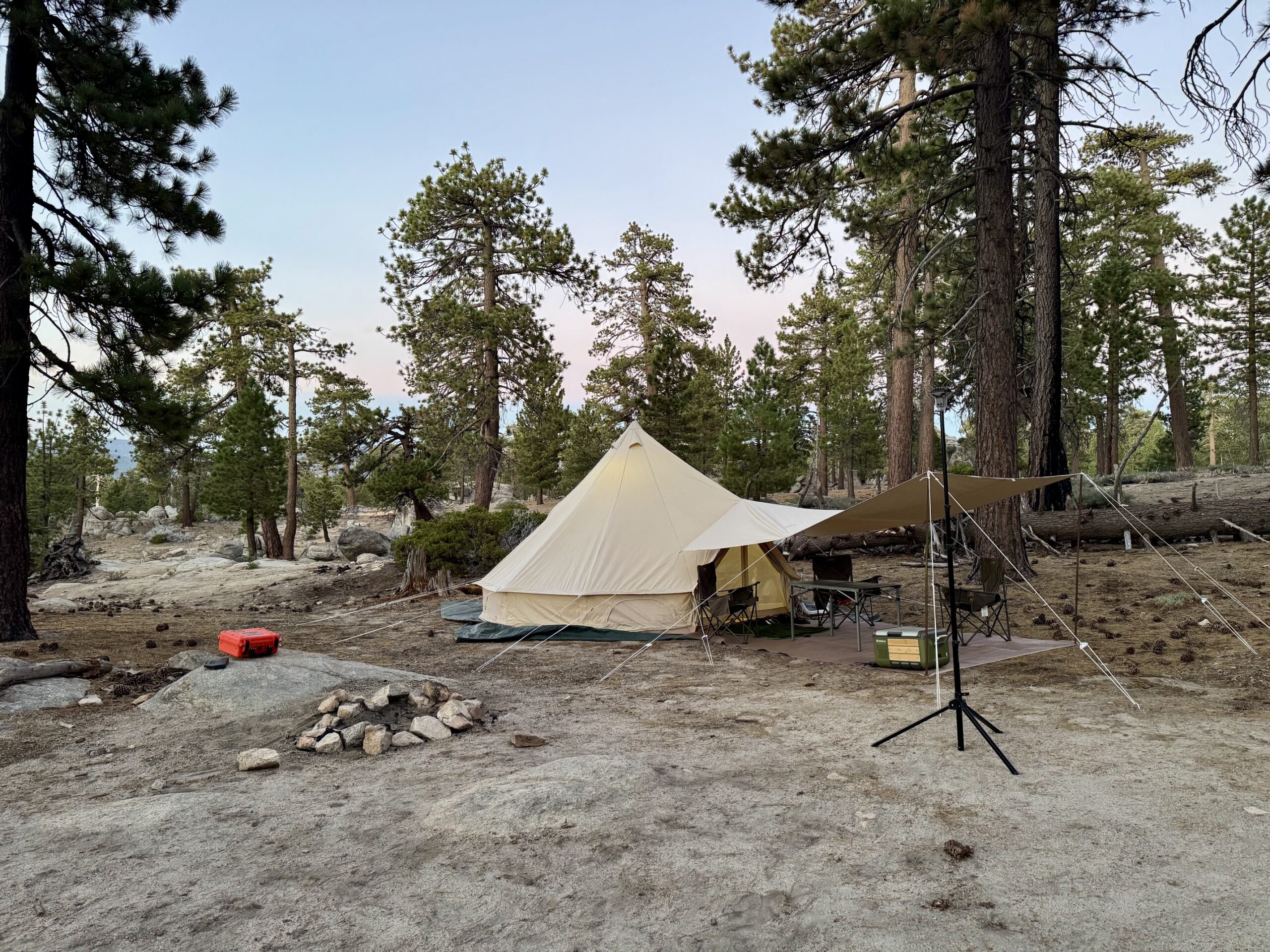
The camping gear you need comes down to a short list. Buy a durable tent, a warm sleep system, a simple kitchen, and reliable light. Spend real money on those four. Skip almost everything else until a specific trip proves you need it.
The trade-off is patience. Impulse buys feel good in the moment, but they pile up fast. Waiting two trips before buying a new item filters out most of the waste. By then, you’ll know what’s missing.
If you’re starting from scratch, I recommend putting your first dollars into shelter. A quality canvas tent like the Stout 5M or 6M Pro changes how every trip feels. Then build the rest of your kit around real needs, one trip at a time.
Ready to Buy?
Check Today’s Prices at Stout Tent
Free shipping in the contiguous US and a lifetime warranty on every tent.
Frequently Asked Questions
What camping gear do I need as a beginner?
Start with a tent, an insulated sleeping pad, a sleeping bag rated for the cold, a headlamp, a stove, and a cooler. Everything else is optional until a trip proves otherwise.
Is expensive camping gear worth it?
Sometimes. Spend more on items you use nightly or protecting you from weather. Save money on utensils, bins, and tarps, since budget versions work fine.
What camping gear is a waste of money?
Single-purpose kitchen gadgets, portable showers, oversized cookware sets, and ultralight gear for car camping top my list. Each adds cost without adding comfort.
How much should I spend on a camping tent?
Plan to spend the largest share of your budget here. A durable canvas tent costs more up front, but it lasts for years and lowers your cost per night.
Do I need a camping stove?
Yes, for most trips. A two-burner propane stove is reliable in wind and rain. Fires are fun, but fire bans and wet wood make them unreliable for cooking.
Should I buy a camping gear set or individual pieces?
Buy individual pieces. Sets include items you won’t use. Choosing each piece lets you spend more where it matters and skip the rest.
Our articles might have affiliate links and the occasional sponsored content, but don’t sweat it – if you buy something, we get a little kickback at no extra cost to you, and we only hype products we truly believe in!