


Quick Facts:
- Coverage: An all-terrain tire warranty covers tread life and defects; a few brands add road hazard.
- Mileage range: None to 70,000 miles across the 10 tires compared here.
- LT sizes: Five of the 10 carry fewer warranted miles in LT sizes, with gaps up to 15,000 miles.
- Payout: Prorated credit toward the same brand, not cash.
- Road hazard from the brand: Falken and General include it; Hankook covers P-metric sizes only.
- Main denial triggers: Uneven wear, missing rotation records, trail damage.
9 min read
In This Guide
How an All-Terrain Tire Warranty Works
An all-terrain tire warranty bundles three separate promises, and each pays out under its own rules. First comes the treadwear warranty, the mileage figure on the ad. Next, a workmanship and materials warranty covers defects for five or six years. Finally, a few brands add road hazard coverage for nails, cuts, and impact breaks.
The mileage number is the easy comparison. However, the mileage pledge on an A/T tire often shrinks in LT sizes. It also pays prorated credit instead of cash. In addition, every brand we checked rejects a mileage claim for uneven wear or missing rotation receipts.
Start a Tread and Pressure Log
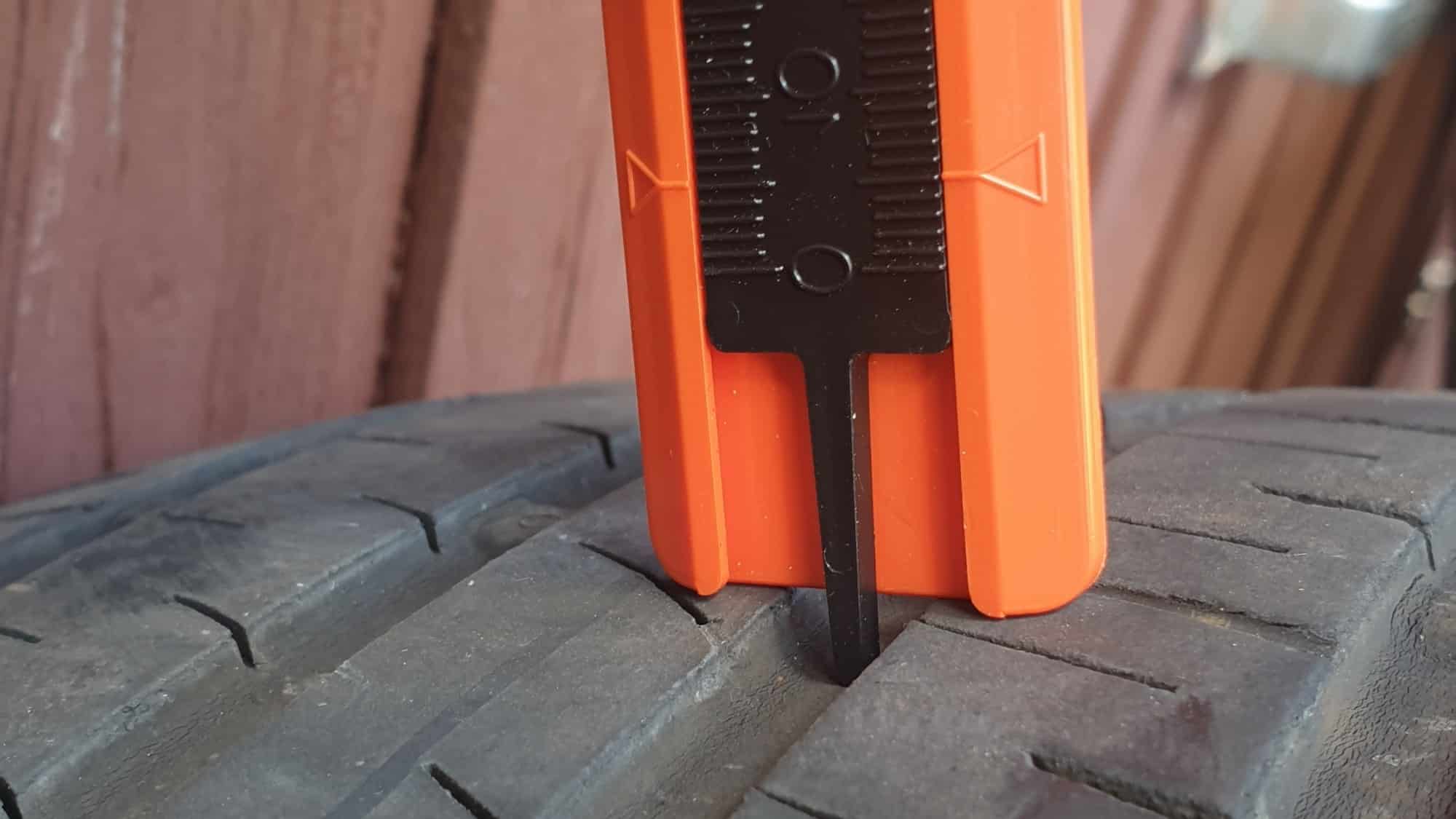
Every mileage claim starts with two numbers you record yourself. One is tread depth in 32nds of an inch, and the other is inflation pressure. The JACO TreadPro dial gauge and the GODESON digital tread gauge both read in 32nds. For pressure, the JACO ElitePro digital gauge reads to 100 psi. It clears the 80 psi maximum on most LT Load Range E tires. Record both at each rotation, with the date and odometer reading. Dated readings give the shop proof of even wear and correct inflation.
Tools for tracking tread and pressure


Tire Warranty Terms for 10 Popular A/T Tires
The table lines up the published terms for 10 popular all-terrain tires. We checked each one against the brand’s own warranty booklet or product page in September 2026. Then we cross-checked each figure against Tire Rack product pages.
| Tire | Miles (P-metric / LT) | Defect term | Brand road hazard | Trial |
|---|---|---|---|---|
| BFGoodrich All-Terrain T/A KO3 | 50,000 / 50,000 | 6 years from purchase | None | 60 days |
| Falken Wildpeak A/T4W | 65,000 / 60,000 | 6 years from the DOT build date | 2 years or first 3/32 inch | 30 days or 1,000 miles |
| Toyo Open Country A/T III | 65,000 / 50,000 | 5 years from purchase | None | 45 days or 500 miles |
| Cooper Discoverer AT3 XLT | N/A (LT sizes only) / 60,000 | 72 months from purchase | None | 45 days |
| General Grabber A/TX | 60,000 / 50,000 | 72 months from purchase | 12 months or first 2/32 inch | 45 days |
| Yokohama Geolandar A/T4 | 65,000 / 55,000 | 60 months from purchase | None | 30 days |
| Hankook Dynapro AT2 Xtreme | 70,000 / 60,000 | 6 years from purchase | P-metric only, 1 year | 30 days |
| Michelin LTX A/T2 | 60,000 / 60,000 | 6 years from purchase | 3-year roadside help, no replacement | 60 days |
| Nitto Ridge Grappler | None | 5 years from purchase | None | None |
| Goodyear Wrangler Territory AT | None | 6 years from purchase | None | None |
LT Sizes Often Carry Fewer Miles, and Two Tires Carry None
The biggest surprise in the table is the size split. For example, the Toyo Open Country A/T III carries 65,000 miles in P-metric sizes but 50,000 in LT sizes. Hankook, Yokohama, and General each drop 10,000 miles, and the Falken A/T4W drops 5,000. For a closer look at two of these tires, see our KO3 vs A/T4W comparison.
If your rig runs LT tires, plan around the LT number. Also note the two tires with no mileage pledge at all. Nitto’s hybrid Ridge Grappler carries none. Likewise, Goodyear sells the Wrangler Territory AT as an original equipment tire with no pledge.
What a Tire Mileage Claim Pays
A mileage pledge pays only when the tire wears evenly to 2/32 inch before its warranted miles. Then the dealer prorates by distance. You pay the share of miles you used, times the current price of the new tire.
General Tire prints a worked example in its Shield+ warranty brochure. A 60,000-mile tire wears out at 45,000 miles, so the owner pays 75% of a $130.02 tire, or $97.52. On top of this, the owner pays tax, mounting, balancing, and disposal. In General’s example, the pledge credits $32.50 per tire toward the next General tire.
Tread depth also acts as a gate. Falken rejects tread-life claims with 5/32 inch or more remaining. Meanwhile, Hankook and Bridgestone refuse tires with more than 4/32 inch left. The credit usually applies only toward the same brand. Two forum owners report paying about $500 installed for a prorated set of four.
What Gets Denied, and Why
Owner reports on Tacoma World, Tundras.com, JL Wrangler Forums, and Ford Raptor Forum follow a clear pattern. Most denied claims trace to how the tire wore, not how far it went.
Uneven Wear and Missing Rotation Receipts
Uneven wear is the top denial reason in the owner threads we read. Falken, Toyo, and Nitto disqualify a tire when its main grooves differ by 2/32 inch or more. Tundra owners say Falken blamed factory alignment for edge wear on their tires. On Tacoma World, an owner says Falken rejected his claim and a friend’s for uneven wear.
Rotation records also decide claims. Falken requires a rotation at least every 5,000 miles, logged on its warranty card. By comparison, BFGoodrich, Michelin, and General call for rotation every 6,000 to 8,000 miles. Hankook sets 7,500 miles or fewer. Consequently, a truck rotated at home without a written log starts any claim behind. Our guide on how to extend off-road tire life covers rotation patterns for 4WD rigs.
Tire Damage From the Trail
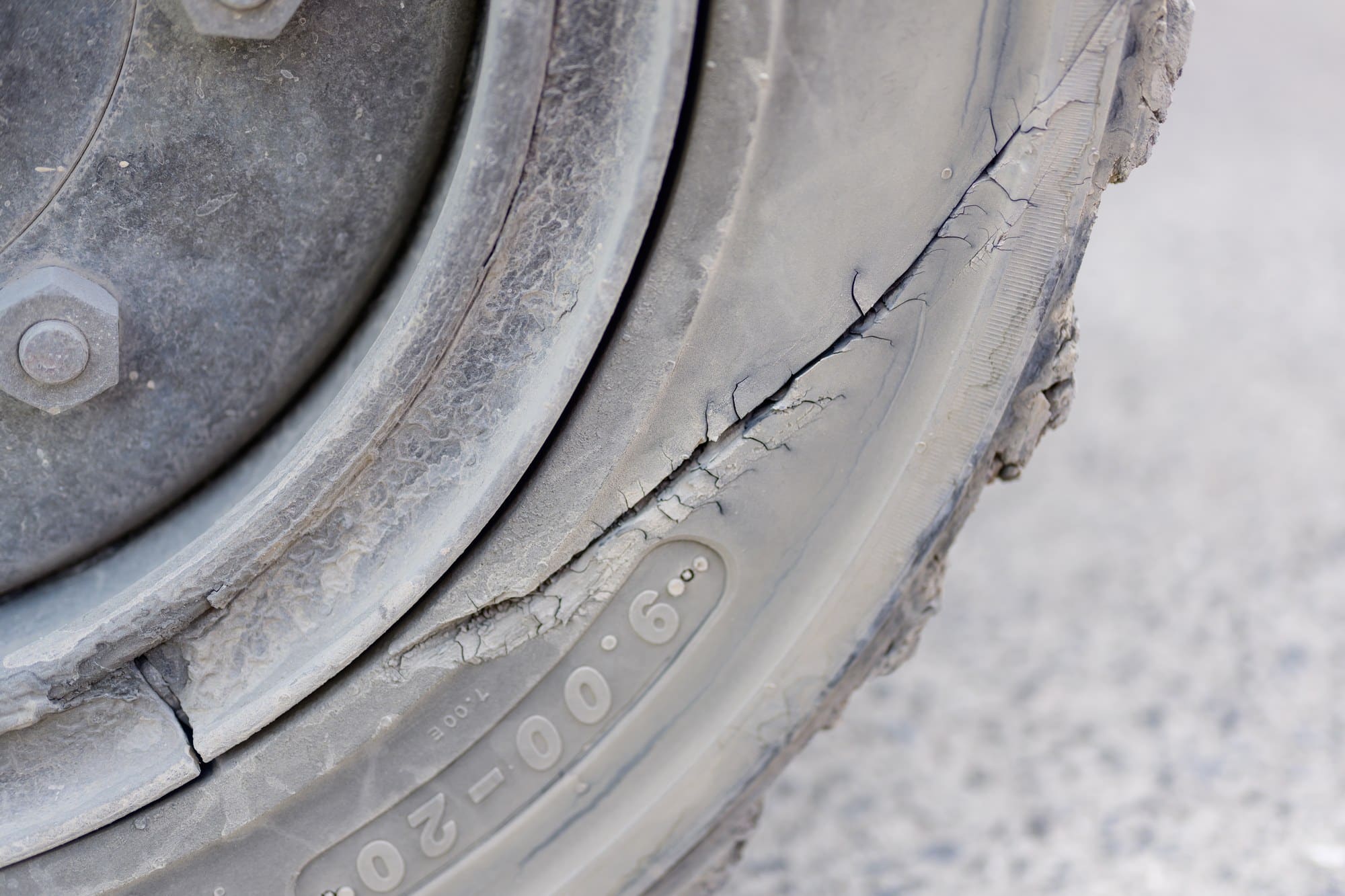
Standard warranties exclude road hazards such as punctures, sidewall cuts, and impact breaks. Several brands also name off-road use directly. Falken lists “off-road use” among its exclusions. Cooper excludes “racing or off road applications,” and Hankook excludes “Racing & off road use and Misapplication.”
Toyo and Nitto word it more softly. Their terms require use “on road surfaces for which the tire is designed.” In contrast, the BFGoodrich booklet names off-road use only as a cause of faster wear. Owners also report trail damage claims turned away, including a lug torn off a Toyo on a trail.
Factory Tires and Unauthorized Sellers
Tires on a new truck follow different rules. For instance, the Wrangler Territory AT carries no mileage pledge at all. Owners on Tundras.com and Tacoma World describe bouncing between the vehicle dealer and the tire brand. Also, BFGoodrich states its standard warranty does not apply to tires from unauthorized dealers. Yokohama voids its mileage and trial coverage on those tires too.
Lifted Trucks, Bigger Tires, and the Fine Print
None of the tire warranty booklets we checked names a lift kit as an exclusion. Instead, the exclusions target what a lift tends to create. They include alignment wear, a size or load rating outside the vehicle maker’s spec, and trail damage.
Toyo, Cooper, and Hankook all require the correct size, load index, and speed rating for the vehicle. Falken and Toyo also print rollover warnings about larger tires on raised suspension. For a truck on 35s, a fresh alignment receipt after the lift carries as much weight as the tire invoice.
Federal law helps on the vehicle side. The FTC’s guide to auto warranties covers aftermarket parts. It says your warranty “stays in effect if you use aftermarket or recycled parts.” Under this guidance, the maker must prove the part caused the damage before denying coverage. The same FTC page lets a maker deny coverage when a bad part or install causes damage. Falken and Toyo already exclude wear from misalignment, lift or no lift.
Manufacturer Warranty vs. Retailer Road Hazard Plan
A tire warranty from the brand covers defects and tread life. By contrast, a retailer road hazard warranty covers the nail, the rock, and the pothole. Only three brands in the table add hazard coverage of their own, and each version runs short.
Falken replaces a tire damaged beyond repair within two years or the first 3/32 inch of wear. However, it excludes damage from off-road use. General covers the first 12 months or first 2/32 inch on tires bought on or after February 1, 2025. Hankook limits its version to P-metric sizes and states “LT-metric tires not eligible.”
How the Big Retailer Plans Compare
Tire Rack road hazard protection comes free for 24 months. It pays up to $599 per tire and covers flat repairs up to $40. However, its terms exclude off-road use. They define it as driving off paved roads maintained by a state, local, or private body. Under this wording, a gravel forest road counts as off-road.
Costco includes a 5-year road hazard warranty with its tires, prorated by remaining tread. Its terms exclude off-road and commercial use. Meanwhile, Discount Tire and America’s Tire sell certificates good for three years. They pay a full refund or replacement with no proration while the tire holds more than 3/32 inch. Redeeming one, though, gives up the brand’s warranty on the tire. Walmart sells an optional plan with its Value install package, and it excludes off-road use as well.
Owners on the forums report retailer plans paying out with little friction, often as a full replacement. The certificate contract we read lists no off-road exclusion. Even so, several owners say store staff cited one, so ask for the terms in writing before you pay.
Here is how the retailer plan choice plays out in one common size, LT285/70R17. The Falken Wildpeak A/T4W carries 60,000 LT miles plus brand road hazard coverage. Both the BFGoodrich KO3 and Toyo Open Country A/T III carry 50,000 LT miles and no brand hazard plan. On those two, a retailer plan supplies the nail and pothole coverage.
LT285/70R17 all-terrain tires from the table

Falken Wildpeak A/T4W All Terrain LT285/70R17 126/123S E Light Truc…

BFGoodrich All-Terrain T/A KO3 Car Tire for Light Trucks

Toyo Tires OPEN COUNTRY A/T III LT285/70R17 121/118S E/10 TL
How to File a Tire Warranty Claim
A clean claim starts on the day you buy the tires. First, keep the invoice showing the date, the odometer reading, and the DOT codes. Falken, for example, starts its six-year defect clock at the DOT build date, not the purchase date.
Next, log every rotation with its date and mileage. Keep alignment receipts too, especially after a lift or a hard trail hit. Then, as the tread nears 2/32 inch, visit an authorized dealer for the brand. The dealer measures the tread, checks the wear pattern, and submits the claim.
Finally, push back politely if the first answer is no. Owners say a retailer pushing on your behalf gets better results. On Ford Raptor Forum, a shop manager’s call raised one BFGoodrich offer to 50%. For a nail, ask instead for a proper plug-patch repair. As our guide on how to plug a tire on the trail explains, a trail plug is a stopgap.
Final Thoughts
A long mileage pledge rewards owners who drive mostly pavement and rotate on time. Still, the payout on a worn tire is modest, so treat the pledge as a bonus. Compare the LT number, not the headline figure. Falken’s A/T4W stands out for pairing 60,000 LT miles with its own road hazard coverage. On the other hand, a tire with no pledge, such as the Ridge Grappler, sells on traction alone.
The honest trade-off is paperwork. Every brand in the table wants rotation proof and even wear, and trail damage rarely qualifies under a tire warranty. To me, a receipt folder in the glovebox matters as much as the mileage number on the sticker.
I have owned five Jeeps, and today I drive a 2025 Chevy Colorado ZR2. If I shopped A/Ts for it tomorrow, I would weigh the warranty right beside the tread pattern. When your rig sees gravel every weekend, read the off-road definition in any road hazard plan before you pay. For paved miles, a free plan from Costco or Tire Rack covers the nails you pick up in town.
FAQ
What does a tire warranty cover?
A tire warranty covers defects in materials and workmanship for five or six years. Many add a treadwear warranty for a set number of miles. Standard terms exclude road hazards, uneven wear, and commercial or racing use.
Does a tire warranty cover nails?
No, a standard tire warranty from the brand excludes nails and other punctures. Falken, General, and Hankook (P-metric sizes only) add short road hazard coverage. Retailers such as Costco, Tire Rack, and Discount Tire include or sell plans for punctures.
What does a 60,000-mile tire mileage warranty mean?
A 60,000-mile tire mileage warranty means the brand expects the tread to last 60,000 miles with proper care. If the tire wears evenly to 2/32 inch sooner, you get prorated credit toward the same brand. For example, a tire worn out at 45,000 miles earns credit for the 25% of miles it fell short.
Is a road hazard warranty worth it?
A road hazard warranty pays off most on large, expensive LT tires and on rigs driving rough roads daily. Check the off-road definition first, since Tire Rack, Costco, and Walmart exclude off-road use. Owners often say a paid certificate set costs about as much as one tire. You need two claims to come out ahead.
Are tires covered under a new car warranty?
It depends on the automaker. Toyota leaves factory tires to the tire maker. Ford and GM cover tire defects under the new-vehicle warranty, prorated up to 36,000 miles. Factory all-terrain tires often carry no mileage pledge; the Goodyear Wrangler Territory AT has none. Check your warranty booklet, then contact the dealer or the tire brand.