


When the temperature drops below freezing at camp, a diesel heater turns a long, cold night into a comfortable one. For overlanders, steady heat also keeps a trip on schedule when the forecast turns colder than planned.
Heaters differ in more ways than price, though. Budget units and premium units often look alike on paper, yet they vary in fuel pumps, controls, and safety features.
This diesel heater buying guide covers the factors worth checking before you buy: heat output, fuel use, power draw, build quality, setup, noise, and safety.
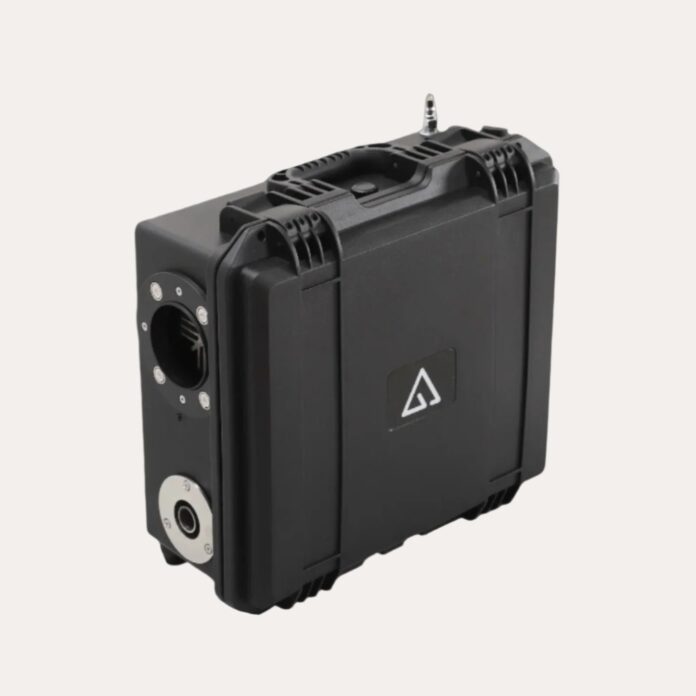
Along the way, it uses the VELIT Portable Air Heater 14000BTU as a reference point. Velit sells this portable unit in a diesel version and a gasoline version.
Diesel stays the focus here. Still, if your rig burns gasoline, the gasoline heater version runs on the fuel you already carry.
Heat Output: Bigger Isn’t Always Better, But It Can Be Smarter
This diesel heater buying guide starts with output, because the right size depends on your space. A heater too large for the space cycles on and off and wastes fuel. On the other hand, an undersized unit runs at full power and still leaves you cold.
The VELIT Portable Air Heater produces 14,000 BTU per hour, or about 4.1 kW. This output falls in the 4kW class. The diesel heater sizing guide recommends this class for ground tents and rooftop tents, and a 2kW unit for insulated vans and truck campers.
Controls matter as much as peak output. In thermostat mode, the heater holds a set temperature and drops into standby once the space runs 3 degrees above your setting. It restarts after the temperature falls 3 degrees below it. Manual mode offers five fixed output levels instead.
Altitude also changes how a heater burns. An onboard barometer adjusts the fuel-air mix as elevation changes, and Velit’s user manual rates the unit for use up to 17,000 feet. Separately, Velit says it tested the heater above 11,000 feet.
Fuel Consumption & Efficiency: Burn Less, Heat More
Fuel use sets your range between fill-ups. In remote areas, a heater with high consumption means hauling extra fuel or cutting a trip short.
Velit’s user manual lists diesel consumption at 0.05 to 0.12 gallons per hour. At those rates, one gallon of diesel lasts roughly 8 to 20 hours, depending on the output setting. The gasoline version burns slightly more at full output, topping out at 0.13 gallons per hour.
Energy content explains the gap. The federal Energy Information Administration lists diesel at 137,381 BTU per gallon, compared with 120,214 BTU for motor gasoline. As a result, each gallon of gasoline holds about 12 percent less energy.
Cold weather adds a catch for diesel. According to Cenex, No. 2 diesel reaches its cloud point at 14°F and gels as temperatures keep falling. Since Velit’s portable heater draws from an external container, fill the container with winter-blend diesel or add an anti-gel additive to the fuel before a cold trip.
In contrast, gasoline does not gel in cold weather. Velit’s product page makes the same point, noting gasoline stays reliable in extreme cold.
Power Requirements: Don’t Drain Your Vehicle Battery
A 12V diesel heater draws power for its fans, fuel pump, controls, and glow plug. Startup draws the most power, since the glow plug heats the combustion chamber before the fuel ignites.
Velit’s user manual rates the heater at 20 to 46 watts while running. However, its quick-start guide calls for a 12V power source rated for at least 126 watts. Velit also notes some setups need a separate 12V, 15A power supply.
Therefore, size your battery or power station around the 126-watt figure, not the running number. This breakdown of diesel heater power consumption explains why 10A ports on some power stations trip during startup.
Once the heater settles into its running draw, battery math looks better. For example, a 100Ah lithium battery stores about 1,280 watt-hours at 12.8V. At 46 watts, the battery covers roughly 28 hours of heater draw before other loads. Meanwhile, at the low end of 20 watts, runtime stretches past 60 hours.
Keep the heater off your starting battery, too. Run it from a portable power station or a separate house battery, so your engine still starts in the morning.
The kit ships with a 6-foot power cable and an XT60-to-cigarette-lighter adapter. Before you rely on a diesel heater for camping, confirm your power station’s 12V port handles the startup load. In a Mispronounced Adventures test, six of nine power stations failed to start the heater through their 12V ports.
Build Quality & Reliability: Don’t Get Left in the Cold
Many budget diesel heaters share one basic layout, so quality comes down to components. On cheaper units, the differences show up in fuel pumps, glow plugs, controllers, and fuel-line fittings. This comparison of cheap vs expensive diesel heaters covers build quality, safety, and durability.
Velit’s approach starts with the burner. According to a review by the YouTube channel Mispronounced Adventures, Velit’s heaters build on the common Espar-based design found in budget units. However, Velit uses proprietary burn chambers, which let the heaters run on gasoline, along with different fuel pumps. Velit supplied the review unit, and YouTube labels the video as including paid promotion.
The portable version sits inside a rainproof case with waterproof aviation plugs and dry-break fuel fittings. A dry break seals both sides of the fuel line when you disconnect it, so fuel stays off your gear.
Reliability also depends on upkeep and support. Velit backs the heater with a two-year limited warranty. Its manual asks you to run the heater at least once a month for 15 minutes or more. After 10 years, the manual calls for replacing the heat exchanger, exhaust pipe, and composite sensor.
Ease of Installation: Set It, Forget It (Well, Almost)
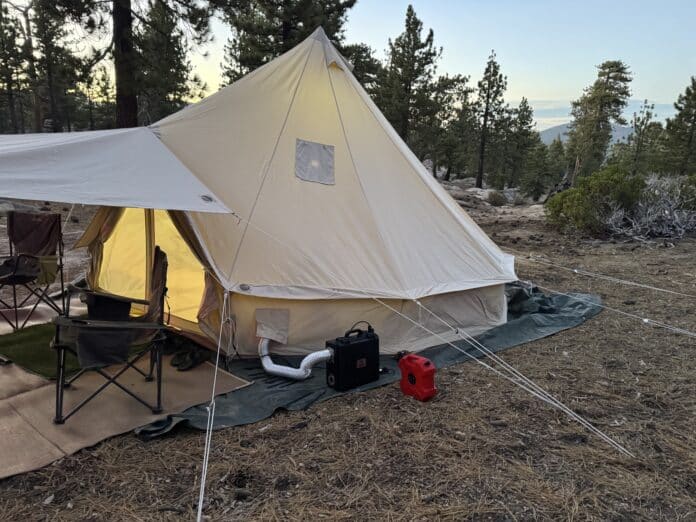
A fixed heater install means drilling through the floor, routing exhaust, and plumbing a fuel pickup. By comparison, a portable diesel heater skips most of this work, because the heater and its controls ship as one unit.
Velit’s kit includes a Bluetooth thermostat, a 10-foot thermostat extension wire, and a 6-foot rubber fuel line. You also get a 6-foot magnetic air duct and Velcro tape. According to Velit, the magnetic ducting attaches without tools.
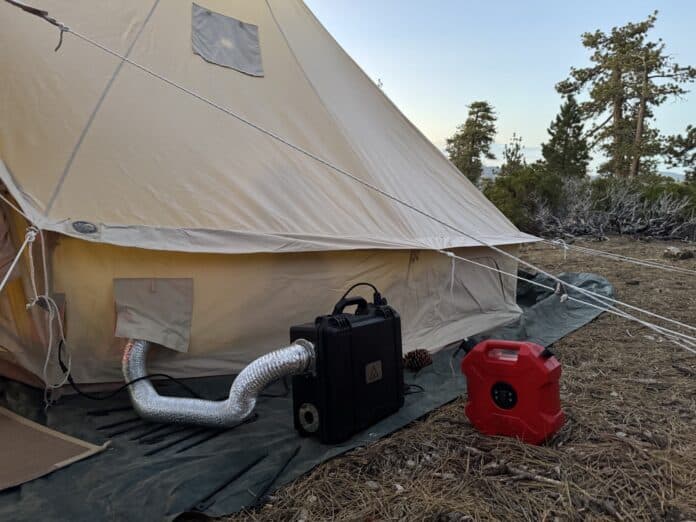
Fuel setup takes one of two paths. First, the BYOC kit, built for a fuel container you already own, adds a cap with a dry break and pickup line. It fits a RotopaX or similar overland container. Second, a detachable one-gallon fuel container attaches to the heater with its own dry break.
Pricing on Velit’s site runs $999 for the heater alone, $1,039 with the BYOC kit, and $1,079 with the one-gallon container.
Mind two limits from the quick-start guide. The fuel line runs a maximum of 8 feet. In addition, the vertical distance between the heater and the fuel container should not exceed 4 feet.
Thermostat placement matters too. If you stow the thermostat inside the case, you adjust output from the phone app, but thermostat mode and the carbon monoxide (CO) alarm both turn off. Instead, run the thermostat on its extension wire into your living space, which keeps every mode and the CO alarm active.
Noise Level: Don’t Let the Heater Ruin the Peace and Quiet
Diesel heater noise comes from three sources: the combustion fan, the exhaust, and the fuel pump. On many units, the pump makes a steady ticking sound you hear from inside the shelter.
Velit’s product page, quick-start guide, and user manual list no decibel rating for the portable heater. For this reason, watch owner videos and read reviews before you buy if quiet matters to you.
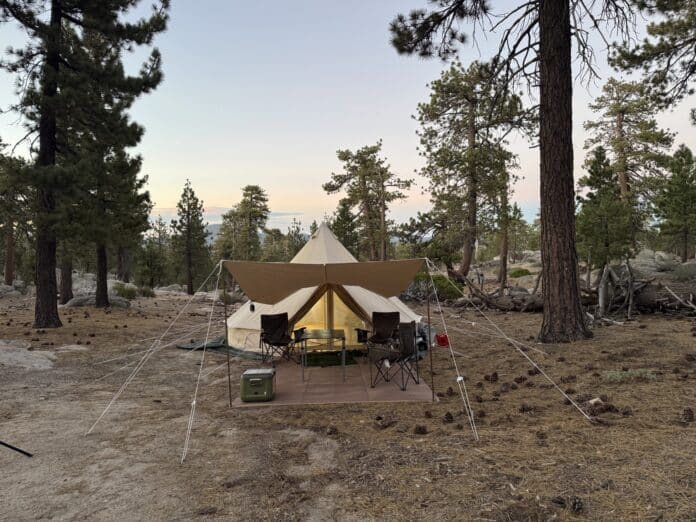
Placement gives you the most control over noise. Velit’s manual prohibits running the heater in garages and other enclosed spaces, and Velit describes the portable unit sitting outside with the thermostat cable run into your tent or camper shell. The 6-foot duct then carries warm air inside, while the fan and exhaust stay on the far side of the wall.
Point the exhaust away from your sleeping area and away from neighboring campsites. Also, set the case on a firm, level surface to cut vibration.
Safety Features: Because Warmth Shouldn’t Come with Risks
Every fuel-burning heater produces carbon monoxide, including diesel heaters. A cracked heat exchanger or a loose exhaust joint lets CO reach your living space.
Velit’s thermostat includes a built-in CO sensor. According to the manual, the alarm triggers once CO climbs above 800 ppm and switches the heater off automatically. After you reset it, the alarm stays silent for the next 30 minutes. Remember, the alarm works only when the thermostat sits on its extension wire inside your living space.
Treat the sensor as a backup, not your only warning. For comparison, a UL 2034 residential CO alarm must sound within 4 to 15 minutes at 400 ppm and within 60 to 240 minutes at 70 ppm. Therefore, mount a separate battery-powered CO alarm near your head, and review this guide to diesel heater carbon monoxide safety for exhaust routing rules.
The manual also bans use in garages and other enclosed spaces. In addition, it tells you to keep flammable materials away from the hot-air outlet and the exhaust outlet. On long trips, the controller caps continuous runtime at 48 hours, then power-cycles the heater and resumes.
Fuel handling matters for both versions. Keep the fuel container outside the shelter and clear of the exhaust outlet, and use a container rated for gasoline if you run the gasoline version.
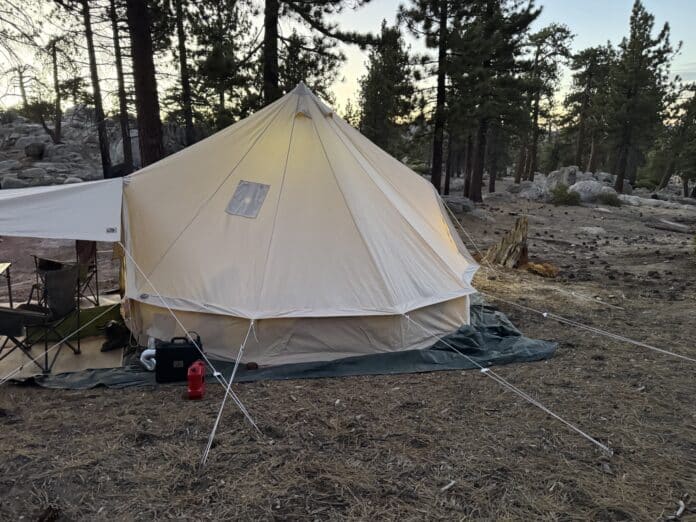
Why Diesel Heaters are a Top Choice for Overlanding
Diesel heaters vent combustion gases outside and deliver dry heat. By comparison, an unvented propane heater releases its combustion byproducts, including water vapor, into the tent.
Diesel also suits life on the road. It is far less volatile than gasoline, and it packs more energy per gallon. If you drive a diesel truck, a portable diesel heater runs on the fuel you already haul.
Plenty of overland rigs burn gasoline, though. For those builds, a gasoline heater removes the need to carry a second fuel. Velit’s product page describes the portable unit as designed for gasoline vehicles, and both versions share the same 14,000 BTU rating and included kit.
The trade-offs run both ways. Gasoline holds less energy per gallon and needs more careful storage, while diesel needs protection from gelling in the cold. Pick the fuel your vehicle burns. Next, look at how easily the heater moves between rigs and camps.
Portability & Versatility: Heat Where You Need It
A portable heater moves between rigs and campsites instead of locking into one vehicle. For example, one unit warms a canvas tent on a fall trip and a truck camper on a winter trip.
Velit’s specs chart lists the portable at 20 pounds and 15.8 by 7.5 by 15 inches. Because the fuel lines use dry breaks, you pack the heater and the fuel container separately.
Velit’s user manual lists a working range of -30°F to 75°F. As a result, the heater covers shoulder-season trips and deep-winter camps alike. Below about 0°F, though, Cenex notes anti-gel additives lose their effect, so switch to a No. 1 diesel blend for the coldest nights.
Setup stays the same wherever you go. Place the case outside, run the magnetic duct into your shelter, and route the thermostat wire to your sleeping area.
Warm Nights Ahead—If You Pick the Right Heater
Use this diesel heater buying guide as a final check before you spend money. Size the output to your shelter, and plan fuel for the hours you expect to run. Then match your power source to the startup load, keep the exhaust sealed and outside, and add a separate CO alarm.
Beyond those basics, weigh build quality, noise, and how often you move the heater between rigs. A diesel heater for camping earns its price when it starts on the first try at altitude and runs all night on a known amount of fuel.
The VELIT Portable Air Heater covers output, altitude, and quick setup. Still, two numbers deserve planning before you buy: its 126-watt minimum power source rating and its 800 ppm CO shutoff point.
Diesel remains the pick for diesel rigs, as long as you treat the fuel for cold weather. However, if your truck burns gasoline, the gasoline version keeps you on one fuel with the same 14,000 BTU rating.
For a side-by-side look at other models, see the best diesel heaters roundup.