


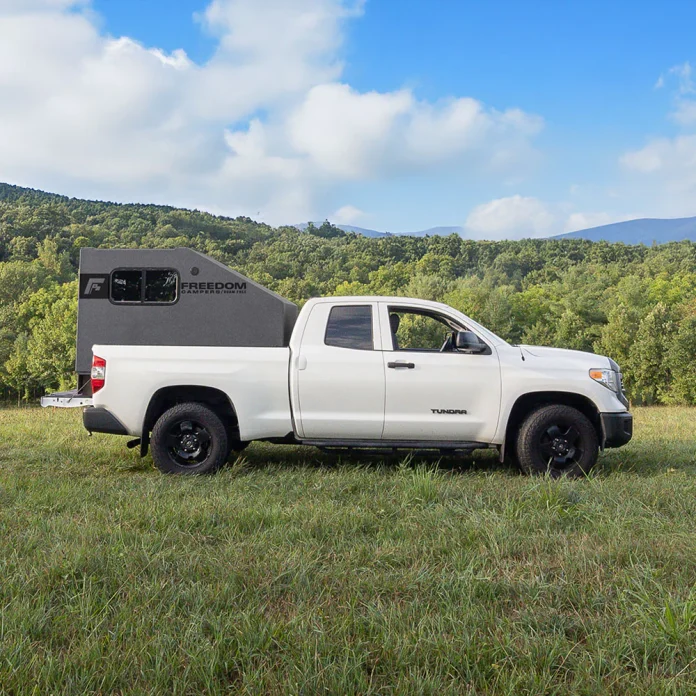

I’ve been camping and overlanding most of my life, working through nearly every shelter type: tents, rooftop tents, truck bed campers, and trailers. One lesson I picked up early is that most people building rigs never check their truck’s payload until something goes wrong. A tire blows on a fire road, or the suspension bottoms out on a rocky descent. That’s when the math gets checked, and the numbers are almost never good.
The payload problem isn’t about buying too much gear. It’s about not knowing your limits before loading up and heading out. Understanding truck payload capacity is one of the most practical steps in any build. Once you know what to look for, the whole audit takes under ten minutes. This guide covers how to run it, where weight sneaks up on you, and how smart shelter choices bring your rig back into a safe, legal range.
Quick Facts:
- Topic: Truck payload capacity and overlanding rig weight
- Key concept: GVWR minus curb weight equals payload
- Average overlanding rig weight added: 800-1,400+ lbs of gear, shelter, and passengers
- Most common violation: Rooftop tent + armor + accessories exceeding payload before fuel
- Lightest slide-in camper option: Freedom Camper, starting at 175 lbs
- Skill level: Beginner to intermediate
- Tools needed: Door sticker (placard), scale or weight estimates, calculator
- Best for: Truck owners building or auditing an overlanding rig
11 min read
In This Article
- Why Payload Is the Most Ignored Number in Overlanding
- How Truck Payload Capacity Works
- Where the Weight Adds Up on a Typical Rig
- How to Calculate Your Rig’s Payload Load
- Shelter Weight: The Biggest Lever You Can Pull
- Shelter Options Compared: RTT vs. Slide-In vs. Trailer
- Pros and Cons of Going Lightweight
- Final Verdict
- Frequently Asked Questions
Why Payload Is the Most Ignored Number in Overlanding
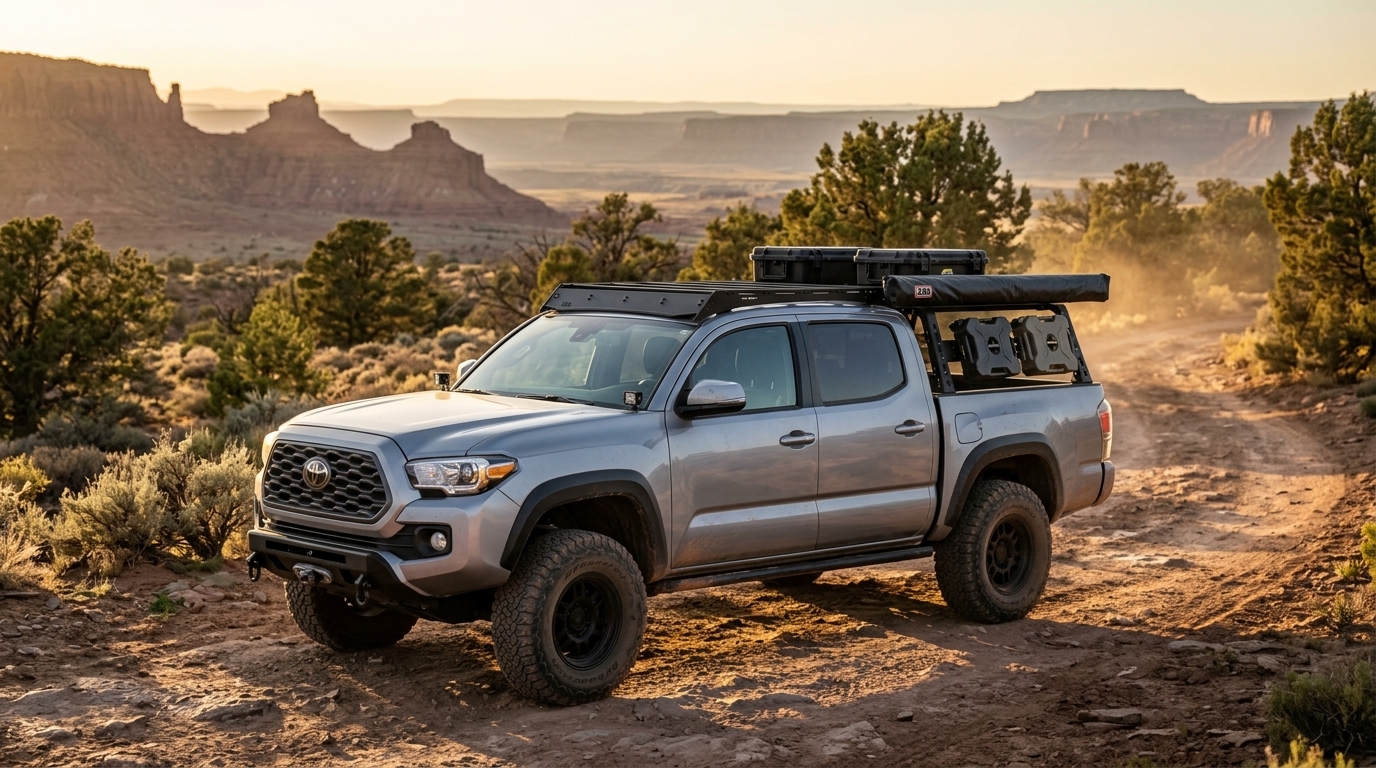
Truck payload capacity is the single most overlooked spec in the overlanding community. Enthusiasts spend hours researching lift kits, skid plates, and recovery gear, yet most couldn’t tell you their truck’s payload rating without digging out the door sticker. Overlanding loads are heavy by nature. Armor, a full-size spare, water storage, recovery gear, food, fuel, and a shelter system together add over 1,000 lbs to a truck already near its limit. Passengers push the number higher still.
Part of the reason this gets ignored is trucks feel capable. Half-ton pickups handle a 900-lb overload without obvious drama at highway speeds. Off-road, however, the consequences show up faster. Compressed suspension limits articulation, braking distances extend, and tires experience heat buildup that increases blowout risk. Beyond safety, overloaded trucks wear through tires, wheel bearings, and brake components faster than designed. The rise of lightweight overlanding as a philosophy isn’t purely about minimalism. It’s a direct response to rigs so heavy they stopped performing well on the trails they were built for.
How Truck Payload Capacity Works
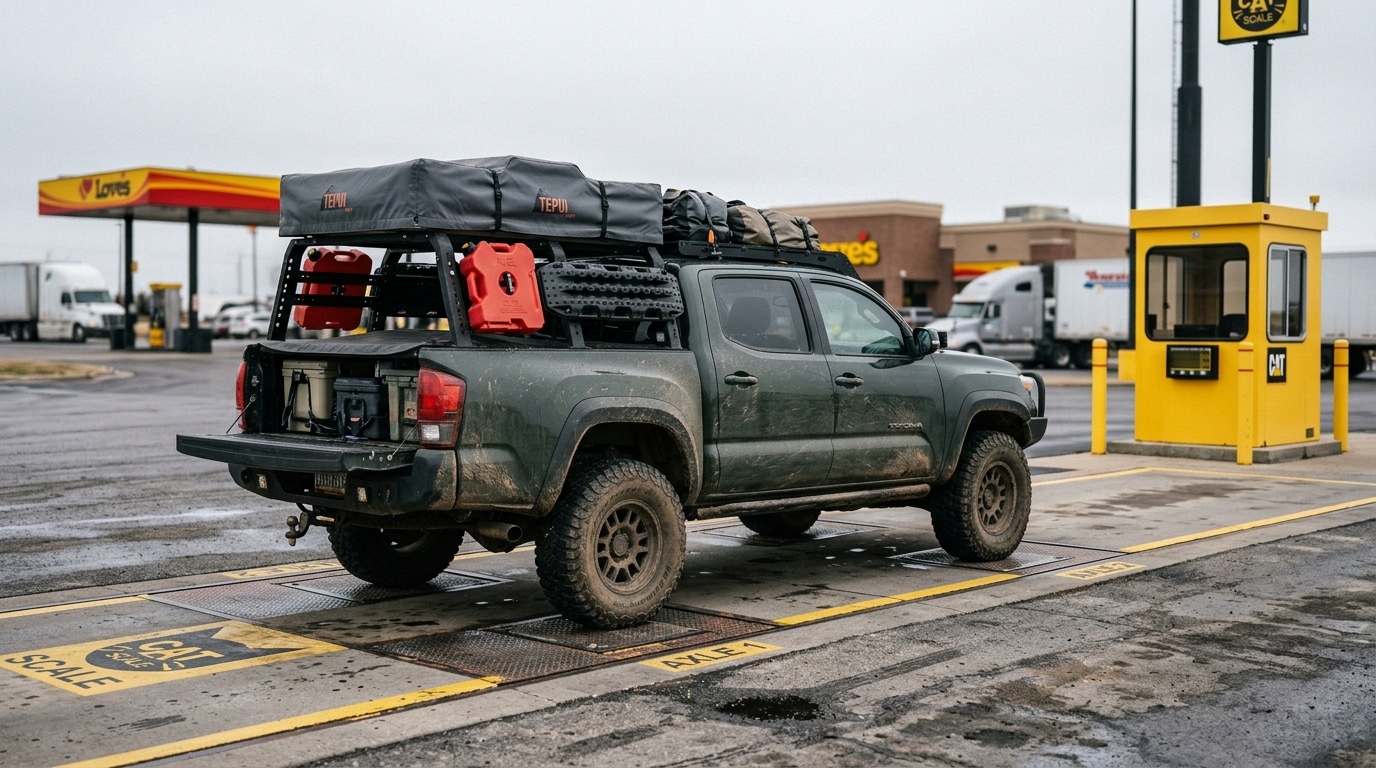
The payload figure on your door sticker represents the maximum combined weight your truck carries beyond its curb weight. Specifically, it covers passengers, cargo in the bed, gear in the cab, roof-mounted accessories, and tongue weight from a trailer. It does not include the trailer’s total weight, only the portion pushing down on your hitch ball, typically 10-15% of the loaded trailer weight.
The math is straightforward. Your truck’s Gross Vehicle Weight Rating (GVWR) minus its curb weight equals available payload. For example, a full-size half-ton with a GVWR of 7,000 lbs and a curb weight of 5,200 lbs has 1,800 lbs of payload. That sounds like a lot. However, add two 200-lb passengers, a 75-lb rooftop tent, 150 lbs of fuel and water, 200 lbs of armor and recovery gear, a 100-lb tool kit, and 150 lbs of food. That number alone totals 1,075 lbs. Only 725 lbs remain before hitting the legal maximum. Understanding the GVWR vs payload distinction before any build decision prevents overloaded truck overlanding situations that sneak up fast.
Why Curb Weight Varies From the Sticker
Most people assume the curb weight on their door sticker is accurate for their specific truck. However, factory options add weight not always reflected in the base curb weight figure. A spray-in bedliner adds 50-80 lbs. Four-wheel drive components add roughly 200 lbs over a two-wheel drive equivalent. Aftermarket steel bumpers (60-120 lbs each) alone add significant unrecorded weight. Add a winch (80-100 lbs), a roof rack (40-80 lbs), and a drawer system (60-150 lbs) and none of it appears in any spec sheet. Your real curb weight is commonly 400-700 lbs above the baseline factory figure before anything goes in the bed.
Where Overlanding Rig Weight Adds Up

Breaking a build into categories makes it easier to see where the heaviest hits land. The table below shows common overlanding additions with typical weight ranges. These figures represent real-world installed weights, not the lightest available options.
| Category | Common Items | Typical Weight Range |
|---|---|---|
| Armor | Front bumper, skid plates, rock sliders | 180-350 lbs |
| Lift and suspension | Lift kit, larger tires (35s vs. stock) | 80-180 lbs |
| Recovery gear | Hi-Lift jack, traction boards, straps, shackles | 60-130 lbs |
| Water and fuel | 10-gal water tank, 5-gal fuel jerry can | 120-200 lbs |
| Shelter system | RTT, tent, camper, or trailer tongue weight | 75-350 lbs |
| Passengers | Driver plus one passenger | 300-450 lbs |
| Food, gear, tools | Kitchen, sleep kit, tools, clothing | 100-200 lbs |
Add those ranges together and the midpoint total lands around 1,030-1,810 lbs on top of a curb weight already heavier than the door sticker suggests. Many common half-ton builds are over payload before the driver sits down. Knowing where those numbers fall is the first step toward a rig that performs well instead of one that only looks capable.
Buy Direct From Freedom Campers
The Lightest Slide-In Camper Available
Starting at 175 lbs, the Freedom Camper adds shelter without wrecking your payload budget. Built in Lamar, Missouri, backed by a 3-year warranty.
How to Calculate Your Rig’s Payload Load
Running a payload audit requires nothing more than your door sticker, a notepad, and honest estimates. Start by finding the yellow or white placard on the inside edge of the driver’s door. It lists your truck’s GVWR. Subtract the curb weight (found in the owner’s manual or a quick web search for your year, make, model, and trim) to get your baseline payload number. Then build your loaded weight list from there.
Write down every category of weight your truck carries on a loaded trip. Include factory add-ons like 4WD components and spray-in liner. Add aftermarket modifications including bumpers, sliders, and winch. Then list gear in the bed or cab, water and fuel containers, passengers, and your shelter system. For items you haven’t weighed, use the table above as a conservative guide and lean toward the higher end of each range. An honest estimate landing under your payload limit is more useful than an optimistic one that turns out wrong at 8,000 feet on a loose trail.
The Tongue Weight Problem
Trailer owners face a variation of this issue that’s easy to miss. Even when a trailer’s total weight stays within the tow rating, tongue weight still counts against payload. Specifically, a 3,500-lb trailer with 15% tongue weight sends 525 lbs of downward force onto your hitch, which counts against payload the same as cargo in the bed. Adding passengers and bed cargo on top of that pushes many towing setups at or above payload before the trailer starts rolling. Tow rating and payload rating are separate limits, and exceeding either creates real risk.
Shelter Weight: The Biggest Lever You Can Pull
Of every category in a payload audit, shelter is the one where the weight range is widest. Rooftop tents occupy the roof, raising the truck’s center of gravity and adding mounting hardware weight. Mid-range hardshell RTTs typically weigh 130-180 lbs installed, with the rack adding another 40-80 lbs. Purpose-built overland trailers offload shelter weight from the bed entirely but add 300-600 lbs of tongue weight to the hitch. Slide-in truck bed camper weight sits in the bed, keeps the center of gravity low, and the lightest options weigh well under 200 lbs.
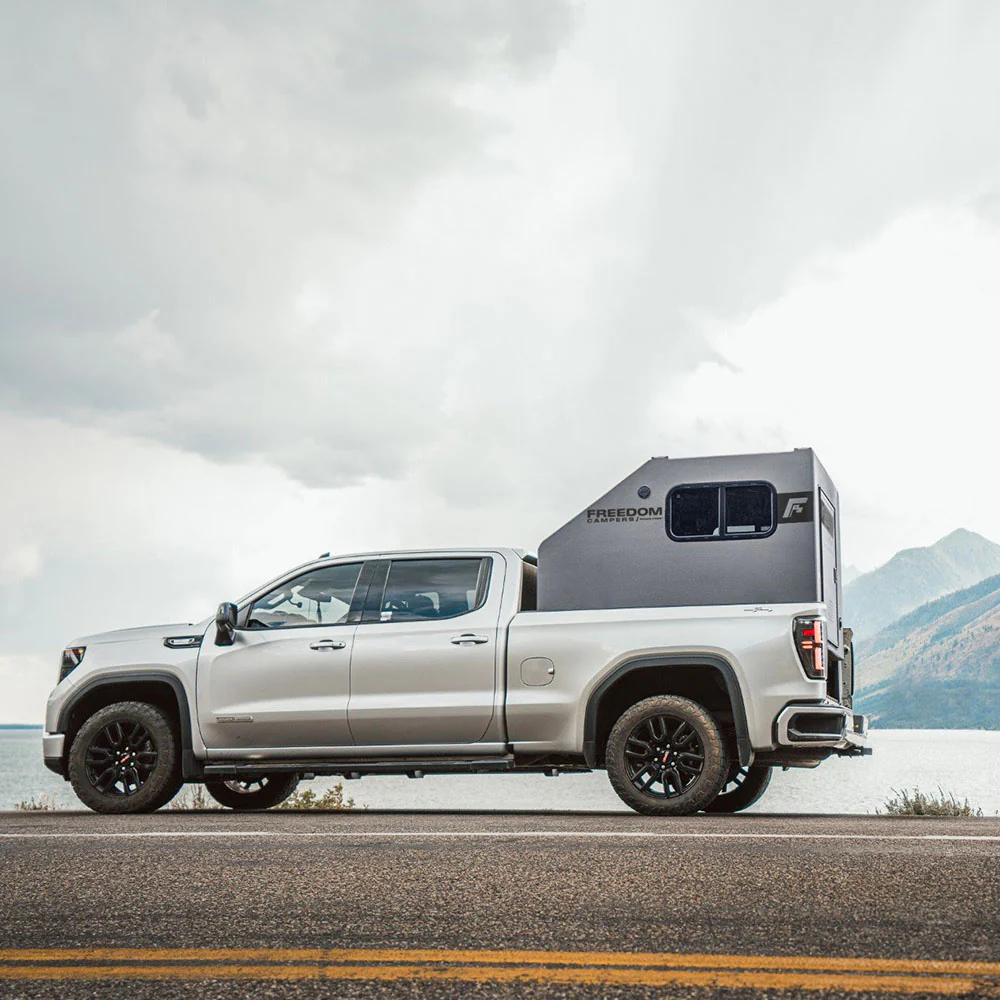
The Freedom Camper is worth examining specifically in a payload context. At 175 lbs for the 48×79 model and 195 lbs for the most popular 58×89 size, it’s among the lightest four-season shelter solutions for a truck bed. For comparison, a standard softshell RTT plus mounting rack typically runs 160-230 lbs combined, and hardshell options with integrated ladder hardware regularly exceed 250 lbs before the mounting system. The Freedom Camper’s low profile also means it doesn’t raise the center of gravity the way a roof-mounted system does. My full Freedom Camper review covers the setup process and real-world performance in detail.
Shelter Options Compared: RTT vs. Slide-In vs. Trailer

Choosing a shelter system isn’t purely a comfort decision once you’ve done a payload audit. Weight, center-of-gravity impact, and tongue weight contribution all affect how your truck handles and how much payload remains for everything else. Each of the three main options makes a different trade on those factors.
Rooftop tents are popular for good reason: quick setup, off the ground, and compatible with most trucks regardless of bed size. However, they sit high, which elevates the center of gravity and increases body roll on uneven terrain. Hardshell options regularly push the total roof load past 200 lbs. Softshell RTTs are lighter but take longer to set up in cold weather. For a thorough look at how these options compare on price, weight, and flexibility, the truck camper vs. teardrop trailer comparison walks through the numbers in detail.
Trailers move the shelter weight off the truck bed entirely, which helps payload on paper. Still, tongue weight counts against the number. For example, a 1,200-lb loaded teardrop trailer with 12% tongue weight sends 144 lbs to the hitch ball. Consequently, for trucks already tight on payload from armor and gear, a trailer shifts the problem rather than solving it. Slide-in campers land in the bed, keep the center of gravity low, and their weight comes entirely off available payload, making the trade-off honest and easy to calculate. Overloaded truck overlanding is a real issue even with trailer setups when the tongue weight math gets ignored.
Save on Your Shelter System
Freedom Camper: 175 lbs, Four-Season Ready
Three sizes for midsize and full-size trucks. The 58×89 fits most full-size beds and sleeps two. Ships to the lower 48 from Lamar, Missouri.
Pros and Cons of Going Lightweight
Pros
- More payload available for water, fuel, food, and gear
- Lower center of gravity improves trail stability and reduces body roll
- Braking distances shorten when total vehicle weight drops
- Suspension stays in its designed operating range, improving articulation
- Tires, bearings, and brake components last longer under lower loads
- Lighter rigs are easier to self-recover when stuck
- Fuel economy improves, especially on long highway drives between trailheads
Cons
- Lighter shelters often cost more per pound than heavier alternatives
- Slide-in campers require a platform in most truck beds (additional setup step)
- Reduced gear capacity forces more deliberate packing choices
- Some lightweight builds sacrifice insulation rating or interior space
- Lighter armor offers less protection than heavier steel options
Final Verdict

The payload problem is real and common. However, it’s almost entirely avoidable with a ten-minute audit before your next trip. Most overlanding rigs carrying a full complement of armor, recovery gear, water, and a rooftop tent are at or past their payload limit before passengers and food. Knowing your numbers doesn’t mean stripping the rig down. It means making informed trade-offs about where the weight goes and why.
Shelter is the most flexible variable in the payload equation. Specifically, a rooftop tent and rack combination adds 170-260 lbs to the roof and raises the center of gravity. Trailers solve the bed problem but introduce tongue weight. By contrast, a lightweight slide-in camper like the Freedom Camper puts 175-195 lbs in the bed, keeps weight low, and leaves significantly more payload for the rest of the kit. On a truck already carrying 300-400 lbs of armor and hardware, that difference is substantial.
The trade-off with going lightweight is mostly financial, not functional. Lighter options tend to cost more upfront, and some minimalist choices require more deliberate packing. However, the performance gains on the trail are consistent. Articulation improves, braking distances shorten, and the suspension operates where it was designed to rather than at the bottom of its travel. Off-road, those are not marginal improvements. They’re the difference between a rig handling well and one feeling heavy and unpredictable on loose terrain.
If your audit shows you’re over payload, the shelter system is the best first place to look. It’s a single-component swap with immediate impact on the total number. The Freedom Camper at $3,499.99 and 175-195 lbs represents one of the most weight-efficient four-season shelter options for a truck, and it’s built and warranted domestically. Start with the audit, run the numbers honestly, and then decide where trimming weight makes the most sense for your specific build.
Ready to Buy?
Check Today’s Price on the Freedom Camper
Backed by a 3-year limited warranty. Built in Lamar, Missouri. Ships to the lower 48 with custom freight options available.
Frequently Asked Questions
What is truck payload capacity and why does it matter for overlanding?
Truck payload capacity is the maximum weight your truck carries beyond its factory curb weight, including passengers, cargo, gear, and tongue weight from a trailer. For overlanders, it matters because a fully equipped rig with armor, recovery gear, water, fuel, and a shelter system frequently approaches or exceeds this limit. Exceeding payload affects braking, handling, suspension performance, and tire life, and it’s a particular problem on off-road terrain where those factors are most consequential.
How do I find my truck’s payload rating?
The payload rating is on the yellow or white placard inside the driver’s door jamb, labeled “combined weight of occupants and cargo.” Alternatively, subtract your truck’s curb weight from the GVWR on that placard. Actual curb weight is often higher than the base spec with factory options like 4WD or a spray-in liner. GVWR vs payload is the core distinction to understand, since both appear on the same sticker and serve different purposes.
Does payload capacity include the driver and passengers?
Yes. Payload includes the combined weight of all occupants, cargo in the bed, accessories, and tongue weight from any attached trailer. Two average-weight passengers add roughly 350-400 lbs to your payload before any gear goes in the truck. That’s an important number to account for early in any payload audit.
What is the lightest slide-in truck bed camper available?
The Freedom Camper is one of the lightest four-season slide-in options available, starting at 175 lbs for the 48×79 model. The most popular 58×89 size weighs 195 lbs. By comparison, purpose-built pop-up truck campers typically start at 900-1,200 lbs, and hardside campers exceed 2,000 lbs. Truck bed camper weight varies widely, and the Freedom Camper’s figure is closer to a rooftop tent than a traditional truck camper, making a significant difference in a payload-constrained build.
How much does a typical overlanding build weigh?
A typical overlanding build adds 700-1,200 lbs to a stock truck. That includes steel bumpers front and rear, rock sliders, skid plates, a rooftop tent and rack, 10 gallons of water, 5 gallons of fuel, plus recovery gear and a tool kit. With two passengers, the total reaches 1,050-1,600 lbs. Many half-ton pickups have payload ratings between 1,500 and 2,200 lbs. A moderately equipped rig is therefore at or near its maximum before food or clothing gets loaded.
How do I reduce my overlanding rig weight without sacrificing capability?
The most impactful changes come from swapping heavy items for lightweight equivalents in the shelter and armor categories. Specifically, replacing a steel front bumper with an aluminum one saves 40-80 lbs. Switching from a hardshell RTT to a slide-in truck bed camper like the Freedom Camper reduces roof load and lowers the center of gravity. Beyond that, auditing water and fuel storage is worthwhile since carrying only what each trip requires instead of maximum capacity saves 30-100 lbs depending on the containers used.
Heads up: Clicking on our affiliate links and exploring our sponsored content helps us at no extra cost to you, and we only recommend gear we’re absolutely crazy about!