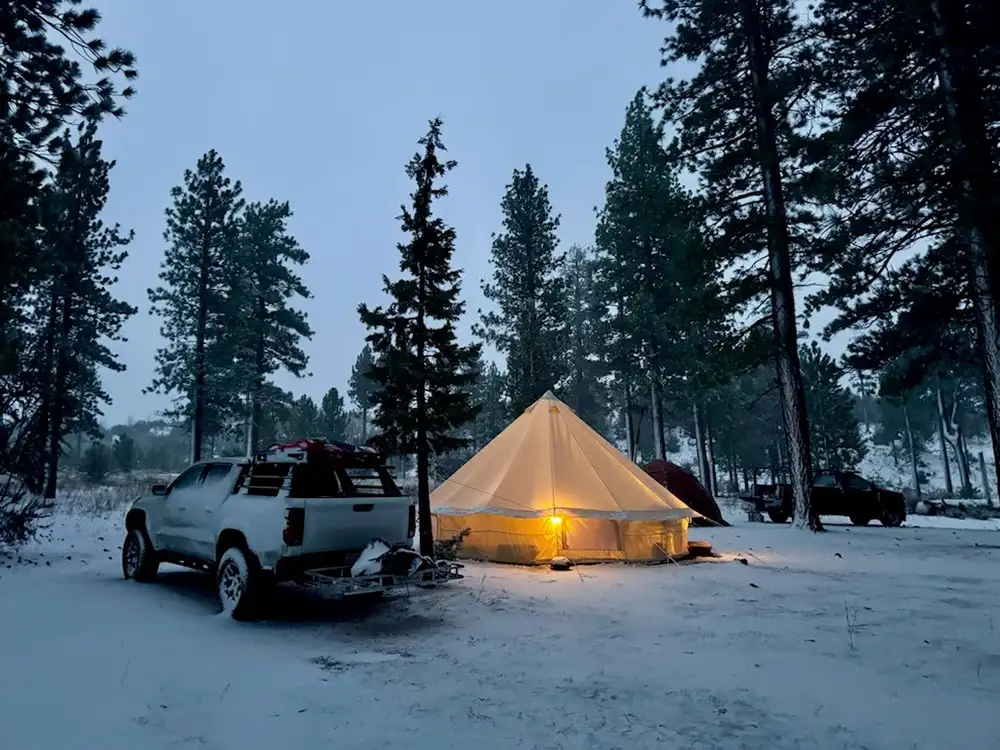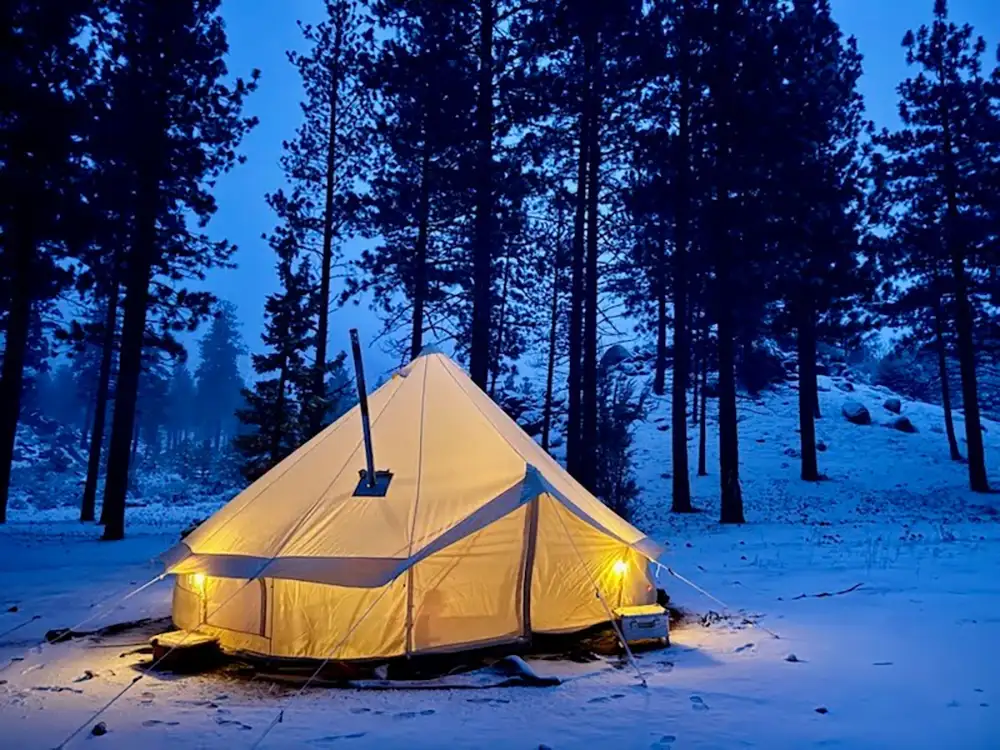
Bell tents have been growing in popularity for good reason. Their simple, timeless design combines a single central pole with a conical shape that creates a spacious interior, offering more flexibility than traditional dome tents without requiring a complicated setup.
Plus, bell tents provide a unique mix of comfort and practicality, making them an ideal choice for everything from family camping trips to extended backcountry adventures. With a bell tent, you can enjoy a shelter that is both functional and comfortable, giving you room to move around, store gear, and even add extra features like stoves or sidewalls.
Modern bell tents have evolved far beyond the traditional cotton canvas models that were once the standard. Today’s tents often feature innovative materials that improve durability, water resistance, and ease of use.
Among these, the Elk Mountain Yukon Bell Tent has proven to be a reliable example of how contemporary bell tents can meet the demands of serious campers. On a recent trip, this tent withstood 42 mph winds—far stronger than what tents of its size typically endure—while keeping me and my companions completely protected and comfortable. It illustrates how careful attention to materials and construction can make a real difference in both performance and usability.
Choosing the right bell tent can feel overwhelming given the variety of options, sizes, and features available. From fabric types to pole construction, ventilation systems to optional upgrades, there are many factors to consider before making a purchase.
This guide walks through the essentials, using the Yukon Bell Tent as a reference point to highlight what to look for and why these elements matter. Whether you are new to bell tents or looking to upgrade your current setup, this guide will help you make informed decisions and ensure that your tent performs well for years to come.
Understanding the Bell Tent Design
Bell tents typically rely on a single center pole for support, creating a wide, open interior that is easy to configure and organize. Unlike wall tents or traditional dome tents, bell tents often do not require a complex frame system, which makes setup faster and easier. The conical shape allows rain to run off efficiently while providing enough vertical space to stand upright near the center.
Bell tents can serve multiple purposes, too, from a comfortable family camping shelter to a base for glamping or outdoor events. The Elk Mountain Yukon Bell Tent demonstrates this versatility, offering a spacious interior without sacrificing portability or ease of assembly.

Choosing the Right Size for Your Bell Tent
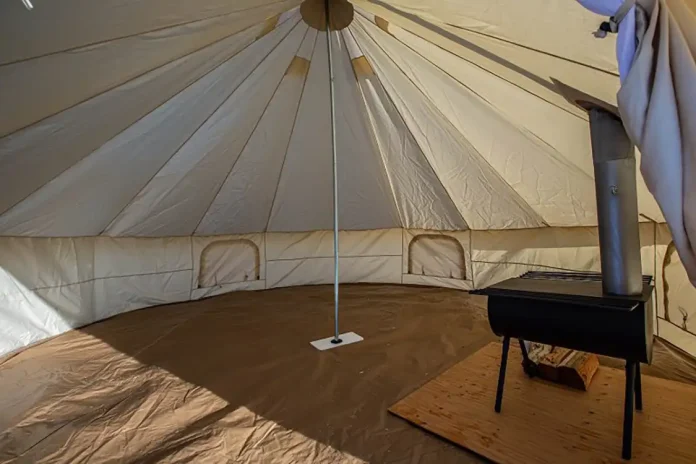
Tent size is one of the most important factors for comfort, and bell tents accommodate your comfort with many different sizes. The Yukon Bell Tent, for example, comes in diameters from 13 to 20 feet. A 13-foot tent provides around 133 square feet of floor space, suitable for two to four campers or a couple with gear. The 16-foot option offers 201 square feet, comfortably accommodating more people or extra furniture. The 20-foot model provides 304 square feet, ideal for larger groups or extended trips. When choosing a size, consider not only sleeping arrangements but also interior movement, gear storage, and furniture placement.
Ceiling height and sidewalls also influence comfort. High central peaks allow adults to stand upright near the center, while sidewalls provide enough headroom to sit comfortably and access doors or windows. For example, the Yukon Bell Tent features three-foot sidewalls, five-foot doorways, and central pole heights ranging from eight to eleven and a half feet, depending on the model. This balance between interior space and structural stability ensures that you can move freely while keeping the tent secure in wind or rain.
Materials and Fabric Options
The type of fabric used in a bell tent affects durability, comfort, and weather resistance. Traditional cotton canvas is breathable but can shrink, be heavy, and is prone to mold and mildew. Modern polyester blends, like Elk Mountain’s Poly Shield Canvas, are lighter, stronger, and more resistant to UV damage. The Poly Shield+ option adds factory-applied treatments for long-lasting resistance to fire, wear, and mildew. These fabrics ensure that tents maintain their shape, strength, and protective qualities season after season.
Material choice also influences interior comfort. Waterproof, breathable canvas helps regulate temperature and reduce condensation. The Yukon Bell Tent’s Poly Shield fabric provides both insulation and moisture resistance, keeping the interior dry during rainstorms and comfortable on hot summer nights. Choosing a high-quality fabric like this is one of the most important decisions for ensuring a tent’s longevity and usability.
Frame and Pole Systems
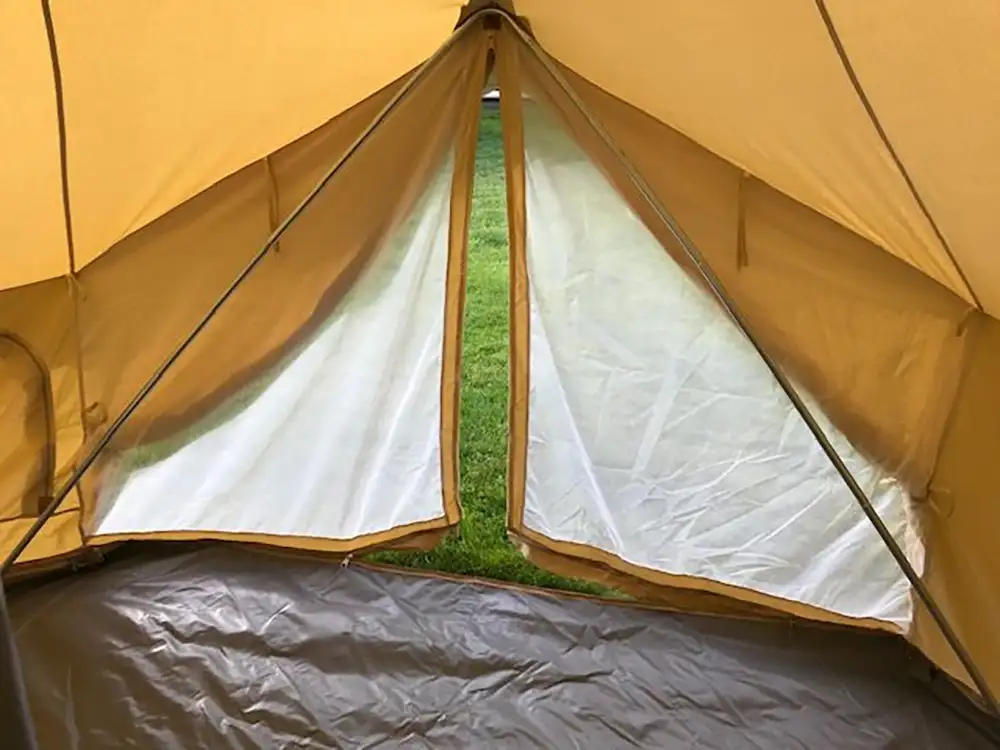
A bell tent’s frame and poles are critical for stability and longevity. Most tents feature a central peak pole and A-frame doorway poles that are typically made from steel or aluminum.
The material used for frames and poles can affect both durability and portability. For example, the Yukon Bell Tent uses a galvanized steel center pole and A-frame doorway poles, which offer a strong yet manageable structure. Rubber gaskets at the top and bottom of the center pole protect the canvas and floor, preventing wear. And with the strength of steel (and correct pole placement and angles) you can rest easy knowing the tent’s structural integrity is intact, especially in wind, snow, or rain.
Ground Protection and Tent Floors
A proper groundsheet is essential for keeping moisture, dirt, and insects out. Some bell tents have removable floors while others are sewn-in. The Yukon Bell Tent features a PVC 540g groundsheet that zips into the tent and curves 3.5 inches up the walls, preventing water ingress. Using quality ground protection like this improves comfort, extends the life of the tent, and ensures a dry, clean interior. Simply put, it’s a superior ground system that provides much more flexibility than a sewn-in floor.
Ventilation, Windows, and Doors

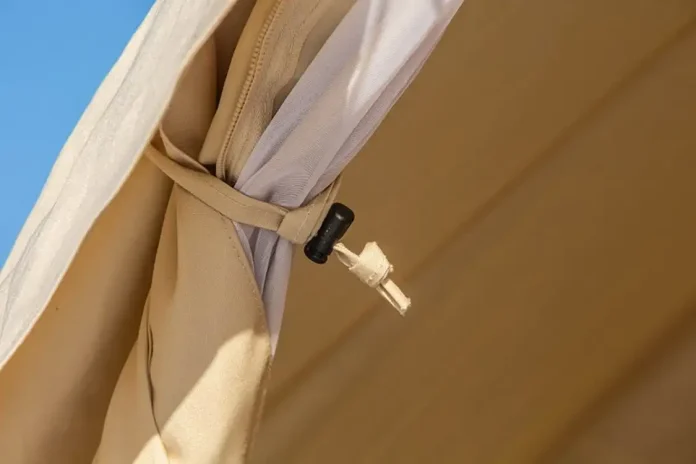
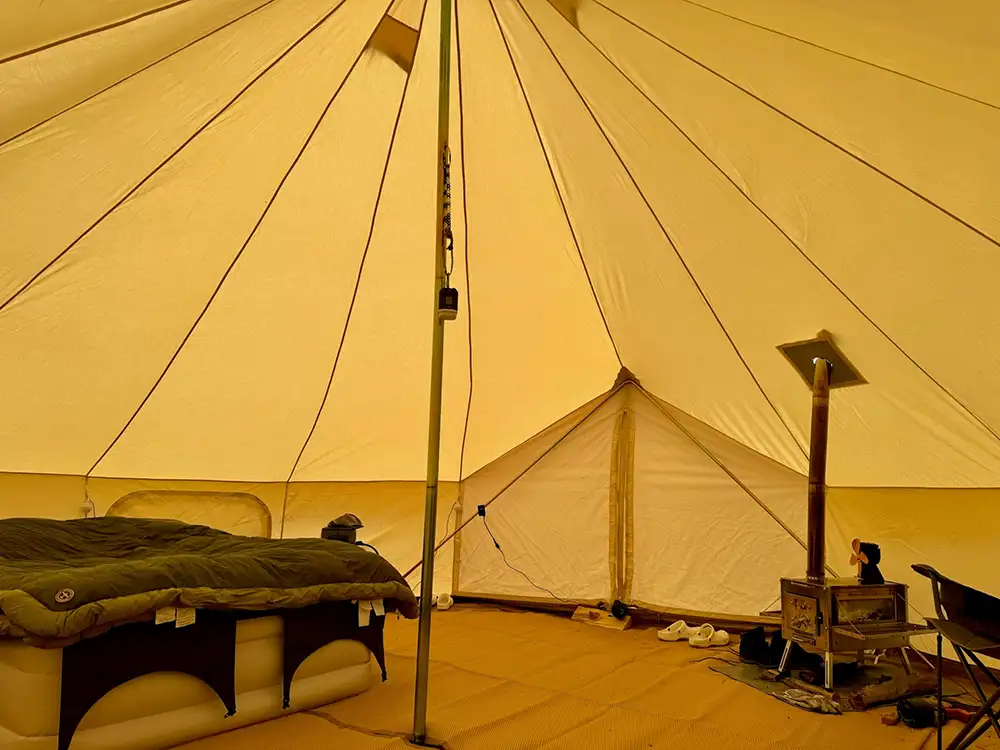
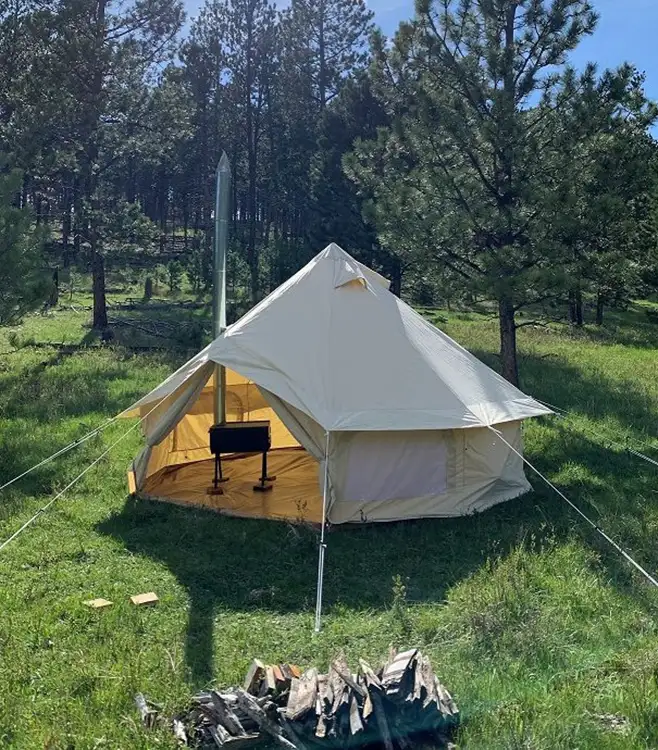
Airflow is critical to prevent condensation and maintain comfort. Many bell tents feature windows, vents, and doors to regulate temperature and keep insects out. The Yukon Bell Tent is one such example with four screened windows and four peak vents, all with mosquito netting, plus a zippered front door that can be tied open. Proper ventilation makes a bell tent usable in both warm and cool conditions while maintaining interior air quality.
Weather Resistance and Durability
A durable bell tent withstands wind, rain, and sun exposure. Reinforced seams, quality stakes, and strong guy ropes all contribute to stability in difficult conditions. The Yukon Bell Tent has again proven its performance here. As noted earlier, it remained secure in 42 mph winds during a recent camping trip. Investing in a tent with high-quality construction and materials like the Yukon ensures safety and comfort during challenging weather—even when the weather gets really wild!
Setup and Portability
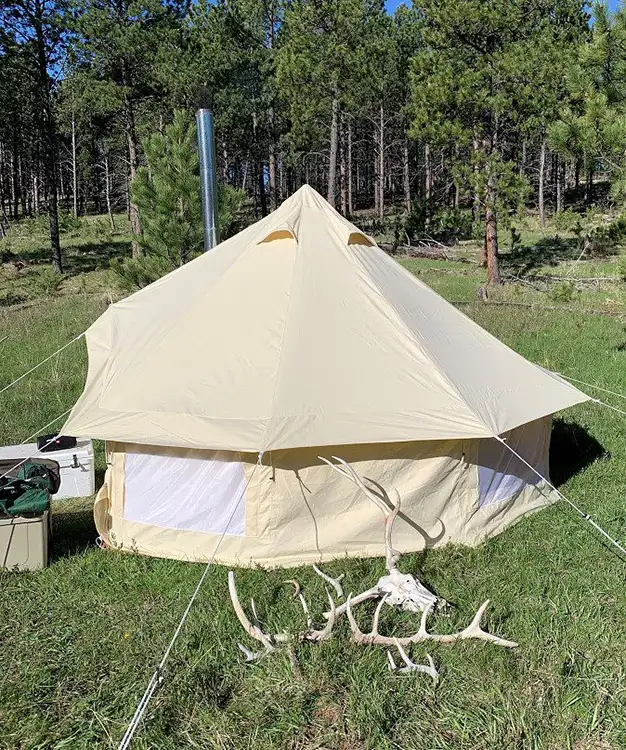
Bell tents are generally easier to set up than wall tents, but size and weight still matter. The Yukon Bell Tent ranges from 80 to 115 pounds depending on size, but with a zippered storage bag for organization, you can quickly and easily move the tent from your vehicle to your campsite and get your tent set up for the night. Before you head out on your first trip with your bell tent, though, practice setting it up so you save time and prevent frustration in the field.
Optional Features and Upgrades
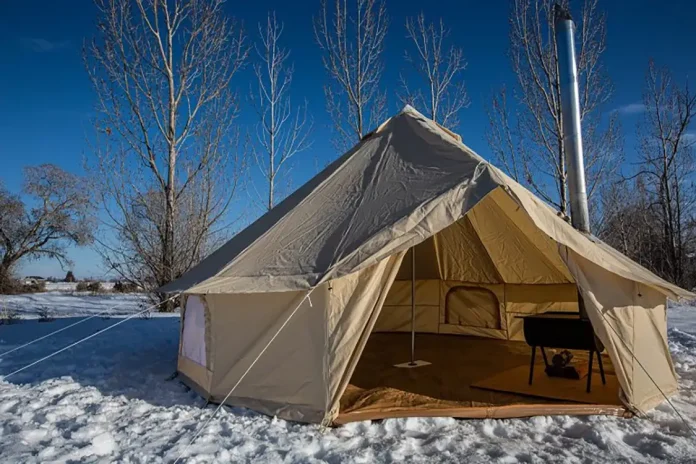
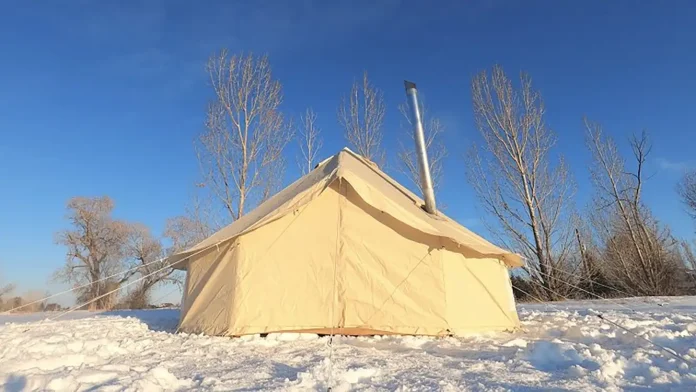
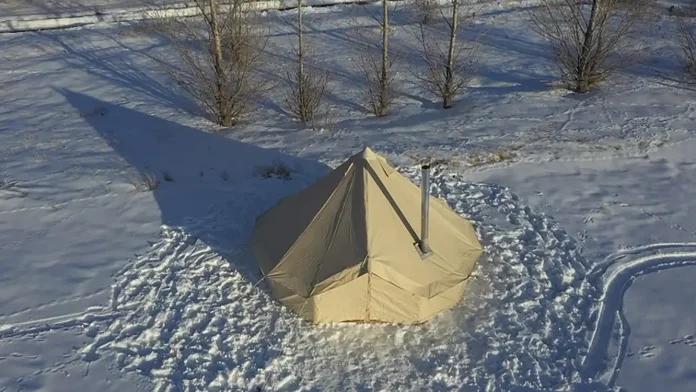
Many bell tents include upgrades like stove pipe jacks, sidewalls, or awnings. The Yukon Bell Tent, for example, has an uncut stove pipe jack to accommodate different stove sizes, providing heating options for colder conditions. Tie-back sidewalls and additional ventilation options allow customization for comfort and usability across seasons, too. These features expand functionality and make the tent adaptable to different environments and year-round usage.
Maintenance and Longevity
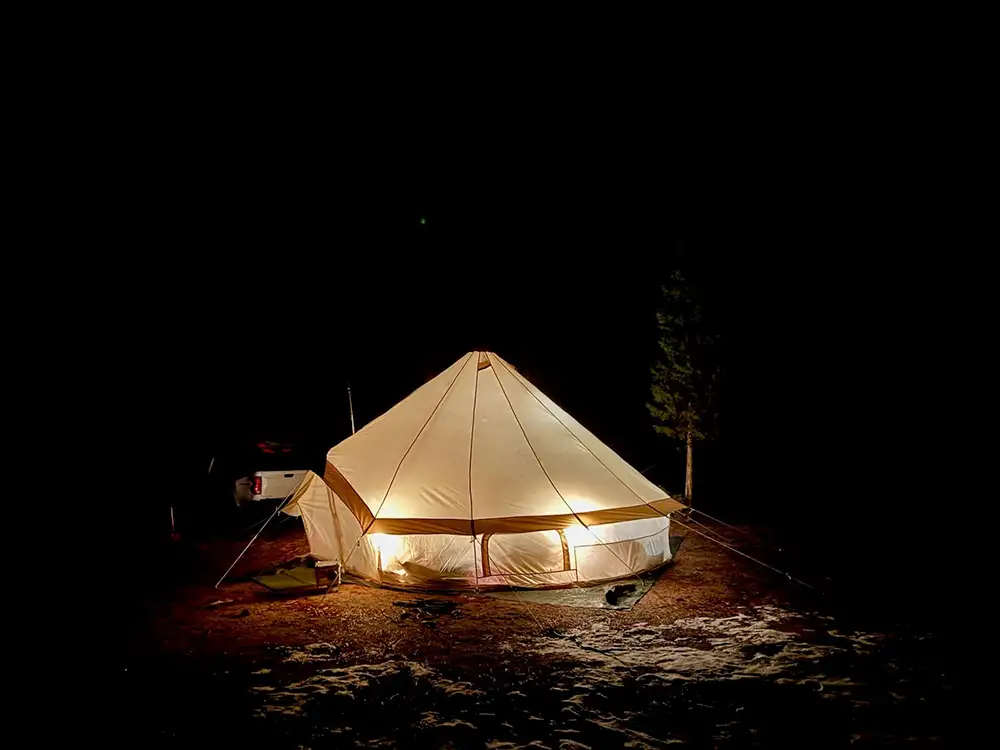
Well-made bell tents like the Elk Mountain Yukon are made to provide years and years of service. But regular care extends the life of a bell tent even further. Proper cleaning, drying, and storage prevent mold, mildew, and fabric damage. Modern fabrics like Poly Shield reduce maintenance requirements, resist UV damage, and maintain strength over time, too. The Yukon Bell Tent’s design and material choices demonstrate how investing in quality fabric and proper care results in a long-lasting tent that performs consistently. That’s precisely what you want when you invest in a bell tent!
Evaluating Budget and Long-Term Value
Evaluating budget and long-term value is a critical step when selecting a bell tent. While it’s tempting to focus solely on the initial purchase price, investing in a high-quality tent can save both money and frustration over time.
Bell tents vary widely in cost, with smaller or lower-end models typically priced under a few hundred dollars, while larger, premium tents can run into the thousands. At first glance, a higher price tag may feel steep, but the long-term benefits of durability, material performance, and included features often outweigh the upfront cost. The Yukon Bell Tent provides a clear example of this principle.
While it is priced higher than entry-level options, it comes with robust construction, high-quality Poly Shield or Poly Shield+ canvas, a complete center pole and door frame system, and all necessary stakes and ropes. This eliminates the need for costly aftermarket upgrades or replacements and ensures the tent performs reliably season after season.
When evaluating the value of a bell tent, consider what is included in the package. Some tents may appear inexpensive, but they often require separate purchases for poles, ground sheets, or guy ropes, adding to the overall cost. The Yukon Bell Tent, by contrast, includes a galvanized steel center pole, A-frame doorway poles, a sewn-in PVC groundsheet, and high-quality guy ropes and stakes. This means that the initial investment covers everything needed to set up a stable, weather-resistant shelter. For campers who plan to spend significant time outdoors or want a tent that can handle varied conditions, this all-inclusive approach represents a better long-term value than piecemeal purchases.
Another factor to weigh is the potential resale or reuse value. Well-constructed bell tents from reputable manufacturers tend to hold their value better than cheaper alternatives. The Yukon Bell Tent’s reputation for quality, combined with its robust materials and performance history, makes it an attractive option for those who might want to resell or upgrade later. A tent that retains structural integrity and appearance over many seasons offers both practical use and long-term financial value, making the initial higher cost worthwhile.
Ultimately, evaluating budget and long-term value is about looking beyond the sticker price and considering the total cost of ownership. A bell tent like the Yukon Bell Tent demonstrates how investing in quality materials, thoughtful design, and complete setup components can provide comfort, reliability, and versatility for years, making it a smart choice for serious campers who want to maximize both performance and value.
Making the Right Choice for Your Camping Adventures
Choosing the right bell tent means matching the tent’s features, size, and durability to your camping style and the environments you plan to visit. It’s not just about picking the largest or fanciest option; it’s about selecting a tent that will keep you comfortable, safe, and well-equipped for your trips. The Yukon Bell Tent provides a good example of this balance, offering different sizes, durable materials, and thoughtful features that suit a wide range of campers, from solo adventurers to families or small groups.
Consider your typical camping conditions when evaluating a bell tent. Smaller models like the 13-foot Yukon Bell Tent are great for couples or solo trips, while the 16- and 20-foot options provide ample space for families, gear, and even indoor activities during bad weather.
Weather resistance is critical, too: the Yukon Bell Tent’s Poly Shield or Poly Shield+ canvas, combined with sturdy galvanized steel poles, has proven capable of withstanding high winds and heavy rain, making it reliable in challenging conditions. Ventilation and airflow are equally important. The Yukon Bell Tent’s screened windows, peak vents, and zippered front door allow campers to manage temperature and moisture, keeping the interior comfortable in both hot and cool climates.
Ease of setup, optional features, and long-term usability also influence the right choice. Features like stove pipe jacks, tie-back sidewalls, and awnings make the tent versatile for different seasons and camping styles. By considering size, materials, ventilation, and adaptability, you can select a bell tent like the Yukon that enhances every camping trip, providing comfort and protection for you and your family for years to come!