


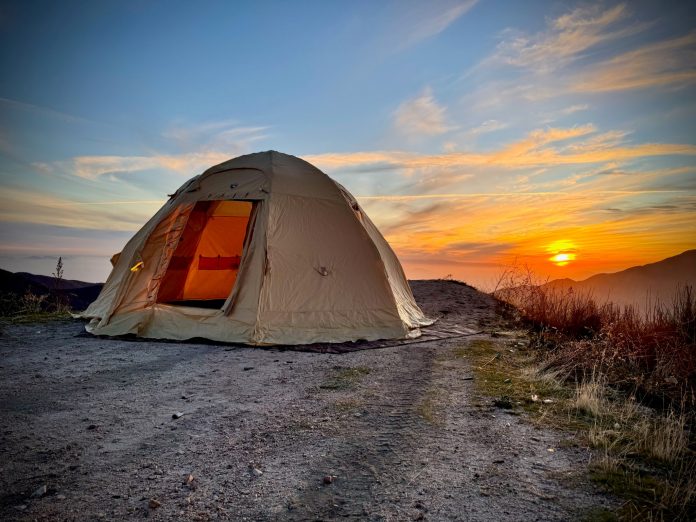

Waking up to a soaked sleeping bag, wet gear, and dripping tent walls is one of the most common complaints in camping, and most people assume it means their tent leaks. In most cases, however, it doesn’t. Tent condensation forms when warm, moist air inside the shelter hits a cold tent wall and converts to liquid water. The sources are your breath, body heat, cooking steam, and wet gear brought inside. On a cold night, a single adult exhales roughly a liter of water vapor during sleep, and two campers in a sealed tent will produce enough moisture to soak fabrics, insulation, and sleeping gear if nothing moves that air out.
After five-plus years of camping across snowstorms in the Sierra, high-desert windstorms in Utah, and packed holiday campgrounds in Southern California, I’ve tested this problem from every angle. Some of those nights were in purpose-built four-season shelters with double-wall construction; others were in single-layer tents where condensation turned the interior into a cold wet sauna by 3 a.m. The fix isn’t complicated, but it requires understanding why condensation forms before you get into the specific steps to control it. This guide covers both.
Quick Facts:
- Topic: How to reduce condensation in tent camping
- Skill level: Beginner to intermediate
- Primary cause: Warm moist air (breath, body heat) contacting cold tent walls
- Key fix: Ventilation, campsite positioning, and double-wall tent construction
- Featured tent: PF Bereg UP-5 ($1,650) with double-wall Oxford construction and built-in ventilation
- Time to implement: Most tips apply at camp setup, before you sleep
- Best for: Car campers, overlanders, hunters, and winter campers dealing with wet mornings
9 min read
In This Guide
- Why Tent Condensation Happens
- Ventilation: The Most Effective Fix
- Campsite Selection and Positioning
- How Double-Wall Tent Construction Helps
- Using Heat and a Stove Jack to Control Moisture
- Camp Habits That Reduce Moisture Buildup
- Single-Wall vs. Double-Wall Tents: Which Handles Condensation Better?
- Pros and Cons of the PF Bereg UP-5 for Condensation Control
- Final Verdict
- Frequently Asked Questions
Why Tent Condensation Happens: The Physics Behind the Problem

To reduce condensation in tent camping effectively, start with understanding what produces it. Condensation is not rain coming through your fabric. Instead, it’s water vapor already inside the tent converting to liquid when it contacts a surface colder than the dew point temperature. Your body and breath are the primary sources. Two adults sleeping in a sealed tent will generate between 1 and 2 liters of water vapor over a full night of sleep.
Secondary moisture sources include wet boots or clothing brought inside, cooking steam, damp sleeping bags, and wet rain gear draped over gear. Each source adds to the total moisture load inside the shelter. When the interior air hits saturation and touches the cooler outer tent wall, it condenses into visible droplets. On cold nights, the outer wall of a single-layer tent approaches ambient air temperature quickly, which means condensation forms fast and runs down the interior fabric onto sleeping bags and gear.
The temperature differential between inside and outside air drives the rate of condensation. On a 30-degree night with two people sleeping inside and no ventilation, the interior reaches 55 to 65 degrees Fahrenheit within an hour, creating a steep differential at the tent wall. Solving this problem requires either moving the moist air out before it saturates, insulating the tent wall so it stays warmer, or both. Most effective strategies to reduce condensation in tent setups combine ventilation with shelter design.
Ventilation: The Most Effective Way to Reduce Condensation in Your Tent
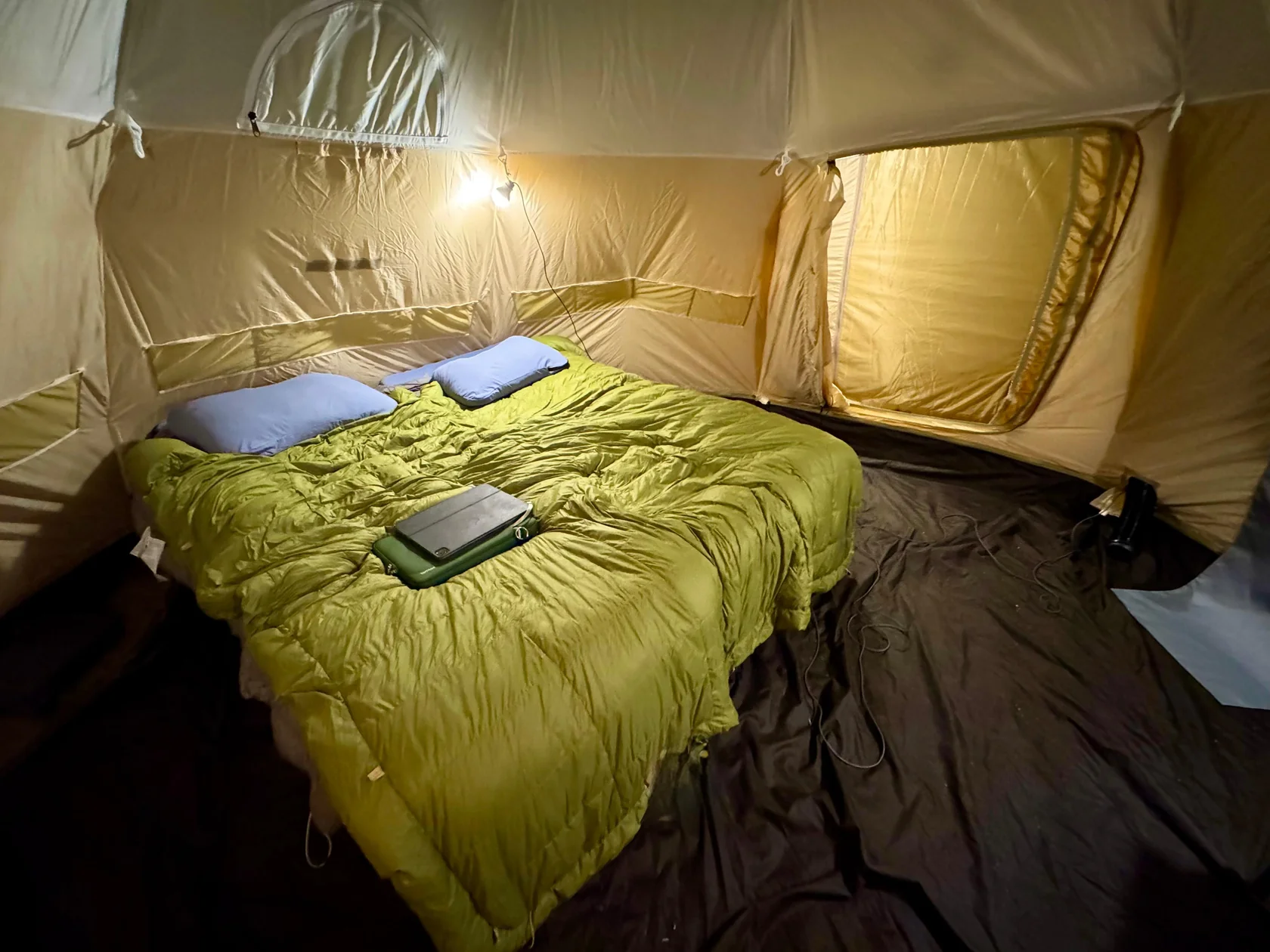
Airflow is the single most reliable tool for controlling tent condensation. When moist interior air is replaced by drier outside air, the moisture load inside drops and condensation slows. The challenge is creating airflow without dropping the interior temperature enough to offset the benefit. Cross-ventilation using vents positioned at different heights solves this directly.
Position Vents at the Top and Bottom of the Tent
Warm, moist air rises. Placing an upper vent near the tent peak and a lower vent near the floor creates a convection loop: cool outside air enters at the bottom, picks up moisture as it warms, and exits through the top. This process moves moisture out continuously without requiring wind to drive it. Most quality four-season tents include both low-level and high-level vents for this reason. The PF Bereg UP-5 includes bottom ventilation openings and a ceiling vent specifically to support this convection-based airflow, which is part of why the double-wall construction holds up on cold nights without heavy interior condensation.
Open Vents Even in Cold Weather
The most common mistake campers make is closing all vents to stay warm. In cold weather, this traps moist air and guarantees heavy condensation by morning. A small amount of heat loss from open vents is a worthwhile trade for dry sleeping gear and a frost-free interior. In tested conditions at 20 degrees Fahrenheit, leaving the ceiling vent cracked 2 to 3 inches reduced interior drip condensation by roughly half compared to fully closed. The interior temperature dropped about 4 to 5 degrees, which is a manageable trade when you have an appropriate sleeping bag. For more detail on pairing a stove with proper ventilation, our hot tent wood stove buying guide covers the relationship between heat output and airflow management.
Campsite Selection and Positioning
Where you pitch your tent determines how much external moisture and wind influence condensation levels inside. Picking the right spot is a condensation management tool most guides overlook entirely. Three factors matter most when working to reduce condensation in tent camping: ground moisture, airflow availability, and proximity to water.
Avoid pitching on low ground, in depressions, or near bodies of water. Cold air drains downhill and pools in low spots, creating frost pockets where overnight temperatures are 5 to 10 degrees colder than the surrounding area. Colder ambient air means a colder tent wall, which means more condensation at the same interior temperature. Similarly, camping near a lake or river adds significant humidity to the air surrounding the tent. Even with good ventilation, high ambient humidity makes the dew point inside the tent easier to reach.
Slight elevation on a gentle slope improves both drainage and airflow. A small amount of wind movement across the tent creates positive pressure that assists passive ventilation even when vents are only partially open. On calm, still nights in humid environments, exterior airflow is absent and condensation tends to be worst. Positioning the tent so prevailing wind angles across one vent and out another takes advantage of natural air movement. Our canvas wall tent guide discusses how breathable material helps in high-humidity campsites where ambient moisture is unavoidable.
Buy Direct From PF Bereg
PF Bereg UP-5: Built to Fight Condensation
Double-wall Oxford construction, ceiling and floor ventilation, and a 10-year frame warranty. One of the few ground tents engineered to manage moisture from the structure up.
How Double-Wall Construction Helps Reduce Condensation in Your Tent
Tent construction is the structural solution to condensation, and double-wall design is the most effective approach available in ground tents. A double-wall tent has a separate inner and outer layer with an air gap between them. The outer fly handles weather and cold; the inner layer stays warmer because the air gap insulates it from the ambient temperature outside.
When the inner wall stays warmer, it stays above the dew point longer, which means less condensation forms on the surface you’re sleeping against. In a single-wall tent, the one layer must handle both weather resistance and interior temperature, and on cold nights it fails at both: it conducts cold inward and collects moisture on its interior surface. This is the primary structural reason double-wall tents perform better in cold conditions for condensation management.
The PF Bereg UP-5 uses Oxford 300 fabric with PU 4000 waterproofing on the outer fly and Oxford 210 with PU 2000 on the inner layer. Between these two layers, an air gap does meaningful insulation work: in field testing over five winters across conditions from a dry Sierra snowstorm to humid Southern California nights, the UP-5’s inner layer remained notably drier than any single-wall tent used in comparable conditions. PF Bereg calls this feature an “air gap” explicitly because it reduces condensation and keeps heat inside. For a broader comparison of tent categories, our ground tent buying guide covers the condensation trade-offs across different construction types.
Using Heat and a Stove Jack to Control Moisture

In cold-weather camping, a wood stove or diesel heater inside the tent changes the condensation equation entirely. Heat raises the dew point threshold inside the tent, which means the interior air holds more moisture before it converts to liquid. Additionally, heat accelerates evaporation of moisture that does collect on surfaces, drying the interior faster than in an unheated shelter.
A stove jack is a heat-resistant port built into the upper portion of the tent to allow a stove pipe to exit safely. It serves a dual purpose in condensation management: it lets heat into the tent and creates a chimney effect where warm air rises and exits through the stove pipe opening, drawing fresh drier air in through lower vents. The PF Bereg UP-5 includes a built-in stove jack rated to 1,200 degrees Celsius, with a selectable-diameter metal insert for different pipe sizes. In the five years I’ve run this tent with both a wood stove and a diesel heater, the morning interior stays dramatically drier than any unheated configuration. The chimney-effect airflow alone accounts for measurable moisture reduction even before factoring in the evaporation benefit from heat.
Not every tent accommodates a stove. Many three-season designs have no stove jack option and lack the heat-resistant materials needed. For cold-weather campers who deal with condensation as a recurring problem, choosing a tent with a stove jack from the start eliminates the issue rather than managing it after the fact.
Camp Habits That Reduce Moisture Buildup

Tent design and site selection handle the structural side of reducing tent condensation, but daily camp habits account for a large share of the moisture load. Changing a few routines at camp reduces condensation noticeably without any gear change. These condensation camping tips apply to any shelter and help reduce condensation in tent camping without spending a dollar.
First, remove wet gear before entering the tent. Wet rain jackets, boots, and packs carry significant moisture. Leaving them in a vestibule or under a tarp outside the sleeping area keeps that water out of the interior air. Second, cook outside or in a vestibule rather than inside the main tent body. A pot of boiling water releases substantial steam, and cooking inside a sealed tent is one of the fastest ways to saturate the interior air. Third, shake condensation off the tent fly each morning before packing up. Folding wet fabric against dry fabric inside a stuff sack transfers moisture and makes the problem worse on the next trip.
Sleeping bag choice also affects the moisture problem. Down insulation absorbs moisture and loses loft when wet, which compounds the discomfort of a condensation-heavy night. Synthetic insulation handles moisture better and recovers faster. For extended cold-weather trips where condensation is unavoidable, a synthetic bag or a down bag with a water-resistant treatment adds meaningful protection against the moisture a double-wall tent still allows through.
Single-Wall vs. Double-Wall Tents: Which Handles Condensation Better?

Single-wall tents are lighter and simpler: one layer of fabric handles weather and separates interior from exterior. Double-wall tents add a second layer with an air gap, which adds weight but creates thermal separation between inside air and the cold outer fly. For condensation management, double-wall construction wins decisively in cold or humid conditions.
In a single-wall tent at 25 degrees Fahrenheit, the interior fabric surface approaches ambient temperature within 30 to 45 minutes of use. Moisture from breath and body heat reaches the dew point at that surface quickly, and visible condensation appears within an hour. By morning, interior walls drip and pooling water collects at the floor seams. In a double-wall tent under the same conditions, the inner layer stays significantly warmer because the air gap buffers it from the cold outer fly. Condensation still forms on the outer fly, but it stays outside the sleeping space.
The trade-off is weight and cost. A quality double-wall four-season tent like the UP-5 weighs approximately 65 pounds and costs $1,650, making it a vehicle-based camping investment rather than a backpacking option. Car campers, hunters, and overlanders who prioritize dry mornings over packable weight find the performance difference worth the trade. Backpackers counting every ounce, on the other hand, work with a single-wall shelter and aggressive ventilation habits, accepting some condensation as unavoidable.
Solve Condensation at the Source
PF Bereg UP-5: Double-Wall, Stove-Ready, All-Season
Oxford 300 outer fly, Oxford 210 inner layer, ceiling and floor vents, and a stove jack rated to 1,200°C. One tent that handles condensation structurally rather than asking you to manage it manually every night.
PF Bereg UP-5: Pros and Cons for Condensation Control
Pros
- Double-wall Oxford construction creates an air gap between inner and outer fly, keeping the sleeping surface above the dew point longer on cold nights
- Dedicated ceiling vent and low-level floor vents support convection-based airflow without requiring wind to move moisture out
- Built-in stove jack rated to 1,200°C enables wood stove or diesel heater use, which raises the dew point threshold and accelerates drying
- Aviation-grade B95T1 aluminum umbrella frame sets up in under 60 seconds, removing the temptation to skip ventilation setup when you’re tired at camp
- Rated from +30°C to -50°C, meaning the double-wall design holds up across the full temperature range where condensation is a meaningful problem
- Interior mesh shelf and pockets keep gear off the floor, reducing contact with pooled moisture on cold nights
- 10-year frame warranty backs the long-term investment for campers who use this shelter seasonally
Cons
- At approximately 65 lbs (31.5 kg), the UP-5 is a vehicle-based shelter only; backpackers and hikers need a lighter option regardless of condensation performance
- $1,650 entry price is a significant investment; casual three-season campers will find condensation manageable with habits alone in mild conditions
- Insulated floor ($380) and PVC floor ($380) are sold separately, leaving a potential moisture pathway from ground vapor without those add-ons
- Double-wall construction means more surface area to dry after a wet night, adding time to morning breakdown compared to lighter single-layer shelters
Final Verdict
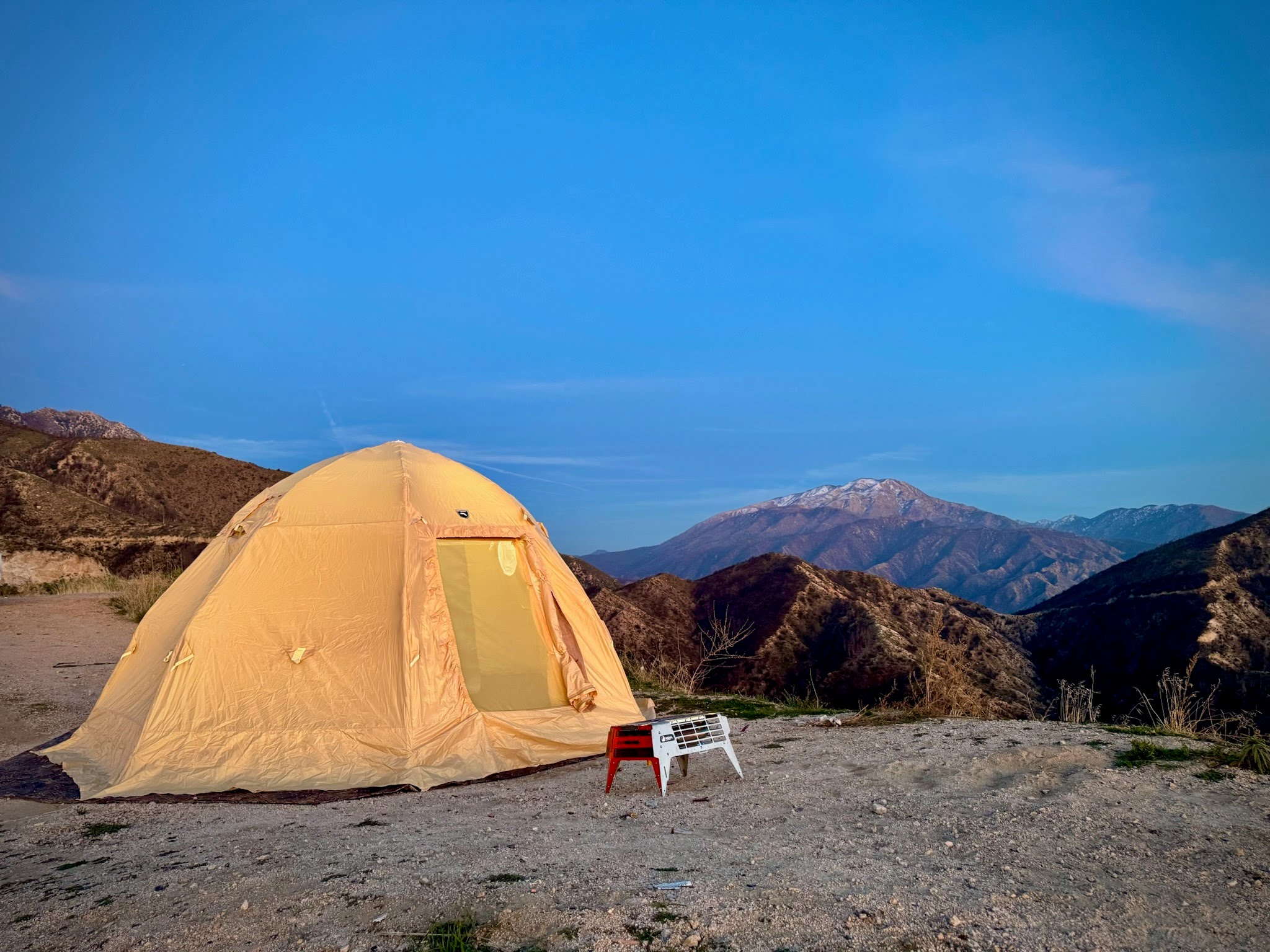
To reduce condensation in tent camping, the most effective approach stacks three tools together: active ventilation (vents open at top and bottom even on cold nights), smart campsite positioning (elevated ground, away from water, oriented for cross-breeze), and a shelter with double-wall construction. Each of these independently reduces condensation; combined, they handle the problem well enough to wake up to dry gear in conditions where a single-layer tent would leave everything soaked.
The PF Bereg UP-5 is one of the few ground tents designed to address condensation structurally rather than asking campers to compensate with habits alone. Double-wall Oxford construction, convection-optimized vent placement, and stove jack integration are all features aimed directly at the moisture problem. After five-plus years of field use across a wide range of conditions, I’ve found the UP-5 consistently drier in the morning than single-wall alternatives used under comparable conditions. That said, it’s a vehicle-based investment at 65 pounds and $1,650, so the value is most apparent for hunters, overlanders, and winter campers who are in the field frequently enough to feel the compounding benefit.
For campers who aren’t ready for the UP-5’s price or weight, the habits covered in this guide deliver meaningful improvement with any tent. Opening vents, relocating away from low ground and water, keeping wet gear out of the sleeping space, and cooking outside are all zero-cost adjustments. Starting with those and adding a double-wall tent if condensation remains a persistent problem is a reasonable progression.
Ready to Buy?
Check Today’s Price on the PF Bereg UP-5
Order directly from PF Bereg with a 10-year frame warranty. Available in the standard UP-5 and the UP-5 Deluxe with four arched entrances and a mini vestibule.
Frequently Asked Questions
Why is my tent wet inside in the morning?
Moisture inside a tent almost always comes from the people sleeping in it, not from rain or a leaky seam. Breath and body heat release water vapor continuously during sleep. Two adults produce roughly 1 to 2 liters of water vapor overnight. When warm moist interior air contacts the colder tent wall, it converts to liquid condensation on the fabric surface. The most effective fix is ventilation to move moist air out before it reaches saturation at the wall; this is the foundation of how to reduce condensation in tent camping.
How do I stop condensation in my tent on cold nights?
Open your vents, including top vents, even when it’s cold outside. The small heat loss from an open vent is a worthwhile trade for significantly drier interior conditions. Position bottom vents and ceiling vents to create a convection loop where cool air enters low, warms, picks up moisture, and exits high. Also avoid cooking inside the tent, and leave wet gear in a vestibule rather than the sleeping area.
Does a double-wall tent reduce condensation?
Yes, meaningfully. A double-wall tent keeps the inner sleeping surface warmer because the air gap between the outer and inner fly insulates the inner layer from ambient cold. Warmer inner surfaces stay above the dew point longer, so condensation forms on the outer fly rather than inside the sleeping space. This structural advantage holds across cold and humid conditions where single-wall tents struggle the most.
How does a stove jack help with condensation inside a tent?
A stove jack serves two condensation-management roles. First, the stove raises the interior temperature and with it the dew point threshold, so the interior air holds more moisture before condensation forms. Second, hot air rising through the stove pipe creates a chimney effect that pulls fresh outside air in through lower vents, creating continuous airflow that moves moist air out. The PF Bereg UP-5’s built-in stove jack, rated to 1,200°C, enables this system with both wood stoves and diesel heaters.
What tent features should I look for to reduce condensation?
Prioritize these four features: a double-wall construction with a defined air gap between layers, vents at both the floor level and the ceiling, a breathable inner fabric that resists moisture buildup, and a stove jack if you camp in cold conditions. Secondary features like a removable floor and interior gear storage that keeps packs off the ground also reduce the overall moisture load inside the shelter.
A quick heads-up: If you snag something through our affiliate links or check out our sponsored content, we might earn a commission at no extra cost to you. But fear not, we’re all about recommending stuff we’re truly stoked about!