


Quick Facts:
- Topic: Choosing, sizing, sealing, and mounting overland storage boxes
- Sizing rule: Measure the space, compare the case’s outside dimensions, then check its inside dimensions against your gear
- Wall loss: Expect up to 3 inches less per inside dimension on small cases, up to 5 inches on roof cases, and 7.4 inches on wheeled trunks
- Seal to look for: A lid gasket or O-ring; IP67 means dust-tight and 30 minutes under 3.3 feet of water
- Roof cases: Roam Adventure Co. Rugged Cases and Pelican Cargo cases both lock to a rack with their own quick-release mounts
- Tie-down: Cam straps through handles or lid channels in the bed or cargo area
- Roof limit: Your vehicle’s roof rating, not the rack’s, sets the ceiling
9 min read
In This Guide
- Why Overland Storage Boxes Beat Loose Gear
- Molded Case, Tote-Style Box, or Budget Trunk
- How to Size Overland Storage Boxes for Your Rig
- What IP Ratings Mean on an Overland Case
- Foam, Dividers, or Open Bins Inside an Overland Case
- Mounting Overland Storage Boxes So They Stay Put
- Hard Cases vs. Soft Bags and Plastic Totes
- Final Thoughts
- Overland Storage Boxes FAQ
Why Overland Storage Boxes Beat Loose Gear
Overland storage boxes turn loose recovery gear, cook kit, and spares into a system. You pack it once and find it in the dark. In practice, a good case keeps dust out, stays put on washboard roads, and stacks with its neighbors. However, the wrong case wastes bed space, lets water in, or cracks at the latches.
This guide covers three decisions, in the order you make them. Sizing comes first, since wall thickness steals inside space. The seal also has to match where the case rides. Then comes mounting, so each case survives a rough road.
I drive a 2025 Chevy Colorado ZR2, so the sizing math below uses its bed as a worked example. Chevy lists the current Colorado bed at 45.5 inches between the wheel wells and 61.7 inches long. For a different truck or SUV, the method stays the same; only the numbers change.
The Roam and Pelican Overland Storage Boxes in This Guide
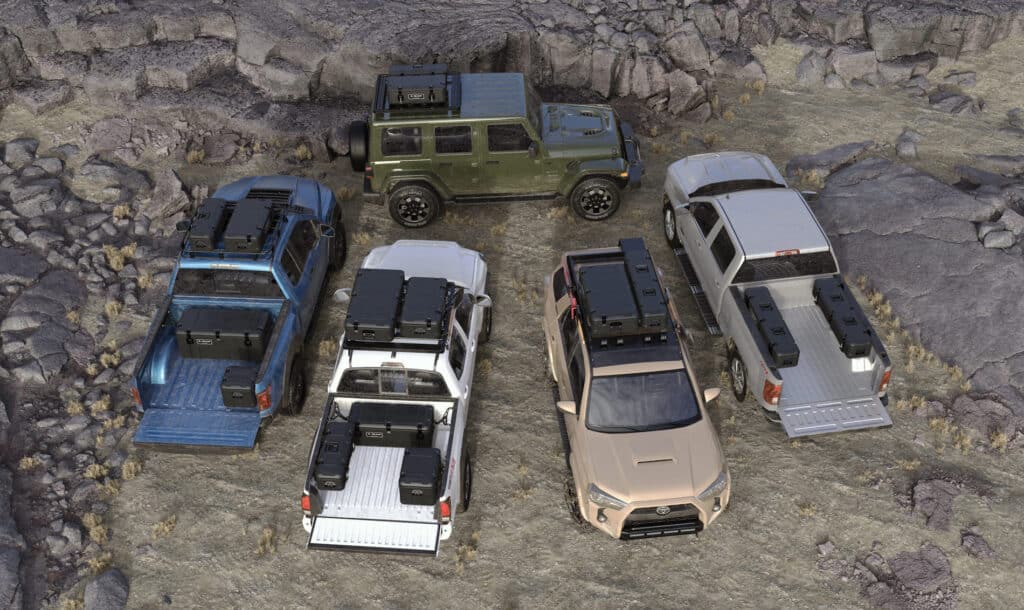
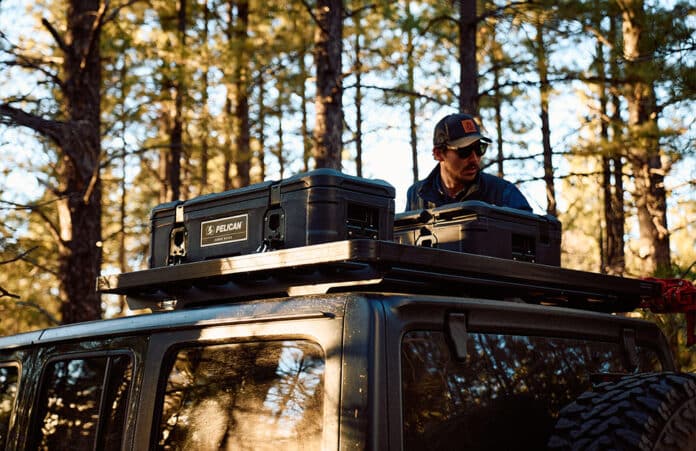
On the roof, this guide uses two cases built for the job. The Roam Adventure Co. Rugged Case and the Pelican Cargo case are both low-profile, roto-molded boxes with gasketed lids. Each brand also sells a locking, quick-release mount for roof racks. Pelican shows its Cargo cases on a Jeep Wrangler, and one JL Wrangler owner on the forums reports Roam’s mounts fit his Pioneer platform rack.
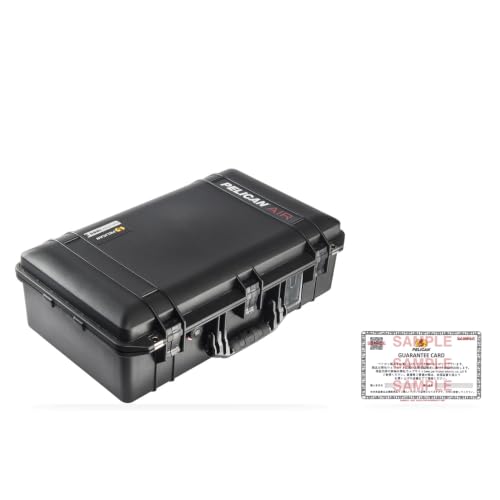
For electronics, the Pelican 1550 Protector Case is the classic molded case with an O-ring and pressure valve. In the bed, the Front Runner Wolf Pack Pro is the gasketed tote-style box. The large Plano Sportsman’s Trunk, meanwhile, is the budget box with no gasket. It rides best under a tonneau or inside the vehicle.
The three cases below cover the jobs most rigs split gear into. The Roam 95L Rugged Case and the Pelican BX140R Cargo Case ride on the roof, while the Pelican 1550 keeps a radio or camera sealed inside the cab.
The Roam and Pelican cases used as examples in this guide


Molded Case, Tote-Style Box, or Budget Trunk
Each case type trades protection, weight, and price differently. For example, the Pelican 1550 molded case carries an IP67 rating, a silicone O-ring, and a pressure valve. Pelican also rates it from -40°F to 190°F. Yet it weighs 11.9 pounds with foam before you pack anything.
Tote-style boxes sit in the middle. The Wolf Pack Pro weighs 8.1 pounds, and Dometic’s Front Runner line describes it as water and dust resistant. Notably, the Pro added a rubber lid seal and four aluminum latches. Those changes fixed the two biggest gripes about the original Wolf Pack: broken plastic latches and dust past an unsealed lid.
Roof cargo cases form their own class. Roam builds the 95L Rugged Case from LLDPE with steel lockable latches and a gasket it describes as dust and water resistant. It weighs 25 pounds empty. Pelican’s BX140R Cargo Case weighs 35.1 pounds and seals its lid with an EPDM gasket. Pelican tests its Cargo line to MIL-STD-810G against 70 mph wind-blown rain and dust, which matches life on a roof at highway speed.
Budget trunks and totes cost the least, and owners call them good enough inside a covered bed or cab. Still, cheap tote lids crack in cold weather, and clear tubs turn brittle in the sun. Therefore, keep them under cover.
For me, the lid gasket is the one feature worth paying extra for. Owners agree it separates a dust-tight box from a dusty one. Also, pick one case family early. Wolf Pack Pros do not stack on original Wolf Packs, so mixing generations leaves stacks wobbly.
How to Size Overland Storage Boxes for Your Rig
Skip the tape measure, and you end up with a useless gap or a lid hitting the tonneau cover. Before you shop, settle what rides along with an off-road packing list, because contents decide the box count.
Measure the Space First
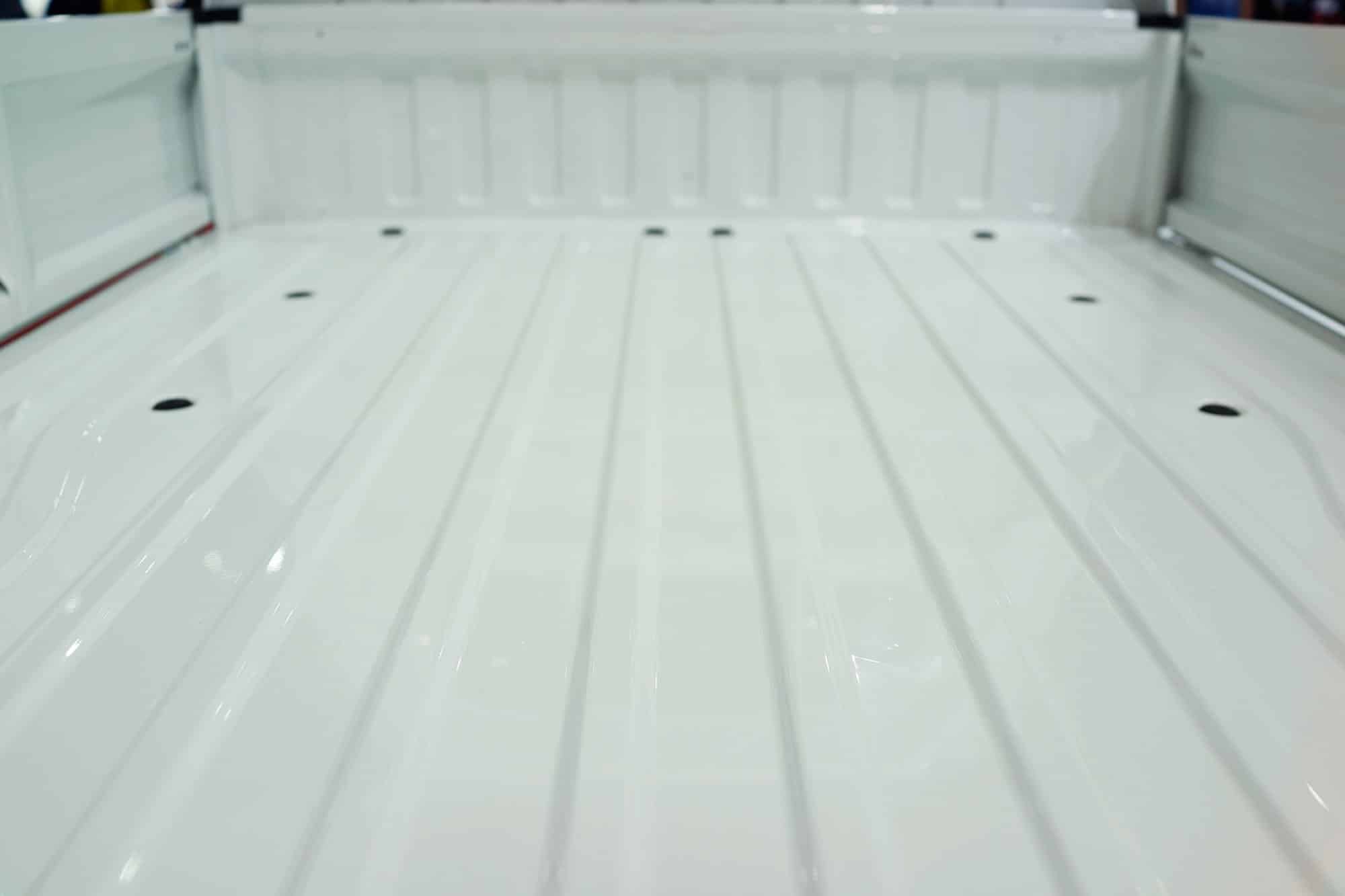
Take three measurements. First, measure the width between the wheel wells or cargo trim. Then measure the length to the tailgate and the height under the tonneau or cover. For example, on my Colorado ZR2, the 45.5-inch width between the wheel wells is the number to beat. Two Wolf Pack Pros end to end measure 40.2 inches, which leaves 5.3 inches for straps and fingers.
Roof cases need the same check. The Roam 95L measures 47.16 inches wide outside, and the Pelican BX140R measures 46 inches. Both run wider than the 45.5-inch gap in my Colorado, so in a bed they ride lengthwise. On a roof rack, measure the usable length of the crossbars or platform instead. One Roam owner mounted an 83L case to the side rails of a Prinsu rack, because the case ran longer than the crossbars.
Square, straight-sided boxes pack far better than tapered totes. Owners on truck and 4Runner forums say tapered bins waste the corners and never stack tight. Above all, one shared footprint across your kit matters more than the size of any single box.
Subtract the Wall Thickness
Outside dimensions decide fit in the truck, while inside dimensions decide what fits in the box. The Wolf Pack Pro measures 20.1 by 15.7 by 9.1 inches outside. Inside, it drops to about 17.5 by 13.2 by 8.0 inches. Similarly, the Pelican 1550 shrinks from 20.66 by 17.2 by 8.4 inches outside to 18.63 by 14.18 by 7.72 inches inside.
Roof cases lose more. The Roam 95L drops from 47.16 by 18.81 by 10.94 inches outside to 43.06 by 14.7 by 8.66 inches inside. The Pelican BX140R shrinks from 46 by 24 by 11.5 inches to 41.75 by 19 by 8.75 inches, a 5-inch loss front to back.
Wheeled trunks lose the most. The large Plano Sportsman’s Trunk measures 37.25 inches long outside but 29.875 inches inside. Wheels, handles, and walls eat 7.4 inches. Consequently, check the inside length against your longest item, such as a shovel or a folded table.
What IP Ratings Mean on an Overland Case
An IP rating tells you how well a case keeps out dust and water under a standard test. Its first digit covers solids, and the second covers water. The IEC 60529 standard sets the tests. As a result, an IP67 waterproof rating means the same thing on any brand.
| Rating | Dust | Water test | Where it fits |
|---|---|---|---|
| IP65 | Dust-tight | Water jets from a 0.25-inch nozzle, 3.3 gallons per minute | Covered bed, cab, rain |
| IP66 | Dust-tight | Powerful jets from a 0.49-inch nozzle, 26.4 gallons per minute | Open bed, bed rack |
| IP67 | Dust-tight | Immersion to 3.3 feet for 30 minutes | Roof rack, electronics, water crossings |
Notably, the Harbor Freight Apache 4800 carries an IP65 rating, while Pelican’s Protector cases, such as the 1550, meet IP67. The difference shows up in a flooded bed or a river crossing, where only the IP67 waterproof rating covers immersion. For storage beyond the cases, see how to keep gear dry and organized on the trail.
Roof cargo cases sit outside the IP system. Pelican rates its Cargo line by the MIL-STD-810G wind-blown rain and dust test instead, and Roam lists its Rugged Case seal as dust and water resistant. Both handle a storm at highway speed. Neither is rated for immersion, so keep a radio or camera in an IP67 case inside the vehicle.
Pressure Valves, Stuck Lids, and Leaks
A tight seal has a side effect. Close the case on a high pass and drive down, and the inside pressure no longer matches the outside. Then the lid locks down. Pelican solves this on its Protector cases with an automatic pressure valve, which balances the pressure while keeping water out.
Cases without a valve need a trick instead. Dometic warns the Wolf Pack Pro lid sometimes proves hard to open. The fix: press on the lid next to the latch before releasing it. Also, owners report rain getting into Wolf Pack Pros strapped on roofs at highway speed. Treat “water resistant” as splash protection, not waterproofing.
Foam, Dividers, or Open Bins Inside an Overland Case
The inside of the case matters as much as the shell. Pick and pluck foam uses pre-cut cubes you pull out to match a shape. It suits fixed-shape, high-value items, such as a radio, a camera, or a satellite messenger. The Pelican 1550 ships with two layers of pick and pluck foam plus a convoluted lid pad.
However, foam wastes space for soft or changing loads. Adjustable dividers fit tools and spares better, because you move the walls when the kit changes. Meanwhile, open bins with small stuff sacks handle food, clothing, and cook kit. Many owners also bag the contents of cheap totes, which adds a second barrier against dust.
Mounting Overland Storage Boxes So They Stay Put

A loose case moves on every bump, then wears through its own finish and your paint. For this reason, every case needs a fixed point and a strap path. Before your first trip, read our guide on how to tie down a load, which covers anchor points.
Safety note: In a crash or rollover, a loose case inside the cab keeps moving at road speed. Keep heavy cases below the seatbacks and strapped to the factory cargo anchors, or carry them in the bed.
In the Bed or Cargo Area
I recommend cam straps for cases, and most owner advice agrees. A cam buckle stops at hand tension. In contrast, a ratchet strap overtightens easily and risks bending a lid or weakening its seal. The Wolf Pack Pro also has a recess in the top edge of each long side. It guides a strap without crushing the lid. On Pelican cases, run the strap through the handles instead of across the lid.
SUVs need the same care inside the cargo area. For layouts built around gear plates and factory anchors, see our overlanding storage ideas for SUVs. Also, tie off every strap tail, since a flapping tail works the buckle loose.
On a Roof Rack
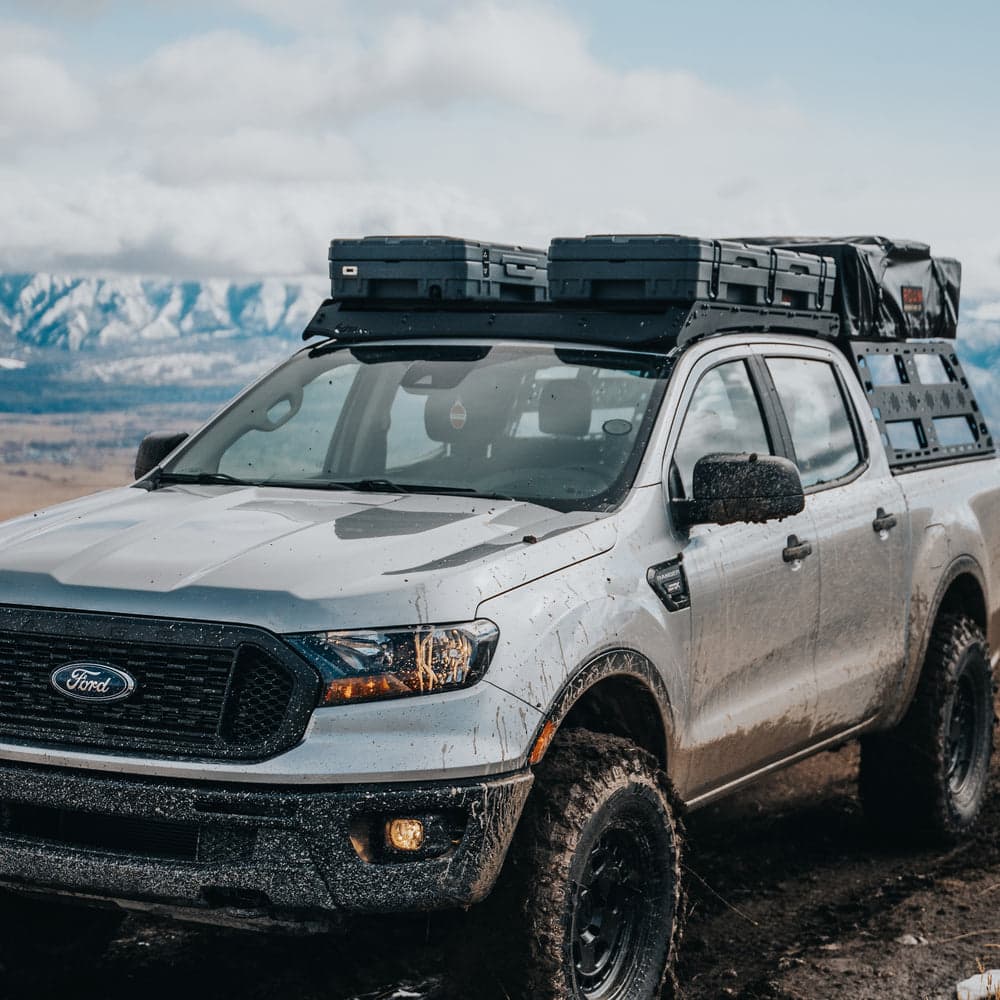
A roof rack storage box faces wind, rain, sun, and vibration at once. Because of this, Roam and Pelican both sell dedicated roof mounts instead of leaving you to strap a case down. Roam’s Rugged Mounts clamp the case to the rack with lockable latches. The 95L set ships with 1/4-20 carriage bolts for 80/20-style slots, and Roam says the case goes on or off in under 5 seconds.
Check your rack’s slot size first, though. One Land Cruiser owner found the Roam bolts too small for his rack’s T-slots and swapped to 5/16-inch carriage bolts. Pelican’s RFMT2 Roof Mount Kit, meanwhile, fits the BX90R, BX140R, BX55S, and BX85S. It bolts to bars running across the roof, needs no drilling in the case, and locks with a padlock. Pelican quotes 14 seconds from locked to loose.
Front Runner also sells a bracket for the Wolf Pack Pro. In particular, it pulls down on the sides of the box rather than squashing the lid.
Roof Weight Limits
Weight is the other limit. Front Runner says its Slimline II rack holds more than many vehicle makers allow. Still, it points owners to the vehicle’s own rating. For example, Toyota’s 2021 4Runner manual caps cargo on the roof luggage carrier at 120 pounds. One Pelican BX140R weighs 35.1 pounds, and the RFMT2 kit adds 4.25 pounds, which leaves about 80 pounds for gear. Two Roam 95L cases weigh 50 pounds, and two sets of 10-pound Rugged Mounts bring the total to 70. The math leaves 50 pounds of gear, or 25 per case. Thule makes the same point: the vehicle sets the maximum weight of the whole system.
Keep heavy items inside and light, bulky items up top. Then check every strap at each fuel stop, especially after driving washboard roads, because vibration loosens cam buckles.
Two roof mounts and one strap set finish a case setup. Roam’s 95L Rugged Mounts and Pelican’s RFMT2 Roof Mount Kit lock each brand’s case to a rack. For the bed or cargo area, NRS 1-inch HD cam straps hold a case without crushing the lid.
Roof mounts and straps mentioned in this guide

ROAM Adventure Co Rugged Black 95L Water Repellent Roof Mount Carrier


, and strap each case so it stays put.)
Hard Cases vs. Soft Bags and Plastic Totes
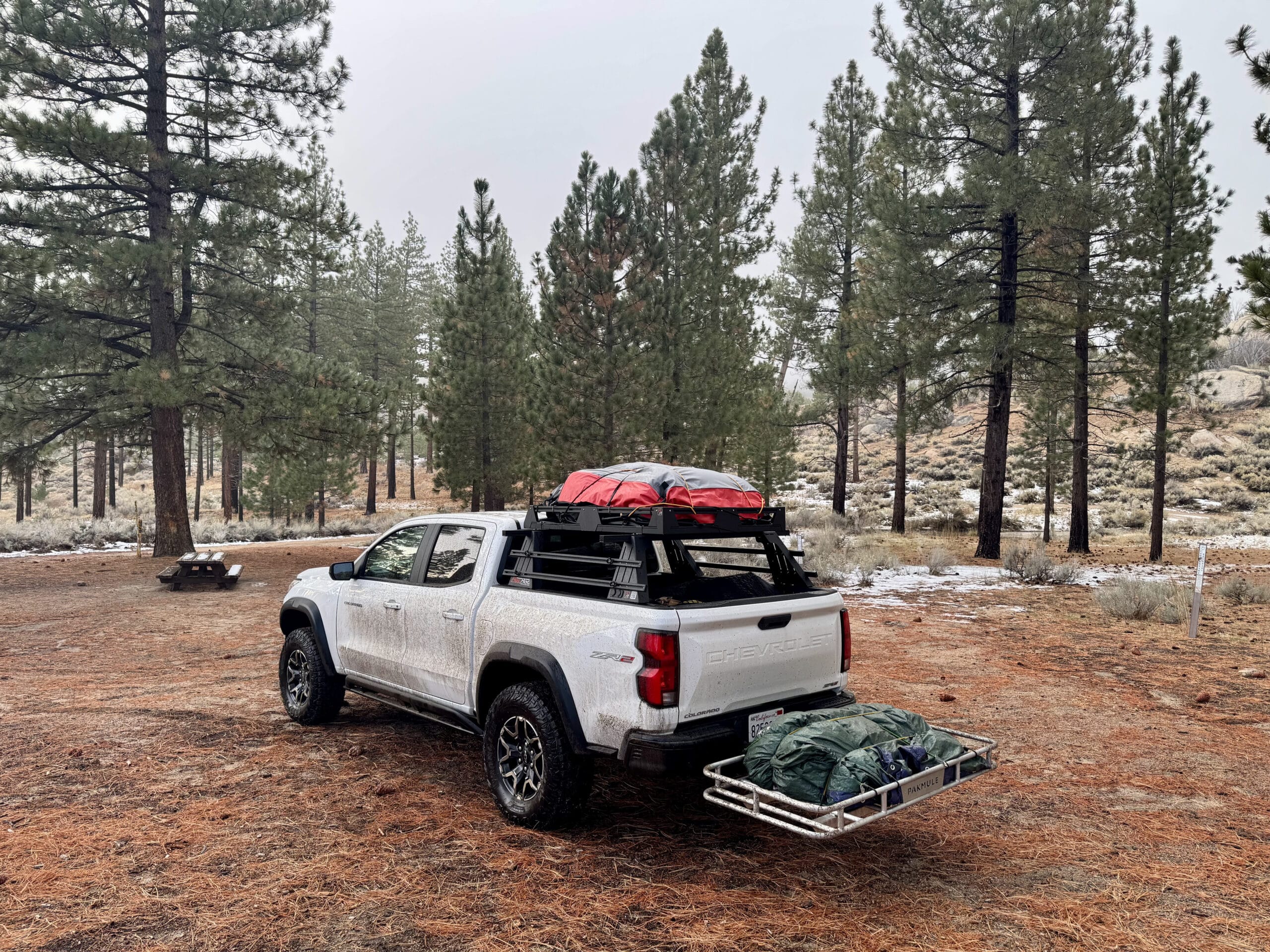
Hard cases give the best protection, stacking, and security. Soft duffels, however, weigh less and squeeze into odd spaces. Plastic totes win on price.
Still, totes and bags fall short on the roof and in an open bed. Bags soak through in a long storm, and neither stops a determined thief. As a middle ground, owners add weatherstripping to the lid of a non-gasketed trunk. One owner reported no dust inside after two days on a roof rack. This trick costs a few dollars, although it offers no immersion protection.
Most owners end up with a mix. For instance, sealed cases hold electronics, totes hold food inside the vehicle, and soft bags hold clothing.
Final Thoughts
If you take only one step from this guide, measure your space before you shop. A case wastes money when it leaves a dead gap by the wheel well. In contrast, the right footprint lets every box in your kit stack and strap as one unit.
Molded IP67 cases cost and weigh more, and tote-style boxes handle dust but not a submerged crossing. Budget trunks lose the most inside space. Therefore, match each case to its job. A Roam Rugged Case or Pelican Cargo case on its own mount suits the roof. A valved Pelican Protector suits electronics, gasketed totes suit the bed, and cheap bins suit the cab.
I have owned five Jeeps and now drive a Colorado ZR2. My advice for all six would be the same. Buy one family of overland storage boxes, strap them with cam buckles, and keep the heavy boxes low. If your budget runs short, start with one sealed case for electronics and add totes for everything else.
Overland Storage Boxes FAQ
What does IP67 waterproof mean?
IP67 means a case is dust-tight and survives 30 minutes under 3.3 feet of water in the IEC 60529 test. It does not cover deeper or longer immersion. Pelican rates its Protector cases, including the 1550, to IP67.
What is the difference between IP65 and IP67?
Both ratings mean dust-tight. IP65 covers water jets at 3.3 gallons per minute. In contrast, IP67 covers 30 minutes under 3.3 feet of water. Choose IP67 for roof racks, electronics, and water crossings.
Are Pelican cases waterproof?
Its Protector cases are, to a point. Pelican rates them IP67, with a silicone O-ring and an automatic pressure valve. However, the brand says its cases are deliberately not airtight, since the valve lets air pass to prevent a locked lid. Pelican Cargo roof cases are a separate line, rated weather resistant and dustproof against 70 mph wind-blown rain.
Are Roam Adventure Co. cases waterproof?
Roam describes the Rugged Case gasket as dust and water resistant and does not list an IP rating. The seal handles rain and dust on a roof rack. For a river crossing or electronics, add an IP67 case inside the vehicle.
Do Roam and Pelican cases fit a Jeep Wrangler roof rack?
Yes, on an aftermarket roof rack. Roam’s Rugged Mounts and Pelican’s RFMT2 kit both bolt to the rack, not the Jeep’s roof. Check the rack maker’s load rating and Jeep’s limit for your top before you load either case.
How do you measure a truck bed for overland storage boxes?
Measure the width between the wheel wells, the length to the tailgate, and the height under any cover. Then compare those numbers with each case’s outside dimensions, and leave a few inches for straps. A current Chevy Colorado, for example, lists 45.5 inches between the wheel wells.
How much weight does a roof rack hold?
The vehicle’s roof rating sets the limit, not the rack’s. Toyota’s 2021 4Runner manual lists 120 pounds of cargo on the roof luggage carrier. Front Runner tells owners to follow the vehicle maker’s rating and to load less on rough roads.