


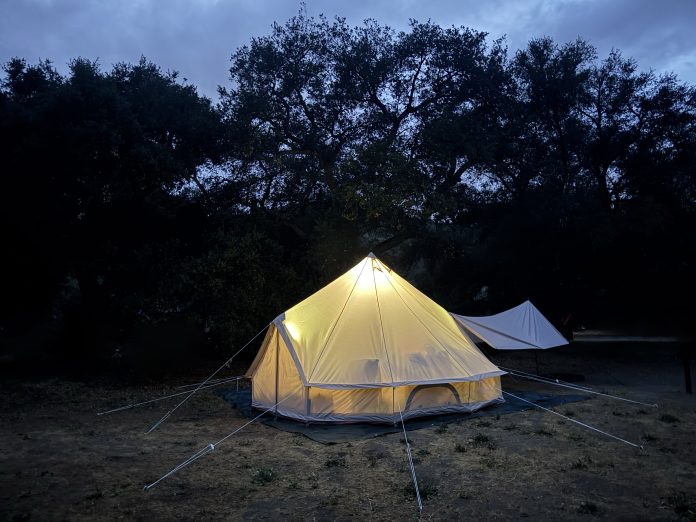

I’ve spent nearly my entire life camping and overlanding. Though I take plenty of quick weekend trips, most of my time camping wasn’t spent moving. It was spent parked in one spot for five, seven, or ten days at a stretch, running a fixed camp while day trips fanned out from a home base. A basecamp built for a week-long stay needs a different approach than the one-night stopovers most gear is designed around.
This guide covers the shelter, kitchen, power, water, and weatherproofing choices I rely on for extended stays. None of it is theoretical. Every recommendation below comes from nights spent testing gear failures firsthand: tents leaking, stoves quitting in the wind, and water systems freezing overnight in the Wind River foothills. Here is what I would tell a friend before their first extended stay.
Quick Facts:
- Topic: Overland basecamp setup for extended stays
- Skill level: Beginner to intermediate
- Time required: 45 to 90 minutes for full camp setup
- Tools needed: Four-season shelter, camp kitchen, power system, water storage
- Difficulty: Moderate
- Cost range: $500 to $3,000 depending on shelter and power choices
- Best for: Week-long overland trips and multi-day basecamp stays
9 min read
In This Guide
- Overland Basecamp Setup Overview
- Basecamp Setup Essentials at a Glance
- Choosing the Right Basecamp Shelter
- Building a Week-Long Camp Kitchen
- Power and Water for Extended Stays
- Weatherproofing Your Camp for Multi-Day Exposure
- Bell Tent vs. Rooftop Tent for Basecamping
- Pros and Cons of a Canvas Basecamp Setup
- Final Verdict
- Frequently Asked Questions
Overland Basecamp Setup Overview
An overland basecamp setup is built around one idea. Your rig stays parked, and you use it as a hub for day trips, hikes, and side excursions. This differs from a touring trip, where you break camp daily and cover new ground. For a week-long overland trip, the shelter, kitchen, and power systems need to hold up to daily use, not a single overnight stay.
Weekend campers often get by with a rooftop tent and a cooler, often cutting their prep time with a modular gear system. A week-long basecamp asks more of every system. Ventilation has to manage condensation night after night. A stove or heater has to run safely for days in a row. Water storage has to stretch across seven mornings of coffee and dishes, not one. For families or groups, floor space becomes the difference between a comfortable stay and a cramped one.
Picture a BLM site in October: cold mornings near freezing, warm afternoons, and a fire ban ruling out an open campfire for heat. A basecamp built for this scenario needs a stove-jack-compatible shelter and a reliable propane or battery system. It also needs enough interior space to dry gear and cook indoors when the wind picks up. This is the standard I plan around, and it is the standard this guide follows.
Basecamp Setup Essentials at a Glance
| System | Week-Long Basecamp Standard |
|---|---|
| Shelter | 4-season canvas or hot tent with stove jack, 100+ sq. ft. |
| Heat source | Wood stove or propane heater rated for enclosed use |
| Kitchen | Two-burner stove, folding table, dedicated wash station |
| Power | 100 to 300 amp hours, solar or DC-DC recharge |
| Water | 3 to 4 gallons per person, per day |
| Ground protection | Zip-in or footprint groundsheet, PVC or rip-stop |
Buy Direct From Stout Tent
The 5M Pro Bell Tent Anchors a Week-Long Basecamp
A 340 gsm canvas shell and a built-in stove jack give you 212 square feet of floor space built for daily use.
Choosing the Right Basecamp Shelter
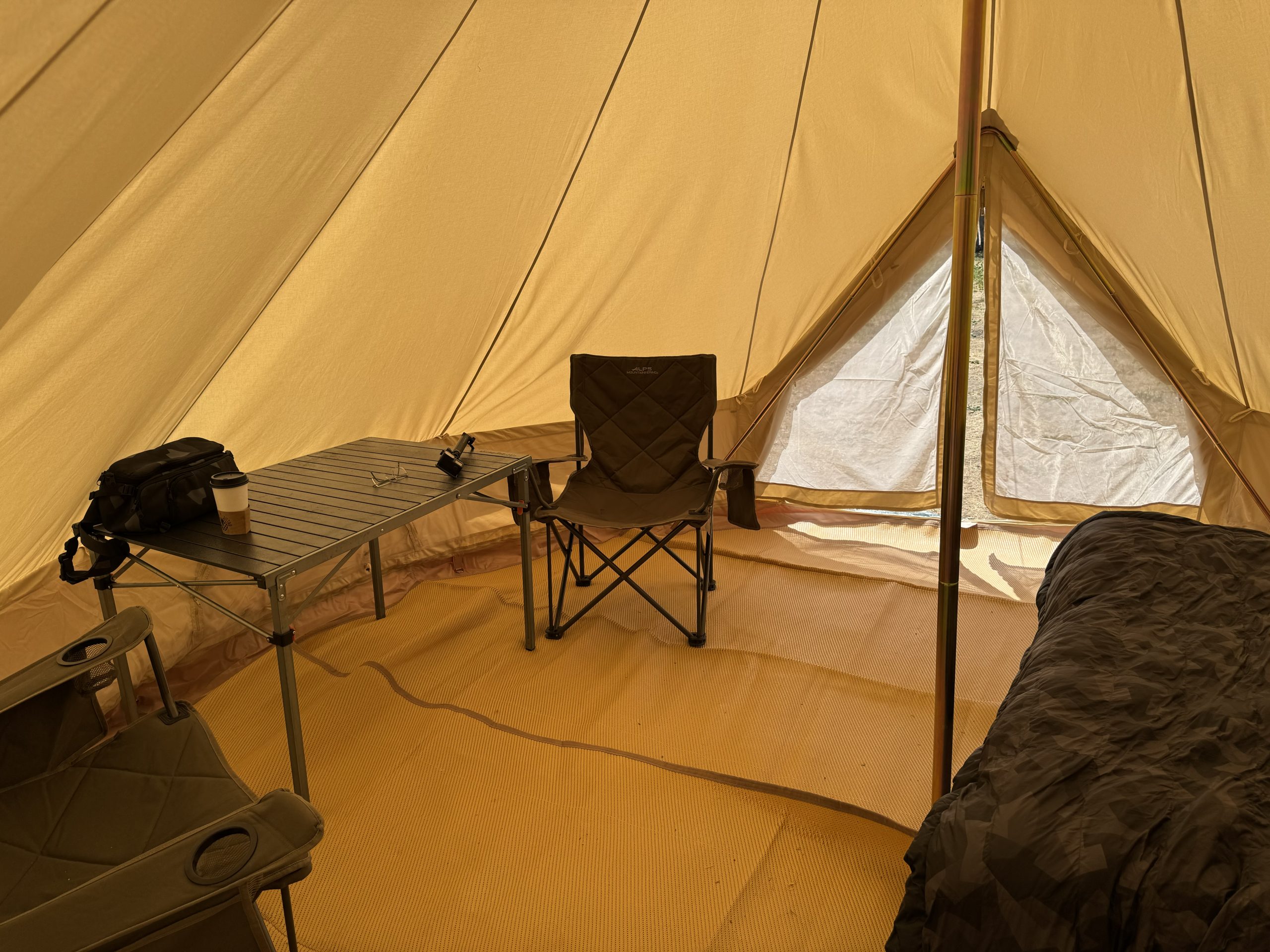
Shelter is the first decision, and it drives almost everything else. Rooftop tents excel for touring trips where you cover new ground daily. Setup takes minutes, and the tent packs onto the rig. However, most rooftop tents run 32 to 55 square feet, which feels tight after four or five nights, especially with a partner, kids, or a dog along.
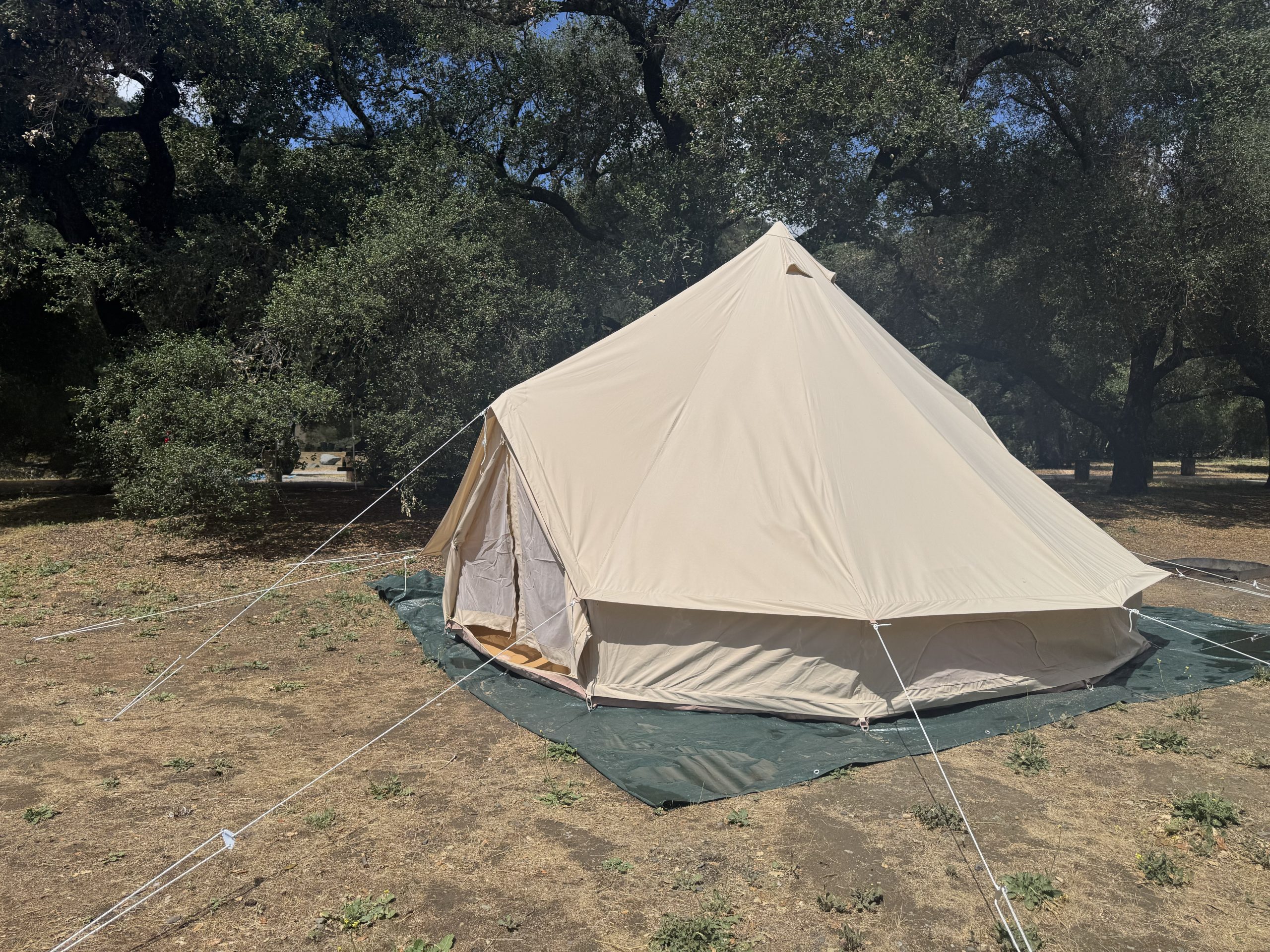
For stays of five nights or longer, a ground-based canvas tent gives you room to stand and cook indoors during weather. For example, a canvas bell tent such as the Stout Tent 5M Pro offers 212 square feet and a 9’9″ center pole height. You get actual living space, not a sleeping pod. The 340 gsm cotton canvas and CPAI-84 fire-retardant rating hold up to daily powerwashing, which matters when the same tent gets walked in and out dozens of times over a week.
First, a stove jack is worth prioritizing if you camp shoulder-season or in cold climates. The 5M Pro’s built-in, high-temperature stove jack lets you run a wood stove safely during cold mornings. You never need to cut a hole in a tent not designed for one. Groups needing more traffic flow through the entrance should look at a double-door layout. The 5M Pro double door adds a second entrance for better airflow and less bottlenecking when several people share one shelter.
Building a Week-Long Camp Kitchen
A camp kitchen for a single overnight and a camp kitchen for seven days are not the same system. For extended stays, set up a dedicated cooking zone separate from the sleeping area. Ideally, put it under an awning or inside a vestibule so wind and rain do not shut down dinner. A two-burner propane stove covers most meals. A folding table gives you a stable prep surface instead of a tailgate, which empties every time you need the truck.
Meanwhile, plan your fuel around the trip length rather than guessing. One 20-lb propane tank runs a two-burner stove for roughly a week of moderate cooking, so pack accordingly. Keep a separate wash station, even a simple two-basin setup with biodegradable soap. Dishes pile up fast when you are cooking three meals a day in one spot rather than eating on the move.
Finally, store food in a hard-sided cooler or a 12V fridge if your power budget allows it. A 12V fridge draws roughly 1 to 1.5 amp hours per hour of runtime. A 100 amp hour battery bank handles this load for a week alongside lights and device charging, provided you have some solar or engine recharge built in.
Power and Water for Extended Stays
Power planning for a week-long basecamp starts with adding up your daily draw. A fridge, camp lights, a fan, and phone or laptop charging typically add up to 40 to 80 amp hours a day for two people. A 100 to 200 amp hour lithium battery bank covers most week-long stays. Pair it with a 100 to 200 watt solar panel or a DC-DC charger, which tops off the battery during any driving between the basecamp and nearby trails.
In contrast, water is simpler math but easier to get wrong. Plan for 3 to 4 gallons per person, per day, covering drinking, cooking, and basic washing. For a family of four staying seven days, this adds up to 84 to 112 gallons total, usually split between onboard tanks and refillable jugs, plus a plan for topping off at a known water source partway through the trip. Running dry on day five of seven is the fastest way to cut a good trip short.
Weatherproofing Your Camp for Multi-Day Exposure
A tent parked for one night tolerates a rough spell of weather. A tent parked for a week has to shed rain and resist UV. It also has to hold guy-lines tight through wind shifting direction over several days. Stake out guy-lines at a true 45-degree angle from the tent wall, and check tension each morning. Canvas stretches slightly when wet and needs a retightening pass.
In dry, high-UV climates like much of Wyoming, Utah, and the Southwest, a rainfly or sunshade extends canvas life significantly. Constant sun exposure is often harder on cotton canvas than rain is. In wetter climates, prioritize a zip-in or footprint groundsheet to keep ground moisture from wicking up into the tent floor overnight. Either way, a double-wall design with a mesh bug-net layer under the canvas sidewalls solves both problems. You roll up the outer wall for airflow on warm days while keeping the interior sealed against rain and insects when weather turns.
Save on Your Basecamp Setup
Camping With a Group? Try the 5M Pro Double Door
A second entrance cuts traffic through one door and improves cross-ventilation for multi-person basecamp stays.
Bell Tent vs. Rooftop Tent for Basecamping
Rooftop tents and canvas bell tents solve different problems. A rooftop tent wins for trips where you move locations every day or two. Setup and teardown take minutes, and the tent rides on the rig between stops. It also keeps you off the ground in bear country or wet terrain, which matters in some regions.
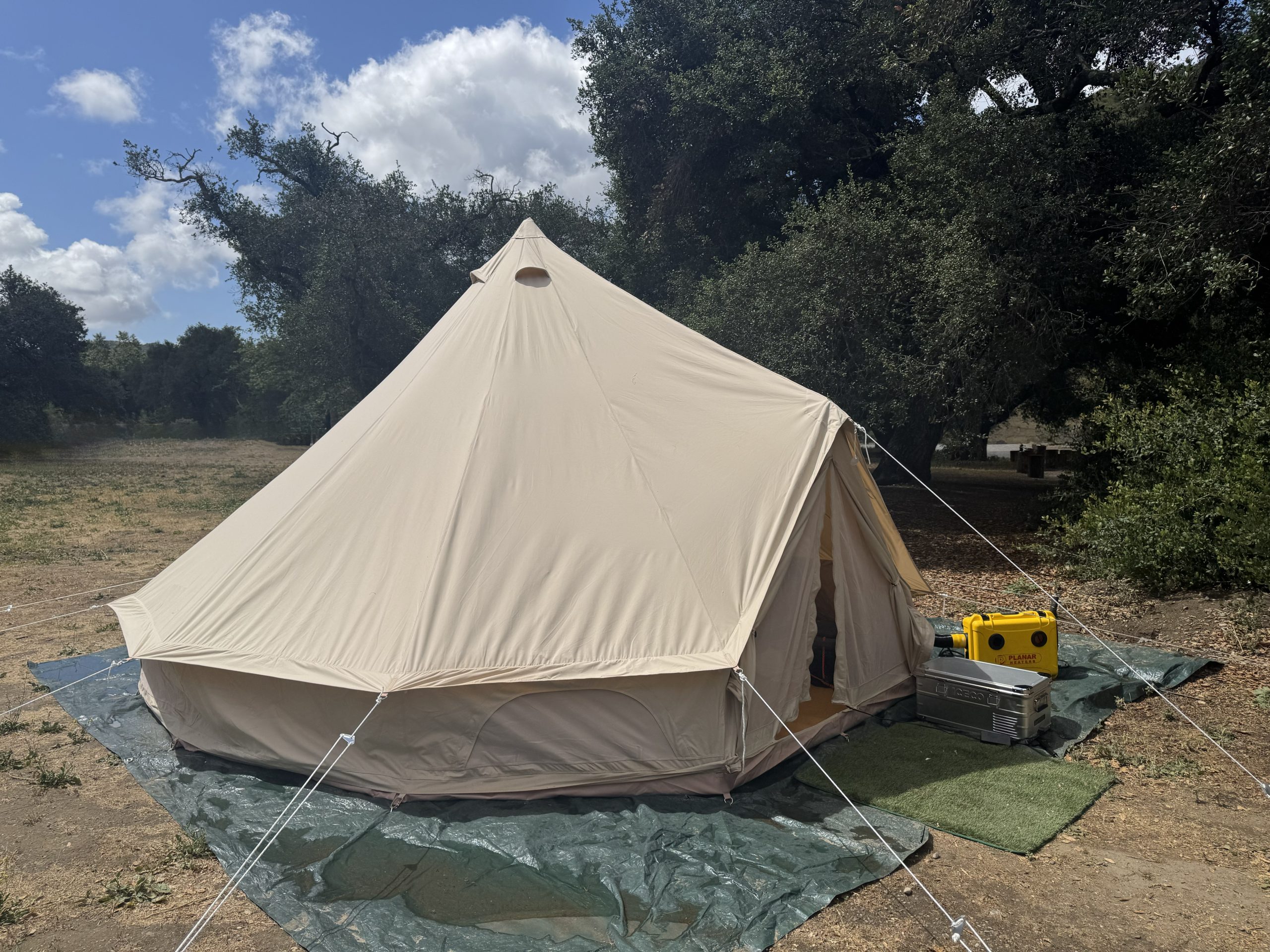
For a fixed week-long basecamp, a ground-based canvas tent generally wins on comfort and function. You get standing headroom and room for a cot or a real mattress instead of a fold-out pad. Detaching from the tent is also simpler. With a rooftop tent, breaking camp to drive somewhere means folding the tent first. With a ground tent, you leave it standing and drive off for the day, which fits the basecamp model better than the touring model.
In terms of cost, quality rooftop tents and quality canvas bell tents land in a similar range, roughly $1,200 to $2,500. The deciding factor is trip style, not price. If you are covering new ground daily, take the rooftop tent. If you are parking for a week and using the rig as a hub, a spacious canvas shelter with a stove jack, like the 5M Pro, earns its keep.
Pros and Cons of a Canvas Basecamp Setup
Before you buy, weigh these trade-offs against your own trip style and group size:
Pros
- Standing headroom, often 8 to 10 feet at the center pole
- Stove jack support for safe cold-weather heating
- 200+ sq. ft. of floor space in larger models
- Canvas breathes better than synthetic tent fabric in heat
- Detach the rig and explore without breaking camp
- Double-wall bug mesh allows airflow without insects
- Holds up to daily foot traffic across a multi-day stay
Cons
- Heavier and bulkier than a rooftop tent, often 90+ lbs
- Setup takes longer, typically 45 to 90 minutes solo
- Not ideal for trips changing location every day
- Requires more storage space in the rig or trailer
- Canvas needs periodic maintenance in high-UV climates
Final Verdict
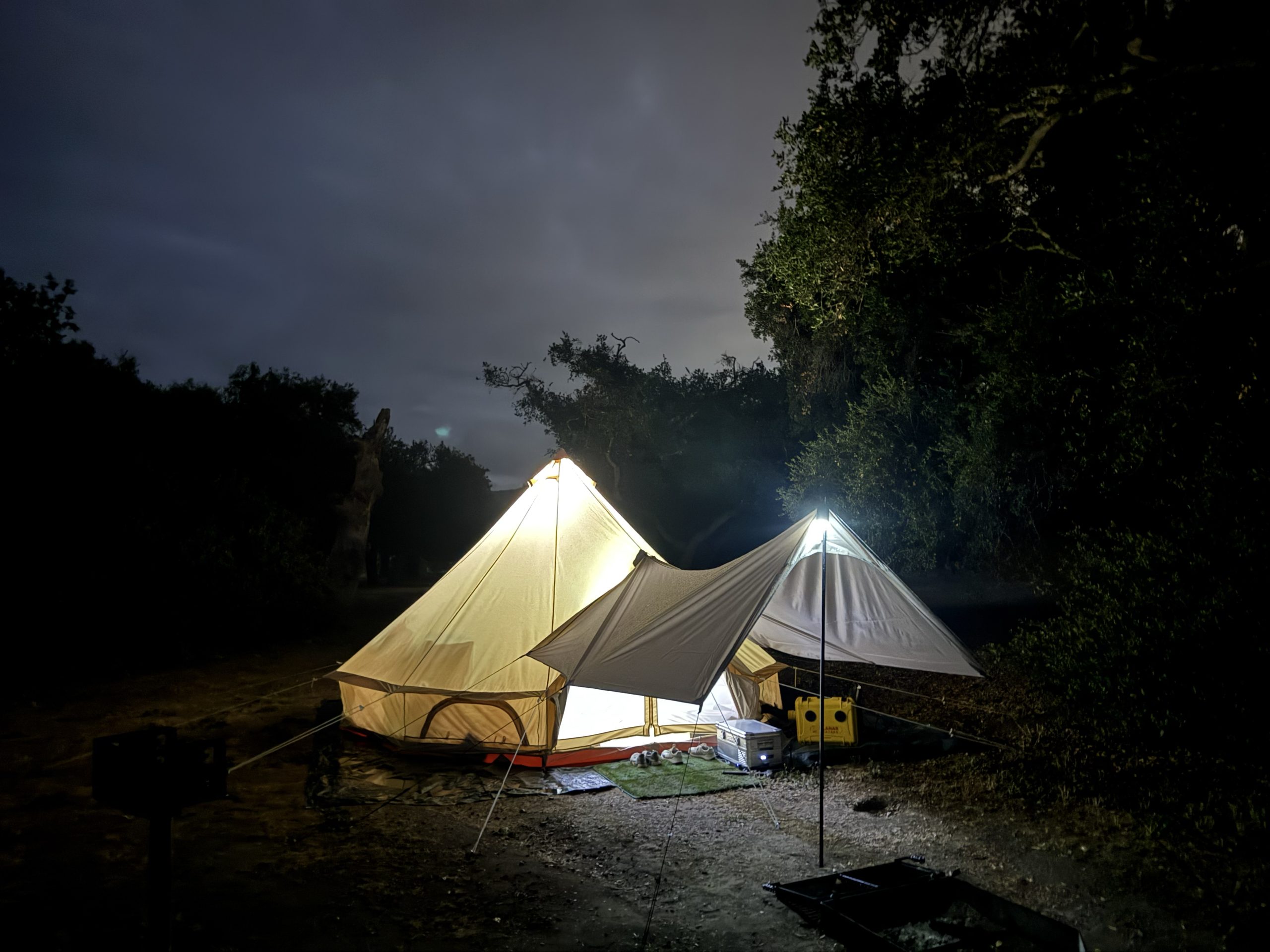
A week-long overland basecamp setup rewards planning more than any single piece of gear. Shelter matters most, since it sets the ceiling on comfort for every day you are parked in one spot. For groups, families, or anyone camping through shoulder-season cold, a four-season canvas tent with a stove jack gives you room to live in camp, not only sleep in it. The Stout Tent 5M Pro is built for exactly this use case.
However, the trade-off is setup time and bulk. If your trip style involves moving locations daily, a rooftop tent still makes more sense. No basecamp system replaces careful water and power math done before you leave the driveway. Skipping this planning step causes more cut-short trips than any gear failure I have seen on the trail.
In addition, a solid basecamp setup runs $1,500 to $3,000 once you account for shelter, a stove or heater, and a modest power system. This is a real investment, though it spreads across every multi-day trip afterward, rather than a single weekend.
For most overlanders planning a week-long stay in variable weather, I recommend building the kitchen and power system first. Then choose a shelter sized for your group with a stove jack included. The 5M Pro single door suits solo campers or couples, while the double door variant suits families or groups who want a second entrance and better cross-ventilation.
Ready to Buy?
Check Today’s Price on the 5M Pro Bell Tent
Stout Tent backs the 5M Pro with a lifetime warranty and free shipping across the contiguous US.
Frequently Asked Questions
How much water do I need for a week-long overland trip?
Plan for 3 to 4 gallons per person, per day, covering drinking, cooking, and washing. A family of four staying seven days needs roughly 84 to 112 gallons, usually split between onboard tanks and refillable jugs.
What size battery bank do I need for a week-long basecamp?
A 100 to 200 amp hour lithium battery bank covers a fridge, lights, and device charging for a week. Pair it with 100 to 200 watts of solar or a DC-DC charger for recharge during any driving.
Is a canvas bell tent warm enough for cold-weather basecamping?
Yes, when it includes a stove jack. A wood stove vented through a built-in stove jack, such as the one on the Stout Tent 5M Pro, keeps interior temperatures comfortable through freezing overnight lows. It also avoids the condensation problems portable heaters often cause in sealed synthetic tents.
Should I choose a rooftop tent or a ground tent for a week-long stay?
For a fixed basecamp where the rig stays parked, a ground-based canvas tent gives more room. It also lets you detach the vehicle without breaking camp. A rooftop tent works better for trips changing location daily.
How long does it take to set up a basecamp tent like the 5M Pro?
Expect 45 to 90 minutes for a first-time solo setup of a 5m bell tent, covering the center pole, A-frame door pole, guy-lines, and zip-in groundsheet. Setup speeds up on repeat trips once you know the sequence.
What is the biggest mistake first-time basecampers make?
Underestimating water and power needs is the most common issue. Trips planned around one-night math run short by day four or five. Calculate totals for the full trip length before you leave.
A quick heads-up: If you snag something through our affiliate links or check out our sponsored content, we might earn a commission at no extra cost to you. But fear not, we’re all about recommending stuff we’re truly stoked about!