


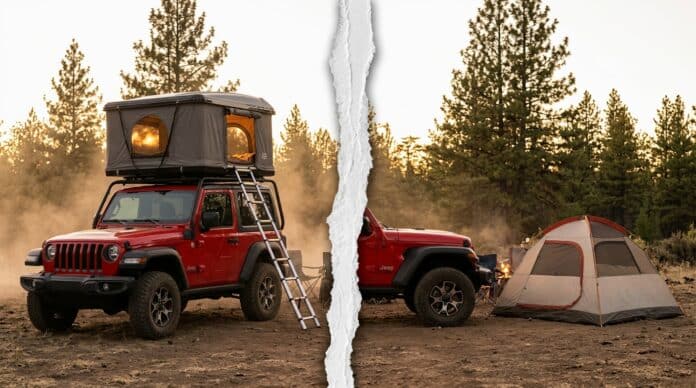

Quick Facts:
- Comparison: Rooftop tent vs ground tent
- Rooftop tent is best for: Frequent overlanders who value fast setup
- Ground tent is best for: Budget campers, families, and base-camp trips
- Rooftop cost (full setup): $2,500 to $7,500
- Ground tent cost: Under $500 for budget models; about $1,650 to $2,800 for four-season tents like the Bereg UP-5 and UP-7
- Setup time: Rooftop 45 to 90 seconds; ground 5 to 15 minutes
- Decision tool: 10-question quiz below
- Best for: Anyone choosing a first overland sleep system
8 min read
In This Guide
If you want a ground tent that handles cold weather with a wood stove inside, see our roundup of the best hot tents of 2026 for four-season picks across canvas bell, wall, and inflatable form factors.
Rooftop Tent vs Ground Tent: The Quick Answer
The rooftop tent vs ground tent debate comes down to money, setup speed, and how often you camp. A rooftop tent gets you off the ground in under 90 seconds, while a ground tent usually costs less and frees you from your vehicle. Our reviews cover both rooftop and ground tents, and neither one wins for everyone. This guide lays out the real trade-offs, then hands you a quiz to settle it.
Choose a rooftop tent if you camp often, move camp daily, and want a firm mattress waiting on your roof. Pick a ground tent if you camp on a budget, bring a family, or like to park the rig and leave it. Most overlanders start on the ground, then graduate to the roof once the trips pile up.
Below, you get a side-by-side table and the honest case for each option. You also get links to the tents we have tested, plus a short quiz. By the end, your pick should feel obvious.
First, a quick definition. A rooftop tent mounts to a roof rack and folds open above your vehicle, while a ground tent, the regular tent most campers grew up with, pitches on the dirt. Both shelter you well in a storm. The real differences are where you sleep, what you spend, and how fast camp goes up.
Rooftop Tent vs Ground Tent: Side by Side
The table below sums up the core differences. Each figure comes from our own reviews and field testing, so treat it as a real-world starting point rather than a sales sheet.
| Factor | Rooftop Tent | Ground Tent |
|---|---|---|
| Price | Tent $1,500 to $4,500; full setup to $7,500 | Budget under $500; four-season $1,650 to $2,800 |
| Setup time | 45 to 90 seconds (hardshell) | 5 to 15 minutes |
| Sleeping position | Off the ground, on the roof | On the ground |
| Weather and wind | Warmer up high, louder in wind | Quieter low, easier to shelter |
| Vehicle impact | Needs a roof rack; mileage drops 10 to 17% | No rack needed; no mileage hit |
| Flexibility | Tied to the parked vehicle | Pitch anywhere, leave the rig |
| Best use | Frequent overlanding | Budget, family, and cold-weather camping |
What Each Setup Costs to Own
Price tags tell only part of the story. A rooftop tent adds a roof rack, and many buyers spend $400 to $1,200 on bars and mounts before the tent ever opens. Fuel is the next hidden cost, since a loaded roof trims highway mileage by 10 to 17 percent. Over a year of regular trips, the fuel gap grows into real money. A roof-mounted tent also sits exposed in parking lots, which raises theft and weather wear.
By contrast, a ground tent skips the rack and the mileage penalty. Budget dome tents start under $500. Premium four-season models cost more: the Bereg UP-5 runs about $1,650, and the larger UP-7 lands near $2,500. Even at the high end, you buy once and store the tent in a duffel rather than on the roof year-round. Against a fully kitted rooftop setup, a four-season ground tent still saves you thousands. For a first purchase on a budget, the numbers point to the ground first.
The Case for a Rooftop Tent
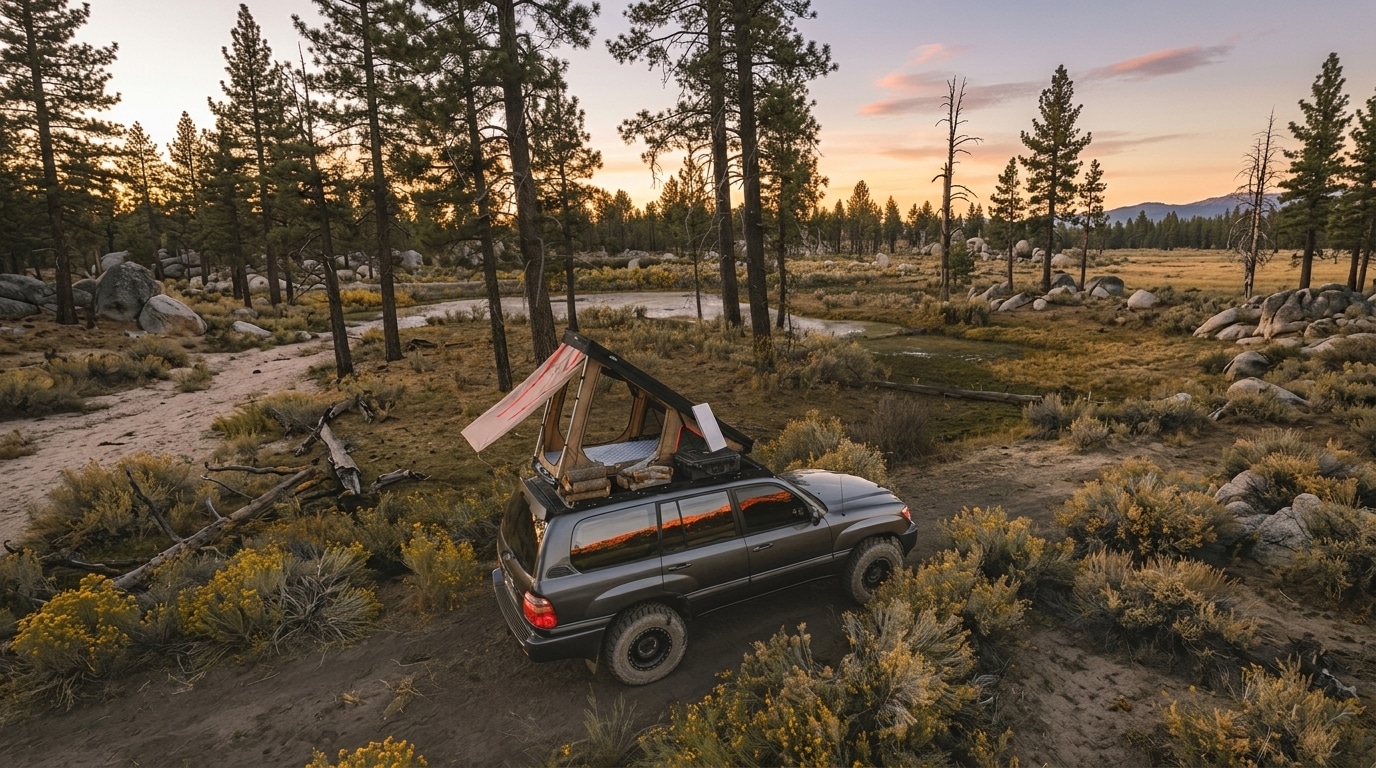
A rooftop tent turns your roof into a bedroom. Hardshell models deploy in 45 to 90 seconds, so camp is ready before the kettle boils. You sleep on a thick built-in mattress; in our Roofnest Condor XL review, the mattress felt closer to a real bed than a camp pad. Because you sit up high, you stay clear of rocks, mud, and most critters, a clear edge over a regular tent on rough ground.
Comfort and speed cost money, though. A full rooftop setup commonly lands between $2,500 and $7,500 once you add a rack. Highway mileage also drops roughly 10 to 17 percent with a tent up top. Premium hardshells from iKamper, Roofnest, and Alu-Cab run about $3,500 to $4,500 for the tent alone. A roof rack is a required add-on, often $400 to $1,200. Extras like an annex are optional, and some makers include one. Together, a premium setup pushes the total toward $7,500. Hardshell or softshell shifts the math further, so our softshell versus hardshell breakdown compares setup speed and wind behavior. If the price gives you pause, our look at whether a rooftop tent is worth it runs the full cost math.
Choosing and Inspecting a Rooftop Tent
For models we have inspected hands-on, browse the rooftop tents we inspected at the Spirit of 1876 showroom. Seeing a roof top tent deploy in person makes the speed and build quality obvious in a way photos cannot.
Durability adds to the appeal. A hardshell roof top tent shrugs off rain and UV for years, and the rigid lid doubles as a fast travel cover. Families often choose larger hybrids, while solo travelers favor low-profile shells for better mileage. Whatever the size, a roof top tent rewards people who camp enough to justify the spend. Spending time with a tent in person, before you buy, takes much of the risk out of a big purchase.
Shop Rooftop Tents
See the Rooftop Tents at Spirit of 1876
Browse the hard-shell and hybrid rooftop tents our team inspected hands-on at the Spirit of 1876 showroom.
The Case for a Ground Tent
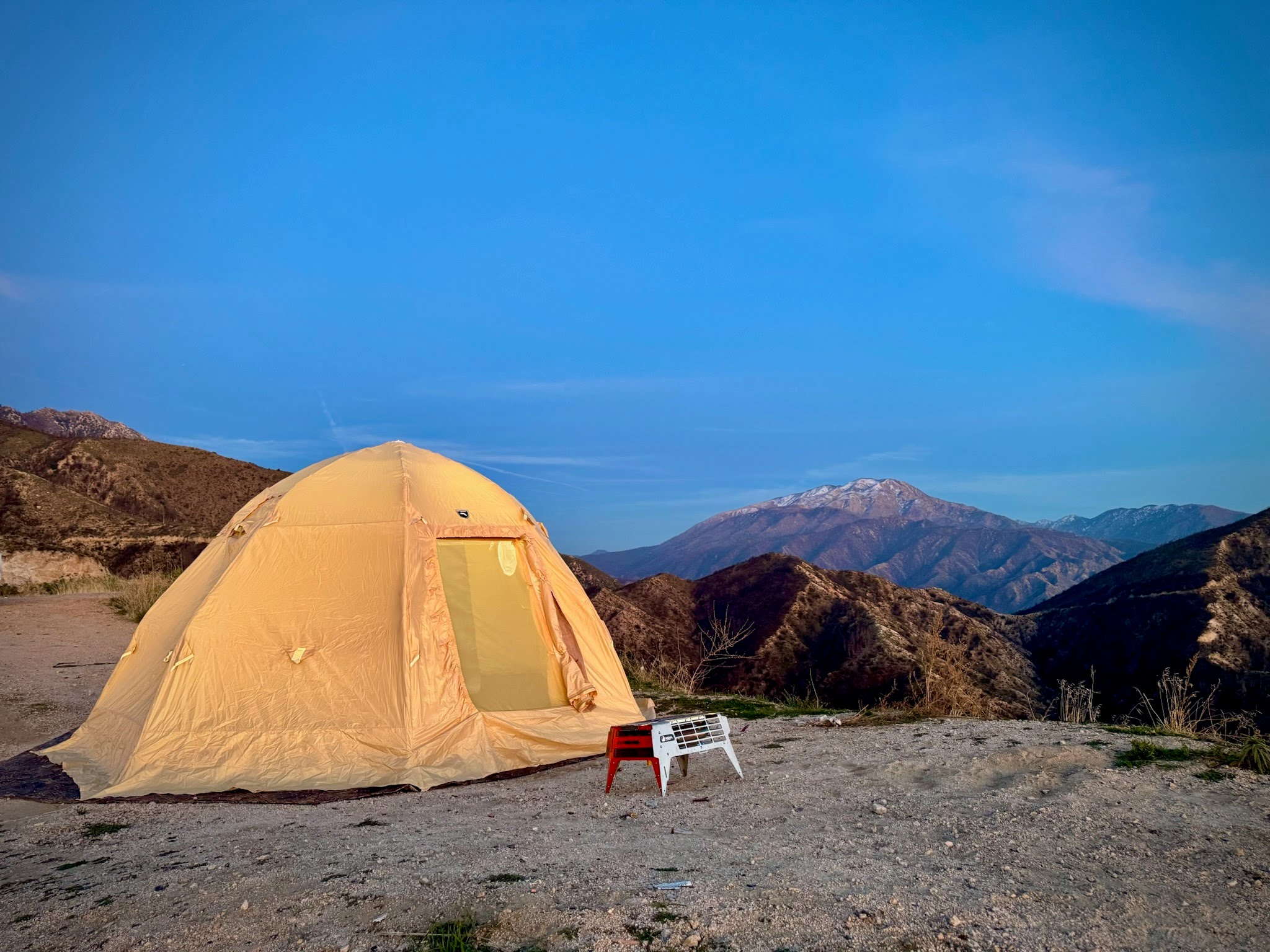
A ground tent wins on price and freedom. Most quality ground tents cost under $500, a fraction of any rooftop rig. You need no roof rack, you take no mileage hit, and you pitch wherever the ground sits flat. Once camp is set, you drive off without tearing it down, which a roof-mounted tent never allows.
Ground tents also run quieter and roomier. In our six-month Overlandish Base Camp review, the ground tent stayed far quieter than a rooftop tent once the wind picked up. Four-season models add real winter capability too. The Bereg UP-5, built by PF Bereg, has served as a go-to dome through years of cold trips, and the larger Bereg UP-7 uses a heavy 300D shell rated for hard weather.
Space and value are the headline wins. A four-season ground tent sleeps a family and still costs less than a bare rooftop shell. For a full rundown of styles, sizes, and materials, start with our ground tent buying guide before you spend a dollar. Ready to shop? Our best ground tents of 2026 ranks our top picks from hands-on testing.
Newcomers gain the most on the ground. A budget ground tent lets you try overlanding for little money, then upgrade to a four-season model once you know your style. Cold-weather campers gain as well, since a four-season tent with a stove jack turns a winter trip into a warm base camp. The Overlandish and Bereg models above show how capable a modern ground tent has become.
Shop Four-Season Tents
Explore Bereg Canada Ground Tents
See the four-season Bereg UP-5 and UP-7 tents built for cold-weather base camps, ready to pitch on any flat ground.
Rooftop or Ground Tent? Take the Quick Quiz
Answer ten quick questions. The quiz tallies your answers, with a few key questions counting double, then points you toward a rooftop tent or a ground tent. Pick the option closer to your reality for each one.
1. How often do you camp?
2. What is your budget for a sleep system?
3. Do you move camp daily, or park and stay?
4. Who travels with you?
5. Does fuel economy matter to you?
6. Do you camp in winter or hard cold?
7. Does your vehicle have a roof rack rated for a tent’s weight?
8. Will you climb a ladder to bed each night?
9. What is the ground usually like where you camp?
10. How much spare cargo space is inside the rig?
Final Verdict
For frequent overlanders, a rooftop tent earns its price through fast setup and a better night of sleep off the ground. Speed matters most when you reach camp after dark or break camp every morning. A faster setup also means more time at camp and less time wrestling poles after a long drive. If you live in your rig on weekends, the roof pays you back.
For budget campers, families, and base-camp trips, a ground tent delivers more space and freedom for far less money. You keep your vehicle free, you skip the mileage hit, and you pitch wherever you like. A regular tent also lets newcomers try overlanding without a major outlay.
If trips are rare or money is tight, start on the ground. A four-season ground tent such as the Bereg UP-5 covers most conditions, and you add a rooftop tent later once the miles add up. Renting a rooftop tent for one trip is also a smart way to test the idea before you commit. Buying twice still costs less than buying wrong.
Run the quiz above, weigh your budget against how often you camp, and the rooftop tent vs ground tent choice resolves itself. Both shelters are good; the right one simply matches how you travel.
Frequently Asked Questions
Is a ground tent better than a rooftop tent?
Neither is better outright. A ground tent wins on price, interior space, and flexibility, while a rooftop tent wins on setup speed and sleeping off the ground. For budget and family trips, the ground tent usually fits better. Frequent overlanders, by contrast, get more from the rooftop tent’s speed. Your travel style decides the winner more than the gear does.
What are the disadvantages of rooftop tents?
Cost leads the list, since a full setup runs $2,500 to $7,500. A rooftop tent also needs a roof rack, drops your mileage roughly 10 to 17 percent, and ties you to the parked vehicle. In strong wind, it runs louder than a ground tent pitched low. You also climb a ladder for every trip up to bed, which wears thin on rainy nights.
Are rooftop tents warmer than ground tents?
A rooftop tent often feels warmer because it sits off the cold ground and traps body heat in a smaller space. Heavier fabric and a sealed floor let a four-season ground tent close much of the gap. For deep winter, a four-season tent with a stove jack still leads.
Will a rooftop tent fit on any car?
Not on every car. Your roof rack and crossbars must handle the tent’s dynamic and static load, and many small cars fall short. Check your vehicle’s roof load rating first. If the numbers are tight, a ground tent or a bed rack solves the problem.
Why does the roof option cost so much?
You pay for heavy-duty materials, a built-in mattress, and a fast-deploy frame rated for highway speeds. A roof rack adds more cost on top. This wide gap is why the rooftop tent vs ground tent price split often runs several times over, even against a premium four-season ground tent.