


Quick Facts:
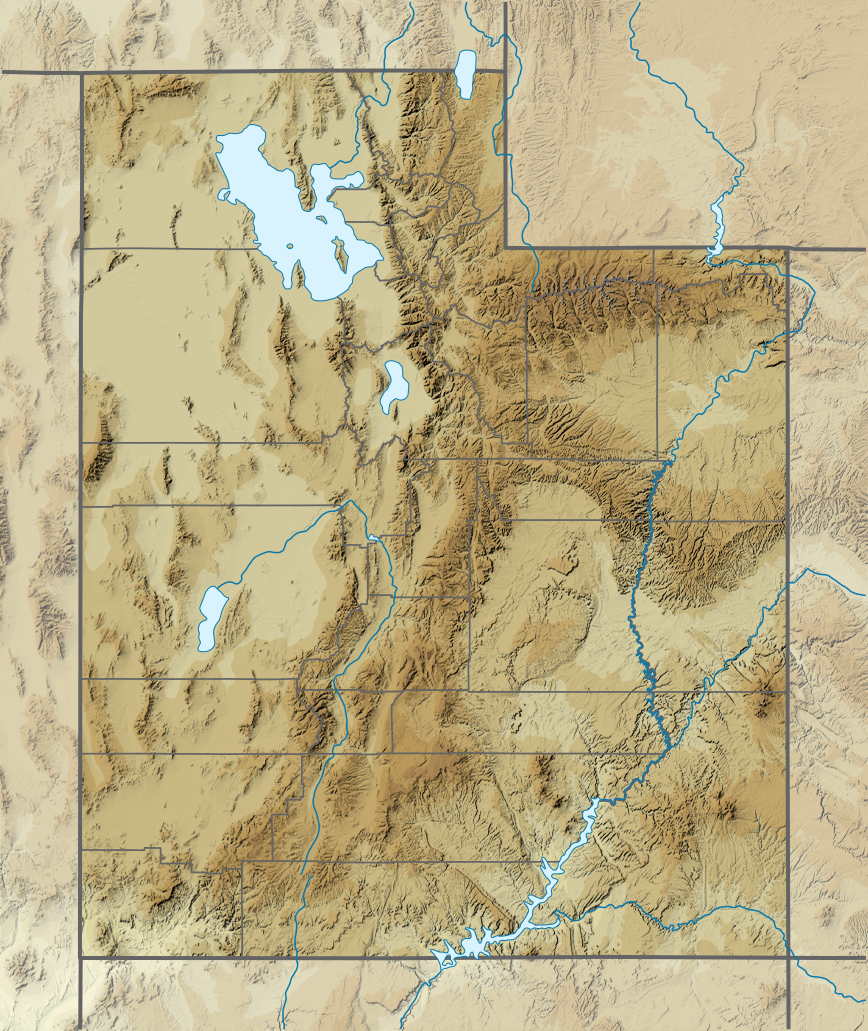
- Location: Juab County, Utah, about 115 miles southwest of Salt Lake City
- Managed by: BLM Fillmore Field Office
- Size: 63,000 acres, including 23,000 acres of open dunes
- Fee: $18 per vehicle per night, or $120 annual
- Camping: 4 campgrounds, 255 developed sites, no reservations
- Season: Open year-round
- Signature feature: Sand Mountain, rising nearly 700 feet
- Best for: Full-size 4x4s and overland rigs learning soft sand
8 min read
In This Guide
- Little Sahara Sand Dunes Utah: What You Are Driving Into
- Little Sahara Fees, Passes and the 14-Day Limit
- Permits: Why a Registered 4×4 Needs None
- The Four Riding Areas Inside Little Sahara
- Driving the Little Sahara Sand Dunes in Utah
- Camping at Little Sahara: 255 Sites, No Reservations
- Rockwell: 9,000 Acres Closed to Vehicles
- Getting to Little Sahara, Fuel and Cell Service
- Little Sahara vs. Sand Hollow
- Final Verdict
- Frequently Asked Questions
Little Sahara Sand Dunes Utah: What You Are Driving Into
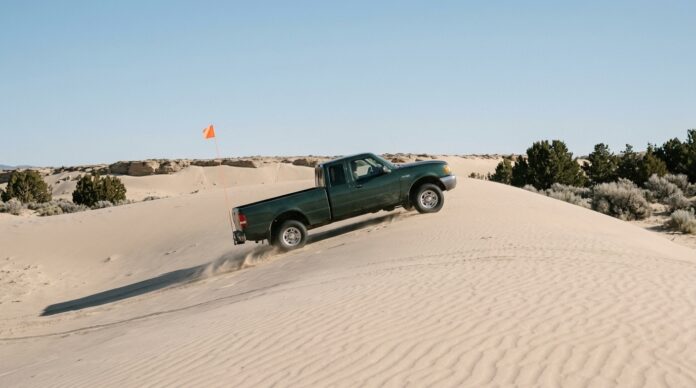
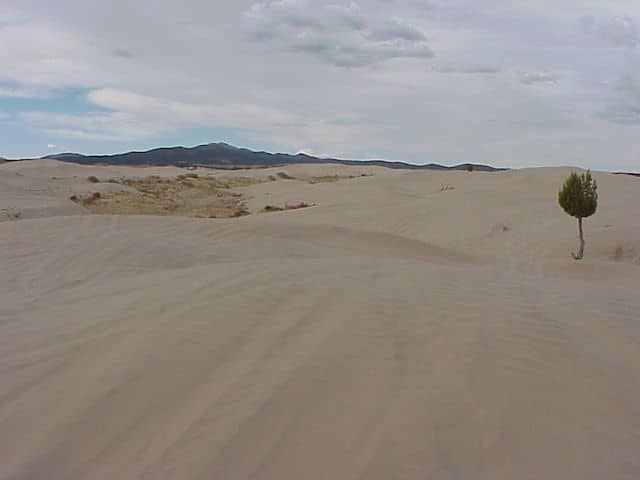
Wide bowls and long runouts give a full-size truck room to build momentum, which is why the Little Sahara sand dunes reward a heavy rig more than most drivers expect. They sit in Juab County, Utah, roughly 115 miles southwest of Salt Lake City and under two hours from the Wasatch Front. The BLM Little Sahara Recreation Area spans 63,000 acres, and roughly 23,000 of those acres are open, free-moving sand left by ancient Lake Bonneville.
Most coverage of this place is written for quads and side-by-sides. Full-size rigs are welcome too, however, and nothing here demands a narrow machine. Those dunes also migrate north and east at 5 to 9 feet per year, so the bowls you drove last spring shift by the next season.
Roughly 300,000 people visit each year, so timing shapes the trip more than skill does. Holiday weekends around Easter, Memorial Day and Labor Day fill the campgrounds first, while midweek in spring or fall the dunes feel close to empty. Shade is the other reason to pick dates carefully. Open sand offers none in July, and the campgrounds carry no hookups for air conditioning.
Little Sahara Fees, Passes and the 14-Day Limit
The fee structure at the Little Sahara Recreation Area is refreshingly simple. One payment covers entry and camping together, so no separate campground charge exists.
| Fee | Amount |
|---|---|
| Standard entry | $18 per vehicle per night |
| Two nights | $36 |
| Six nights | $106, the sixth night discounted |
| Annual pass per vehicle | $120 |
| Annual pass, seniors and people with disabilities | $60 |
| Camping surcharge | None, camping is included |
| Stay limit | 14 days |
The 14-day limit covers your total stay, so a two-week trip is legal while a season-long basecamp is not. A nightly pass runs from your arrival until dusk the following day. Pay online through Recreation.gov, at the Visitor Center when staffed, or with a self-pay envelope onsite. Cash and check carry no processing fee, while an annual pass expires at the end of its purchase month a year later.
Print the pass and lay it folded on the dash with the QR code visible. Motorcycle riders and open-top drivers must carry it on them instead.
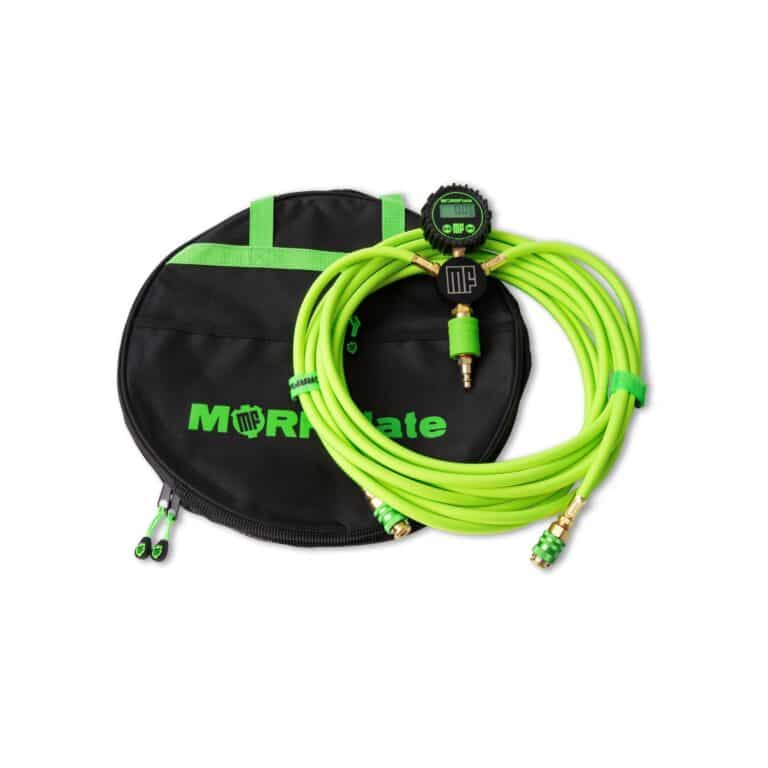
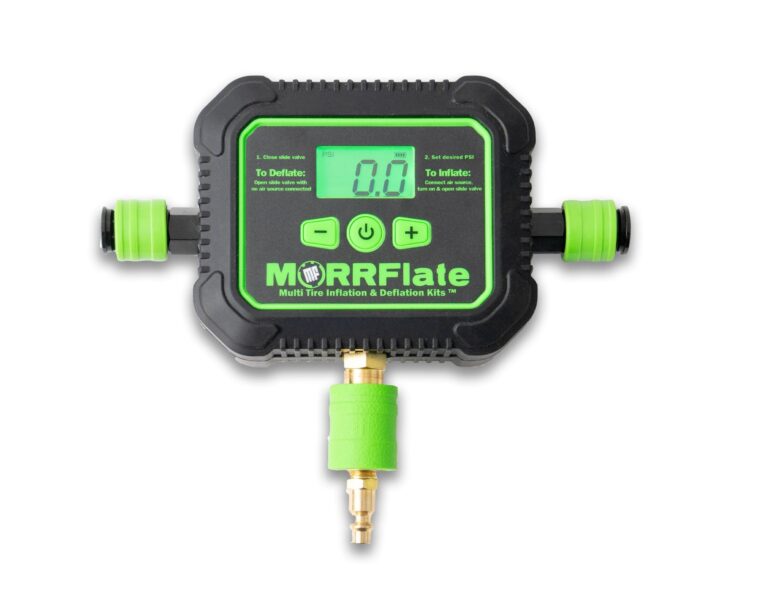
MORRFlate Air Down and Air Up Gear

Permits: Why a Registered 4×4 Needs None
A registered Jeep, Tacoma or full-size truck needs no Utah OHV permit. Utah’s own FAQ says so, and it names those vehicles. However, out-of-state ATVs, UTVs, dirt bikes and snowmobiles do need a non-resident OHV permit. It costs $35 and stays valid 12 months from purchase. The state sells it online only, with a $4 duplicate fee, and processing runs up to 20 business days.
Utah’s exact wording matters, so here it is. A machine registered as a passenger vehicle needs no non-resident OHV permit, because Utah does not classify it as an off-highway vehicle. Jeep, Tacoma and Land Rover appear by name in the same guidance, alongside street-legal motorcycles registered in another state.
Trailered machines still need their own paperwork, since the permit attaches to the machine rather than the operator. Utah also requires every OHV operator to hold a state OHV education certificate, and helmets are mandatory for riders under 18.
Safety note: BLM requires a red or orange whip flag standing at least 8 feet above level ground on OHVs here. Dune crests hide oncoming traffic completely, so run a flag on a full-size rig as well. Approach every ridge at an angle, slowly enough to stop on the near side.
The Four Riding Areas Inside Little Sahara
Sand Mountain
Sand Mountain rises nearly 700 feet and draws the crowds. Geologists describe it as a bedrock barrier standing at right angles to the prevailing wind, which is why sand piles against it. BLM lists it as advanced terrain, and the hill climbs reward light, powerful machines rather than heavy trucks. Instead, park at the base, watch the climbs, and spend your driving time in the bowls.
White Sand Dunes
The north end holds the White Sand Dunes, with easy access and a variety of bowls suited to every skill level. Most full-size drivers should start here. Bowls give you a visible runout, so a stuck rig sits within sight of the road.
Southwest of Black Mountain
Low-lying dunes southwest of Black Mountain form the beginner zone and stay less crowded. Sand here is shallower, and a mistake costs a shovel rather than a recovery.
Black Mountain Trails
Black Mountain itself carries a network of dirt trails for traditional trail riding. For an overland rig, this is arguably the best terrain in the unit, since it strings together real miles instead of loops in a bowl.
Driving the Little Sahara Sand Dunes in Utah
Sand rewards float over grip. Airing down widens the footprint, drops ground pressure and keeps the tire on top of the surface instead of digging through it. The National Park Service tells drivers on its own sand routes to run 15 to 20 PSI, and closer to 20 in dry, soft sand. Our airing down guide by terrain walks through the same trade-offs.
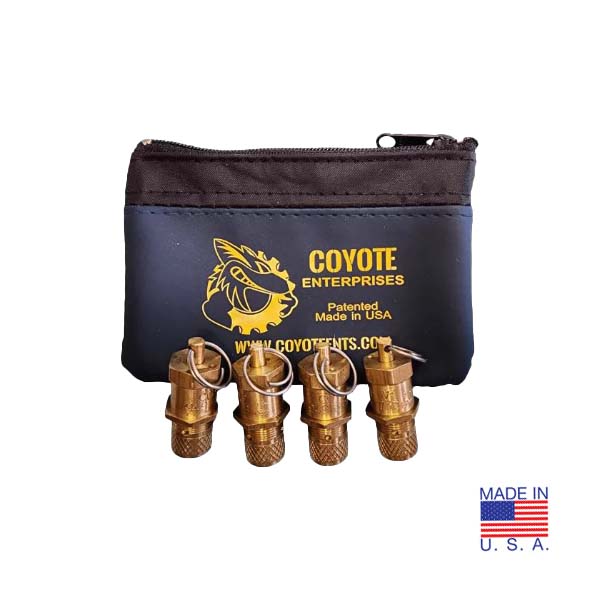
Weight changes the math. A rig carrying a rooftop tent, drawers, water and fuel needs more pressure than an empty short-bed, because the sidewall still has to support the load. Start conservatively, drive 100 yards, then drop further in small steps while watching for the bead to squirm under steering. A gauge-equipped deflator makes those steps repeatable, and our tested deflator roundup covers the current field.
Momentum matters more than horsepower. Pick a line, commit early, and keep steering inputs gentle. Above all, avoid stopping on an upslope, since restarting on soft sand digs a trench under the rear tires. Our sand driving technique guide covers throttle and line selection in detail.
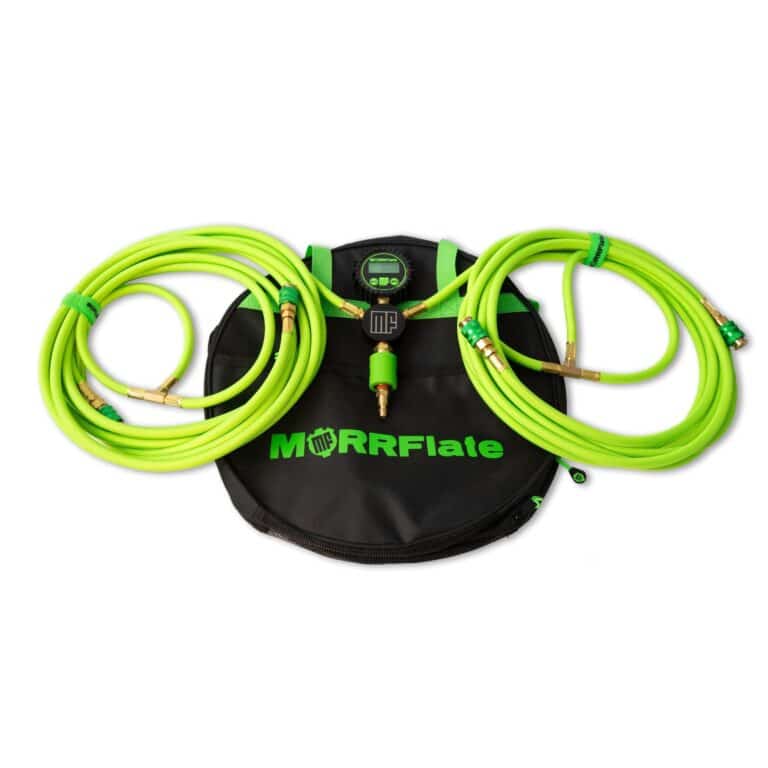
BLM lists no air station among the facilities inside the boundary. Whatever pressure you drop to, you carry the tool to reverse it, and the nearest services sit roughly 23 to 38 miles away. Reinflating four tires from dune pressure is a long, hot job for a small pump. Therefore size the compressor for a continuous four-tire run, not for topping off a spare. Carrying a shovel and traction boards matters equally, because digging out of soft sand gets harder the longer the tires spin.
Camping at Little Sahara: 255 Sites, No Reservations
BLM counts 255 developed sites across four campgrounds, and none take reservations. Sand Mountain carries no published site number, so the three counts below do not reach the total alone. Everything is first come, first served, which is why holiday weekends reward an early Friday arrival.
| Campground | Sites | Notes |
|---|---|---|
| Oasis | 115 | Most developed, paved RV pads, dump station, easy dune access |
| White Sands | 100 | Junipers, northern dunes, flush toilets in warm months |
| Jericho | 40 picnic sites, camping allowed | Groups and overflow, ramadas, amphitheater, play area |
| Sand Mountain | Not published | Undesignated sites on three paved loops, water, restrooms, closest to the hill |
Dispersed camping is permitted outside the developed campgrounds, away from established roadways, under standard Leave No Trace rules. Flush toilets run during the warmer months, while vault toilets stay open all year. BLM listed the water fill stations and both dump stations as open at the time of writing, so check its facilities status before you leave. Anyone who prefers free sites has options across the rest of the state as well.
Glass containers, wooden pallets and paintball guns are prohibited, and burning pallets is illegal. Tunneling in the sand is also banned because of collapse risk, which sounds obvious until you watch children start digging.
Rockwell: 9,000 Acres Closed to Vehicles
One boundary matters more than any other. BLM closes roughly 9,000 acres, the Rockwell Wilderness Study Area, to all vehicles. Recreation.gov calls the same ground the Rockwell Natural Area in one place and the Rockwell Outstanding Natural Area in another. It also sizes the closure at 6,000 acres against BLM’s 9,000. Names vary. The closure does not.
Hike it instead. Mule deer, pronghorn antelope, 15 bird species and the desert whipsnake live there. The dunes also support a giant four-winged saltbush found naturally nowhere else on earth.
Getting to Little Sahara, Fuel and Cell Service
From I-15 take the Nephi exit, run west 14.5 miles on SR-132, then turn northwest on Juab County Route 1812 at the Sand Dunes sign. The recreation area entrance sits 4 miles west of Jericho Junction. Eureka lies about 23 miles away, Nephi about 28 miles, and Delta about 38 miles.
BLM lists no fuel, store or ice inside the boundary. Fill up in Nephi coming from the north or Delta coming from the south, and carry more water than you plan to drink. Air belongs on the same list, since the only compressor at Little Sahara is the one you brought.
Cell service is limited and unreliable across every carrier. Visitor Center Wi-Fi reaches Recreation.gov and nothing else, so download maps before you leave pavement. Sixteen miles of paved road serve the campgrounds, and everything past them is sand or dirt.
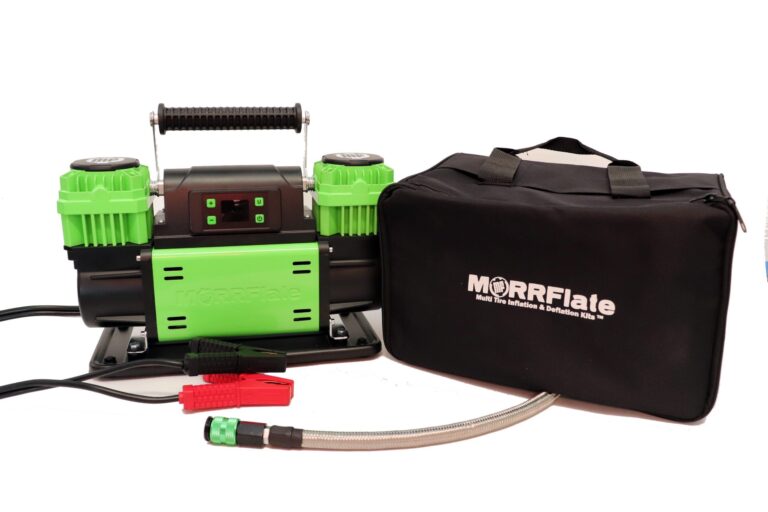
MORRFlate TenSix PSI Pro 12v Portable Compressor - Gen2
$325. 10.6 CFM at 0 PSI and 6.5 CFM at 30 PSI, sized for a continuous four tire run rather than topping off a spare. Preset PSI auto mode covers 10 to 120 PSI, manual runs 1 to 150, and the 80 percent duty cycle at 0 PSI allows 45 minutes on and 10 minutes off. Draw is 90 amps peak, about 50 running, with a 3 year no hassle warranty.
See It at MORRFlateLittle Sahara vs. Sand Hollow
Utah offers two well-known sand destinations, and they suit different trips. Sand Hollow near Hurricane pairs dunes with slickrock, sits close to St. George services, and works as a day stop on a southern Utah loop. Our Utah off-road trails guide covers the southern half of the state.
Little Sahara trades scenery variety for volume of sand and a lower price of entry. You get 23,000 acres of open dunes, 255 campsites, and one $18 fee covering entry and camping together. A Utah state park, by contrast, bills day use and camping separately.
Choose by trip length. A weekend of nothing but sand and dune camping belongs at Little Sahara, while a mixed rock-and-sand week belongs further south.
Final Verdict
Little Sahara is the most approachable big dune field in Utah for a full-size 4×4. Beginner terrain, intermediate bowls and an advanced hill sit within a few miles of each other, so one weekend covers the whole learning curve.
The trade-offs are real. Crowds arrive on holiday weekends, no reservation system protects you, and services stop at the boundary. Anyone who needs a guaranteed site or a store within walking distance should look at a state park instead.
Value stands out. An $18 pass covers a night of camping plus dune access for the whole vehicle, and $120 covers a year. Little else in Utah opens this much sand for the price.
Come prepared to manage your own air. Airing down is what makes the sand work, reinflating is what gets you home, and nothing inside the gate does either job for you. Bring the compressor, the flag and the shovel, then enjoy 23,000 acres of open sand.
Frequently Asked Questions
How much does Little Sahara cost?
Entry is $18 per vehicle per night, and camping is included at no extra charge. An annual pass costs $120 per vehicle, or $60 for seniors and people with disabilities.
Do you need a Utah OHV permit for a Jeep or truck?
No. Utah states plainly: a machine registered as a passenger vehicle needs no non-resident permit, because the state does not classify it as an off-highway vehicle. A trailered ATV or UTV from out of state still needs a $35 permit.
Is Little Sahara open year-round?
Yes. BLM publishes no seasonal closure for the recreation area itself. Visitor Center hours and flush-toilet availability shift with the seasons, while vault toilets stay open all year.
Do you need a reservation to camp at Little Sahara?
No. All 255 developed sites across the four campgrounds are first come, first served, and no reservation system exists. Dispersed camping is also permitted away from established roadways.
What tire pressure should you run in the dunes?
The National Park Service advises 15 to 20 PSI for sand driving, and closer to 20 in dry, soft sand. Drop pressure in stages, then reinflate before you reach pavement, since BLM lists no air station inside the boundary.
How tall is Sand Mountain?
BLM describes Sand Mountain as rising nearly 700 feet. No surveyed figure is published, so treat 700 feet as the accepted approximation rather than an exact height.