


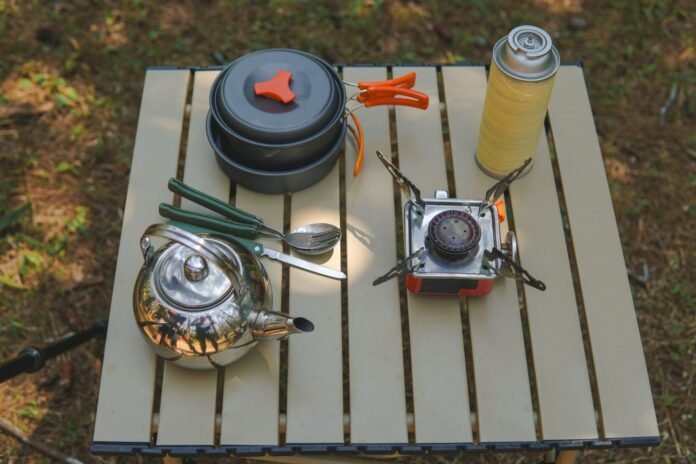
Quick Facts:
- Topic: Camping cookware for a truck or SUV, from set size to material.
- Metals covered: Hard-anodized aluminum, stainless steel, titanium, and cast iron.
- Best all-around pick: A stainless nesting set plus one cast iron skillet.
- Crew size: MSR rates its Alpine 2 Pot Set, a 1.5 L and 2 L stainless pair, for two to three people.
- Weight range: The Snow Peak Trek 900 titanium cookset weighs 6.2 oz, and a Lodge 10.25 inch skillet weighs 5.66 lb.
- Biggest truck-bed risk: Non-stick coatings scratch while nested, and loose parts rattle.
- Best for: Truck, SUV, and overland campers building a camp kitchen.
7 min read
In This Guide
- Choosing Camping Cookware for a Truck or SUV
- What Washboard Roads Do to Your Cookware
- Camping Cookware Materials Compared
- Hard-Anodized Aluminum vs. Stainless Steel
- Cast Iron: The One Heavy Piece Worth Carrying
- Sizing a Nesting Cookware Set to Your Crew
- Pack and Clean Your Camping Cookware
- Five Camping Cookware Features Worth Paying For
- Final Thoughts
- FAQ
Choosing Camping Cookware for a Truck or SUV
Camping cookware decides how well dinner cooks and how loud your drawer gets on a washboard road. Many buying guides target backpackers, so they chase ounces. In a truck or SUV, however, weight matters less. Durability, even heat, and a stack quiet enough to ignore matter more.
This guide treats overland cookware as a vehicle problem. First, it compares four metals. Next, it shows how to size a nesting cookware set to your crew and lists five features worth paying for. For the whole kitchen, including stoves and meals, start with our complete overland camp kitchen setup guide.
My short version: pair a small stainless nesting set with one heavy skillet. Many owners run a similar pairing, and I agree with them. Stainless survives rough handling, while the skillet covers searing.
Three sets show the range in size and metal. The Stanley Adventure All-in-One 2 Bowl Cook Set is a stainless set for two. GSI Outdoors makes the Glacier Stainless Camper, a stainless set sized for four. The MSR Quick 2 Camping Cook Set uses hard-anodized aluminum with a non-stick 1.5 L pot.
Three nesting cookware sets compared

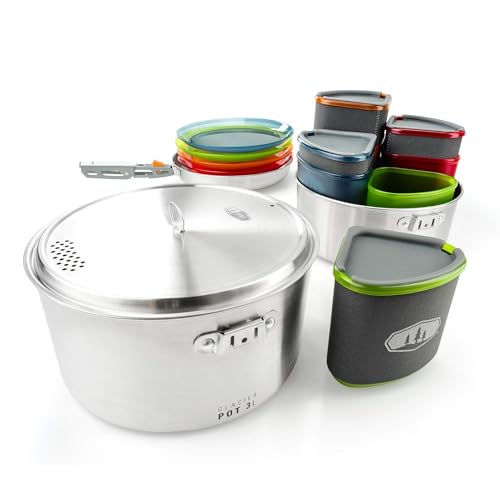
GSI Outdoors Glacier Stainless Camper 4 Person Packable Cookware & …

What Washboard Roads Do to Your Cookware
A truck bed shakes everything loose over time. Owners report three recurring problems: scratched non-stick, scorched food, and rattling parts prone to breaking.
Non-stick fails first. Owners on Overland Bound and Expedition Portal describe coatings scratching and flaking when pots nest without protection or meet metal utensils. Poison Control also advises low to medium heat, no preheating of an empty pan, and replacing scratched pans. It puts the start of PTFE breakdown above about 500°F.
Thin bottoms scorch next. A small, high-output burner concentrates heat under a thin pot, so food scorches. Owners say a thick or clad base fixes more problems than the choice of metal.
Finally, small parts fail. Owners report broken plastic tabs, loose lid holders, and dented titanium. Cast iron also rusts when it sits in a damp galley. Therefore, check handles, lids, and fasteners before you buy, and pack with a folded towel between pieces.
Check how the set stacks, too. Pots with straight sides and flat lids nest tightly, while bulging handles leave gaps where parts shift. A tight stack moves less, so it also wears less.
Camping Cookware Materials Compared
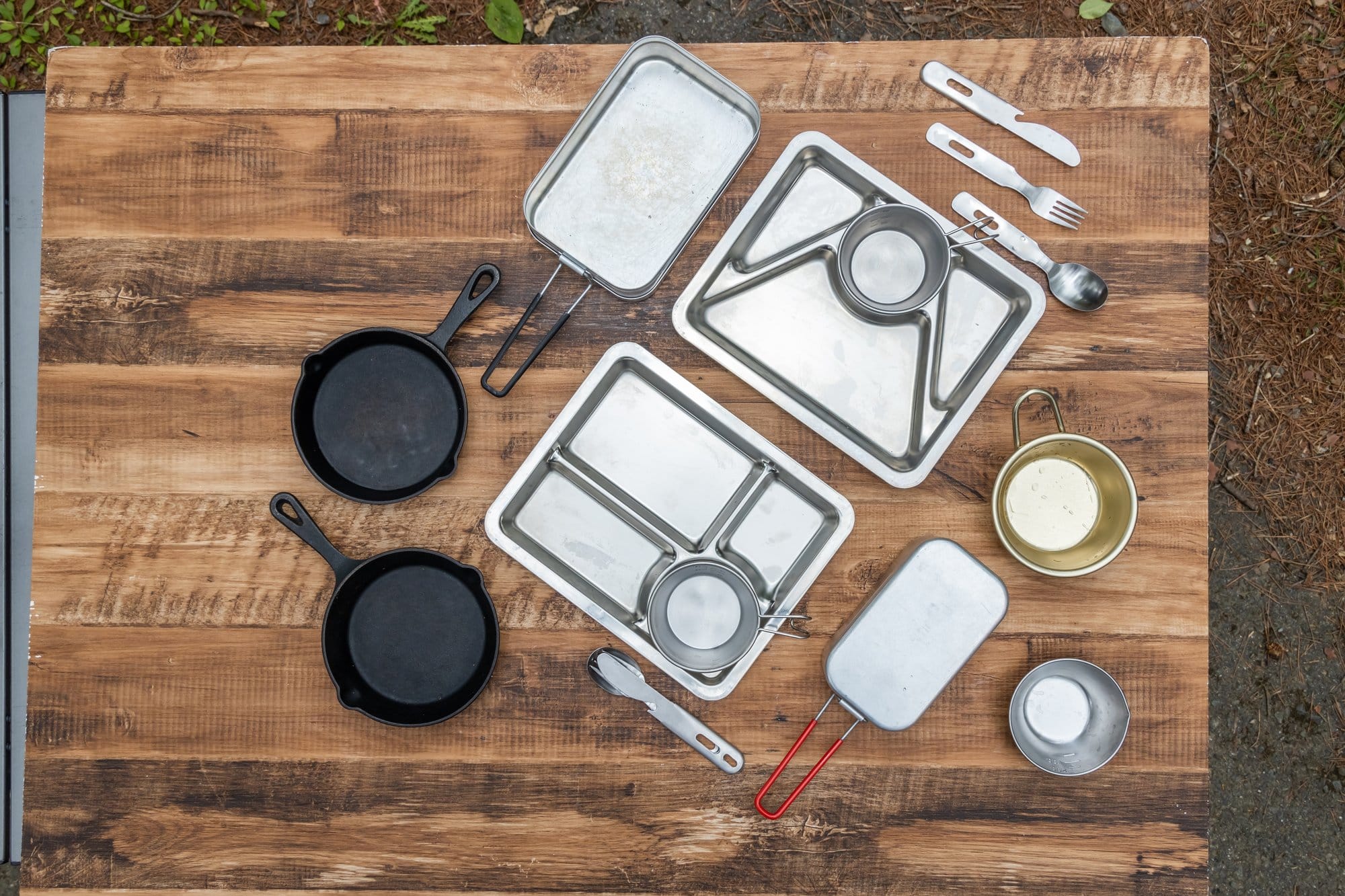
Four metals cover almost every set. Heat behavior drives most of the difference. An engineering reference table lists aluminum at about 237 W/m·K, cast iron at about 52, titanium at about 22, and stainless steel at about 14. Aluminum therefore spreads heat more than 15 times better than stainless. Owners say a thick base fixes more problems than the metal, so treat this gap as one factor.
| Material | Heat behavior | Weight example | Watch for |
|---|---|---|---|
| Hard-anodized aluminum | Even and quick | MSR Quick 2 set: 27.5 oz | Scratched coatings |
| Stainless steel | Hot spots on thin bases | MSR Alpine 2 Pot Set: 1 lb 10 oz | Scorching on thin bottoms |
| Titanium | Boils water well, forms hot spots | Snow Peak Trek 900: 6.2 oz | Dents |
| Cast iron | Strong heat retention | Lodge 10.25 inch skillet: 5.66 lb | Rust and weight |
The weights come from each maker’s own page. Read them as examples, not a contest, because a skillet and a mug pot do different jobs. MSR says titanium suits boiling water but also forms hot spots, so it fits a mug pot better than a family dinner.
Hard-Anodized Aluminum vs. Stainless Steel
For heat, hard-anodized aluminum comes out ahead. MSR says anodized aluminum conducts evenly and quickly, and GSI Outdoors calls its hard-anodized surface non-reactive and exceptionally even-heating. It suits sauces, eggs, and gentle simmers.
However, many hard-anodized sets add a non-stick coating, which is the weak point on a rough road. Stainless has no coating to flake. MSR calls it the toughest and most scratch-resistant of its three materials, so metal spoons and hard scraping do little harm.
Stainless conducts heat poorly, as MSR notes, so the base matters. I look at the base before I look at the metal. My Bereg wood stove does the cooking by day, which is one more reason I want a thick base under a pot.
For a truck or SUV, stainless is my pick. If you simmer often and treat your pots gently, a hard-anodized set earns its place.
Cast Iron: The One Heavy Piece Worth Carrying
A truck has the payload, so cast iron makes sense. Lodge lists its 10.25 inch skillet at 5.66 lb. Its 5 qt Dutch oven weighs 13.29 lb, so the skillet is the easier pick. Owners accept the weight because the pan survives abuse and sears well.
Cast iron rusts when it stays damp, however. Dry it after washing and wipe on a thin coat of oil. Our notes on cast iron skillet seasoning and care cover the routine, and the camp Dutch oven sizes and materials primer handles the pot side. Owners also like carbon steel as a lighter skillet alternative.
Sizing a Nesting Cookware Set to Your Crew
Pot volume sets the crew size. MSR rates its Alpine 2 Pot Set, a 1.5 L and 2 L stainless pair, for two to three people. Its Quick 2 aluminum set, with a 1.5 L and 2.5 L pot, serves two. Sea to Summit says its 3 L Detour pot serves two. GSI Outdoors lists the Glacier Stainless Camper, with 3 L and 2 L pots and a 9 inch pan, for four people.
Weight matters less in a truck, but it still adds up. The MSR Quick 2 set weighs 27.5 oz, and Sea to Summit lists its Detour 5 piece stainless set at 45.5 oz.
Pick the camp cookware set by headcount. For three or more, buy the larger set, or add a skillet and a second pot so dinner finishes in one round.
Count the pieces you will use, too. A 19-piece kit looks like a bargain, yet each extra piece adds rattle without adding meals. Measure your stove grate first, because pot diameter has to match your burner spacing. Our overlanding food system guide pairs a 10 inch cast iron skillet with a 4 qt stainless pot as a two-piece kit.
Pack and Clean Your Camping Cookware
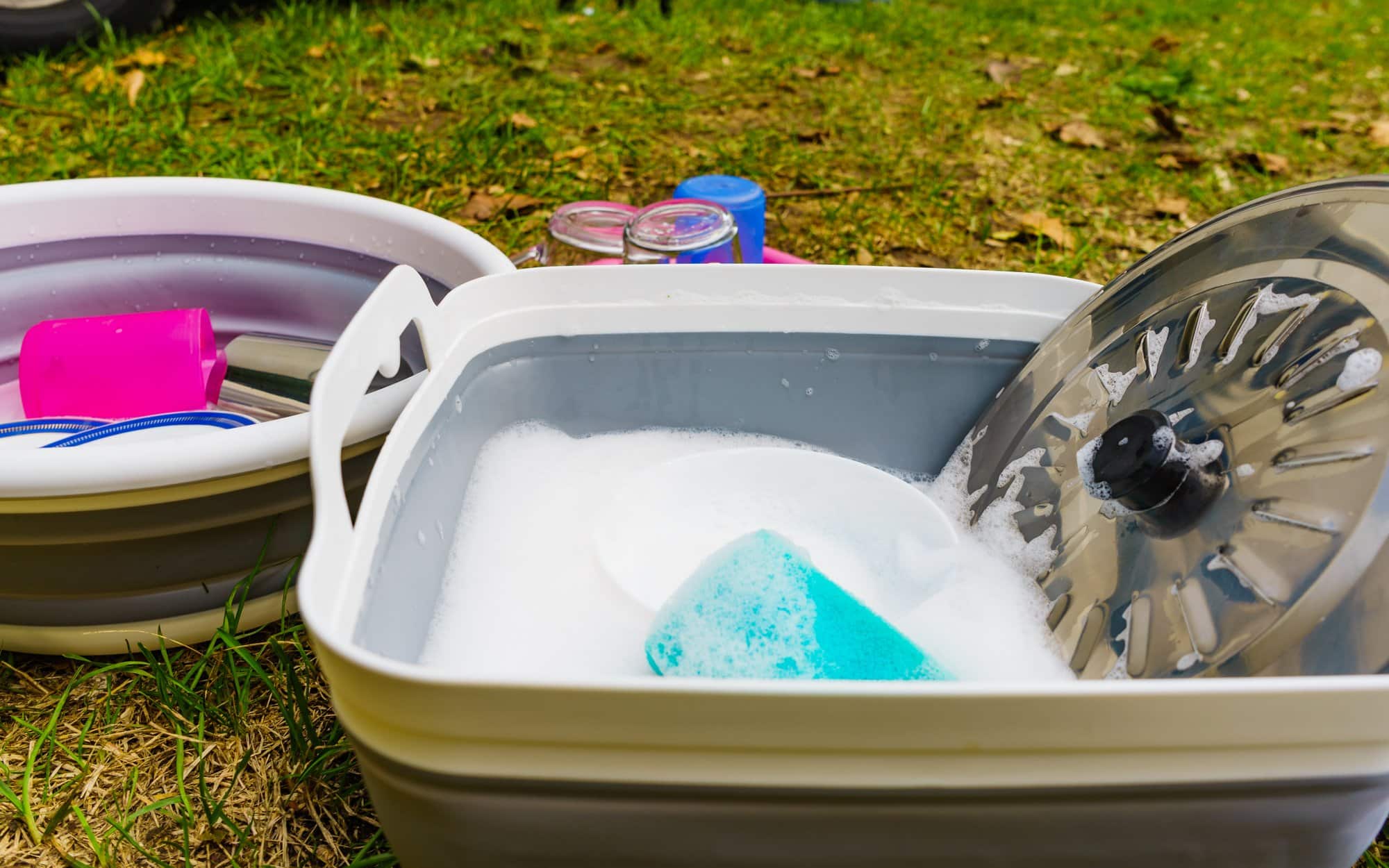
Follow the same packing order every trip. Put a folded towel or felt between pots, nest the small pieces inside the big one, and load the set into one dedicated bin or lidded bag. Our guide to organizing cooking gear in one crate shows the layout.
Cleaning takes less water than you expect. Scrape food into the trash and wash with a small amount of biodegradable soap. Then scatter strained wash water at least 200 feet from streams and lakes, as Leave No Trace advises.
Four small items round out the kit. The MSR PanHandler Camping Pot Grip replaces fragile handles. Classic Campsuds Biodegradable Camping Soap and the Lodge Chainmail Scrubbing Pad handle cleanup. The ONETIGRIS Camping Storage Bag with Lid keeps the stack in one place. Use the chainmail pad on cast iron, and keep it away from non-stick.
Care and packing gear

MSR PanHandler Camping Pot Grip with PackTowl Carry Sleeve


Five Camping Cookware Features Worth Paying For
Specs sell a camp cookware set, but a few details decide whether it survives a truck.
A Thick or Clad Base
Heat spreading starts at the bottom. A thick base cuts scorching on small burners.
Everything Nests Inside One Pot
Owners favor sets where the plates, mugs, and utensils nest inside the largest pot. One stack means one item to load and nothing to lose.
Folding or Removable Handles
While folding handles shrink the stack, removable handles let one pot gripper serve the whole set. Check the lock, because a loose handle fails with hot food inside.
A Strainer Lid
Pasta drains through a strainer lid without a separate colander, which removes one more item from the drawer.
Bare Metal Inside
Skip the coating where you have a choice. Bare stainless takes metal utensils, and nothing flakes into your food.
Final Thoughts
If I were outfitting a truck today, I would buy a stainless nesting set sized to my crew and one cast iron skillet. I would skip the non-stick, because a washboard road is hard on a coating. Check the base thickness, the handles, and the lid before you pay.
Hard-anodized aluminum and titanium still have a place. Titanium works for boiling water and light kits, while anodized aluminum earns its place in gentle cooking if you protect the coating. A truck gives you the room to choose durability instead.
Start small. Buy one good set, one skillet, and a bin to hold them, then add pieces after a few trips show you what you reach for. Good overland cookware is the cookware you stop thinking about. Dinner comes together, the drawer stays quiet, and the evening is yours.
FAQ
How do you choose camping cookware?
Start with crew size, then pick a metal. Stainless suits a truck best, aluminum suits gentle cooking, and cast iron covers searing. Look for a thick base, folding handles, and a set where everything nests inside one pot.
What is a nesting cookware set?
A nesting set stacks its pots, lids, plates, and mugs inside one another. The stack stores as one compact unit, which saves drawer space and cuts rattle.
Is stainless steel or aluminum better for camping cookware?
Aluminum spreads heat better, while stainless takes more abuse. Hard-anodized aluminum suits gentle cooking. Stainless suits rough roads and metal utensils, especially with a thick base.
How do you stop cookware from rattling in a truck?
Put a folded towel or felt between pieces, nest small items inside the biggest pot, and load the stack into a lidded bin or bag. Then strap it down so it stays put.
How do you clean camping cookware without a sink?
Scrape off food, wash with a small amount of biodegradable soap in a basin, and scatter strained water at least 200 feet from streams and lakes. Dry cast iron right away and oil it lightly.