


Quick Facts:
- Topic: 3PMSF tires and the severe snow mark on a sidewall.
- What it certifies: A passing score for acceleration grip on medium-packed snow.
- Pass mark: A snow grip index of 1.10 against a 14-inch reference tire, or 1.12 against a 16-inch one.
- Test method: ASTM F1805-18 snow traction test, per the USTMA definition.
- Not tested: Braking on snow, cornering on snow, and ice traction.
- Sidewall marking: The letters M and S plus a mountain pictograph with a snowflake inside.
- Best for: Truck and SUV owners choosing an all-terrain tire for winter driving.
8 min read
In This Guide
- What 3PMSF Tires Are
- Where to Find the 3PMSF Symbol on Your Tires
- What 3PMSF Tires Must Prove in the Test
- What the Symbol Does Not Promise
- How 3PMSF Tires Compare to M+S and Winter Tires
- Where the Symbol Matters for Traction Laws and Tire Rules
- All-Terrains With the Symbol
- What to Carry With a Snow-Rated Tire
- Final Thoughts
- FAQ
What 3PMSF Tires Are
3PMSF tires carry a sidewall symbol of a mountain with a snowflake inside. The mark means the tire met a minimum score for acceleration grip on medium-packed snow. A standardized test scores each tire against a reference tire. The mark does not rank tires, and it promises nothing about braking, cornering, or ice.
It is easy to read the symbol as a winter tire label. However, the 3PMSF meaning is narrower. Tire Rack states it plainly: all winter tires wear the symbol, but not every tire with the symbol is a winter tire.
This guide covers the test, the pass mark, and the limits. It also explains where the symbol matters for traction rules, which all-terrains carry it, and what to pack with them. If you shop for all-terrains and see snow on your route, those details tell you which tires are worth a closer look.
Where to Find the 3PMSF Symbol on Your Tires
First, look on the sidewall next to the M+S marking. A qualifying tire shows the letters M and S plus a three peak mountain snowflake pictograph. Its middle peak is tallest, with a six-sided snowflake inside the mountain. Specifically, the USTMA definition sets a minimum of 15 mm, about 0.6 inch, for both base and height. As a result, the mark is easy to spot.
Next, check the exact size you run. Manufacturers qualify tires size by size, and some all-terrains carry the symbol on only part of the range. For example, our Hankook Dynapro AT2 review shows M+S on every size but the snowflake on select sizes only.
Tread depth matters as much as the mark. Colorado, for instance, asks for 3/16 inch of tread on qualifying tires under its traction law.
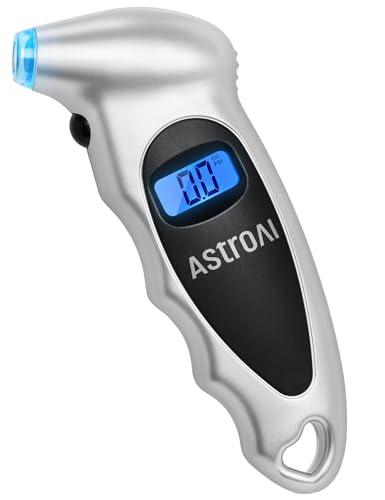
Three low-cost tools cover these checks. LUMITECO tread gauges come in a two-pack and read in 32nds of an inch, so 3/16 inch (6/32) is simple to check. AstroAI’s digital gauge reads to 150 psi, and OlarHike’s inflator tops out at 150 psi, enough for truck tires.
Tire check tools for snow season


OlarHike 12000mAh Heavy Duty Tire Inflator Portable Air Compressor
What 3PMSF Tires Must Prove in the Test
Finding the mark is the easy part. Knowing what it proves takes a look at the test. In 1999, the U.S. Tire Manufacturers Association (USTMA) and the Rubber Association of Canada agreed on a performance standard for passenger and light truck tires, according to Tire Rack. The current USTMA definition sets the numbers. It also allows other test methods and reference tires from standardizing bodies, provided proper correlations are demonstrated.
| Item | Requirement |
|---|---|
| Test method | ASTM F1805-18 snow traction test on a medium-packed snow surface |
| Pass mark, 14-inch reference tire | Snow grip index of 1.10 or higher (reference tire P195/75R14) |
| Pass mark, 16-inch reference tire | Snow grip index of 1.12 or higher (reference tire P225/60R16) |
| Test load on candidate tires | 74% of the test inflation rated load |
| Tire types covered | Passenger and light truck tires, including LT sizes |
The index works as a ratio. A reference tire scores 1.00, so 1.10 means 10% more acceleration traction than the reference tire. Some regulations multiply the figure by 100 and call it a traction index. As a result, you also see 110 and 112 in print.
What the Symbol Does Not Promise
Tire Rack notes the test measures acceleration traction on medium-packed snow only. Braking and turning on snow are not components, and neither is ice traction. The test also does not measure deep powder or slush. A tire needs to meet one threshold, and many tires across many categories meet it.
Tire Rack reports tires with the symbol generally outperform standard all-season tires when braking and cornering in winter. However, the symbol itself does not guarantee this result, particularly on non-winter tires. The same source also reports 3PMSF all-season and all-terrain tires cannot match dedicated winter tires in all winter conditions.
Ice also has its own mark. USTMA’s bulletin for passenger tires requires an ice grip index of 1.18 or higher against the 16-inch reference tire. Those tires must also meet the severe snow definition. The ice mark shows a mountain with icicles instead of a snowflake.
For example, two tires with the same symbol still differ. Our KO3 vs AT4W comparison covers a matching-size test where the KO3 beat the A/T4W on every shared snow measure and lost to it on both ice measures. My take: treat the symbol as a starting point, then read independent snow and ice results before you buy.
How 3PMSF Tires Compare to M+S and Winter Tires
The table below shows what each marking tells you, using the sources cited above.
| Marking | What it tells you |
|---|---|
| M+S | Based on tread pattern geometry, with no guarantee of snow performance |
| 3PMSF | Passed the snow acceleration test at an index of 1.10 or 1.12 |
| Ice Grip Symbol | For passenger tires, passed an ice grip test at 1.18 or higher, plus the severe snow definition |
| Dedicated winter tire | Always carries the snowflake, with a compound, tread, and construction built for cold |
Mud-terrain buyers should note the gap between M+S and the snowflake. Two of the five tires in our roundup of mud-terrain tires without the snowflake state an M+S rating, and none carries the snowflake. As a result, an M+S mud-terrain and a 3PMSF all-terrain are not interchangeable for winter trips.
Where the Symbol Matters for Traction Laws and Tire Rules
Some winter driving rules name the snowflake mark, but rules vary by state and province. Agencies change them, so read the local text each season. In Colorado, the Passenger Vehicle Traction Law accepts AWD or 4WD vehicles with tires marked mud and snow. The marking appears as the mountain-snowflake icon or M+S, and the tires need 3/16 inch of tread. Chains or an approved alternative traction device also comply. The penalty for non-compliance includes a $100 fine plus a $33 surcharge.
An M+S tire with enough tread satisfies Colorado’s traction law on an AWD or 4WD truck. Only the snowflake mark reflects a snow test. In Quebec, the standard is stricter. Passenger vehicles registered there must run winter tires from December 1 to March 15. Since December 15, 2014, only tires with the snowflake pictogram and studded tires count, according to the SAAQ.
California adds a different use for the mark. The California Energy Commission says its new replacement tire efficiency standard exempts tires marked with the three-peak mountain snowflake. Our breakdown of California’s new tire law exemption explains how it applies to 33s and 35s.
All-Terrains With the Symbol
For instance, two popular overland all-terrains carry the mark. BFGoodrich lists the symbol on its All-Terrain T/A KO3 product page, and Falken lists it on the Wildpeak A/T4W. Our winter off-roading rig guide also names the KO2 and the Falken AT3W as examples of all-terrains to choose over a mud-terrain on most winter routes.
Before you buy, confirm the symbol for your exact size on the manufacturer’s page or the tire itself. Then compare independent snow and ice results for the tire, because the mark settles only the minimum.
What to Carry With a Snow-Rated Tire
A snow-rated tire adds grip, but it does not replace recovery gear. CDOT has the authority to implement traction and chain laws on any state highway. In Colorado, when the passenger vehicle chain law is in effect, every vehicle must carry chains or an approved alternative traction device. For example, CDOT’s approved list includes cable chains and the AutoSock.
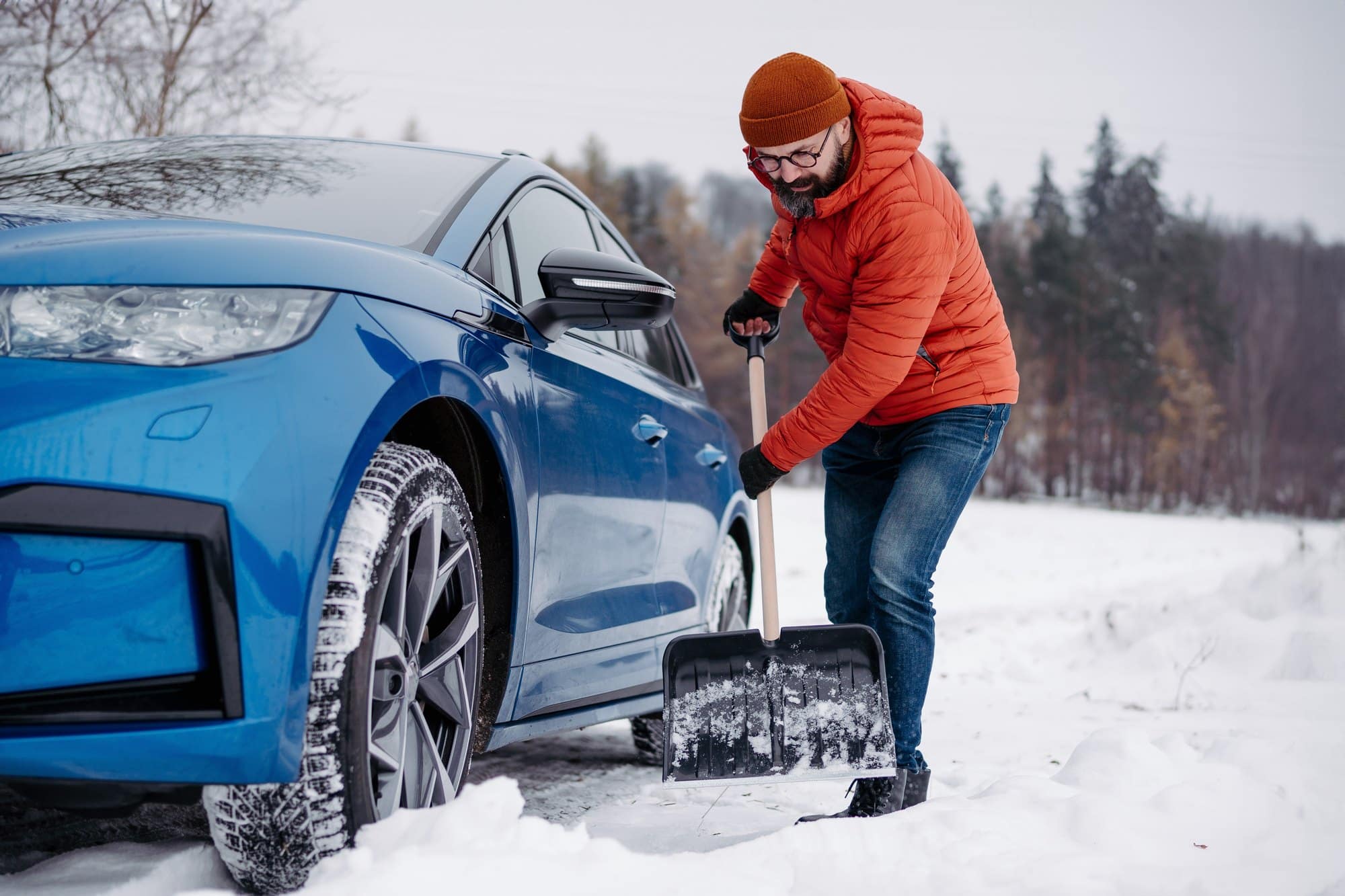
Beyond the legal minimum, our guide to snow recovery gear for frozen ground ranks what to buy first. The order runs steel shovel, traction boards, dry insulated gloves, then tire chains.
Rhino USA’s folding steel shovel digs out a buried tire, and X-BULL traction boards give spinning wheels something to bite. AutoSock HP870 snow socks are size specific, so check the fitment chart against your tire size first. Per AutoSock’s size finder, 265/70R17 and 265/75R16 are among its fits.
Snow recovery and traction gear


X-BULL New Recovery Traction Tracks Tire Ladder for Sand Snow Mud 4…


Final Thoughts
If you came wondering whether the snowflake is worth chasing on an all-terrain, the answer is yes, with limits. It tells you the tire cleared a real, standardized snow test, which the M+S mark never does. In my view, it is the right first filter for an all-terrain, but you should not stop there.
Treat the three peak mountain snowflake mark as a minimum, not a ceiling. It will not tell you how a tire brakes on a snowy hill or how it grips on ice. Read independent results for your exact tire. If you drive icy roads every day, a dedicated winter tire still wins.
For most overlanders, the plan is short. Choose a tire with the symbol in your size. Keep at least 3/16 inch of tread, the Colorado traction law minimum, and pack recovery gear. Then you go into winter with a tire you understand and a short list of known limits.
FAQ
What does 3PMSF mean on tires?
3PMSF stands for three peak mountain snowflake. The sidewall symbol shows a tire passed the industry severe snow test, scoring at least 1.10 or 1.12 against a reference tire on medium-packed snow. However, the 3PMSF meaning covers acceleration traction only.
Is 3PMSF better than M+S?
For snow, yes. M+S reflects tread pattern geometry and carries no performance guarantee, while the snowflake requires a passing score in a measured snow test. A tire might carry both marks.
Are 3PMSF tires worth it?
They are worth it if you drive in snow or cross areas with traction rules. The mark gives you a tested minimum for snow grip. Then check independent braking and ice results before you commit.
Are 3PMSF tires winter tires?
Not necessarily. All winter tires carry the symbol, but many all-season and all-terrain tires carry it too. Dedicated winter tires add compounds and tread designs built for cold weather.
Are 3PMSF tires fine to drive in summer?
Usually. The symbol appears on all-season and all-terrain tires sold for year-round use. Dedicated winter tires carry it too, so check the tire type first. Treadwear and wet-road behavior vary by model, so check each tire’s own warranty and test results.
Is a 3PMSF all-terrain as good as a dedicated winter tire?
No. Tire Rack states 3PMSF all-season and all-terrain tires cannot match dedicated winter tires in all winter conditions. An all-terrain with the symbol suits mixed use, while a winter tire suits daily ice and cold.
Related Reading