


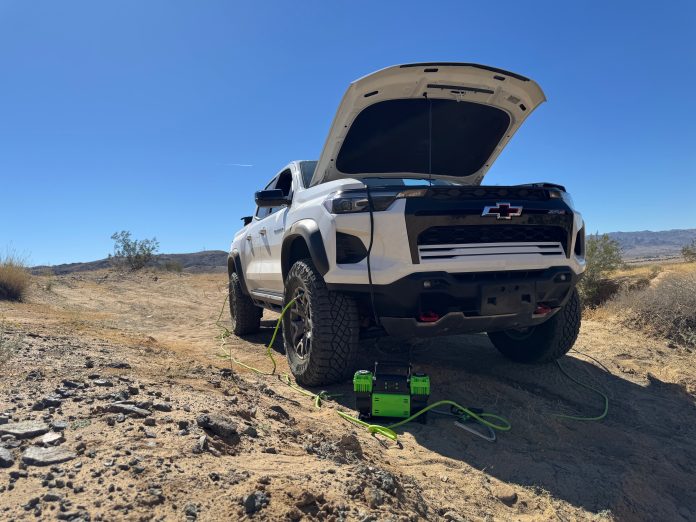
Last updated: February 2026 | 12 min read
Quick Verdict
Airing down your tires is one of the most effective and underutilized techniques in off-road driving. Lower tire pressure increases your contact patch with the ground, improves traction on loose surfaces, and provides a smoother ride over obstacles. The right PSI depends entirely on your terrain. Sand demands the lowest pressures, rocky terrain requires a middle ground, and mud sits somewhere in between. Using a multi-tire inflation system like MORRflate with the Ten Six compressor eliminates the hassle of manually adjusting each tire and lets you refocus on the trail ahead.
Table of Contents
- Why Airing Down Matters
- The Science Behind Tire Pressure
- PSI by Terrain: A Practical Guide
- Tools and Methods for Airing Down
- The Old Way vs. Modern Multi-Tire Systems
- Why MORRflate Changed My Overlanding
- The Critical Step Everyone Forgets: Re-inflation
- Safety Warnings and Best Practices
- Frequently Asked Questions
Why Airing Down Tires Off Road Matters
Airing down tires off road is one of the first skills every overlander should learn. I’ve overlanded and camped in Southern California for years. Big Bear, Joshua Tree, the Mojave. If there’s dirt, sand, or rocks, I’ve driven through it. One thing separates experienced drivers from novices: tire pressure.
Airing down tires off road isn’t randomly letting air out. Instead, it’s deliberately adjusting how your vehicle interfaces with the ground. Reduced pressure flexes tire sidewalls more, spreads your contact patch, and increases traction dramatically. In sand, this means floating over the surface versus bogging down. Over rocks, it means rolling smoothly versus bouncing like a pogo stick.
But the benefits go beyond traction. Because lower pressure absorbs bumps and impacts better, ride quality improves substantially. Your vehicle feels planted, which matters on long trips covering miles of rough terrain. Less bouncing means less fatigue and less vehicle punishment.
The Science Behind Off-Road Tire Pressure
When you lower tire pressure, your tire shifts from a relatively rigid structure to something flexible. As a result, sidewalls deflect more and the tire’s footprint where it touches ground expands. This is your contact patch, and it’s everything in off-road driving.
A larger contact patch means more rubber touching ground. As a result, you get more friction, more traction, and better grip. In sand, the wider contact patch distributes weight over more surface so you don’t sink. Meanwhile, on rocks, your tire conforms to irregular surfaces and maintains contact across more of the rock’s profile.
Lower pressure also changes how your tire responds to obstacles. At higher pressures, your tire hits a rock or root and bounces off. However, at reduced pressure your tire absorbs the impact and molds around the obstacle, maintaining traction throughout. The ride feels more compliant overall.
There’s a limit, though. Go too low and your tire folds because sidewalls collapse too much. This risks pinching the bead off the rim or the tire rolling off entirely. In addition, rolling resistance increases dramatically, burning more fuel. The key is finding the sweet spot for your specific terrain and vehicle.
Airing Down PSI by Terrain: A Practical Off-Road Guide
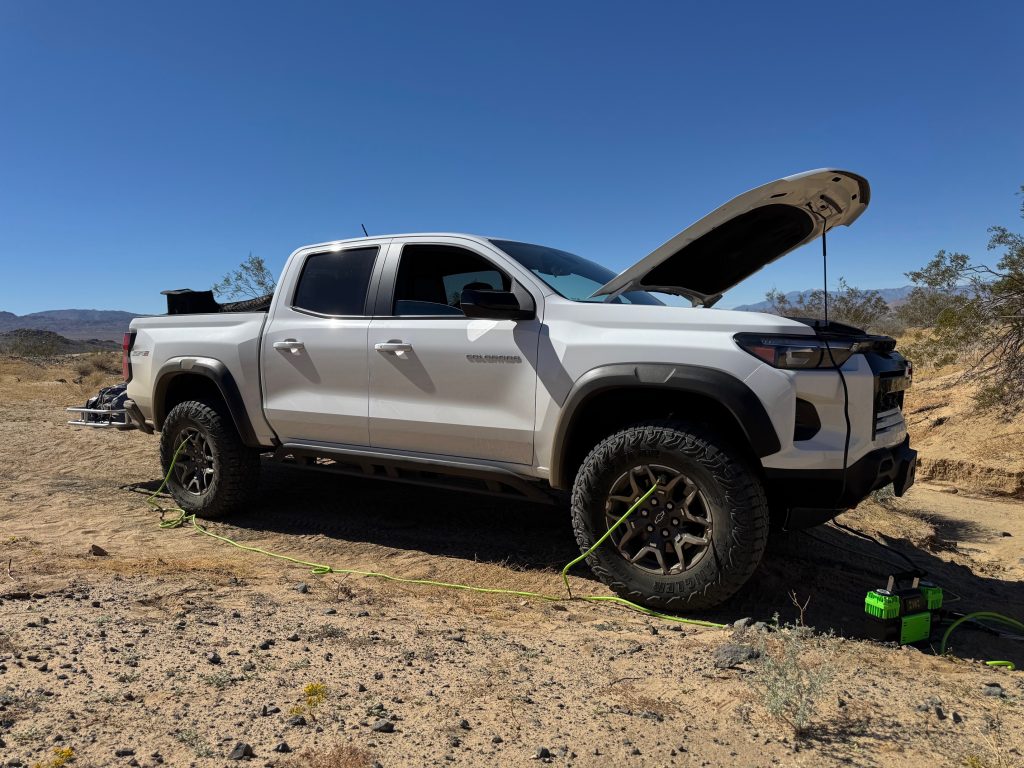
When airing down tires off road, different surfaces demand different pressures, so no universal “air down” number exists. Instead, think about what the ground does to your tire and adjust accordingly.
Sand
Sand is where airing down tires off road matters most. I typically run 12 to 18 PSI depending on softness. For deep powder or dunes, I’ve gone as low as 10 PSI. The softer the surface, the lower you go because sand offers almost no support, so you want maximum float. As a result, your tire spreads out and stays on top rather than sinking. In the Mojave dunes, for example, the right pressure makes the difference between moving steadily and getting stuck.
Mud
Mud is sneaky because it looks different everywhere. For thick, gooey mud where traction’s the problem, lower pressure between 15 and 20 PSI helps since the wider contact patch gives you more grip. However, some mud is more about suction and bogging, where you need to move quickly to avoid sinking. In those conditions, higher pressures sometimes work better, around 18 to 25 PSI, so you’re not pressing weight into the mud as heavily. Traction boards also help in deep mud when tire pressure alone isn’t enough. Ultimately, the right pressure depends on consistency and the specific trail.
Rocks and Rough Terrain
Rocky terrain needs a moderate approach, so I run 20 to 28 PSI on rocky trails. If you go too low, you risk pinch flats or rim damage. On the other hand, going too high means you’re not conforming to rocks, which reduces traction and harshens the ride. The middle ground lets your tire flex for impacts without sacrificing sidewall protection. For example, Big Bear’s rocky fire roads work well with this range.
Snow and Ice
Snow calls for lower pressure, typically 18 to 24 PSI depending on depth and crust. The wider contact patch helps you maintain traction on slippery surfaces. Ice, however, is less about pressure and more about traction devices, although lower pressures still help by spreading weight over a larger area.
Washboard and Corrugated Roads
Washboard surfaces benefit from lower pressure for comfort, around 18 to 24 PSI. Because the extra sidewall flex absorbs vibration rather than transmitting it into the chassis, you feel it less and your vehicle takes less punishment as well.
Tools and Methods for Airing Down Tires Off Road
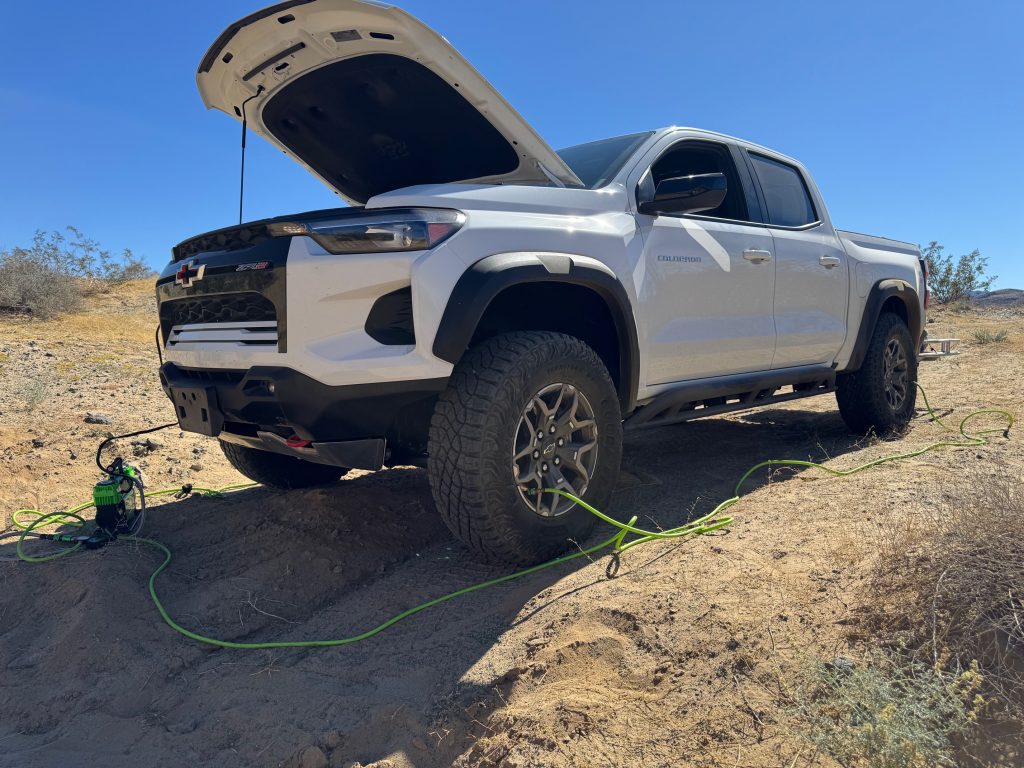
For airing down tires off road, you need two things: a way to let air out and a way to put air back in. Carrying the right overlanding gear makes this process smoother. For letting air out, you have several options. First, a basic air release tool is cheap and simple. It’s a small brass or plastic fitting you screw onto your valve stem to let air bleed off. You control flow by how much you open it. It works, but it’s slow because you’re kneeling at each tire, waiting for pressure to drop, checking the gauge repeatedly. After four tires on a long trip, that gets old fast.
Second, a tire pressure gauge with a bleed valve works better since you get more control and watch pressure drop in real time. But you’re still doing each tire individually, spending time at every wheel.
For re-inflation, you need a compressor, either electric requiring power or mechanical requiring elbow grease. Although a portable 12V compressor works, it’s slow for four tires. You’re waiting forever, melting in heat, ready to move.
The Old Way vs. Modern Multi-Tire Systems
I used the old method of airing down tires off road for years. Letting air out with a bleed tool, checking pressures manually, re-inflating one tire at a time. It worked. Took time, used energy I could spend enjoying the trail, required manual work before and after every drive.
Modern multi-tire inflation systems changed everything. Instead of managing each tire independently, these systems adjust all four simultaneously from a central controller. Air down faster. Re-inflate faster. Spend less time fussing with setup and more time driving.
The workflow difference is significant. You stop kneeling at each wheel, stop checking individual tire pressures, and stop waiting for a compressor. Instead, you dial in your pressure on a controller, the system handles the rest, and you move on. This sounds small until you’re doing it every time you enter and exit a trail. Then it feels substantial.

MORRFlate TenSix Off Road Air Compressor, 12 Volt Heavy Duty Tire Inflator | 10.6 CFM 150 PSI, Dual Cylinder Portable Offroad Air Compressor, 12V 90 Amp, 80% Duty Cycle, 4x4 Truck Overlanding, 4 Tire
FAST 10.6 CFM INFLATION: Air up a set of 35″ tires in under 5 minutes when used with the MORRFlate multi-tire inflation and deflation kits.
- 10.6 CFM dual-cylinder output
- Fills four 35-inch tires in about 5 minutes
- Inflates and deflates four tires at once with the kit
- Overkill for a single daily driver staying on pavement

Why MORRflate Changed My Overlanding
Three years ago, I switched to MORRflate for airing down and re-inflation. Haven’t looked back. Before that, I used other compressors and multi-tire systems. They worked but had compromises, whether it was speed, reliability, a confusing interface, or cheap-feeling quality.
MORRflate is different because the Air Hub autoMagic controller is straightforward. You set your target pressure on the digital display, select deflate or inflate, and press start. Then the system handles all four tires at once. No juggling valves or manual labor.
What impressed me most, though, is the Ten Six compressor. It’s powerful and reliable. After three years of overlanding and field testing, it’s bulletproof. I’ve used it in heat, dust, sand storms, and cold weather, and it performs consistently. Moreover, the company keeps improving hardware, listens to feedback, and makes updates. Their hoses have a lifetime warranty, which says something about their confidence.
The time savings matter most, however. On a Joshua Tree trip, for example, I was airing down and re-inflating multiple times while moving between terrain sections. The sand dunes needed lower pressures while the rocky climbs needed higher. With the old manual method, I would’ve spent an hour total standing around. With MORRflate, it was five minutes at each transition. As a result, I had time to scout the trail, check the map, plan the next leg, or simply enjoy the trip instead of fussing with tire pressures.
Reliability matters equally. Over a three-year overlanding journey, equipment failures are the enemy. I’ve seen other tire pressure systems look good initially but then develop field problems: cracking hoses, leaking valves, failing controllers. MORRflate, on the other hand, works every time. That reliability is worth everything when you’re hours from help.
Re-inflation: The Critical Step After Airing Down Off Road
Here’s where people mess up. They air down to tackle a trail, drive through challenging terrain, and then forget or delay re-inflating before hitting pavement.
Driving at highway speed on low pressure is dangerous and damages tires because sidewalls work harder, tires heat faster, and you risk blowouts. Even without immediate failure, low-pressure highway driving shortens tire life permanently.
The solution is simple: set a rule. Every time you finish off-road, re-inflate immediately before hitting pavement. Make it automatic so that before you switch from trail mode to highway mode, you’ve already restored tire pressure to road specs.
MORRflate saves you here since the Ten Six compressor and multi-tire controller make re-inflating as simple as deflating. You dial in your road pressure, usually 30 to 35 PSI depending on your vehicle specs, and the system fills all four simultaneously. In about five minutes you’re done. That’s fast enough that it’s not a burden, and reliable enough that you trust it works.
Safety Warnings for Airing Down Tires Off Road
MORRFlate air management gear

MORRFlate Air Hub Automatic Tire Inflation Deflation System Control…
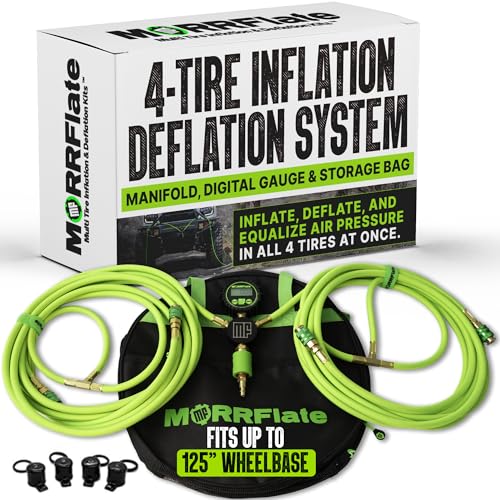

Airing down tires off road is powerful and effective, but it comes with responsibilities. Here are the critical ones.
First, know your tire’s limits. Every tire has a minimum safe pressure, typically around 8 to 10 PSI for most passenger and light truck tires. Check your specific tire’s sidewall for this number. Going below the minimum risks bead separation, where your tire comes off the rim. If that happens at speed, you lose control fast. Having proper recovery gear on hand is essential for situations like this.
Second, inspect tires before airing down. Look for damage, wear, or sidewall cracks because a damaged tire at low pressure is a failure waiting to happen. Don’t push compromised tires at low pressure on aggressive terrain.
Third, know your carrying weight. Overloaded vehicles need more tire pressure than lightly loaded ones, even on the same terrain, since more weight requires more sidewall support.
Additionally, monitor your speed. Airing down is for off-road speeds, typically 5 to 20 MPH depending on terrain. Pushing speed on aired-down tires increases failure risk and damages sidewalls, so keep it slow and steady.
Most importantly, always re-inflate before highway driving. This is non-negotiable because low pressure at high speed leads to tire destruction.
Finally, use a quality tire pressure monitoring system. Guessing isn’t a strategy, so know your pressure before and after airing down. Having an accurate controller like the MORRflate Air Hub matters because you know exactly what you’re running.

Frequently Asked Questions
How often should I air down on a single trip?
It depends on your route. If you’re staying on one terrain type, air down once and you’re done. However, if you’re moving between different terrain, you should adjust multiple times. For instance, sand to rocks requires a pressure change, and rocks to mud might too. Pay attention to the ground and adjust accordingly.
Is airing down bad for my tires?
Not if done correctly within safe limits. Airing down is normal off-road practice. Controlled deflation and re-inflation, not extreme damage. Problems occur only if you go too low, damage sidewalls, or drive highway speed on low pressure. Stay within safe ranges, re-inflate properly, and your tires are fine.
Can I use a manual tire pump to air down?
Manual pump works for re-inflating but not airing down. Use a bleed valve tool to release air manually, but a compressor is necessary for efficient re-inflation. Carrying a quality compressor is essential.
What happens if I get a flat while aired down?
You need to get the tire off the ground to repair it, either with a jack or recovery strap, then get it to a shop or use a plug kit if you have one. Can’t drive far on a flat, even with low pressure. Carry a plug kit, small air pump, and jack. This is standard 4×4 recovery gear regardless of tire pressure.
Do I need a special compressor for airing down?
Standard portable compressor works for re-inflation. A compressor designed for quick cycling and high output makes it faster and easier. The Ten Six compressor with MORRflate is built for this. Fast enough that re-inflating doesn’t feel like a chore.
Can I air down with my vehicle’s tire pump if it has one?
Some newer vehicles have onboard compressors for inflating tires. They’re slow and weak for systematic airing down and re-inflation of all four. Dedicated external compressor is always better.
Final Thoughts
Airing down tires off road is one of the most underutilized techniques in overlanding. Many people see it as optional or complicated, but it’s neither. It’s fundamental. Getting tire pressure right for your terrain transforms how your vehicle handles and how comfortable your experience is.
The barrier isn’t knowledge anymore; it’s convenience. Although manual airing down is doable, it’s tedious. Modern multi-tire systems eliminate that tedium because they adjust tire pressure as easily as dialing a number, for all four tires at once, without kneeling in dirt or waiting.
After three years of field testing MORRflate exclusively, I’m confident recommending it. The Ten Six compressor is reliable, the Air Hub autoMagic controller is intuitive, and the system is built to last. Consequently, it saves time on every trip, meaning more exploring and less equipment management.
Your off-road tire pressure matters more than you think. Get it right and your off-road experience improves immediately. Pair that knowledge with the right tools and you’ll air down consistently every time. If you’re still building out your overlanding rig, tire pressure management should be one of your first upgrades.
MORRFlate TenSix Off Road Air Compressor, 12 Volt Heavy Duty Tire Inflator | 10.6 CFM 150 PSI, Dual Cylinder Portable Offroad Air Compressor, 12V 90 Amp, 80% Duty Cycle, 4x4 Truck Overlanding, 4 Tire
FAST 10.6 CFM INFLATION: Air up a set of 35″ tires in under 5 minutes when used with the MORRFlate multi-tire inflation and deflation kits.
- 10.6 CFM dual-cylinder output
- Fills four 35-inch tires in about 5 minutes
- Inflates and deflates four tires at once with the kit
- Overkill for a single daily driver staying on pavement