




Where you put the heater decides how well it warms the van, how loud it runs, and how safe the exhaust stays. Air heater mounting comes down to three layouts: under a seat, through the floor, or inside a bench. Each layout trades duct length, service access, and cabin space, so the right pick depends on your build.
Short answer: build a bench box for most vans, use the seat base when the cab sits near the bed and you want the shortest duct, and pick the floor when easy service matters most. The Velit 14,000 BTU gasoline and diesel heater makes a good test case, because its manual sets firm rules on orientation, exhaust, and ducting.
This guide draws on the Velit owner’s manual, the Espar Airtronic D2/D4 installation manual, and the Born to Roam 2 kW installation manual. We did not install a heater for this article. Instead, every number below traces to a published manual, and we compare each layout against those rules. 4WDTalk covers overland gear and cold-weather camping, so we read these documents the way a builder would. Please confirm the final details against the manual shipped with your own heater.
Quick Facts:
- Topic: Air heater mounting layouts for vans
- Layouts compared: Under-seat, floor, and bench
- Heater used for rules: Velit 14,000 BTU gasoline or diesel air heater
- Heater size: 14.6 x 5.5 x 5.9 inches, 10 lbs
- Orientation: Fuel port facing the ground, never sideways
- Exhaust distance: At least 4 ft from vehicle openings
- Hot air hose: 60 mm inner diameter or larger
- Heater price: $729
- Best for: Van builders choosing where the heater goes
8 min read
In This Guide
Air Heater Mounting Overview
Air heater mounting is the first decision in any diesel heater installation, and the same logic covers gasoline units. The heater burns fuel in a sealed chamber, so it needs a spot where fuel, combustion air, exhaust, and warm air all have a short, clean path. Van heater placement shapes every other part of the job.
Three layouts cover most builds. An under-seat mount hides the heater in a seat base. A floor mount puts it on the floor behind a cover. A bench mount builds a ventilated box into your furniture. For example, a crew van with a fixed seat often suits the first layout, while a cargo van with a sleeping platform often suits the third.
If you are still choosing a unit, our diesel heater buying guide covers sizing. In addition, our explainer on how an air heater works walks through the burn cycle. The Velit unit used here measures 14.6 x 5.5 x 5.9 inches and weighs 10 lbs, which keeps van heater placement flexible for most builds.
Air Heater Mounting Rules at a Glance
The table below lists the placement rules from the Velit owner’s manual. Every layout in this guide has to satisfy all of them.
| Rule | Velit Manual Requirement |
|---|---|
| Orientation | Never sideways; fuel port faces the ground |
| Fasteners | Four M6 nuts, torqued to 6 to 7 Nm |
| Gasket | Replace the sealing gasket at every reinstall |
| Thin panels | Add a reinforcing plate under 1.5 mm |
| Hot air hose | 60 mm inner diameter minimum, rated above 130°C |
| Intake to outlet pressure | No more than 0.15 kPa difference |
| Exhaust distance | At least 4 ft from vehicle openings |
| Exhaust shape | No upward bends; total bends 270 degrees or less |
Buy Direct From Velit
A Compact 14,000 BTU Heater for Tight Spaces
The Velit air heater weighs 10 lbs and ships with a full install kit for $729.
Under-Seat Air Heater Mounting
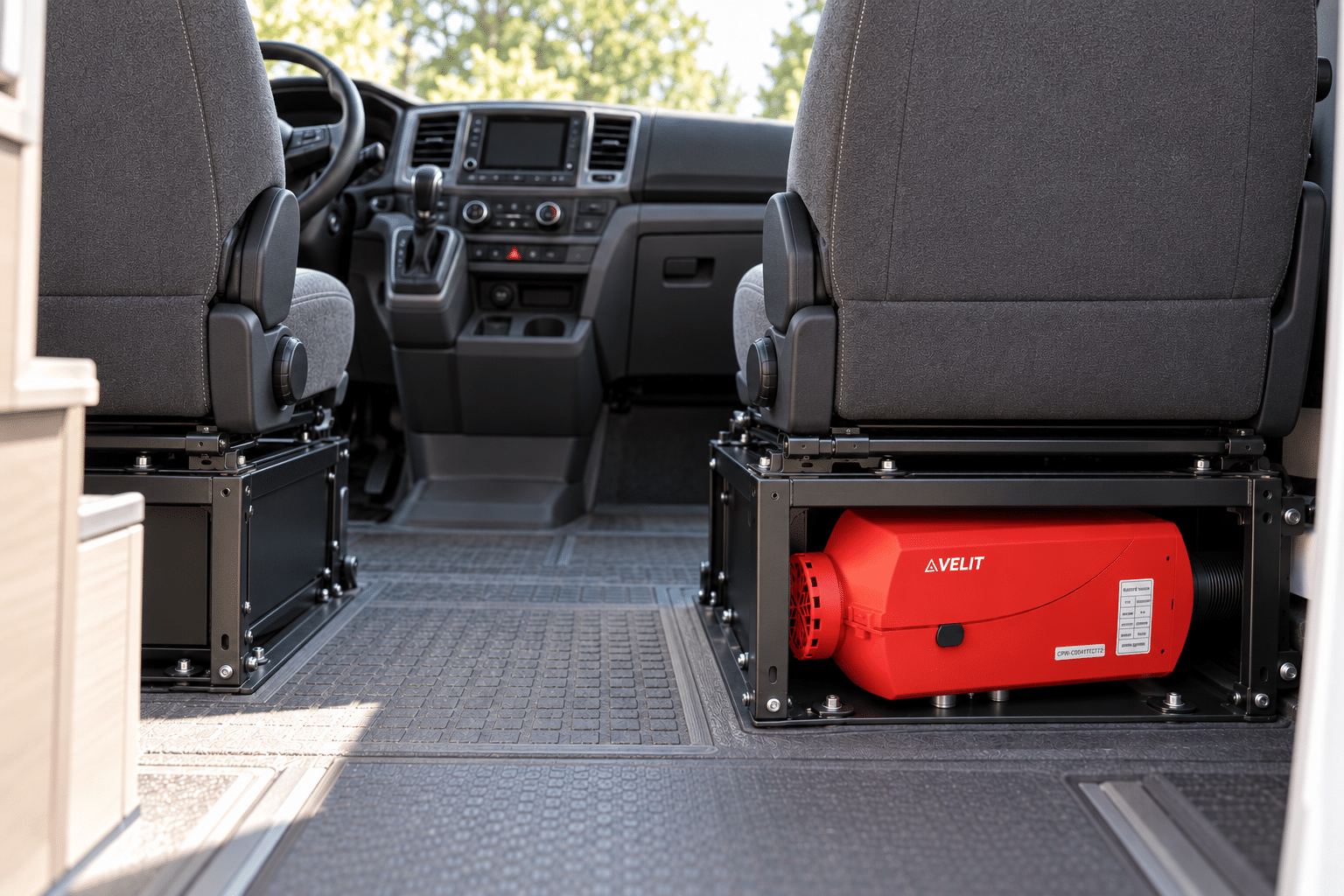
Why Builders Choose a Seat Base
A seat base keeps the heater near the cab, so the hot air duct stays short. Specifically, a short duct loses less heat and keeps the pressure difference between intake and outlet low. The Velit manual caps this difference at 0.15 kPa, and long, kinked ducts push you toward the limit.
A seat base sits low in the cab, so the exhaust has a short drop to the underbody. Fewer bends keep you under the manual’s 270-degree total. Upright mounting still applies, with the fuel port facing the ground.
Under-Seat Limits to Check
Space is the main limit. The heater body measures 14.6 x 5.5 x 5.9 inches, and the inlet and outlet must stay clear of obstructions. Moreover, seat foam, fabric, and plastic trim sit close to the hot air outlet in many seat bases.
Safety note: The Velit manual lists clothing, wood, and plastic among items to keep away from the hot air outlet and the exhaust outlet. Shield seat padding with a metal plate, and stop the job if the outlet points at upholstery.
Floor Air Heater Mounting
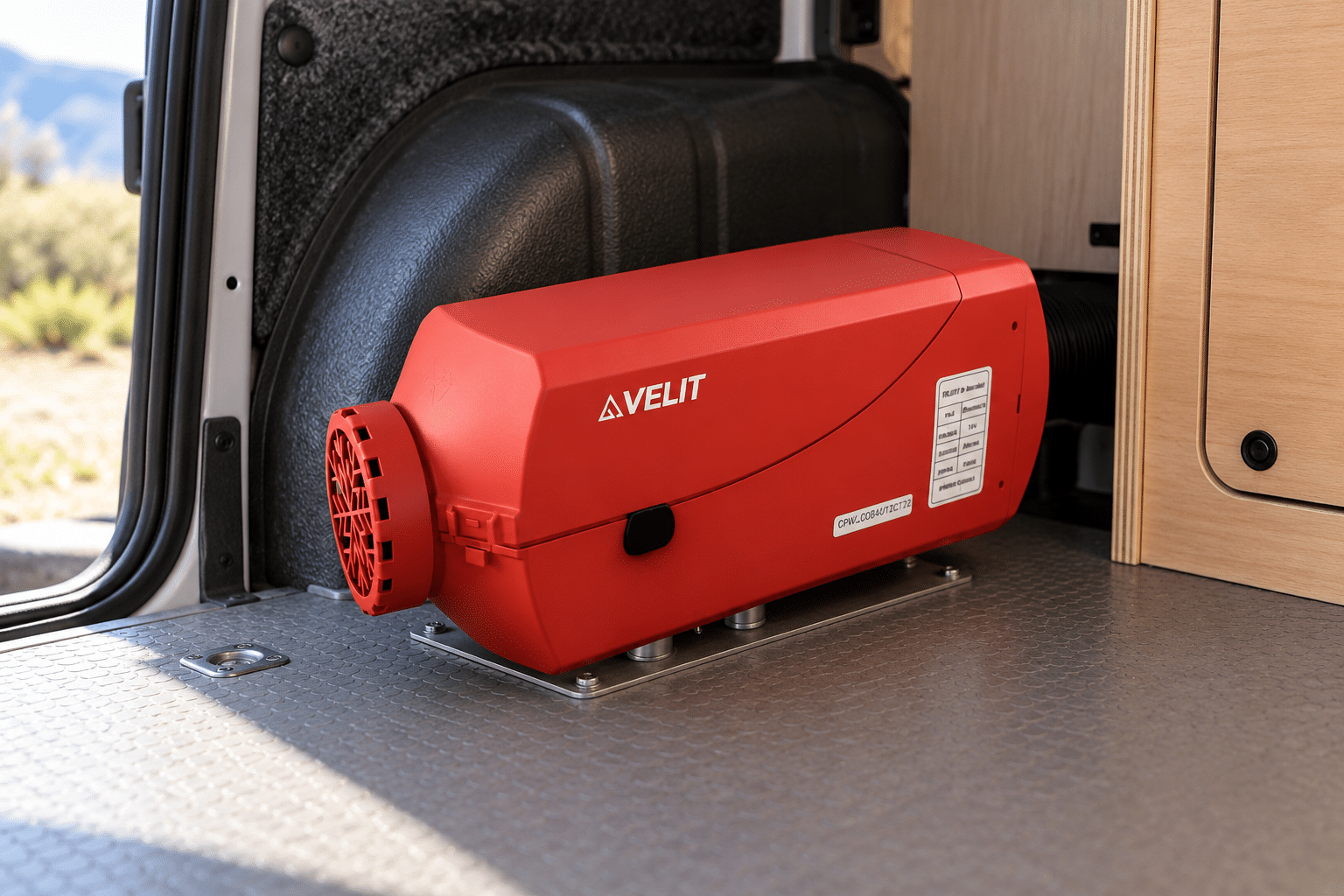
How a Floor Mount Works
A floor mount sits on the van floor and passes the exhaust and intake through a hole in the panel. One 2 kW unit’s manual calls for a 102 to 105 mm hole and flame-retardant silicone around the mounting ring. Similarly, the Espar manual requires a flat, horizontal surface with an airtight seal.
This layout keeps the heater easy to reach. First, you remove one cover to inspect the fuel line, which the Velit manual says to check often for leaks. You also run the heater once a month for at least 15 minutes, as the manual advises, and you skip the furniture teardown.
Sealing and Torque for a Floor Mount
Check your floor thickness before you cut anything. The Velit manual requires a reinforcing plate under panels thinner than 1.5 mm. Next, tighten the four M6 nuts to 6 to 7 Nm, and fit a new gasket if you ever pull the heater out.
Floor space is the trade-off. A floor mount eats usable area, and the duct runs longer if the heater sits far from the cab. Consequently, many builders reserve this layout for vans with a spare corner behind a wheel well or a cabinet.
Bench Air Heater Mounting
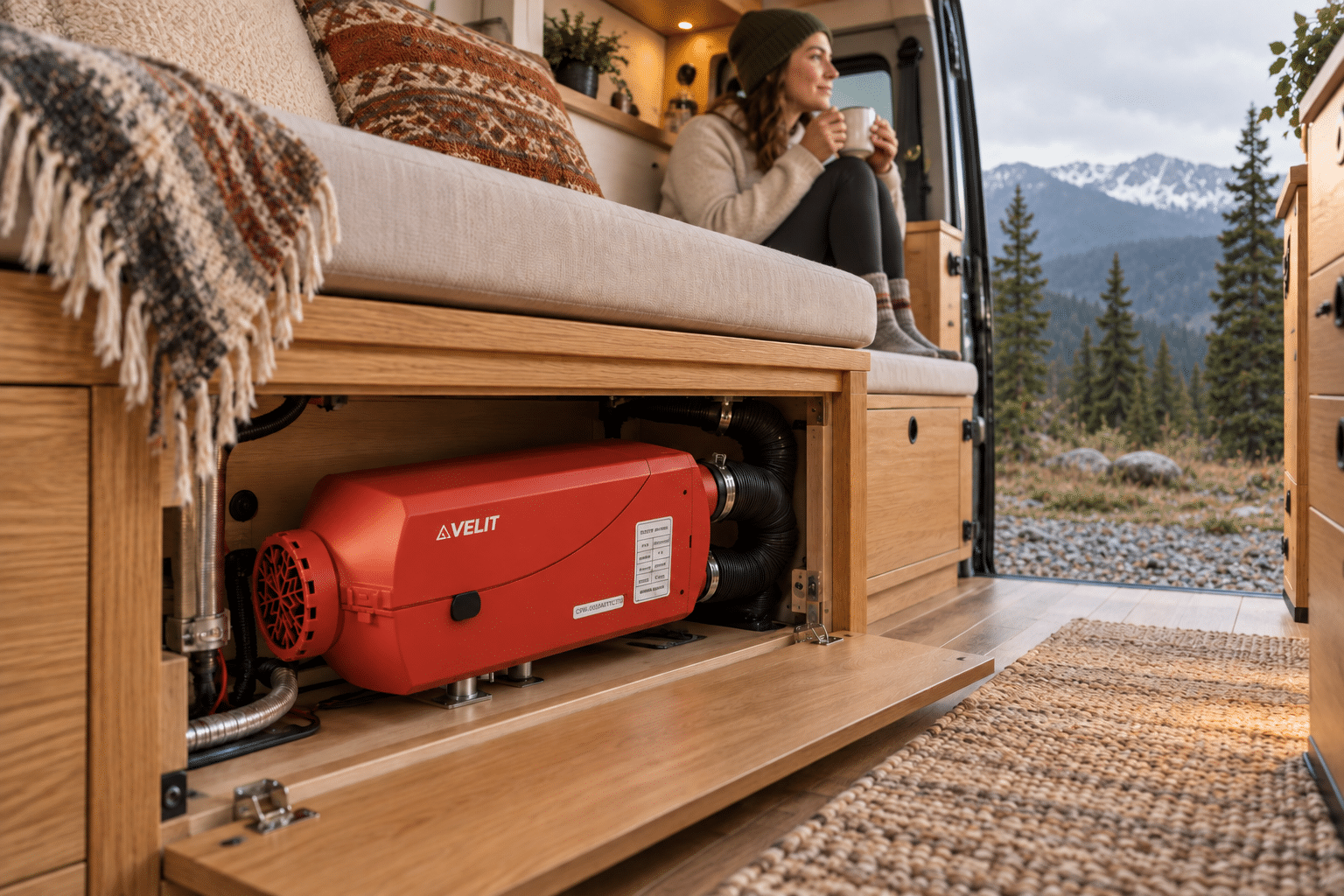
Sizing a Bench Box for Clearance
A bench box hides the heater and turns dead furniture space into useful space. The Espar manual names tool and luggage compartments as typical locations. However, it also requires 2 inches of clearance from flammable or heat-sensitive material.
Using the Espar figure, add 4 inches to each Velit dimension for planning. The cavity then measures about 18.6 x 9.5 x 9.9 inches. This is our arithmetic, not a Velit specification, so confirm it against your install plan.
Air Supply and Ducting in a Bench
The heater still needs fresh air to move. One 2 kW manual says the rear intake must draw from the main cabin, with a cabin vent added if needed. Likewise, the Espar manual says heating air must come from an area free of poisonous gases.
Use a duct with a 60 mm inner diameter or larger, rated above 130°C. Espar also asks for smooth duct bends. Keep the outlet clear, because a blocked outlet triggers an overheat fault on the Velit unit.
Safety note: Never store gear against the heater. Keep fuel cans, gas canisters, and bedding away from the hot air outlet, and leave a clear air path around the cabinet door.
Built for Tight Installs
Gasoline or Diesel, Same 14,000 BTU Heater
Choose your fuel on one listing, with built-in CO sensing and Bluetooth control.
Heater Exhaust Routing and Fuel Rules
Heater exhaust routing limits where the heater goes. Put the outlet at least 4 ft from vehicle openings, with no upward bends, as the Velit manual directs. The manual also sets the outlet angle at 90 degrees, plus or minus 10 degrees, with a bend radius of at least 50 mm.
For comparison, the Espar manual sets exhaust length between 8 inches and 6.5 ft. It also says to route fumes away from the passenger compartment. In addition, Espar keeps the combustion air intake at least 12 inches from the exhaust.
Fuel Pump and Tank Limits
Fuel limits sometimes rule out a layout. The Velit manual lists fuel pump height limits of 3 m, 0.5 m, and 2 m, plus 0.15 m for a sealed tank. Check the diagram in your manual to see which limit applies where.
Therefore, measure from your tank to the planned spot before you commit.
Power Draw
Power is simpler, since the heater draws 20 to 46 watts. Our guide to heater power consumption explains why the startup surge matters more than the running draw.
Under-Seat vs. Floor vs. Bench Air Heater Mounting
| Factor | Under-Seat | Floor | Bench |
|---|---|---|---|
| Duct length to cabin | Short | Varies | Medium |
| Service access | Tight | Easy | Moderate |
| Cabin space used | Almost none | Most | Little |
| Fire risk to nearby items | Seat foam | Depends on nearby items | Stored gear |
| Best for | Short duct runs | Easy service | Hidden installs |
Ratings above reflect general tendencies, not measured data. Compared with the other two, the bench offers the best balance for most builds, because it hides the heater and gives you control of the duct path. In contrast, the floor layout wins on service access, while the under-seat layout wins on duct length. Bench scores in the middle on every row, which is the point: it avoids the seat foam risk of the under-seat layout and the floor space cost of the floor layout.
Velit Heater Pros
- Compact 14.6 x 5.5 x 5.9 inch body
- 10 lb weight eases mounting
- 20 to 46 watt rated power draw
- Built-in CO alarm trips above 800 ppm
- Rated to 17,000 ft elevation
- One $729 listing covers gasoline and diesel
Velit Heater Cons
- Upright mounting only, with the fuel port down
- Exhaust must sit at least 4 ft from vehicle openings
- Panels under 1.5 mm need a reinforcing plate
- New gasket needed at every reinstall
- 60 mm hot air hose is bulky in tight boxes
Final Verdict
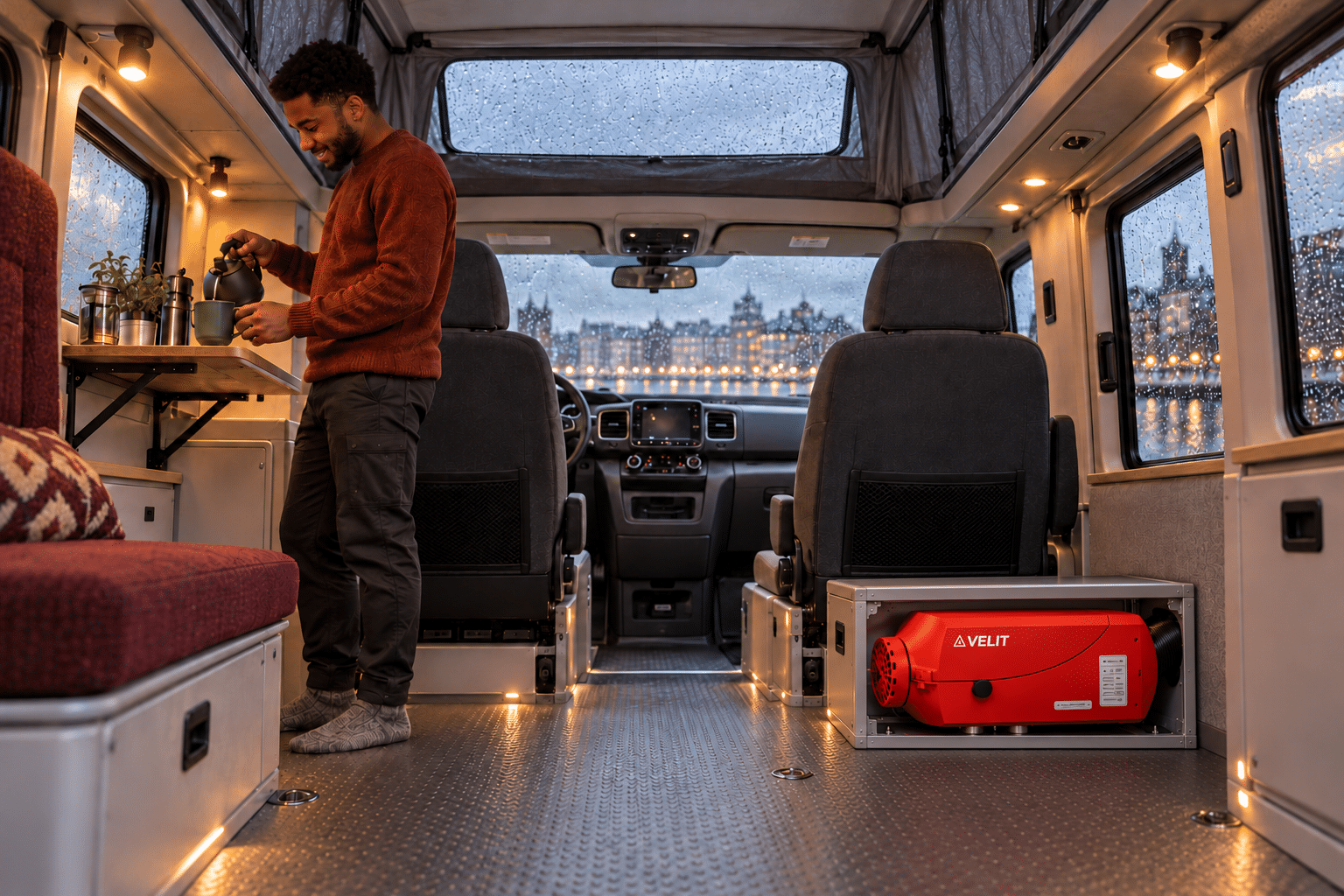
The bench layout suits most van builds, because it hides the heater and keeps the cabin clear. Its biggest strength is flexibility: you choose the cavity size and the duct path. Choose the under-seat layout if your cab sits close to the sleeping area and you want the shortest duct.
Each layout costs you something. A bench needs a ventilated, fire-safe box, and a floor mount needs a reinforcing plate on thin panels. Skip the under-seat layout if your seat base holds foam you have no way to shield. Anyone unsure about diesel heater installation, exhaust, or fuel work should hire a certified installer.
On value, the Velit heater costs $729 and covers both fuel types on one listing. Manual rules are strict but clear, and each one maps to a measurable check. As a result, you know before cutting whether a spot qualifies.
We recommend planning around the bench first, then testing the exhaust path against the 4 ft rule. Fall back to the floor layout when your build has no room for a box. This ranking comes from manual rules and duct logic, not a hands-on install, so treat it as a planning filter before you cut anything. If you are still comparing heaters, read our best diesel heaters guide before you buy.
Ready to Buy?
Plan the Mount, Then Order the Heater
Order the gasoline or diesel version direct from Velit, with a two-year limited warranty.
FAQ
Is it OK to mount an air heater on its side?
No. The Velit manual states the unit must not be installed sideways. Mount the heater upright, with the fuel port facing the ground.
How far should the exhaust sit from windows and doors?
The Velit manual calls for at least 4 ft from vehicle openings. Espar adds a rule to route fumes away from the passenger compartment.
What size hot air duct does the Velit heater need?
Use a hose with an inner diameter of at least 60 mm, rated above 130°C. Keep the bends smooth, because the pressure difference between intake and outlet must stay at or below 0.15 kPa.
Does a floor-mounted heater need a reinforcing plate?
Yes, when the panel is thinner than 1.5 mm. The Velit manual requires an extra plate in this case. Measure your floor before cutting.
How much space does a bench box need?
Plan on about 18.6 x 9.5 x 9.9 inches. This figure adds 2 inches per side to the heater body, based on Espar’s clearance rule. Confirm it against your own manual.
A quick heads-up: If you snag something through our affiliate links or check out our sponsored content, we might earn a commission at no extra cost to you. But fear not, we’re all about recommending stuff we’re truly stoked about!
Related Reading
Sources: Velit heater owner’s manual, Espar Airtronic D2/D4 manual, and Born to Roam 2 kW installation manual.