


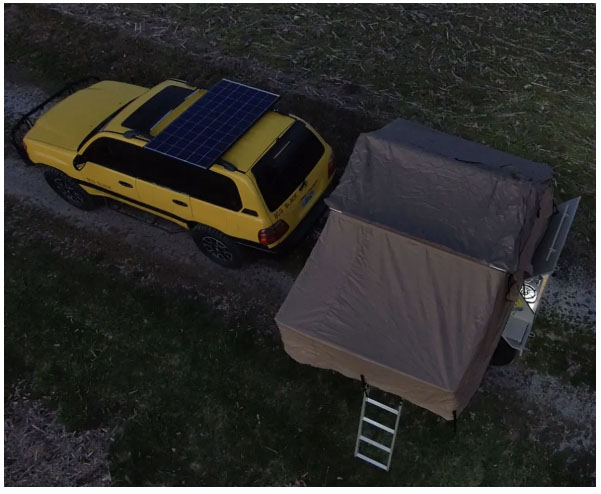

Choosing where to mount a rooftop tent sounds simple until you look at the numbers. Most mid-size trucks and SUVs carry a dynamic roof limit between 150 and 200 pounds while moving. A popular mid-range soft-shell RTT weighs 140 to 165 pounds. Add a roof rack at 30 to 40 pounds, and many setups are already brushing against the manufacturer’s rated limit before a single sleeping bag goes inside. Sean McAllister has been testing and evaluating overlanding gear across thousands of miles of dirt roads, shelf roads, and two-track in the American Southwest and Pacific Northwest. His field experience, combined with hands-on time with trailer-mounted and vehicle-mounted RTT setups, shapes every comparison in this guide.
This article breaks down the decision framework most overlanders miss. A rooftop tent camping pros and cons analysis only tells half the story. Where you mount the tent changes your vehicle dynamics, your trail access, your setup routine, and your total cost. Both configurations work. However, the right one depends on how you travel, what you tow, and whether your rig’s roof safely handles the load. This guide covers each factor so you leave with a decision, not more questions.
Quick Facts:
- Topic: Rooftop tent on trailer vs. vehicle-mounted RTT comparison
- Key Stat: Most trucks and SUVs have 150–200 lb dynamic roof limits; mid-range RTTs weigh 140–165 lb
- Typical RTT Weight Range: 90 lb (entry soft shell) to 270 lb (electric hard shell)
- Trailer Setup Cost: ~$2,000–$3,200 (used utility trailer + entry RTT) to $11,000+ (overland trailer + premium RTT)
- Vehicle Setup Cost: $1,200–$5,000+ for RTT alone, plus $200–$800 roof rack
- Best for trailer mount: Overlanders with a dedicated tow rig, basecamp-style trips, family setups, heavy RTTs
- Best for vehicle mount: Solo travelers, daily drivers, technical trail access without a trailer
8 min read
In This Guide
- Rooftop Tent on Trailer vs. Vehicle: The Core Difference
- Key Numbers at a Glance
- Vehicle-Mounted RTT: What You Gain and What You Give Up
- Trailer-Mounted Rooftop Tent: The Case for Moving the Tent Off Your Roof
- Rooftop Tent Weight Limit: Why the Numbers Matter More Than You Think
- Trail Access and Maneuverability
- Cost Comparison: Vehicle Mount vs. Trailer Setup
- Trailer vs. Vehicle: Side-by-Side Comparison
- Pros and Cons
- Final Verdict: Which Setup Is Right for You?
- Frequently Asked Questions
Rooftop Tent on Trailer vs. Vehicle: The Core Difference
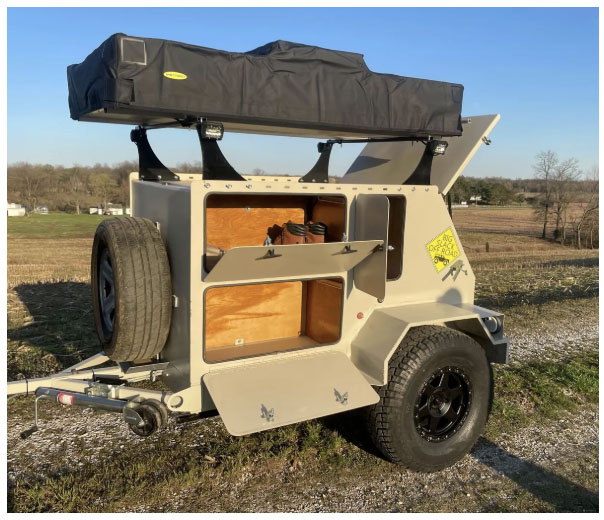
A rooftop tent on trailer mounts the sleeping platform on a separate tow-behind unit rather than on the vehicle’s roof or bed. The tent rides on the trailer during transit, then deploys at the campsite exactly like a vehicle-mounted RTT. The core difference is where the weight lives and what it does to your rig while driving. For a roof-mounted setup, every pound of tent and rack loads the roof during highway runs, off-road driving, and hard braking. A trailer-mounted setup, by contrast, shifts the weight behind the vehicle onto the trailer frame and axle.
Both setups use the same RTT models. The distinction is the mounting platform. Specifically, a roof-mounted RTT bolts to a roof rack, a bed rack, or directly to a factory crossbar system. A trailer-mounted RTT, by contrast, bolts to the trailer’s overland rack or roll cage. Because the tent deploys off the side or rear of the trailer rather than off the top of the vehicle, you also get a lower center of gravity while driving. For overlanders weighing their options, our guide to the best rooftop tents for overlanding covers the specific models working well in both configurations.
The choice between these two setups is not about which is objectively better. Instead, it depends on three variables: your vehicle’s roof rating, your trailer access, and how you use your rig between trips. A solo traveler who day-hikes from camp and needs technical trail access will almost always choose the roof-mounted option. A family running basecamp-style trips who leaves the trailer at site and drives the vehicle to the trailhead is, similarly, a clear candidate for trailer-mounted. This guide walks through each factor to help you identify the right answer for your specific overlanding tent setup.
Key Numbers at a Glance
| Factor | Vehicle-Mounted RTT | Trailer-Mounted RTT |
|---|---|---|
| Typical RTT weight impact on vehicle | 140–270 lb on roof or bed | 0 lb on roof; tongue weight ~10–15% of loaded trailer |
| Dynamic roof rating (typical mid-size) | 150–200 lb (rack + tent combined) | Not applicable |
| Estimated MPG penalty | 2–4 MPG (aerodynamic drag) | ~0.5–1.5 MPG (trailer drag) |
| Trail access without tent | Full access; tent stays with rig | Detach trailer at camp; drive solo |
| Setup time at camp | 2–5 min (hard shell); 5–10 min (soft shell) | 2–5 min (same tent, different platform) |
| Technical trail clearance | No trailer to manage | Trailer limits tight switchbacks and V-lines |
| Entry cost (RTT only) | $1,200–$5,000+ | $1,200–$5,000+ plus trailer cost |
Built for a Rooftop Tent
The Slack Wagon Junior: Trailer-Ready from the Factory
500 lb empty weight, Timbren axleless suspension, and a rack-ready platform designed to carry an RTT without stressing your roof.
Vehicle-Mounted RTT: What You Gain and What You Give Up
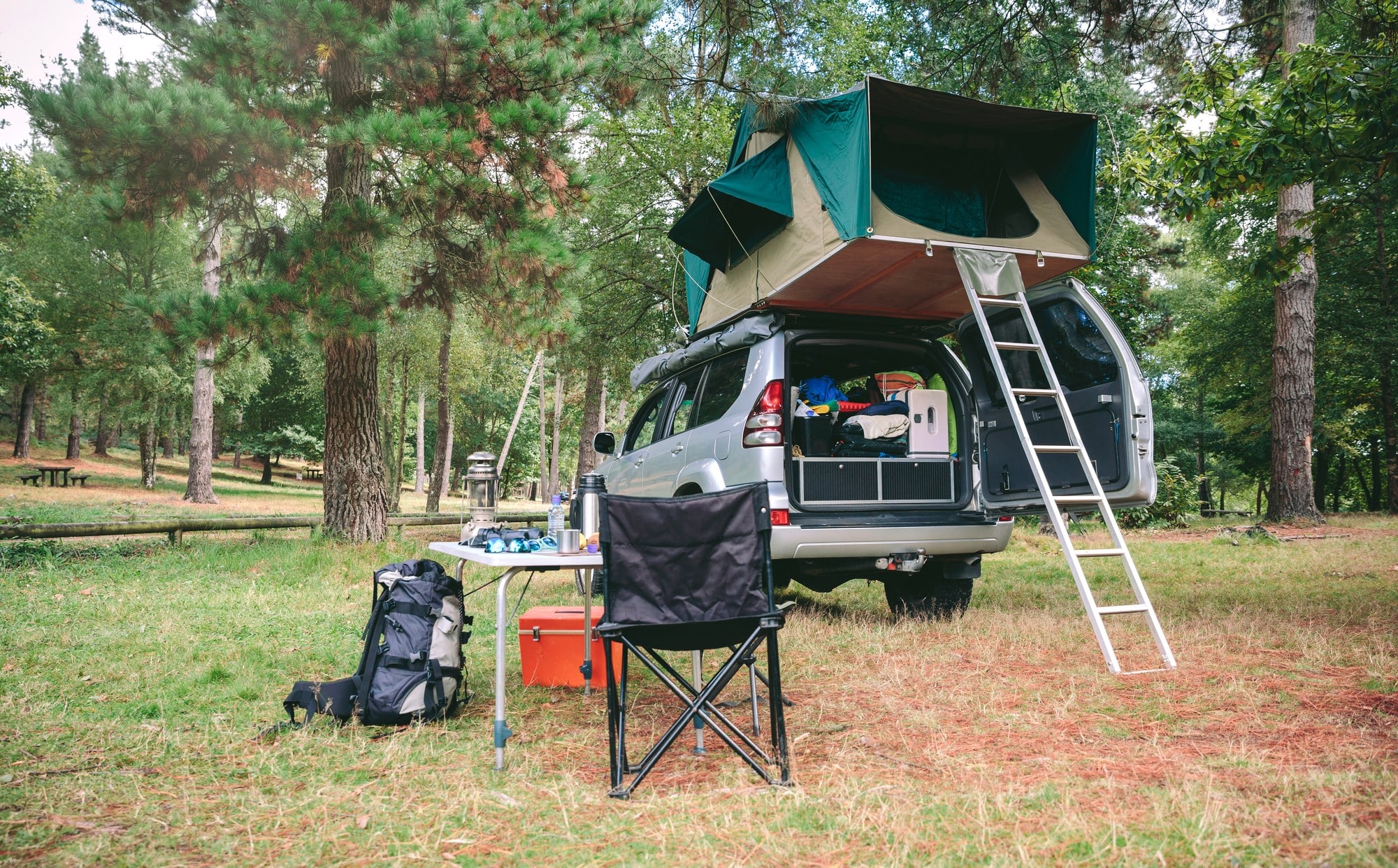
Mounting an RTT on your vehicle is the simpler system. You bolt a roof rack or bed rack to your rig, mount the tent, and the entire sleep system travels with you everywhere. There is no trailer hookup, no secondary tow rating to manage, and no maneuverability penalty on tight trails. For overlanders without a trailer, this is the default approach. It works well when your roof load stays within the dynamic rating and when you need access to narrow, technical terrain.
Vehicle-Mounted Weight and Handling Tradeoffs
The tradeoff involves weight and aerodynamics. A 165-lb RTT plus a 35-lb roof rack puts 200 lbs on the roof before gear. For a Toyota 4Runner with a 165-lb dynamic roof limit, the tent alone is at the ceiling. Exceeding the dynamic rating is not a soft recommendation to avoid; it stresses mounting points, raises the vehicle’s center of gravity, and increases body roll at speed. For off-road driving, specifically, some manufacturers recommend staying at or below 80% of the dynamic rating. For a 4Runner, the practical roof budget therefore becomes around 132 lbs total. Because many popular mid-range RTTs weigh more than this figure, the rooftop tent weight limit is a real constraint. Our guide on building a lightweight overlanding setup shows how RTT weight fits into a full-rig weight budget.
The aerodynamic penalty is also real. A rooftop tent on a vehicle increases wind resistance substantially. Estimated fuel economy penalties run 2 to 4 MPG compared to a clean roofline. Over a weekend trip with 400 miles of highway driving, consequently, the difference adds up to a meaningful fuel cost gap. Additionally, the roof profile height increases, which affects clearance in parking garages, car washes, and low-clearance trail obstacles such as tree branches.
Trailer-Mounted Rooftop Tent: The Case for Moving the Tent Off Your Roof

A trailer mounted rooftop tent moves the sleeping platform off the vehicle roof entirely. At camp, the trailer unhitches and stays put while the vehicle drives free for day hikes, town runs, or technical singletrack. This is the core appeal for overlanders who run basecamp-style trips. You set up camp once, leave the trailer, and use the vehicle as a day vehicle while the tent stays deployed. The Big Slack Off Road Slack Wagon review covers how a purpose-built overland trailer handles this role in detail.
Trailer-Mounted Performance and Flexibility
The vehicle benefits are substantial. Removing 140 to 270 lbs from the roof lowers the center of gravity, reduces aerodynamic drag, and frees up the roof for solar panels, antennas, or a roof basket for lighter cargo. Tongue weight from a loaded trailer is typically 10 to 15 percent of trailer weight. On a 1,000-lb loaded trailer, therefore, you get 100 to 150 lbs pressing down on the hitch rather than the roof. As a result, your vehicle handles better on highway drives and off-road runs. Estimated MPG penalties also drop to roughly 0.5 to 1.5 MPG compared to 2 to 4 for a roof-mounted tent.
The tradeoff is the trailer itself. You need a tow vehicle with a trailer rating, a hitch, wiring, and somewhere to store the trailer when not in use. Lightweight overland trailers purpose-built for RTT use, however, solve many of these logistics problems. For context on how trailer weight affects off-road capability, our overview of lightweight overland trailers for off-road explains why empty weight matters more than most buyers expect.
Rooftop Tent Weight Limit: Why the Numbers Matter More Than You Think
Dynamic roof limits are the most commonly overlooked spec in the RTT buying process. These limits apply while the vehicle is moving. Static limits, by contrast, apply to a parked vehicle and are much higher, typically 600 to 800 lbs. RTT marketers sometimes display the static figure more prominently, however the dynamic rating governs what you put on your roof for highway driving and off-road use. According to JD Power’s roof load capacity guide, these two numbers are frequently confused by buyers. On a Toyota 4Runner, the dynamic limit is 165 lbs. For a Jeep Wrangler JL, it is 150 lbs, and for a Ford Bronco, it is also 150 lbs. These numbers include the rack itself, not the tent alone.
A typical roof rack weighs 30 to 40 lbs. A mid-range soft-shell RTT weighs 140 to 165 lbs. On a Jeep Wrangler JL, therefore, the combined weight already exceeds the 150-lb dynamic limit before a single accessory goes on the roof. For off-road driving, some guidance suggests reducing the rated dynamic limit by approximately one-third for unpaved surfaces. A rooftop tent on a trailer, by contrast, carries the same weight on a rated trailer axle. Trailer axles carry dynamic load ratings of 1,000 to 3,500 lbs depending on trailer class, which is a fundamentally different load equation.
Trail Access and Maneuverability
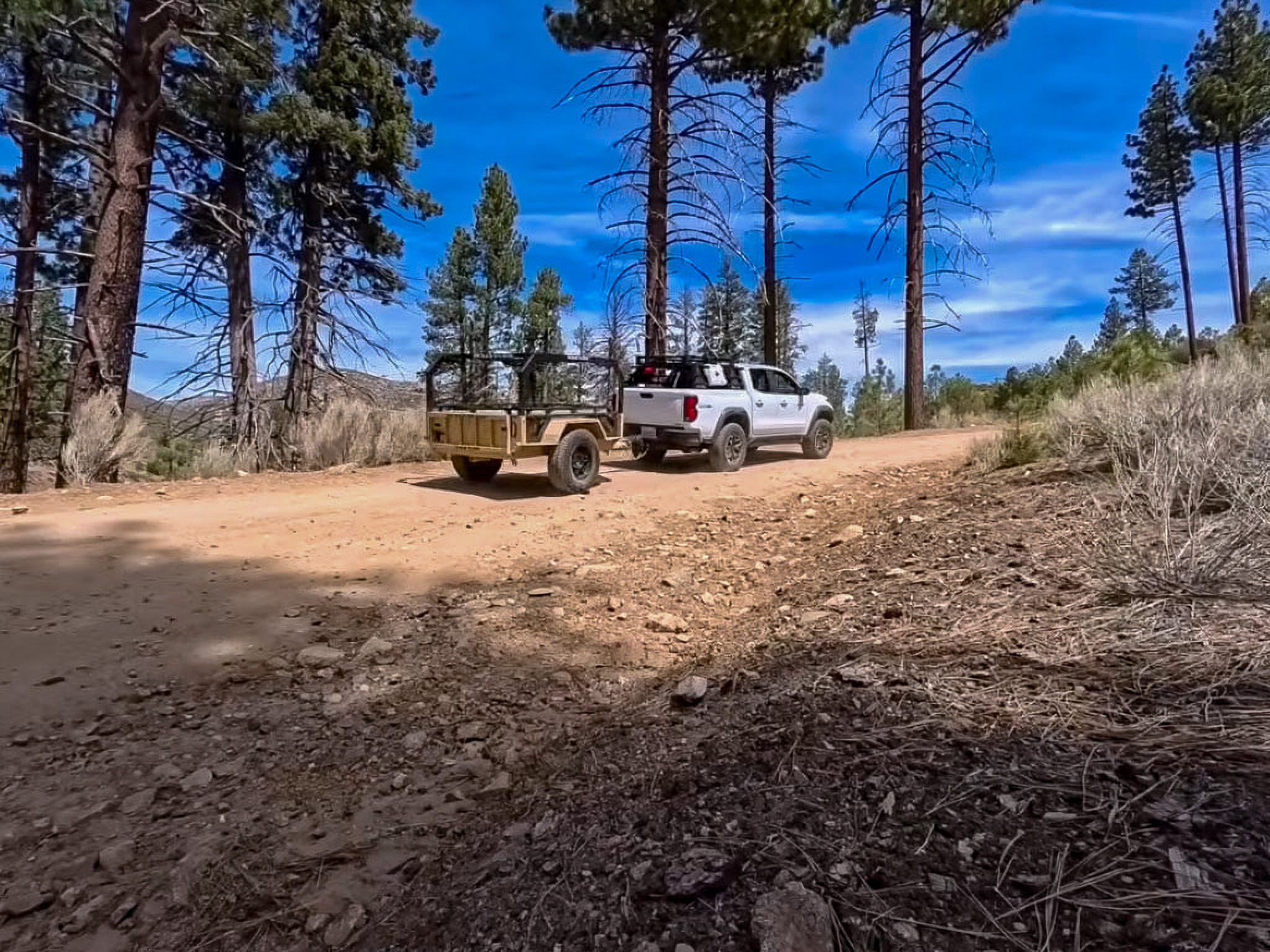
Trail access is where the roof-mounted setup has a clear advantage. Without a trailer attached, you go where the vehicle goes. Tight switchbacks, V-line recoveries, narrow singletrack, and washed-out ledges are all accessible. A trailer changes the equation significantly. Trailers add length to your total footprint, restrict your turning radius, and require wider lines on switchbacks. On trails rated for Jeeps and trucks, a trailer is manageable with experience. However, most overlanders detach and leave the trailer at a staging area on the most technical routes.
This limitation is also part of the trailer’s appeal. On basecamp-style trips, the trailer parks at camp and the vehicle runs free for day hikes, town errands, and secondary drives. The roof-mounted setup, by contrast, means the tent goes wherever the vehicle goes. For spontaneous camping, this is a benefit. For longer stays where you want a clean, unloaded vehicle for a summit trail or a supply run, however, it becomes a limitation instead. Our guide to choosing a budget overland trailer covers how to evaluate the right trailer rack system for your tow vehicle and trip style.
Cost Comparison: Vehicle Mount vs. Trailer Setup
A roof-mounted RTT setup requires the tent itself ($1,200 to $5,000+), a roof or bed rack ($200 to $800), and any additional mounting hardware. Total cost for a functional roof-mounted overlanding tent setup runs $1,400 to $5,800 for the sleep platform alone. For overlanders already running a roof rack, the marginal cost is the tent price only. As a result, the roof-mounted setup offers a clear cost advantage for buyers who already have a rack installed.
A trailer-mounted setup adds the trailer cost on top of the RTT. A used utility trailer capable of supporting a rack and RTT runs $500 to $1,500. A purpose-built overland trailer runs $3,000 to $6,000 new. Add an entry-level RTT and total setup cost runs $2,000 to $3,200 at the low end and $11,000 or more at the high end with a premium overland trailer and premium hard-shell tent. For buyers considering a purpose-built trailer as the RTT platform, our Slack Wagon trailer walkaround and specs breaks down the RTT mounting setup in detail.
Ready for an RTT Out of the Box
Slack Wagon Junior: Purpose-Built Overland Trailer
Rack-ready for any rooftop tent. 700 lb payload, Timbren axleless suspension, 57-inch width for tight trails. $4,499 direct from Big Slack Off Road.
Trailer vs. Vehicle: Side-by-Side Comparison

The roof-mounted setup wins on cost, simplicity, and trail access. If you already own a roof rack, adding an RTT is the lowest-friction path to rooftop camping. Solo travelers and couples who run technical trails benefit most from keeping everything on the vehicle. Specifically, there is no trailer to manage, no hitch to disconnect, and no minimum trail width to negotiate. For buyers in this category, choosing the lightest RTT your budget supports reduces the roof load and keeps you closer to the dynamic rating margin.
The trailer-mounted setup wins on vehicle performance, comfort at longer camps, and flexibility once you are at the site. Families, couples running week-long trips, and overlanders who frequently run basecamp-style setups get the most value from a trailer platform. Moving a 165-lb trailer mounted rooftop tent off the vehicle roof to a purpose-built trailer eliminates the roof rating concern, reduces highway fuel penalty, and gives you a detachable sleep platform. The Slack Wagon Junior at $4,499 is purpose-built for this role, with 500-lb empty weight, a rack included, and a 57-inch width to access most trail systems a mid-size truck handles.
Pros and Cons
Trailer-Mounted RTT: Pros
- Removes 140–270 lb from vehicle roof; eliminates dynamic roof rating concern
- Lower center of gravity while driving improves highway and off-road handling
- Detach trailer at camp; drive the vehicle free for day hikes and technical trails
- Estimated 0.5–1.5 MPG fuel penalty vs. 2–4 MPG for a roof-mounted setup
- Roof freed for solar panels, antennas, or a roof basket for lighter gear
- Works with any RTT weight class, including premium hard shells at 200–270 lb
Trailer-Mounted RTT: Cons
- Trailer adds $500–$6,000+ to total setup cost
- Requires a tow-rated vehicle, hitch, and wiring
- Limits access on tight switchbacks, V-lines, and narrow singletrack
- Storage footprint for the trailer when not in use
- More pre-trip logistics: hitch connection, safety chains, trailer lights
Vehicle-Mounted RTT: Pros
- Lower entry cost: RTT ($1,200+) plus rack ($200–$800)
- No trailer required; works with any vehicle with a roof or bed
- Full trail access without width or length penalty
- Tent travels with rig; spontaneous camping is straightforward
- Setup at camp is equally fast as a trailer-mounted equivalent
Vehicle-Mounted RTT: Cons
- Dynamic roof limit (150–200 lb) is easily exceeded by mid-range RTTs plus rack
- 2–4 MPG fuel penalty from aerodynamic drag at highway speed
- Raises center of gravity; increases body roll and braking distance
- Tent travels with vehicle; no basecamp-plus-day-vehicle option
- Height increase affects clearance in parking structures, car washes, and low branches
Final Verdict: Which Rooftop Tent on Trailer or Vehicle Setup Fits Your Rig?

A rooftop tent on a trailer makes the most sense for overlanders who run basecamp-style trips, travel with a partner or family, or own an RTT pushing their vehicle’s dynamic roof limit. Moving the sleep platform off the roof eliminates the most common technical objection to RTT ownership: roof rating compliance. Additionally, it gives you a detachable camp stays set up while the vehicle works. If your roof budget is already tight with a rack alone, a trailer is not an upgrade; it is a requirement for safe operation with many popular tent models.
Mounting the tent directly on your rig makes more sense for solo travelers, technical trail enthusiasts, and overlanders who value simplicity and low cost over flexibility at camp. If you already run a roof rack rated above your tent weight, adding an RTT is a straightforward, cost-effective upgrade. The trail access and spontaneous camping advantage is real. For buyers who spend the majority of trail time on routes where a trailer would be a liability, the roof-mounted route remains the better choice.
On cost, the roof-mounted setup has a clear initial advantage. However, total cost converges when you account for a purpose-built overland trailer adding cargo space, payload capacity, and overlanding infrastructure the vehicle alone cannot provide. A trailer at $3,000 to $5,000 paired with an entry-level RTT at $1,200 to $1,700 builds a complete basecamp system for roughly the same price as a premium roof-mounted hard-shell setup, with the trailer’s added flexibility included.
The RTT-Ready Trailer at $4,499
Slack Wagon Junior by Big Slack Off Road
Rack-ready for any RTT. 700 lb payload, Timbren axleless suspension, and 57 inches wide; narrow enough to follow your vehicle wherever it goes.
Frequently Asked Questions
Can you put a rooftop tent on a trailer?
Yes. Any trailer with a rack system or overland roll cage rated to handle the tent’s weight works as an RTT platform. Purpose-built overland trailers such as the Slack Wagon Junior include rack-mounting points designed specifically for this use. Utility trailers work with an aftermarket rack added. The tent deploys at camp the same way it would from a vehicle roof, typically opening to the side or rear of the trailer.
Is it better to put a rooftop tent on a truck or a trailer?
It depends on your trip style. A trailer mounted rooftop tent is better for basecamp trips where you detach at camp and drive the vehicle solo. A truck-mounted RTT is better for technical trails, solo travel, and overlanders who value simplicity over basecamp flexibility. The other deciding factor is your truck’s dynamic roof limit; if a popular RTT and rack exceed it, a trailer is the safer option.
What are the disadvantages of a trailer-mounted rooftop tent?
The main disadvantages are cost and trail access. A trailer adds $500 to $6,000 or more to the total overlanding tent setup cost. It also restricts access on tight switchbacks and narrow singletrack where the combined vehicle-plus-trailer footprint becomes a liability. Pre-trip logistics increase as well: hitch connection, safety chains, trailer light check, and storage between trips all add friction compared to a roof-mounted system.
What is the dynamic roof weight limit for a truck or SUV?
Dynamic roof limits vary by vehicle. Common figures include: Toyota 4Runner at 165 lb, Toyota Tacoma at 200 lb, Jeep Wrangler JL at 150 lb, Ford Bronco at 150 lb, and Ford F-150 at 150 to 200 lb depending on trim. These limits include the rack itself, not the tent alone. For off-road driving, staying at or below 80% of the dynamic rating provides a meaningful safety margin. Always check your vehicle’s owner’s manual for the exact figure before mounting any RTT.
Can you leave a rooftop tent set up on a trailer while you drive your vehicle?
Yes, and this is one of the main advantages of the trailer-mounted setup. At a basecamp-style campsite, you unhitch the trailer, leave the tent deployed, and drive the vehicle to trailheads, supply runs, or secondary day destinations. The tent stays ready for your return without requiring a teardown and re-setup. This setup works especially well for trips of three or more nights where you return to the same camp each evening.
What kind of trailer can hold a rooftop tent?
Any trailer with a rack-mounting surface rated to handle the tent weight works. Purpose-built overland trailers are designed with this in mind and include integrated overland trailer rack points, off-road suspension, and payload ratings high enough for a full camping kit plus an RTT. Utility trailers work with an aftermarket rack system added, though the overall build is heavier and less refined. At minimum, the trailer should have a static rack-load rating above the RTT’s weight, plus the weight of the rack itself.
Our articles might have affiliate links and the occasional sponsored content, but don’t sweat it – if you buy something, we get a little kickback at no extra cost to you, and we only hype products we truly believe in!