


Quick Facts:
- Automaker: Jaguar Land Rover (JLR)
- Model: US-built Land Rover Defender for the American market
- Platform: Sourced from Stellantis (non-binding deal, 2026)
- Current build site: Nitra, Slovakia
- Reported US site: Toledo, Ohio (unconfirmed)
- Main driver: Reducing import tariff exposure
- US sales weight: About 30% of JLR global sales
- Status: Strategy announced; specs and timing not set
- Best for: Off-road buyers watching Defender price and availability
5 min read
In This Article
A US-Built Defender: What JLR Announced
Jaguar Land Rover plans to build a US-built Defender for American buyers, and the project relies on a platform from Stellantis. For off-road shoppers, the payoff is direct, because local assembly points toward steadier pricing and supply. Today the Defender reaches the United States from a plant in Nitra, Slovakia, so every unit carries import-tariff cost. As a result, a US-built Defender would rework the current supply chain. JLR CEO PB Balaji tied the plan to a broader push for growth and more flexible powertrains.
This news matters because the Defender has become one of JLR’s strongest sellers since its 2020 relaunch. The model blends daily comfort with real trail capability, so demand runs deep among off-road and overland shoppers. Moreover, the plan expands North American production for a brand with deep US demand. Read the company’s own outline in the JLR newsroom release.
Details remain thin for now. JLR has not locked a design, a powertrain, or a launch date. Still, the direction is set, and the reasoning is clear. Below, you get the confirmed facts first, then the analysis off-road buyers need most.
Key Facts at a Glance
| Detail | What We Know |
|---|---|
| Automaker | Jaguar Land Rover (JLR) |
| Model | Land Rover Defender, a US-specific version |
| Platform source | Stellantis, via a non-binding agreement signed in 2026 |
| Current build location | Nitra, Slovakia |
| Possible US plant | Toledo, Ohio (reported, unconfirmed) |
| US share of JLR sales | About 30%, its single largest market |
| Main driver | Lower import tariff exposure, closer production |
| Status | Strategy announced; design, powertrain, and timing open |
Why JLR Wants a US-Built Defender
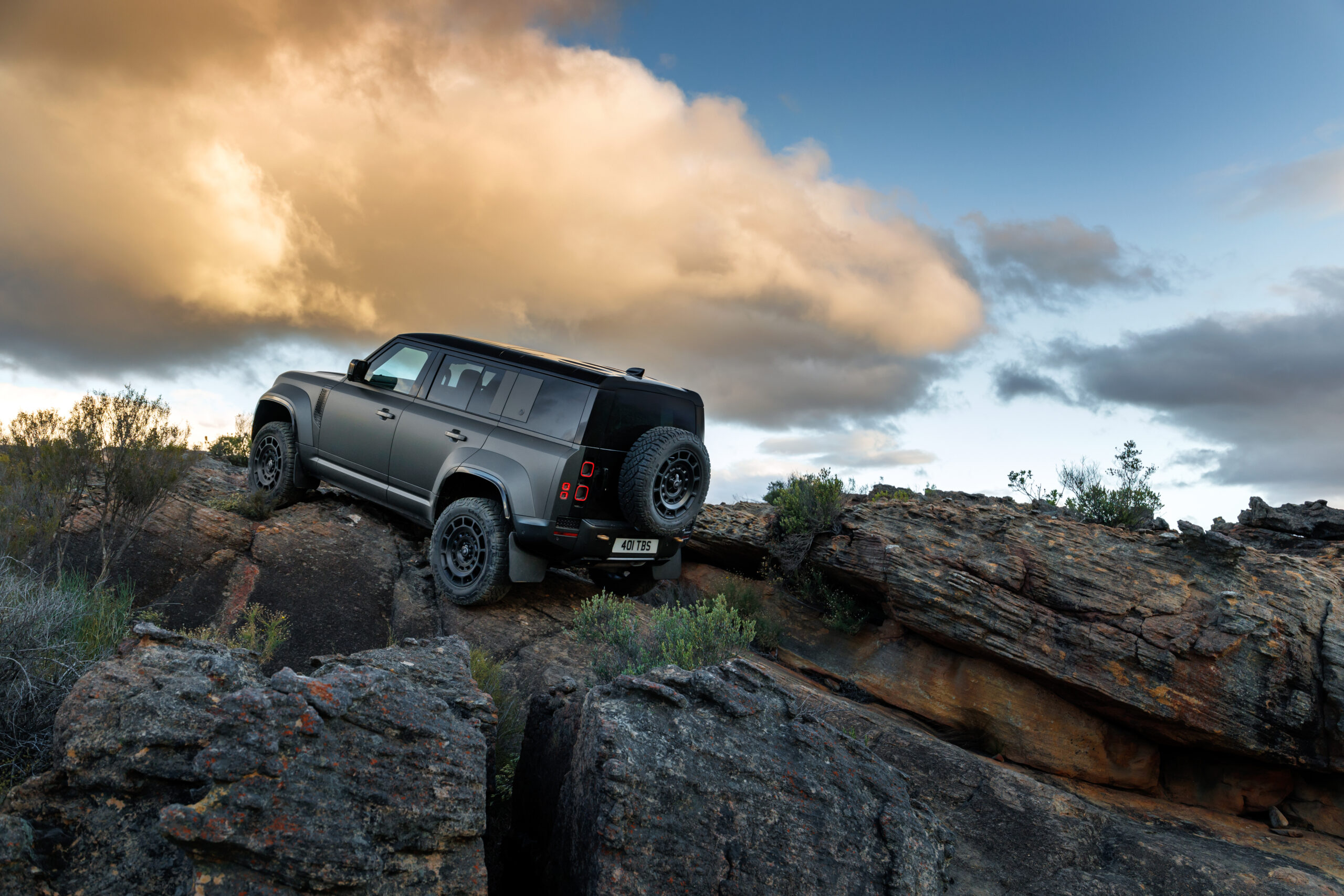
The math starts with tariffs. Imported vehicles face a roughly 15% US tariff, and every Slovakia-built Defender carries the tariff into the country. Because the United States drives roughly 30% of JLR global sales, the exposure is large. Local assembly would sidestep the tariff and protect margins on the brand’s most important market. As a result, a US-built Defender reads less like a vanity project and more like financial defense.
Growth is the second reason. JLR sees room to sell more Defenders to affluent American buyers who want a premium SUV with genuine off-road credentials. Building closer to those buyers shortens the supply chain and adds flexibility when demand shifts. For example, a domestic line would let JLR react to trim demand without waiting on an ocean crossing. Steadier supply also tends to hold the Defender’s price at the dealer.
The strategy fits a wider industry pattern. Tariffs and trade friction have pushed several automakers to move production onto US soil. JLR is following the same logic while protecting the model with the most to lose.
Consider the timing as well. Because trade policy keeps shifting, a plant on US soil gives JLR insurance against future tariff hikes. Moreover, domestic output supports faster warranty and parts support for American owners. For a brand chasing double-digit growth, those operational gains matter as much as the sticker price.
The Stellantis Platform Connection
The Stellantis platform is the surprising part of this story. JLR and Stellantis signed a non-binding agreement in 2026 covering vehicle architectures and electrification technology. A US Defender built on Stellantis underpinnings looks like one of the first major results of the 2026 agreement. Notably, the deal gives JLR a faster route to American production without building an all-new factory from scratch.
Industry watchers point to Stellantis facilities in North America as likely build sites. Reports name the Toledo, Ohio plant, potentially alongside Jeep products, though neither company has confirmed a location. If Toledo holds, the new Land Rover Defender would share a home with some of the most recognized off-road nameplates in America. Stellantis has laid out an aggressive multi-brand roadmap, as our breakdown of the Stellantis product roadmap shows.
Shared architecture raises a fair question about identity. Traditionalists will ask whether a Defender riding on Stellantis hardware still feels like a Defender. JLR will need to prove the platform delivers the ground clearance, articulation, and durability the badge demands.
What a US-Built Defender Means for Off-Road Buyers

Set the identity debate aside for a moment, because the buyer stakes are concrete. Price sits at the top of the list. A US-built Defender avoids the import tariff, so JLR gains room to hold or lower the Land Rover Defender price against rivals. Off-road shoppers cross-shop this segment hard, so even a modest price shift moves buyers. A cheaper, tariff-free Defender would pressure the INEOS Grenadier, the Ford Bronco, and the Jeep Wrangler at once.
Capability history works in JLR’s favor. Since 2020, the Defender has earned trail respect, and the high-performance OCTA pushed the range further. The factory-backed Defender Dakar D7X-R, based on the OCTA, won the Stock category at the 2026 Dakar Rally. This result reflects JLR’s engineering pedigree, though the US car would ride on different Stellantis underpinnings, so buyers should judge the new version on its own merits.
Availability improves too. Domestic assembly means shorter waits and better parts flow for owners far from the coast. For overlanders planning long builds, supply certainty carries real weight. If you compare a future Defender against today’s field, our guide to the best overland vehicles for 2026 shows where it would slot.
The rival question stays interesting. Many enthusiasts already treat the Grenadier as the analog heir to the old truck, a case we make in our look at the Grenadier as the new Defender. A US Defender would meet the Grenadier on home ground, so shoppers weighing the two should read whether the INEOS Grenadier off-roader fits their needs. It would also land beside American icons chasing the same buyers, including the ever-shifting Ford Bronco pickup plans.
What JLR Has Not Confirmed
Plenty stays open. JLR has not named the exact Stellantis platform, so the technical picture is incomplete. The company has not confirmed the powertrain lineup either. Recently, JLR signaled a longer runway for gas and hybrid models after EV demand grew slower than the industry expected. A US Defender therefore might launch with combustion or hybrid power rather than a pure battery drivetrain.
Timing is the other gap. No launch window has been set, and no build site is official. Reports around Toledo remain speculation until JLR or Stellantis says otherwise. Treat the 15% tariff figure and the Ohio location as directional, not final. As the 2027 Land Rover Defender picture sharpens, expect firmer numbers on price, output, and on-sale dates.
History offers a caution too. Automaker plans shift as trade rules and demand move. For instance, prior US-build rumors across the industry have slipped or stalled before reaching a showroom. Therefore, treat this Defender news as a strong signal of intent rather than a signed production contract.
Final Verdict: What It Means
A US-built Defender would reshape one of the most watched corners of the off-road market. The plan targets affluent buyers who want a premium 4×4, and it protects JLR’s largest market from tariff pain. For readers tracking the new Land Rover Defender, the takeaway is momentum: JLR is committing to American production, not merely floating an idea.
The trade-offs deserve honesty. A Stellantis platform invites doubt about whether the truck keeps its Defender character. Powertrain and pricing stay unconfirmed, so firm buying advice is premature. Buyers who need a rig this year should shop the current Slovakia-built Defender or a rival like the Grenadier instead of waiting.
On value, the signal is encouraging. Cutting the 15% tariff gives JLR real room on the Land Rover Defender price, which helps American buyers directly. Combined with the Dakar-proven capability of the current range, a homegrown Defender arrives from a position of strength.
Watch the next few months for a confirmed platform, plant, and timeline. If JLR names Toledo and locks a hybrid or gas lineup, the 2027 Land Rover Defender becomes one of the biggest off-road stories of the year. Until then, keep the Grenadier and the Bronco on your shortlist as proven alternatives.