


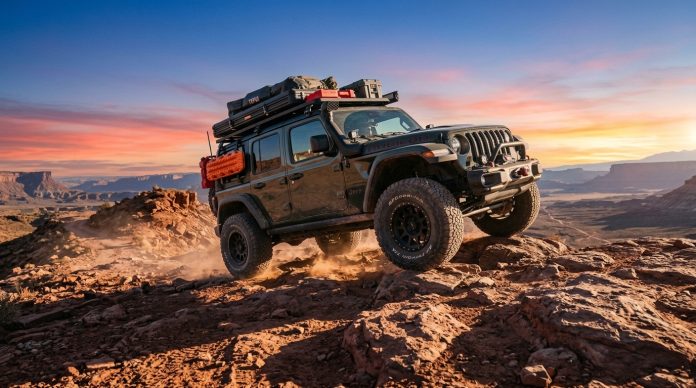

Best Overland Vehicles of 2026: 7 Trail-Ready SUVs and Trucks
Quick Verdict: The best overland vehicles 2026 deliver factory ground clearance from 8.3 to 11.6 inches, locking differentials, and overland-ready trims at MSRPs from roughly $50,000 to $90,390. Toyota fields three serious contenders, Ford and Jeep hold heritage capability, Chevrolet brings AEV-tuned firepower with the Colorado ZR2 Bison, and INEOS closes the field with a body-on-frame purist built for global expedition.
Last updated: April 2026 | 12 min read
In This Guide
- Why 2026 Is a Strong Year for Overland Buyers
- 2026 Overland Vehicles at a Glance
- Toyota Land Cruiser
- Ford Bronco Badlands With Sasquatch
- Toyota 4Runner Trailhunter
- Jeep Wrangler Rubicon
- Toyota Tacoma Trailhunter
- Chevrolet Colorado ZR2 Bison
- INEOS Grenadier
- Truck or SUV: Which Should You Pick?
- Pros and Cons of the 2026 Overland Class
- Final Verdict
- Frequently Asked Questions
Why 2026 Is a Strong Year for Overland Buyers
If you shop for the best overland vehicles 2026 has to offer, the field is deeper than ever. Manufacturers no longer treat overlanding as a fringe segment. Instead, factory overland trims now ship with steel skid plates, locking differentials, on-board air, and 33-inch all-terrains as standard equipment. Toyota’s Trailhunter line, Chevrolet’s ZR2 Bison, and Ford’s Sasquatch package each answer the aftermarket build overlanders used to assemble piece by piece on a base trim overland 4×4.
Sales data backs the trend. The Toyota 4Runner moved 33,244 units in Q1 2026, a 294 percent jump over the prior year, while Ford reported 31,197 Bronco deliveries in the same quarter. Meanwhile, Jeep continues to lead the body-on-frame segment with the Wrangler, and INEOS keeps adding U.S. dealers as the Grenadier earns a following among serious expedition drivers.
This guide ranks seven rigs by capability first, drivetrain second, and value third. Every vehicle covered ships with low-range gearing, real underbody protection, and a factory-rated tow capacity above 3,000 pounds. We focused on overland-ready trims rather than base models, because the trim choice often matters more than the badge.
Pricing in this guide reflects 2026 MSRPs as listed by the manufacturers and confirmed through KBB and Edmunds. Specs cover ground clearance, approach and departure angles, payload, and tow rating. For a closer look at Toyota family choices, see our 4Runner vs. Land Cruiser overland matchup.
2026 Overland Vehicles at a Glance
Before the deep dives, here is the head-to-head on the seven best overland vehicles 2026 buyers should put on a shortlist. Specs come from official manufacturer sites and have been cross-checked against Car and Driver and Edmunds listings. Whether you shop a best overland SUV trim like the 4Runner Trailhunter or a best overlanding truck like the Tacoma Trailhunter, the comparison below frames the trade-offs.
| Vehicle | Ground Clearance | Approach Angle | Tow Rating | Starting MSRP |
|---|---|---|---|---|
| Toyota Land Cruiser | 8.3 in | 31° | 6,000 lb | $57,685 |
| Ford Bronco Badlands (Sasquatch) | 11.6 in | 43.2° | 3,500 lb | $50,000 |
| Toyota 4Runner Trailhunter | 10.1 in | 33° | 6,000 lb | $67,000 |
| Jeep Wrangler Rubicon (Top Trail Pick) | 10.8 in | 43.9° | 5,000 lb | $50,490 |
| Toyota Tacoma Trailhunter | 9.5 in | 33° | 6,000 lb | $66,245 |
| Chevrolet Colorado ZR2 Bison | 12.2 in | 38.2° | 5,500 lb | $60,000 |
| INEOS Grenadier | 10.4 in | 36.2° | 7,716 lb | $72,995 |
Toyota Land Cruiser: Refined Heritage Built for the Long Haul
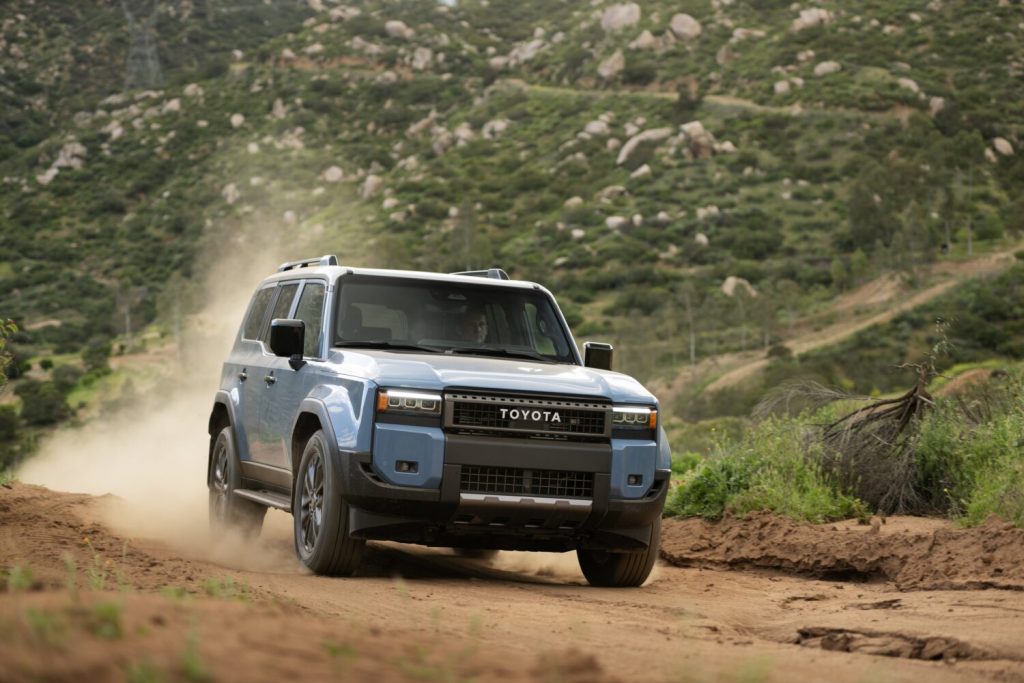
Image: Toyota USA Newsroom (editorial use)
The 2026 Toyota Land Cruiser returns to the U.S. lineup as a mid-size SUV with full-time 4WD, a center-locking differential, and a rear locker on higher trims. Power comes from a 2.4-liter i-FORCE MAX hybrid producing 326 horsepower and 465 lb-ft of torque, paired with an 8-speed automatic. Ground clearance sits at 8.3 inches, with a 31-degree approach angle and a 22-degree departure angle.
For overlanders, the Land Cruiser earns its slot among the best overland SUV picks because of long-haul comfort, legendary reliability, and a fuel-efficient hybrid powertrain returning 23 mpg combined. The 1958 trim opens the lineup at $57,685, while the loaded Land Cruiser trim reaches roughly $63,000. Toyota fits standard skid plates, multi-terrain select, and crawl control across the range.
Where the Land Cruiser falls short is ground clearance and rear seat space. Compared to the old V8 200-series, the new platform trades sheer trail prowess for daily-driver refinement. Still, for a couple driving from Moab to Baja with a rooftop tent and a fridge, this rig hits the sweet spot of capable, comfortable, and confident.
Toyota
2026 Toyota Land Cruiser
Build, configure, and view current pricing on the official Toyota Land Cruiser site.
Ford Bronco Badlands With Sasquatch: Best Factory Geometry
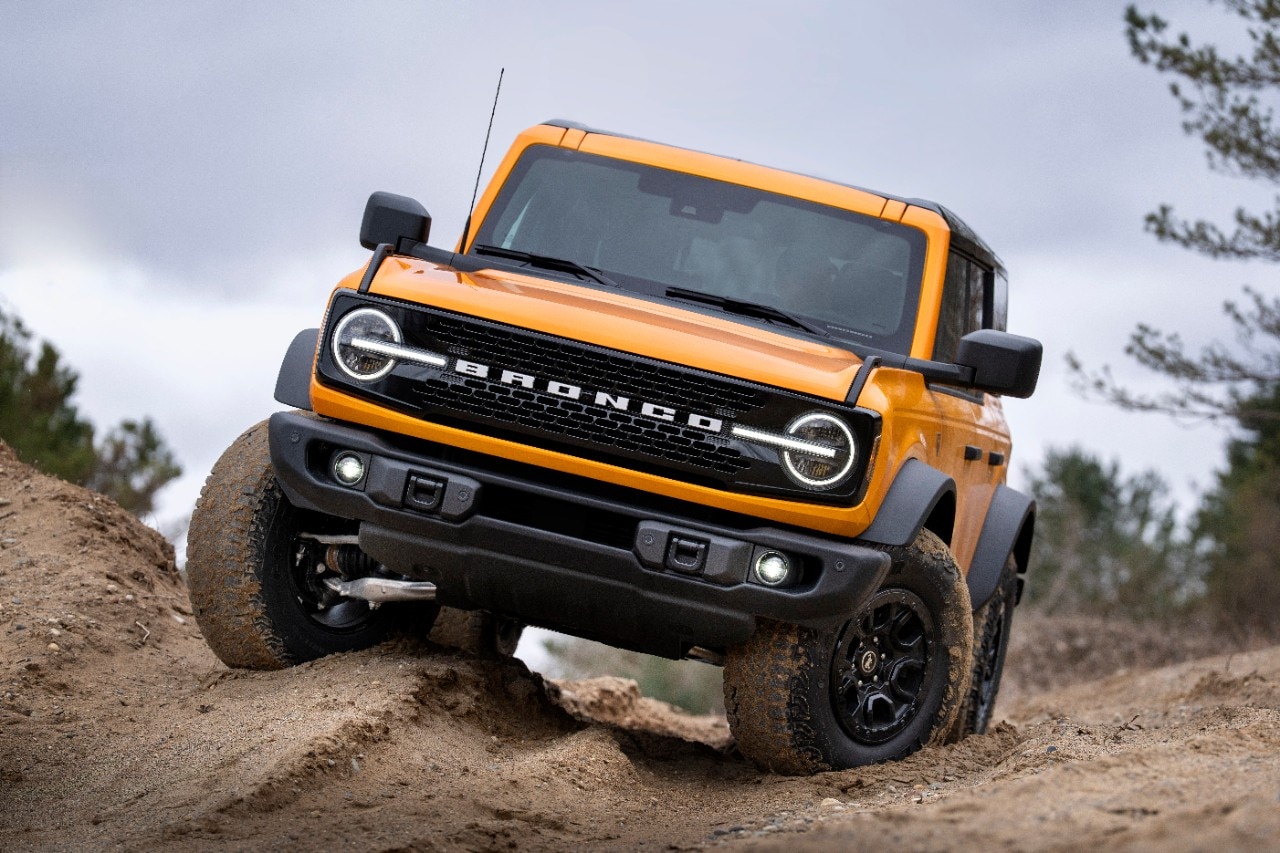
The 2026 Ford Bronco Badlands with the Sasquatch package delivers some of the most aggressive trail geometry in this group. With Sasquatch on the four-door Badlands, ground clearance reaches up to 11.6 inches, the approach angle hits 43.2 degrees, and the departure angle sits at 37.0 degrees. Sasquatch also adds 35-inch Goodyear Territory mud-terrains, electronic locking front and rear differentials, Bilstein position-sensitive shocks, and beadlock-capable 17-inch wheels.
Powertrain options include a 2.7-liter EcoBoost V6 making 330 horsepower or the optional 2.3-liter EcoBoost. The 2.7L V6 routes through a 10-speed automatic with low-range gearing and a stabilizer bar disconnect for articulation. Bronco Badlands pricing starts near $50,000, with Sasquatch adding roughly $4,000.
Ford built the Bronco for technical trails, so the trade-off is a smaller cargo footprint compared to a Land Cruiser or Grenadier. The two-door is short on space for full overland kit, but the four-door Sasquatch swallows a 270-degree awning, a fridge slide, and a rooftop tent without complaint. If your routes alternate between technical climbs and 600-mile highway transits, the Sasquatch’s Bilstein position-sensitive shocks earn the trade where the Wrangler’s stiffer suspension punishes the spine.
Ford
2026 Ford Bronco Badlands
Configure your Sasquatch package and check current incentives at Ford’s official Bronco page.
Toyota 4Runner Trailhunter: The Factory-Built Overlander
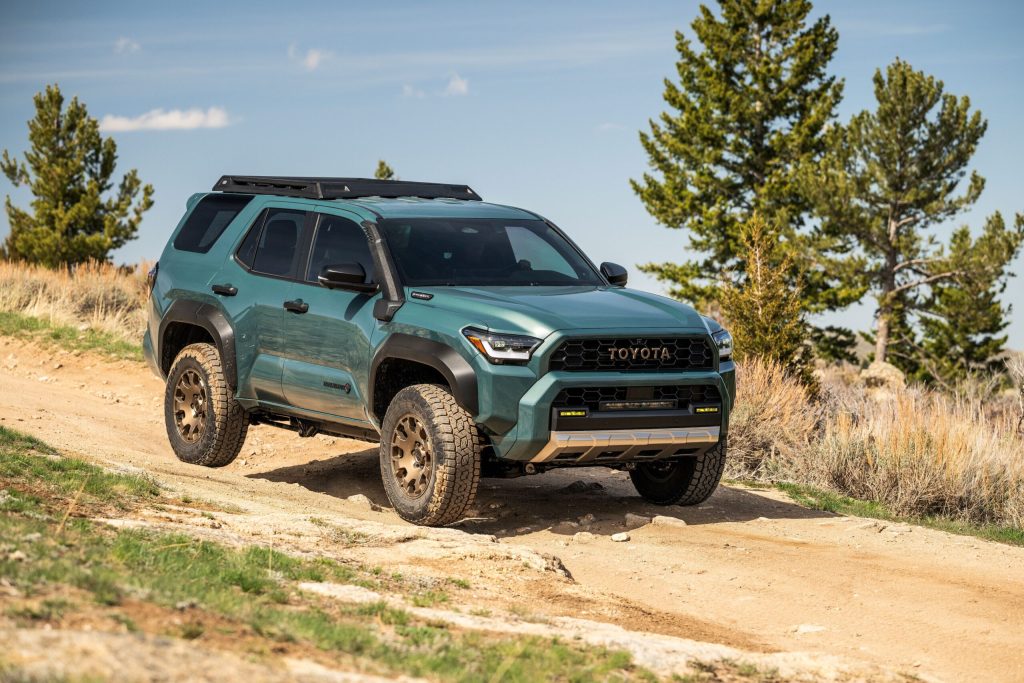
Image: Toyota USA Newsroom (editorial use)
The 2026 Toyota 4Runner Trailhunter ships closer to a finished overland build than anything else on this list. Toyota partnered with ARB and Old Man Emu to bake in a 33-inch Toyo Open Country tire, an OME-tuned 2.5-inch lift, an ARB roof rack, a high-mount snorkel, an onboard air compressor, and rock rails. Ground clearance lands at 10.1 inches, and approach and departure angles measure roughly 33 and 24 degrees, respectively.
Under the hood, the i-FORCE MAX hybrid makes 326 horsepower and 465 lb-ft of torque, paired with full-time 4WD on Trailhunter, an electronic rear locker, a center-locking differential, and crawl control with multi-terrain select. Tow capacity tops out at 6,000 pounds. Pricing for the Trailhunter trim lands near $67,000 MSRP, well above the SR5 base 4Runner price of $43,565.
For buyers who want to skip the aftermarket runaround, the Trailhunter rewards the spend. By bundling parts you would otherwise source from ARB and OME catalogs, Toyota saves you weeks of upfit time. Compared to a stripped 4Runner SR5, you spend roughly $20K more, similar to building a base trim with the same parts and labor. As a best overland SUV pick, the 4Runner Trailhunter sets the bar. For a head-to-head with the Tacoma platform, see our Tacoma vs. 4Runner overland comparison.
Toyota
2026 Toyota 4Runner Trailhunter
View Trailhunter trim equipment and find inventory at the official Toyota 4Runner page.
Jeep Wrangler Rubicon: The Articulation King
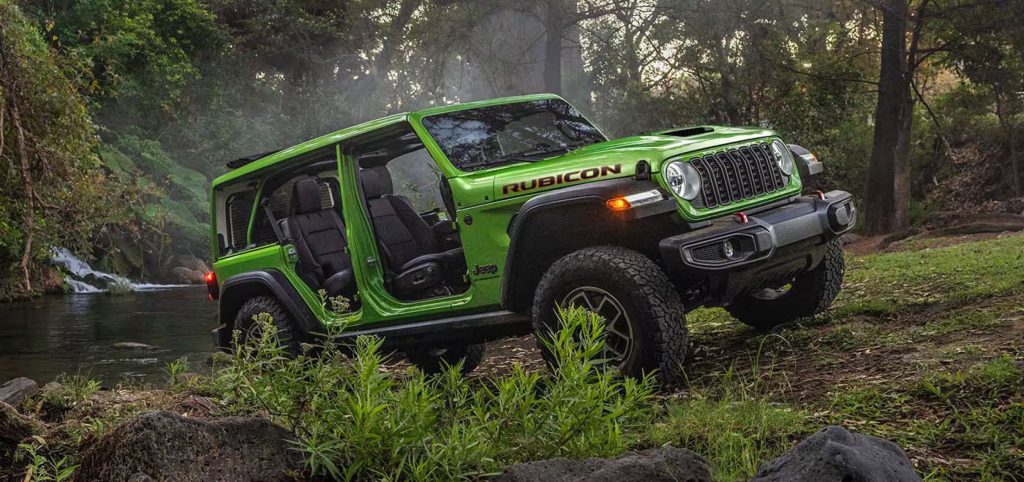
Image: Stellantis Media (editorial use)
For pure off-road geometry, the 2026 Jeep Wrangler Rubicon still leads. Approach angle measures 43.9 degrees, departure 37.0 degrees, and breakover 22.6 degrees, with 10.8 inches of ground clearance. Standard equipment includes Tru-Lok front and rear locking differentials, a Rock-Trac transfer case with a 4:1 low-range ratio, an electronic front sway-bar disconnect, and 33-inch BFGoodrich KO3 all-terrains.
The Rubicon four-door starts at roughly $50,490, with the Pentastar V6 making 285 horsepower and the Rubicon X trim climbing to $58,000. Jeep also offers the 4xe plug-in hybrid Rubicon for buyers who want roughly 21 miles of electric-only range plus the same off-road hardware. Towing reaches up to 5,000 pounds with the optional Trailer Tow Package, while the standard rating sits at 3,500 pounds.
The Wrangler shines where the trail gets technical. With the front sway-bar unhooked, articulation easily clears boulders and rutted climbs the Bronco scrapes through. Downsides are well known: highway road noise, modest payload, and a tow rating limiting trailering options. For most U.S. trail networks, however, no factory rig outflexes a Rubicon as a true overland 4×4.
Jeep
2026 Jeep Wrangler Rubicon
Configure your Rubicon, Rubicon X, or Rubicon 4xe at the official Jeep Wrangler site.
Toyota Tacoma Trailhunter: The Bed-Equipped Twin
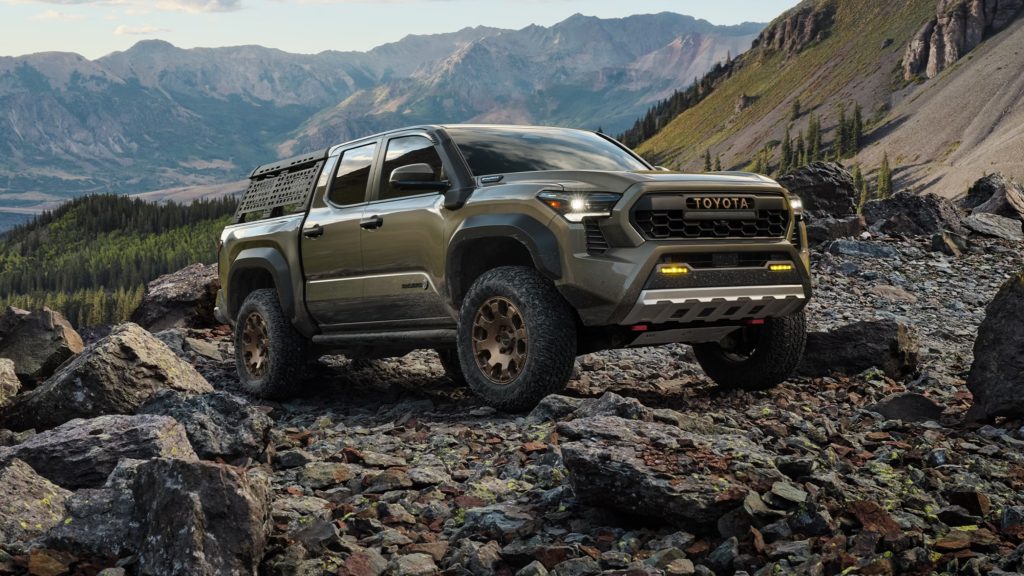
Image: Toyota USA Newsroom (editorial use)
The 2026 Toyota Tacoma Trailhunter takes the same ARB and Old Man Emu treatment from the 4Runner and applies it to the midsize truck platform, earning a top-three slot among any best overlanding truck shortlist. Standard equipment includes 33-inch Toyo Open Country tires, OME shocks with rear remote reservoirs, a high-mount snorkel, an ARB Old Man Emu suspension lift, and an onboard air compressor. Ground clearance measures 9.5 inches, with a 33-degree approach angle.
The i-FORCE MAX hybrid powertrain delivers 326 horsepower and 465 lb-ft of torque, the highest torque output in the midsize truck segment. Tow rating reaches 6,000 pounds, and the bed accepts a slide-out kitchen, a 270-degree awning, and a wedge-style rooftop tent without overloading the rear axle. Pricing for the Trailhunter starts near $66,245 with the hybrid double cab and 6-foot bed.
For overlanders who want a truck bed instead of an enclosed cargo area, the Tacoma Trailhunter delivers what most aftermarket builds chase. Compared to the 4Runner Trailhunter, you give up rear-seat cargo space but gain a true bed for fuel cans, recovery boards, and a fridge slide. The Tacoma also runs cooler on long highway hauls thanks to the open bed.
Toyota
2026 Toyota Tacoma Trailhunter
Browse Trailhunter specs, configure trims, and find local inventory at the official Toyota Tacoma page.
Chevrolet Colorado ZR2 Bison: AEV Engineering From the Factory
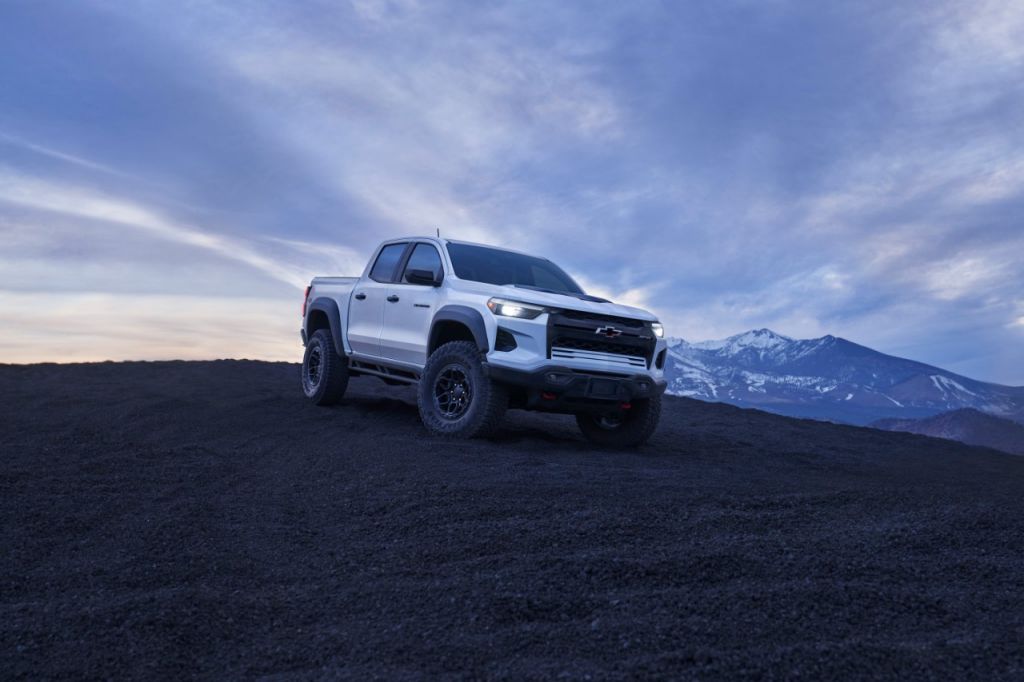
Image: Chevrolet Newsroom (editorial use)
The 2026 Chevrolet Colorado ZR2 Bison applies American Expedition Vehicles upgrades to a midsize truck. Hot-stamped boron-steel skid plates protect the fuel tank, transfer case, and front and rear differentials. Bison-specific 35-inch Goodyear Wrangler Territory MT tires sit on 17-inch AEV-designed wheels with hydraulic jounce control suspension and Multimatic DSSV dampers. Ground clearance climbs to 12.2 inches, and the front locker plus rear locker pair with the same 2.7-liter Turbo Plus engine making 310 horsepower and 430 lb-ft of torque.
The ZR2 Bison also receives a redesigned front bumper with integrated recovery points, an AEV-specific stamped steel rear bumper, and 38-degree approach geometry. Towing rates at 5,500 pounds, payload at roughly 1,150 pounds, and the bed length matches the standard Colorado at 5 feet 2 inches. MSRP for the Bison sits near $60,000, roughly $7,200 above the standard ZR2.
Where the Bison stands apart is the AEV engineering. Boron-steel skids weigh less than aftermarket plates while protecting more area. The Multimatic DSSV dampers also handle high-speed desert running better than the off-road shocks on competing midsize trucks. For Baja-style overland missions or long Forest Service routes, the Bison earns its premium.
Chevrolet
2026 Chevrolet Colorado ZR2 Bison
Configure the AEV-tuned ZR2 Bison and view current offers on the official Chevrolet Colorado site.
INEOS Grenadier: The Body-On-Frame Purist
Video: INEOS Grenadier official YouTube channel. Press images for the 2026 model year are still under embargo, so the official manufacturer brand video runs in their place.
The 2026 INEOS Grenadier is the rig overlanders cite when they want a Defender alternative without the Land Rover price tag, and it earns a place among the best overland vehicles 2026 has to offer. Built on solid-beam axles front and rear, with a heavy-duty coil suspension and a BMW-sourced 3.0-liter inline-six making 281 horsepower in gas form or 245 horsepower in diesel, the Grenadier is a tool-truck overland 4×4. Ground clearance measures 10.4 inches, the approach angle reaches 36.2 degrees, and the curb weight tops 5,875 pounds.
Standard equipment includes front and center locking differentials, with a rear locker available as an option. Payload sits at 1,841 pounds, tow rating climbs to 7,716 pounds, and the wading depth measures 31.5 inches. Pricing opens at $72,995 for the base Station Wagon, with the Trialmaster Edition near $79,990 and the Black Editions reaching $90,390. INEOS also sells the Quartermaster pickup variant on a longer 142-inch wheelbase.
The Grenadier earns its slot for one reason: overlanders designed it from the ground up, rather than adapting a passenger SUV. Switchgear sits on the roof console for muddy gloves, the body uses a fully boxed ladder frame, and the cabin includes a 400-amp aux-power circuit standard. Although the price runs steep and U.S. dealer coverage still trails Toyota, the Grenadier is the most legitimate factory option you find at a sub-$100K price for round-the-world expeditions.
INEOS
2026 INEOS Grenadier
Configure the Trialmaster, Black Edition, or Quartermaster on the official INEOS Grenadier site.
Truck or SUV: Which Should You Pick?
The truck-versus-SUV debate splits the overlanding world. Trucks like the Tacoma Trailhunter and Colorado ZR2 Bison give you a bed for fuel cans, recovery boards, and a fridge slide, plus a higher payload margin once gear is loaded. As a best overlanding truck pick, either platform earns the slot. SUVs like the 4Runner Trailhunter and Land Cruiser deliver enclosed cargo, a quieter cabin, and an easier interior shower for couples on month-long trips.
For solo or two-person trips with a hard-shell rooftop tent and a fridge slide, the Tacoma Trailhunter or ZR2 Bison wins on payload headroom. Family-of-four overlanders with a trailer or teardrop should consider an SUV like the Land Cruiser, which holds passengers better and tows the camper without stressing the rear axle. The Wrangler and Bronco split the middle, and the choice often comes down to whether you prefer Toyota or Ford service networks.
Budget shapes the call too. The Wrangler Rubicon at $50,490 and the Bronco Badlands at roughly $50,000 sit at the affordable end of this list, while the Grenadier at $79,990 and the Trailhunter trims near $66K to $67K reach the premium tier. If you plan to add a rooftop tent, see our truck camper versus rooftop tent comparison before locking in your platform.
Pros and Cons of the 2026 Overland Class
Pros
- Factory overland trims (Trailhunter, ZR2 Bison, Sasquatch) eliminate $10K to $20K of aftermarket build cost
- Locking differentials, low-range gearing, and skid plates ship as standard equipment
- Ground clearance ranges from 8.3 inches on the Land Cruiser to 13.1 inches on the Bronco Sasquatch
- Hybrid options on the 4Runner, Tacoma, and Land Cruiser deliver 23-plus mpg combined
- Approach angles reach 43.9 degrees on the Wrangler and 43.2 degrees on the Bronco
- Tow ratings span 5,000 pounds on the Wrangler Rubicon (with Trailer Tow Package) to 7,716 pounds on the Grenadier
- Onboard air compressors come standard on Trailhunter trims, saving the cost of a $400 ARB twin compressor
Cons
- MSRPs span $40K to $90K, well above 2020-era pricing
- Trailhunter and Grenadier inventory often sells out at allocation, with markups at some dealers
- Bronco Badlands tow rating caps at 3,500 pounds, limiting trailer options for buyers without the Wrangler’s Trailer Tow upgrade
- Hybrid powertrains add 200 to 400 pounds of weight, cutting into payload margin
- INEOS dealer coverage still trails Toyota and Ford by a wide margin
- Fuel economy on the Bronco Sasquatch with 35-inch tires drops to 17 mpg combined
Final Verdict: Picking From the Best Overland Vehicles 2026
For pure trail capability, the Jeep Wrangler Rubicon still earns top honors among the best overland vehicles 2026 buyers will find. Approach angle, articulation, locking diffs, and aftermarket parts ecosystem give it an edge no other rig matches at $50,490. If you live for technical rock crawling and short trail loops, the Wrangler Rubicon is the answer.
For long-haul overland work, the Toyota 4Runner Trailhunter and Toyota Tacoma Trailhunter split the SUV-versus-truck choice with factory-built ARB and Old Man Emu kit baked in. The Trailhunter trims save you weeks of upfit time and roughly $15K to $20K in aftermarket spend, and they ship with the i-FORCE MAX hybrid for 23 mpg highway efficiency.
At the prestige end, the Land Cruiser and Grenadier compete on different terms. Toyota’s Land Cruiser delivers reliability with a refined cabin for $57,685, while the Grenadier rewards expedition buyers willing to pay $79,990 for solid-beam axles, BMW power, and a tool-truck cabin. Meanwhile, the Bronco Badlands with Sasquatch and the Colorado ZR2 Bison round out the best overland vehicles 2026 field with the most aggressive factory geometry and the AEV-engineered Multimatic suspension, respectively.
If you push us for a single pick, the Toyota Tacoma Trailhunter wins our nod for the best overland vehicles 2026 list. The bed flexibility, hybrid torque, factory ARB equipment, and 6,000-pound tow rating give it a rare combination of trail capability and trip-range usefulness. For a recovery gear shortlist to pair with whichever rig you pick, see our best overland shovel review.
Frequently Asked Questions
What is the most reliable overland vehicle in 2026?
Toyota dominates reliability rankings in this segment. The Land Cruiser, 4Runner, and Tacoma all earn above-average reliability scores from Consumer Reports and J.D. Power. For high-mileage expeditions, a Land Cruiser hybrid or a Tacoma Trailhunter remains the safer long-term bet over a Bronco or Grenadier, both of which carry shorter U.S. dealer histories.
Do I need a 4×4 for overlanding?
For serious overland routes with rocks, sand, mud, or snow, yes. Every vehicle on this list ships with low-range gearing and at least one locking differential. AWD crossovers handle gravel forest roads, but they lack the low-range torque multiplication and underbody protection real overland routes demand.
What is the difference between overlanding and off-roading?
Off-roading focuses on the trail itself, often as a day trip with a return to pavement. Overlanding emphasizes self-reliant vehicle-based travel over multiple days, with sleeping, cooking, and water systems integrated into the rig. Overland buyers prioritize payload, fuel range, and long-haul comfort more than rock-crawl articulation, though serious routes need both.
How much should I budget for an overland vehicle in 2026?
Plan for $50K to $70K for a factory overland trim like the Trailhunter, ZR2 Bison, or Bronco Sasquatch. Add roughly $5K to $10K for a rooftop tent, awning, fridge, and recovery kit. Buyers shopping used 4Runners or older Tacomas build capable rigs at $35K total, but expect to spend weeks on upfit work.
Which overland vehicle has the best payload capacity?
Among the rigs on this list, the INEOS Grenadier leads with 1,841 pounds of standard payload. The Tacoma Trailhunter follows at roughly 1,200 pounds, and the Colorado ZR2 Bison sits near 1,150 pounds. Wrangler Rubicon payload sits at roughly 1,000 pounds, which fills quickly with a rooftop tent, fuel cans, and two adults.
Are factory overland trims worth the premium?
For most buyers shopping the best overland vehicles 2026 lineup, yes. The Trailhunter trims, ZR2 Bison, and Bronco Sasquatch package roughly the same equipment you would source from ARB, Old Man Emu, AEV, or Bilstein, plus warranty coverage. Factory builds also retain resale value better than heavily modified rigs and skip the four-to-eight-week aftermarket install timeline.