


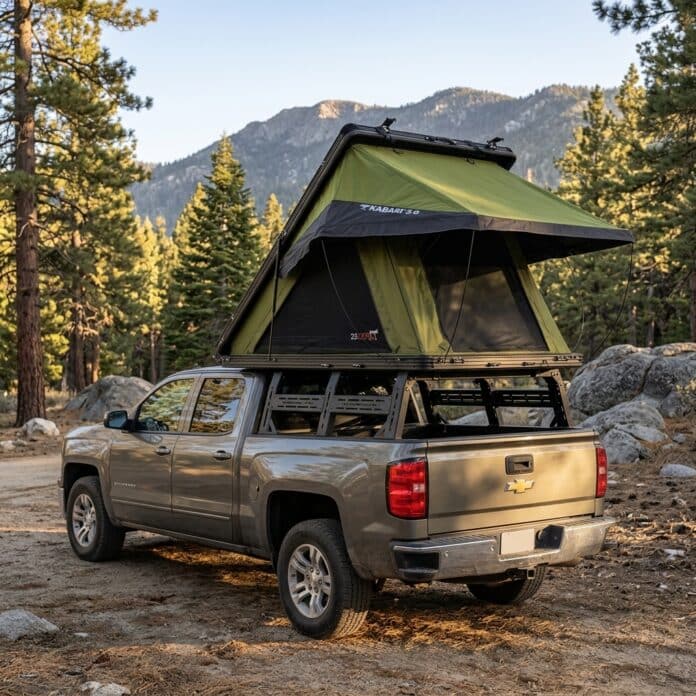

Quick Facts:
- Product: 23Zero Kabari SuperFly (hybrid lightweight wedge-style rooftop tent)
- Mounted weight: 105 lb
- Shell: Semi-hardshell with waterproof PVC top, aluminum frame
- Sleeps: 2 adults
- Mattress: 2″ foam with condensation mat
- Closed height: 7.75″ with rails (6.25″ without)
- Season rating: 4-season
- Price: $2,495 at Spirit of 1876
- Best for: overlanders who want hardshell setup speed at near-softshell weight
8 min read
The 23Zero Kabari SuperFly is a hybrid wedge-style rooftop tent built for drivers who want fast hardshell setup without the weight penalty. At 105 pounds mounted, it undercuts most aluminum hardshells by a wide margin. I looked at 23Zero’s wedge lineup in person at Spirit of 1876 in Castle Rock, Colorado, and the SuperFly sits in an interesting middle ground. This review covers the specs, the build, the trade-offs, and who should buy it.
Spirit of 1876 is an authorized 23Zero dealer, and their team filmed a Kabari SuperFly walkthrough for their Tent Talk Tuesday series. Watch it below for a close look at the shell, the interior, and the deployment. Then read on for the full breakdown.
In This Review
- 23Zero Kabari SuperFly Overview
- Key Specs at a Glance
- First Impressions From the Spirit of 1876 Floor
- What Makes the SuperFly Lightweight
- Inside the Tent: Mattress, Windows, Lighting
- Setup, Mounting, and Roof Rack Requirements
- Softshell vs. Hardshell: Where It Fits
- Pros and Cons
- Final Verdict
- Frequently Asked Questions
23Zero Kabari SuperFly Overview: The Lightweight Wedge Explained
The 23Zero Kabari SuperFly targets overlanders, weekend campers, and anyone tired of hoisting a heavy hardshell onto a roof. In particular, it delivers wedge-style hardshell convenience at a weight closer to a softshell tent. The mounted weight comes in at 105 pounds. For comparison, 23Zero’s full-aluminum Kabari Z weighs 204 pounds. Therefore, this lightweight rooftop tent saves you roughly half the load up top.
Price sits at $2,495 through Spirit of 1876. In addition, the tent ships as a semi-hardshell with a waterproof PVC top and a lightweight aluminum frame. This build keeps the profile low and the weight down. However, it trades some of the rigid feel you get from a molded clamshell. For most buyers moving up from a softshell, the SuperFly still feels like a big step forward.
The best use case is solo travel or a couple who moves camp often. Specifically, fast setup and low weight matter most when you relocate every night. 23Zero states the tent deploys in minutes, and the wedge design opens with minimal effort. For a broader look at how these tents compare with hard-sided rigs, see our rooftop tent versus truck camper breakdown.
Key Specs at a Glance
| Specification | Details |
|---|---|
| Type | Hybrid lightweight wedge-style rooftop tent (semi-hardshell) |
| Shell | Waterproof PVC top over a lightweight aluminum frame |
| Canopy fabric | ECO13B recycled material with Light Suppression Technology (LST) |
| Mounted weight | 105 lb |
| Closed dimensions | 50.25″ W x 86.5″ L x 7.75″ H (6.25″ H without mounting rails) |
| Sleeping footprint | 46.5″ W x 79.5″ L |
| Internal dimensions | 47″ W x 80″ L x 56″ H (peak) |
| Sleeps | 2 adults |
| Mattress | 2″ foam with condensation mat |
| Windows and doors | Side windows 43″ x 38″; rear door 31″ x 45″ |
| Climate ports | Dual heater/cooler ports, 5.5″ diameter |
| Lighting and storage | 25.5″ dimmable USB LED bar, six header pockets, two boot bags |
| Season rating | 4-season |
| Price at Spirit of 1876 | $2,495 |
Specs above come from 23Zero’s published product page. Stock and pricing shift over time, so confirm current numbers before you order.
Featured on Spirit of 1876
See the 23Zero Kabari SuperFly at Spirit of 1876
Check current pricing, stock, and financing on the lightweight wedge at an authorized 23Zero dealer.
First Impressions From the Spirit of 1876 Floor
I flew from California to Castle Rock, Colorado, to evaluate rooftop tents in person at Spirit of 1876. 23Zero products filled a large part of the showroom, and I spent time opening, climbing into, and inspecting the wedge and hardshell models on display. Mike, the owner, walked me through the lineup. Notably, the lightweight wedges stood out for how little effort the lift took.
Photos undersell how low these wedge shells sit when closed. Specifically, the SuperFly packs down to 7.75 inches with its mounting rails, or 6.25 inches without them. On the floor, the thin closed profile looked more like a cargo box than a tent. In addition, a lower profile helps your fuel economy and clears more garage doors and parking structures.
Semi-hardshell construction is the core idea here. Instead of a heavy aluminum lid, 23Zero uses a waterproof PVC top over an aluminum frame. As a result, the tent drops serious weight while keeping a hard cap over the sleeping area. For a sense of what raises one tent above another, see our guide on what separates a great rooftop tent.
What Makes the 23Zero Kabari SuperFly Lightweight
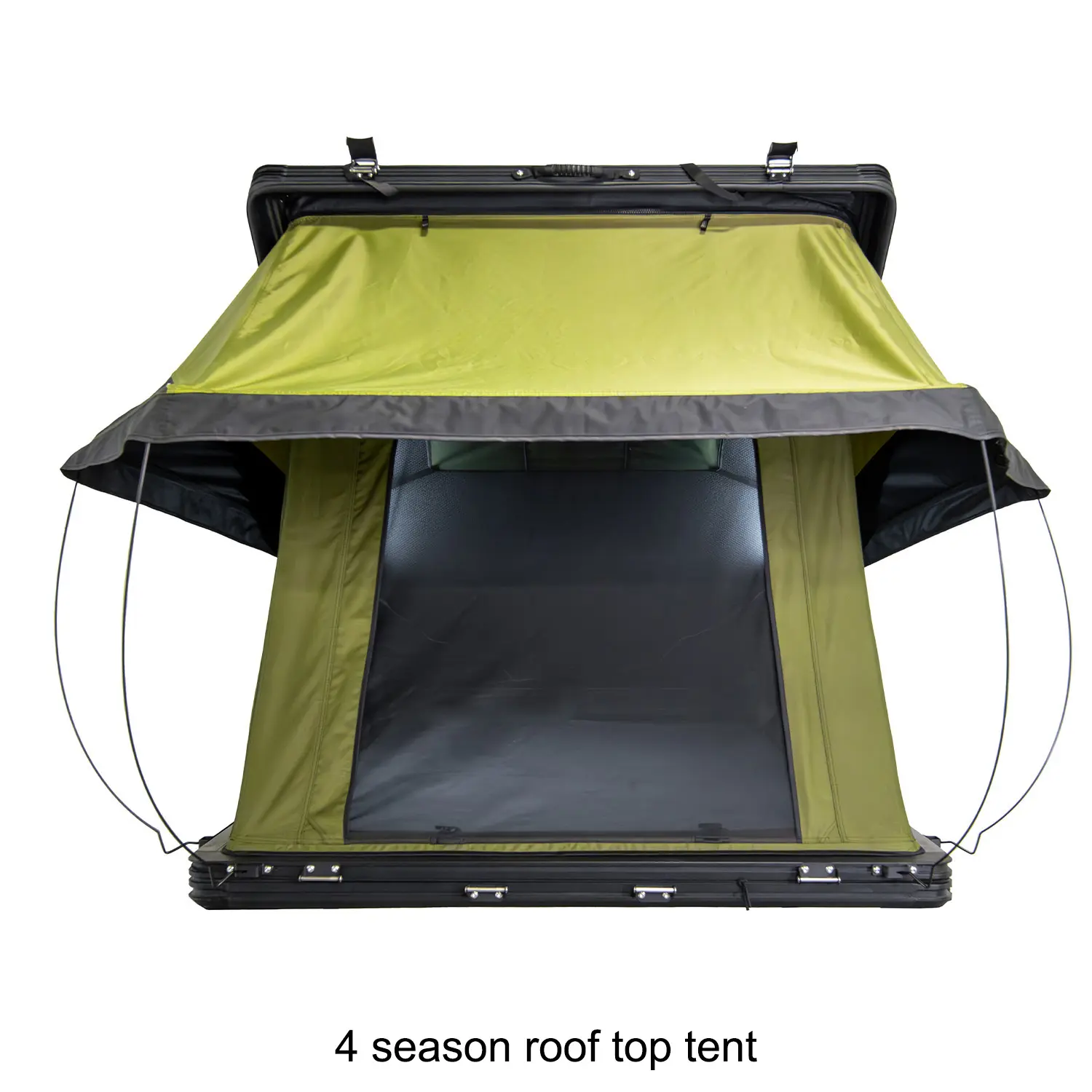
Weight is the headline number on the 23Zero Kabari SuperFly. At 105 pounds mounted, it weighs roughly half of a comparable full-aluminum wedge. Your rack notices the difference. Consequently, more vehicles will carry it within their dynamic roof load rating. Smaller SUVs, mid-size trucks, and some crossovers open up as candidates.
The savings come from the semi-hardshell design. Specifically, the waterproof PVC top replaces the heavy molded shell used on full hardshells. An aluminum frame supports the structure underneath. Meanwhile, the canopy uses 23Zero’s ECO13B recycled fabric with Light Suppression Technology. This fabric blocks daylight, so the interior stays darker for late sleepers.
Lighter weight changes what you drive and how you load. For example, one person plus a helper will mount the SuperFly on a mid-size truck with a set of ramps. In addition, less roof weight means less body roll on trail and steadier handling on the highway. The trade-off is shell rigidity, which I cover in the comparison below.
Inside the Tent: Mattress, Windows, and Lighting
Interior space is generous for a wedge. In particular, the SuperFly gives you 47 inches of width, 80 inches of length, and up to 56 inches of peak height. Two adults fit on the 46.5 by 79.5 inch sleeping footprint. The 2-inch foam mattress includes a condensation mat underneath, which helps limit moisture on cold mornings.
Ventilation and views come from large openings. Side windows measure 43 by 38 inches, and the rear door opens to 31 by 45 inches. As a result, a cross-breeze moves through the tent on warm nights. For colder trips, dual heater and cooler ports at 5.5 inches each let you run a diesel heater hose inside without leaving a door unzipped.
23Zero includes usable extras. Notably, a 25.5-inch dimmable USB LED light bar runs along the ceiling. Six header pockets and two boot bags handle small gear and footwear. For more ways to sleep warm and dry up top, see our tips for comfortable rooftop tent camping.
Setup, Mounting, and Roof Rack Requirements
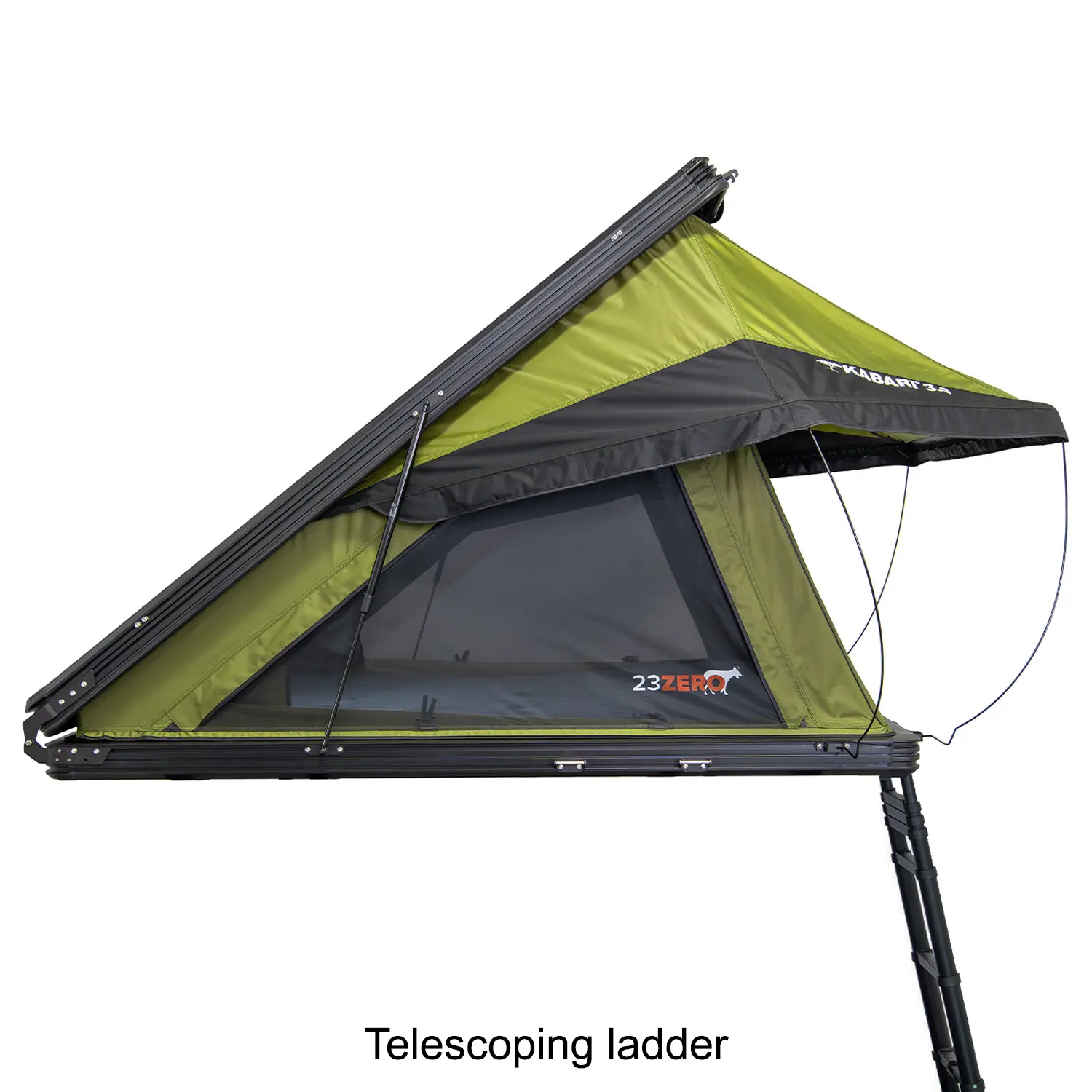
The wedge design keeps setup simple. First, release the latches. Then lift the tall side, and the shell props open on its struts. 23Zero markets deployment in minutes, and the wedge shape means fewer poles and less fabric than a softshell fold-out. Closing takes practice to tuck the fabric cleanly, though the routine speeds up within a few nights.
Mounting follows the standard crossbar approach. This wedge rooftop tent fits most factory and aftermarket racks. However, your rack’s dynamic weight rating is the first number to check. Plan for the 105-pound tent plus two occupants once you park. Therefore, confirm both your dynamic rating for driving and your static rating for sleeping before you buy.
Plan your install method before the tent arrives. For example, two people plus a set of ramps handle the 105-pound lift onto a mid-size truck. Solo mounting works with a hoist or a rack-mounted slider. In addition, a dealer install through Spirit of 1876 sets clamp torque and crossbar spacing, which matters most on a semi-hardshell frame carrying two sleepers.
Softshell vs. Hardshell: Where the 23Zero Kabari SuperFly Fits
Softshell tents win on price and interior space. However, they take longer to set up and pack away, and the exposed fabric wears faster. Hardshell clamshells and wedges win on speed and durability. Still, a full-aluminum hardshell rooftop tent adds serious weight, often 150 to 210 pounds. The 23Zero Kabari SuperFly sits between these two camps.
Against a softshell, the SuperFly sets up faster and presents a cleaner closed profile at 7.75 inches. Compared with a full hardshell rooftop tent, it saves close to 100 pounds while keeping a hard top over your head. For example, the Kabari Z weighs 204 pounds, nearly double the SuperFly. Consequently, this lightweight rooftop tent opens rooftop camping to smaller vehicles priced out of heavy shells.
Choose a softshell if you want maximum floor space for the lowest price. Go with a full hardshell if outright shell rigidity and insulation rank above weight. Pick the SuperFly if you want hardshell speed at a weight your rack will carry. For the full category rundown, read our hardtop rooftop tent buyer’s guide.
Ready to Buy?
Order the Kabari SuperFly From Spirit of 1876
Buy direct from an authorized 23Zero dealer with expert install help and warranty support. Confirm current price and stock.
Pros and Cons
Pros
- Mounted weight of 105 lb, roughly half a full-aluminum wedge
- Low 7.75-inch closed profile (6.25 inches without rails) for clearance and fuel economy
- Semi-hardshell PVC top with aluminum frame for fast wedge setup
- 4-season rating with dual 5.5-inch heater and cooler ports
- ECO13B recycled fabric with Light Suppression Technology for a darker interior
- 2-inch foam mattress with a condensation mat included
- 56-inch peak height and large 43 by 38 inch side windows
- $2,495 price undercuts most full hardshells
Cons
- Semi-hardshell PVC top gives up some rigidity versus a molded aluminum shell
- 2-inch mattress runs thinner than the 65mm foam on premium tents
- Currently on backorder at some dealers
- Two-person footprint limits it to solo campers and couples
- Cold, calm nights still bring condensation without good airflow
Final Verdict
The 23Zero Kabari SuperFly earns its spot for buyers who want hardshell speed without a 200-pound roof load. Its biggest strength is the weight-to-convenience balance. At 105 pounds, it mounts on vehicles priced out of heavy aluminum wedges. Meanwhile, the low closed profile and quick wedge lift make daily setup painless.
The trade-offs are honest. A semi-hardshell PVC top does not match the outright rigidity of a molded aluminum shell. Similarly, the 2-inch mattress sits below the plush foam on premium tents, so a topper helps on longer trips. Cold and still nights bring condensation, as they do with nearly every rooftop tent.
On value, $2,495 lands well below full hardshells while beating softshells on setup speed and weather protection. For solo overlanders and couples who move camp often, the math works. Spread across years of trips, the price per night drops fast.
For the buyer who wants a light hardshell-style wedge at a fair price, the 23Zero Kabari SuperFly is a strong pick. If you want a fully rigid shell and do not mind the weight, step up to the full-aluminum Kabari Z instead. For most weight-conscious campers, the SuperFly balances softshell weight against hardshell speed.
Frequently Asked Questions
How much does the 23Zero Kabari SuperFly weigh?
The SuperFly weighs 105 pounds mounted. For comparison, 23Zero’s full-aluminum Kabari Z weighs 204 pounds. Therefore, this wedge saves you close to 100 pounds on your roof rack.
How much does the 23Zero Kabari SuperFly cost?
Spirit of 1876 lists the SuperFly at $2,495. Pricing and stock shift over time, and some dealers show backorder status. Check current price and availability before you order.
What is a wedge rooftop tent?
A wedge rooftop tent opens on an angle, with a tall side and a low side. This shape sets up fast and keeps a low closed profile for clearance and fuel economy. 23Zero builds the SuperFly on a semi-hardshell wedge design.
Is the 23Zero Kabari SuperFly a hardshell or softshell?
The SuperFly is a hybrid. It uses a semi-hardshell with a waterproof PVC top over an aluminum frame. As a result, it sets up like a hardshell rooftop tent but weighs closer to a softshell.
What roof rack do you need for the SuperFly?
The SuperFly fits most factory and aftermarket crossbars. Confirm your rack’s dynamic weight rating covers the 105-pound tent while driving. Also check the static rating for the tent plus occupants while parked.
Is the 23Zero Kabari SuperFly good for winter?
23Zero rates the SuperFly for four-season use. The dual 5.5-inch heater ports let you run a diesel heater hose inside. However, plan for condensation on cold nights and add a warm sleeping bag.