



Quick Facts:
- Reveal date: July 21, 2026, via Toyota’s official newsroom
- New trim: Toyota Tundra Trailhunter, an overlanding-focused package
- Based on: SR5 grade, not a top-tier trim
- Key hardware: Old Man Emu suspension, Michelin LTX Trail tires, locking rear differential
- Screen: 14-inch touchscreen, standard on every 2027 Tundra grade
- Safety suite: Toyota Safety Sense 4.0, standard across the lineup
- Pricing: Not announced yet
- Full details: Expected fall 2026; exact on-sale date not yet set
- Best for: Overlanders who want factory-built trail capability without buying a flagship Tundra
8 min read
In This Article
- Toyota Tundra Trailhunter Overview
- Key Specs at a Glance
- What’s New on the 2027 Tundra
- The Toyota Tundra Trailhunter Package Explained
- Trailhunter Powertrain: What We Know So Far
- Toyota Safety Sense 4.0 and New Tech
- Where Trailhunter Fits in the Lineup
- Toyota Tundra Trailhunter vs. TRD Pro
- Pros and Cons
- Final Verdict
- Frequently Asked Questions
Toyota Tundra Trailhunter Overview
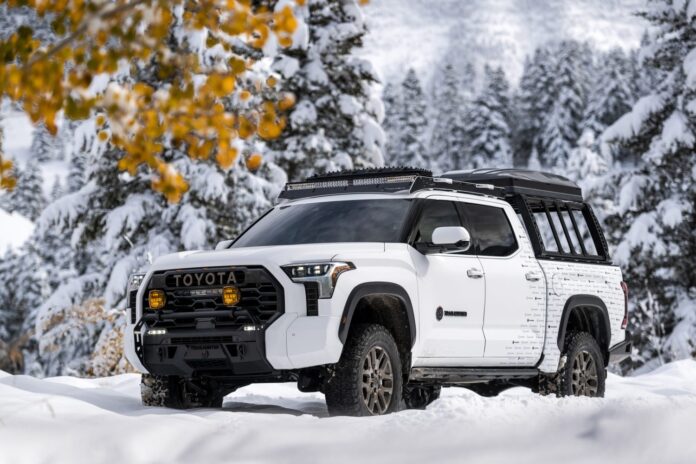
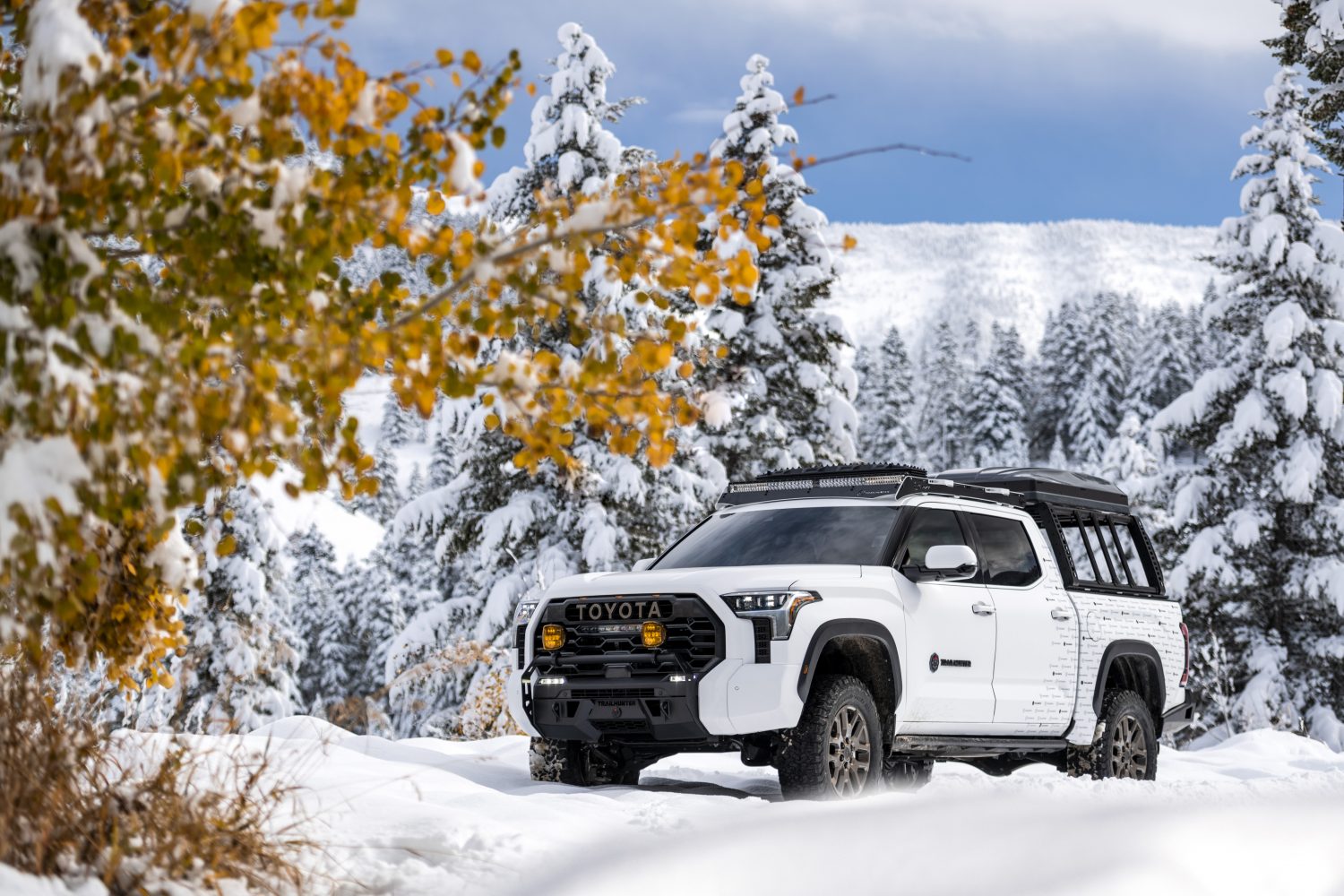
The Toyota Tundra Trailhunter is now official. Toyota confirmed the trim on July 21, 2026. The announcement came through an official newsroom release, and it headlines a broader update to the 2027 Toyota Tundra. This package brings factory overlanding hardware to Toyota’s full-size truck for the first time. Toyota Trailhunter versions of the Tacoma and 4Runner already proved popular with trail-focused buyers. This formula now extends to Tundra.
Toyota built this trim around accessibility instead of exclusivity. The automaker did not reserve Trailhunter for a flagship model. Instead, it based the package on the SR5, the second-lowest grade in the Toyota Tundra 2027 range. As a result, this decision separates the truck from its Tacoma and 4Runner counterparts. It also signals a push to put overlanding-ready hardware within reach of more buyers, not only Capstone and TRD Pro shoppers. Readers who already weighed a Tundra against a Tacoma as a camper build base now have a new factory-built option worth adding to the comparison.
Toyota has not released a Tundra Trailhunter price yet. The company describes the package as sitting at a more accessible point than its top trims. Full specifications arrive when Toyota shares more details this fall. Picture a Tundra SR5 buyer who wants to run forest service roads. This buyer also tows a trailer to a remote trailhead sometimes, without stepping up to a $70,000 truck. Toyota built this package with this exact buyer in mind.
The reveal also lands alongside the 2027 Tundra TRD Hammer, a separate Raptor-fighting trim. Toyota’s 2027 Tundra now carries two distinct off-road personalities in the same model year. Trailhunter handles overlanding and trail work, while TRD Hammer chases high-speed desert running.
Key Specs at a Glance
| Specification | Details |
|---|---|
| Base grade | SR5 |
| Suspension | Old Man Emu upgraded suspension |
| Tires | Michelin LTX Trail, 265/70R18 |
| Wheels | 18-inch, bronze finish |
| Off-road systems | Multi-Terrain Select, Crawl Control, locking rear differential |
| Recovery gear | Front recovery hooks, additional underbody protection |
| Touchscreen | 14 inches, standard on every grade |
| Safety suite | Toyota Safety Sense 4.0, standard |
| Pricing | Not announced; expected fall 2026 |
| On-sale date | Not yet confirmed; full details expected fall 2026 |
What’s New on the 2027 Tundra
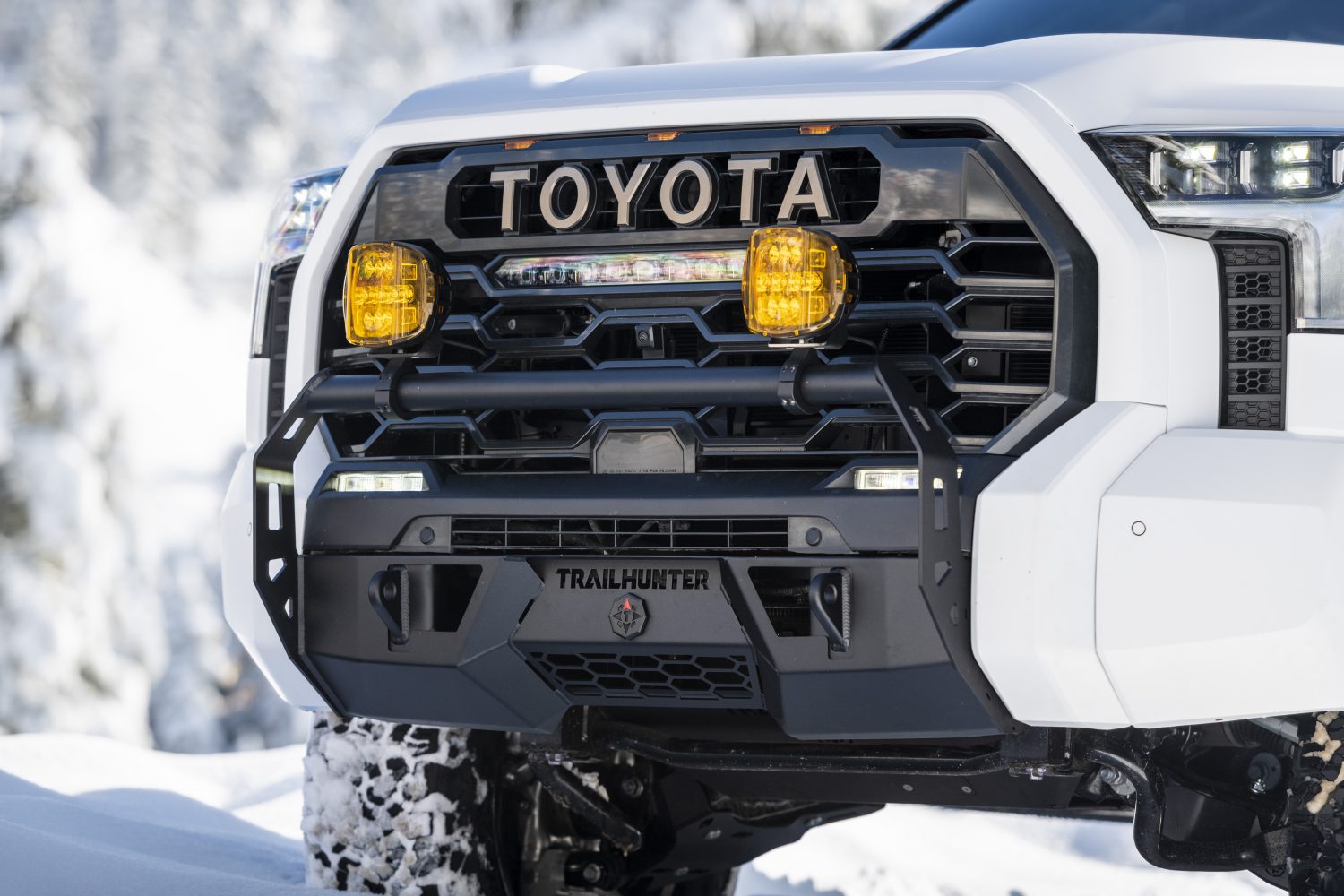
Trailhunter is the headline, but Toyota updated the entire Tundra lineup for 2027. Every grade gets a sharper front end from Toyota’s CALTY design studio. Designers squared off the grille, reshaped the bumper, and integrated new LED fog lights. These changes look subtle next to the Trailhunter hardware. Still, they set a more purposeful tone across the lineup.
Lighting also improves across the range. The grille-mounted LED light bar now runs brighter. Buyers get the option to add RIGID fog lights for extra visibility on dark trails. Front recovery hooks, once limited to off-road trims, now show up more often. They carry more visual presence as a styling cue in addition to their function.
None of these changes replace the powertrain or chassis, which stay mechanically similar to the outgoing model. Toyota is positioning this update as a refresh year, with technology and trim additions doing most of the work. This mechanical stability shows on the recall front too. The only recent issue on the current truck is a single-truck payload label recall, a sign the outgoing generation has held up well heading into this refresh.
The Toyota Tundra Trailhunter Package Explained
Toyota built the Trailhunter package on the SR5 grade instead of reserving it for a top-tier model. Some rivals gate their overland packages behind a flagship trim. This placement carries real weight, since it puts serious trail hardware within reach of buyers who would otherwise skip a flagship trim entirely.
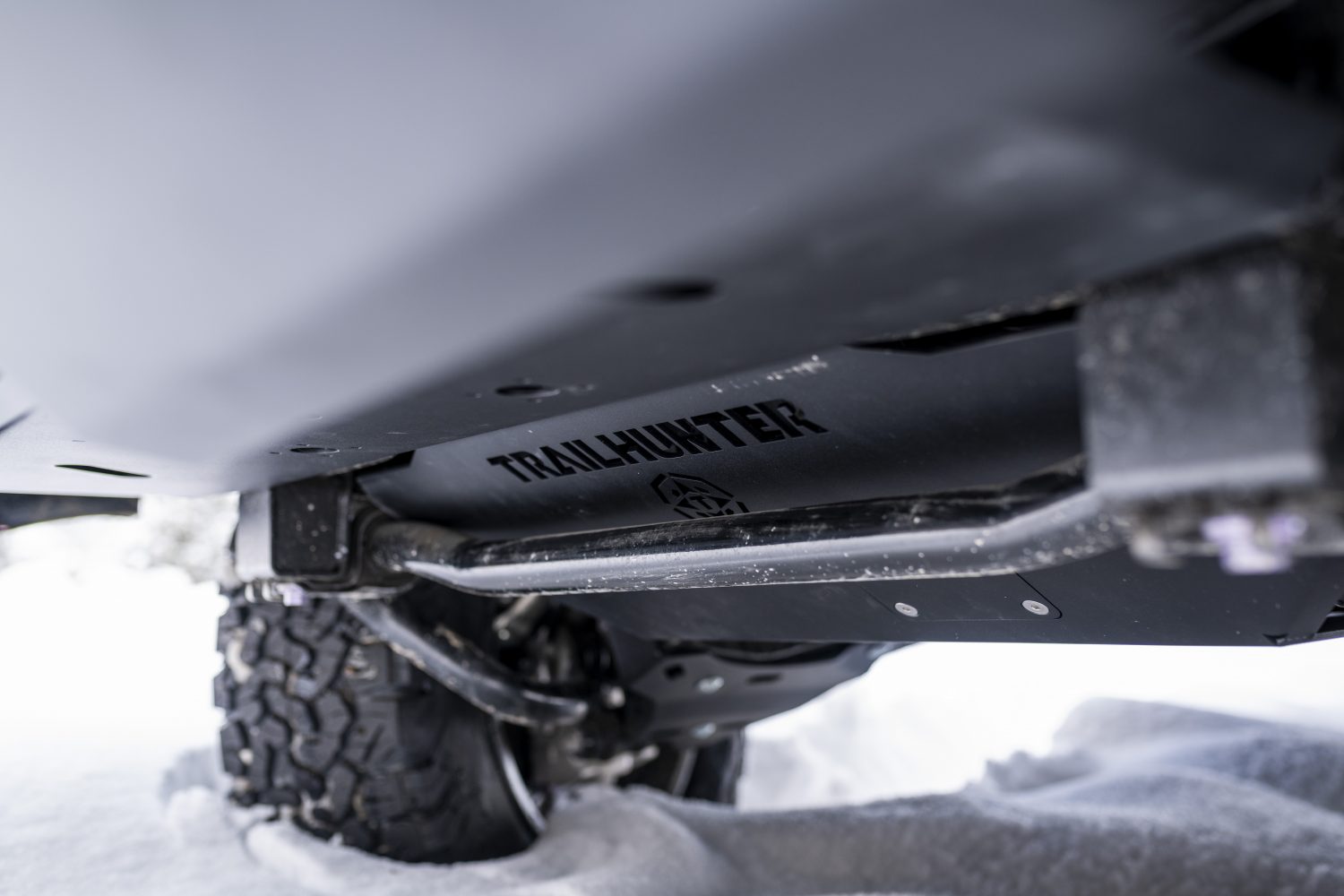
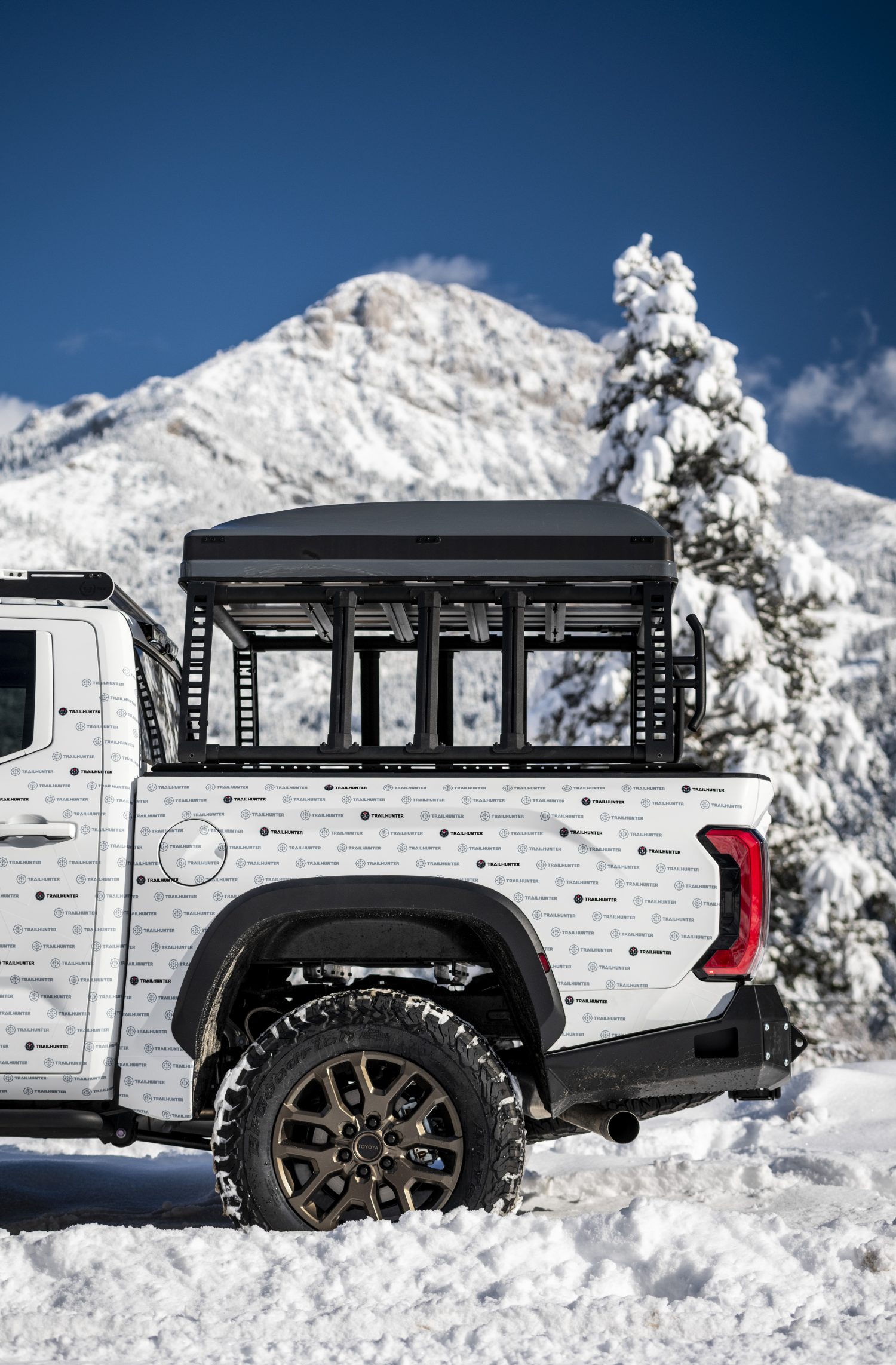
Standard equipment includes an Old Man Emu suspension upgrade built for load-carrying and articulation. In addition, front recovery hooks and additional underbody protection cover rocker panels and other vulnerable components. Michelin LTX Trail 265/70R18 tires round out the package, mounted to bronze-colored 18-inch wheels. Notably, this wheel color is a visual signature shared across every Toyota Trailhunter model in the lineup.
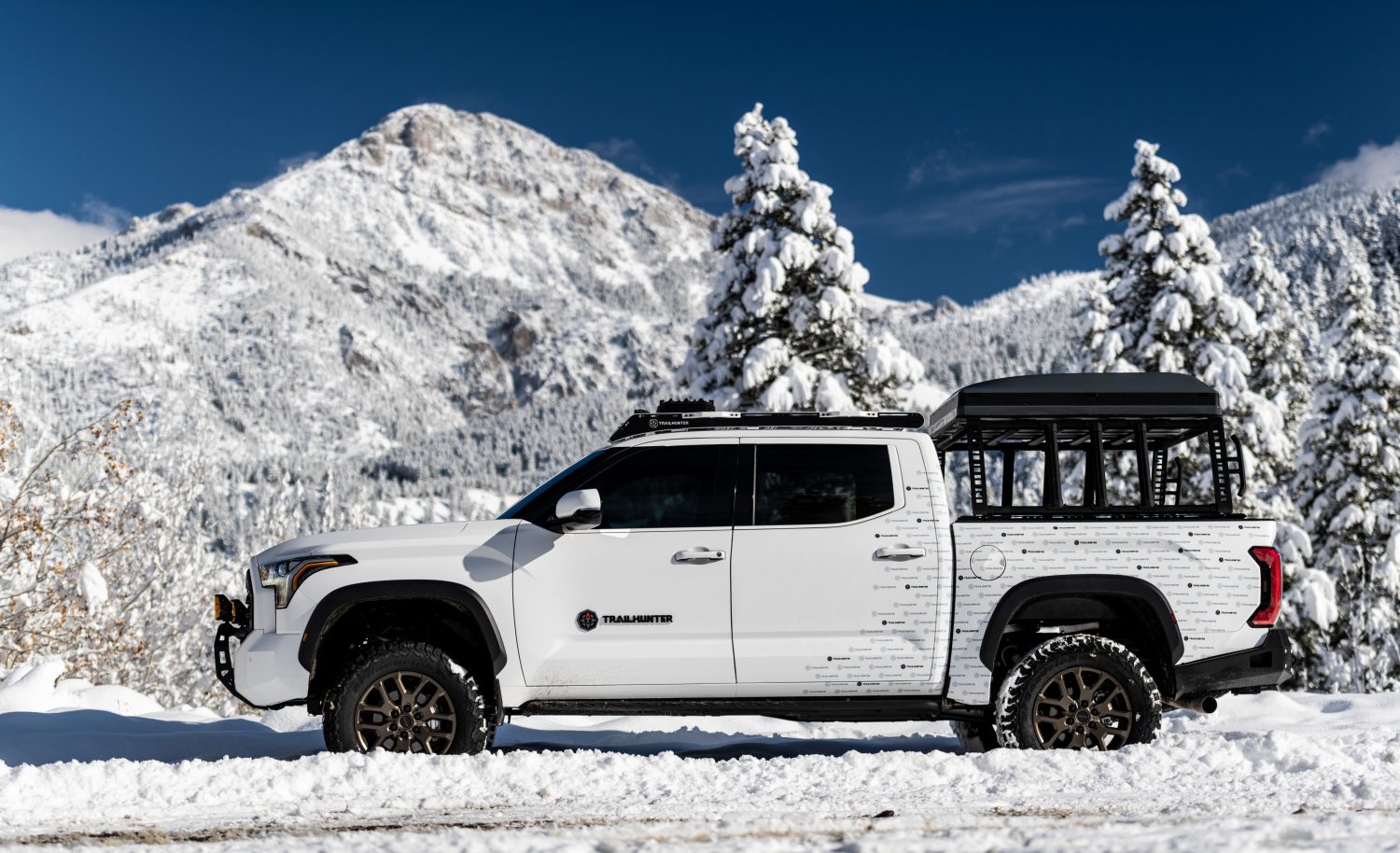
Off-road electronics round out the package. Multi-Terrain Select adjusts throttle and traction response for surfaces like sand, mud, and rock. Meanwhile, Crawl Control manages throttle and brakes automatically at low speeds so drivers focus on steering instead of pedals. A locking rear differential adds mechanical traction when electronic aids reach their limit. Toyota finishes the look with model-exclusive badging, separating Trailhunter from standard SR5 trucks at a glance.
Trailhunter Powertrain: What We Know So Far
Toyota has not confirmed which engine the Tundra Trailhunter uses, and this gap stands out. The current Tundra SR5 ships with a twin-turbo 3.4-liter V6. It makes 389 horsepower and 479 lb-ft of torque, with no hybrid option at this trim level. Should Trailhunter carry this same non-hybrid setup, it would break from Toyota’s pattern elsewhere in the lineup.
This distinction stands out. The Tacoma and 4Runner versions of Trailhunter both use the hybrid i-FORCE MAX turbocharged four-cylinder instead of a non-hybrid V6. Toyota built those trims around the extra low-end torque hybrid power delivers on technical terrain. A non-hybrid Tundra Trailhunter would represent a real departure rather than a simple extension of the badge.
Toyota’s broader lineup still offers the hybrid i-FORCE MAX V6 on higher trims. Meanwhile, every configuration pairs with a 10-speed automatic transmission. Buyers who want hybrid torque specifically for trail use should wait for Toyota’s fall announcement instead of assuming Trailhunter includes it.
Toyota Safety Sense 4.0 and New Tech
While the powertrain question waits on Toyota, the 2027 Tundra’s technology upgrades are already confirmed. Every grade gets a standard 14-inch touchscreen, replacing the old 8-inch base unit on lower trims. The new multimedia system runs through a partnership with AT&T. It adds 5G connectivity, customizable home-screen widgets, and a faster-responding voice assistant answering “Hey Toyota” prompts.
A standard Drive Recorder dash camera also comes with every 2027 Tundra, capturing 20-second clips from the exterior cameras during manual or impact-triggered events. Digital key functionality expands too. Owners store their key in a phone’s Apple Wallet, Google Wallet, or Samsung Wallet, share access with up to five additional devices, and keep the key working over near-field communication even after the phone’s battery dies.
Toyota Safety Sense 4.0 arrives standard across the lineup, including Trailhunter. The suite adds pedestrian-detecting pre-collision braking, full-speed adaptive cruise control, and steering-assisted lane departure alert. It also brings automatic high beams, lane tracing assist, road sign assist, and proactive driving assist. This combination covers both off-road trails and highway driving without forcing a trade-off.
Where Trailhunter Fits in the Lineup
This technology comes standard no matter which grade or package a buyer chooses. Grade choices for the Toyota Tundra 2027 model year span SR, SR5, Limited, Platinum, 1794 Edition, TRD Pro, and Capstone. Trailhunter comes as a package layered on top of SR5, not as a standalone grade. Buyers configure a Trailhunter truck by starting with SR5 equipment and adding the package on top.
Toyota has not released pricing for this package. Full details will come this fall, alongside the rest of the 2027 Tundra announcement. The company has, however, described Trailhunter’s position as more accessible than its top-tier trims. This suggests a price gap between Trailhunter and Capstone or TRD Pro, wide enough to matter for budget-conscious overlanders. For context, buyers get a preview of how Toyota tiers its off-road trims in 4wdTalk’s ranking of the best Tacoma off-road trims, since Toyota tends to repeat its trim logic across models. Exact figures and an on-sale date remain unconfirmed for now.
Toyota Tundra Trailhunter vs. TRD Pro
Trailhunter and TRD Pro solve different problems, even though both wear Toyota’s off-road badge. TRD Pro carries Toyota’s most aggressive off-road hardware and a higher price tag. It targets buyers who want maximum capability and are willing to pay for it. Trailhunter targets a different buyer instead, one who wants factory overlanding gear built for long-distance trail travel with cargo and camping equipment, without stepping up to a flagship trim.
The clearest difference shows up in intent. TRD Pro leans toward desert running and high-speed off-road performance. Trailhunter leans toward slower, load-bearing trail use instead: forest roads, remote campsites, and multi-day trips. Recovery gear and tire durability matter more than outright speed here. Buyers cross-shopping the two should consider their day-to-day use, not only which badge looks tougher on the tailgate.
Anyone who has read 4wdTalk’s breakdown of the Tacoma’s Trailhunter trim already recognizes this pattern. Toyota is applying the same playbook to its full-size truck, and early signs point to a similar split in mission between the two badges.
Pros and Cons
Pros
- Trailhunter hardware, including Old Man Emu suspension and a locking rear differential, comes on the SR5 grade instead of a flagship trim
- Standard 14-inch touchscreen across every 2027 Tundra grade, up from an 8-inch unit on base trucks
- Toyota Safety Sense 4.0 comes standard, including on Trailhunter
- Michelin LTX Trail 265/70R18 tires ship factory-installed, skipping an aftermarket tire purchase
- Front recovery hooks and extra underbody protection arrive built in rather than bolted on later
- Digital key sharing across up to five devices adds real convenience for multi-driver households
Cons
- Toyota has not confirmed pricing for the package, so budget-focused buyers cannot compare costs yet
- The hybrid i-FORCE MAX powertrain is not confirmed for Trailhunter, unlike the Tacoma and 4Runner versions
- Full specifications will not arrive until closer to fall 2026, leaving several details unresolved
- SR5-based trucks skip some comfort and technology features reserved for Limited and Platinum grades
Final Verdict
Toyota built the Tundra Trailhunter for buyers who want real trail capability without paying flagship prices. Its biggest strength is placement. Basing the package on SR5 instead of a top trim opens access to a much wider group of Tundra shoppers. Old Man Emu suspension, a locking rear differential, and factory recovery gear now reach buyers Toyota’s usual off-road trims skip entirely.
The real trade-off is uncertainty. Toyota has not confirmed pricing, exact availability, or which engine the trim uses. The engine question matters most, since the Tacoma and 4Runner versions of this trim both rely on hybrid power. Buyers who need those answers before deciding should wait for Toyota’s fall 2026 announcement rather than budget around assumptions.
Value looks strong on paper. Factory-installed all-terrain tires, a locking differential, and upgraded suspension typically cost thousands of dollars to add as aftermarket upgrades. Toyota is bundling this hardware into a package positioned below its most expensive trims. Aftermarket-built trucks struggle to match this combination at a comparable price, though buyers cannot confirm the actual savings until Toyota names a price.
Buyers should hold off on a final decision until Toyota’s fall reveal answers the pricing and powertrain questions. At this point, cross-shop Trailhunter directly against TRD Pro, the TRD Hammer, and rival off-road trucks like the GMC Sierra AT4X and Ram TRX before committing.
Frequently Asked Questions
When does the 2027 Toyota Tundra Trailhunter come out?
Toyota plans to share full pricing and specification details this fall. An exact on-sale date has not been confirmed yet.
How much will the 2027 Tundra Trailhunter cost?
Toyota has not released a Tundra Trailhunter price. The company describes the package as positioned at a more accessible point than its top-tier trims. Exact figures arrive when Toyota shares more details this fall.
What is the difference between the Tundra TRD Pro and Trailhunter?
TRD Pro focuses on high-speed off-road performance with Toyota’s most aggressive suspension tuning. Trailhunter focuses on overlanding instead: load-bearing suspension, recovery gear, and all-terrain tires built for long trail trips rather than desert running.
Does the Tundra Trailhunter come with the hybrid i-FORCE MAX engine?
Toyota has not confirmed the engine yet. The current non-hybrid Tundra SR5, which Trailhunter is based on, uses a twin-turbo 3.4-liter V6 rated at 389 horsepower. However, the Tacoma and 4Runner Trailhunter trims both use hybrid power instead.
What is the most luxurious 2027 Toyota Tundra trim?
Capstone remains the top trim in the Toyota Tundra 2027 lineup, positioned above Platinum and 1794 Edition. It suits buyers who prioritize comfort and features over off-road hardware.
Is the 2027 Tundra Trailhunter available to order yet?
Not yet. Toyota confirmed the trim exists and detailed its hardware. Ordering will not open until Toyota finalizes pricing, expected this fall.