


Quick Facts:
- Topic: Hill descent control (HDC), the electronic descent-speed system
- Speed range: Roughly 1 to 20 mph, depending on the brand
- Skill level: Beginner-friendly; automates a technique experienced drivers already use by hand
- Systems compared: Land Rover, Ford, Jeep, Toyota, Subaru
- Cost: Included free once your trim has it; no added part or installation cost
- Main limitation: Brake heat on long descents forces some systems to shut off
- Best for: Steep, uneven, or slippery grades where per-wheel braking beats one foot on a pedal
9 min read
In This Guide
What Hill Descent Control Actually Does
Hill descent control holds your vehicle at a steady speed on a steep downhill grade. Notably, it brakes each wheel on its own, without you touching the pedal. Over 100 vehicle models across two dozen brands offer some version of it, from Land Rover Defenders to Subaru Outbacks.
The system works automatically once you switch it on. As a result, a new off-roader uses it correctly on the first try. The nearest manual alternative is the old-school method. First, shift into a low gear, let engine braking do most of the work, and feather the brake pedal by feel.
However, this electronic version adds one real edge a human foot cannot match. It brakes each wheel by itself, which helps stop a skid on loose or uneven ground. It also costs nothing extra to use once your vehicle has it. Land Rover, Jeep, Toyota, Ford, and Subaru build it into most 4WD trims. Also, no tools and no installation are required.
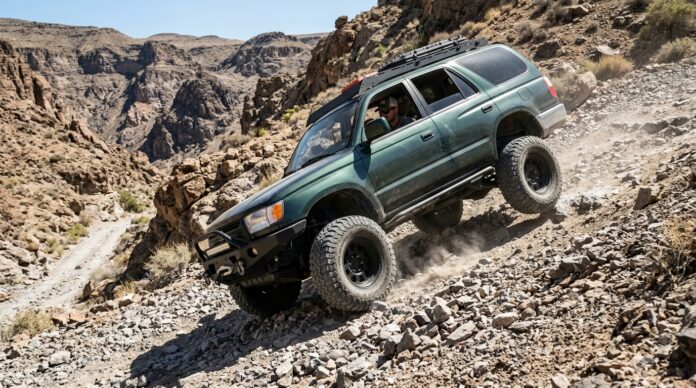
Picture a rocky switchback dropping into a canyon. A driver sets a target speed near 3 mph. The system holds this pace over loose rock while the driver focuses entirely on steering. This guide covers how the system works, how the major brands compare, and the exact steps to use it well. It also covers where the system breaks down. This includes a brake-heat limit most owners never hear about until it happens on the trail.
How Does Hill Descent Control Work?
The system runs through your anti-lock brake hardware. These are the same parts already tracking each wheel’s speed dozens of times per second. Once you switch it on for a descent, it watches for gravity pulling you past your target speed. It then pulses brake pressure at whichever wheel needs it. Your foot, in contrast, applies equal pressure across the axle.
Most systems default to roughly 7 mph with no accelerator input, then let you nudge this target up or down. Land Rover and BMW-style systems use steering wheel buttons borrowed from cruise control. Ford’s pedal-based systems read how far you press the accelerator or brake to shift the target. Jeep’s Selec-Speed Control instead offers eight fixed steps between 0.6 and 5 mph. Instead, you choose a step through the gear selector, not a dial.
The system brakes each wheel on its own. As a result, it holds a steady pace even when one tire loses grip on a rock or a patch of mud. In contrast, a single foot on one pedal cannot do this. It is the one real mechanical edge this feature holds over manual technique, and a genuine one. Wikipedia’s overview of hill descent control systems covers the ABS-based mechanics in more depth for curious readers.
HDC by Brand: What Each System Is Called
Every brand builds on this same ABS foundation, yet none of them call it the same thing. Manufacturer naming causes most of the confusion around this feature. Several brands sell more than one system. Owners often mix them up in forum threads, asking whether their vehicle even has the feature at all.
| Brand / System | Typical Speed Range | How It Engages |
|---|---|---|
| Land Rover HDC | Engages at low speed, adjustable to roughly 30 mph before it disengages | Standard on all 4WD models; dash button near the traction control switch |
| Ford HDC | Roughly 2 to 12 mph, up to 20 mph on some trucks | Brake-only; pedal input adjusts the pre-set target speed |
| Ford Trail Control | 1 to 20 mph in 4WD High, up to 10 mph in 4WD Low | Brake and throttle; works climbing or descending, forward or reverse |
| Jeep Selec-Speed Control | 0.6 to 5 mph across 8 fixed steps | Needs 4WD Low and a starting speed under 5 mph; set via the gear selector |
| Toyota Downhill Assist Control | Roughly 3 to 18 mph | Brake-only; works in 4WD High, set via a dial or switch |
| Toyota Crawl Control | Roughly 1 to 5 mph across multiple settings | Brake and throttle; 4WD Low only, works both up and down hills |
| Subaru HDC (X-MODE) | Up to 12 mph | Turns on automatically once X-MODE is active and a descent is detected |
These figures are representative ranges. Exact numbers shift between model years and trims within the same brand. Treat this table as a starting point. Then confirm your model’s own spec in its owner’s manual before you rely on it on the trail.
Toyota and Ford: Two Names, Two Different Systems
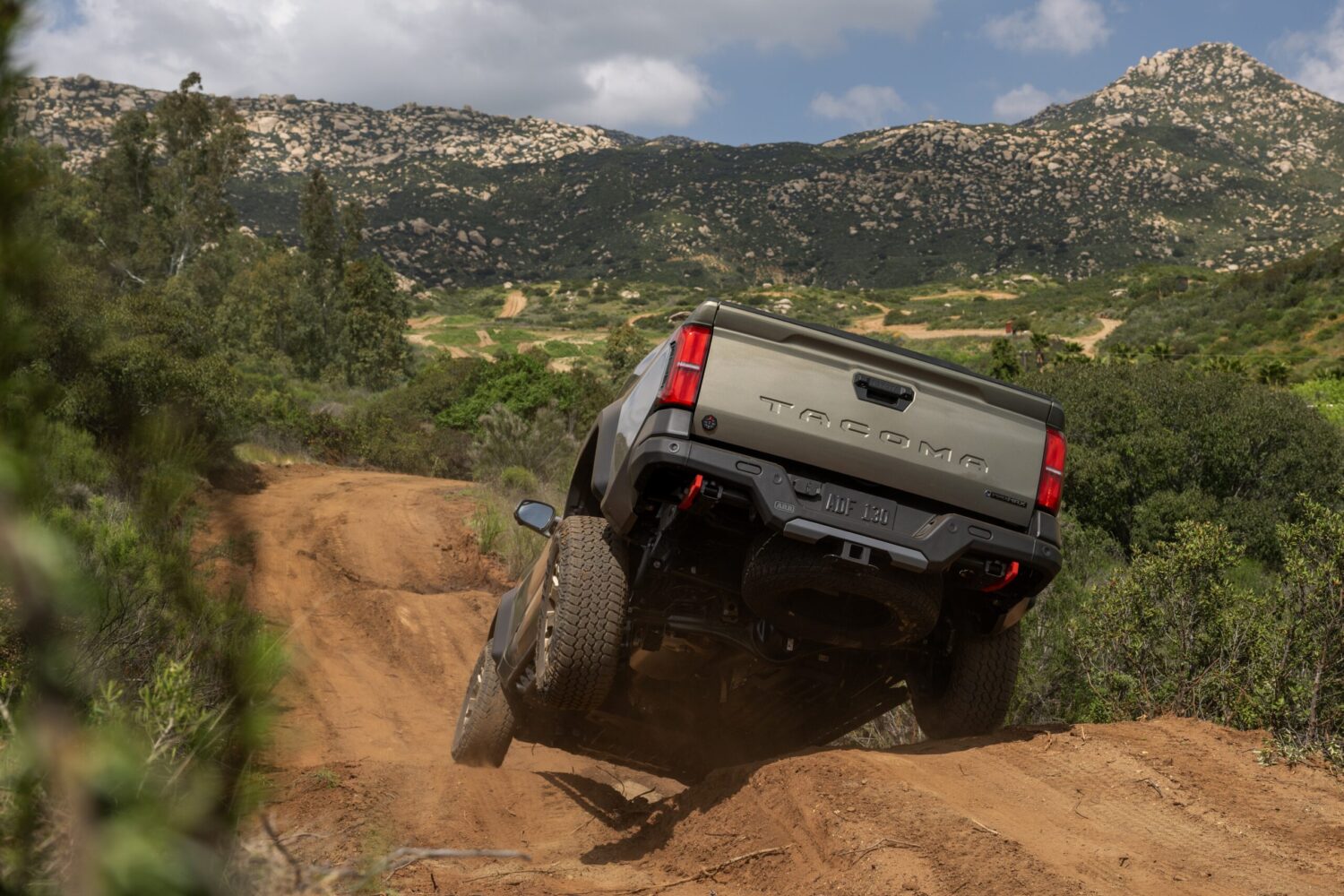
Toyota splits the job into two systems. Downhill Assist Control brakes only, holds a fixed rate in 4WD High, and covers roughly 3 to 18 mph. Also, Crawl Control adds throttle management on top of braking. It runs in 4WD Low at much lower speeds and works climbing as well as descending. Our rundown of Toyota’s Crawl Control and DAC by trim breaks down which Tacoma and 4Runner trims get which system.
Ford sells two systems, and owners confuse them often too. Hill Descent Control is the older, brake-only system. Trail Control adds throttle management and works forward, reverse, uphill, and downhill, similar in scope to Toyota’s Crawl Control. A Bronco or newer F-150 often carries both systems, each suited to a different situation.
Jeep and Land Rover
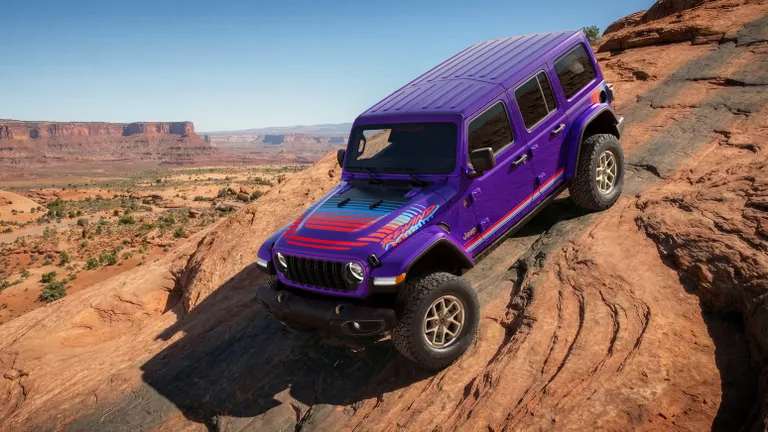
Jeep markets its version as Selec-Speed Control on the Wrangler and Gladiator. Many owners simply call it hill descent control, since it functions the same way. Specifically, it needs 4WD Low and a starting speed under roughly 5 mph. This pairs naturally with Jeep’s low-range gearing. See our piece on Jeep’s Selec-Speed Control on the Rubicon for more.
Land Rover keeps its naming simple: Hill Descent Control is standard on every 4WD model the brand sells. Land Rover popularized the feature decades ago. Its version still sets the benchmark other brands describe their own systems against.
How to Use Hill Descent Control
The button location and menu path vary by brand. However, the sequence stays consistent across nearly every system on the market.
- Shift into the correct drive mode first. Most systems need 4WD; Jeep’s Selec-Speed Control and Toyota’s Crawl Control need 4WD Low.
- Slow to the system’s starting speed. Jeep’s system needs under 5 mph to engage; others switch on at any speed and brake you down to target speed.
- Press the button or select it from the terrain menu. A dash light or chime usually confirms it is active.
- Take your foot off the brake and let the system hold your speed. Steer through the descent while it handles the braking.
- Adjust your target speed as the terrain changes, using the steering wheel buttons, pedal pressure, or gear selector.
- Override anytime by pressing the accelerator or brake firmly. Every system yields to direct input, then resumes automatic control once you let go.
- Switch it off once you reach flat ground. Most systems disengage automatically above a set speed, but a manual switch-off avoids a surprise brake pulse.
Practice this sequence on a gentle, familiar slope first. You will then recognize your own system’s feel and sound before you rely on it somewhere technical.
Safety note: This system still uses your physical brake pads and rotors to hold speed. A long, sustained descent overheats them the same way riding the pedal by hand would. As a result, most systems shut down with a warning once they sense excess heat. Pair it with your lowest usable gear so engine braking shares the load. Never treat it as your only defense on a multi-mile grade.
Brake Heat and Safety Gear for Long Descents


Limitations of HDC
Brake heat is the limit owners hit most and hear about least from dealers. Chevrolet Colorado and GMC Canyon owners on enthusiast forums report the brakes overheat on long descents. A warning appears, and the system shuts down. This forces a return to manual braking for the rest of the grade. On Subaru forums, owners facing the same problem are told to keep moving, even slowly, for about ten minutes so the brakes cool down gradually instead of stopping on the hill.
Speed gates the system on both ends. Land Rover’s version will drop out above roughly 30 to 31 mph, and if you keep accelerating past this point, several independent sources say the same system shuts off completely above 50 mph. On the low end, some systems will not activate at all until your speed drops under a set threshold. This surprises new users on their first attempt.
Loose sand exposes a different weak spot. The system works by pulsing individual wheel brakes, and this intermittent braking kills the momentum sand driving depends on. Consequently, general sand-driving advice recommends turning off aggressive brake-based systems in favor of steady throttle on dunes or soft desert tracks.
Hill Descent Control Not Working: Common Causes
Hill descent control not working almost always traces back to one of three causes. The vehicle sits in the wrong drive mode. Common examples include 2WD instead of 4WD, or 4WD High instead of the 4WD Low some systems require. The starting speed runs too high for its own threshold. Or the brakes are still hot from a recent descent, and the system sits in a cooldown lockout. Some owners also notice unexpected downshifts while the system is active. This is usually normal automatic gear management, not a fault. However, a dash warning light paired with a shutdown always deserves a dealer check.
Tools for Troubleshooting and Recovery on the Trail



X-BULL New Recovery Traction Tracks Sand Mud Snow Track Tire Ladder…
HDC vs Engine Braking: What’s the Real Difference
Engine braking is the manual method this system was built to automate. A driver shifts into a low gear, and compression in the engine slows the vehicle without brake-pedal input. As a result, this frees the driver to feather the brakes lightly where the grade demands it. Our guide to using low range for descents covers this technique step by step. It suits drivers without an electronic system, or drivers who simply prefer it.
This is the core of the hill descent control vs engine braking question. One is automatic, per-wheel, and hands-off. In contrast, the other is manual, single-pedal, and skill-dependent. The electronic system layers automatic brake pressure on top of whatever gear you pick. Consequently, the two work together rather than replacing each other. Its clearest advantage is independent wheel control. This prevents the kind of one-sided skid a driver on a single pedal cannot fully avoid on uneven or slick ground. Gear choice alone sometimes carries a descent. For a deeper look, our 4 High vs 4 Low guide compares the mechanical tradeoffs.
Towing changes this hill descent control vs engine braking tradeoff further. Extra weight behind you multiplies brake heat on a long grade. As a result, pairing either method with your lowest usable gear matters even more with a trailer attached. Our piece on avoiding brake fade on long descents covers the towing-specific version of this same brake-heat problem.
FAQ
How does HDC work behind the scenes?
It uses your anti-lock brake system to apply pressure at each wheel on its own. This holds a target speed on a downhill grade without brake-pedal input.
What speed range does the system operate at?
Most systems run somewhere between 1 and 20 mph, though the range depends heavily on the brand. Jeep’s Selec-Speed Control tops out near 5 mph. Meanwhile, Ford’s Trail Control reaches 20 mph in 4WD High.
Is hill descent control the same as engine braking?
No. Engine braking is a manual technique using a low gear to slow the vehicle. Hill descent control is an automated system using the brakes at each wheel instead. Many drivers use both together on the steepest grades.
What is the difference between HDC and crawl control?
Hill descent control, or Toyota’s Downhill Assist Control, typically brakes only and works in one direction. Instead, Crawl Control adds throttle management, runs in 4WD Low, and works both climbing and descending at much lower speeds.
Can hill descent control overheat your brakes?
Yes. Repeated brake-only intervention on a long, steep descent builds the same heat manual brake riding would. As a result, most systems shut down automatically with a warning once the brakes reach an unsafe temperature.
Should you use HDC on sand or loose gravel?
Use caution. For example, on loose gravel it generally helps by stopping wheel lockup. On soft or deep sand, its intermittent braking kills the momentum sand driving depends on, so steady momentum works better instead.