


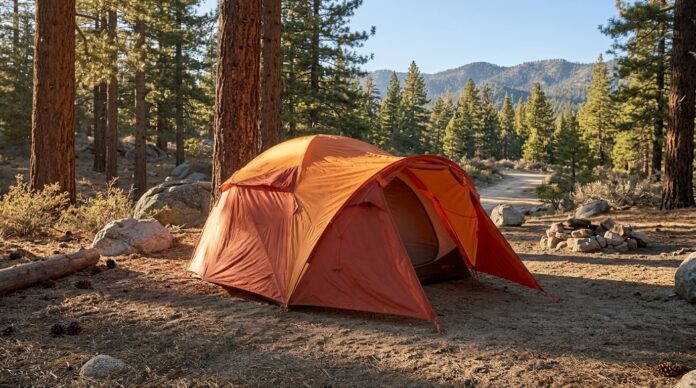

Quick Verdict: The Marmot Halo 6P is one of the most weather-capable 6-person family tents you can buy for under $500 street price. Its dome-plus-brow-pole design absorbs sustained wind that flattens taller cabin tents, and the 1,800mm polyester ripstop fly with 3,000mm coated floor keeps a real family dry through actual storms. The tradeoff: it weighs 20 lbs 1.3 oz packed and gives you 96.7 sq ft of floor space—generous for four adults, tight for six with gear. Skip it if you need cabin-tent standing room throughout; grab it if you camp shoulder-season and want a tent that will not embarrass itself when the wind picks up.
Last updated: August 2026 | 9 min read
In This Review
- Marmot Halo 6P Overview: Who This Tent Is For
- Key Specs at a Glance
- Weather Performance: Wind, Rain, and Snow
- Interior Space and Livability
- Setup, Poles, and Packability
- Materials, Durability, and Ventilation
- Marmot Halo 6P vs. Kelty Wireless 6 and REI Wonderland 6
- Pros and Cons
- Final Verdict
- Frequently Asked Questions
Marmot Halo 6P Overview: Who This Tent Is For
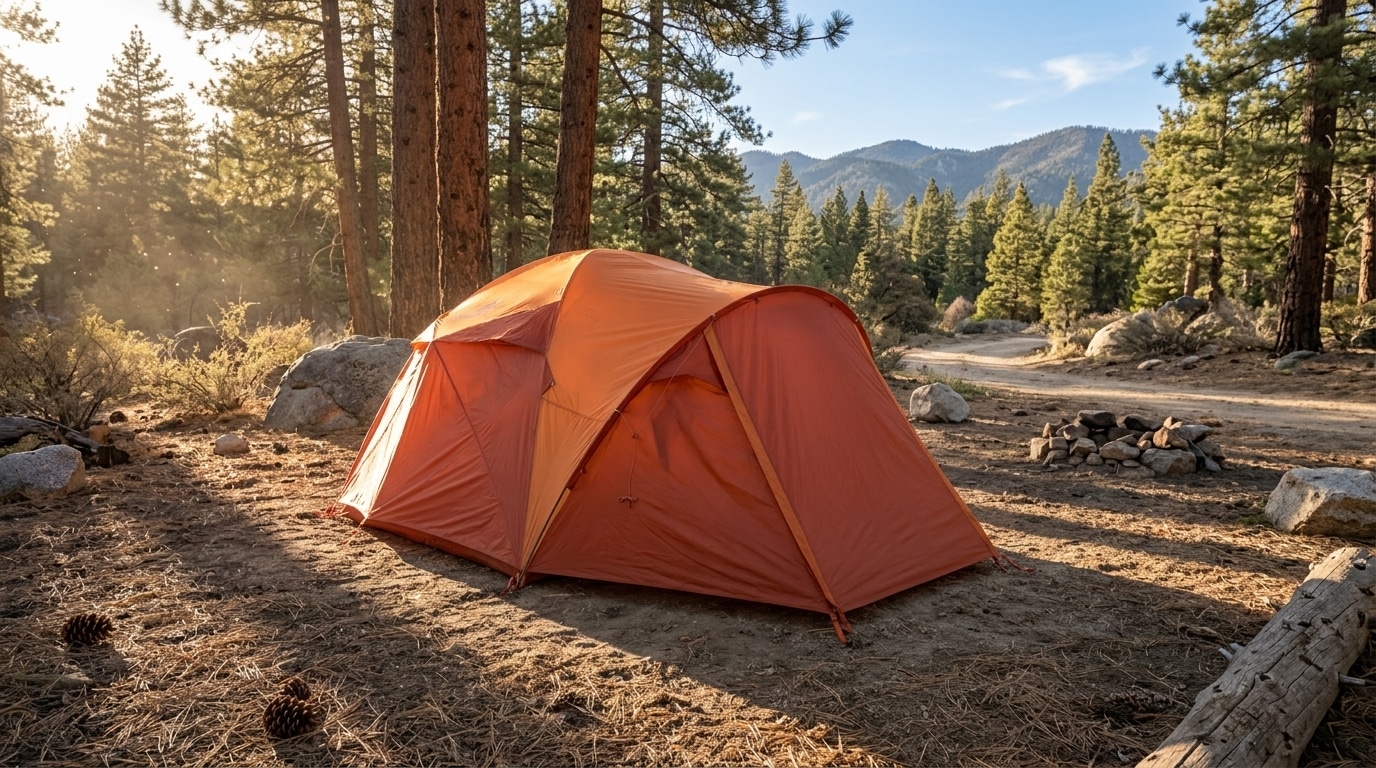
The Marmot Halo 6P sits in the crowded middle ground of family camping tents: too big and heavy for backpacking, too small for the cabin-tent crowd that expects a stand-up entryway and vertical walls. Where it earns its price is weather. Marmot has been refining the Halo line since the mid-2010s, and the current version pairs a modified-dome geometry with 12-13mm DAC DA17 aluminum poles and a full-coverage 68-denier polyester ripstop fly. That combination is what car campers, overlanders, and shoulder-season family groups pay $469 to $759 for.
Overlanders on the 4WDTalk have consistently rated the Halo 6P as a solid basecamp option because it handles the actual conditions you encounter at 8,000+ feet in the Sierras or on the eastern side of the Rockies. Rain doesn’t leak. Wind gusts don’t collapse the poles. Snow load, within reason, doesn’t crush it. That’s a low bar in theory and a high one in practice—most big-box family tents fail one of those three tests before their second season.
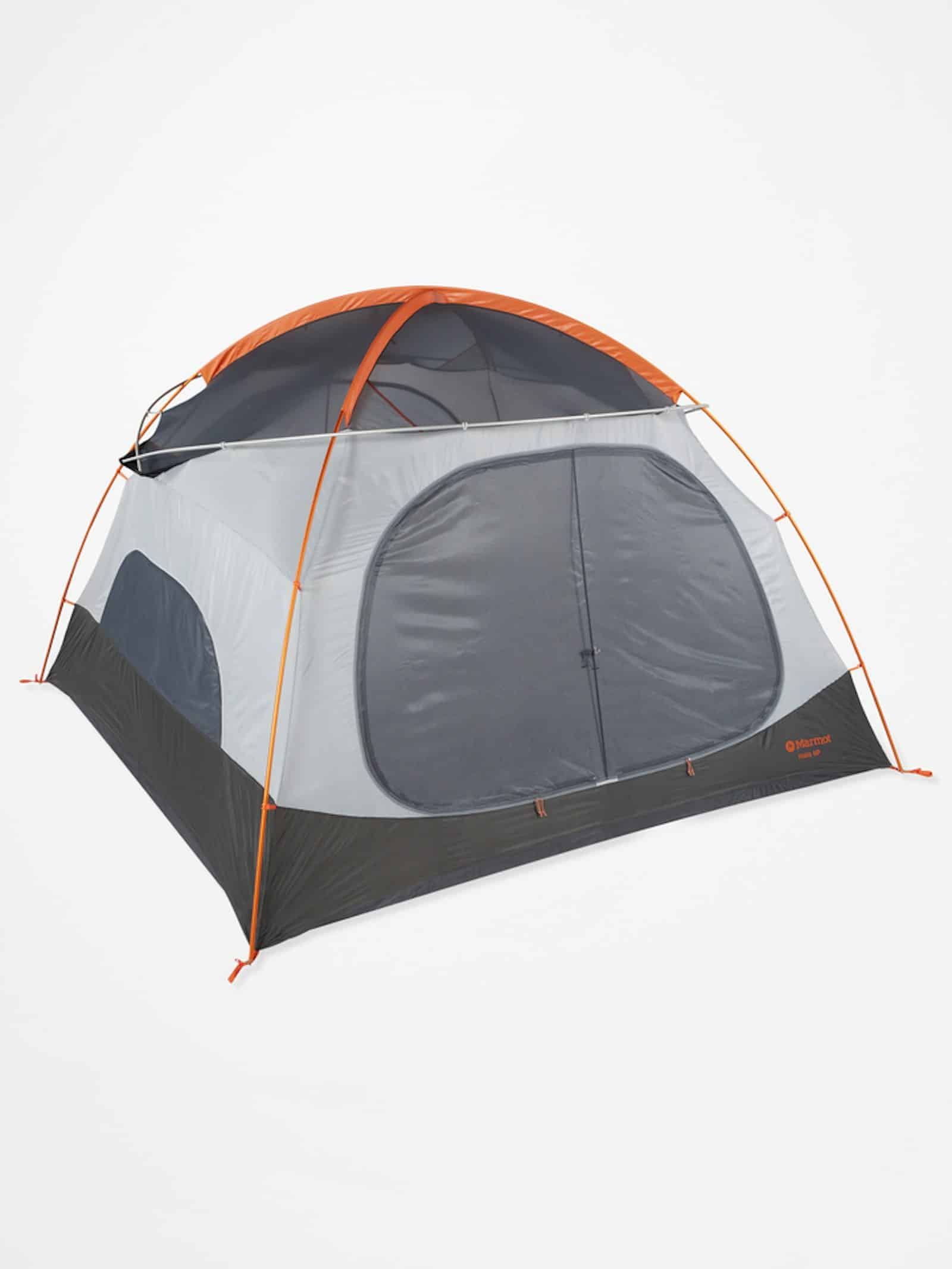
Where the Halo 6P is the wrong tent: fair-weather car campers who want maximum floor space per dollar, families who need a room-divider layout, and anyone hoping to stand upright anywhere except dead center under the peak. The current-model peak height is 76 inches, and the walls slope aggressively toward the corners.
Key Specs at a Glance
| Specification | Details |
|---|---|
| Sleeping Capacity | 6-person (comfortable for 4 adults with gear) |
| Seasons | 3-season |
| Floor Area | 96.7 sq ft (118 x 118 in / 300 x 300 cm) |
| Peak Height | 76 in (192 cm) |
| Vestibule Area | 32 sq ft each x 2 doors (~65 sq ft total) |
| Packed Weight | 20 lbs 1.3 oz (9.11 kg) |
| Minimum Weight | 19 lbs 5 oz (8.76 kg) |
| Packed Size | 25 x 14 in (64 x 36 cm) |
| Poles | DAC DA17 aluminum, 12-13mm (4-5 poles) |
| Fly Fabric | 68D polyester ripstop, 1,800mm waterproof |
| Floor Fabric | 70D nylon (older) or 150D polyester Oxford (new), 3,000mm |
| Doors / Vestibules | 2 / 2 (double-wall design) |
| Freestanding | Yes |
| MSRP / Street Price | $499-$759 MSRP / $469-$489 typical |
| Footprint Included | No (sold separately, $79) |
| Warranty | Lifetime (Marmot) |
| Top Pick | Best for Max Space | Best for Smaller Crews | |
|---|---|---|---|
| Product | TOP PICK Marmot Halo 6P Marmot Halo 6P |  Marmot Limestone 6P Marmot Limestone 6P | 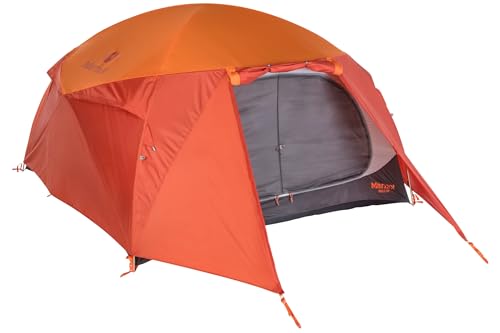 Marmot Halo 4P Marmot Halo 4P |
| Rating | ★★★★☆ 4.4 86 ratings | ★★★★☆ 4.6 1,900 ratings | ★★★★☆ 4.4 86 ratings |
| Sleeps | 6 | 6 | 4 |
| Peak Height | 76 in | 76 in | 59 in |
| Vestibule Area | 66 sq ft | 41 sq ft | 15 sq ft |
| Price | $758.95 as of Sep 30, 8:56 am | $499.99 as of Sep 30, 8:56 am | $598.95 as of Sep 30, 8:56 am |
| Check Price → | Check Price → | Check Price → |
Weather Performance: Wind, Rain, and Snow
This is where the Marmot Halo 6P earns the review. The tent’s calling card is its halo pole design—an additional brow pole at the top that pulls the fly outward and adds structural rigidity to the primary dome. In practice, that translates to a tent that stays put when other 6-person shelters are folding in half. Trailspace reviewers have documented the Halo 6P surviving “torrential downpour” without water intrusion and holding shape through 7 hours of sustained high wind, according to Trailspace field reports.
The rain performance comes from three elements working together: the 68-denier polyester ripstop fly with 1,800mm waterproof coating, fully taped seams, and full-coverage design that reaches the ground on all four sides. Compared to competitor tents like the Kelty Palisade 6, whose partial fly stops short of ground level, the Halo’s full coverage is a meaningful advantage when weather turns sideways. Rain does not blow up under the sides.
Snow is where you have to be honest about what a 3-season tent is. The Halo 6P is not a mountaineering tent, but for shoulder-season use—October in Utah, April in Colorado, that surprise Sierra storm in June—it handles a couple inches of snow load without complaint. Users with sustained heavy snow accumulation should knock it off periodically. The 3,000mm coated floor is more waterproof than the fly, which matters when snow melts on the ground under the tent.
One documented weakness: the stock guyline and stake package included with the tent is minimal. Serious wind performance requires deploying every guyout point and using stakes upgraded from the aluminum shepherd hooks Marmot ships. Budget $30-40 for MSR Groundhogs or similar. For a deeper look at cold-weather setups, our best hot tents guide covers 4-season alternatives with stove jacks.
Interior Space and Livability
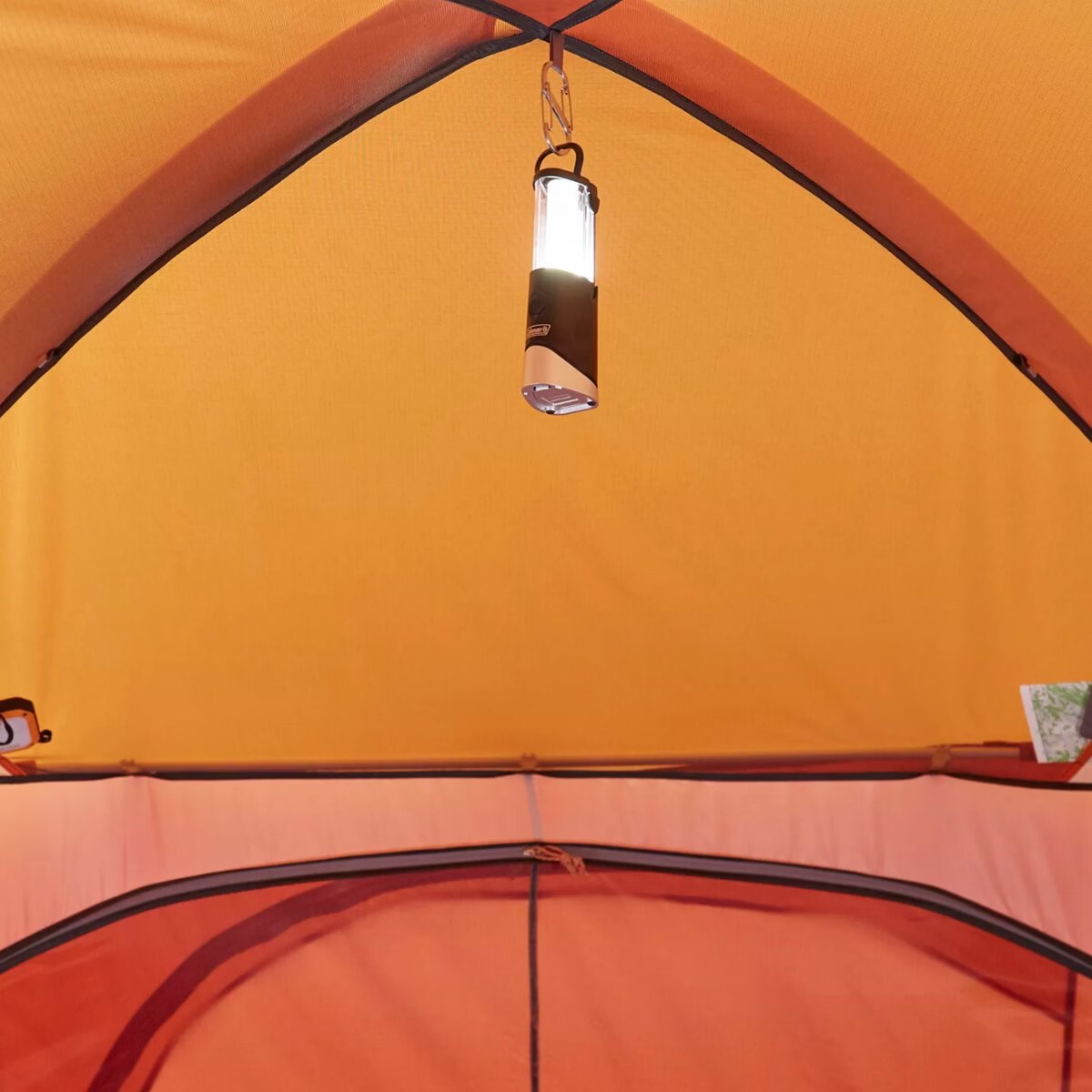
Marmot rates the Halo 6P for six people, and Marmot is being generous—as most tent manufacturers are. In real-world use, 96.7 square feet fits four adults comfortably with sleeping pads and personal gear, or two adults plus three kids with room for a queen mattress and duffel storage. Six actual adults with sleeping bags and gear is uncomfortable; six actual adults sleeping shoulder-to-shoulder without gear is what the rating actually means.
The 76-inch peak height means a six-foot person can stand upright in the middle of the tent. Because it’s a dome and not a cabin, the walls slope aggressively toward the corners. You cannot walk around inside standing up. This is the fundamental trade-off you accept for a tent that handles wind: cabin tents fail in weather, but they let you change clothes standing up in the corner.
The two-door, two-vestibule setup is a real quality-of-life upgrade over single-door 6-person tents. Family members entering and exiting from opposite sides eliminate the middle-of-the-night step-over problem. Each 32-square-foot vestibule swallows a full family’s boots, packs, and camp chairs out of the rain. On extended trips, one vestibule becomes the “wet gear” side and the other becomes the “clean gear” side—a small organizational win that meaningfully reduces the mess of multi-day camping.
Setup, Poles, and Packability
The Halo 6P uses a clip-and-sleeve pole attachment system with color-coded pole ends. Two experienced adults can pitch it in 10 minutes. One adult alone can do it in 15-20 minutes if they know the tent; the first pitch is always slower. The DAC DA17 aluminum poles are the same reliable poles found in far more expensive backpacking tents from Big Agnes and MSR—that is not a corner Marmot cut to hit price.
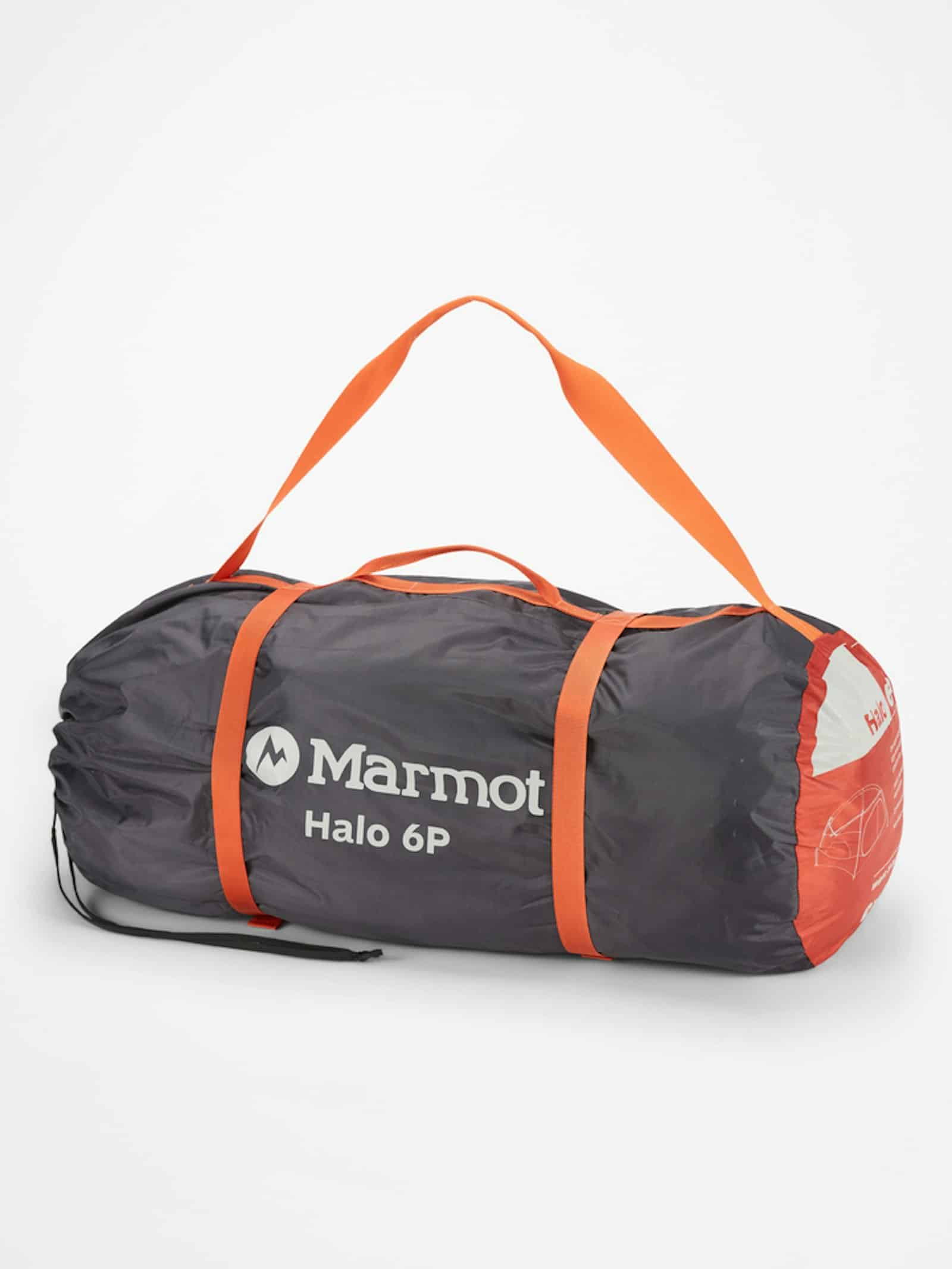
Packed dimensions are 25 x 14 inches, which fits fine in an SUV or the rear cargo area of a mid-size overlanding rig. It will not fit in a small hatchback trunk alongside other gear. At 20 pounds 1.3 ounces packed, it’s heavy enough that one adult carries it awkwardly. Two people handle it easily.
Redditors have documented one recurring frustration: the stuff sack Marmot ships is undersized. Repacking the tent in the field back into that specific sack requires the kind of precision folding you don’t feel like doing at the end of a wet weekend. Most owners eventually swap to an aftermarket stuff sack with 20-30% more volume. It’s a small annoyance but worth budgeting for.
Materials, Durability, and Ventilation
Marmot’s material selection on the Halo 6P is quietly one of the best value stories in family camping. The 68D polyester ripstop fly resists UV degradation dramatically better than nylon flies, which is the failure mode that kills most family tents by year three. Nylon absorbs UV, gets brittle, and starts tearing at the seams. Polyester ripstop stays flexible and holds up through more sun exposure. If you’re a car camper who leaves your tent pitched in the sun during three-day weekends, this material choice extends the tent’s real service life by years.
The current-generation floor uses a 150-denier polyester Oxford fabric with a 3,000mm coating, replacing the older 70D nylon floor. That’s a substantial upgrade—thicker fabric that resists punctures from sticks, gravel, and shifting sleeping pads. It also stays more waterproof over time. The older 70D nylon floor was fine, but the new floor is materially better.
Ventilation on the Halo 6P is above-average for a full-coverage-fly tent. Four top fly vents and two large side vents create real cross-flow when the doors are zipped shut. Reviewers on Outdoor Gear Lab have specifically praised the vent design’s ability to keep the interior from getting steamy in cool, damp weather. Compared to family tents that rely only on mesh doors for airflow, the dedicated top vents make a noticeable difference in condensation management.
Marmot Halo 6P vs. Kelty Wireless 6 and REI Wonderland 6
The Halo 6P competes directly with two other popular family tents in the $400-$600 range. The Kelty Wireless 6 (around $349) is lighter and cheaper but comes with a partial fly that stops short of the ground, less vestibule coverage, and thinner floor fabric. It’s the right pick for fair-weather car campers on a budget. The Halo is the right pick when weather matters.
The REI Wonderland 6 (around $529) is the cabin-tent competitor: near-vertical walls, 83-inch peak height, and a room divider for family privacy. It’s a better tent for maximizing usable interior volume in benign weather, but its taller profile and less aerodynamic shape make it distinctly worse in wind. Choose the Wonderland if you camp mostly in state parks with mild conditions and want a stand-up-anywhere layout. Choose the Halo if your trips include the Sierras, the Rockies, or any backcountry site where the weather can turn.
On value, the Halo 6P sits in the middle: pricier than the Kelty, cheaper than the Wonderland, and materially better than both in sustained wind and rain. For overlanders and shoulder-season family campers who want one tent that handles the range of conditions they actually encounter, the Halo is the smart middle pick. Our best ground tents guide covers more alternatives across the family-tent category.
Pros and Cons
Pros
- Halo brow-pole design delivers exceptional wind stability for a family tent
- Full-coverage 1,800mm polyester ripstop fly reaches ground on all four sides
- 3,000mm coated 150D polyester Oxford floor handles rough ground and standing water
- DAC DA17 aluminum poles are backpacking-grade quality at car-camping price
- Two doors and two 32 sq ft vestibules eliminate step-over traffic and store wet gear
- Four top vents plus two side vents keep condensation manageable in cool weather
- Polyester ripstop fly resists UV degradation better than nylon (longer service life)
- Marmot’s lifetime warranty covers manufacturing defects
Cons
- Dome geometry means aggressive wall slope—no standing room in corners
- Included stakes and guylines are minimal (budget $30-40 for upgrades)
- Stuff sack runs tight; field-packing back to original size is fussy
- 20 lb 1.3 oz packed weight is heavy for one person to carry alone
- Rated 6-person capacity is realistic for 4 adults with gear
- Footprint sold separately ($79) but essentially required for floor protection
Final Verdict
Marmot Halo Family Camping Tent w/Rainfly, Tangelo/Rusted Orange, 6 Person
The dome-plus-brow-pole design holds its shape in wind that flattens taller cabin tents.
- Halo brow pole holds tent shape through sustained wind
- Full-coverage 1,800mm polyester ripstop fly with taped seams
- DAC DA17 aluminum poles usually reserved for premium backpacking tents
- Two doors and two vestibules end the midnight step-over
- 20 lbs 1.3 oz packed makes it a two-person carry
- Stock stakes and guylines need upgrading before real wind
The Marmot Halo 6P is the tent to buy if you camp in shoulder seasons, at elevation, or anywhere weather can turn unpredictably. Its dome-plus-brow-pole architecture, DAC aluminum poles, and full-coverage polyester fly combine to handle rain and wind in a way that most sub-$500 family tents simply cannot. For overlanders running basecamps in Big Bear, Anza-Borrego, Moab, or the Sierra foothills, this is a tent that will last five to seven seasons of hard use without complaint.
Where the Halo 6P is the wrong tent: benign-weather car campers who want maximum floor space per dollar, families who prioritize a cabin-tent layout with vertical walls, and anyone whose trips are always warm and dry. In those cases, cabin tents from REI (Wonderland) or Big Agnes deliver more usable volume for less money. The Halo’s premium is entirely paid for by its weather resistance—if you don’t need that, you’re paying for capability you won’t use.
At $469-$489 street price, the Halo 6P is a legitimate long-term value proposition. Divided across a realistic 6-7 season service life, that’s under $80 per year for a tent that keeps a family dry through storms. Cheaper big-box tents fail within two seasons of similar use, and the total cost of replacement plus lost weekends adds up.
Final recommendation: buy the Halo 6P if you’re an overlander, shoulder-season camper, or a family whose trips regularly include elevation. If your camping is limited to fair-weather car camping in valley campgrounds, the Ozark Trail 8-Person tent or a Kelty Wireless 6 will save you $200 and give you comparable comfort in benign conditions.
Frequently Asked Questions
Is the Marmot Halo 6P a good tent?
Yes. The Marmot Halo 6P is one of the more weather-capable 6-person family tents you can buy under $500. Its full-coverage polyester ripstop fly, DAC aluminum poles, and halo brow-pole design deliver real wind and rain performance that most sub-$500 family tents cannot match. It is 3-season rated and best suited for overlanders and shoulder-season car campers.
How much does the Marmot Halo 6P weigh?
The Marmot Halo 6P has a packed weight of 20 lbs 1.3 oz (9.11 kg) and a minimum trail weight of 19 lbs 5 oz (8.76 kg). It packs down to 25 x 14 inches (64 x 36 cm). It is too heavy for backpacking but reasonable for car camping and overlanding.
How many people does the Marmot Halo 6P actually sleep?
Marmot rates the Halo 6P for six people, but in real-world use it fits four adults comfortably with sleeping pads and gear, or two adults plus three children with a queen mattress. Six actual adults with gear is uncomfortable. The floor area is 96.7 square feet (118 x 118 inches).
Is the Marmot Halo 6P waterproof?
Yes. The Marmot Halo 6P uses a 68-denier polyester ripstop fly with a 1,800mm waterproof coating and a 3,000mm coated floor (either 70D nylon on older models or 150D polyester Oxford on current models). Seams are fully taped. Field reports document the tent surviving torrential rain without leaks, and its full-coverage fly design keeps rain from blowing up under the sides.
Can the Marmot Halo 6P handle high winds?
Yes, better than most 6-person tents in its price range. The tent’s halo brow-pole design creates additional structural rigidity that helps it stay put in sustained wind. Trailspace reviewers have documented the Halo 6P holding up through 7 hours of high winds. Serious wind performance requires deploying all guyout points and upgrading the stock aluminum shepherd-hook stakes to something like MSR Groundhogs.
Is the Marmot Halo 6P worth the price?
For overlanders and shoulder-season car campers, yes. At $469-$489 street price on Amazon (down from $499-$759 MSRP), the Halo 6P delivers 5-7 seasons of hard use in a category where cheaper tents fail within two seasons of similar conditions. If you camp only in fair weather at valley campgrounds, cheaper family tents will save you money without meaningful comfort loss.
Does the Marmot Halo 6P come with a footprint?
No. The footprint is sold separately by Marmot for $79. It is not strictly required, but strongly recommended for floor protection on gravel, roots, or rough ground. Third-party generic footprints in the 10×10 foot range work as budget alternatives.
What warranty does the Marmot Halo 6P come with?
Marmot backs the Halo 6P with a lifetime warranty against manufacturing defects. This does not cover damage from misuse, UV degradation, or normal wear, but it does cover pole failures, seam separation, and zipper issues that arise from defective materials.