


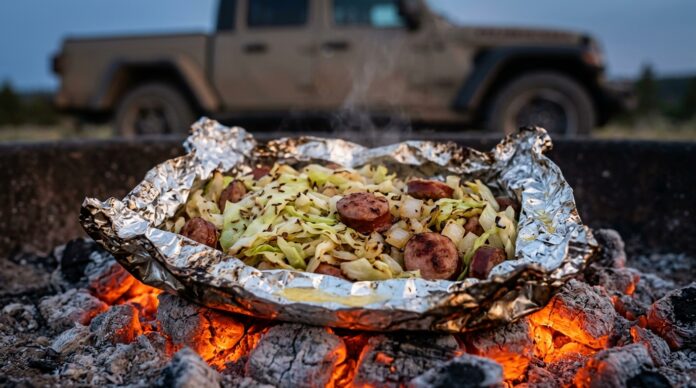
Save this recipe for your next trip.
Last updated: July 2026 | 12 min read
Written by Alex Schult
Editor in Chief of 4wdTalk.com. 15+ years of off-road and overlanding experience with 1,000+ hours on the trail.
This recipe was tested on an actual overland trip. Amazon affiliate links support 4wdTalk.com at no extra cost to you.
In This Recipe
Why This Recipe Works for Overlanders
Foil packet kielbasa and cabbage solves the problem every camp cook hits by the third or fourth night of a trip: fresh produce is thinning out and the crew wants something hearty. Kielbasa is fully cooked and smoked. This packet is really about building flavor into the cabbage, not worrying whether the meat is done.
I pack this one for the back half of a trip. The delicate greens are gone by then, but cabbage still holds up in the cooler. A whole head of cabbage shreds into enough for two or three packets and keeps far longer than lettuce or spinach ever would. Kielbasa needs no cold chain beyond a standard cooler.
This is the recipe that turns a thinning food bin into a real dinner. Caraway seeds are the ingredient that makes this taste like something more than sausage and cabbage. They carry the same anise-forward flavor found in rye bread and sauerkraut, and a full teaspoon per packet is enough to notice. Butter helps the cabbage soften instead of steaming dry.
Cabbage and kielbasa also travel better than most fresh vegetables. A whole cabbage head holds up in a cooler for a week or more without wilting. Kielbasa keeps just as long, sealed and cold. On a five-day loop through the backcountry, this recipe rides in the back half of the trip without a grocery stop.
Equipment You Need
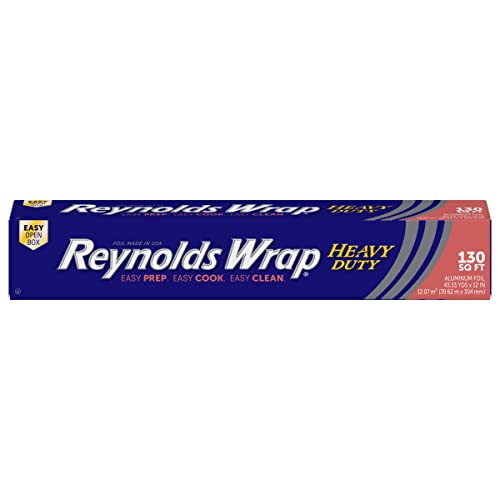
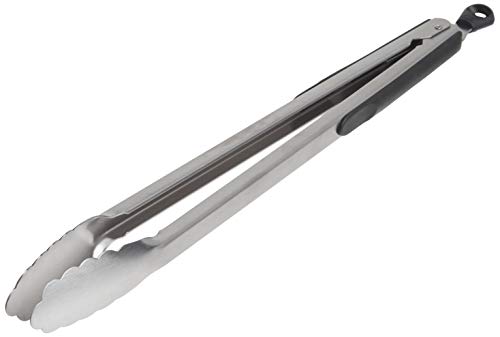
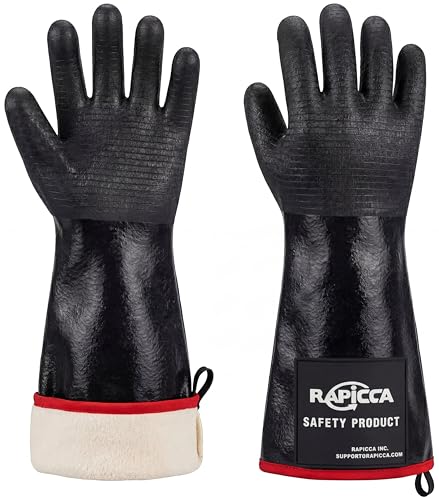
This recipe uses the same core kit as every foil packet camping recipe. Heavy-duty aluminum foil at 0.94 mil (Reynolds Wrap Heavy Duty) handles the coal contact without tearing. Long-handled tongs pull the packet off coals without burned knuckles. Heat-resistant gloves rated to at least 500F handle the flip. A meat thermometer confirms the packet reheats to 165F internal, the safe temperature for the fully cooked kielbasa inside.
Gear for This Recipe

TempPro TempSwift 1 Sec Meat Thermometer Digital for Kitchen Cookin…
Ingredients
Serves 4 | Prep 10 min | Cook 25 min | Medium-hot coals
- 1 pound kielbasa, sliced into half-inch rounds
- 4 cups shredded cabbage
- 1 medium onion, diced
- 1 teaspoon caraway seeds
- 2 tablespoons butter, cut into pats
- Salt and black pepper, to taste
Step-by-Step Instructions
Home Prep
Slice the kielbasa into half-inch rounds and store it in a sealed bag. Shred the cabbage and dice the onion, then combine them in a separate bag. Measure the caraway seeds into a small container. All three components hold well in the cooler for several days before the packet gets assembled.
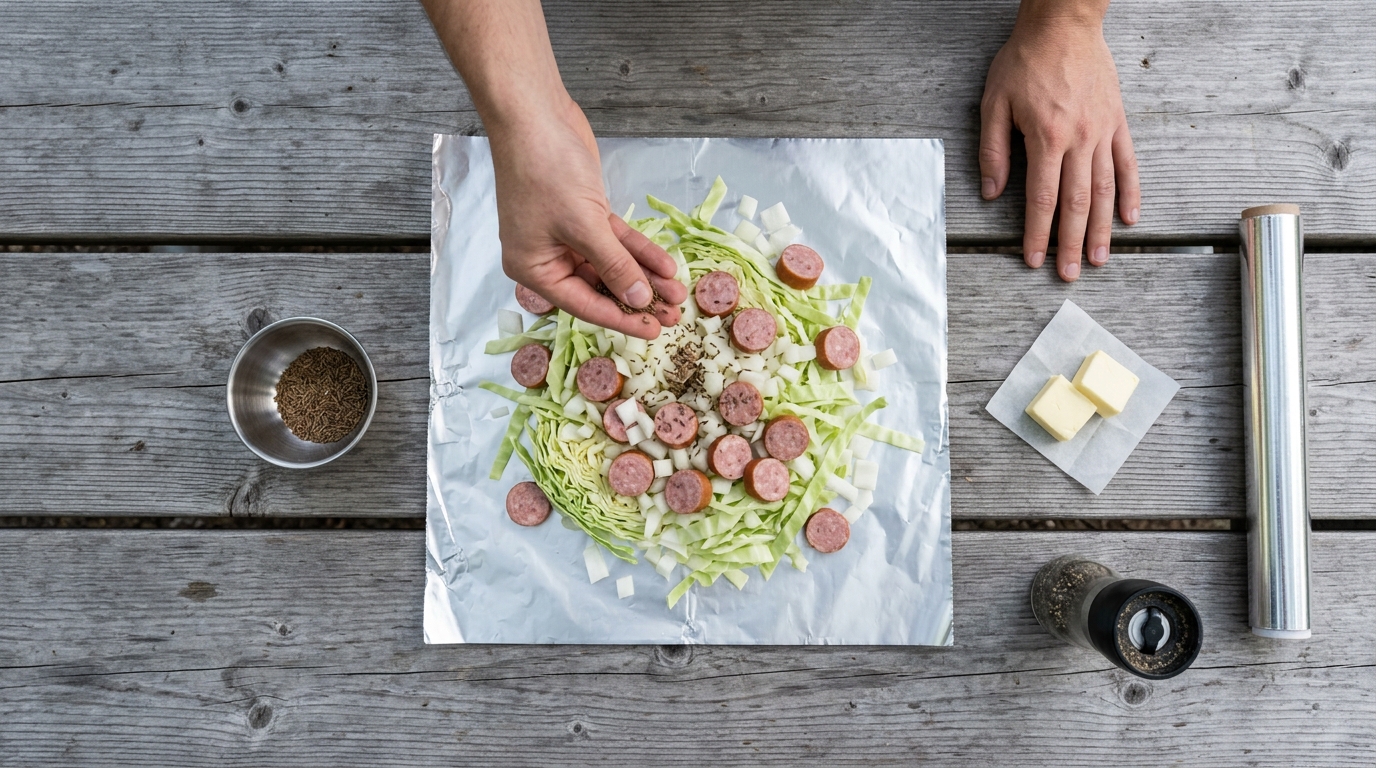
At camp, lay out a 16-inch square of heavy-duty foil per serving. Layer a quarter of the cabbage and onion mixture in the center, top with kielbasa rounds, and sprinkle with caraway seeds, salt, and pepper. Add a pat of butter on top. Flat-pack fold the packet, sealing every edge so steam builds inside to soften the cabbage.
At Camp
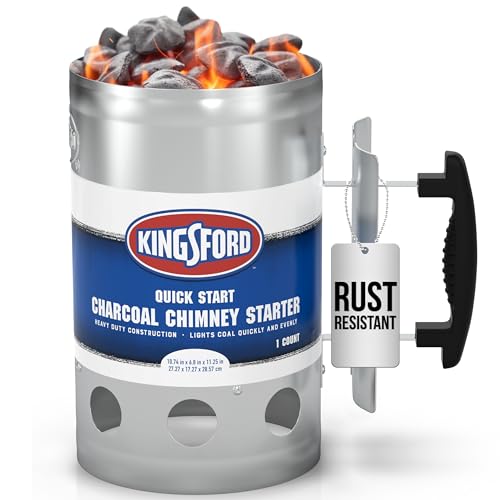
Build a bed of medium-hot coals, glowing orange with a layer of gray ash on top. Place the packets directly on the coals or on a grill grate set 2 to 3 inches above. Flip once at the midpoint of the cook.
Cook 22 to 25 minutes total, until the cabbage has softened and the kielbasa has browned at the edges. Check with a meat thermometer inserted into the center of the packet. The kielbasa is fully cooked already. The 165F reading confirms the packet has reheated enough to eat safely, not that raw meat has finished cooking.
Coal Bed Math
Coal temperature determines whether the cabbage fully softens in this recipe’s 22 to 25 minute window. Use this table to read your coal bed before placing packets.
| Coal Stage | Temperature | Best For |
|---|---|---|
| Hot | 500F+ | Searing, quick shrimp packets |
| Medium-Hot | 400-500F | Kielbasa and cabbage, taco meat |
| Medium | 350-400F | Breakfast packets, vegetables |
| Medium-Low | 250-350F | Chocolate fondue, delicate desserts |
Field Tips
Shred the cabbage thin, closer to coleslaw size than wedge size. Thick-cut cabbage wedges need far longer than 25 minutes to soften fully over coals. Thin shreds cook evenly in the same window as the kielbasa.
Do not skip the butter. Cabbage has almost no fat of its own, and without it, the shreds steam dry instead of turning silky.
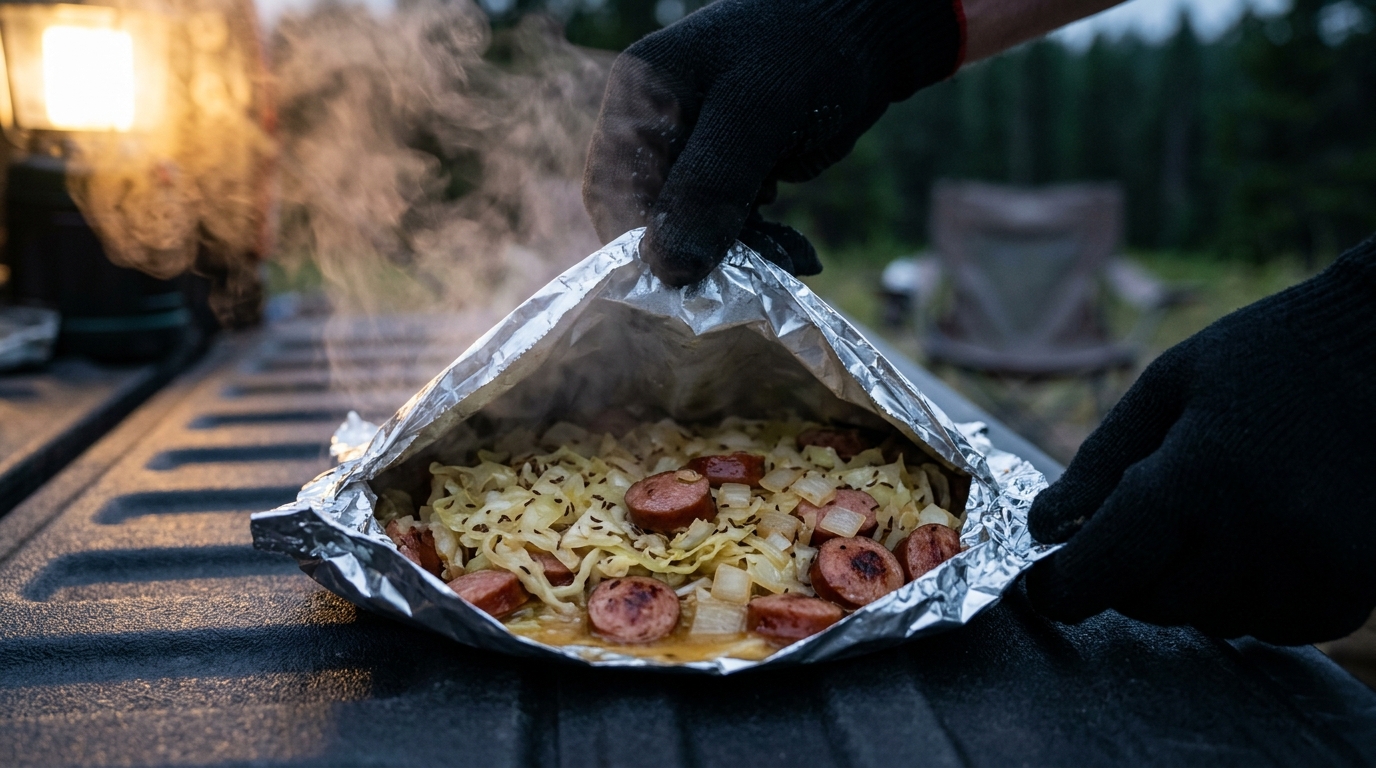
Slice the kielbasa in even half-inch rounds. Thicker chunks take longer to brown at the edges and can leave the packet unevenly cooked between the meat and the cabbage.
Keep the kielbasa packet on the same cooler shelf as other ready-to-eat food, not with raw chicken or fish. Since the sausage is already fully cooked, the food safety concern here is reheating it properly, not preventing raw meat from spoiling. The USDA has guidance on reheating pre-cooked food safely on its leftovers and food safety page. It is worth a bookmark for any camp cook working with cured or smoked meats.
Coal and Cleanup Gear


Variations and Substitutions
The base foil packet kielbasa and cabbage build takes well to swaps once the flat-pack fold feels natural. Try one change at a time so the cook time stays predictable.
- Apple addition: Add a few thin apple slices alongside the cabbage. The fruit softens into the mix and pairs well with the caraway.
- Mustard finish: Add a teaspoon of whole grain mustard to the packet before sealing for a tangier, more traditional profile.
- Red cabbage swap: Red cabbage works the same way as green and holds its texture slightly better over a long cook.
- Potato addition: Add a half cup of thin-sliced baby potatoes for a heartier, more filling packet. Potatoes need the full 25 minutes to soften.
- Bratwurst swap: Fresh bratwurst works in place of kielbasa, but it needs to reach 160F internal since it is raw, not pre-cooked like kielbasa.
- Low-sodium build: Use a low-sodium kielbasa and season with fresh cracked pepper instead of added salt to control sodium on a multi-day trip.
- Vinegar splash: Add a splash of apple cider vinegar for brightness that cuts through the richness of the butter and sausage.
Storage and Leftovers
Leftover foil packet kielbasa and cabbage keeps in a cooler at sub-40F for up to 2 days. Store the unopened packet directly in the cooler, since the foil already seals in the juices. Reheat on medium coals or a camp stove burner for 8 to 10 minutes, turning once at the midpoint. Confirm it reaches 165F internal again.
For longer trips, portion leftovers into a separate container rather than reheating the same packet twice. Cabbage releases more liquid the second time it is heated, and a foil packet that has already been opened once seals less reliably. A dedicated trash bag for used foil keeps the drawer system clean and supports a Leave No Trace pack-out.
Frequently Asked Questions
What temperature should foil packet kielbasa and cabbage reach?
The kielbasa is already fully cooked and smoked. The packet only needs to reheat to 165F internal, the standard safe reheat temperature for pre-cooked food. Check with an instant-read thermometer in the center of the packet.
Why is the cabbage still crunchy after 25 minutes on coals?
Cabbage cut too thick is the usual cause. Shred it closer to coleslaw size than wedge size, since thick cuts need far longer than this recipe’s cook window to soften fully.
Can you use a different sausage instead of kielbasa?
Yes, but check whether it is pre-cooked or raw. Fresh bratwurst or Italian sausage needs to reach 160F internal since it starts raw, unlike kielbasa, which only needs reheating to 165F.
What does caraway seed add to this recipe?
Caraway carries an anise-forward flavor found in rye bread and sauerkraut. A teaspoon per packet is enough to notice without overwhelming the kielbasa and cabbage.
How long does cabbage last in a cooler before it wilts?
A whole cabbage head holds up in a cooler for a week or more without wilting, longer than most leafy greens. This makes it a good choice for the back half of a multi-day trip.
Can you make foil packet kielbasa and cabbage ahead of time?
Yes. Slice the kielbasa and shred the cabbage up to 2 days ahead and store them separately in the cooler. Assemble the full packet at camp right before cooking.
Why did the packet turn out dry instead of silky?
Skipping the butter is the usual cause. Cabbage has almost no fat of its own, and without butter, the shreds steam dry instead of turning tender and silky.
You Might Also Like