



I’ve been camping and overlanding my entire life. From weekend desert runs to multi-week backcountry pushes, I’ve made every mistake, carried everything I didn’t need, and eventually learned the hard way: the best setups are not the heaviest ones. Over the years building 4WDTalk into a community for people who share the same passion for getting remote, one question surfaces constantly: how do you build a lightweight overlanding setup without giving up the comfort making those remote nights worth the miles?
The answer isn’t a single product or a single strategy. It’s a mindset applied consistently across every decision you make, from shelter to power to the trailer behind your rig. I first met the SNO Trailers team years ago, toured their production facility, and took their trailers out on the trail. Their approach to building light without building soft left an impression deepened by more time in the field. This guide walks through several proven methods for building a genuinely capable, comfortable lightweight overlanding setup, including one of the most refined tools for doing exactly this.
Quick Verdict: A lightweight overlanding setup doesn’t require sacrificing comfort. It requires being deliberate about weight at every layer of your build: vehicle payload, shelter, power, kitchen, and trailer. The SNO Trailers Recon, at 875 lbs dry with a 40-degree departure angle and Timbren HD axle-less suspension, is one of the most capable lightweight overlanding trailers available starting at $13,995. Apply the strategies in this guide and your rig reaches more places with less effort while still sleeping, eating, and living well on the trail.
Last updated: May 2026 | 8 min read
In This Guide
- Why Weight Is a Capability Problem, Not Simply a Comfort One
- Start With Your Vehicle’s Actual Payload
- Choose Your Shelter Wisely
- Lighten Your Power System Without Going Dark
- Build Around a Purpose-Built Lightweight Trailer
- Pack a Smarter Kitchen
- Approach Comfort as a System
- SNO Trailers Recon: Specs at a Glance
- Frequently Asked Questions
Why Weight Is a Capability Problem, Not Simply a Comfort One
Overlanding has never been more accessible, and this accessibility has created a specific problem: more gear, heavier rigs, and setups making it harder to reach the places worth going. A lightweight overlanding setup solves this by trimming unnecessary weight at every layer of the build. Lighter rigs brake shorter on gravel, handle more confidently on off-camber terrain, and put less strain on recovery gear when things go sideways. For anyone towing, a lighter trailer preserves more capacity for water, fuel, and food.
Weight isn’t only a comfort issue. It’s a capability issue. Every pound of unnecessary mass is a pound of towing capacity, payload, and trail performance lost. The strategies below address five separate areas where overlanders routinely carry more than they need, and each one compounds the benefit of the others when building a lightweight overlanding setup.
Start With Your Vehicle’s Actual Payload
Before adding overlanding gear, calculate your vehicle’s payload capacity. This number, listed on the door jamb sticker, represents the maximum combined weight of passengers, cargo, and tongue weight from a trailer. Most mid-size trucks and SUVs carry between 1,200 and 1,800 pounds of payload. A heavy rooftop tent (80 to 150 pounds), a full roof rack (50 to 80 pounds), water (8.3 pounds per gallon), recovery gear, and tools add up faster than most people expect. Many overlanders unknowingly blow past their payload limit before they’ve left the driveway.
The practical fix is auditing every item you carry and assigning it a weight. Start by cutting duplicates: one good knife beats three mediocre ones, a reliable multi-tool replaces a cluttered toolbox, and a compact first aid kit replaces the bloated household version most people grab. Modular storage systems, such as drawer kits or MOLLE panel setups, reduce loose gear shifting and let you pull entire modules when a trip doesn’t require them. The goal is a base configuration light enough to leave room for what matters most: water, fuel, food, and safety gear.
Specifically, weigh your loaded rig before committing to a full build. This single step surfaces hidden weight problems most overlanders never identify until something breaks or handles poorly on a steep descent.
Choose Your Shelter Wisely
Shelter is where the most significant weight savings, or losses, happen. A heavy hard-side truck camper mounted to a full-size bed adds 1,000 to 1,500 pounds and shifts the center of gravity considerably. A quality hardshell rooftop tent runs 100 to 200 pounds and deploys in minutes without changing the vehicle’s handling profile dramatically. Ground tents weigh even less and require no roof rack investment, though they trade off elevation and setup speed.
For most overlanders, a softshell or hardshell rooftop tent represents a strong balance of weight and overlanding comfort. Models from Alu-Cab, iKamper, and 23ZERO range from 80 to 150 pounds and provide genuine four-season protection with high-density foam mattresses. However, a rooftop tent means your vehicle becomes camp. Every time you want to move, you’re breaking camp first. For overlanders who explore side trails from a fixed base or travel with more than two people, a purpose-built lightweight trailer solves the mobility problem while keeping total weight manageable and comfort high, making it one of the most practical anchors of any lightweight overlanding setup.
Featured Lightweight Trailer
SNO Trailers Recon: 875 lbs. Built for the Trail.
Small and light enough to tow with your ATV or side-by-side. Designed with Timbren HD axle-less suspension, an aluminum body, and serious off-road capability from the ground up. Starting at $13,995.
Lighten Your Power System Without Going Dark
An overbuilt power system is one of the most common sources of unnecessary weight in overlanding builds. A 300-amp-hour lithium battery bank, a large inverter, and a full solar array sound right until you weigh the system and realize it’s consumed 80 to 120 pounds of your payload for capabilities you’ll use twice a year. For most overlanders running a fridge, lights, phone charging, and a small fan, a 100-amp-hour lithium battery paired with a single 100-watt flexible solar panel is more than enough for a four-day trip in most conditions.
Lithium iron phosphate batteries have changed the weight equation for off-grid power specifically. Compared to AGM batteries, LiFePO4 cells provide the same usable capacity at roughly half the weight. A 100Ah AGM weighs around 60 pounds; the equivalent LiFePO4 sits at 22 to 28 pounds. Across a dual-battery setup, those savings add up to 60 to 80 pounds of recovered payload. A focused power system paired with a quality 12-volt compressor fridge in the 30- to 45-liter range covers every comfort need most overlanders have, without turning the rig into a rolling generator station with a fuel-economy penalty you don’t need.
Build Around a Purpose-Built Lightweight Trailer

For overlanders who want to separate camp from the tow vehicle, a purpose-built lightweight off-road trailer changes the equation entirely. When I toured the SNO Trailers facility and spent time with their team, I watched their build process firsthand. These are meticulous people. Every weld, every fitment decision, every material choice reflects a commitment to making life easier on the trail without piling on weight you don’t need.
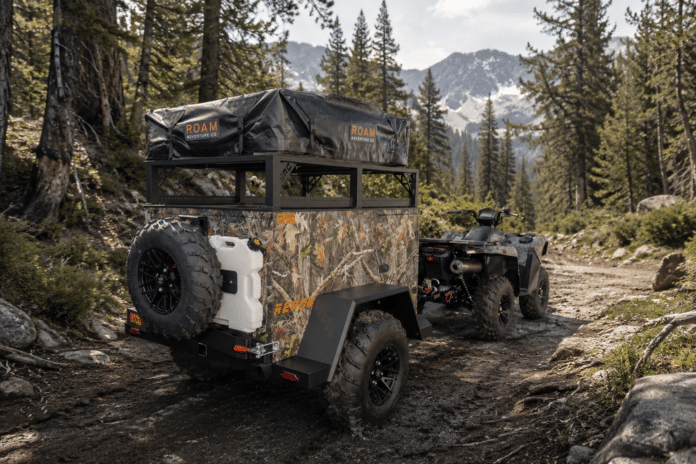
The SNO Trailers Recon is their lightest trailer, and its design reflects the mission at every spec. At 875 pounds dry, it weighs less than most rooftop tent and roof rack combinations you’d mount to a full-size truck. The Recon measures 10 feet 2 inches long, 6 feet wide, and 5 feet 4 inches tall. Its Timbren 3500-pound HD axle-less suspension tracks over terrain without momentum transfer from a solid axle, meaning it follows your rig through rough sections instead of fighting the trail. The aluminum body keeps the weight number honest while resisting the corrosion shortening the life of steel-bodied alternatives. Method wheels wrapped in 275 all-terrain tires provide legitimate off-road traction. A 40-degree departure angle means the Recon follows into places most overlanding trailers stop short of.
Storage is organized across a large rear compartment with slide access, two large side doors, and a front utility box. Available upgrades extend the platform further: rear pullout with slides, awning mount, shower mount, Prinsu-compatible roof rack crossbars, solar, second battery, upgraded electronics, inverter, and a stainless steel kitchen pullout. For overlanders who run ATVs or side-by-sides in addition to their primary tow vehicle, the Recon is small and light enough to tow behind those machines as well. It starts at $13,995, which positions it well against heavier, more complex alternatives that’ll require a bigger tow vehicle to move.
Configure Your Build
The Recon Is Ready to Configure. Is Your Build?
Choose from three standard colors, add upgrades like solar, kitchen pullout, awning, and second battery, and build the lightweight basecamp your rig deserves. The SNO Trailers team is meticulous in ways most trailer builders are not.
Pack a Smarter Kitchen
The overlanding kitchen is another area where weight spirals quickly and without notice in any lightweight overlanding setup. A two-burner propane stove, a full set of cast iron cookware, a heavy rotomolded cooler, and miscellaneous utensils will turn a cook kit into a 40- to 60-pound anchor. The lighter alternative covers the same cooking capability without the mass. A single-burner isobutane setup, such as the MSR Windburner or a comparable integrated system, handles boiling tasks in seconds with minimal fuel weight per trip day. For longer outings, a 12-volt compressor fridge in the 30-liter range keeps food at temperature without ice management, eliminating the hassle of daily ice sourcing in areas where you won’t find any.
Titanium and hard-anodized aluminum cookware provide the durability of heavier options at a fraction of the weight. A titanium pot set weighs under a pound and handles everything from boiling water to simmering a proper meal over flame. Combined with a quality cutting board, a compact utensil roll, and one sharp fixed-blade knife, the cook kit drops below 10 pounds including the stove. Specifically, targeting this number leaves meaningful payload available for water and fuel on extended trips where resupply is limited.
Approach Comfort as a System, Not an Afterthought

The trap most overlanders fall into is adding comfort items one at a time without checking cumulative weight. A camp chair, a portable shower, a folding table, a Bluetooth speaker, extra blankets, and a camp rug each seem reasonable individually. Together, they add 30 to 50 pounds of overlanding gear to a setup without providing the kind of comfort meaningfully improving the experience. The problem isn’t comfort, it’s unplanned comfort.
A better approach is identifying the two or three comfort items genuinely improving your time on the trail and investing in lightweight versions of those specifically. For most overlanders, a quality sleeping system rated to expected temperatures, a reliable camp chair with a small packed size, and a solid awning for shade and rain coverage deliver the most noticeable return. An awning transforms campsite usability in ways a camp rug never does. If the setup includes a lightweight trailer like the SNO Trailers Recon, the awning mount upgrade shifts this infrastructure to the trailer rather than consuming vehicle payload, which keeps the primary rig available for day-use exploration without tearing down camp.
The Recon’s storage layout addresses one of the biggest overlooked comfort issues in lightweight builds: organization. When every item’s got a dedicated place, camps set up and break down faster. Faster transitions mean more time doing what you came out there to do. Specifically, the rear pullout with slides, the fixed storage above the kitchen area, and the two side door compartments create a system where nothing’s buried under everything else at the worst possible moment.
SNO Trailers Recon: Key Specs at a Glance
| Specification | Details |
|---|---|
| Dry Weight | 875 lbs |
| Dimensions (L x W x H) | 10’2″ x 6’0″ x 5’4″ |
| Departure Angle | 40 degrees |
| Suspension | Timbren 3500 lb HD Axle-Less |
| Suspension Load Rating | 3,500 lbs |
| Frame | Powder coated steel with proprietary anti-rust base coating |
| Body Material | Aluminum |
| Wheels & Tires | Method wheels with 275 all-terrain tires |
| Standard Colors | SNO White, Storm Gray, Desert Sand |
| Storage | Large rear compartment with slide, 2 large side doors, front utility box |
| Starting Price | $13,995 USD |
Pros and Cons of a Lightweight Overlanding Trailer Approach
Pros
- Preserves tow vehicle payload for water, fuel, and safety gear
- Improved braking and handling on loose, off-camber terrain
- Separates camp from tow vehicle, enabling day-use exploration without breaking down the campsite
- Purpose-built trailers like the Recon bring organized storage systems ground tents and RTTs cannot match
- Aluminum construction resists corrosion over years of serious use
- Axle-less suspension tracks rough terrain without trailer momentum fighting the tow vehicle
- Light enough to tow with an ATV or side-by-side for deeper access
Cons
- Trailer adds turning radius and requires wider campsites than vehicle-only setups
- Higher upfront cost than a rooftop tent or ground tent alone
- Some technical single-track trails remain inaccessible with any trailer attached
- Requires a minimum tow vehicle with appropriate hitch and brake controller
- Lightweight trailers demand careful attention to load placement and weight distribution
Building Light Is Building Smart
A lightweight overlanding setup doesn’t mean going sparse. It means being deliberate about what earns a spot in your rig. Every pound removed is a pound of capability gained back, whether it translates to sharper handling on switchbacks, more room for water and fuel, or the ability to follow a trail turning a heavier setup around. The methods above, applied across vehicle prep, shelter, power, kitchen, and comfort systems, produce a setup reaching more places with less effort while still sleeping well, eating well, and living well once you arrive.
For anyone building or rethinking a lightweight overlanding setup where a purpose-built basecamp trailer belongs in the plan, the SNO Trailers Recon represents one of the most considered lightweight overlanding trailers available. At 875 pounds dry, with a Timbren HD axle-less suspension, aluminum construction, Method wheels, and a 40-degree departure angle, it’s built to go where the trip demands without adding weight your tow vehicle doesn’t need. The team behind it is serious about trail-capable design in ways most trailer manufacturers aren’t, and the standard shows in every aspect of the build.
Frequently Asked Questions
What qualifies as a lightweight overlanding trailer?
In the overlanding community, a lightweight overlanding trailer generally refers to units under 1,500 pounds dry weight. Trailers in this range, including the SNO Trailers Recon at 875 pounds, sit well within the towing capacity of mid-size trucks, SUVs, and in some cases ATVs and side-by-sides. Lighter trailers also preserve more tow vehicle payload for water, fuel, recovery gear, and passengers.
Does towing a lightweight off-road trailer hurt fuel economy significantly?
Yes, towing any trailer increases fuel consumption, though the impact scales with trailer weight and aerodynamic profile. A lightweight off-road trailer in the 875- to 1,500-pound range typically reduces fuel economy by 15 to 25 percent depending on terrain, speed, and tow vehicle. Compact trailers with low profiles, like the Recon, don’t carry as much aerodynamic drag as tall expedition trailers and perform better at highway speeds as a result.
Is a rooftop tent or a lightweight trailer better for overlanding comfort?
Both approaches provide genuine overlanding comfort, but they’re built for different trip profiles. An RTT keeps the setup simple, eliminates the need to back into a campsite, and reduces overall vehicle width. A lightweight trailer separates camp from vehicle, provides more organized storage, and lets the tow vehicle leave for day exploration without the campsite coming with it. For overlanders staying in one area for multiple nights, a lightweight trailer typically delivers better comfort and organization. For overlanders moving camp daily, an RTT offers more flexibility.
How do I reduce weight in my existing lightweight overlanding setup without rebuilding everything?
Start with the kitchen and power system, since that’s where the most unnecessary weight hides. Swap cast iron cookware for titanium or hard-anodized aluminum, replace an AGM battery with a LiFePO4 of the same amp-hour rating, and audit your tool kit for duplicates. Weigh each item and set a weight budget for each category. Most overlanders find 30 to 50 pounds of savings in the first audit without pulling anything they’d actually use on the trail.
What suspension system does the SNO Trailers Recon use, and why does it matter?
The SNO Trailers Recon runs a Timbren 3500-pound HD axle-less suspension system rated to 3,500 pounds. Axle-less suspension eliminates the solid axle you’d find on most utility and cargo trailers, letting each wheel articulate independently over rough terrain. In practice, it means the Recon tracks more smoothly over rocks, ruts, and uneven surfaces without transferring as much lateral momentum to the tow vehicle. For technical trails, that reduces stress on the hitch, improves tracking, and keeps the trailer from pushing your rig through corners on downhill descents.
A quick heads-up: If you snag something through our affiliate links or check out our sponsored content, we might earn a commission at no extra cost to you. But fear not, we’re all about recommending stuff we’re truly stoked about!