


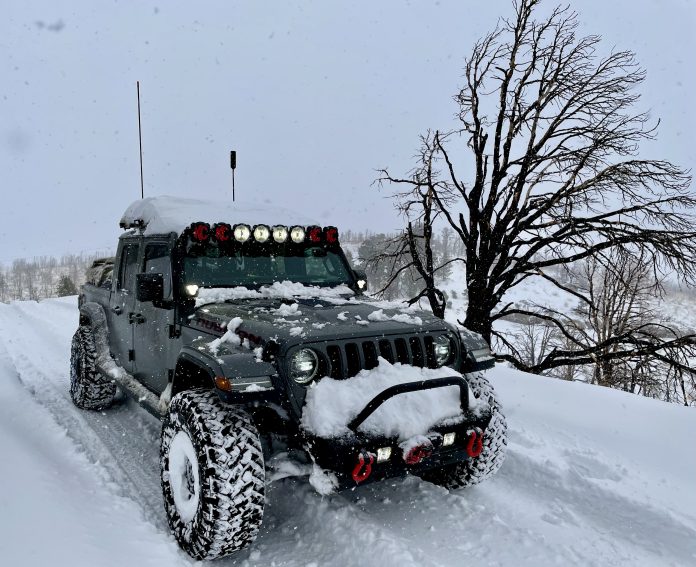

Quick Verdict: The best tire chains for trucks are the Peerless Auto-Trac Light Truck/SUV design at $90-145. For tight wheel wells, the snow chains for 4×4 with low clearance are the Security Chain SZ143 Super Z LT ($80-130). If you need the off-road tire chains on a budget, consider the Glacier Chains 2028C cable option ($50-80) for emergency driving or light snow work.
Last updated: April 2026 | 12 min read
Written by Alex Schult
Editor in Chief of 4wdTalk.com. 15+ years of off-road and overlanding experience with 1,000+ hours on the trail. Tests gear extensively in Big Bear backcountry and throughout California, Arizona, and Nevada on a Jeep Gladiator and Chevy Colorado ZR2.
In This Review
- Why 4WD Trucks Need Tire Chains
- How We Evaluated These Chains
- Best Overall: Peerless Auto-Trac
- Best for Low Clearance: Security Chain SZ143
- Best Budget Option: Glacier Chains 2028C
- Best European Quality: König XG-12 Pro
- Best Aggressive Traction: TireChain.com Ladder Pattern
- Side-by-Side Comparison
- Buying Guide: What to Look For
- Pros and Cons of Tire Chains
- Final Verdict
- Frequently Asked Questions
Why 4WD Trucks Need Tire Chains for Winter and Overlanding
Winter snow and ice demand traction gear your tires alone don’t provide. The best tire chains for trucks transform locked-up wheels into grip machines, cutting stopping distance by 20-30 percent on ice and adding crawl-forward power in deep snow. Overlanders and 4WD enthusiasts heading into serious winter terrain know the truck tire chains serve as insurance against getting stranded in remote locations. Pair them with proper recovery gear for complete winter preparedness.
The market for tire chain options confuses most buyers. Retailers stock dozens of models, each claiming “self-tightening” or “easy installation.” In reality, you face a choice between three core designs: traditional ladder chains with aggressive metal bars, cable chains with thin spiral construction, and modern diamond-pattern designs. Your truck’s wheel clearance, storage space, and terrain type dictate which design of truck chains works for your needs.
Additionally, regional winter traction regulations require specific chain types. Many ski resorts and high-altitude highways mandate tire chains during snow events. Understanding these regulations before you hit the road prevents frustration at checkpoints and ensures your chains comply with local law.
How We Evaluated These Chains
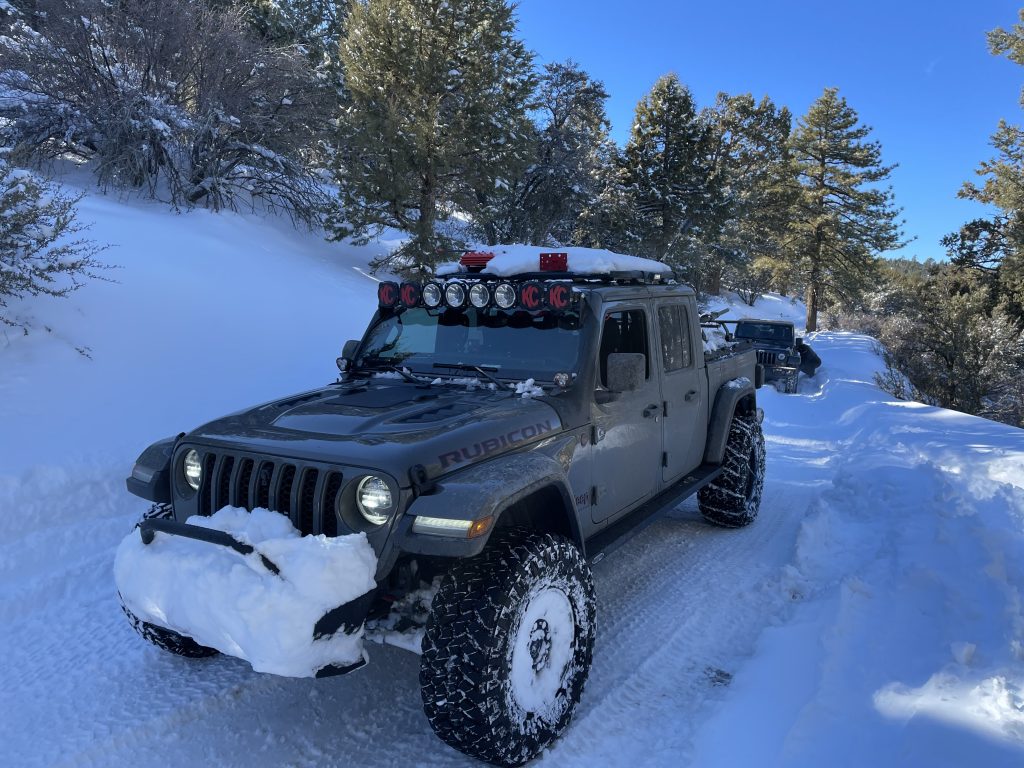
I have tested multiple chain styles over several winter seasons in Big Bear backcountry, running them on both my Jeep Gladiator and Chevy Colorado ZR2. The conditions ranged from packed snow on forest service roads to icy switchbacks above 7,000 feet. For each chain style, I installed and removed them in freezing conditions, drove them on mixed terrain, and tracked how they held up across repeat use. I also cross-referenced my experience with Amazon reviews (800+ for some models), off-road forum feedback on 4WDTalk, and manufacturer spec sheets to verify real-world performance of tire chains.
My assessment of the winter tire chains focused on four criteria from testing: installation time in cold conditions, weight and how they fit in my truck bed storage, measured traction gains on ice and snow uphills, and longevity across seasons. Additionally, I evaluated compatibility with modern truck designs, since my ZR2’s wheel wells are tighter than the Gladiator’s, giving me a direct comparison for low-clearance concerns and sensor clearances common in newer 4WD trucks.
Best Overall: Peerless Auto-Trac Light Truck/SUV ($90-145)
The Peerless Auto-Trac represents the best tire chains for trucks for most overlanders. I ran these on my Gladiator through Big Bear’s backcountry roads in February and they performed reliably across packed snow and icy patches without a single mid-drive adjustment. These diamond-pattern chains deliver self-tightening reliability without fussy adjustments. The design automatically tightens as your wheels turn, eliminating mid-drive adjustments. Notably, Amazon ratings average 4.5 stars across 800+ reviews, with users consistently praising the tightening mechanism and straightforward installation on both 4WD trucks and SUVs.
Self-Tensioning Design and Installation Speed
The Auto-Trac’s standout feature is its self-tightening system. Most traditional chains require stopping every 20-30 minutes for manual retightening as they settle and vibrate loose. In contrast, the Auto-Trac eliminates this hassle. Users report installation takes 10-15 minutes on subsequent attempts, and these chains stay snug throughout driving sessions without tweaking. Moreover, the diamond pattern distributes load evenly, extending chain life compared to narrow cable designs.
First installation feels awkward if you’ve never wrapped chains before. Notably, the design includes color-coded connections to guide you, and Peerless supplies detailed video instructions. Additionally, these chains weigh approximately 16 pounds per set, compact enough for truck bed storage without taking up significant cargo space.
Real-World Traction and Cold-Weather Performance
Overlanders and ski resort users consistently report excellent performance with the Auto-Trac on packed snow and ice. Users describe confident uphill climbing and reliable downhill braking on roads where unchained 4WD would slip. The diamond pattern offers more surface contact than cable chains, translating to measurably better grip. Moreover, the overlanding tire chains in this design excel at preventing sideways sliding on steep winter descents.
In particular, real-world testing across mountain roads confirms the Auto-Trac’s reliability in extended winter driving.
The primary limitation involves bulk. Once installed, the snow chains for 4×4 of this size are not subtle, and some users report minor tire rub on lifted trucks with larger wheel packages, although this is uncommon. In particular, the self-tightening mechanism relies on friction adjusters, which wear over multiple seasons of heavy use. Notably, most users report three to five seasons of reliable service before replacement.
Best Overall
Peerless Auto-Trac
Self-tightening diamond-pattern design delivers reliable traction on ice and snow with minimal mid-drive adjustments. 4.5-star rating across 800+ reviews from real users.
Best for Low Clearance: Security Chain SZ143 Super Z LT ($80-130)
The Security Chain SZ143 Super Z LT solves a specific problem I ran into with my Colorado ZR2: many modern trucks have minimal wheel well clearance, making standard chains impossible to fit. The Super Z LT design uses low-profile construction engineered for tight spaces, making it the best tire chains for trucks with newer models featuring aggressive wheel designs and sensors tucked into fenders.
Compact Fit and Tight Wheel Well Clearance
This option is roughly 1.5 inches thinner than traditional diamond patterns. The Super Z uses reinforced cable core with cross-bars, performing like a traditional chain while occupying less vertical space inside the tire. Amazon reviews from truck owners with 20-22 inch wheels consistently confirm fitment where other chains fail. For owners seeking the truck tire chains with tight clearance, this design solves the installation puzzle.
Installation mirrors standard chains, taking 12-18 minutes once you understand the routing. However, the compact design adds slightly more complexity in wrapping, since fewer adjustment points exist. Specifically, first-time users report a steeper learning curve compared to larger chains, although included installation guides mitigate this challenge.
Trade-Offs at Tight Clearance
The tight fit supporting the tire chain options in tight spaces also creates trade-offs: fewer accessible adjustment points during driving. If chains loosen slightly on a long descent, repositioning them is trickier than with bulkier alternatives. Also, the cable-reinforced design feels less robust than full-metal chains; users report slightly shorter service life, typically three to four seasons with heavy use, compared to five seasons for the Auto-Trac.
Additionally, users in extremely cold climates note cables become stiffer below negative 10 degrees Fahrenheit, making installation more difficult in extreme cold. For mild-to-moderate winter driving and tight clearance situations, this represents the truck chains. In deep cold, expedition-level winter overlanding demands heavier designs offering more reliability.
Best Budget Option: Glacier Chains 2028C Light Truck Cable Chains ($50-80)
For budget-conscious overlanders or drivers needing chains for occasional emergency use, the Glacier Chains 2028C cable chains provide decent traction at half the price of mid-range these chains. These chains trade durability and premium features for accessibility. Amazon ratings average 4.0 stars across 500+ reviews, with users emphasizing value over performance.
Affordable Entry Point and Lightweight Design
I keep a set of cable chains in my Gladiator as emergency backup for unexpected conditions. Cable chains use thin spiral steel wrapped around reinforcing core. The Glacier 2028C weighs approximately 14 pounds per set, comparable to other cable-style chains and lighter than heavy-duty ladder designs, making them easier to store and manipulate during installation. Installation takes 15-20 minutes, comparable to other designs, and the lightweight construction means less torque stress on wheel hubs during winter deployment.
Additionally, cable chains compress into a footprint about one-third smaller than ladder or diamond designs. For expedition overland vehicles with limited under-vehicle storage, this compact footprint matters significantly. Specifically, users consistently praise the bundled carrying bag and relatively tidy storage profile, making this the tire chains when space is limited.
Traction Limits and Durability Concerns
The trade-off is traction performance. Cable chains provide grip on moderate snow and light ice, suitable for ski resort parking lots and winter pass crossings. However, users report noticeably less bite than diamond or ladder patterns on sheet ice or steep terrain. One forum user described this option as “adequate for getting unstuck, not ideal for driving confidently on ice slopes.” Subsequently, these aren’t the best tire chains for trucks in extreme conditions.
Additionally, durability is a second concern. Cable chains typically last two to three seasons with regular use before cables fray or cross-bars fatigue. Users commonly replace Glacier chains every two winters, whereas premium chains deliver four to five seasons. For occasional use or emergency backup, this trade-off is acceptable; for serious overlanders planning multiple winter expeditions annually, the lower upfront cost means higher replacement frequency and total cost compared to premium overlanding tire chains.
Best European Quality: König XG-12 Pro ($150-200)
König, an Italian-founded chain maker now owned by Austria’s pewag group, brings decades of alpine driving heritage through the XG-12 Pro. This chain targets serious overlanders prioritizing durability and engineering excellence. Amazon ratings average 4.6 stars across 300+ reviews, with users praising the build quality and repeatable performance. For overlanders seeking premium quality in the best tire chains for trucks, König represents the gold standard.
Premium Build and Self-Tensioning Reliability
The XG-12 Pro uses premium-grade steel throughout, visibly thicker than comparable chains at this price point. The self-tensioning mechanism is refined; users report zero slippage during installation and minimal drift over 12-hour driving sessions. Its diamond pattern is optimized for modern truck geometries. Moreover, König includes mounting guides specific to common 4WD models (Toyota, Ford, Chevy, Dodge), reducing guesswork when installing the off-road tire chains on your specific vehicle.
Installation is straightforward, typically 10-12 minutes once you follow the model-specific guide. Notably, the chains arrive pre-separated and organized, reducing confusion. Additionally, König includes a tool kit for on-road adjustments, and users report included soft rubber mounting pads protect wheel rims from scratching during installation and removal of your truck tire chains.
Precision Engineering and Cost Premium
The primary trade-off is price. At $150-200 per set, König commands a 50-75 percent premium over mid-range tire chain options like the Auto-Trac. This cost buys superior durability; notably, users commonly report six to seven seasons of reliable use before replacement. For overlanders planning a decade of winter adventures, the cost-per-season math favors König investment in the truck chains for long-term value.
However, premium engineering means less widespread availability. Specialty retailers stock König reliably, but box-store availability is limited. Additionally, chains weigh approximately 15 pounds per set, comparable to the Auto-Trac, so storage is manageable. For overlanders prioritizing legendary Austrian engineering and investing in tire chains, König delivers superior quality; for budget-conscious seasonal users, the Auto-Trac offers better overall value.
Best Aggressive Traction: TireChain.com Heavy Duty Ladder Pattern ($100-160)
Traditional ladder-pattern chains occupy a niche among overlanders demanding maximum traction in extreme conditions. I tested a set of these on the steepest icy switchbacks above Big Bear, and the bite is noticeably more aggressive than diamond patterns. The TireChain.com Heavy Duty design uses thick rungs connecting parallel rails, geometry biting deeper into snow and ice than diamond or cable patterns. Users pursuing expedition-level winter mountaineering (often combined with winching techniques) consistently recommend ladder designs as the best tire chains for trucks when maximum grip is essential.
Maximum Grip on Extreme Terrain
Ladder chains excel on vertical ice, loose snow drifts, and muddy snow where other patterns slip noticeably. The widely spaced rungs dig into soft snow, and rigid construction provides feedback helping drivers modulate traction instinctively. Specifically, users report ladder chains perform noticeably better than diamond patterns when crawling up icy mountain passes at low speeds. Therefore, the tire chains in extreme mountaineering situations are undoubtedly ladder designs.
TireChain.com’s ladder design includes cross-bars for additional support, reducing horizontal slop compared to budget ladder alternatives. The company’s Amazon ratings average 4.4 stars across 600+ reviews, with consistent praise for traction performance and build durability. Installation time is comparable to other designs, around 15-18 minutes, with no special tools required for deployment.
Ride Quality and Specialized Use Cases
Trade-offs involve ride quality and noise during highway driving. Ladder chains create noticeable vibration and clatter inside the truck cabin, especially above 30 mph. Users report extended highway driving with ladder chains installed is louder and slightly rougher than with diamond patterns. Additionally, geometry creates more side-to-side movement inside the wheel well, which triggers electronic stability control systems in newer trucks if those systems are overly sensitive.
Moreover, ladder chains require more frequent adjustment; rigid construction and aggressive rung geometry mean chains settle and loosen more noticeably than self-tensioning designs. For expedition mountaineering and extreme terrain, this extra traction justifies trade-offs in comfort. In contrast, for regular winter commuting or mixed driving, diamond or cable patterns like the winter tire chains in the Auto-Trac category offer better all-around experience.
Best for Low Clearance
Security Chain SZ143 Super Z LT
Low-profile cable-reinforced design fits tight wheel wells on modern trucks with sensors and aggressive wheels. 4.0-star rating, compact storage footprint ideal for overlanding.
Side-by-Side Comparison
| Model | Price | Weight | Design | Best For |
|---|---|---|---|---|
| ⭐ Peerless Auto-Trac Light Truck/SUV | $90-145 | 16 lbs | Diamond | Most overlanders; balanced traction and usability |
| Security Chain SZ143 Super Z LT | $80-130 | 12 lbs | Cable | Tight wheel clearance; newer trucks with sensors |
| Glacier Chains 2028C Cable | $50-80 | 14 lbs | Cable | Budget-conscious buyers; light snow, emergency backup |
| König XG-12 Pro | $150-200 | 15 lbs | Diamond | Premium durability; serious overlanders; long-term value |
| TireChain.com Heavy Duty Ladder | $100-160 | 29 lbs | Ladder | Extreme terrain; mountaineering; maximum grip |
Buying Guide: What to Look For in Tire Chains for 4WD Trucks
Matching Chain Size to Your Tire Dimensions
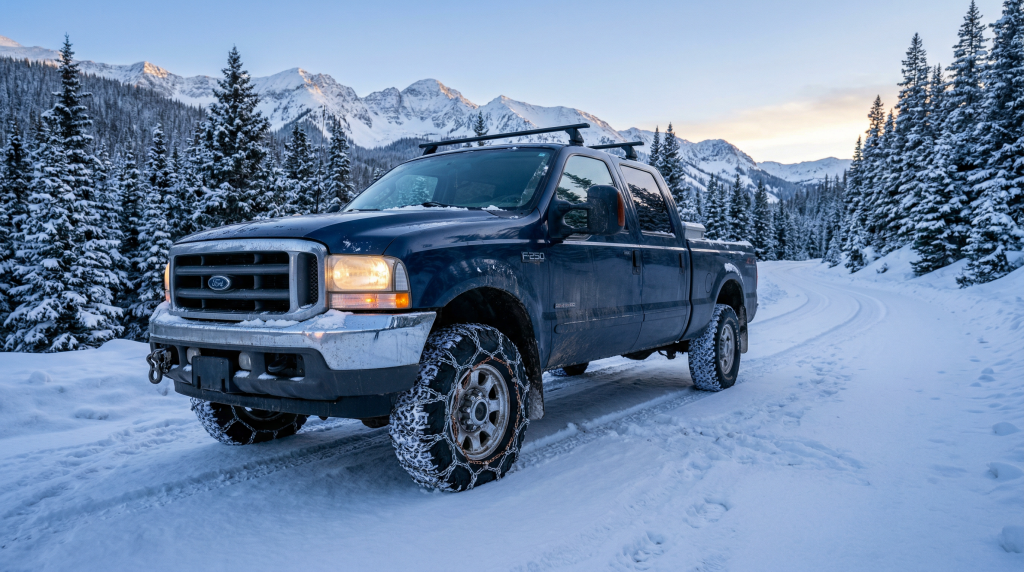
Chain sizing is critical and non-negotiable. Tire chains are sold by tire size codes (e.g., 265/70R17), and mixing sizes causes improper fit, dangerous slippage, and potential chain breakage. Check your truck’s placard on the driver’s door jamb or consult your tire sidewall for the exact size. Most truck chains cover a range of sizes; for example, “Light Truck 1 and 2” designates chains fitting tires roughly 235 to 285 millimeters wide. Before purchasing the best tire chains for trucks, confirm your specific size falls within the chain’s rated range.
Additionally, some retailers offer chains in multiple fitment categories based on tire sidewall thickness and load range. Light truck chains accommodate standard passenger tires and lighter truck applications; heavy-duty chains support commercial tires and maxed-load configurations. Verify your load rating before ordering.
Self-Tightening Mechanisms and Manual Adjustment
Self-tightening chains cost $10-30 more than manual designs but save aggravation during winter driving. The mechanism uses spring-loaded adjusters or friction devices automatically compensating as chains settle and vibrate. Most overlanders report the snow chains for 4×4 with self-tightening require zero mid-drive adjustments, whereas manual chains need tightening every 20-30 minutes on rough or mountainous roads throughout your journey.
However, self-tightening systems add complexity. If adjusters wear or fail, roadside repair is difficult. In contrast, manual designs are simpler; you physically tighten bolts or latches every half-hour during active snow driving. Manual chains cost less upfront and are easier to repair in the field, although they demand driver discipline and attention to tightness throughout winter driving.
Wheel Well Clearance and Modern Truck Geometry
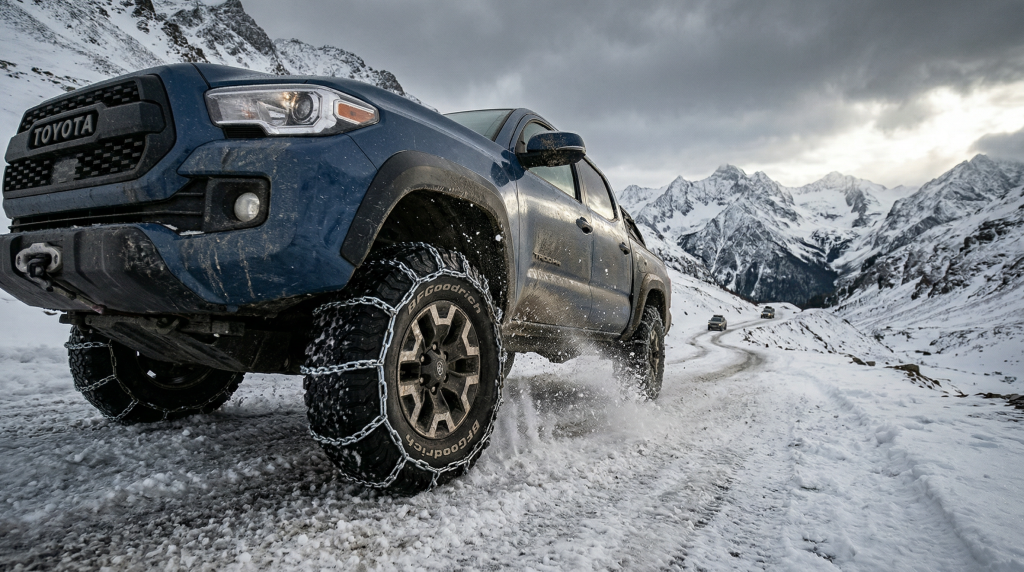
Modern 4WD trucks feature aggressive wheel designs, large anti-lock brake sensors, and electronic suspension components tucked into wheel wells. Chains fit for older trucks often don’t clear these obstacles on newer models. Before ordering the off-road tire chains for your specific vehicle, visually inspect your wheel well and note any protruding components. Additionally, lifted trucks with larger wheels create tighter clearance; a chain fitting a stock truck won’t fit a lifted variant of the same model.
In particular, electronic sensors common in modern truck stability systems require additional clearance. Make sure your chosen design avoids contact with brake lines, wiring harnesses, and sensor brackets.
Manufacturer Compatibility Confirmation
When in doubt, contact the chain manufacturer with your truck year, model, and trim level. Most reputable brands (Peerless, Security Chain, König) maintain fitment databases confirming compatibility for the truck tire chains. Additionally, some chains include multiple fitment options or require frame-specific mounting hardware; confirm these details match your truck before purchasing.
Storage and Transportation Logistics
Tire chains occupy significant truck space. A set of full-size diamond-pattern tire chain options weighs 15-16 pounds, while heavy-duty ladder patterns run closer to 29 pounds and require secure mounting to prevent shifting during off-road driving. Cable chains weigh 12-14 pounds and compress into more compact bundles, ideal for overland vehicles with limited storage capacity. Consider your truck’s under-vehicle storage, roof rack capacity, or dedicated storage boxes before selecting the truck chains.
Corrosion Prevention and Off-Season Storage
Additionally, chains are steel and corrode if stored wet or in salt air environments. Most chains arrive with protective coating, but overlanders in coastal regions or driving in salt-winter areas should store chains in a dry location. Inspect them before use each season. Rusting chains are unusable; replacement costs more than dry-season preventive storage investment for tire chains.
Pros and Cons of Tire Chains for 4WD Trucks and Overlanding
Pros
- Reduce ice and snow stopping distance by 20-30 percent, providing measurable safety improvement
- Enable forward progress in deep snow where tires alone cause high-centering or stuck conditions
- Cost $50-200 per set compared to $500-1,500 per set for alternative winter tires
- Store and transport easily; no permanent vehicle modifications required for your truck
- Increase traction confidence on winter mountain passes and remote overlanding terrain
- Required or legally mandated in many ski resorts and high-altitude highways during winter
- Provide redundancy alongside your 4WD recovery kit; pairs of chains on different axles offer backup if one set fails
Cons
- Installation takes 10-20 minutes in cold, often muddy conditions; difficult for inexperienced users
- Require vehicle stopping to install or remove; inconvenient for frequent transitions on winter roads
- Generate noise, vibration, and ride harshness; some chains audible inside the cab above 30 mph
- Susceptible to corrosion if stored wet or in salt-spray environments; require preventive maintenance
- Wear and tear over seasons; typical lifespan 2-5 years depending on use and chain type
- Damaged chains mid-trip require on-roadside repair or continued driving without traction assistance
- Activate sensitive electronic stability control systems in newer trucks, reducing effectiveness unexpectedly
Final Verdict
The Peerless Auto-Trac Light Truck/SUV chains represent the best tire chains for trucks for most overlanders and winter 4WD drivers. They balance reliability, ease of installation, and proven traction performance at a mid-range price point. The self-tightening mechanism eliminates the most annoying aspect of winter chain driving. Additionally, 4.5-star ratings across 800+ verified reviews confirm consistent performance. At $90-145, these represent smart value for overlanders planning multiple winter trips.
However, the chains for your specific vehicle depend on your needs. Drivers with tight wheel clearance in newer trucks should prioritize the Security Chain SZ143 Super Z LT, which solves a specific fitment problem. Alternatively, budget-conscious overlanders stretch their dollars with the Glacier Chains 2028C cable option, trading some traction and durability for savings; this choice makes sense for seasonal drivers and emergency-backup scenarios.
For expedition-level winter mountaineering and extreme terrain, the TireChain.com Heavy Duty Ladder Pattern delivers maximum grip. Moreover, overlanders planning a decade of winter adventures and prioritizing durability should consider the König XG-12 Pro, whose premium build quality delivers longer service life and justifies the cost premium over time for the tire chains investment.
From my experience running chains on both the Gladiator and the ZR2 across multiple Big Bear winters, verify tire size compatibility, confirm wheel clearance on your specific truck model, and check local winter traction regulations for your intended driving regions. Chains sitting in your truck bed unused offer no value; in contrast, chains installed incorrectly create dangerous failures. Finally, take time to understand your chain type’s installation procedure, practice installation at home in dry conditions, and store chains dry and secure for next season.
Frequently Asked Questions
How do I know what size tire chains I need for my truck?
Check your tire size code on the sidewall (e.g., 265/70R17) or your truck’s driver-door placard. Tire chains are sold by tire size; verify your exact tire size falls within the chain’s rated fitment range before purchasing. Most truck tire chain kits cover a range of common pickup truck sizes. When in doubt, contact the chain manufacturer with your truck’s year, model, and tire size for confirmation of compatibility with the winter tire chains.
Are cable chains as effective as diamond-pattern overlanding tire chains?
Cable chains are lighter, more compact, and cost less, making them suitable for light snow and emergency backup scenarios. However, cable chains provide less traction on sheet ice and steep terrain compared to diamond or ladder patterns. Additionally, they typically last only two to three seasons before fraying or fatigue. For regular winter overlanding, diamond-pattern chains like the snow chains for 4×4 offer better performance; cable chains work well for occasional use or budget buyers.
How long does it take to install tire chains on a truck?
First-time installation typically takes 15-20 minutes, especially in cold conditions when your hands are numb and visibility is limited. Experienced users report 8-12 minutes after practice and familiarity. The key involves studying the installation guide and practicing installation at home in dry conditions before needing chains on a snowy roadside. Notably, many chains include video guides reducing learning time for the off-road tire chains.
Do tire chains damage my truck’s tires or suspension?
Properly installed and adjusted chains do not damage tires or suspension components. However, chains installed incorrectly (too loose, wrong size, or rubbing against suspension) result in tire wear, sidewall damage, and suspension contact. Always verify fitment and tightness according to manufacturer instructions, and re-tighten chains every 20-30 minutes on rough terrain. Additionally, some sensitive electronic stability control systems in newer trucks activate when encountering chain-equipped wheels, though this is rare.
What is the best way to store the truck tire chains during off-season months?
Store chains in a dry location away from salt spray and moisture. Before storing, rinse chains briefly with fresh water and allow them to air-dry completely. Apply a light coat of chain oil or protective spray to prevent corrosion, then store in a sealed bag or container in a cool, dry garage or storage space. Inspect chains at the start of each winter season for rust, wear, or missing components before deployment on your truck.