


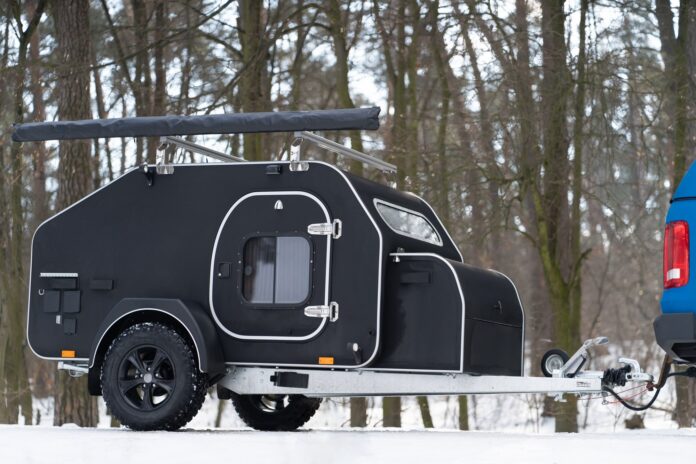
Quick Facts:
- Topic: Weight distribution hitch decisions for off-road and overland trailers.
- Tongue weight target: 10 to 15 percent of the loaded trailer weight (Ford uses 10 percent).
- Hitch rule: Your owner’s manual sets the trailer weight where a hitch becomes required.
- Trail rule: Release or remove the bars before rough ground.
- First step: Weigh the loaded tongue.
- Best for: Owners of pickups and SUVs who pull trailers off pavement.
8 min read
In This Guide
Overview
A weight distribution hitch moves part of a trailer’s tongue weight off the rear axle of your truck. It spreads the load to the front axle and the trailer axles. On pavement, the result is a level truck, steadier steering, and less trailer sway. Over rough ground, however, the same bars resist the motion between truck and trailer.
Short answer for a light trailer: read your manual first. The hitch line sits at 5,000 lb in one Toyota Tacoma manual and 6,000 lb in the 2026 Colorado supplement. Spring bars also cost you articulation on the trail. Off-road trailers differ from travel trailers, because small ones run light and some use a coupler built to twist on several axes. We read manuals from hitch makers and automakers, plus owner forum threads, to see how the two ideas fit together.
I think of a weight distribution hitch as a highway tool. Some owners agree, and they take the bars off at the trailhead. Before you buy anything, weigh your tongue and check the backcountry trailer weight distribution tips for loading basics.
Your tongue weight is the first number to know, because it drives most of the checks below. Load the trailer the way you tow it, with water, propane, and gear aboard. Then a scale such as the Sherline LM 1000, the Sherline LM 2000, or the Fastway Simple WEIGH reads it with the jack resting on the scale.
Tongue weight scales


Key Facts at a Glance
| Topic | Detail |
|---|---|
| Tongue weight | Chevrolet, Mopar, Reese, and Equal-i-zer say 10 to 15 percent of loaded trailer weight. Ford uses 10 percent. |
| Chevrolet Colorado, 2026 | Weight distribution is optional up to 6,000 lb of trailer weight and required above it. The 2026 ZR2 maximum is 6,000 lb, the top of the optional range. |
| Toyota Tacoma owner’s manual | A sway control device above 2,000 lb of trailer weight, and a weight distribution hitch above 5,000 lb. |
| Ford Bronco, 2024 | Receiver rated for 3,500 lb of trailer and 350 lb of tongue weight. The Bronco Raptor is 4,500 lb and 450 lb. |
| Equal-i-zer manual | Never tow with the hitch engaged on rough roads or through profound ditches and dips. |
| Cruisemaster DO35 | Works with a weight distribution hitch if coupling movement is not blocked and the downward load stays under 772 lb. |
What a Weight Distribution Hitch Does and Does Not Do
The spring bars act as levers. Chevrolet’s 2026 trailering guide says they shift some hitch weight onto the front axle of the tow vehicle and rearward to the trailer axles. The goal is to restore front axle load. Equal-i-zer says its design improves steering and stopping, and the target height varies by maker, as the setup section shows.
However, a hitch does not raise any rating. Blue Ox tells owners to follow the lowest-rated component, and Equal-i-zer says no hitch increases a vehicle, receiver, trailer, axle, or tire rating. Also, sway control is a separate job. Equal-i-zer’s manual notes weight distribution reduces sway but does not guarantee against it.
More is not better. Andersen warns removing too much tongue weight reduces rear tire traction, especially on wet, slick, or gravel roads. Equal-i-zer calls more than 100 percent restoration over-distribution and links it to loss of traction.
When You Need One
Work through three checks in order. First, read the trailering section of your manual, because automakers set different limits. Chevrolet’s 2026 Colorado supplement calls a hitch optional up to 6,000 lb of trailer weight and required above it. A Toyota Tacoma owner’s manual sets the hitch line at 5,000 lb and calls for a sway control device above 2,000 lb. Second, weigh the loaded tongue and compare it with your receiver rating. Ford rates the 2024 Bronco receiver at 3,500 lb of trailer and 350 lb of tongue weight.
I drive a 2025 Colorado ZR2. Chevrolet lists the 2026 ZR2 at a 6,000 lb maximum trailer weight, the top of the optional range. Check the number for your own model year. Tongue weight still counts against your payload capacity and GVWR, so compare both numbers.
Third, watch the truck. If the rear squats and the front end rises after you couple up, you need to restore front axle load. Equal-i-zer lists this as a symptom, and Air Lift says a heavy tongue lightens the front end and steering traction suffers.
Light trailers sometimes skip the hitch. Some owners with trailers under about 3,500 lb rely on correct loading and rear support instead. Others still want a hitch above 400 lb of tongue weight. Both are owner rules of thumb, not ratings. Run the math before you skip it. A 3,500 lb trailer at 10 to 15 percent puts 350 to 525 lb on the ball. The total meets or exceeds the 2024 Bronco’s 350 lb receiver rating. A small versus large overland trailer comparison shows how quickly tongue weight climbs with size.
Why Spring Bars Limit Articulation

An off-road trailer works by twisting freely. A true articulating hitch lets the trailer rotate against the truck on more than one axis, as our look at how a true off-road coupler articulates explains. Bars work against this freedom, because they tie the hitch head to the trailer frame.
Two hitch makers publish limits. Equal-i-zer’s manual warns engaged bars on rough roads strain the arms and hitch head and risk fatigue or failure. Reese recommends in its installation instructions removing the bars when backing into campsites, and it notes trunnion bars swing only a limited amount.
Owners also report damage. Forum posts describe bent bars, a cracked hitch head, torn brackets, and a broken cam after dips and off-camber ground. We found no articulation rating from Equal-i-zer or Andersen for their hitches.
Australian coupling maker Cruisemaster sets conditions for use. Its DO35 works with a weight distribution hitch when coupling movement stays unobstructed and the downward load stays under 772 lb before the bars are tightened. It also warns Hayman Reese systems, a different line from US Reese hitches, risk touching the coupling and damaging either part.
When to Take the Bars Off
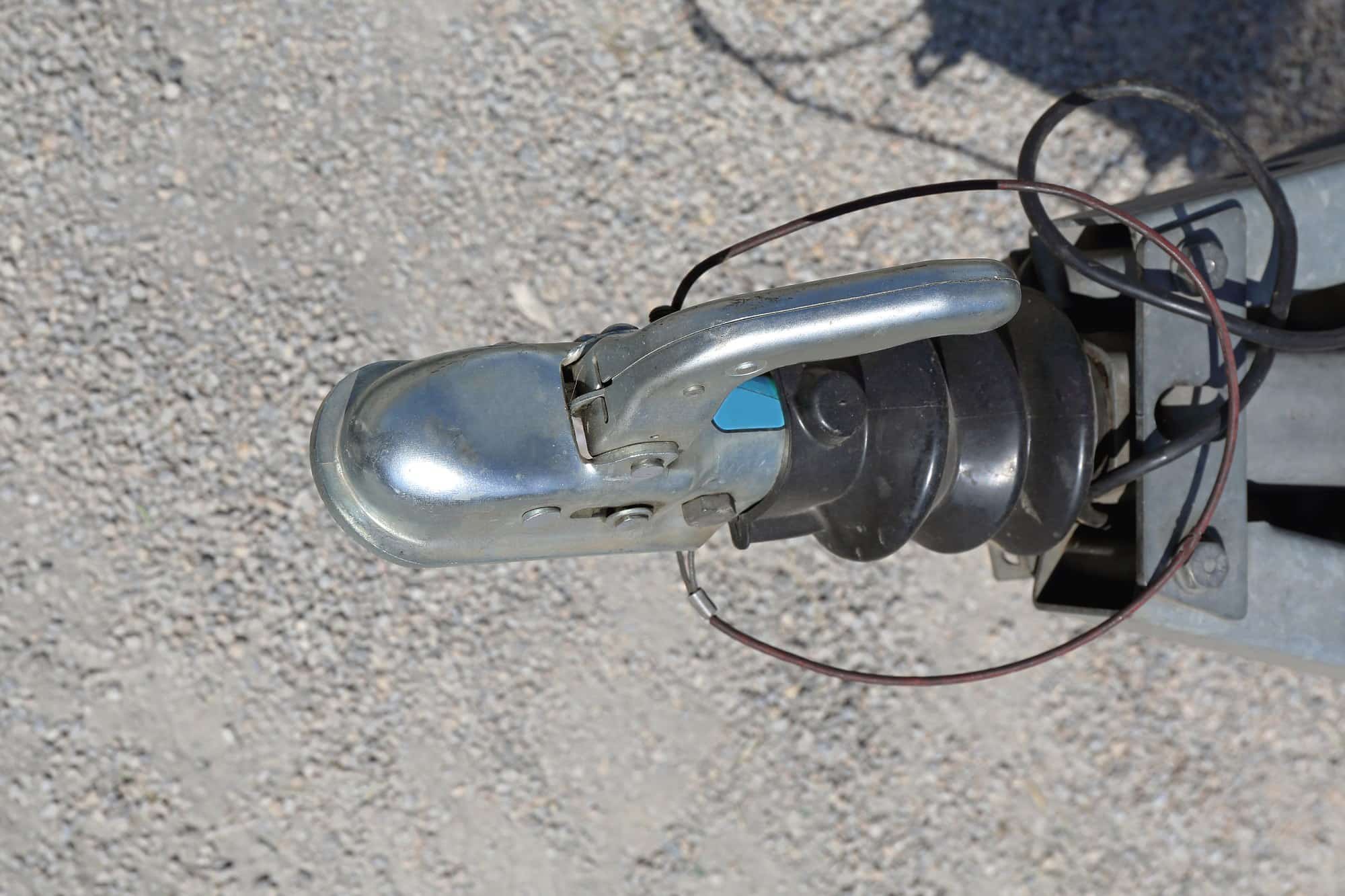
In the forum threads we read, most owners who tow off pavement follow one rule: bars on for pavement, bars off for dirt. A smaller group leaves them on for graded gravel and forest roads, and releases tension only for dips, ruts, and steep transitions. Equal-i-zer tells owners to disengage before backing onto a steep uphill driveway.
Andersen’s chain design makes this easier. The company says its hitch stays connected on wet, slick, or gravel roads, and owners loosen the chain nuts instead of lifting heavy bars. Owner habits and the Equal-i-zer manual point to a simple trailhead routine:
- Park on level ground.
- Mark the thread count or chain nut position with a paint pen.
- Use the tongue jack to take tension off the bars before removing any pins.
- Store the bars, then reconnect and re-tension on level ground.
The manual agrees on the jack step. Equal-i-zer says never to loosen or remove any part of the hitch while it is under load. Follow your own maker’s release order, because chain, cam, and trunnion systems differ. Surge brakes add one more check, because Andersen states its hitch does not work with them.
Weight Distribution Hitch vs. Air Springs and Other Fixes
Air springs and helper springs hold the rear of the truck up. According to Air Lift, air springs do not increase GVWR or GAWR, and the company pairs them with bars for different jobs. The springs support the rear, while the bars redistribute the load. Timbren makes a similar statement about payload and towing capacity.
However, owners add a practical warning. They say airbags restore ride height but do not move load to the front axle, so treating them as a replacement leaves the steering light.
Still, loading is the first fix to try. Ford advises about 60 percent of cargo in the front half of the trailer and 40 percent in the rear, within tongue load limits. If the tongue runs heavy, owners move heavy items such as a fridge or water behind the axle. Shift a little at a time and weigh again.
By contrast, a fully articulating hitch keeps trail movement but does not shift load to the front axle. A heavy tongue still needs a plan, whichever coupler you choose.
If your numbers call for a kit, compare the Reese 66091 Dual Cam II, the Equal-i-zer 90-00-0600, and the CURT 17601 TruTrack 2P. Each one includes sway control. Kit contents differ, so confirm what ships in the box before you order.
Weight distribution hitch kits

Reese 66091 Weight Distribution with Dual Cam II Active Sway Control


CURT 17601 TruTrack 2P Weight Distribution Hitch with Sway Control
Choosing and Setting Up a Kit
Match a kit’s ratings to your measured tongue weight and your trailer weight, and stay inside the lowest rating in the system. The Equal-i-zer 90-00-0600 is rated for 600 lb of tongue weight and 6,000 lb of trailer. CURT’s 17601 TruTrack 2P is rated for 1,000 lb and 10,000 lb. A 1,500 to 3,500 lb trailer carries about 150 to 525 lb on the ball at 10 to 15 percent. These kits sit well above the light end of your range. Ask the maker for the minimum tongue weight before you order.
Then measure fender height three times: uncoupled, coupled without bars, and coupled with bars. Equal-i-zer calls 50 to 100 percent restoration good and says not to exceed 100. Chevrolet’s Colorado supplement targets half the squat, while a Toyota manual says to return the fender to its original height. Follow your own truck’s manual.
Level the trailer, because GM warns against towing an unlevel trailer. Also plan on airing down your off-road trailer before the trail, and re-inflate to the trailer maker’s spec for the road. Reese suggests setting the ball about 1 inch above coupler height to offset squat.
FAQ
How does a weight distribution hitch work?
The bars lever against the trailer frame and lift the hitch head. This moves part of the tongue weight to the front axle and the trailer axles. As a result, the truck sits level and steers with more grip.
Do I need a weight distribution hitch for a small off-road trailer?
Not always. Check your owner’s manual first, then weigh the tongue. If the rear squats or the front end rises, a hitch or rear springs are worth a look. Otherwise, correct loading and a weighed tongue are the first fixes to try.
Is it safe to use a weight distribution hitch off road?
Equal-i-zer says never to tow with the hitch engaged on rough roads. Reese recommends removing the bars before backing into campsites and driveways, while Andersen says its hitch stays connected on gravel roads. Graded gravel depends on your hitch and trailer, so release the bars before dips, ruts, or twisting ground.
Does a weight distribution hitch reduce tongue weight?
Not at the coupler. A hitch spreads the tongue weight across the axles of the truck and trailer, so the rear axle carries less.
Do you have to remove the bars to back up?
It depends on the hitch. Reese recommends removing the bars when backing into campsites. Blue Ox allows backing up while connected, and Equal-i-zer still advises disengaging at steep grade changes.
Final Thoughts
If you tow a small off-road trailer, start with the scale, not a purchase. Weigh the tongue, read your manual, and see whether your truck even asks for a hitch. Some owners find loading and rear support are enough.
If you pull something heavier, or your truck squats and wanders on pavement, a weight distribution hitch helps. My advice is to use it on pavement and plan time at each trailhead to take the bars off and put them back.
Whatever you tow, follow the manuals and keep the trailer free to move over rough ground. For more on the basics, read our off-road trailer towing tips.