


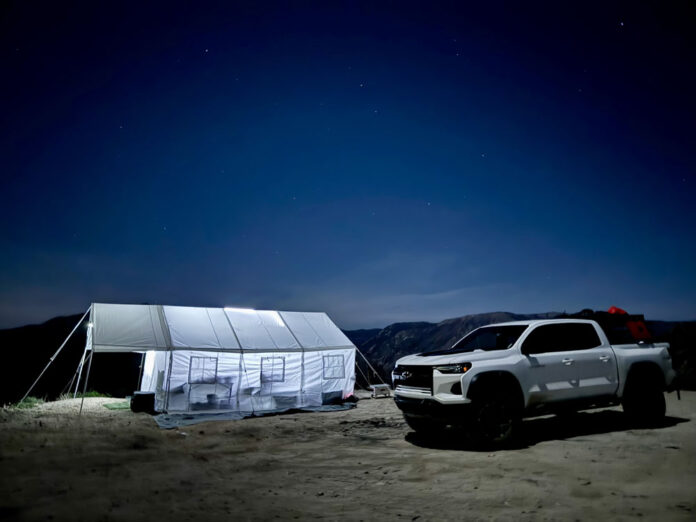

Our team at 4WDTalk has spent years testing camp gear for overland travel, and we keep seeing the same shift. More travelers now pick one good spot and stay for several days instead of packing up every morning. This overlanding basecamp style trades mileage for time at camp. It suits people who want to hike, fish, hunt, or simply rest after a long drive.
This article explains why the shift is happening and who it fits. It also shows how a large shelter supports the style, using the Elk Mountain wall tent as the example. Our full Elk Mountain wall tent review covers the 13×16 with the awning in detail. Here, the focus is the bigger question of when staying put beats moving on.
Quick Facts:
- Topic: Why some overlanders stay at one camp instead of moving daily
- Best for: Trips built around hiking, fishing, hunting, or family time
- Main gain: More time outdoors and less time packing
- Main cost: Fewer places seen and more gear to haul
- Example shelter: Elk Mountain 13×16 wall tent with awning
- Key detail: 208 square feet of floor with standing headroom
7 min read
In This Guide
- Why the Overlanding Basecamp Is Gaining Ground
- Elk Mountain 13×16 Wall Tent at a Glance
- What You Gain by Staying Put
- What You Give Up With an Overlanding Basecamp
- Why a Wall Tent Anchors an Overlanding Basecamp
- Setting Up a Wall Tent Once, Not Every Day
- Overlanding Basecamp vs. Daily Moves
- Final Verdict
- Frequently Asked Questions
Why the Overlanding Basecamp Is Gaining Ground
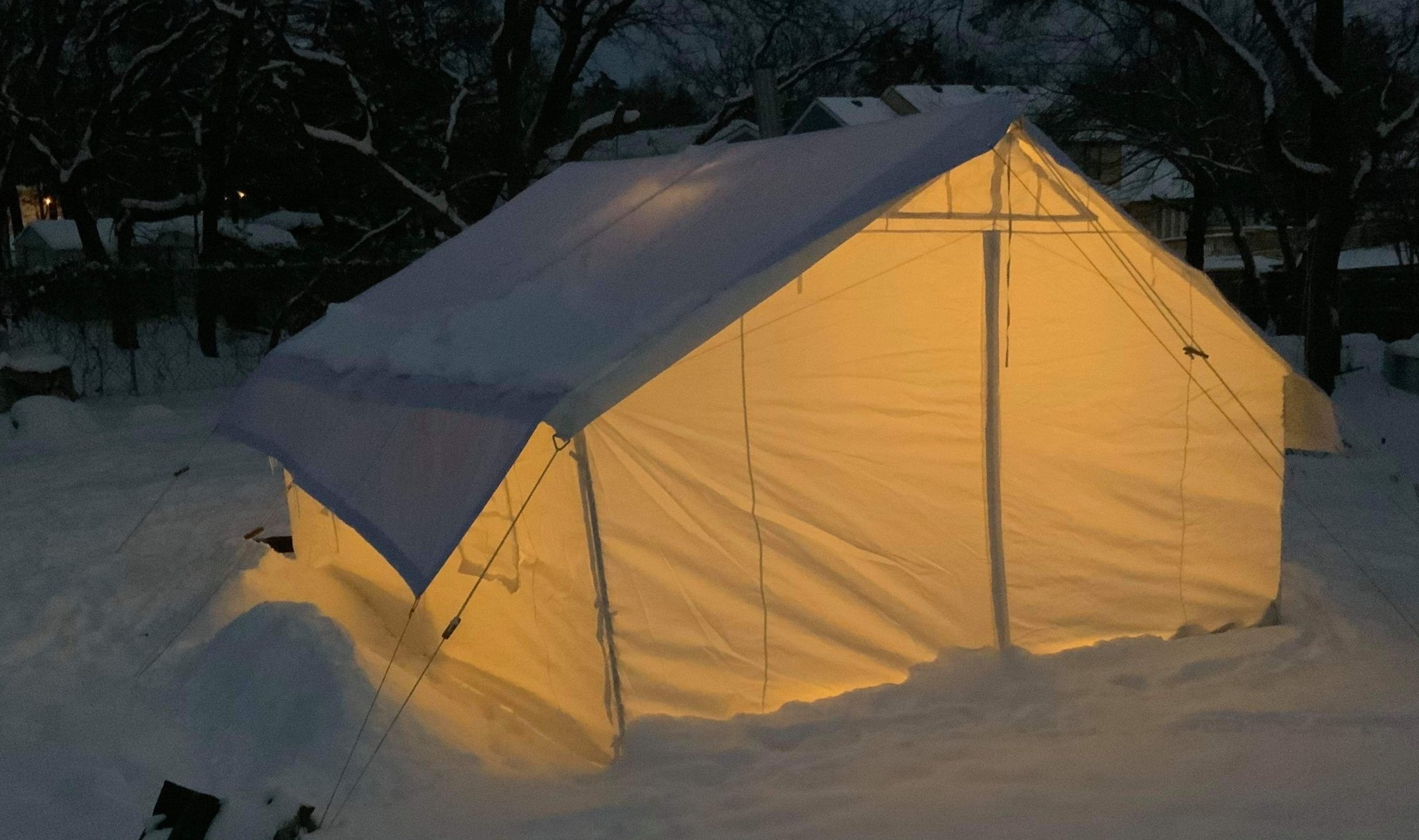
An overlanding basecamp is a single camp used as a home base for several days. Travelers drive in, set up once, and explore from there. Daily moves work differently. Each morning brings teardown, loading, and a new search for a site.
Many travelers now question this routine. Packing and unpacking take real time. Driving every day also costs fuel and attention. Meanwhile, the best parts of a trip often happen away from the truck.
So, staying put has real appeal. You trade variety of scenery for depth in one place. Then the trip becomes less about mileage and more about time outdoors.
Elk Mountain 13×16 Wall Tent at a Glance
| Feature | Detail |
|---|---|
| Fabric | 11 oz PolyShield polyester canvas |
| Floor area | 208 square feet |
| Windows | Six screened windows and two gable vents |
| Awning | Sewn in, about 5 feet deep on the 13×16 |
| Sidewalls | 5 feet, with sewn-in sod cloth |
| Stove jack | 5 inch opening on new tents |
| Frame | 1 inch steel or aluminum, sold separately |
| Floor | Sold separately |
| First setup | About 60 minutes with two people |
Buy Direct From Elk Mountain
See the Elk Mountain Wall Tent With Awning
Pick a size, add a frame, and build a camp made for longer stays.
What You Gain by Staying Put

Time is the biggest gain. Breaking camp and setting up again take real effort every day. Over a four-day trip, those hours add up. Staying put returns them to you.
Comfort improves as well. A basecamp allows bigger gear, such as a full-size tent, a camp kitchen, and real chairs. Because nothing needs to fit back in the truck each morning, you pack for comfort instead of speed.
In addition, day trips from camp let you leave heavy gear behind. You carry water, food, and a daypack, then return to a ready shelter. This style also keeps your food, bedding, and tools in one organized place.
Finally, weather becomes easier to handle. A solid shelter lets you wait out a storm instead of driving through it.
What You Give Up With an Overlanding Basecamp

Staying put has costs. You see fewer places in a given week. Route-focused travelers often value the changing scenery, and a basecamp trades it away.
Site choice matters more, too. A poor spot hurts for days instead of one night. So, check water access, wind exposure, and ground before you commit.
Rules also apply. Many public lands limit how long you stay at one site, so read the posted limit first. Stationary camping works best when you plan around those rules, and stationary camping suits trips with a fixed destination.
Finally, basecamp camping needs more gear. A large shelter, a frame, and extra supplies add weight and bulk. This is the real price of comfort.
Why a Wall Tent Anchors an Overlanding Basecamp
The Elk Mountain wall tent shows how the style works in practice. The 13×16 with the awning gives 208 square feet of floor and standing headroom. Our reviewer tested this exact model.
Six screened windows and two gable vents move air through the tent. The sewn-in awning adds covered space at the front for boots, chairs, and gear. Together, these features make long stays more livable.
The fabric is 11 oz PolyShield polyester canvas. On a 42°F night with no wind, a small gas heater held the interior at 62°F during our review. The tent also suits a stove, with a 5 inch jack opening on new models.
Overall, our review found the awning model a good fit for camping in place three or more nights. This fits the basecamp style well. Wall tent camping rewards travelers who plan to stay.
Setting Up a Wall Tent Once, Not Every Day
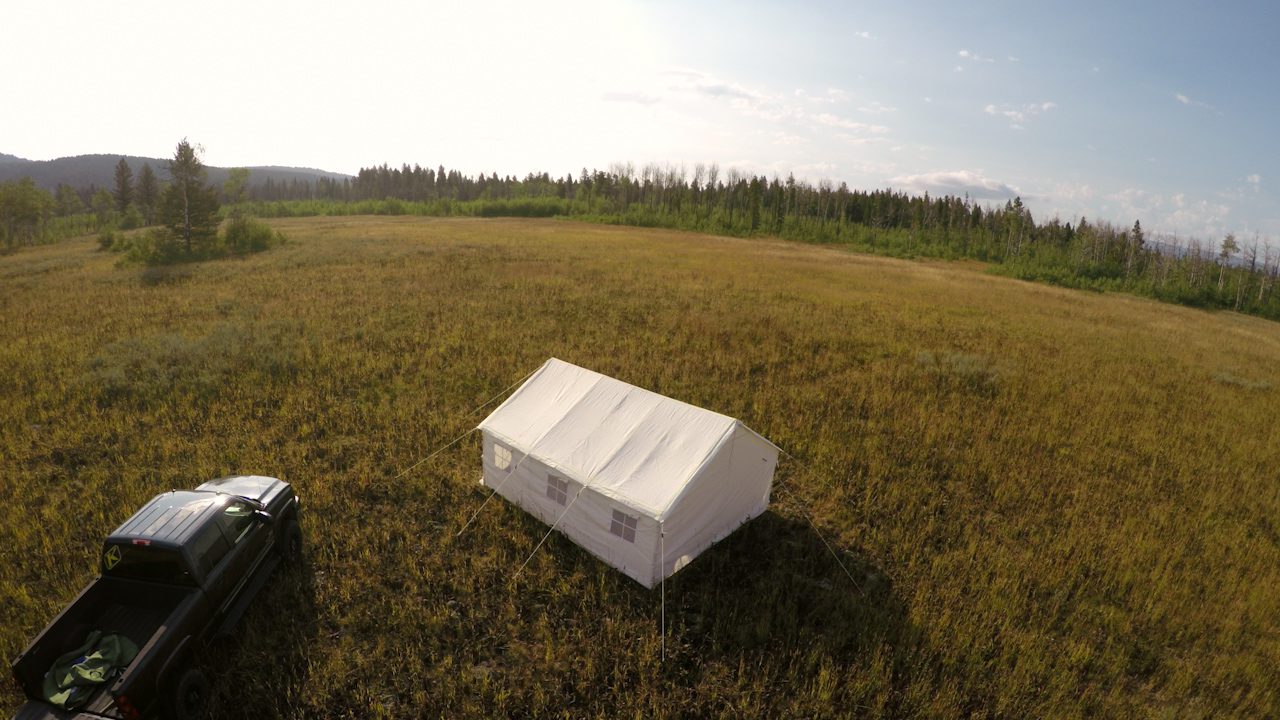
A big tent sounds like a lot of work. However, the effort happens once. Our reviewer needed about 60 minutes with two people on the first pitch. The review expected later setups to take 30 to 40 minutes, though this was not timed.
Because you stay for days, the cost spreads across the whole trip. The frame and floor are sold separately, so factor them into your budget. Our setup guide for the 13×16 walks through the frame, canvas, sod cloth, stakes, and awning in order.
Packing is the one sore point. Our review flagged the storage bag as undersized. Plan for extra room in the truck, since basecamp camping rewards a well-packed rig.
Ready to Stay a While?
Build Your Basecamp Around a Wall Tent
Choose the awning model for trips of three nights or more.
Overlanding Basecamp vs. Daily Moves
| Factor | Basecamp | Daily Moves |
|---|---|---|
| Setup effort | Once per trip | Every day |
| Scenery | One area, seen in depth | Many areas, seen briefly |
| Comfort | Larger gear and more space | Compact gear and less space |
| Bad weather | Wait it out in a sturdy shelter | Move on or drive through |
| Gear load | Heavier and bulkier | Lighter and compact |
| Best for | Hiking, fishing, hunting, family trips | Long routes and crossing regions |
Daily moves still win for long routes. If your goal is distance or crossing a region, a compact setup makes sense. Nobody wants to pitch a large tent for a single night.
However, a basecamp wins once the destination matters more than the drive. Many travelers also mix both styles. They move for a few days, then settle at one spot for the best part of the trip.
Final Verdict
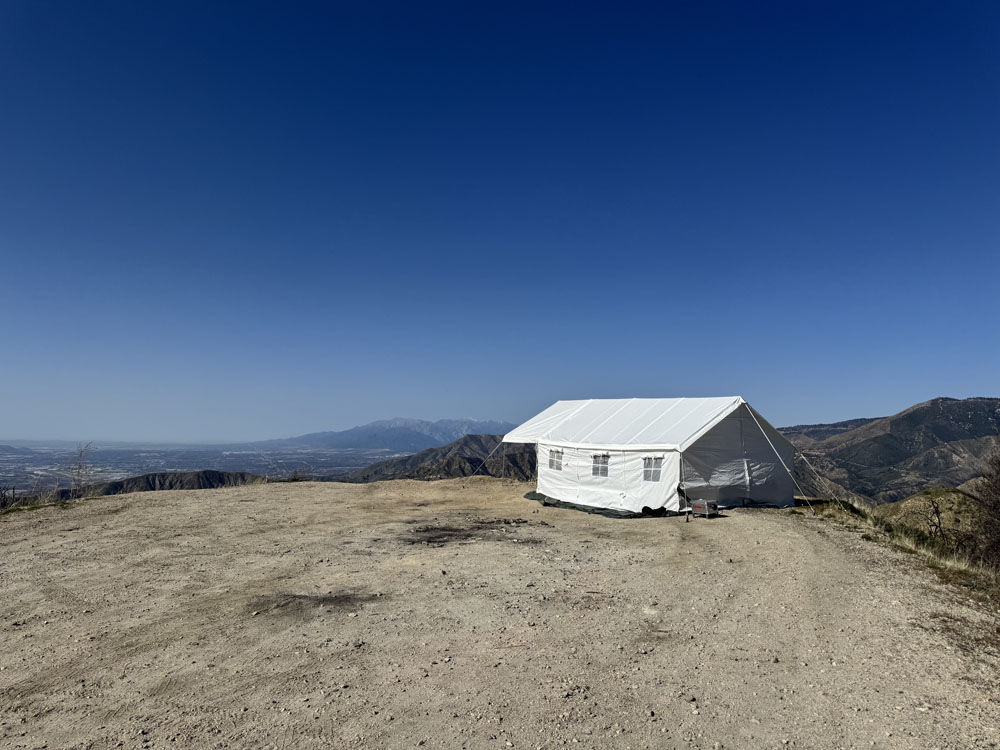
The overlanding basecamp is not a replacement for road travel. It is a different way to spend the same time. Travelers who value depth over distance tend to enjoy it most.
The trade is clear. You give up variety and carry more gear. In return, you gain comfort, calmer mornings, and more hours doing what brought you outdoors.
The Elk Mountain wall tent suits this style well, especially the awning model for stays of three nights or more. It asks for a frame, a floor, and a patient first setup. Once pitched, it works as a real home for the trip.
If your trips already center on a single destination, try staying put on the next one. Pick a good site, pack for comfort, and let the days slow down.
Gear Up for the Next Trip
Explore the Elk Mountain Wall Tent
A roomy, stand-up shelter for camps built to last several days.
Frequently Asked Questions
Is an overlanding basecamp better than moving camp every day?
Neither style wins every time. A basecamp suits travelers who want depth, comfort, and day trips from one spot. Daily moves suit those who want distance and variety.
How long should I stay at one basecamp?
Three or more nights is the point where a larger shelter starts to pay off. Always check the stay limit posted for your land before you commit.
What kind of tent works best for a basecamp?
A large, stand-up shelter works best, because you spend real time inside. A wall tent such as the Elk Mountain 13×16 offers 208 square feet and room for a stove.
Does a wall tent take a long time to set up?
The first pitch took about 60 minutes with two people in our review. Later setups should be faster, and the effort happens once for the whole trip.
What do I need besides the tent for wall tent camping?
The frame and floor are sold separately. Many campers also add a stove, a stove mat, and awning side walls for extra weather protection.
Our articles might have affiliate links and the occasional sponsored content, but don’t sweat it – if you buy something, we get a little kickback at no extra cost to you, and we only hype products we truly believe in!