


Towing the Big Slack Off Road Slacklander behind a mid-size SUV or Jeep can feel intimidating at first. The thought of navigating narrow trails, rocky passes, or sand with a fully loaded trailer is enough to make any adventurer pause. But with the right preparation, setup, and driving techniques, towing the Slacklander can be smooth, predictable, and even enjoyable.
This article is designed for owners and prospective buyers of mid-size off-road vehicles who want practical, real-world advice on towing the Slacklander. From vehicle prep to hitch setup, weight distribution, and trail techniques, we’ll break down everything you need to know to get your trailer behind your rig safely and confidently.
Table of Contents
- Understanding Your Vehicle’s Towing Capacity
- Preparing Your Mid-Size SUV or Jeep for Towing
- Hitch Selection and Setup
- Weight Distribution and Cargo Loading Tips
- Trail Driving Techniques with the Slacklander
- Maintenance and Safety Checks Before and During Trips
- Towing the Slacklander on Different Terrain
- Final Thoughts on Towing the Slacklander
- FAQ
Understanding Your Vehicle’s Towing Capacity

The first step in towing the Big Slack Off Road Slacklander safely is understanding your vehicle’s towing capacity. Mid-size SUVs and Jeeps each have manufacturer-rated maximum tow capacities, and exceeding these numbers can compromise brakes, suspension, and drivetrain components. It’s not just about hauling the trailer; it’s about maintaining control, stability, and safety at all times.
The Slacklander weighs approximately 1,500 pounds empty and carries a 1,000-pound payload. That combination places it well within the towing range of most mid-size SUVs, including the Jeep Wrangler, Toyota 4Runner, and Ford Bronco. Staying within these limits ensures your brakes aren’t overworked, your engine isn’t overheating, and your transmission operates efficiently, even on steep trails.
It’s important to consider tongue weight and the gross combined weight rating (GCWR) as well. Proper tongue weight helps maintain steering stability and prevents trailer sway, which is particularly important when towing the Slacklander on tight or technical trails. Personal experience has shown that even small miscalculations in tongue weight can drastically change handling on uneven terrain, so always measure before you head out.
Preparing Your Mid-Size SUV or Jeep for Towing

Preparation is key when towing the Slacklander. Start with a complete vehicle inspection: check tire pressure, brake condition, fluid levels, and suspension health. Off-road conditions amplify the stress on your vehicle, so a pre-trip inspection can prevent costly breakdowns or trailer incidents.
For extended trips or challenging terrain, additional modifications can help. Transmission coolers, sway bars, and upgraded tires improve stability and heat management. Ensuring your hitch receiver is rated for the combined load is essential, and if your vehicle has aftermarket suspension or lift kits, verify that your tow geometry still aligns properly with the Slacklander.
Proper preparation doesn’t just prevent mechanical failures; it also builds confidence. Knowing that your vehicle is ready for towing allows you to focus on navigating the trail and enjoying the adventure rather than worrying about equipment failure. My own experience with towing trailers without prep taught me that even minor oversights—like underinflated tires—can quickly turn into trail headaches.
Hitch Selection and Setup
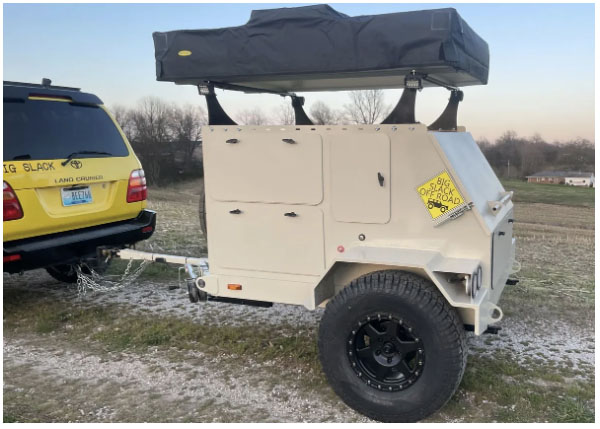
The right hitch is crucial when towing the Slacklander. While standard receiver hitches work for basic towing, an articulating hitch provides extra flexibility on rough trails. The Slacklander offers a Lock N Roll articulating hitch option, allowing both the trailer and vehicle to move independently, reducing stress on the chassis and improving ground clearance.
Proper hitch setup includes measuring tongue height and ensuring pin weight aligns with your vehicle’s specifications. Too little weight can cause trailer sway, while too much can overload the rear suspension. Always use safety chains, ensure trailer wiring is functional, and verify that the hitch and ball rating meet or exceed the Slacklander’s loaded weight.
When I first started towing, incorrect hitch height caused the trailer to push rather than track properly behind the vehicle. The Slacklander’s optional articulating hitch eliminated that issue entirely, giving me confidence on steep and uneven trails where a rigid hitch would have caused problems.
Weight Distribution and Cargo Loading Tips

Weight distribution is just as important as vehicle capability. Towing the Slacklander safely requires loading heavier items low and near the center of the trailer. Avoid stacking gear at the edges or on the roof when possible, and secure everything to prevent shifting during off-road maneuvers.
The Slacklander’s storage features, including a large drawer system for coolers or a refrigerator, multiple tie-down points, and a rear kitchen hatch, make proper weight distribution straightforward. Placing water tanks and battery systems low in the chassis also improves stability, especially on side slopes or during sudden directional changes.
In addition to internal weight, consider tire pressure adjustments. Off-road conditions often benefit from slightly lower trailer tire pressure to improve traction and reduce impact on suspension. On pavement, revert to manufacturer-recommended pressures for handling and longevity.
Trail Driving Techniques with the Slacklander
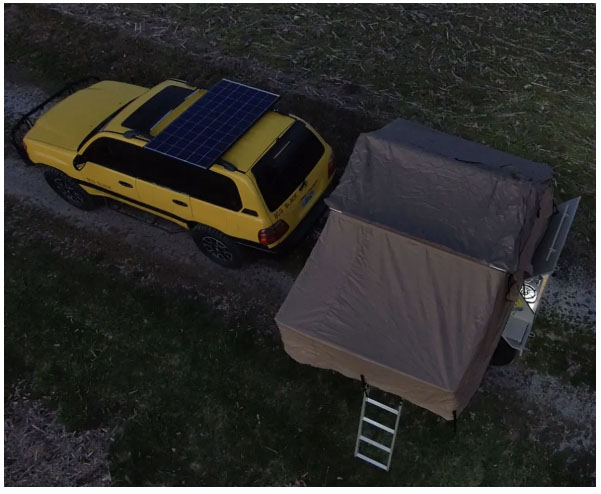
Driving with the Slacklander requires adjustments compared to towing on the highway. On sand or mud, maintain steady momentum and avoid abrupt steering inputs. Over rocks or uneven terrain, engage 4WD and take a wider line when possible to prevent wheel hang-ups.
Braking with a loaded trailer is another consideration. The Slacklander’s 2,200-lb Timbren axle and optional electric brakes help manage downhill momentum, but you should always brake early and anticipate trail conditions. Avoid sudden stops that can push your SUV or Jeep off line or stress the hitch connection.
When towing the Slacklander, give yourself extra room for turns. Its compact 6 ft by 4 ft main box keeps it nimble, but trails can be unforgiving. Watching your mirrors, maintaining low speeds, and using your spotter on technical obstacles make a huge difference in both safety and confidence.
Maintenance and Safety Checks Before and During Trips
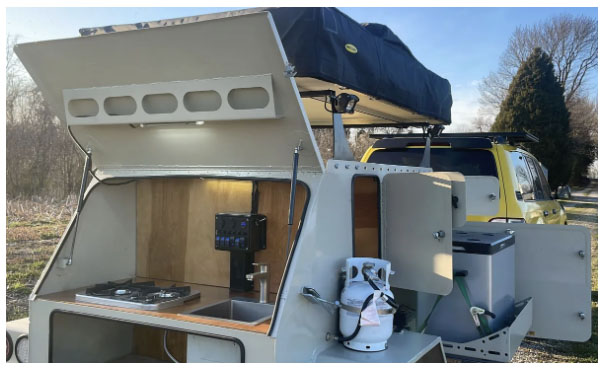
Routine checks before and during towing keep you safe and prevent trail setbacks. Inspect tires, brakes, and suspension for wear. Check hitch connections, wiring, and lighting. Secure all cargo, and test that the trailer moves freely when disconnected.
During multi-day trips, perform mid-trip checks on tire pressure, cargo security, and fluid levels. The Slacklander’s robust design reduces the risk of unexpected failures, but no trailer is maintenance-free. Catching small issues early prevents bigger problems when far from help.
From personal experience, I’ve seen that even well-built trailers like the Slacklander benefit from a simple mid-trip inspection routine. It keeps confidence high and allows you to focus on the trail instead of worrying about gear failure.
Towing the Slacklander on Different Terrain
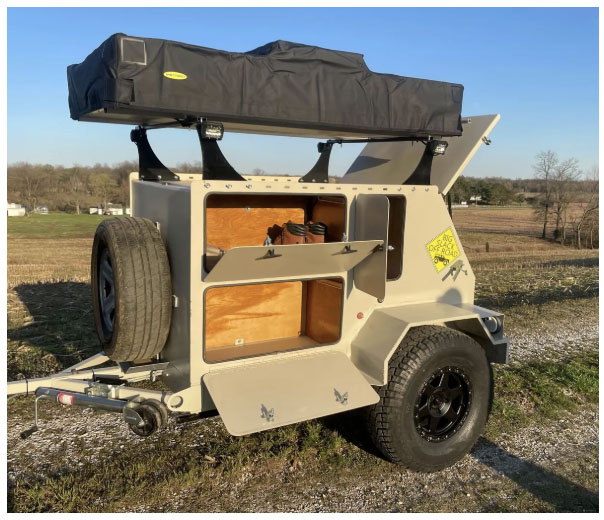
Towing the Slacklander across diverse terrain reveals why its design is so effective. On sandy dunes, its light weight and proper track alignment prevent bogging. On rocky trails, the articulating hitch and Timbren suspension allow both trailer and vehicle to articulate over obstacles. Forest trails and narrow paths are easier to navigate thanks to optimized track width and compact dimensions.
These features combine to reduce trail anxiety and allow focus on driving technique rather than managing a cumbersome load. Observing how the trailer behaves on steep inclines, tight switchbacks, or washboard roads provides valuable insights for new owners who may be nervous about towing for the first time.
My own experience towing the Slacklander shows that preparation, proper setup, and understanding the terrain make towing safe and intuitive. Each environment teaches something about load distribution, throttle control, and anticipation that improves overall confidence.
Final Thoughts on Towing the Slacklander

Towing the Slacklander behind a mid-size SUV or Jeep is about preparation, understanding your vehicle, and following proven techniques. By respecting towing limits, distributing weight properly, and maintaining equipment, you ensure that your off-road adventure is both safe and enjoyable.
The Slacklander was designed by people who live the off-road life, tested and refined through real-world use. Its weight, suspension, and modular options make it ideal for mid-size rigs, allowing drivers to focus on the adventure rather than the challenges of towing.
With proper preparation and thoughtful driving, towing the Big Slack Off Road Slacklander becomes second nature. It’s not just a trailer—it’s a reliable partner that keeps up with your off-road adventures, wherever the trail leads.
FAQ
What is the recommended tongue weight for towing the Slacklander?
Maintain roughly 10-15% of the trailer’s total weight on the hitch ball. For the Slacklander, this typically ranges between 250 and 400 pounds, depending on payload.
Can a Jeep Wrangler or Toyota 4Runner safely tow the Slacklander fully loaded?
Yes, both vehicles have adequate towing capacity for the Slacklander’s 1,500-pound empty weight and 1,000-pound payload. Always verify your specific model’s tow rating.
How do I adjust tire pressure for towing the Slacklander on different terrains?
Lower trailer tire pressure slightly for sand or mud to improve traction, and use standard manufacturer-recommended pressures for pavement and hard surfaces.
Is an articulating hitch necessary for off-road towing?
While not strictly required, an articulating hitch like the Slacklander’s Lock N Roll option improves ground clearance, reduces stress on the trailer, and allows smoother articulation over rough terrain.
What’s the best way to practice towing before hitting a trail?
Start in a controlled environment, like an empty parking lot or slow rural road. Practice turns, reversing, and obstacle navigation before tackling technical off-road trails.
Just so you know, some of the cool stuff we mention comes with affiliate links, meaning we earn a commission if you buy (no extra charge to you!). Plus, we occasionally feature sponsored content, but rest assured, we only shout out products we genuinely stand behind.