


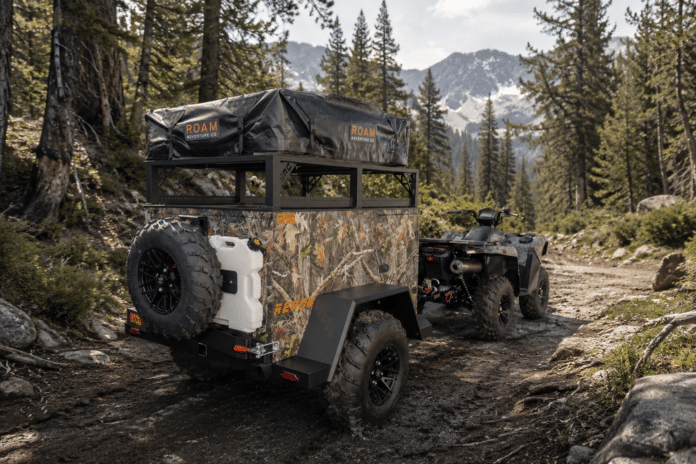

I’ve been camping and overlanding for virtually my entire life. From roughing it in a tent as a kid to building out full rigs, I’ve logged thousands of miles in the backcountry. Some of those trails don’t even show up on most GPS maps. Over the years, I’ve had the pleasure of meeting the SNO Trailers team many times. That includes touring their facility and seeing firsthand how they build their trailers. Their dedication to quality construction is second-to-none. It shows in every weld, every component choice, and every detail that goes into a finished unit. When a company builds with that level of intention, it matters, especially when you’re miles from the nearest pavement.
Towing a trailer into the backcountry is one of the most rewarding ways to explore remote terrain. Backcountry trailer safety and off-road towing safety are topics that deserve more attention. The gear that makes camp life more comfortable can create real problems if the setup isn’t right. The same gear that makes camp life more comfortable can also create real problems if it’s not set up right. These backcountry trailer safety tips apply to full-size rigs and ATV or side-by-side setups alike. Use them to travel smarter, stay safer, and get the most out of your time in the backcountry.
Quick Facts:
- Topic: Backcountry trailer safety tips for overlanders
- Featured Trailer: SNO Trailers Recon
- Recon Dry Weight: 875 lbs
- Recon Suspension: Timbren 3500 lb HD Axle-Less Suspension
- Recon Departure Angle: 40 degrees
- Recon Starting Price: $13,995 USD
- Skill Level: Beginner to intermediate overlanders
- Best for: Anyone towing a trailer into off-road or backcountry terrain
13 min read
In This Guide
- Why Backcountry Trailer Safety Matters
- Get Your Weight Distribution Right
- Know Your Rig’s Limits Before You Go
- Pre-Trip Inspection for Your Backcountry Trailer
- Terrain-Specific Towing Tactics
- Recovery Gear and Communication
- How the SNO Trailers Recon Is Built for This
- Recon vs. Larger Overlanding Trailers
- Pros and Cons
- Final Verdict
- Frequently Asked Questions
Why Backcountry Trailer Safety Matters
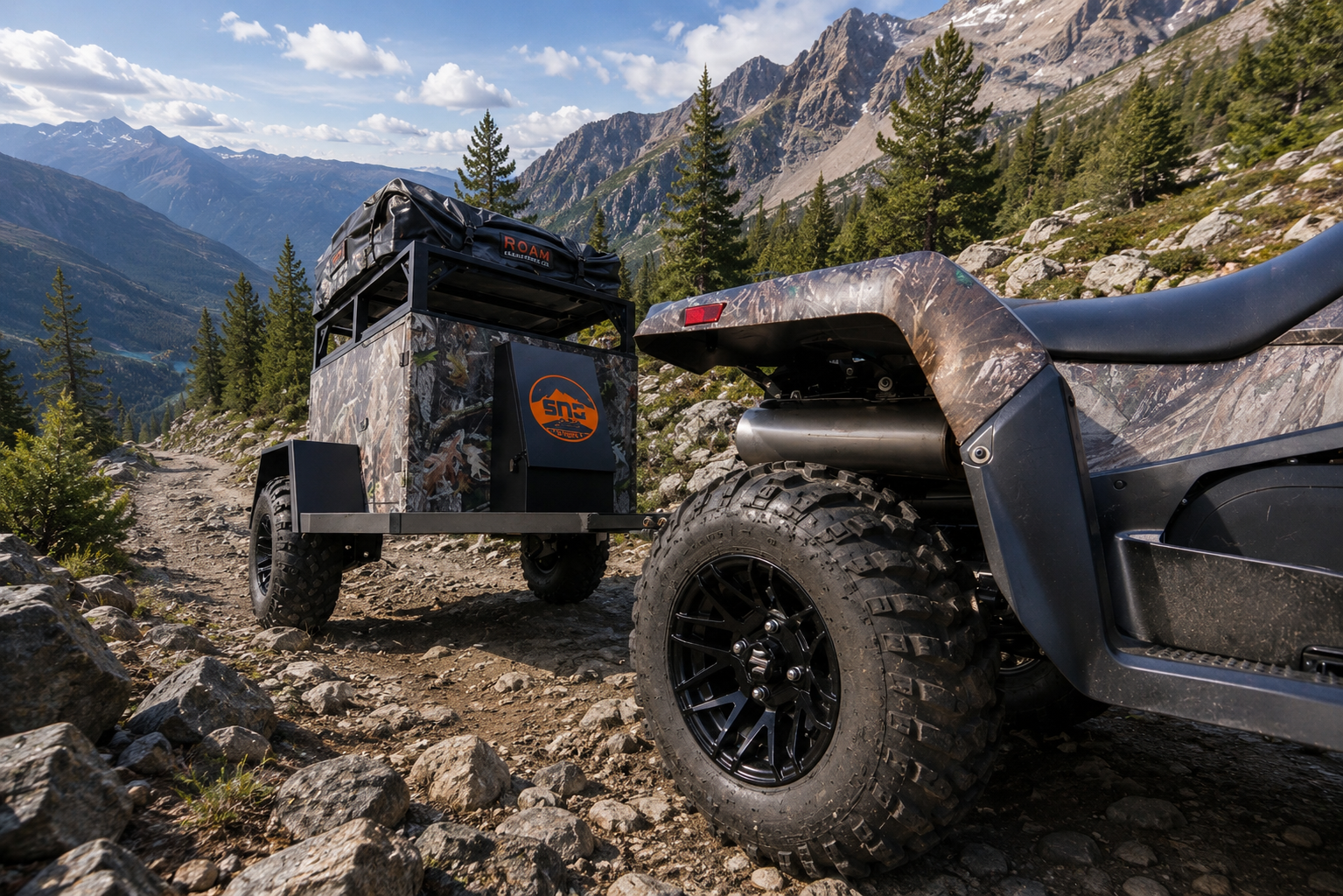
Backcountry trailer safety isn’t a checkbox; it’s an ongoing practice that separates confident, capable overlanders from those who end up waiting for a rescue. When you add a trailer to any towing vehicle, you’re fundamentally changing how it handles, brakes, and responds to terrain. On the highway, those changes are manageable. However, on a rutted two-track or a loose-shale descent, even small errors in setup or technique get amplified fast. The good news is that most backcountry trailer safety problems are preventable with the right knowledge going in.
The appeal of towing a trailer into the backcountry is real. You get more storage and a more comfortable camp. You can also leave your trailer parked at base while you run day trips with a lighter, unloaded vehicle. For many overlanders, a compact trailer hits the sweet spot between a rooftop-tent-only setup and a full expedition rig. Still, that flexibility comes with responsibility. A trailer that’s packed incorrectly, attached improperly, or towed beyond its rated limits becomes a liability, especially when you’re miles from cell service.
These tips come from years of personal experience on trails across the American West. They also reflect conversations with seasoned overlanders and time spent with builders like the team behind SNO Trailers’ commitment to quality. Their approach to engineering each trailer from the ground up reinforces why the right equipment decisions matter as much as the right technique.
Get Your Weight Distribution Right
Weight distribution is the single most important factor in off-road towing stability. The standard rule is to load roughly 60% of your cargo weight over the front half of the trailer, closer to the tow vehicle. This keeps your tongue weight in the 10–15% range of your gross trailer weight (GTW). For a trailer fully loaded to 2,000 lbs, that means 200–300 lbs of tongue weight. Too little tongue weight causes trailer sway, where the back of the trailer begins to fishtail, especially on loose or uneven surfaces. Too much tongue weight pushes down on the hitch and lifts the front wheels of your tow vehicle, reducing steering and braking effectiveness.
In the backcountry, weight distribution becomes even more critical because terrain changes constantly. A load that felt balanced on the highway may shift significantly after a few miles of washboard road. Therefore, secure everything with cargo nets or tie-down straps before you leave, and check your load again after your first stop. Pay particular attention to heavy items like water jugs, coolers, and tool bags. These should sit low, close to the axle, and centered side-to-side to prevent leaning. Uneven lateral loading wears tires faster and stresses suspension components in ways that compound over a long trip.
How to Check Tongue Weight Without Specialized Equipment
You don’t need a professional scale to get a reasonable tongue weight estimate. A standard bathroom scale and a simple lever system using a 2×4 and a fulcrum block gives you a workable measurement. Alternatively, most hardware stores carry inexpensive tongue weight gauges designed for exactly this purpose. Checking before every trip, especially when your load changes between outings, takes five minutes and removes a major variable from your safety equation.
Know Your Rig’s Limits Before You Go

Every towing vehicle has a rated tow capacity, and that number matters more off-road than it does on the highway. On smooth pavement, towing near your maximum rated weight is manageable. On a steep trail with loose footing, that same load demands far more from your engine, transmission, brakes, and cooling system. A general backcountry best practice is to tow no more than 80% of your vehicle’s maximum rated capacity when heading off-road. This gives you a performance buffer when conditions get demanding.
Also know your trailer’s gross vehicle weight rating (GVWR). This is the maximum your trailer is rated to carry, including its dry weight plus all cargo, water, and gear. Exceeding GVWR puts stress on the trailer’s axle, suspension, and frame , components designed and rated for specific loads. Because the SNO Trailers Recon starts at just 875 lbs dry weight with a Timbren 3500 lb HD axle-less suspension, it gives tow-vehicle operators significant working margin. That suspension rating means the Recon isn’t just light. It’s built to handle real terrain loads without being pushed to its structural limit on every trip.
Pre-Trip Inspection for Your Backcountry Trailer
Good backcountry trailer safety starts before you ever leave the driveway. Walk around your trailer with a purpose before every trip. This inspection doesn’t need to take more than 10–15 minutes, but skipping it is how small problems become big ones 40 miles in. Start at the hitch. Confirm the ball mount is fully engaged, the locking lever is seated, and the safety chains are crossed under the coupler. Check that your 7-pin connector is fully seated and that all trailer lights function correctly. Brake lights, turn signals, and running lights all need to work before you leave the driveway.
Next, check your tires. Inspect for cuts, sidewall bulges, and correct inflation. Off-road terrain calls for different tire pressures than highway driving; airing down improves traction and ride quality. Airing down too much on a loaded trailer risks sidewall damage on sharp rock edges. Check your wheel lug nuts with a torque wrench, because vibration on rough roads can back them off. Finally, inspect your suspension components for any cracking, unusual wear, or loose hardware. Catching a loose bolt on your pre-trip walk-around costs you nothing. Catching it on the trail costs you the whole trip.
Buy Direct From SNO Trailers
The Recon Is Ready for the Backcountry
875 lbs dry weight. 40-degree departure angle. Timbren HD suspension. Starting at $13,995.
Terrain-Specific Towing Tactics
Different terrain types demand different approaches. On steep descents, use your vehicle’s engine braking rather than riding your brake pedal. Sustained brake application on long downhills heats your rotors and brake fluid. This leads to brake fade at exactly the moment you need stopping power most. Engage a lower gear before you start descending, and let the drivetrain do the work. On rocky terrain, choose lines that keep your trailer’s wheels on the clearest path. Your tow vehicle and trailer have different wheelbases, so the trailer tracks differently through tight turns and switchbacks.
Mud and soft soil change the physics of towing significantly. Lateral slip on a muddy trail increases the risk of trailer sway even at low speeds. For this reason, maintaining a tongue weight closer to the upper end of the recommended range (12–15%) provides more stability in low-traction conditions. In sand, the opposite challenge appears. Off-road towing in sandy terrain means your trailer’s additional rolling resistance can bog down a vehicle that would otherwise navigate easily. Airing down tires on both the tow vehicle and the trailer is the most effective countermeasure. It also protects your tires from pinch flats on sharp-edged terrain.
Recovery Gear and Communication

Every backcountry camping trailer setup should include a basic recovery kit. Backcountry camping with a trailer means you’re farther from help, so self-sufficiency matters. At minimum, carry a rated recovery strap, a hi-lift or exhaust jack, traction boards, and shackles rated for your trailer’s weight. A shovel is also essential for digging out in soft terrain. A trailer adds complexity to recovery scenarios. Specifically, you’ll often need to detach the trailer before you recover the tow vehicle. Having a flat, stable spot to park the trailer is an important consideration when you choose your recovery anchor point. The critical difference from solo-vehicle recovery is that the trailer changes your anchor geometry. Disconnecting it first lets you focus fully on extracting the tow vehicle.
Communication gear is equally important. Cell service in the backcountry is unreliable at best and nonexistent at worst. A satellite communicator like Garmin inReach, SPOT, or a similar device gives you two-way messaging and SOS capability regardless of cell coverage. Share your planned route and expected return time with someone who knows to call for help if you don’t check in. This is basic trip planning, but it’s the kind of thing that gets skipped when excitement runs high and the trail looks manageable. It always looks manageable until it doesn’t.
Configure Your Build
Build the Recon for Your Adventures
Add solar, a second battery, kitchen pullout, awning, shower, and more. SNO Trailers builds to your specs.
How the SNO Trailers Recon Is Built for This
Most backcountry trailer safety problems trace back to one core issue: the wrong trailer for the terrain. A heavy, poorly suspended trailer with a high center of gravity punishes every mistake and makes difficult trails even harder. The SNO Trailers Recon was designed specifically to address these problems. At 875 lbs dry weight and measuring 10’2″ long by 6’0″ wide by 5’4″ tall, it fits where larger trailers won’t go. Its 40-degree departure angle means you aren’t grinding the tail end on steep exits, either.
The Timbren 3500 lb HD axle-less suspension is worth special attention here. Traditional axle suspension transfers bumps from one wheel to the other. A rock strike on the left side affects the right side as well. Axle-less suspension isolates each wheel independently. This keeps the trailer more stable on uneven ground and reduces stress transferred to your hitch and tow vehicle. For backcountry travel specifically, this design choice is a significant safety advantage. The Recon also ships with Method wheels and 275 all-terrain tires as standard equipment, not an upgrade, which means it arrives ready to work. SNO Trailers uses a powder-coated steel frame with a proprietary anti-rust base coating as standard. That attention to long-term durability is something I’ve seen firsthand during my visits to their facility. These aren’t budget components dressed up in nice marketing; they’re the real thing.
Recon vs. Larger Overlanding Trailers: Which Should You Choose?

The Recon’s compact footprint makes it the right tool for anyone who wants to access technical terrain without leaving their trailer at the trailhead. Compared to larger overland trailers, including SNO Trailers’ own SNO Trailers Alpine, shown above, which uses Fabtech integrated suspension with up to 8 inches of travel. The Recon trades some amenity space for significantly better trail access. It’s small enough to tow with an ATV or side-by-side, which opens up trails that are completely off-limits to truck-towed rigs.
Larger overlanding trailers offer more living space, more storage, and more off-grid capacity. However, they also require wider trails, more towing capacity, and more skill to navigate tight switchbacks or narrow canyon roads. For weekend warriors, couples, or solo overlanders who prioritize access over square footage, the Recon delivers everything essential. It avoids the handling and access penalties that come with size and weight. If you’re running a full family setup or planning weeks-long expeditions, a larger rig makes more sense. However, for the vast majority of backcountry scenarios, the Recon’s capabilities are exactly where they need to be.
Pros and Cons
Pros
- 875 lb dry weight enables towing with ATVs and side-by-sides, not just trucks
- 40-degree departure angle handles steep backcountry exits without ground strikes
- Timbren 3500 lb HD axle-less suspension isolates each wheel independently for better terrain tracking
- Method wheels and 275 all-terrain tires standard; no tire upgrade needed out of the box
- Compact 10’2″ length navigates tight trails that full-size trailers can’t access
- Aluminum body with powder-coated steel frame resists rust in wet and snowy conditions
- Wide upgrade path: solar, second battery, kitchen pullout, awning, shower all available
- Made in the USA by a team with a proven track record of quality builds
Cons
- Smaller space than larger overlanding trailers; not ideal for groups of 3 or more
- Base model electronics package is minimal; kitchen pullout and solar are upgrade-tier additions
- Limited dealer network compared to mass-market RV brands
Final Verdict
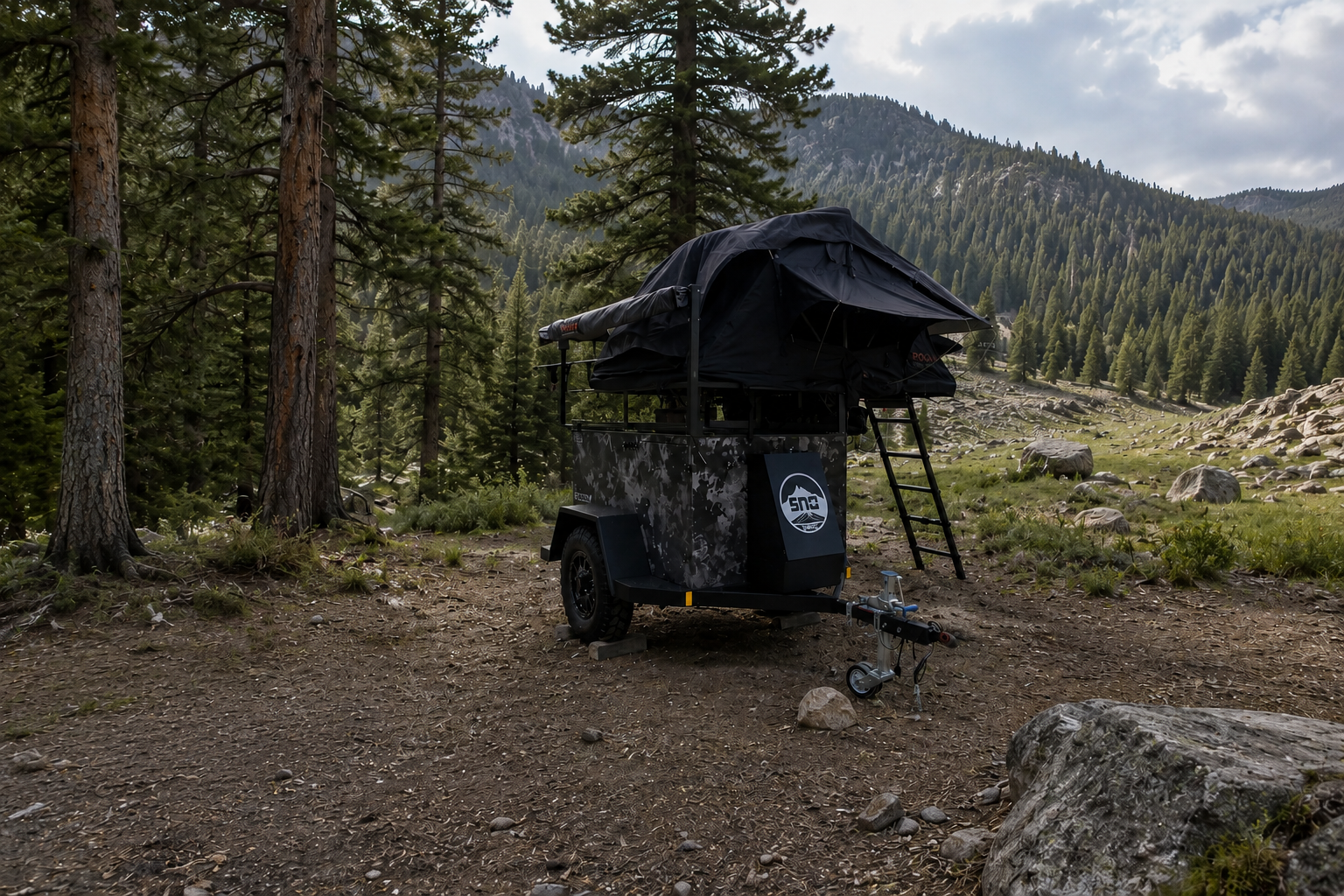
If you’re serious about backcountry travel with a trailer, the fundamentals in this guide will serve you on any rig. Weight distribution, terrain tactics, pre-trip inspection, recovery preparedness. These aren’t optional safety theater. They’re the practices that keep trips from turning into emergencies. The good news is that none of them require exotic gear or advanced mechanical knowledge. They require attention and the habit of thinking ahead before you hit the trail.
For overlanders looking for a trailer that reinforces those habits by design, the SNO Trailers Recon is one of the most capable compact options available. Its low dry weight, serious suspension hardware, and trail-worthy departure geometry address the real challenges of backcountry towing. You won’t need to sacrifice a capable tow vehicle for a heavy rig. Having spent time with the SNO Trailers team and seen their operation up close, I trust the quality behind the product. Their builds aren’t rushed to market; they’re designed and built by people who use this gear themselves.
The Recon is an especially strong fit for ATV and UTV towers who want to access deeper terrain. Truck towers who want the handling benefits of a compact rig will appreciate it as well. If you need more space for a family or a month-long expedition, look at the Alpine or a larger model. However, for the vast majority of weekend-to-week-long backcountry trips, the Recon handles the job with room to spare.
Technique Matters As Much As Equipment
Above all, the best trailer for backcountry travel is the one paired with sound technique, proper loading, and a rider who respects the terrain. No amount of suspension travel compensates for a poorly loaded rig or a driver who’s never thought through what happens when the trail gets hard. Start with the fundamentals, choose equipment that’s built for the mission, and the backcountry opens up in ways that make every mile worth the prep.
Ready to Buy?
Check Today’s Price on the SNO Trailers Recon
SNO Trailers builds every unit to order. Reserve your spot with 20% down, fully refundable. Made in the USA.
Frequently Asked Questions
What is the correct tongue weight for backcountry trailer towing?
The standard target for tongue weight is 10–15% of your gross trailer weight (GTW). For off-road and backcountry towing, staying closer to 12–15% of GTW gives you better stability on low-traction surfaces like mud or loose gravel. Too little tongue weight, below 10%, significantly increases the risk of trailer sway, especially at trail speeds where sudden steering inputs are common.
How do you load a trailer for off-road travel?
Place roughly 60% of your cargo weight over the front half of the trailer, closer to the tow vehicle. Keep the heaviest items low, near the axle, and balanced side-to-side. Secure everything with cargo nets or tie-down straps before you leave, and check your load after your first stop on rough terrain. Shifting cargo changes your weight distribution and can create instability without warning.
Can the SNO Trailers Recon be towed with an ATV or side-by-side?
Yes. The Recon weighs just 875 lbs dry weight, which puts it well within the tow capacity of most capable ATVs and side-by-sides. Its compact dimensions of 10’2″ long, 6’0″ wide, also make it manageable on tight trails where a full-size truck-towed trailer wouldn’t fit. Check your specific ATV or UTV’s rated tow capacity before loading the Recon with gear to confirm your setup stays within limits.
What recovery gear should I bring when towing a trailer in the backcountry?
At minimum, carry a rated recovery strap, a hi-lift or exhaust jack, traction boards, a shovel, and shackles rated for your combined weight. Also carry a satellite communicator for emergencies. When a recovery becomes necessary, you’ll often need to detach the trailer first. So choose your recovery anchor point with that step in mind, and make sure the trailer is on stable ground before you start pulling.
How do I avoid trailer sway on dirt roads and backcountry trails?
Proper weight distribution is the primary defense against trailer sway. Keep tongue weight at 10–15% of your GTW, load heavier items forward and low, and secure all cargo against shifting. Beyond loading, avoid sudden steering inputs or hard braking on loose surfaces. If sway starts while moving, ease off the throttle gradually. Do not hit the brakes. Then let let the trailer straighten behind you before slowing down intentionally.
Is the SNO Trailers Recon good for overlanding?
The Recon is a strong choice for backcountry overlanding, particularly for those who prioritize trail access and tow flexibility. Its Timbren 3500 lb HD axle-less suspension, 40-degree departure angle, and 875 lb dry weight give it real capability on technical terrain. The trailer is upgradeable with solar, a second battery, kitchen pullout, awning, and shower. It grows with your needs without requiring a complete trailer replacement.
A quick heads-up: If you snag something through our affiliate links or check out our sponsored content, we might earn a commission at no extra cost to you. But fear not, we’re all about recommending stuff we’re truly stoked about!