


Quick Facts:
- Decision: satellite phone vs messenger for trucks, SUVs and remote trails.
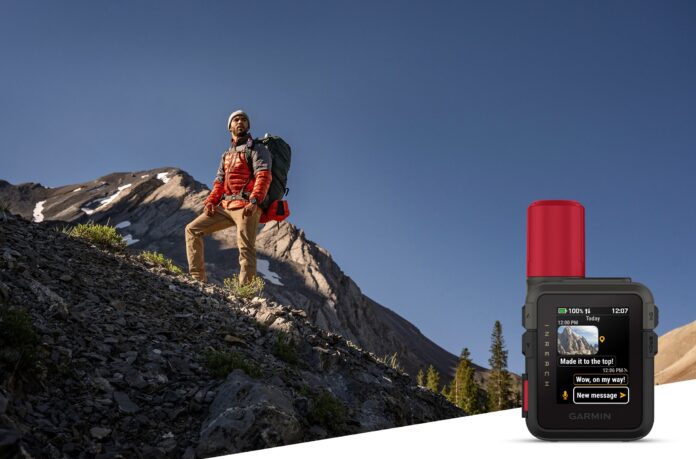
- Messenger example: Garmin inReach Mini 3 Plus, $499.99, with 30-second voice messages but no live calls.
- Phone example: Iridium 9555, 9.4 ounces, with 4 hours of talk time and 30 hours of standby.
- Phone cost: $72 to $120 a month on Iridium handheld plans, or $210 for a one-week rental.
- Your own cell phone: T-Satellite lists texts, picture and audio messages, but not voice calls.
8 min read
In This Guide
Overview
Satellite phone vs messenger comes down to one feature: live voice. A satellite messenger sends texts, your location and an SOS to a rescue center. In contrast, an Iridium satellite phone places a real call. Often called a sat phone, it lets you hear a person answer.
Voice messaging has narrowed the gap. The Garmin inReach Mini 3 Plus now sends 30-second voice messages with a text transcript. It also shares photos through the Garmin Messenger app. However, a voice message is a recording, not a conversation. You still wait for the reply.
Cost also pushes many owners toward a messenger. Iridium handheld plans run $72 to $120 a month, according to Global Satellite Group. Owners across forums also say a messenger plan costs less. Therefore, a messenger is enough for many trips. The useful question is when live voice earns its price. This guide answers it by trip type, and it shows where a one-time rental replaces a purchase.
If a messenger fits your trips, three units are sold on Amazon now: the Mini 3 Plus, the Garmin inReach Messenger Plus and the ZOLEO Satellite Communicator.
Satellite messengers sold on Amazon


ZOLEO Satellite Communicator (Limestone) | Two-Way GPS Messenger wi…
Satellite Phone vs Messenger at a Glance
Garmin calls its device a satellite communicator, while owners and retailers say satellite messenger. The table compares the Garmin inReach Mini 3 Plus with the Iridium 9555, a compact handset on the same satellite network. Figures come from Garmin, the Garmin owner’s manual and Iridium.
| Feature | Mini 3 Plus (messenger) | Iridium 9555 (phone) |
|---|---|---|
| Live voice calls | No, only 30-second voice messages. | Yes, two-way calls. |
| Emergency help | Interactive SOS to the Garmin Response center. | You dial the right local number yourself. |
| Weight | Under 5 ounces with its carabiner. | 9.4 ounces. |
| Battery | Up to 350 hours in low power mode with 10-minute tracking. | 4 hours of talk time, 30 hours of standby. |
| Operating temperature | -4 to 140 degrees F. | 14 to 131 degrees F. |
Weight and battery decide how you carry each device. A messenger clips to a pack strap, while a handset lives in a door pocket or a go-bag. Garmin advises carrying its device high and outside the pack with the antenna facing up, so the unit sees the sky.
What a Messenger Handles Without a Call
First, consider the emergency case. Press SOS on the Mini 3 Plus and it sends an interactive message to the Garmin Response center. Garmin says its team has supported more than 18,000 inReach incident responses in more than 150 countries. Because the center contacts local responders for you, you do not need to know the local number or speak clearly.
You send routine messages more often than an SOS. Owners report texts leaving from canyons, mountains and dense forest, and family texting back. Battery is another reason owners like a messenger. Garmin rates the Mini 3 Plus at up to 350 hours in low power mode with 10-minute tracking. Performance mode lasts up to 95 hours, so a long weekend needs no charger. To weigh a messenger against a radio, read our guide to the satellite communicator versus GMRS radio.
Voice notes and photos add context. DC Rainmaker’s review notes the 30-second limit on each voice message and the transcript attached to each one. For example, you send a photo of a leaking axle seal and a short voice note to a shop using the Garmin Messenger app. Then the shop sees the damage before the truck arrives. Recipients need the Garmin Messenger app or a compatible Garmin device. Delivery still takes time, and every device wants open sky. Heavy canopy and canyon walls delay messages, according to owners.
Satellite Phone vs Messenger: What Voice Buys You
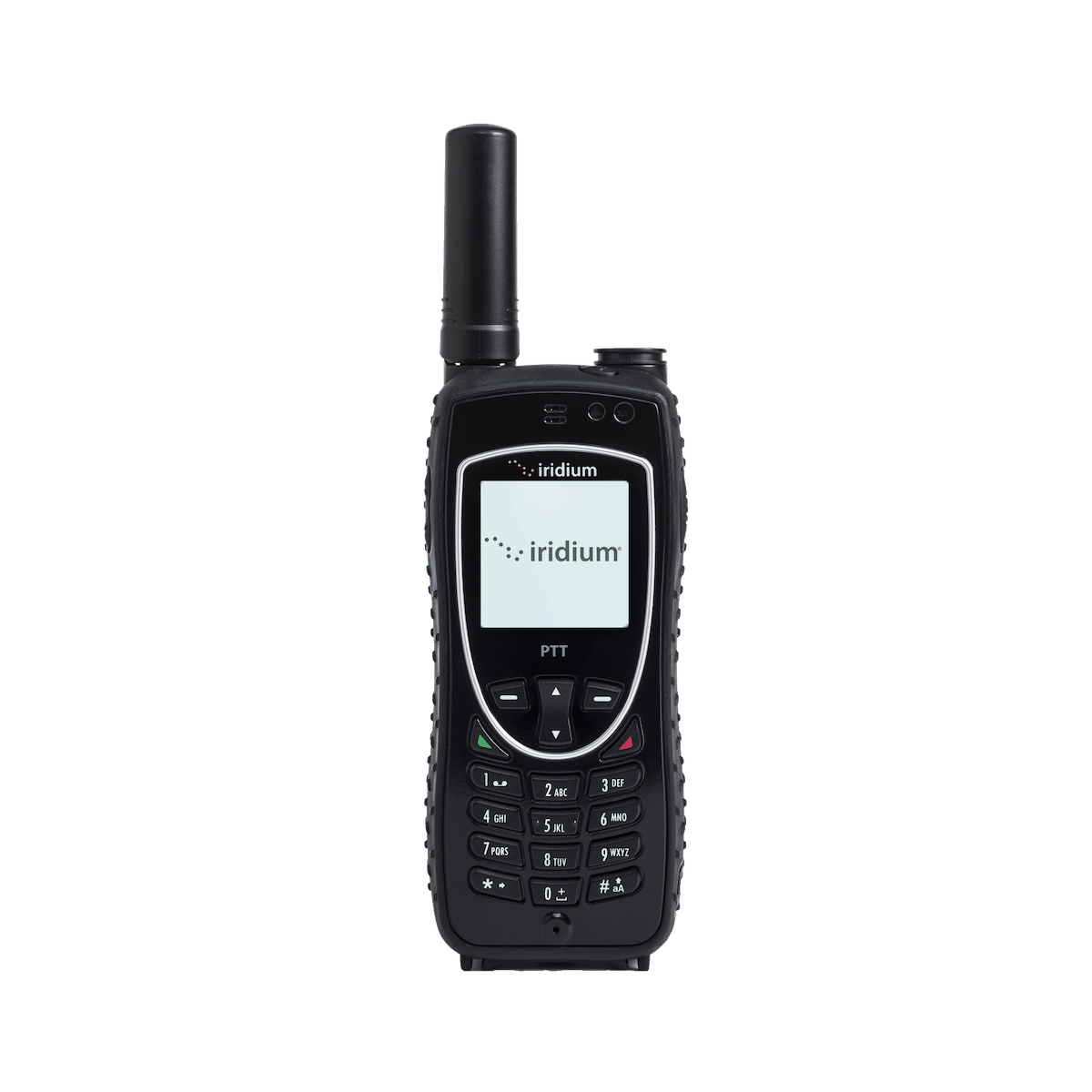
A satellite phone gives you what a messenger lacks: a live two-way conversation. The Iridium 9555 pays for the call in weight and battery, as the table shows. Compared with the Mini 3 Plus, it weighs about twice as much.
Rugged versions exist. The Iridium Extreme PTT adds an IP65 rating, MIL-STD 810F durability, a programmable SOS button and GPS. It offers 5 hours of talk time and 16.5 hours of standby. Iridium lists 24/7 emergency assistance in phone mode on this model.
Voice wins when details matter. Owners who favor satellite phones cite live talks with a transporter or a service department. Some want evacuations run by voice, since details matter. Others want proof the other person understood. Voice reaches a dispatcher without a typing delay. An Iridium satellite phone suits these jobs, and a satellite communicator does not replace it.
Standby battery sets the trade-off. Thirty hours of standby means a powered-on handset drains in about a day and a quarter. As a result, plan to switch it off and power it up at scheduled call times. Carry a charger or spare battery too.
Satellite Phone vs Messenger Costs
Airtime sets the price gap. Global Satellite Group lists Iridium handheld plans by the month. Specifically, Seasonal 10 costs $72, Starter 25 costs $80, Advanced 100 costs $96 and Power 250 costs $120. Most plans add a one-time $60 activation fee. Keep a plan active for 12 months and you spend $864 to $1,440 before you buy the handset. Owners call the handset itself expensive.
Rental changes the math for a single trip. The same retailer rents a handset for $210 the first week, $180 the second week and $150 for each additional week. It also charges $180 for airtime and holds a $1,000 refundable deposit. However, one Tacoma World owner found rental saved little, so compare the total against your trip length.
A messenger costs less to start. The Mini 3 Plus lists at $499.99, and Garmin lists a $39.99 activation fee for new plans. Garmin bills plans monthly. Meanwhile, its support page says consumer plans suspend for $0 for up to 12 months with no reactivation fee. Garmin dates this option to June 5, 2025, and owner threads from 2024 describe older terms. Confirm the terms on Garmin’s plan page before you pay.
Also check your rescue coverage, since Garmin’s SAR plan requires an active inReach plan. Our search and rescue insurance guide explains the details. My take: buy the messenger, and rent the phone for the one trip where you need a live call.
Satellite Phone vs Messenger: Pick by Trip Type
Match the device to the trip, not to the forum debate. Many recreational drivers and hikers in the owner threads choose a messenger alone.
Stay With the Messenger If
Weekend runs, solo day trips and convoy trips where you mainly need to be found fit a messenger. You send check-ins, share a live track and keep an SOS within reach. Write a trip plan and a check-in schedule first, and our guide on how to plan a remote camping trip covers both. Also, carry the device on your body, because a long walk-out leaves the truck behind.
Add a Satellite Phone If
Add voice when you coordinate pickups, travel for weeks away from services, or want a live conversation with a doctor or dispatcher. Two rigs also split roles well, with one driver carrying the phone and the other carrying the messenger. Experienced posters say each tool has its own job. Our safety guide names the mistake of relying on one comms device.
Whichever device you carry, pair it with power and protection. A 10,000mAh Anker power bank and an Anker 323 car charger keep it topped up, while a Pelican 1010 Micro Case guards it in the glovebox. Check the case’s interior size against your device before you order.
Power and protection for your device


Anker 323 52.5W USB C Car Charger with 30W PowerIQ 3.0 Fast Chargin…
Where Phone Satellite Texting Fits
Your own phone now adds a third option. T-Mobile’s T-Satellite service on Starlink supports text messaging, picture and audio messaging, select apps and texts to 911. It costs $10 a month for customers of other carriers. However, the T-Mobile support page does not list voice calls.
Several owners in a July 2026 Rokslide thread say it connects more easily than Apple’s satellite texting, though two report it failing. It also has no emergency button, and several owners still carry an inReach or Zoleo. Our Starlink Direct to Cell guide covers the service in full. Think of it as an extra texting layer on your own phone, not a stand-in for either device.
Final Thoughts
Most overlanders do well with a messenger alone. The Mini 3 Plus covers the three jobs a typical trip needs. It sends an SOS, keeps family informed and now carries short voice notes and photos. Therefore, I’d put it on every trip, and owners across the forums describe the same plan.
A sat phone earns its price on specific trips. If you coordinate pickups, travel for weeks or need to talk to a professional, a live call is worth the airtime. For a single trip, renting avoids the handset purchase, although the airtime charge and the refundable deposit raise the upfront cost.
Both choices cost you something. A messenger never gives you a live conversation. An Iridium handset leaves the emergency call to you. The Extreme PTT adds an SOS button. Both slow down under heavy canopy or in a canyon, so test your setup in open sky first.
My pick: carry a messenger every trip, and rent a phone when voice matters. If price decides it, owners point to Zoleo as a cheaper messenger. Your family hears from you either way, and you pay for live calls only on trips needing one.
FAQ
Does a Garmin inReach make phone calls?
No. The Garmin inReach Mini 3 Plus sends texts, photos and 30-second voice messages, but it does not place live calls. Garmin requires an active satellite plan for these features.
How much is a satellite phone?
Owners call the handset expensive. Iridium handheld plans add $72 to $120 a month, according to Global Satellite Group. Most plans also charge a $60 activation fee. Renting starts at $210 for the first week.
Is a satellite phone worth it for overlanding?
It is worth it when you need a live conversation, such as coordinating a pickup or talking to a doctor. For check-ins and SOS, a messenger costs less and covers the need. Some owners rent a phone for a single trip instead of buying one.
Does Starlink Direct to Cell support voice calls?
T-Mobile’s support page lists text messaging, picture and audio messaging, select apps and texts to 911 for T-Satellite. It does not list voice calls. Treat it as a texting backup, not a phone replacement.
What is the difference between a satellite phone and a satellite messenger?
A satellite phone places live voice calls. In contrast, a messenger sends texts, location tracks and SOS alerts, and on newer models it sends short voice notes and photos. Both need open sky and an active service plan to work.