


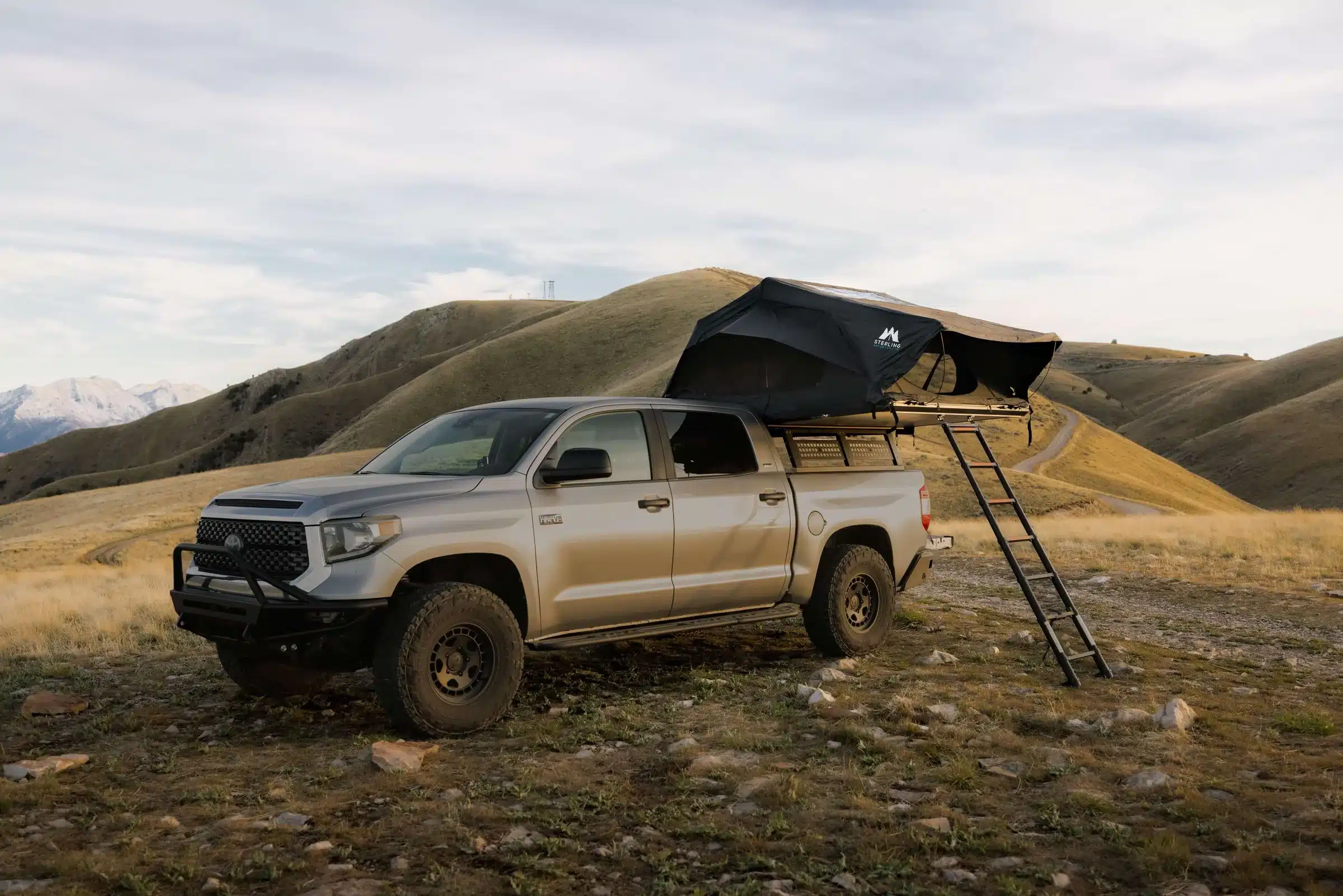
This rooftop tent buying guide covers the choices in the order they matter. First comes tent type, then your roof’s weight limit, sleeping space, weather features and daily ownership. Each example has a 4wdTalk review, and each tent links to it.
I flew from California to Castle Rock, Colorado, to sit down with Mike, who owns Spirit of 1876. Then we walked his warehouse floor tent by tent. Spirit of 1876 advertises with 4wdTalk, and the two modules below link to its product pages for 11 of these tents. Mike opened the shop in 2018 to let buyers compare brands side by side.
Before you compare shells, answer two questions. First, do you need your vehicle during the day? Owners raise this point often. Once the tent opens, it stays tied to your truck, so a trailhead run means packing up. Second, how many people sleep up top? Those two answers narrow the field before you look at weight.
Softshell vs Hardshell Rooftop Tent
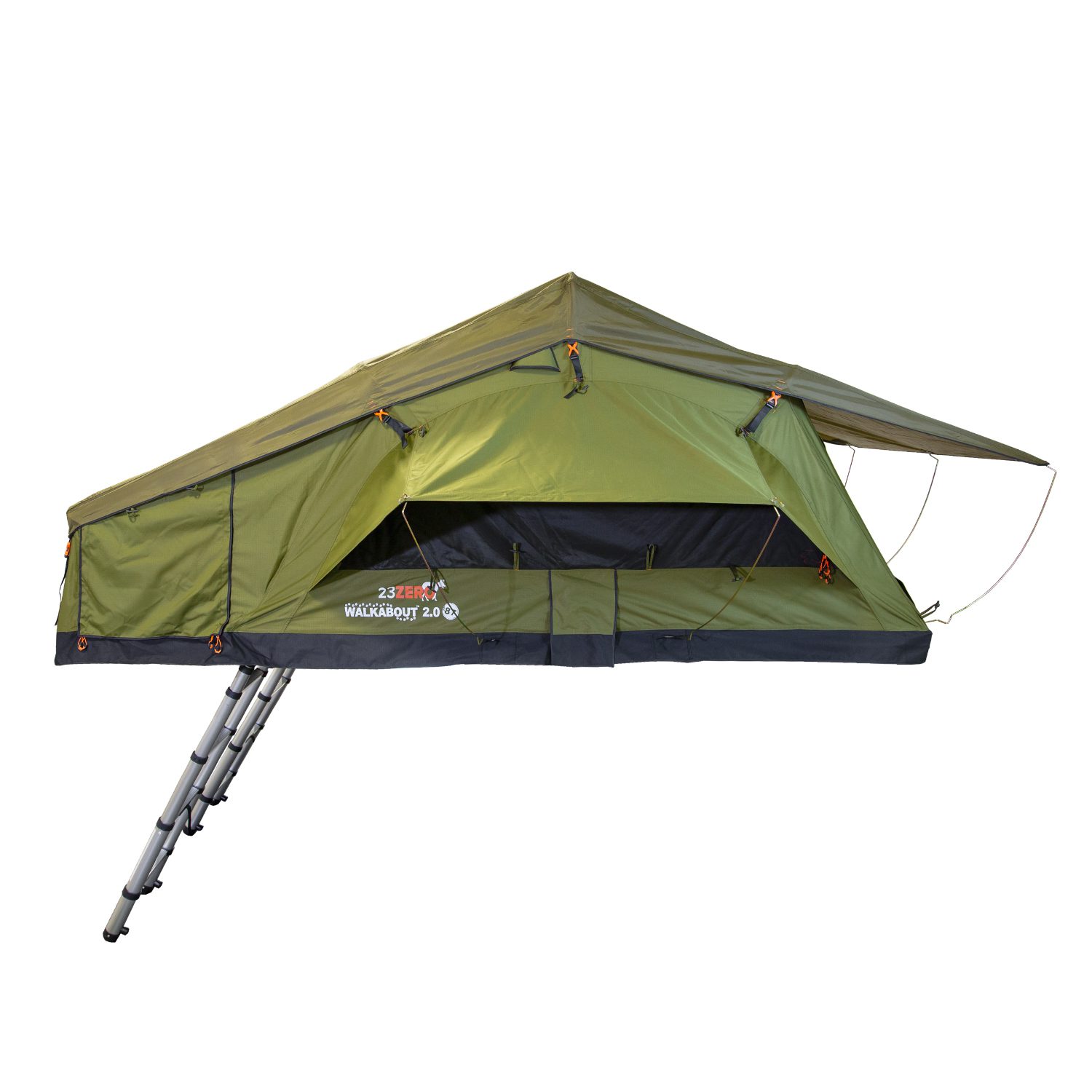
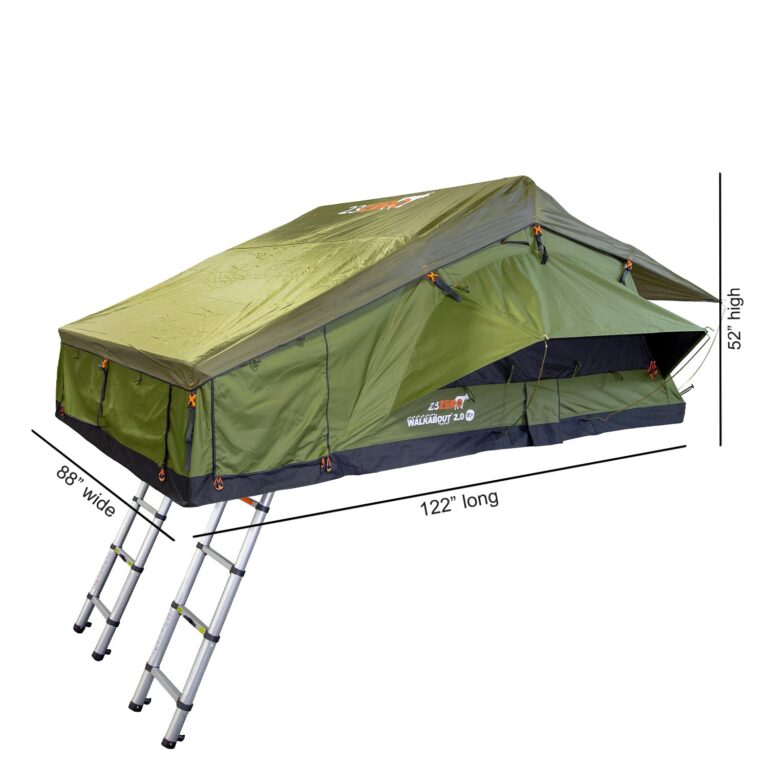
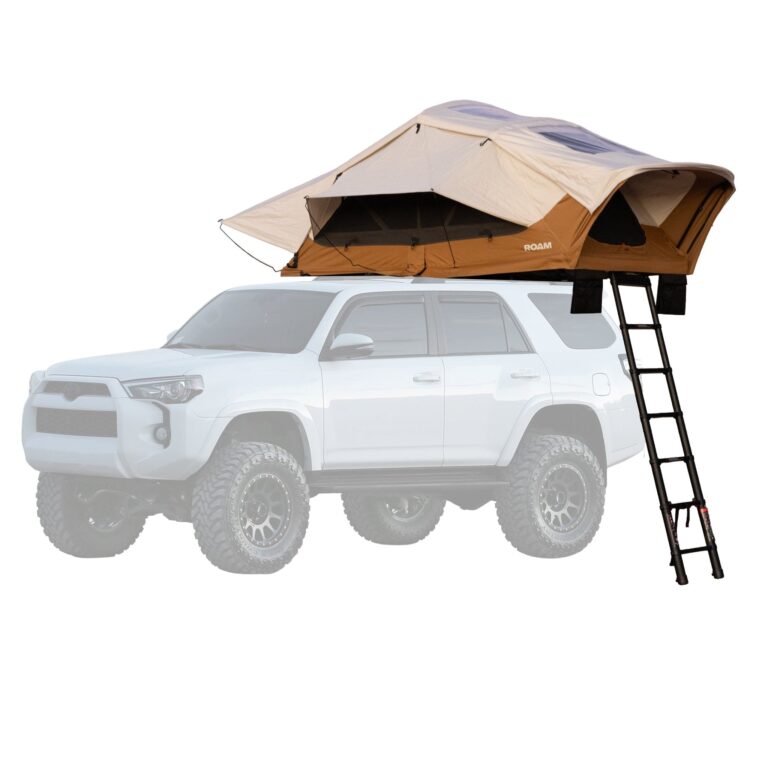
A softshell rooftop tent folds in half on the rack. To open it, you unfold it over the side, and the ladder holds up the overhang. Because it folds in half, a softshell doubles its footprint when open. Mike’s view: “To maximize your space, soft shells are usually your best bet.”
The 23Zero Walkabout 87 2.0 shows the upside. Per 23Zero, it sleeps 6 adults on an 87 by 96-inch bed and weighs 198 pounds. Our 23Zero Walkabout 87 review covers its family-size bed. For two or three people, ROAM lists the Vagabond 2.0 with a 96-inch bed at 150 pounds. Our ROAM Vagabond 2.0 review also breaks it down.
However, the trade-off shows up at pack-down. Mike says a softshell takes about 5 minutes to close, or 10 the first time. A hardshell closes in about 30 seconds, he says, though owners report 2 to 3 minutes alone. On Tacoma World and IH8MUD, owners who switch to a hardshell rooftop tent cite the cover, straps and tucked fabric. Softshells also flap more in wind, and owners report bigger mileage losses with them.
Rooftop Tent Types at a Glance
| Type | Tents in this guide | Listed weight | Best for |
|---|---|---|---|
| Softshell fold-over | Walkabout 87 2.0, Vagabond 2.0 | 150 to 198 lb | Most floor space, families. |
| Clamshell and wedge | Wasatch Lite V2, Kabari SuperFly, Baseline, Aircrest, TMON | 96 to 150 lb | Couples on light-rated roofs. |
| X-hinge hybrid | Wasatch Lite Pro, OVRLNDR 2P | 138 to 149 lb | Couples who want foot room. |
| Pop-up and box shell | Evasion, Uinta Box Shell | 134 to 163 lb | Even headroom end to end. |
| Fold-out and platform hybrid | Skycamp 3.0, Nova King, Basin | 135 to 165 lb | Fold-outs for families, Basin for two. |
| Side-opening | Armadillo Horizon 3 | 246 lb | Three adults on a stout rack. |
Weights come from each maker’s listing, and some include the ladder or rails while others do not. For this reason, check the fine print on the exact model before you run your roof math.
Hardshell Shapes Compared
As a rule, hardshells open faster than softshells. Still, the shape decides your headroom, your weight and your bed layout. Here are the hardshell layouts in this guide, starting with the lightest. For the type count, we group side-opening tents with the fold-outs, since both open over the side.
Clamshell and Wedge Tents
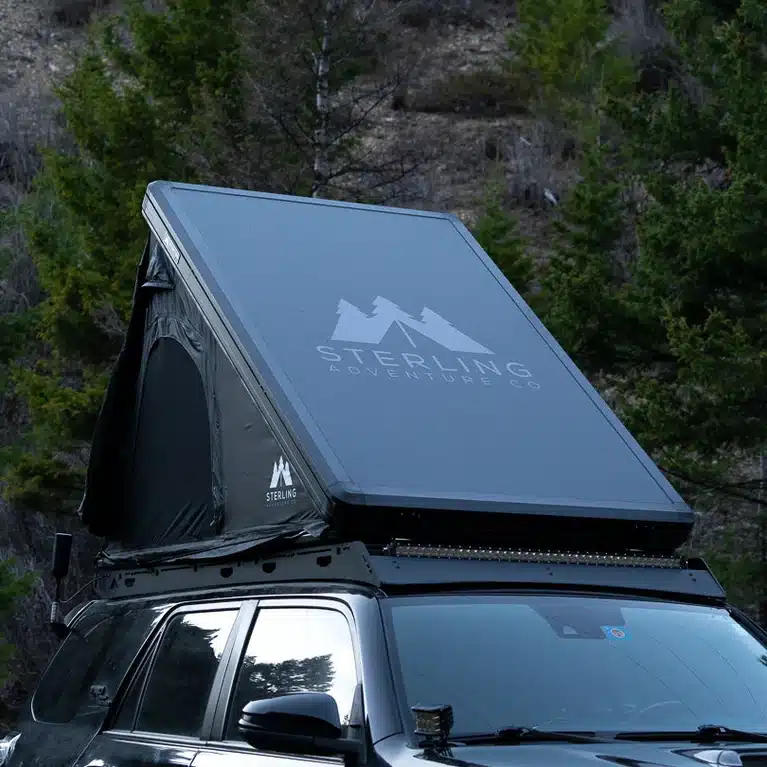
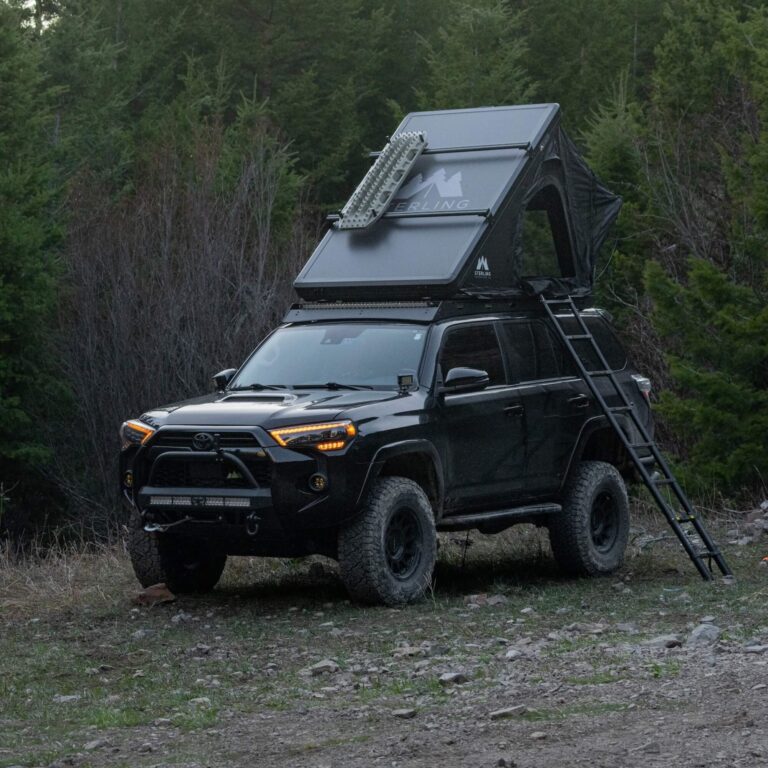
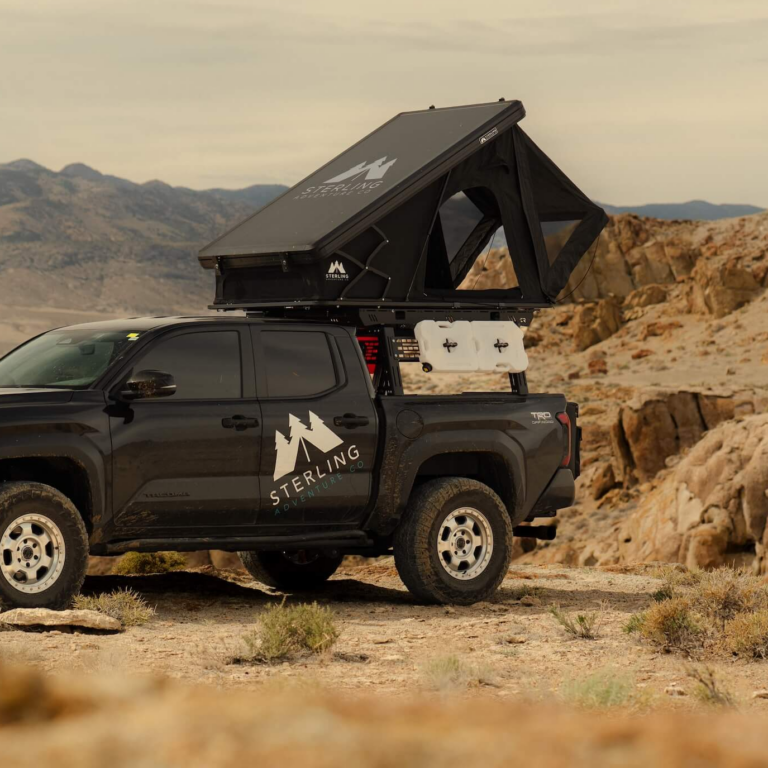
A clamshell hinges at one end, so the roof slopes down toward your feet. Because the frame stays simple, this is the lightest hardshell layout. Per Sterling, the Wasatch Lite V2 weighs 96 pounds as a shell and about 105 with the mattress. Notably, it stands 4.7 inches tall when closed. Our Wasatch Lite V2 review notes owners leave it mounted and still park in the garage.
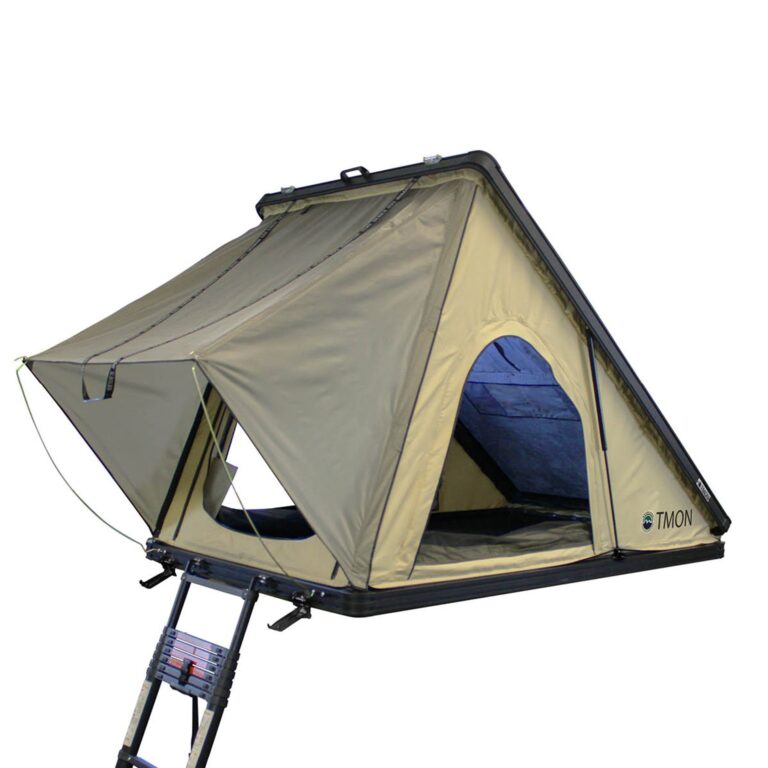
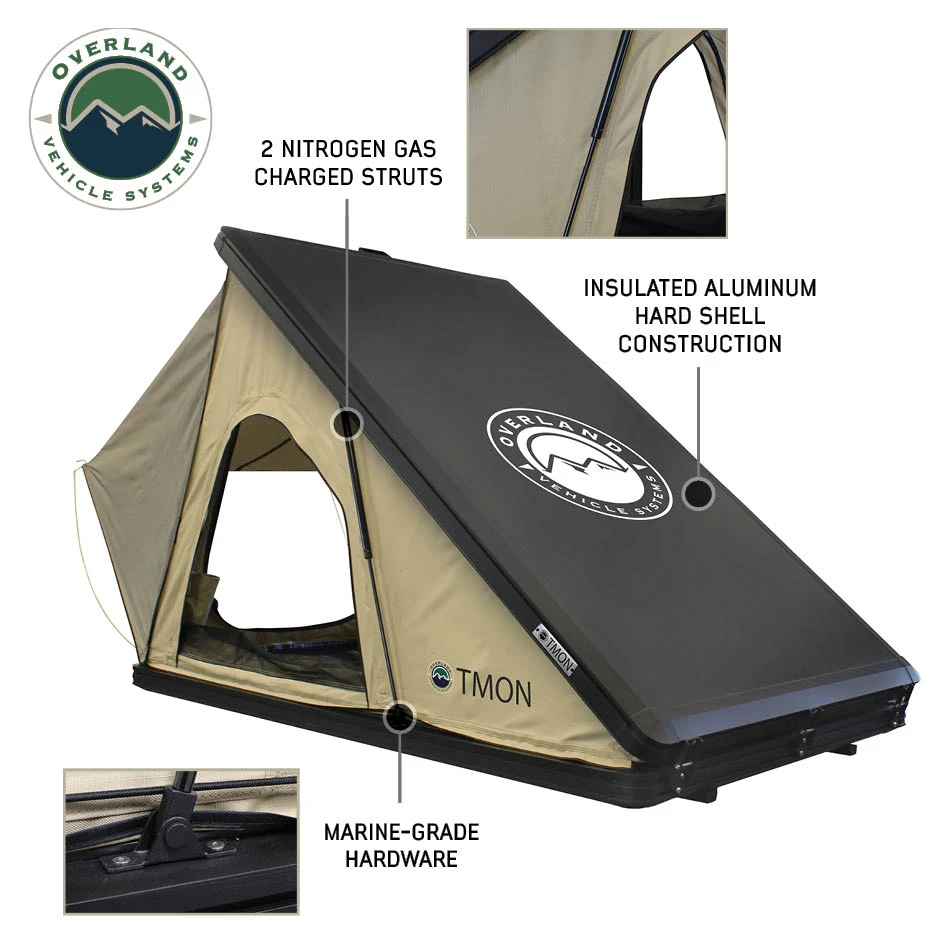
Other light options include the 23Zero Kabari SuperFly at 105 pounds mounted, per 23Zero, and the Featherlyte Baseline at 110 pounds. However, the Baseline ships with a 1-inch mattress, per Featherlyte, so budget for a pad. See our 23Zero Kabari SuperFly review and Featherlyte Baseline review for both. Featherlyte’s Aircrest, a 112-pound clamshell, gets the same treatment in our Featherlyte Aircrest review. For an aluminum shell with gas struts, our OVS TMON review covers a 150-pound clamshell for two.
X-Hinge Hybrids
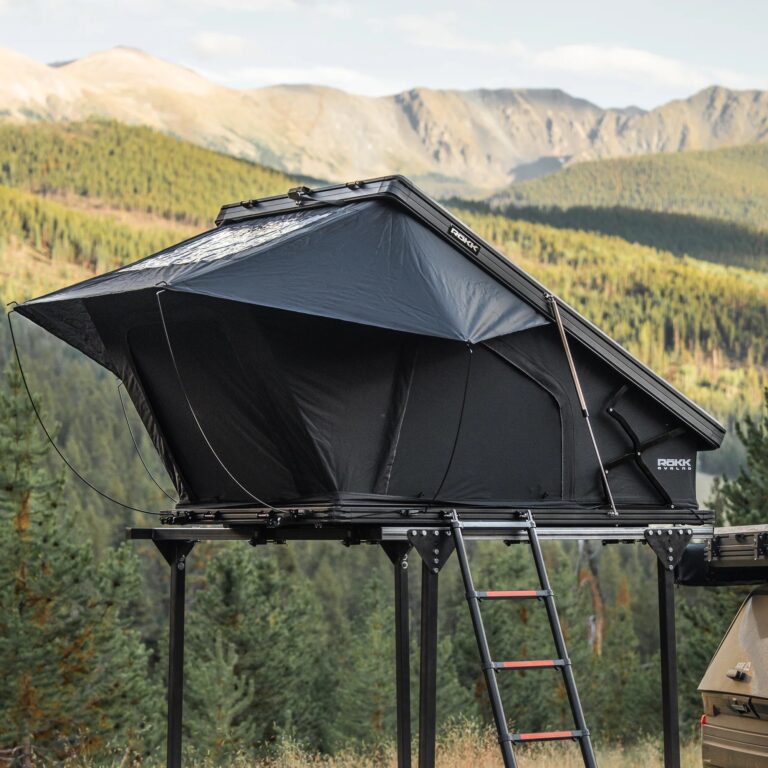
An X-hinge lifts both ends at once, which cuts the wedge taper at your feet. Sterling says the hinge on the Wasatch Lite Pro adds 13 inches of headroom. One 6-foot-4 owner calls the earlier Wasatch Lite a little small and says he stretches out fully in the Pro. Similarly, the ROKK OVRLNDR 2P uses crossed support arms, and ROKK lists 15 inches of foot clearance. ROKK also lists a 3.5-inch diesel heater port. Our ROKK OVRLNDR 2P review and Wasatch Lite Pro review compare the details.

Softshell, Wedge and X-Hinge Tents at Spirit of 1876
Sponsored content. Produced in partnership with Spirit of 1876.
Pop-Up and Box Shell Tents
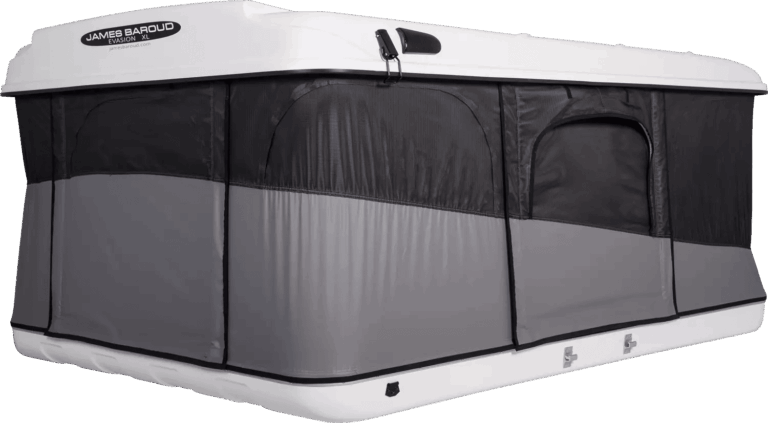
A pop-up lifts the whole lid straight up on struts at all four corners. In contrast to a wedge, a pop-up gives you the same headroom from head to foot. James Baroud lists 39 inches of headroom for the Evasion. Depending on size, it weighs 134 to 163 pounds without its ladder, per James Baroud. Our James Baroud Evasion review covers its 4-layer fiberglass shell.
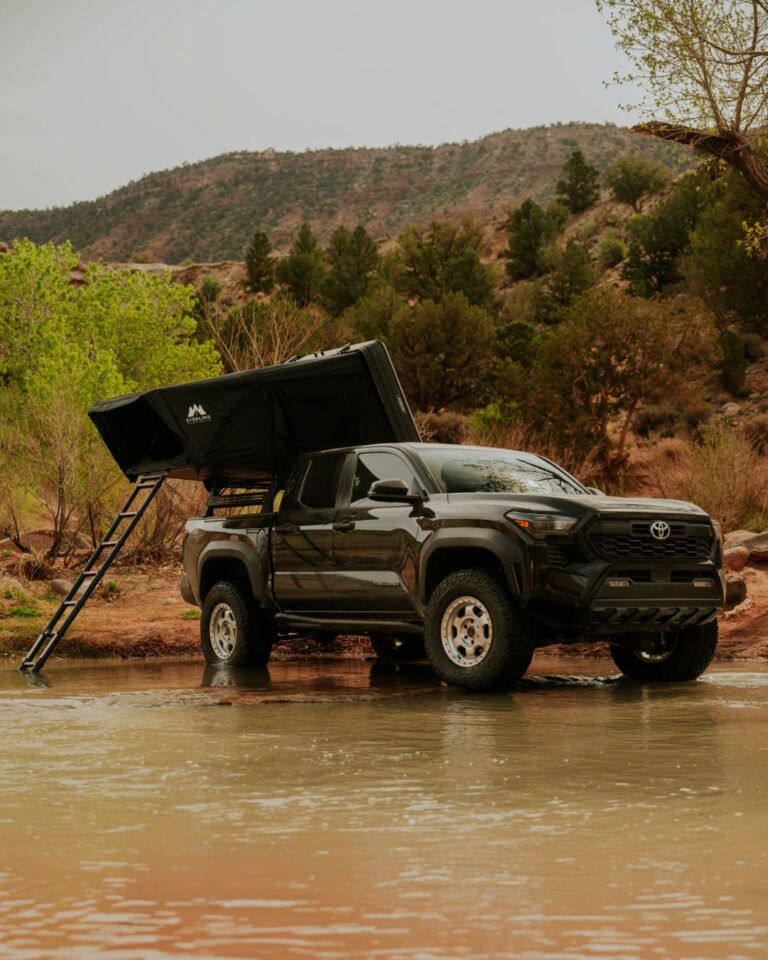
The Sterling Uinta Box Shell goes further, with vertical walls from end to end. Sterling lists a 47-inch open height and a mattress bigger than a queen. Its spec table also puts the weight at 160 pounds. The Uinta Box Shell review lays out the specs.
Fold-Out, Platform and Side-Opening Tents
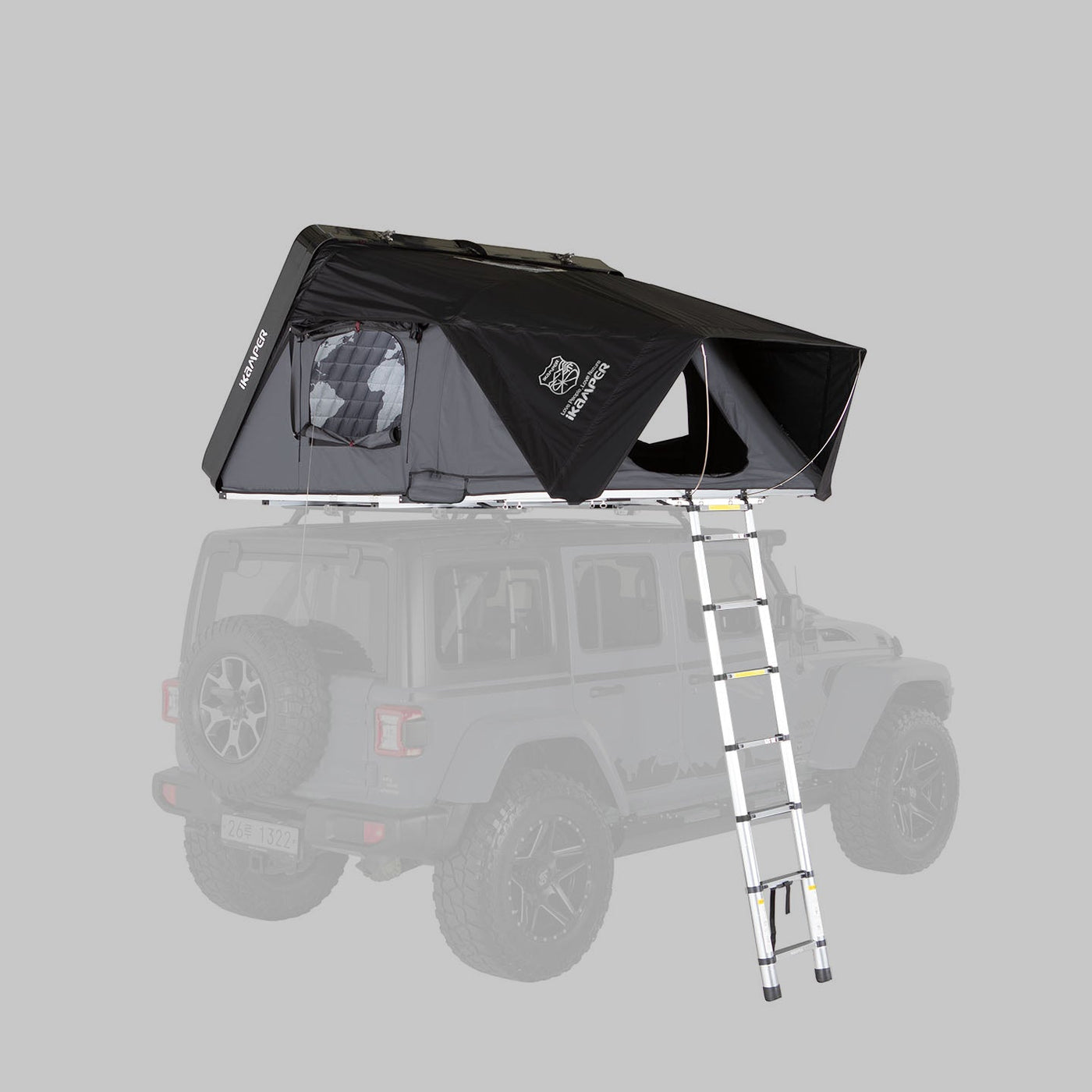
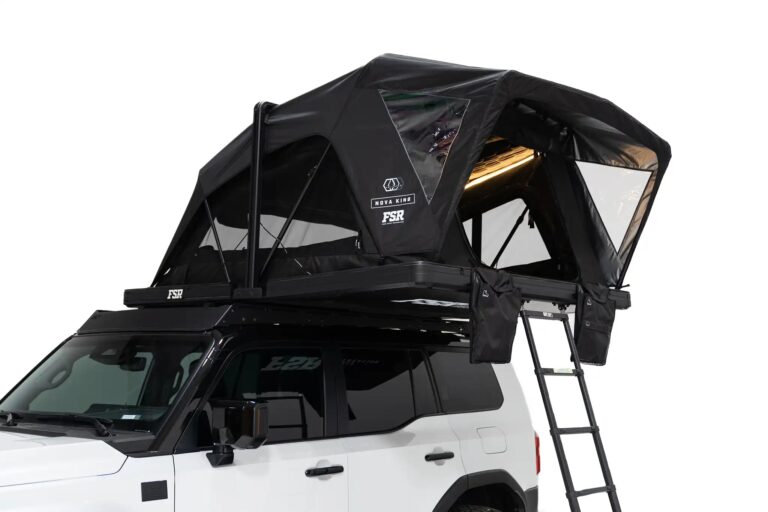
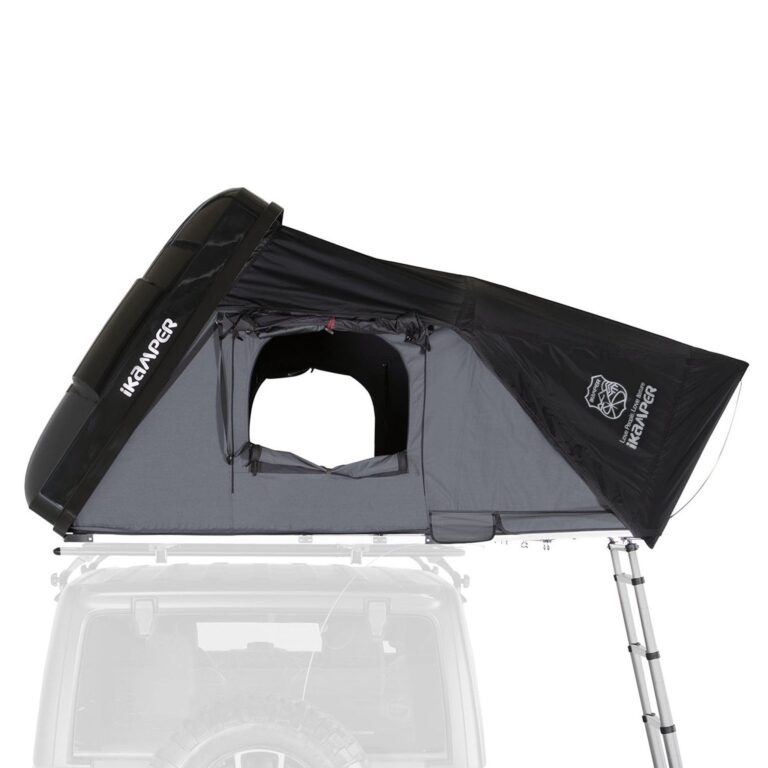
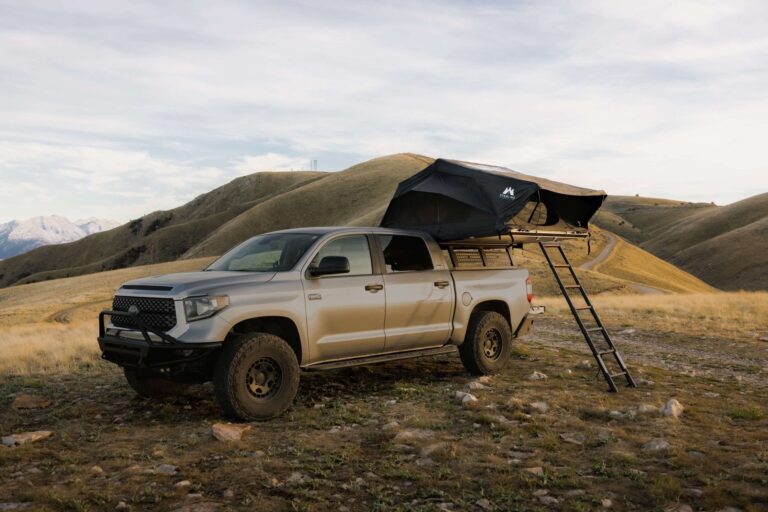
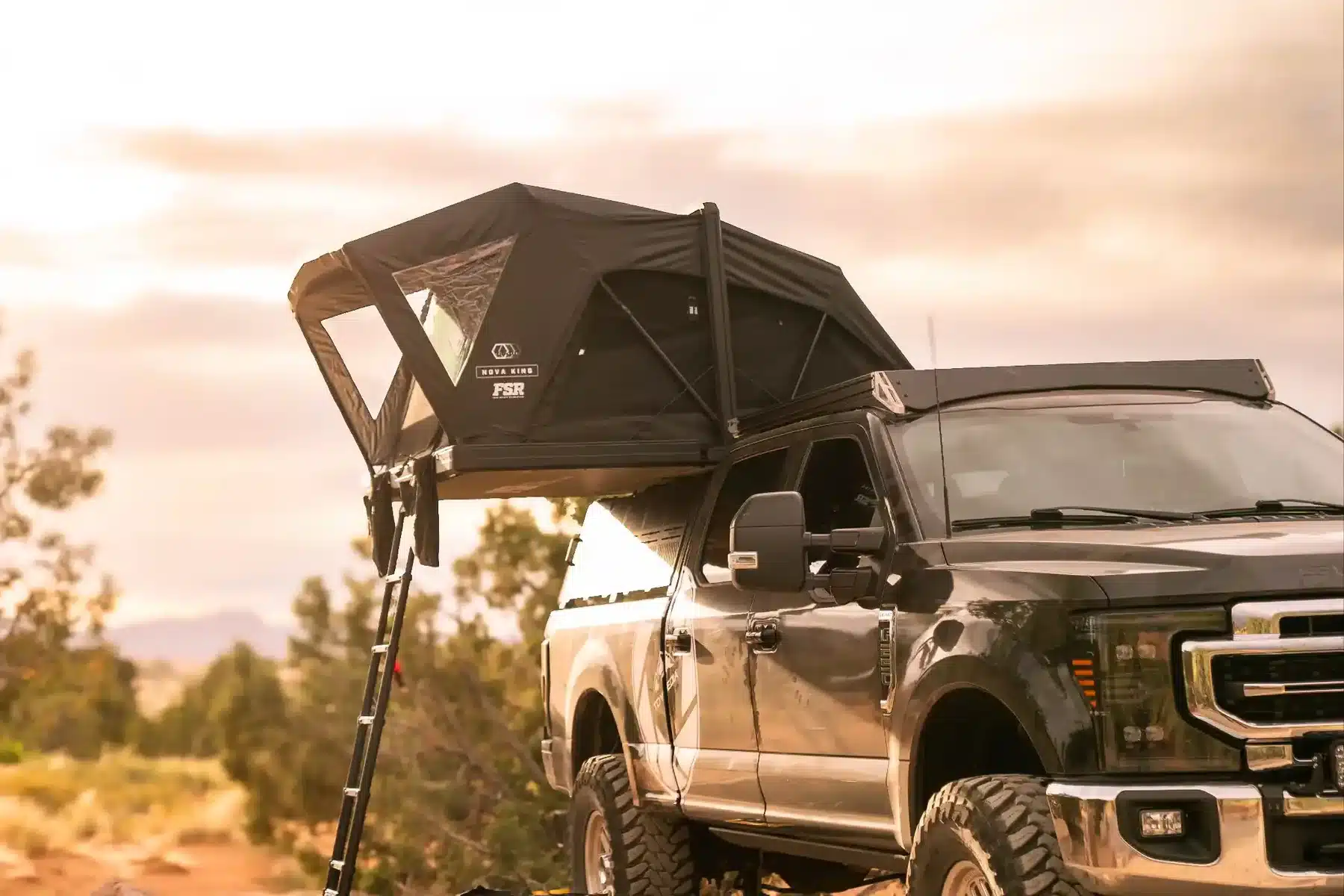
A fold-out hardshell flips a hinged panel over the side, much like a softshell. As a result, a narrow case opens into a family bed. Per iKamper, the Skycamp 3.0 weighs 165 pounds and sleeps 3 to 4 on an 82.75 by 77.25-inch bed. Likewise, the Freespirit Recreation Nova King weighs 162 pounds and widens from 42 inches closed to 72 inches open, per Freespirit. Our iKamper Skycamp 3.0 review and Nova King review cover both.
The Sterling Basin is a platform hybrid. Specifically, Sterling builds the top and bottom from aluminum and uses poly-cotton canvas for the walls. Per Sterling, it weighs 135 pounds and opens to a flat 94.5 by 74.8-inch platform for two. Our Sterling Basin review has the details. At the heavy end, the 23Zero Armadillo Horizon 3 opens from one side. Per 23Zero, it weighs 246 pounds with rails and ladder. Our Horizon vs Everest comparison sets it against a cantilever rival.
Roof Rack Weight Limit and Load Math

Your roof has two ratings. The dynamic rating covers weight while the vehicle moves, and the static rating covers it while parked. Of the two, the dynamic number decides which tent you buy. 23Zero’s roof load guide puts most passenger vehicles at 100 to 165 pounds dynamic. Your rack’s weight counts against the dynamic rating.
Run the math before you shop. Our guide to roof limits by vehicle lists a JL Wrangler at 150 pounds dynamic. The same guide also puts most racks at 30 to 40 pounds. Take 150 pounds, subtract a 35-pound rack, and 115 pounds remain. On pavement, a Wasatch Lite V2 at about 105 pounds fits, while a 150-pound TMON does not. Off-road, the same guide says to stay at 80% of the dynamic rating. A JL then has 120 pounds total, or 85 after the rack, and no tent here fits. Other ratings in our guide: 4Runner 165 pounds, Tacoma 200 and Bronco 150. Always confirm your own figure in the owner’s manual, since ratings vary by model and trim.
Mike says the biggest mistake he sees is a tent on a new vehicle’s factory rack. Specifically, factory racks are built for cargo boxes, skis and bikes. He also flags 200-pound tents on Jeep gutter mounts for fiberglass hardtops, which he says are rated around 150 pounds. His advice: bust out the calculator for everything else you carry, from bumpers and drawers to fridges, batteries, water and awnings.
Static Load in Camp
Static load matters once people climb in. Our guide to a rooftop tent on a truck cap works an example. Two 180-pound adults plus a 150-pound tent put 510 pounds on the mounts. Per our roof limits guide, static ratings typically run 600 to 800 pounds, so a couple usually fits under the parked number. Instead, buyers tend to exceed the roof rack weight limit on the driving side.
The clip below starts in the weight and safety part of the interview, 17 minutes and 24 seconds in.
Mike walks through other tents in the full Spirit of 1876 interview on the 4wdTalk YouTube channel.
Sizing a Rooftop Tent for Your Crew
My crew is four people: my girlfriend, her son, my son and me. For us, sleeping space decides the short list before shell type does. Makers often advertise hard shells for 2 to 3 adults and soft shells for 3 to 4. For this reason, read the bed size in inches, not the people count.
Width per sleeper is the number to check. For example, the TMON’s 45.5-inch bed gives two adults under 23 inches each. Length also matters for tall sleepers. Spirit of 1876 does not recommend the OVS TMON for anyone over 6-foot-2. Most hardshell beds in this guide run about 78 to 83 inches long.
Families have three options. First, a large softshell like the Walkabout 87 gives the most room. Next, a fold-out hardshell like the Skycamp 3.0 trades some space for speed, with a 60-second setup, per iKamper. Finally, the Horizon 3 sleeps 3 adults at 246 pounds, per 23Zero. Run your roof math before you fall for a family bed. Take a 4Runner rated 165 pounds, rack included. The 165-pound Skycamp fills the whole rating before the rack goes on. In contrast, a Tacoma at 200 pounds leaves 35 pounds for the rack. Our rooftop tent size guide walks through the bed math in more detail.

Materials, Cold Weather and Heater Ports
Shell material changes weight and insulation. James Baroud builds the Evasion from 4 layers of fiberglass. iKamper uses a dual-layer fiberglass-reinforced plastic shell on the Skycamp 3.0. Per the makers, the OVS TMON, both Wasatch tents and the Uinta Box Shell use aluminum. A softshell relies on its fabric and cover instead, such as the 600D PVC travel cover on the Walkabout 87.
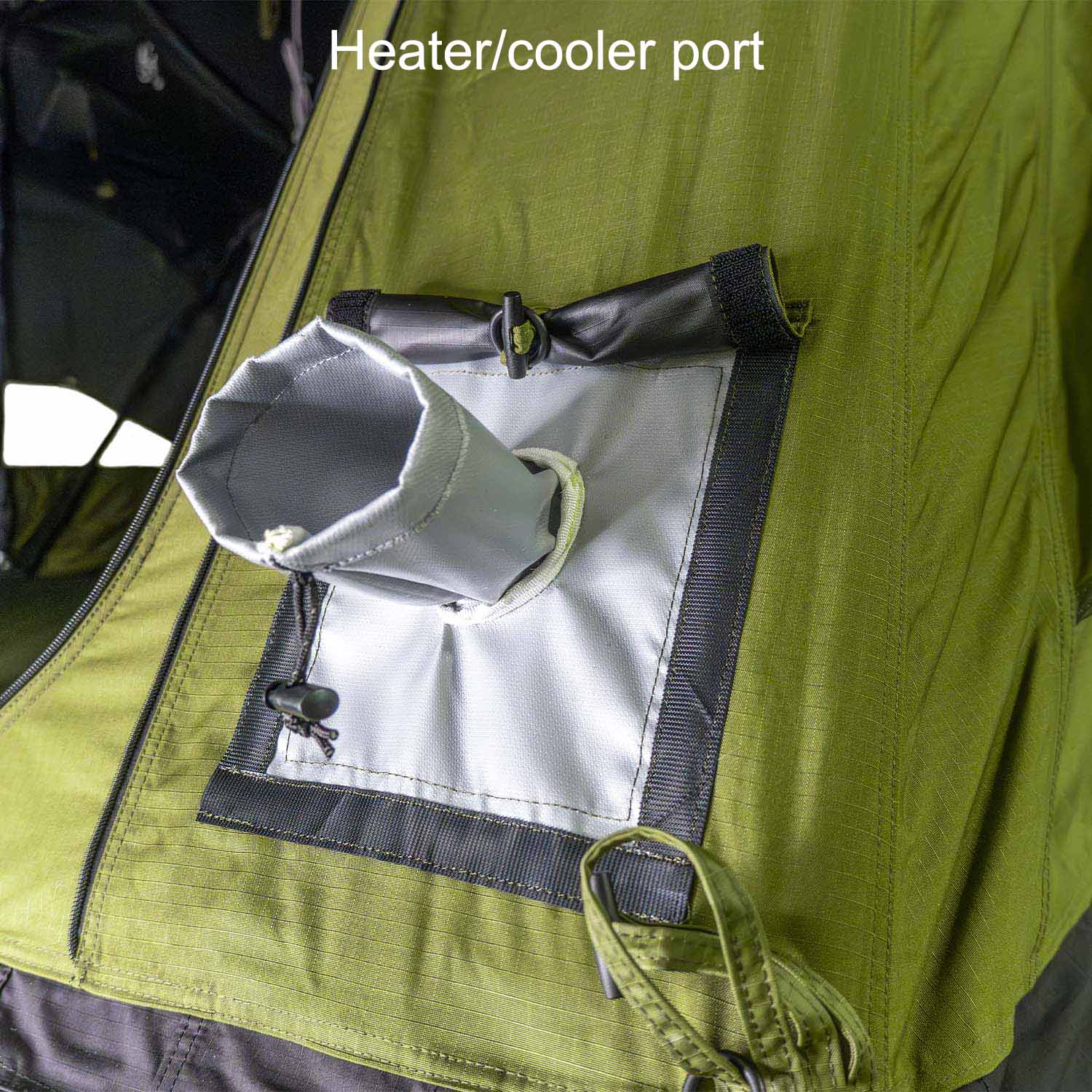
I do a lot of winter camping with diesel and gas heaters. Because of this, a heater port sits near the top of my checklist. Nine tents here list a port: the Walkabout 87, Horizon 3, both Wasatch tents, Uinta Box Shell, Sterling Basin, Kabari SuperFly, OVRLNDR 2P and Nova King. In contrast, the Skycamp 3.0, TMON and Baseline list none, so you route the duct through a door gap. Either way, keep the heater outside, seal the gap around the duct and carry a carbon monoxide alarm.
Condensation and Airflow
Condensation forms in cold weather in every shell type. Our James Baroud Evasion review notes moisture below about 40 degrees Fahrenheit, while Skycamp 3.0 owners report water collecting under the mattress. Look for an anti-condensation mat in the box. Per the makers, five tents here include one: the Wasatch Lite Pro, Uinta Box Shell, Sterling Basin, Kabari SuperFly and Nova King. However, the TMON does not. Also, air the tent out after a wet night. Owners on IH8MUD report mold in tents put away damp.
Living With a Rooftop Tent
Closed height affects your garage and your fuel. For example, Mike says many Colorado garage doors stand about 7 to 7.5 feet tall. Listed closed heights run from 4.7 inches on the Wasatch Lite V2 to 14 inches on the packed Walkabout 87. On fuel, Mike’s customers report a 1 to 2 mpg drop, and up to 3 mpg in the worst cases. Still, owners say mounting height matters as much as tent type. Truck owners with a tent at or below the cab report about 0 to 1 mpg. By contrast, one F-150 owner with a tall tent on a bed rack lost nearly 4.
The ladder and the mattress also shape daily life. Owners mention night bathroom trips and dogs as the ladder’s downside. In addition, many owners replace the stock 2- to 3-inch foam with a thicker pad. Mike adds cheap foam stiffens in the cold. Most owners also leave the tent mounted all year, because removing it takes two strong people or a hoist.
Warranty Fine Print
Warranty terms vary more than specs. James Baroud lists a 3-year warranty, extended to 5 years with registration within 90 days. Featherlyte gives the Baseline a 1-year warranty, and ROAM’s terms for the Vagabond 2.0 exclude weather-related damage, per our reviews. Also, iKamper says mounting anything to the Skycamp shell voids its warranty.
Hardshell and Box Shell Tents at Spirit of 1876
Sponsored content. Produced in partnership with Spirit of 1876.
Rooftop Tent Buying Guide Checklist
Use this rooftop tent buying guide checklist before you buy:
- Decide whether you need your vehicle during the day.
- Find your dynamic roof rating in the owner’s manual, then subtract the rack.
- Check the tent’s listed weight and whether it includes the ladder.
- Measure bed width per sleeper and length for your tallest camper.
- Check mattress thickness and budget for a pad if it runs under 2 inches.
- Check for a heater port and an anti-condensation mat if you camp in the cold.
- Add the closed height and mounting height to your roof height for garage clearance.
- Read the warranty terms for registration rules and exclusions.
Final Thoughts
The right tent starts with your roof, not the brochure. Once you know your dynamic rating and your headcount, the field narrows fast. For a couple on a roof rated near 150 pounds, a wedge under 115 pounds leaves room for a 35-pound rack. The Wasatch Lite V2 is the lightest here. If you want room for your feet and a heater port, consider the X-hinge tents.
For families, the choice comes down to space versus speed. A softshell like the Walkabout 87 gives the biggest bed in this guide. On the other hand, a fold-out hardshell like the Skycamp 3.0 closes far faster. For me, speed is the main reason to buy a hardshell rooftop tent. Owners on the forums we read rank fast setup as the top benefit too.
Spend time on the trade-offs before you spend money. Every tent here asks you to live with roof weight, a ladder and a camp tied to your truck. If those fit how you travel, the remaining choice is shape and size. Mike’s showroom lets you compare those side by side. Our list of the best rooftop tents of 2026 covers more picks.
Rooftop Tent Buying Guide FAQ
How much weight does a roof rack hold for a rooftop tent?
Your vehicle’s dynamic roof rating sets the limit while driving. Per 23Zero’s guide, most passenger vehicles fall between 100 and 165 pounds. The rack’s own weight counts against the rating. Check your owner’s manual for your exact figure.
Is a hardshell or softshell rooftop tent better?
A softshell gives the most sleeping space for the money, per Spirit of 1876 owner Mike. However, he says a hardshell closes in about 30 seconds, compared with about 5 minutes for a softshell. Families often pick softshells, and couples who move camp daily lean toward hardshells.
Does a rooftop tent affect gas mileage?
Yes. Mike’s customers report a 1 to 2 mpg drop, and up to 3 mpg in the worst cases. Mounting height and wind exposure change the number.
Is it safe to use a heater in a rooftop tent?
Owners do it safely with the heater outside and only the warm-air duct running in. Several tents list a heater port, and without one you seal the gap around the duct. Carry a carbon monoxide alarm either way.
Do owners leave a rooftop tent on the vehicle all year?
Most owners do, because removing a tent takes two strong people or a hoist. Check your garage clearance first, and open the tent to air it out after wet trips to prevent mold.
Related Reading
Advertising disclosure: Spirit of 1876 is a 4wdTalk advertising partner. The two product modules above are paid placements. Spirit of 1876 did not pay for, review, or approve this guide before publication. This guide draws on the makers’ published specifications, 4wdTalk’s earlier reviews, owner reports, and a sit-down interview with Mike in Castle Rock, Colorado. 4wdTalk has not slept in these tents or deployed them in the field.