



Quick Facts:
- Topic: Overlanding safety tips for drivers past their first season.
- Best for: Owners of a built rig with a year or more of trips.
- Cold weather: Most LiFePO4 batteries stop charging below a cutoff from 25°F to 41°F, depending on brand.
- Power: The Starlink Mini runs on 12V to 48V DC, with no inverter needed.
- Bear country: Yosemite food storage fines run up to $5,000.
- Carbon monoxide: Non-fire CO poisoning kills more than 400 Americans a year, per the CDC.
- Biggest single fix: A UL 2034 CO alarm next to where you sleep.
12 min read
In This Overlanding Guide
- Overlanding Safety Tips for Year Two
- Overlanding Safety Tips at a Glance
- Mistake 1: Cold Lithium Charging
- Mistake 2: 12V Gear on an Inverter
- Mistake 3: No Full-Size Spare
- Mistake 4: Offline onX Land Layers
- Mistake 5: One Comms Device
- Mistake 6: Food in the Vehicle
- Mistake 7: Heater With No CO Alarm
- Mistake 8: Too Low on Washboard
- Mistake 9: Roof Rating While Moving
- Mistake 10: Old Fire Rules
- Final Thoughts
- Overlanding Safety Tips FAQ
Overlanding Safety Tips for Year Two and Beyond
Your rig has a few trips behind it, and everything works. These overlanding safety tips cover the mistakes experienced overlanders make inside a setup they trust. Our earlier list of overlanding mistakes beginners make dealt with early mods, weight, and tires. This sequel targets the habits a seasoned driver stops questioning. For example, think of a fridge running through an inverter, or an offline map layer nobody has refreshed.
I’ve built my own rigs over the years. I also spend a lot of trail time looking at other people’s builds. The mistakes below are the ones I keep seeing on rigs owned by people who know what they’re doing. None of them appears on a beginner checklist, because each one grows from a setup you trusted last trip.
Each chapter follows the same pattern: what goes wrong, why it happens, and the fix. Several cost real money, such as a $5,000 food storage fine in Yosemite. Others bring real danger, including carbon monoxide from a heater running while you sleep.
Overlanding Safety Tips at a Glance
The table puts all ten overlanding safety tips in one place. Scan it before a trip, then read the chapters where your setup matches the mistake.
| Mistake | What Goes Wrong | The Fix |
|---|---|---|
| 1. Charging lithium below freezing | The BMS blocks charging, or cold charging damages cells. | Use a self-heating battery. |
| 2. 12V gear on an inverter | Idle draw and conversion loss drain the battery. | Run 12V devices from DC outlets. |
| 3. No full-size spare | A compact spare caps speed and strains a 4WD driveline. | Carry a matching full-size spare. |
| 4. Trusting onX land layers offline | Land data updates every 1 to 2 years. | Refresh downloads and carry the MVUM. |
| 5. One comms device | Each device covers one job. | Layer SOS, Starlink, and GMRS. |
| 6. Food in the vehicle | Bears break into cars, and fines reach $5,000. | Use lockers or certified containers. |
| 7. Heater with no CO alarm | CO kills some sleepers before symptoms show. | Mount a UL 2034 alarm. |
| 8. Too low on washboard | Heat builds and beads unseat. | Run gravel pressures and slow down. |
| 9. Ignoring the roof’s moving limit | A tent alone outweighs some factory roof limits. | Use the lowest rating in the chain. |
| 10. Old fire rules | Stage 2 bans fires even in campgrounds. | Check the local order every trip. |
Mistake 1: Charging Lithium Batteries Below Freezing
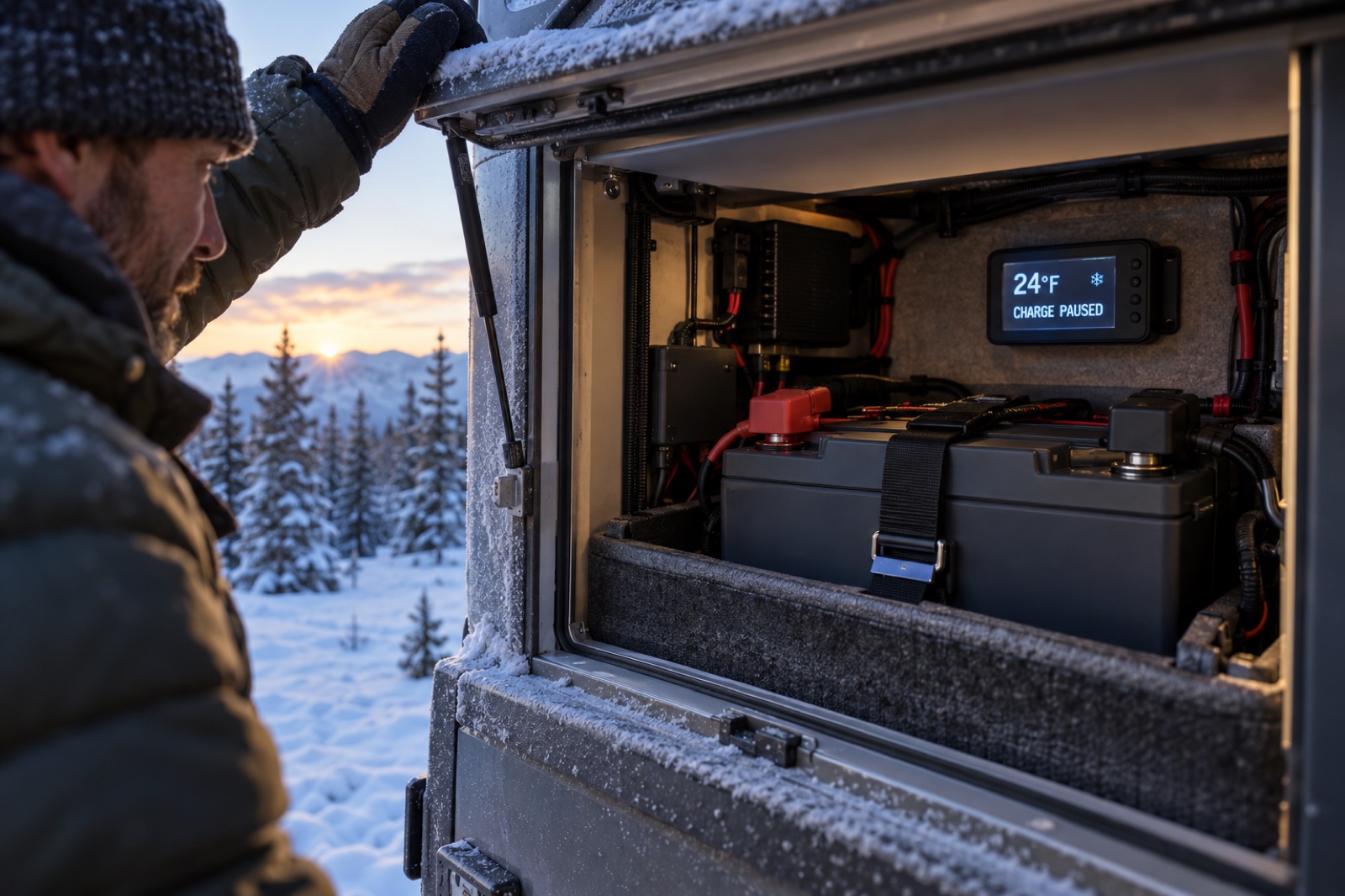
LiFePO4 batteries handle cold discharge well, but most refuse a charge near freezing. The cutoff also differs by brand. Battle Born’s BMS pauses charging below 25°F, while Renogy and LiTime block it below 32°F. Victron lists a 41°F minimum charging temperature for its Lithium Smart batteries. As a result, a battery rated to discharge at -4°F still turns away solar current on a cold morning.
Charging frozen cells with no protection is worse than no charge at all. According to Renogy, cold charging plates lithium onto the anode and grows dendrites. Those dendrites risk puncturing the separator. Renogy links plating to internal short circuits and calls the damage irreversible. Cold also trims usable capacity, since Victron rates its Lithium Smart batteries at about 80% capacity at 32°F.
A self-heating battery solves this, as does a battery with low-temperature charge protection inside an insulated box. For instance, Renogy’s DuoHeat pads switch on at 41°F and off at 50°F. In other words, the battery warms itself before it charges. If you’re replacing a battery before winter, the table below compares heated and cold-protected 12V 100Ah LiFePO4 batteries.
| Top Pick | Best Compact | Best Cold-Protected | |
|---|---|---|---|
| Product | TOP PICK LiTime Group 24 Self-Heating |  Renogy DuoHeat Mini |  LiTime Group 27 Low-Temp |
| Rating | ★★★★★ 4.7 655 ratings | ★★★★☆ 4.0 10 ratings | ★★★★☆ 4.6 570 ratings |
| Cold protection | Self-heating | Self-heating | Low-temp cutoff only |
| Weight | 21 lb | 21.4 lb | 22.9 lb |
| Group size | Group 24 | Group 22NF | Group 27 |
| Price | $409.99 as of Oct 21, 5:59 pm | $352.99 as of Oct 21, 7:37 pm | $355.99 as of Oct 21, 7:37 pm |
| Check Price → | Check Price → | Check Price → |
Mistake 2: Running 12V Gear Through an Inverter
Plugging a Starlink Mini or a fridge into an inverter wastes power you paid for. Specifically, Victron’s Phoenix 12V inverters list peak efficiency between 87% and 92%. Even at peak, 8% to 13% of the energy turns into heat. The same inverters also draw 4.2W to 12W with nothing plugged in. Over 24 hours, a 12W idle draw burns 288 watt-hours. The same 288 watt-hours runs a Starlink Mini for about 7 to 11 hours.
Most of this gear never needed AC in the first place. Starlink’s spec sheet lists the Mini at 12V to 48V DC input with a 60W rating. It also runs from a 100W USB-C PD source. Similarly, Dometic’s CFX3 35 fridge takes 12V or 24V DC directly and ships with a DC cable. Running either one through an inverter converts DC to AC, then back to DC inside the power supply.
I’ve tested a lot of portable power stations for 4wdTalk. For a fridge or a Starlink Mini, the 12V outlets are the first ports I’d point you to. Our breakdown of Starlink Mini power consumption walks through the wiring options, including a 12V barrel cable and USB-C PD. Therefore, switch the inverter off unless a device has no DC option.
Mistake 3: Running Without a Full-Size Spare
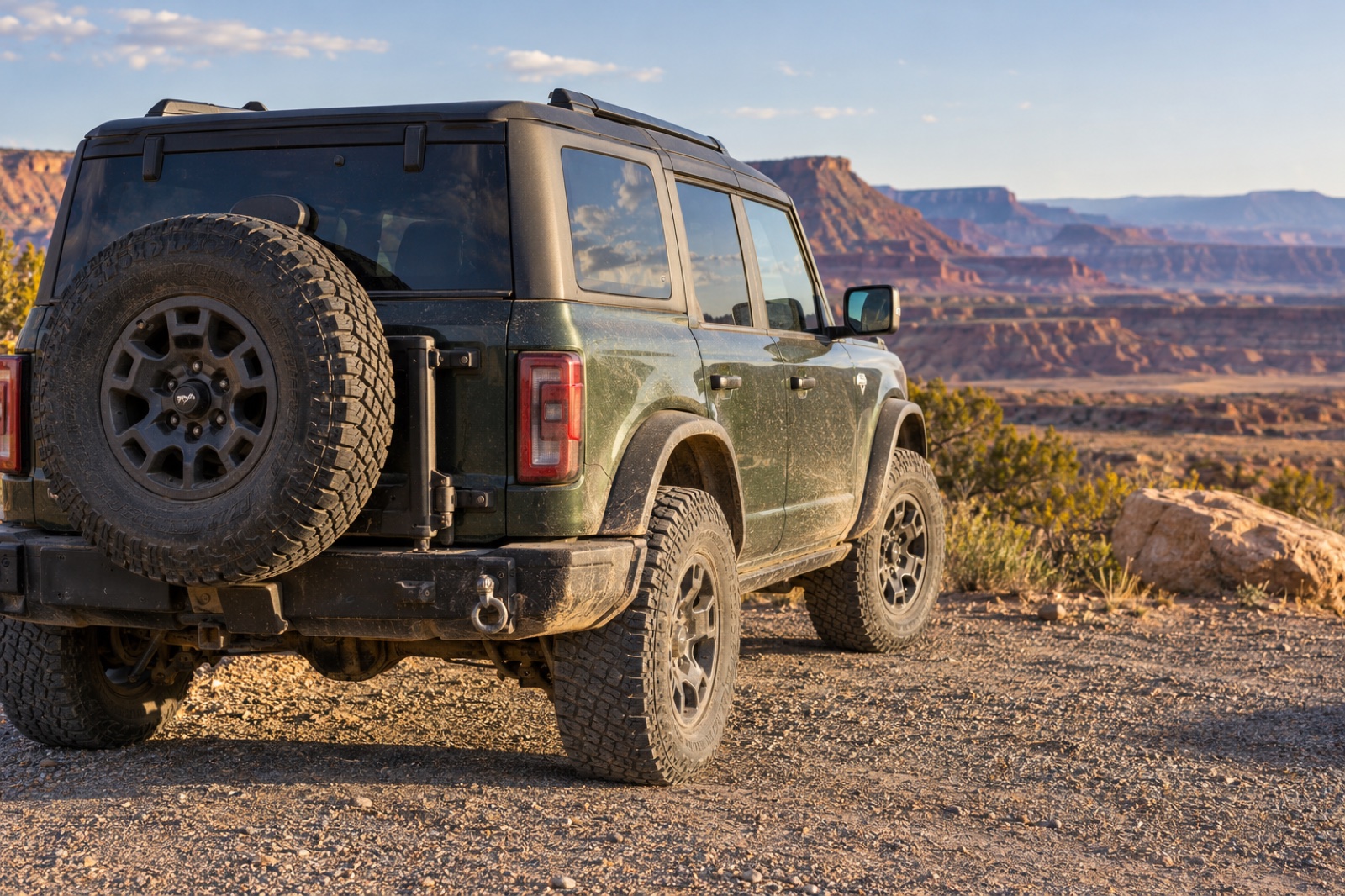
Upsized tires turn the factory spare into a liability, and a compact spare is worse. Tire Rack limits temporary spares to 50 mph. It also says to remove one as soon as you repair or replace the flat. On a driven wheel, a compact spare forces the driveline to make up the difference in revolutions per mile. Tire Rack says this adds heat and wear, especially on 4WD and AWD vehicles.
Diameter matters even with a full-size spare. On a 4WD vehicle, a 1/8-inch difference in overall diameter equals about 4 revolutions per mile, according to Tire Rack. Over time, the mismatch strains differentials and couplings. For example, a factory spare still under the bed after a move to 33-inch tires no longer matches.
Experienced drivers also lean on a plug kit, which handles tread punctures but not sidewall cuts. Instead of betting a trip on a plug, carry a matching full-size spare. Then work it into a five-tire rotation, so the spare wears at the same rate as the other four. For remote trips, few overlanding safety tips pay off faster.
Mistake 4: Trusting onX Private Land Layers Offline
onX Offroad is a strong trail app, but its land layer is a reference, not the law. The onX Offroad help center says private and government land data updates every 1 to 2 years. Timing depends on how current each county keeps its records. In addition, onX puts typical boundary accuracy within 20 feet and says its satellite imagery averages 4 years old.
Offline mode freezes whatever you downloaded. Because an offline area holds the data from the day you saved it, last spring’s download misses every update since. However, the Forest Service treats its Motor Vehicle Use Map (MVUM) as the legal record. Any route missing from the MVUM is off limits to motor vehicles. BLM California also restricts vehicles to designated routes outside open OHV areas.
Handle this before you lose signal. First, delete and re-download your offline areas. Next, save the MVUM for each national forest on your route, and keep a paper map in the door pocket. When the app and the MVUM disagree, follow the MVUM.
Mistake 5: Relying on One Comms Device
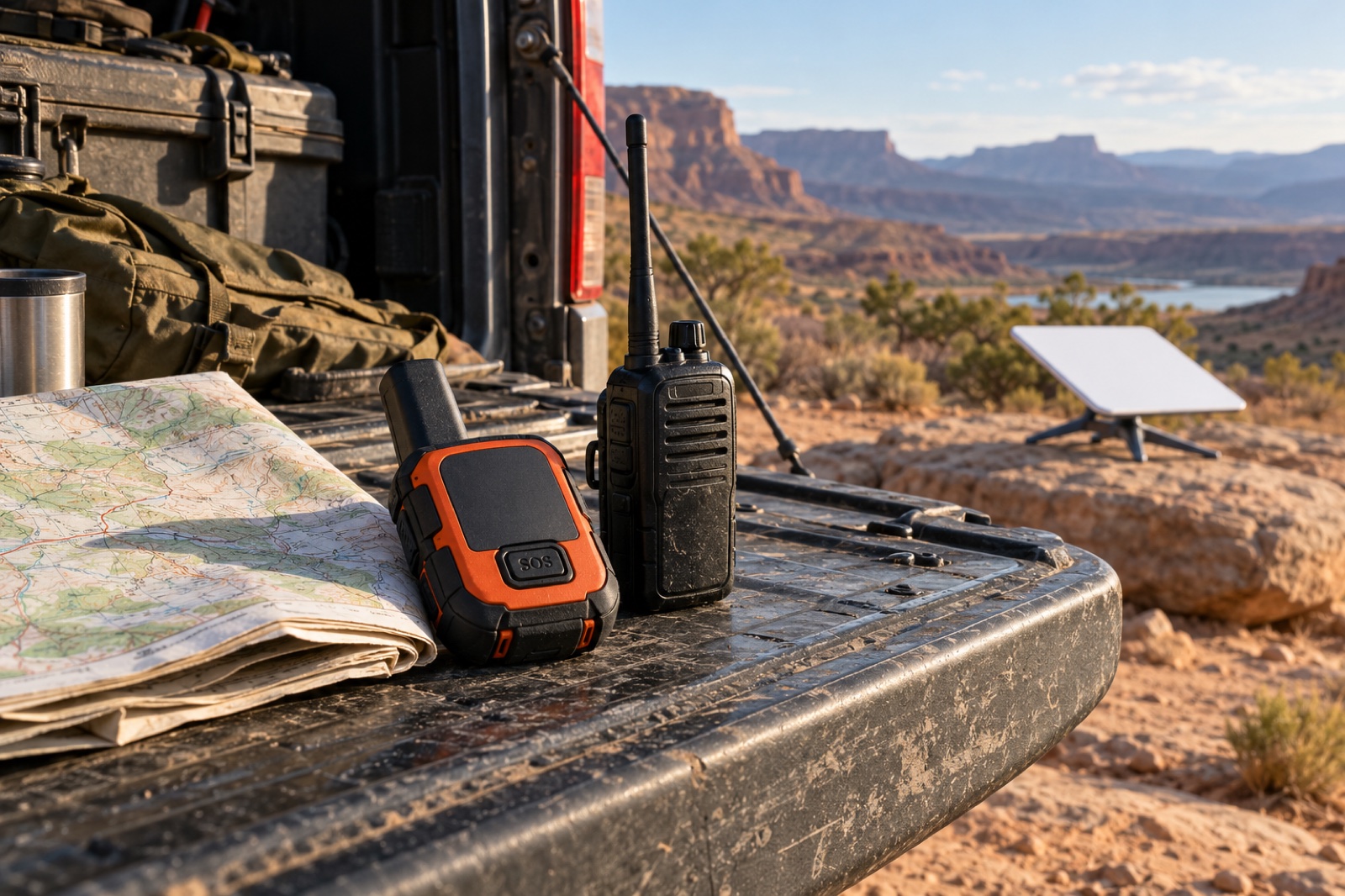
Once a Starlink Mini rides along, a separate SOS device starts to feel redundant. It isn’t. Each comms device covers one job, and no single device covers every emergency. A Starlink Mini gives you full internet for weather, calls, and maps. However, Starlink says trees and terrain cause outages, and the Mini averages 25W to 40W. By contrast, a Garmin inReach sends SOS to Garmin Response, a 24/7 coordination center, though it needs an active plan. Finally, GMRS radios handle rig-to-rig talk. The FCC license costs $35, lasts 10 years, and covers your family.
Your phone adds a fourth layer. T-Mobile’s T-Satellite sends texts, including texts to 911, through Starlink satellites. It costs $10 a month unless your plan includes it. Likewise, iPhone 14 and later include Apple’s Emergency SOS via satellite free for 2 years after activation. Both need open sky, and T-Mobile says tree cover and canyons degrade service.
Of all the overlanding safety tips in this list, layering comms gives you the most ways out. Here is the setup I’d recommend. Keep an inReach on your body for SOS, a Starlink Mini on the rig for data and calls, and GMRS for the group. As of October 2026, Starlink’s Roam 100GB plan runs $55 a month. Also, the Mini runs straight from 12V, as covered in Mistake 2. Our guide to satellite communicator vs radio breaks down which device handles which job.
Mistake 6: Leaving Food in the Vehicle in Bear Country
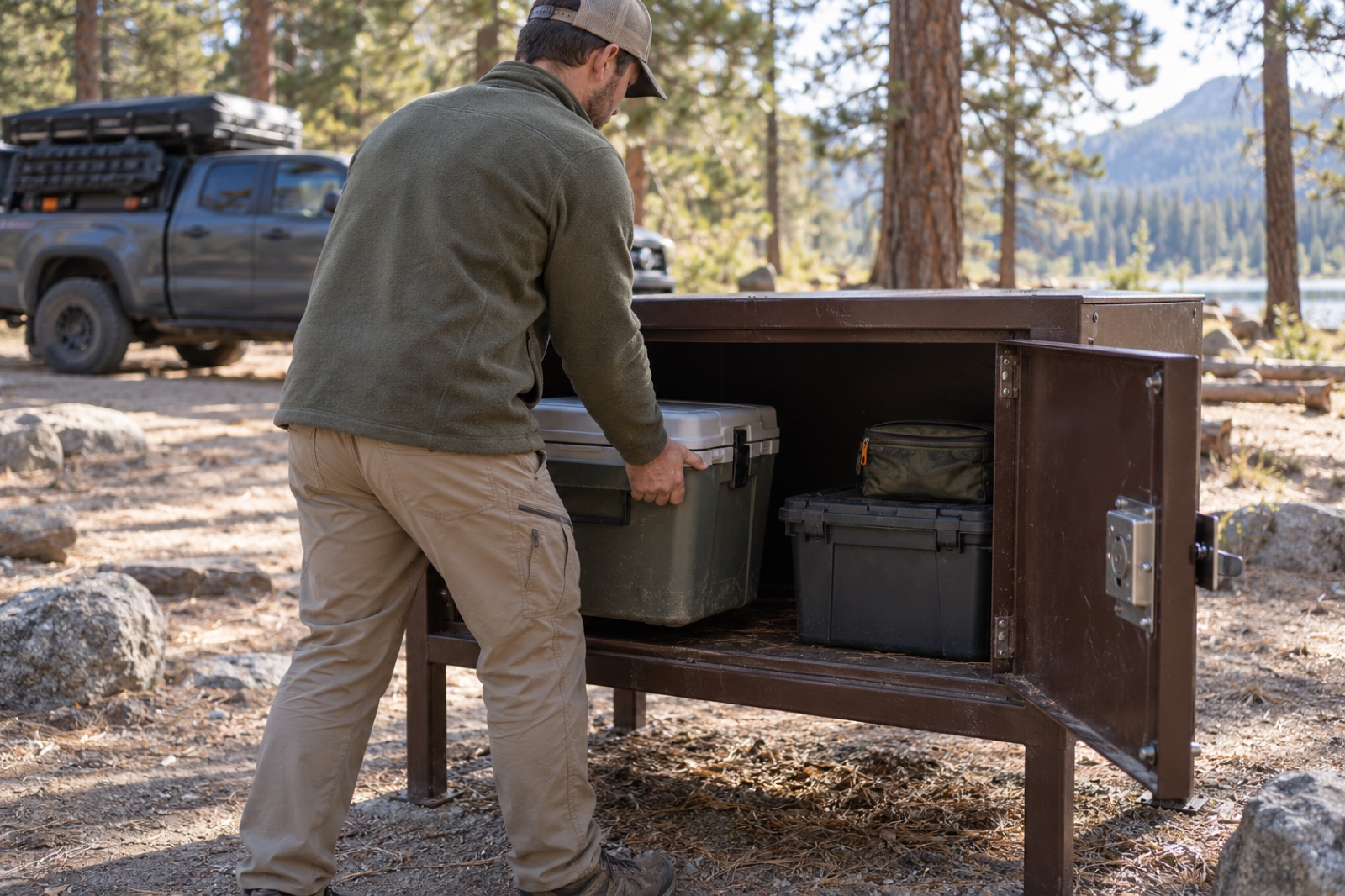
A locked truck doesn’t count as bear storage everywhere, and a rooftop tent or pop-up camper never does. Yosemite lets you leave food in a car only in daylight, out of sight, with windows closed. After dark, the food has to come out. The park never allows food in a pickup bed. In addition, Yosemite bans food storage in pop-up or tent trailers and other soft-sided campers.
The penalties are steep. Yosemite violations bring fines up to $5,000, impoundment of your food or car, or removal from your campsite. Grand Teton goes further, requiring every scented item in a bear locker or locked hard-sided vehicle, day and night. Its list includes coolers, stoves, toiletries, and sunscreen. Even a cooler sold as bear-resistant needs locking, because the IGBC says an unlocked cooler isn’t bear-resistant.
Rules shift from park to park, so habit trips people up more than ignorance does. Before each trip, read the food storage page for the exact park or forest. Then store everything scented in a bear locker or a certified container with the latches closed. Finally, cook away from where you sleep. Distance between kitchen and bed belongs in any set of overlanding safety tips for bear country.
Mistake 7: Running a Heater Without a Carbon Monoxide Detector
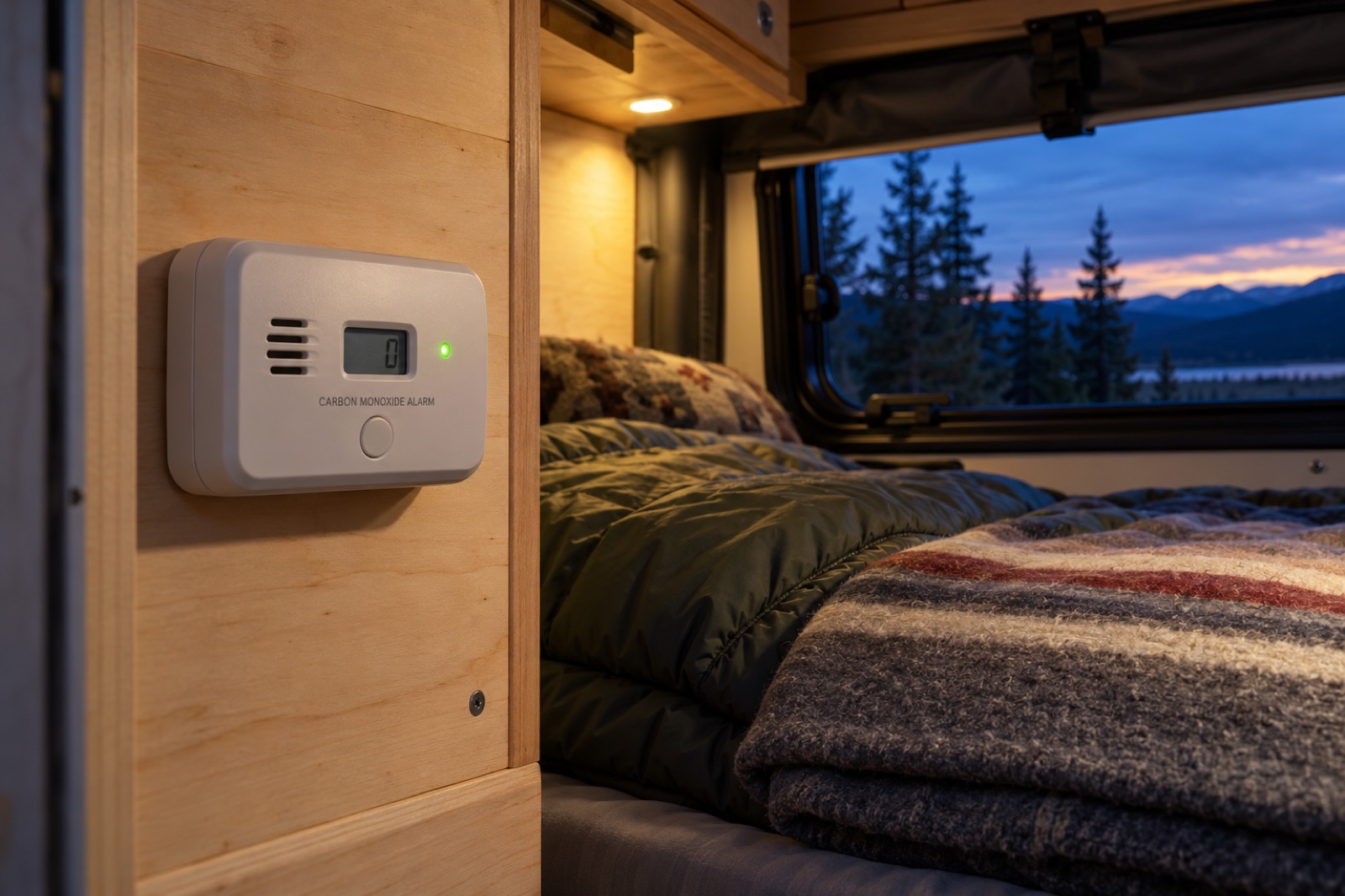
Safety note: Carbon monoxide has no smell. If anyone wakes with a headache, dizziness, or nausea while a heater runs, shut the heater off. Then open the tent or cab and get everyone into fresh air.
According to the CDC, non-fire carbon monoxide poisoning kills more than 400 Americans a year. It also sends more than 100,000 people to emergency rooms. The CDC warns sleeping people sometimes die before they feel any symptoms. As a result, an overnight heater in a tent, rooftop tent, or truck cap needs an alarm most of all.
Seasoned campers tend to trust the safety features they paid for. However, the oxygen depletion sensor on a Buddy heater reacts to low oxygen. It doesn’t replace a CO alarm. The MH9BX Buddy manual also says in capital letters to never run the heater while you sleep. Diesel heaters carry a different risk. For example, Webasto’s install manual requires the exhaust to exit only outside. A leak or a badly placed outlet sends fumes back into the space.
Mount a battery-powered carbon monoxide detector listed to UL 2034 near where you sleep. The CPSC helped develop the UL 2034 standard. Put this alarm at the top of your list of overlanding safety tips, because it guards against a hazard you won’t feel.
Mistake 8: Airing Down Too Far on Washboard
Rock or sand pressures on a washboard road cook tires. Cooper’s tire pressure guide warns corrugated roads build heat fast because the tire flexes over every ripple. Worse, heat in the belts isn’t always detectable by touch. Cooper also says the risk of pushing a tire off the rim rises below about 20 psi.
BFGoodrich gives no universal number, but it warns of bead unseating and rim damage from too little pressure. For comparison, Cooper puts fast, smooth gravel at 28 to 34 psi and slow, rough gravel at 26 to 32 psi. Its sand range starts lower, at 18 psi. In other words, washboard calls for a modest drop plus lower speed. Cooper also ties the two together: any drop in pressure needs a drop in speed.
Airing Back Up Before Pavement
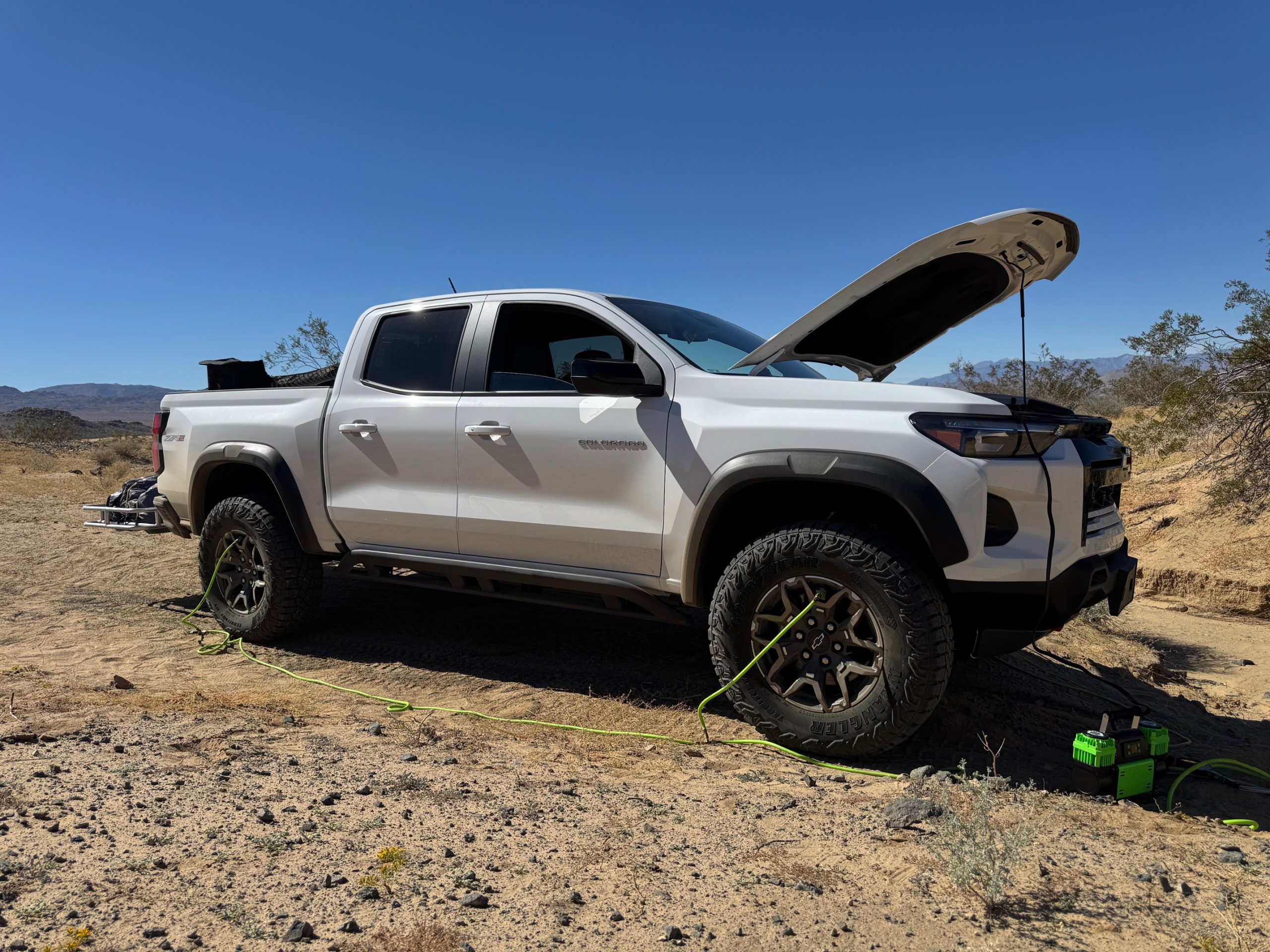
Airing back up is the other half of the job, since BFGoodrich says to reinflate before pavement. I’ve run a MORRFlate TenSix compressor for the better part of four or five years. I also spent a couple of months testing the MORRFlate Air Hub this fall. MORRFlate rates the TenSix at 10.6 CFM at 0 psi and 6.5 CFM at 30 psi. Our guide to driving on washboard roads covers pressure and speed in more depth. If a slow compressor tempts you to skip the air-up stop, the TenSix below is the one I’d look at first.

MORRFlate TenSix PSI Pro 12 Volt Air Compressor Heavy Duty, Off Road 4x4 | 10.6 CFM 150 PSI, Auto Stop Offroad Tire Inflator, Dual Cylinder Portable Air Compressor, 12V Overlanding Truck, Carry Bag
A dual-cylinder 12V compressor with an auto stop, built to air up a full set of tires after the trail.
- 10.6 CFM at 0 psi and 6.5 CFM at 30 psi
- Auto mode shuts off at the pressure you set
- 80% duty cycle at 0 psi
- Stainless outlet hose, purge valve and thermal cutoff
- 3-year warranty
- Peaks near 90 amps and runs near 50 amps, so it needs a solid 12V source
- Single-tire fills do not show its full speed without the 4-tire kit
Mistake 9: Ignoring Your Roof’s Dynamic Load Rating
Racks and roofs carry two ratings, and the lower one rules while you drive. Rhino-Rack explains the static rating applies to a parked vehicle. The dynamic rating applies on the move, and it runs lower. Rhino-Rack’s field data also shows roof loads run far higher off-road than on pavement.
Now run the math on a popular tent. iKamper lists the Skycamp 3.0 Mini at 125 lb. It also asks for a dynamic load rating of at least 125 lb from your roof and rack. By comparison, Jeep’s 2025 Gladiator manual caps roof load at 100 lb including crossbars. Likewise, a Toyota 4Runner owner’s manual caps it at 120 lb. In both cases, the tent alone tops the factory limit before the rack or any gear goes up.
I drive a Gladiator and a Colorado ZR2. Since I pack more gear than most people, my trucks usually run loaded. Whatever you drive, use the lowest rating in the chain: vehicle roof, rack, or tent requirement. Roof math rarely shows up in lists of overlanding safety tips, yet the fix is easy. A bed rack or truck cap moves the weight off the roof. Our guide to static vs. dynamic weight ratings on truck caps runs the numbers.
Mistake 10: Assuming Last Trip’s Fire Restrictions Still Apply
Fire restrictions change through the season and differ by forest. As a result, the rule you followed in June tells you little about October. For example, Stage 1 on the San Juan National Forest bans campfires outside permanent rings at developed sites. Stoves with a shut-off valve stay legal. Stage 2 goes further and bans all fires, even in developed campgrounds. It also bans driving off established roads, trails, or parking areas.
Stove clearance rules vary too. San Juan requires 3 feet from anything flammable, while Inyo and Rogue River-Siskiyou require 5 feet. Under a federal fire order, penalties reach a $5,000 fine for an individual, plus up to six months in jail. The Rogue River-Siskiyou Stage 2 order lists both.
Closer to home, the trails I drive around Big Bear, Monache Meadows, and Anza-Borrego all sit in California. On BLM land there, stoves and lanterns with shut-off valves need a valid California Campfire Permit. The permit is free. Even with a permit, Inyo’s Stage 1 order bans dispersed campfires. Check the forest or BLM district order the morning you leave, and carry the permit in your glovebox. No item on this list of overlanding safety tips changes more often between trips.
Final Thoughts
Every mistake on this list comes from experience, not inexperience. You bought good gear, it worked, and the habit stuck. So these overlanding safety tips ask you to question the setup you already trust.
If you fix only three things this season, make them these. Get a UL 2034 carbon monoxide alarm, a matching full-size spare, and a dedicated SOS device alongside your Starlink. Those three cover the highest stakes: your sleep, your drivetrain, and your way out. Next, turn off the inverter and check your battery’s cold-charge cutoff before the first freeze.
I’d rather see experienced overlanders spend an evening on these fixes than another weekend shopping for the next mod. If you’re newer to the hobby, start with the beginner list linked at the top. Then come back here after your first season. Your rig earned your trust on past trips. Spend one evening making sure it still deserves it.
Overlanding Safety Tips FAQ
Is It Safe to Charge Lithium Batteries Below Freezing?
No, unless the battery has a heater or warms itself first. Most LiFePO4 makers block charging below a cutoff from 25°F to 41°F, depending on brand. Renogy calls the damage from charging frozen cells irreversible, so a self-heating battery is the safer pick for winter trips.
Do You Need a Full-Size Spare for Overlanding?
Yes, if you drive far from tire shops. Tire Rack limits compact spares to 50 mph and warns they strain 4WD and AWD drivelines. A matching full-size spare keeps all four corners at the same diameter.
What Is the Difference Between Static and Dynamic Roof Load Ratings?
The static rating applies when the vehicle sits parked, and the dynamic rating applies while it moves. Your rack, tent, and gear must stay under the lower dynamic number on the road. Once you park and climb into a rooftop tent, the static rating covers the people inside.
Is It Safe to Keep Food in Your Truck When Overlanding in Bear Country?
Only where local rules allow it, and never in a soft-sided camper, rooftop tent, or truck bed. Yosemite allows food in a closed car only during daylight and fines violations up to $5,000. Grand Teton requires scented items in a bear locker or a locked hard-sided vehicle day and night.
Is Starlink Enough for Overlanding Emergencies?
Not on its own. Starlink needs open sky and steady power, while a Garmin inReach sends SOS to a 24/7 response center. Carry both, plus GMRS for talking to other rigs.
What Tire Pressure Should You Run on Washboard Roads When Overlanding?
Treat washboard like gravel. Cooper’s published guide suggests 28 to 34 psi for fast, smooth gravel. For slow, rough gravel, it suggests 26 to 32 psi. Slow down whenever you lower pressure, because washboard builds tire heat fast. Then air back up before pavement.