


Quick Facts:
- Topic: Choosing an auxiliary fuel tank or a replacement tank for a truck or SUV.
- Tank types: Replacement, auxiliary transfer, spare tire and in-bed.
- Capacity examples: 12 gallons added (Titan Trail Trekker II) to 33 gallons total (Long Range America Tacoma replacement).
- List prices: $399 for the Titan Trail Trekker II, $2,795 for the Long Range America tanks covered here.
- Install time: 5 hours for the Tacoma replacement, 9 hours for the Gladiator auxiliary tank, per Long Range America.
- Fuel weight: Gasoline weighs about 6 pounds per gallon.
- California: Long Range America does not ship tanks to California.
- Best for: Overlanders who want range without roof-mounted fuel cans.
8 min read
In This Guide
- Overview: What an Auxiliary Fuel Tank Gives You
- Why Jerry Cans Fall Short on Long Routes
- Tank Types at a Glance
- How an Auxiliary Fuel Tank Works
- Replacement Fuel Tank vs. Auxiliary Fuel Tank
- Spare Tire and In-Bed Tanks for Jeeps and Diesel Trucks
- What a Bigger Tank Costs in Weight, Money and Install Time
- Final Thoughts
- Frequently Asked Questions
Overview: What an Auxiliary Fuel Tank Gives You
An auxiliary fuel tank gives your truck or SUV a second reservoir, so you stop strapping five-gallon cans to the roof. On the LRA design, the tank sits low on the frame, and you move fuel with a dash switch instead of a spout. Still, a tank is one of several ways to add range, and each one costs a different amount in money, weight and install time. The short version: a replacement tank suits a Tacoma, a spare tire tank suits a Jeep JL, and a 17-gallon tank suits a Gladiator.
Tanks fall into four types. A replacement tank swaps out the factory tank, while a transfer tank sits beside it and feeds it. Titan Fuel Tanks also sells spare tire and in-bed systems for diesel pickups. For example, Long Range America (LRA) lists a 33-gallon replacement for the 4×4 2005 to 2023 Tacoma, which holds 21 gallons from the factory.
I owned a Jeep Gladiator, so the 17-gallon auxiliary tank LRA sells for it stood out to me. It lifts the truck from 22 gallons to 39 without a single container in the bed.
This guide compares the tank types, then covers weight, cost, install time and state law. Specifically, the tank figures come from the makers’ own product pages, and prices are list prices, which change.
Why Jerry Cans Fall Short on Long Routes
Five gallons of gasoline weigh about 30 pounds before you count the container. Four cans add 120 pounds to a roof rack or bed rail. This raises the center of gravity of a rig built to flex on rocks. Fuel also vents and smells, so the cans live outside the cab and collect trail dust.
Cans still earn a spot as backup. Our fuel range planning guide covers range math, weight and the rules for carrying cans. However, a long range fuel tank bolted low to the vehicle is a better home for your main fuel supply.
If you keep a backup, three options are worth a look. They are the Wavian steel NATO fuel container, which holds about 5 gallons, the RotopaX 4-gallon gasoline pack and the RotopaX 2-gallon gasoline pack. Check each listing for mounting hardware and fit, since your rack or bed setup decides what works.
Backup fuel containers mentioned in this guide


Tank Types at a Glance
The table lists four products, with the maker’s list price for each.
| Tank type | Example | Capacity | List price |
|---|---|---|---|
| Replacement | LRA Toyota Tacoma, 2005 to 2023 | 33 gallons (21 from the factory) | $2,795 |
| Auxiliary transfer | LRA Jeep Gladiator JT, 2019 to 2025 | 17 gallons added (39 total) | $2,795 |
| Spare tire transfer | Titan Trail Trekker II for the Jeep JL | 12 gallons | $399 |
| Spare tire diesel system | Titan for 2008 to 2016 Ford F-250, F-350 and F-450 | 30 gallons | $1,699 |
How an Auxiliary Fuel Tank Works
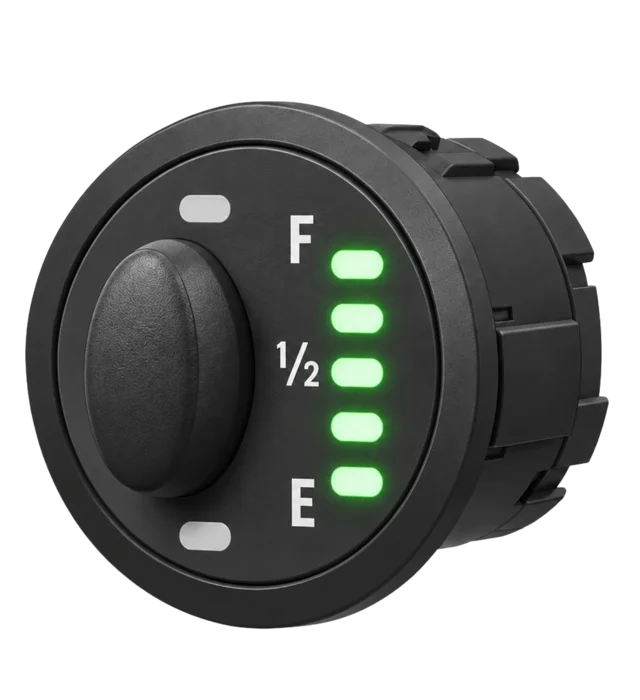
An auxiliary fuel tank feeds your factory tank, not your engine. When you want fuel moved, you press a switch on the dash, and a transfer pump pushes it across. According to LRA, your engine keeps drawing from the factory tank and its sending unit, so the factory fuel system stays intact.
Your dash gauge keeps reading the factory tank. For this reason, the switch carries a small LED gauge, which shows the auxiliary level at a glance.
The LRA Gladiator JT tank is a good example. It sits on the left side of the driveshaft, holds 17 gallons and adds to the 22-gallon factory tank for 39 gallons in total. LRA says it retains factory ground clearance and the factory emissions function.
Fit also comes with conditions. The kit requires an exhaust modification, and it does not fit the EcoDiesel. LRA also warns against covering the exhaust or tank with a skid plate, because covering them risks overheating the tank. If you plan armor, read why skid plates are one of the first mods before you commit.
Replacement Fuel Tank vs. Auxiliary Fuel Tank
A replacement fuel tank takes the place of the factory tank, so you fill it the way you always have. The LRA Tacoma tank, for example, fills through the factory gas door and holds 33 gallons instead of 21.
However, this tank has quirks. The fuel gauge stays accurate, but distance to empty does not reflect the new capacity. LRA says about 7 gallons remain when the low-fuel light comes on. Aftermarket differential skid plates do not fit alongside this tank, so check your underbody armor before you order.
An auxiliary design keeps the factory tank and adds capacity beside it. Installation takes longer, since LRA lists 9 hours for the Gladiator tank against 5 hours for the Tacoma replacement. In exchange, the factory tank and its sending unit stay in place.
Next, do the math before you buy. LRA’s example multiplies extra gallons by your mileage, so 24 extra gallons at 15 mpg add about 360 miles. By the same math, the 12 extra gallons in the Tacoma tank add roughly 180 miles at 15 mpg.
Each extended range fuel tank on the LRA site is built for one fuel type, gas or diesel, so check the listing before you order. The Tacoma long range fuel tank is 2 mm aluminized steel and carries a three-year, unlimited-mile warranty.
Spare Tire and In-Bed Tanks for Jeeps and Diesel Trucks
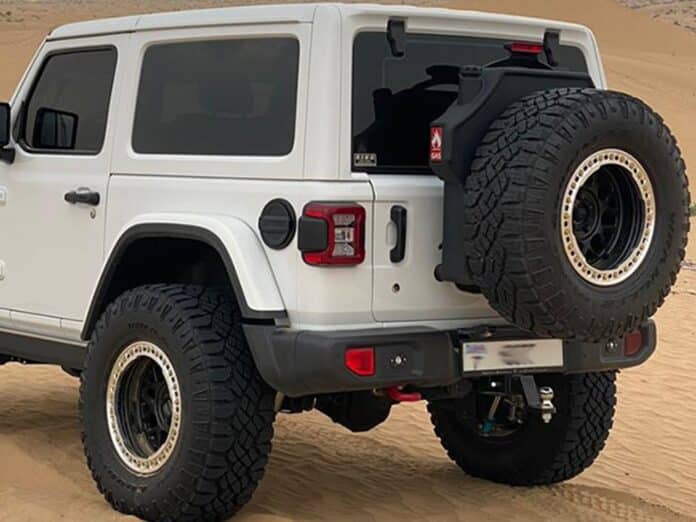
If you drive a Jeep Wrangler JL, Titan offers a cheaper option. The Trail Trekker II mounts on the rear spare tire carrier, holds 12 gallons and lists at $399. Titan says it handles wheels of 15 inches and larger, with tires up to 37 inches.
The tank uses Titan’s military grade cross-linked polymer and carries a lifetime warranty. A shaker siphon rated at 2 gallons per minute ships in the box, and the tank is grounded for safety.
Still, weight is the drawback. Titan states a full tank weighs about 100 pounds, and the company makes you responsible for confirming your carrier mount supports the load. A swing-out carrier already holds a heavy spare, so inspect the hinges first.
In contrast, heavy-duty diesel owners have bigger options. Titan’s spare tire auxiliary system holds 30 gallons and lists at $1,699 for 2008 to 2016 Ford F-250, F-350 and F-450 trucks with Power Stroke engines. Titan says the system keeps the bed open for gear. It also lists in-bed Travel Trekker systems, including a 50-gallon model.
What a Bigger Tank Costs in Weight, Money and Install Time
Fuel adds weight wherever it lives. At about 6 pounds per gallon, 12 extra gallons add roughly 72 pounds and 17 extra gallons add about 100 pounds. Both numbers exclude the tank itself, and both count against your payload. LRA lists its Tacoma tank at 90 pounds empty. Read our overlanding payload guide before you load the rest of the rig.
Price also varies widely. The Trail Trekker II lists at $399 and Titan’s 30-gallon diesel system at $1,699, while both LRA tanks above list at $2,795. Shipping costs extra, because LRA quotes $245 for commercial delivery and $445 to a home.
Also plan for labor. LRA recommends a qualified professional and does not cover damage from improper installation. Its Tacoma tank lists 5 hours of work, and its Gladiator tank lists 9. Therefore, plan on a full day for the Gladiator. The job also includes an exhaust modification.
Beyond cost, check your state before you order. LRA tanks are not CARB certified, so the company will not ship them to California addresses or sell them for California-registered vehicles. Look for emissions certification on any tank you buy elsewhere, and ask your state motor vehicle office whether a second fuel tank needs any paperwork.
Auxiliary Fuel Tank Care and Install Extras
Care matters as well. LRA tells owners not to top off its tanks, because topping off voids the tank warranty. Titan says the Trail Trekker is for temporary storage only, so empty it rather than leave fuel in it for weeks. For fuel left in your main tank, STA-BIL Storage Fuel Stabilizer treats up to 80 gallons per 32-ounce bottle.
Two small items round out an install. A buyer on the LRA Tacoma page advises keeping silicone dielectric grease on hand for the tank’s top O-ring and electrical plugs. Permatex sells a dielectric tune-up grease of this type. If you add a spare tire tank, a spare shaker siphon hose such as the Wadoy gives you a backup way to move fuel. Match its hose size to your tank first.
Install and care gear mentioned in this guide


Final Thoughts
Tacoma drivers who want an extended range fuel tank get the simplest setup from a replacement tank. You keep one tank, one filler and one gauge, and you gain 12 gallons. Although the price is steep, LRA lists 5 hours for the install, against 9 hours for its Gladiator tank.
Wrangler JL owners with a rear carrier have a cheaper choice. At $399, the Trail Trekker II costs about one-seventh as much as an LRA tank. However, you move fuel with a siphon and carry about 100 pounds on the carrier. For a Gladiator, the truck I used to own, I would look hard at the 17-gallon LRA tank. It takes the truck to 39 gallons and keeps the factory tank.
Meanwhile, heavy-duty diesel owners should start with Titan. Its spare tire system adds 30 gallons under the truck, and its in-bed Travel Trekker systems add 40 or 50 gallons of diesel storage.
Whatever you pick, plan the trip around the new range. Our desert overlanding route guide shows how to build fuel stops into a multi-day plan. A bigger tank gives you flexibility, not a reason to skip the math.
Frequently Asked Questions
How much does an auxiliary fuel tank cost?
Prices on the makers’ own sites run from $399 for the Titan Trail Trekker II to $1,699 for Titan’s 30-gallon diesel spare tire system. The LRA tanks covered here list at $2,795, plus freight. Installation costs extra.
Does an auxiliary fuel tank feed the engine directly?
No. According to LRA, the auxiliary tank feeds your factory tank when you press a switch, and the engine keeps drawing from the factory tank.
Which is easier to install, a replacement or an auxiliary tank?
LRA lists 5 hours for its Tacoma replacement tank and 9 hours for its Gladiator auxiliary tank. Both jobs call for a qualified professional, according to LRA.
Will a bigger tank change my fuel gauge or distance to empty?
On the LRA Tacoma tank, the fuel gauge stays accurate, but distance to empty does not reflect the new capacity. About 7 gallons remain when the low-fuel light comes on.
Do LRA tanks ship to California?
No. LRA tanks are not CARB certified, so LRA does not ship them to California addresses or sell them to California residents or for California-registered vehicles.
How much range do 12 extra gallons add?
Multiply the extra gallons by your mileage. At 15 mpg, 12 extra gallons add about 180 miles, while real range depends on your load, terrain, tires and driving.
Related Reading