


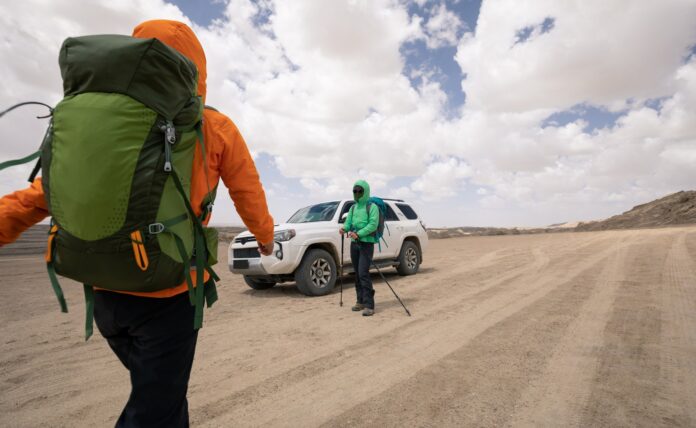
Quick Facts:
- Topic: A get home bag built from the gear already in your truck.
- Goal: Walk up to 15 miles to safety from a disabled truck.
- Pace: 3 miles per hour, or about 5 hours of walking.
- Water: 2 liters in the bag, plus a filter and water purification tablets.
- Target weight: 15 pounds or less, fully loaded.
- Skill level: Beginner.
- Best for: Truck, SUV, and overland owners who drive remote roads.
8 min read
In This Guide
Get Home Bag Overview: Walking Out Starts With What You Already Carry
The engine will not start, the signal is gone, and the nearest pavement is miles away. A get home bag is the pack you grab when you must walk to safety. You carry it on your back, so every ounce matters.
I have owned five Jeeps and now drive a 2025 Chevy Colorado ZR2. From those years of ownership, I believe the best get home bag starts inside the truck, not in the store aisle. Most rigs already hold a headlamp, tools, spare layers, and a first aid kit. Therefore, you need a sorting plan more than a shopping list.
This guide covers what to move from your truck emergency kit. It also covers when to walk and the few additions worth buying. The planning math is simple. At a steady 3 miles per hour, a 15-mile walk takes five hours of movement before any breaks.
Raid Your Truck First: Move Existing Gear Into Your Get Home Bag
Start by dumping your truck emergency kit on the tailgate. Sort every item into three piles: moves to the bag, stays with the truck, and does not matter. Heavy recovery gear such as shackles, straps, and boards stays behind, because none of it helps you walk.
Move these items into the bag:
- A headlamp or flashlight, plus a spare set of batteries.
- Work or recovery gloves, which protect your hands and add warmth.
- A lithium jump pack with a USB port, which doubles as a phone charger once the engine will not start.
- A rain shell, a warm hat, and a dry pair of wool socks.
- One multi-tool or knife you trust.
After the sort, four gaps show up in most trucks. They are a headlamp with real battery life, a way to treat water, a pack-sized first aid kit, and a satellite messenger. The first three are cheap and light. These picks fill them: the Black Diamond Spot 400 headlamp, the Sawyer Squeeze water filter, and the Adventure Medical Kits Ultralight/Watertight .7 first aid kit.
Fill the gaps in your truck kit


Sawyer Products SP129 Squeeze Water Filtration System w/Two 32-Oz S…

Adventure Medical Kits Ultralight/Watertight Medical Kit .7
Our guide to gear sorted by how often you use it makes the sort easier, because it already groups the emergency tier. Anything you reach for every drive stays in the cab.
My TOPS Knives Silent Hero goes with me every time I head into the field, and it is my favorite knife. For a get home bag, any fixed blade or sturdy folder you trust does the job. Choose one tool and skip the rest.
Stay With the Truck or Walk Out? Make the Call Early
Packing the bag is the easy part. Deciding when to use it is harder. Your default is to stay. A truck is easier for rescuers to spot than a person on foot, and it gives you shelter. Official winter storm guidance from Ready.gov says the same: if you are trapped in your car, stay inside. Our stay-with-the-rig emergency kit covers the stay-put plan.
Walk out only when staying is the worse option. Four situations qualify:
- Nobody knows your route, and you have no signal or messenger.
- Your water will run out before help is likely to arrive.
- The truck sits in danger from fire, flood, or rising water.
- You see a road, house, or trailhead within a short, safe walk.
Safety note: Do not walk in a whiteout or in midday desert heat. In heat, rest in the shade beside the truck until dusk or dawn. During a whiteout, stay put until it clears. Carry extra water in hot weather, and turn back to the truck if you lose the track.
Make the call within the first hour, while you still have daylight, charge, and energy. Waiting until dark or until your phone dies narrows every option. Deciding early does not mean leaving early. In a storm, the call is usually to stay. If help sits more than a day’s walk away, stay with the truck.
Water, Light, and Power for the Walk
Water Weighs More Than You Think
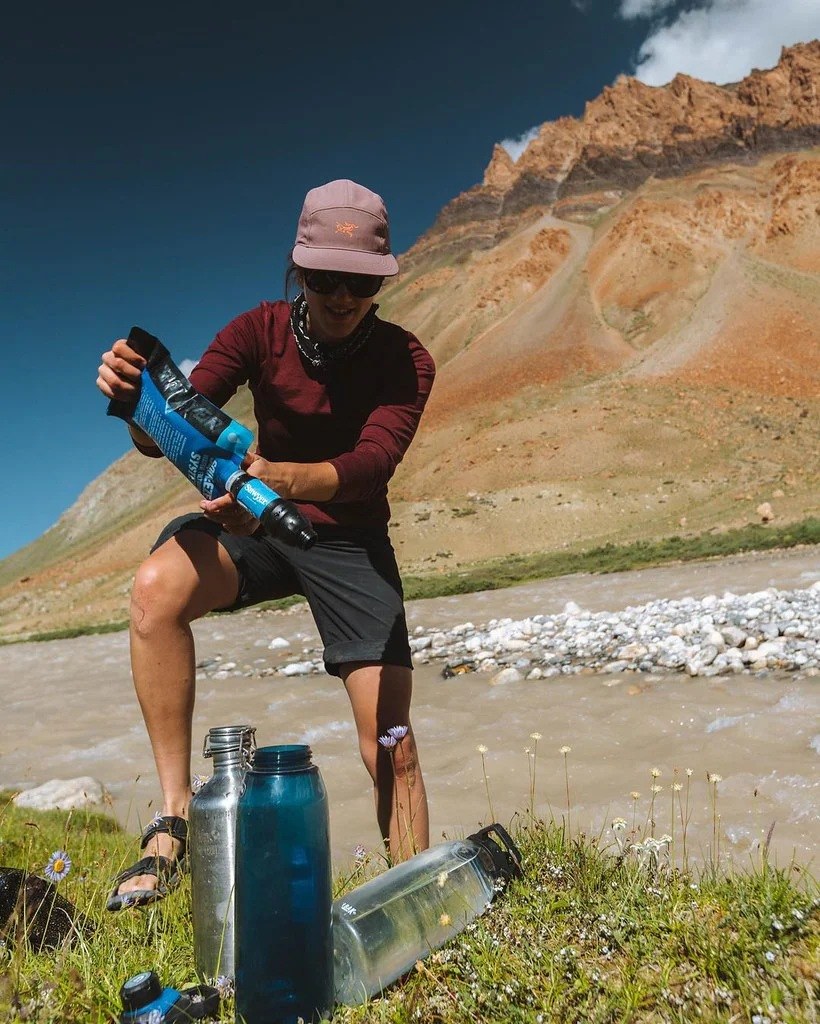
Ready.gov advises storing at least one gallon of water per person per day for home emergencies. A gallon weighs about 8 pounds, so no one carries it for 15 miles. Instead, carry 2 liters, which weigh about 4.4 pounds, and plan to refill on the way. Check your map for water before the trip. If no source exists on the route, stay with the truck. In hot weather, add a third liter, since sweat losses climb with heat and effort.
A hollow-fiber filter like the Sawyer Squeeze stops bacteria and protozoa, not viruses. Therefore, pair it with water purification tablets, which weigh almost nothing, to cover viruses. To locate a source in desert and mountain country, follow our guide to finding and purifying water.
Light and Power Keep the Walk Going
A headlamp frees both hands and saves your phone battery. Carry fresh batteries for it, and keep the phone on battery saver. Cold also drains lithium cells quickly, so keep the phone and jump pack inside your jacket during a winter walk.
Boots, Layers, and First Aid: What Keeps You Walking
Footwear decides how far you get. Keep a pair of broken-in hiking shoes or boots in the cab, because new or stiff shoes raise blisters fast. Add moleskin and athletic tape to the bag, next to the wool socks you already moved. Change socks at the first hot spot, and pack two or three energy bars for the long middle of the walk.
Layers matter as much as footwear. Dress for the temperature you expect at night, not the one at noon. The shell, hat, and wool socks from your sort cover the basics. To see the base, insulation, and shell system in detail, read our guide to cold weather layering for off-roaders.
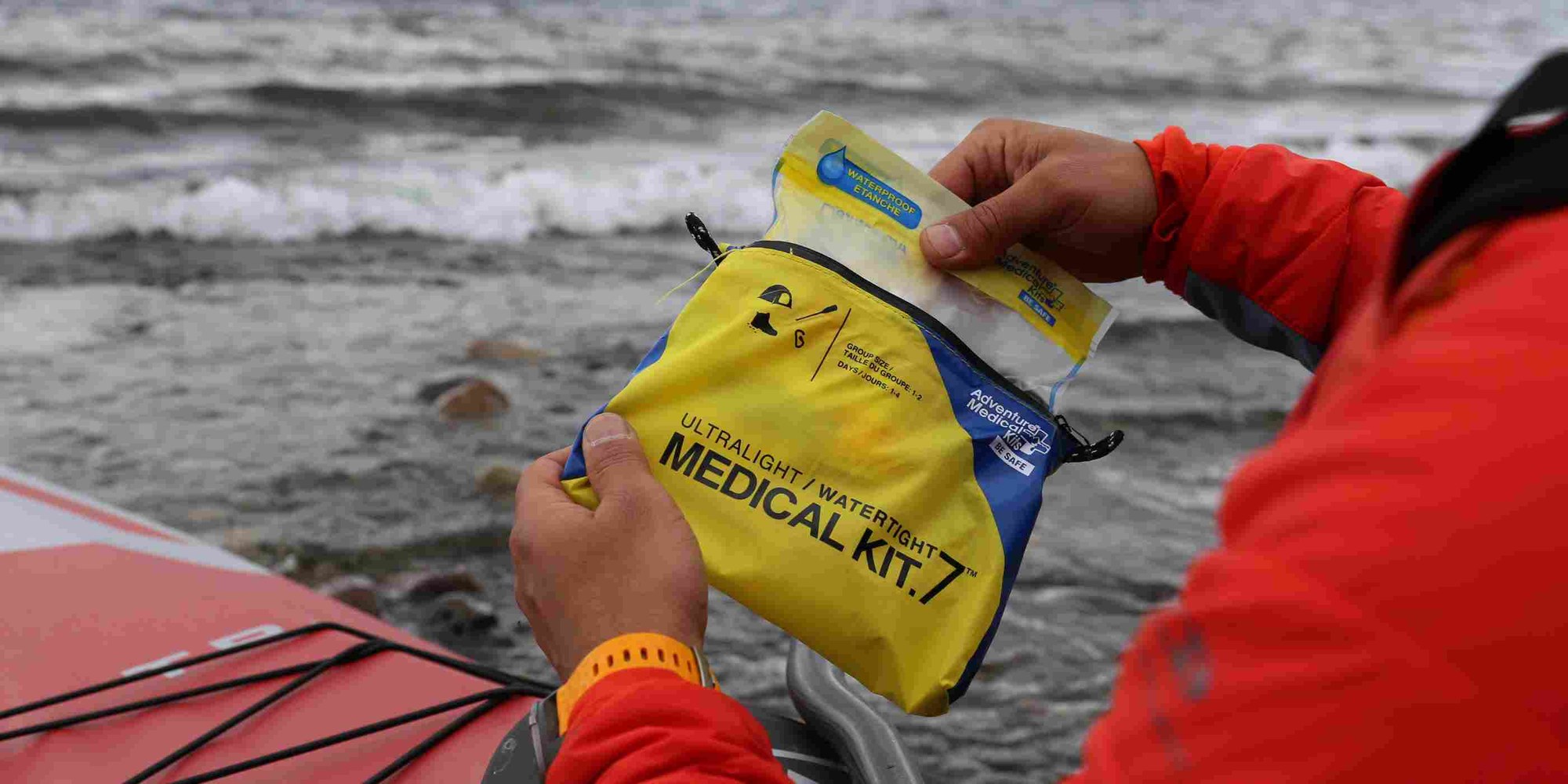
Next, trim your truck first aid kit to pack size. Keep bandages, gauze, tape, blister care, and any medications you take every day. Leave bulky items behind. A small kit such as the Adventure Medical Kits Ultralight/Watertight .7 packs these basics into one waterproof bag.
Call, Navigate, and Leave a Note Before You Walk
Try to call before you walk, and stay put if help is coming. First, check your phone for signal, even a single bar, and send your location by text. Next, use a satellite messenger if you own one. The Garmin inReach Mini 2 sends messages and SOS alerts by satellite, and it requires an active subscription plan. Our comparison of a satellite communicator versus a GMRS radio explains which one fits your trips.
Navigation comes next. Download offline maps before every trip, and keep a paper map and compass in the bag as a backup. Screenshot your route as well. Phones fail, and paper does not need a charge. Share your plan with someone before you leave, not after the breakdown.
Finally, leave a note on the dash. Write your name, the date and time, the direction you are walking, and your destination. Take a photo of the note and send it to a friend. If you sleep out, an emergency bivvy or space blanket holds heat for the night you do not finish the walk.
These three items cover calls, power, and a night out: the Garmin inReach Mini 2, an Anker 10,000mAh power bank, and the SOL Escape Lite bivvy.
Comms, power, and shelter add-ons


Get Home Bag vs. Bug Out Bag: Which One Do You Need?
A bug out bag supports several days away from home, so it carries shelter, food, and extra water. Your get home bag has a narrower job. It moves you from the truck to a known destination in about a day. Consequently, it stays light, at 15 pounds or less, and focused on walking.
Most truck owners need the lighter bag first. It adds little weight to the truck, and it fits in a seat pocket or bed box. A full survival kit with shelter and days of food belongs at home or in a camp setup, not in your daily rig. Wildfire or hurricane country changes the math, because evacuation then starts at home. In those areas, build both bags, and let them share the filter, the headlamp, and the first aid kit.
Store Your Get Home Bag So It Works When You Need It
Heat is the biggest storage problem. The National Weather Service reports vehicle interiors heat up 20 degrees in as little as 10 minutes. Batteries, medications, and plastic bottles suffer in a hot cab. As a result, store the bag on the floor behind the seat, or in a shaded bed box.
Cold is the second storage problem. Lithium cells drain quickly in freezing weather, so a power bank and spare batteries lose charge in a cold cab. In winter, bring them indoors overnight when practical, and keep them inside your jacket on the walk.
Check the bag every season. Swap the batteries, rotate the water and bars, and confirm your shoes still fit. Update the truck emergency kit and any survival kit at the same time, so both stay current.
Final Thoughts
A good get home bag is not a big purchase. It is a plan you build over one evening from gear you already own, plus a few small additions. The plan also steadies you on a bad day, because you know what to grab and where to go.
Start with the sort on your tailgate this weekend. Then fill the gaps, pack the bag, and leave it where you will find it. Whatever your rig, I would rather you carry a light bag you pack than a heavy one you leave at home.
Write this short list on a card and tape it inside the bag: water, filter, tablets, headlamp, first aid, layers, map, power, messenger. Stay with the truck when it is safe, and walk when it is not. Pair this bag with your stay-put kit, and you are ready for both choices. Then head out knowing you have a way home.
Get Home Bag FAQ
What is a get home bag?
A get home bag is a light pack for the walk from a disabled vehicle to safety. It holds water, light, first aid, navigation, and layers for about one day of walking.
What should be in a get home bag?
Pack water and a filter, a headlamp, a first aid kit, a rain shell, spare socks, a paper map, a power source, and a knife or multi-tool. Add any medications you take daily.
What is the difference between a bug out bag and a get home bag?
A bug out bag supports several days away from home. The get home bag covers one day of walking from your truck to a safe destination, so it weighs far less.
How much water should you carry in a get home bag?
Carry about 2 liters, plus a filter and water purification tablets. Water weighs about 8 pounds per gallon, so refilling on the route beats carrying it all.
How many miles should you plan to walk in a day?
Plan around 15 miles on flat ground at 3 miles per hour. Hills, heat, snow, and a heavy pack slow you down, so shorten the plan in rough country.
Related Reading