


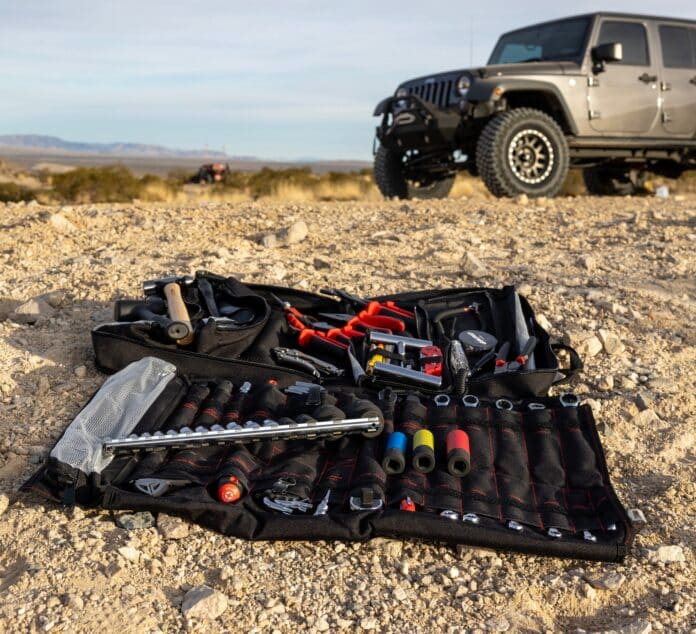
Quick Facts:
- Topic: Building an overland tool kit for trail repairs.
- Skill level: Beginner to intermediate wrench work.
- Everyday drive size: 3/8 inch, with a 1/2-inch bar for big fasteners.
- Metric range to start: 8mm to 22mm sockets and wrenches.
- Kit tiers: Quick fixes, real wrench work, and tow or call for help.
- Spend on: Ratchet, sockets, leverage, tire repair kit and jack.
- Save on: Pliers, screwdrivers and flashlights.
- Best for: Overlanders and off-roaders who drive trucks and SUVs.
9 min read
In This Guide
- Overview: What an Overland Tool Kit Needs to Fix
- Start With What Breaks, Not What Sells
- The Sockets and Wrenches Your Overland Tool Kit Needs
- Specialty Tools Worth the Space
- Fixes, Tapes, and Spares Worth Their Weight
- Pre-Built Kit vs. Building Your Own Overland Tool Kit
- Organize and Test Your Overland Tool Kit
- Final Thoughts
- FAQ
Overview: What an Overland Tool Kit Needs to Fix
A well-planned overland tool kit fixes the breakdowns owners report most and leaves everything else at home. We read owner threads on Reddit and several 4×4 forums. The same repeat offenders show up: flat tires, split hoses, blown fuses and loose hardware. Most of those repairs need a handful of sockets, a few cheap fixers and a good tire kit. Few need a full mechanic’s chest.
Overpacking is a regret owners name often. Owners say tool weight quietly wears on a rig, so they trim their kits after a few trips. However, some owners also warn about cheap tools, because a split socket turns a small repair into a tow. This guide sorts gear by what breaks, then shows where to spend and where to save, with a weight target near 20 lb.
In my view, the rule is simple: spend where a failure strands you, and economize where it only annoys you. Ratchets, sockets, long bars, jacks and tire kits belong in the first group. Screwdrivers, pliers and flashlights belong in the second.
Three tools carry the heaviest jobs: a 3/8-inch socket set, a 1/2-inch breaker bar and a torque wrench. Specifically, the grid below shows one of each. They are the TEKTON 3/8 Inch Drive 6-Point Socket and Ratchet Set, the TEKTON 1/2 Inch Drive x 24 Inch Breaker Bar and the EPAuto 1/2-inch Drive Click Torque Wrench. The next sections explain sizes and what to skip.
Core socket and leverage tools


Start With What Breaks, Not What Sells
Build the kit from failures instead of catalog pages. Owners report the same repairs again and again, so tier your kit by how bad the breakdown gets. For example, a punctured tire needs a plug kit. A failed CV axle needs sockets, leverage and a spare part.
| Tier | Typical failures | What fixes it |
|---|---|---|
| 1. Quick fixes | Punctured tire, loose rack bolts, split hose, blown fuse, dead battery. | Plug kit, compressor, hex keys, zip ties, tape, hose clamps, fuses, jump pack. |
| 2. Real wrench work | Tie rod end, CV axle, u-joint, serpentine belt, starter. | Sockets, leverage bar, torque wrench, pliers and parts for your own rig. |
| 3. Tow or call for help | Transmission failure, differential housing damage, engine damage. | Recovery gear and a way to call for help, not spare parts. |
Tier 3 failures end the trip no matter what you carry, so skip spares for them. Several owners say a spare differential or axle housing is not worth the room. Instead, spend the space on recovery gear and a way to call for help.
Next, audit your own rig. List every fastener size you touch during routine service. Then write the list on tape and stick it to your tool roll. As a result, you carry the sizes you use and skip the rest. For survival gear and first aid, see our overland emergency kit guide, because this article covers the repair side.
The Sockets and Wrenches Your Overland Tool Kit Needs
Start with metric in any off road tool kit. Most modern trucks and SUVs use metric fasteners, and a set covering 8mm to 22mm handles most basic trail repairs. Owners joke everything ends up being a 10mm, so carry extras. Add a deep impact socket for your lug nuts. Sizes vary by vehicle, and owners report 19mm, 21mm and 3/4-inch nuts on trucks.
Choose 3/8-inch drive for everyday work. It packs small and handles most bolts under the hood and along the chassis. Then add a 1/2-inch bar and a few large sockets for lug nuts, axle nuts and suspension bolts. In my view, a 3/8-inch set plus a 1/2-inch bar covers the job for most rigs. Some trail magazine writers name a 1/2-inch ratchet and socket set as the one place to splurge, but most owners use 3/8-inch for daily work and save 1/2-inch for the big fasteners.
The TEKTON 3/8 Inch Drive 6-Point Socket and Ratchet Set covers 6mm to 24mm plus inch sizes. It also includes an 8-inch quick-release ratchet and an 18-inch bar.
Impact Sockets and Inch Sizes
Use impact sockets for lug nuts and axle nuts, because chrome sockets are not rated for impact wrenches. Impact sockets are built for high torque, which suits a long bar. Look up your axle nut size once, since it varies by vehicle and often sits outside a standard set.
Do you need inch sizes too? Late-model trucks run mostly metric, but racks, batteries and trailers often use inch hardware. In a pinch, a 3/4-inch socket fits a 19mm nut because 3/4 inch equals 19.05mm. Otherwise, add one small inch set only if your gear needs it. Finish the core with combination wrenches in the same size range. Also add one adjustable wrench to hold the back side of a nut.
Specialty Tools Worth the Space
Leverage and Torque Tools
A breaker bar loosens lug nuts, axle nuts and seized suspension bolts where a ratchet stalls. The TEKTON 1/2 Inch Drive x 24 Inch Breaker Bar weighs 2.9 lb and has an AISI 4140 steel head. Its pivoting head swings 230 degrees. Owners also carry a short length of pipe as a cheap cheater extension.
Safety note: Pull the bar toward you instead of pushing it, and stand so a slipping socket sends you away from the rig. Keep your knuckles clear of its arc.
Add a click-type torque wrench. The EPAuto 1/2-inch Drive Click Torque Wrench covers 10 to 150 ft-lb. Confirm your lug nut spec in the owner’s manual. Click models need no battery, so they suit the field better than digital ones. Torque lug nuts after any wheel swap, then recheck them at the next stop. Our post-trail inspection checklist covers the rest of your after-run checks.
Consider a cordless impact next. Owners praise a 1/2-inch model for lug nuts and axle nuts. One regrets buying a 3/8-inch tool because it struggles on suspension bolts. Keep the manual bar anyway, because batteries run down.
Tire Repair and Wiring Fixes
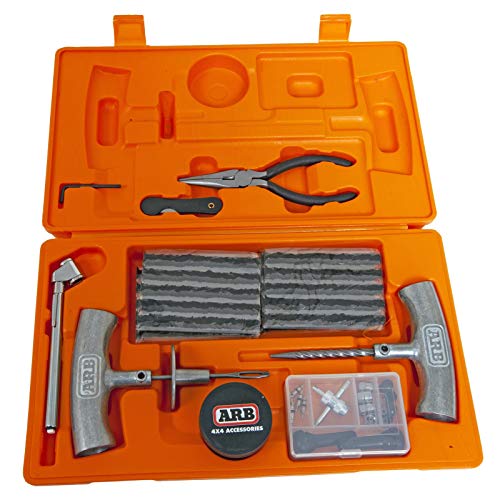
Punctures top most owner lists, so buy a quality tire kit. Look for spare plugs, valve cores and a core tool. Then pair it with a compressor and a jack sized for your tires. Some owners say the factory jack does not always suit a lifted rig on big tires. The ARB 10000011 Speedy Seal 2 Universal Heavy Duty Tire Repair Kit bundles a reamer, needle, valve cores and a gauge. Our guide on how to plug a tire on the trail walks through the steps.
Safety note: A jack lifts a vehicle but does not hold it. Never place any part of your body under a rig supported only by a jack.
Carry a bottle jack rated for your rig’s weight, plus a flat base plate. Soft dirt and sand let a bare jack sink. A plate of plywood or steel, about 12 inches square, spreads the load. Check the jack’s lift range against your axle height before the trip.
For wiring fixes, carry a multimeter, a strip-and-crimp tool and butt connectors. Owners also keep 10 to 14 gauge stranded wire, a few relays and electrical tape.
Fixes, Tapes, and Spares Worth Their Weight
Cheap fixers do more work than the socket set, according to forum owners. Heavy zip ties, Gorilla or duct tape, baling wire, hose clamps and epoxy show up on nearly every list. Metal ties suit hot areas near exhaust parts. In my view, these fixers deserve space before any fancy tool. They hold a rig together until you reach home. For epoxy, the J-B Weld 8265S Original Cold-Weld Steel Reinforced Epoxy is a familiar choice for bonding metal.
Pull your fuse box diagram and carry spare fuses for every rating your rig uses. One owner says a single fuse of each size, roughly a dozen types, is plenty. The JOREST 300Pcs Car Fuse Assortment Kit includes mini, standard and micro blades plus a puller.
Carry only cheap, small parts for the failures which strand your own rig. Common picks include a serpentine belt, its routing diagram and the tensioner socket. Also consider radiator hoses, u-joints and tie rod ends. Add a CV axle only for remote trips. Our list of spare parts for an overlanding trip goes deeper on filters, bearings and fluids.
Three small buys cover many tier 1 quick fixes. Specifically, the grid below collects the JOREST fuse kit, the J-B Weld epoxy and the ARB Speedy Seal 2 tire kit.
Fixers and repair spares



Pre-Built Kit vs. Building Your Own Overland Tool Kit
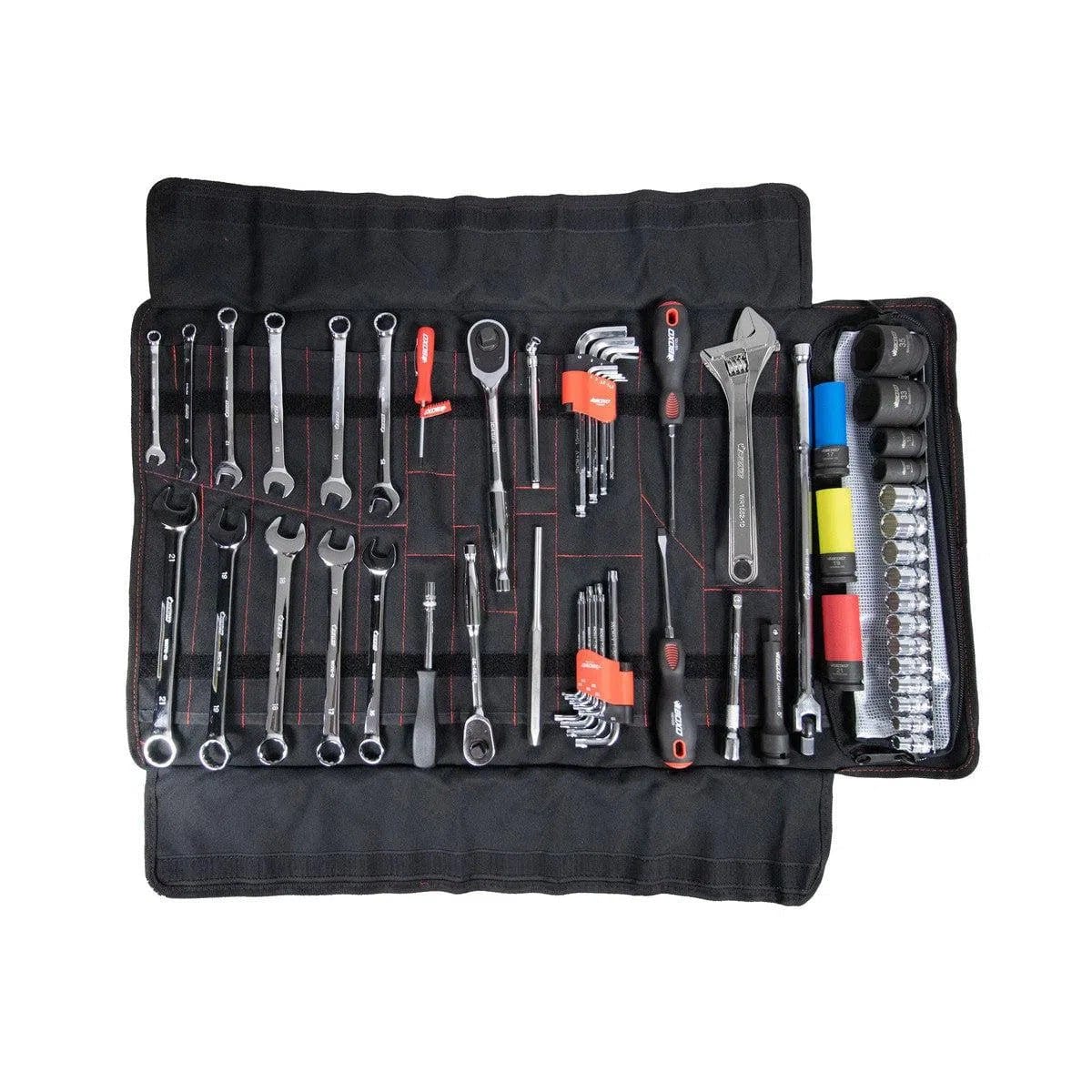
A pre-built bag saves research. The BoxoUSA Off-Road Bag packs 80 pieces: a 60-piece metric tool roll plus five removable pouches in a Cordura nylon bag with MOLLE webbing. It includes 8mm to 19mm wrenches and 3/8-inch sockets, plus 1/2-inch impact sockets and a bar. A tire repair kit and a circuit tester round it out. BoxoUSA backs the tools with a lifetime warranty and lists the bag at $595.
However, the bag is metric only and weighs 34 lb, according to BoxoUSA. One Overland Bound owner calls a tool bag around 20 lb plenty. Building your own often costs less and matches your rig’s fasteners. In exchange, the bag arrives organized and ready to pack.
So who picks which? Buy a pre-built off road tool kit if you want one purchase and a clean layout. Build your own if you know your rig’s sizes and want to stay near 20 lb. Price your build first, then compare it with the bag’s $595. Either way, add the fixers and spares from the last section, because no kit ships with your rig’s belt.
Organize and Test Your Overland Tool Kit
Storage has no single answer. A tool roll keeps wrenches compact and rattle-free, but needs space to unroll. Soft bags pack densely and split weight into smaller loads. Hard cases suit tire kits and fluids, though you should strap a loaded case down.
Then test your off road tool kit before the trip. Pull a wheel in the driveway, swap a belt, and note every missing size. Replace what you used after each run. Tools only help if you know the job. Our off-road packing list shows what else earns space in the truck.
Final Thoughts
Start small and build from your own rig. This week, write down your fastener sizes. Buy a quality ratchet and socket set, a long bar and a tire kit. Then fill the gaps with cheap fixers. This starter kit handles the repairs owners report most.
Add more as your trips get remote. A torque wrench, a cordless impact and a few rig-specific spares turn a tow into a trail repair. However, skip spares for repairs beyond a trail kit, such as transmission failures. Trust your recovery gear and communication instead.
If you want it done fast, the BoxoUSA Off-Road Bag is a fair shortcut. A rig with a known size list usually gets a lighter kit for less money when you build it yourself. Either path works when you practice with the tools before you need them.
FAQ
What tools belong in an overland tool kit?
Start with a 3/8-inch metric socket set, a 1/2-inch bar, combination wrenches, locking pliers and a tire plug kit. Then add zip ties, tape, epoxy, fuses and a multimeter. For remote trips, also add a torque wrench and spares for your own rig.
What size socket do I need for lug nuts?
It depends on the vehicle. Owners report 19mm, 21mm and 3/4-inch lug nuts on trucks and SUVs, so check your owner’s manual and carry a deep impact socket in the matching size.
Is a pre-built overland tool kit worth it?
It is worth it if you want one organized purchase. The BoxoUSA Off-Road Bag, for example, weighs 34 lb and runs metric only, so some owners build lighter kits for their own rig.
Is a cordless impact wrench worth carrying on the trail?
Owners praise a 1/2-inch cordless impact for lug nuts and axle nuts, while one reports a 3/8-inch model struggled on suspension bolts. Keep a manual bar as a backup, because batteries run down.
Related Reading
- Stop Throwing Parts at Your 4×4: The Best Bidirectional Scan Tool for Trucks and SUVs
- Lithium Jump Starter and Smart Charger Guide for Dual-Battery Rigs
- What to Do When Something Goes Wrong on the Trail: A Field Guide to Off-Road Recovery and Problem-Solving
- 4WD Tools You Need for a Remote Multi-Day Adventure