


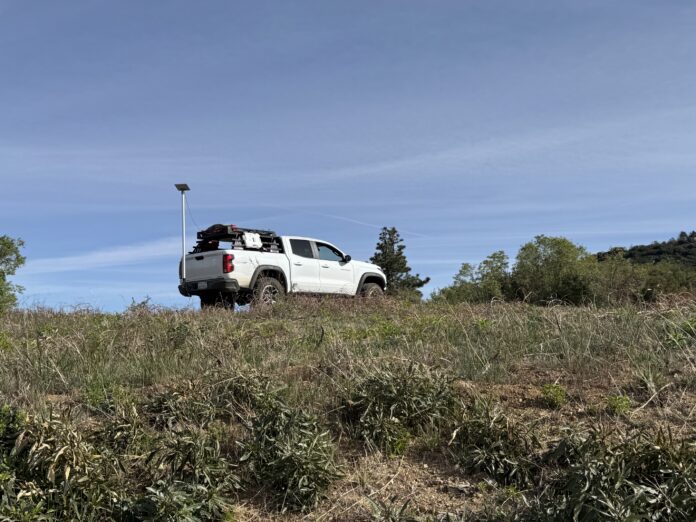

I’ve spent over 30 years camping and 15-plus years overlanding across the U.S. Cell service has been the exception rather than the rule at most of my favorite sites. Early on, this meant total disconnection. There was no way to check a weather update, confirm a family member made it home safely, or call for help if the truck broke down on a forest road. Over the years I have learned to stay connected without cell service while camping. Running Starlink from camp alongside a dedicated satellite messenger clipped to my pack has made a significant difference in peace of mind.
Staying connected without cell service is not a single-device problem. For instance, video calls and file uploads need real bandwidth, which only satellite internet provides. A simple check-in message or an SOS trigger needs something far lighter and more battery-efficient. This guide breaks down the main categories, where each one earns its place in a camp setup, and how to combine them without overspending on redundant gear.
Quick Facts:
- Topic: Staying connected without cell service while camping or overlanding
- Best for: Boondockers, overlanders, remote workers, and safety-conscious backcountry travelers
- Main options: Satellite internet (Starlink), satellite messengers, GPS communicators, PLBs
- Cost range: $50 one-time for a hardware mount up to $150/month for full satellite internet service
- Skill level: Beginner friendly, most devices work out of the box
- Setup time: Under 10 minutes for most devices
8 min read
In This Guide
Comparing Your Connectivity Options
| Device Type | Best For | Typical Cost |
|---|---|---|
| Satellite internet (Starlink) | Video calls, streaming, remote work | $50-150/month plus hardware |
| Satellite messenger | Two-way texting, check-ins, SOS | $200-350 device plus $15-50/month plan |
| Personal locator beacon | Emergency SOS only, no subscription | $250-350 one-time |
| Smartphone satellite features | Occasional texts, no extra hardware | $10/month add-on |
Satellite Internet: Starlink for Camping and Overlanding
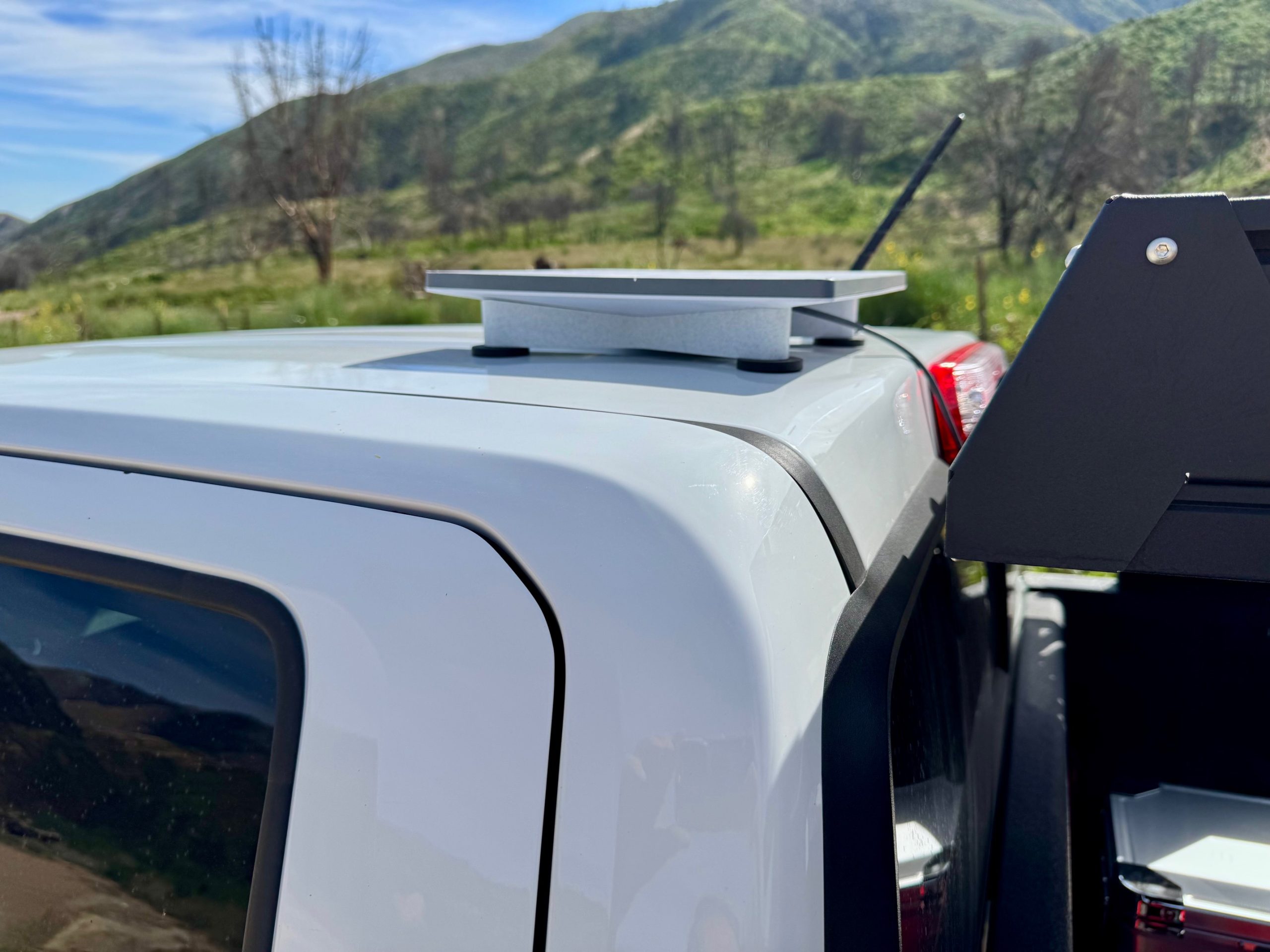
Starlink solves the bandwidth problem no messenger or beacon touches. Video calls, file uploads, and general browsing all require a steady data connection. Starlink delivers this through a dish needing a clear view of the sky. For overlanders and boondockers, the Starlink Mini has become the practical choice thanks to its smaller size and lower power draw compared to the standard dish.
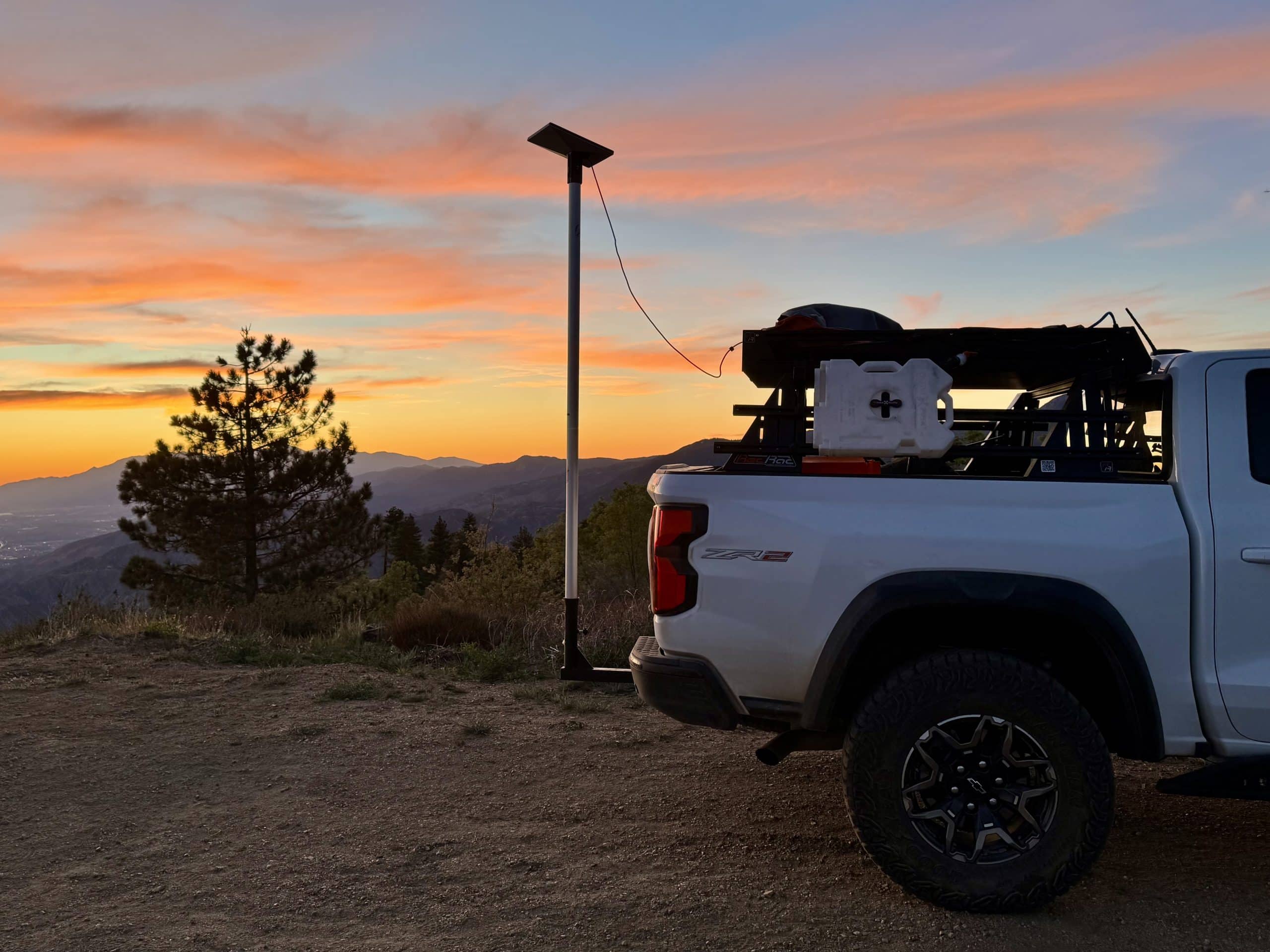
Mounting matters more than most new users expect. Specifically, a dish sitting on the ground or propped against a cooler catches far more obstructions than one elevated above the vehicle roof, so elevation should be the first setup decision, not an afterthought. I run a magnetic roof mount on my truck specifically for this reason. It adds height in under two minutes with no drilling, and repositioning between camp spots takes seconds. Curious about picking the right mount for a grooved truck roof? Our magnetic mount review covers the testing in depth. For denser tree cover, our hitch-mounted pole kit review covers the taller option.
Trade-Offs Worth Knowing
Starlink requires power, a mounted dish, and a monthly subscription, putting it in a different category from the lightweight devices below. It suits anyone needing to work remotely from camp or stream during a long stay. For a weekend trip needing only a simple check-in message, however, it is overkill.
Satellite Messengers and GPS Communicators

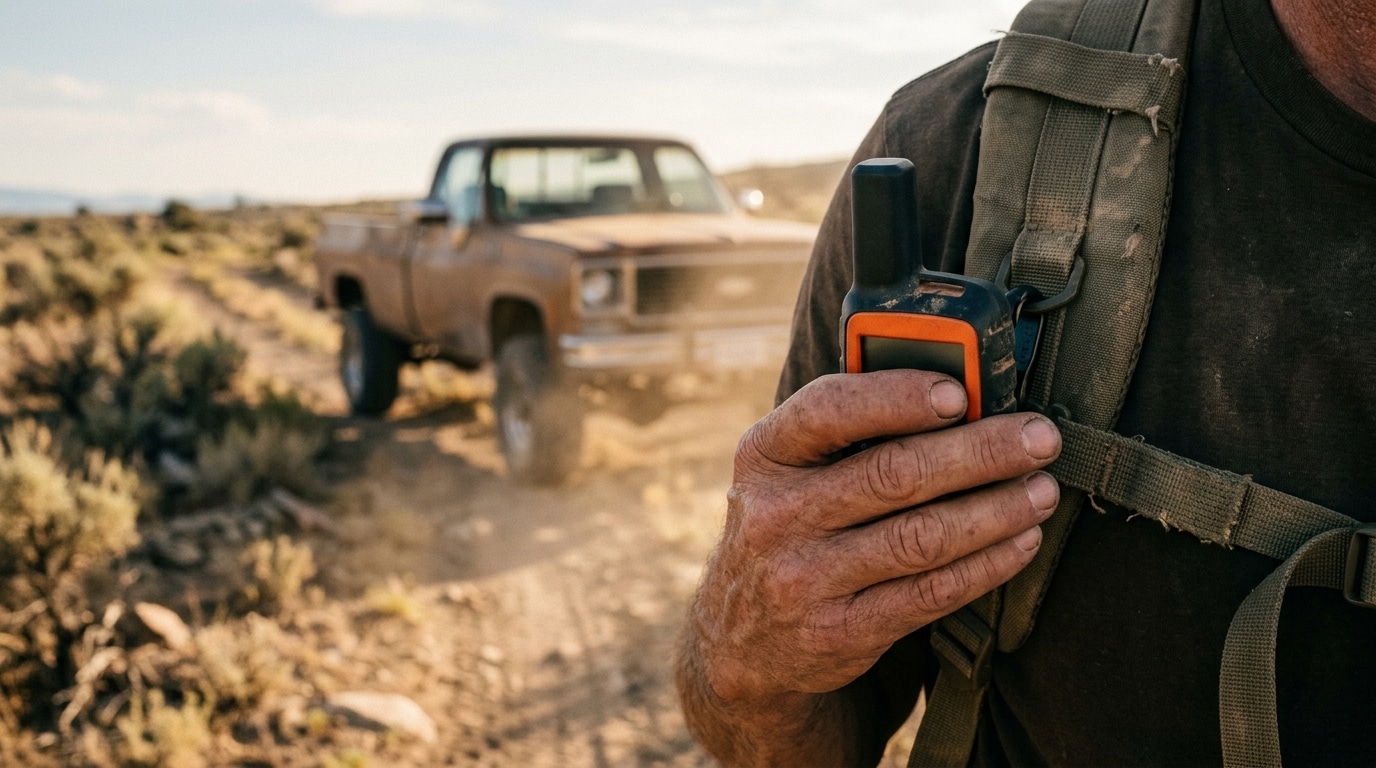
Satellite messengers fill the gap between full internet and a bare emergency beacon. In particular, devices like the Garmin inReach Mini 3 Plus and the Zoleo Satellite Communicator send and receive short text messages over a private satellite network. They also add GPS location sharing and weather updates. These devices run on small batteries and cost far less than a Starlink setup. They work well as a standalone option for shorter trips or as a backup running alongside satellite internet on longer ones.
Two-way messaging is the key feature separating a communicator from an older-style beacon. A message travels both directions, so a family member confirming pickup logistics or a friend checking in gets a real reply rather than a one-way alert. Notably, some devices, like the Bivy Stick, add mesh networking. This lets nearby units communicate directly without any satellite connection at all, useful for group trips spread across a dispersed camping area.
Subscription Plans and Ongoing Costs
Nearly every satellite messenger requires an active subscription to function, similar to a phone plan. Additionally, costs vary widely by provider and message volume. Consequently, matching the plan to actual trip frequency avoids paying for unused capacity most months. Seasonal or pause-and-resume plans suit occasional campers better than a full annual subscription.
Featured at Flagpole Buddy
Mini Starlink Flat Mount, Magnetic Version
Mount your Starlink Mini in minutes with no drilling required.
Personal Locator Beacons for Emergency-Only Backup
A personal locator beacon takes a narrower approach than a messenger. In fact, devices like the ACR Electronics rescueME PLB1 transmit a single SOS signal to search and rescue channels. No subscription or two-way messaging capability is required. This makes a PLB the simplest, most battery-reliable option for someone who wants emergency coverage without an ongoing bill.
The tradeoff is obvious: a PLB cannot send a routine check-in or confirm you made camp safely. Indeed, it exists purely for the worst-case scenario, so it works best as a backup rather than a primary communication tool. Many overlanders carry a PLB as a backup even when running a full satellite messenger. The beacon needs no charging discipline or plan renewal to stay ready.
Choosing the Right Setup for Your Trip
A weekend car-camping trip close to a maintained road rarely needs more than a smartphone and a basic plan for peace of mind. After all, most modern phones now include basic satellite texting for emergencies. In contrast, extended boondocking or overlanding trips into genuinely remote terrain benefit from layering devices. A satellite messenger handles daily check-ins, paired with Starlink if the trip involves remote work or a longer stay at one site.
Vehicle-based campers get an advantage messengers alone cannot offer. Notably, a roof-mounted Starlink setup turns a truck or RV into a working basecamp. A compact messenger still travels along on day hikes away from the vehicle. For campers working remotely from camp, this combination covers both the bandwidth-heavy workday and the lightweight safety net once you step away from the rig. A broader accessory list rounding out a full connectivity kit is available in our Starlink Mini accessories guide.
Pros and Cons by Device Type
Pros
- Starlink delivers real bandwidth for work and streaming at camp
- Satellite messengers cost far less than full internet setups
- PLBs need no subscription and stay ready for years
- Magnetic roof mounts add Starlink height in under two minutes
- Layered setups cover both routine check-ins and emergencies
- Most devices run on batteries lasting several days per charge
Cons
- Starlink needs power, a mount, and an ongoing subscription
- Satellite messengers require a monthly or seasonal plan
- PLBs offer no two-way messaging or routine check-in feature
- All satellite devices need a relatively clear view of the sky
- Running multiple devices adds cost and setup complexity
Final Verdict
Most campers benefit from matching the device to the trip rather than buying the most capable option available. In short, a satellite messenger covers the majority of camping and overlanding trips at a lower cost than full satellite internet. It still delivers the two-way peace of mind a basic PLB cannot.
Starlink earns its place for longer stays, remote work, or any trip where streaming and video calls matter. Above all, a magnetic roof mount makes it practical on a truck or overlanding rig. It adds height and a clear signal path in minutes rather than requiring a permanent installation.
For most boondockers, the strongest setup layers a satellite messenger for daily safety and check-ins with a Starlink connection for the workday or long-term stay. Neither replaces the other. Together, they cover the full range of what it takes to stay connected without cell service while camping.
Ready to Add Starlink to Your Rig?
Mount It in Minutes With Flagpole Buddy
Backed by a 2-year warranty and free domestic shipping.
Frequently Asked Questions
What is the best way to stay connected while camping without cell service?
The right option depends on trip length and purpose. Generally, satellite messengers cover most camping trips affordably, while Starlink suits longer stays or remote work needing real bandwidth. Many overlanders combine both for full coverage.
Do satellite messengers require a subscription?
Yes. Nearly every satellite messenger, including the Garmin inReach and Zoleo lines, needs an active plan to send and receive messages. Consequently, plans range from seasonal pause-and-resume options to full annual subscriptions, so matching the plan to trip frequency avoids overpaying.
What is the difference between a satellite messenger and a PLB?
A satellite messenger supports two-way texting, GPS sharing, and SOS alerts, all requiring a subscription. In contrast, a personal locator beacon transmits a one-way SOS signal only, needs no subscription, and stays ready for years without ongoing costs.
Does Starlink work while camping or overlanding?
Yes. The Starlink Mini is popular among overlanders for its compact size and lower power draw. Consequently, mounting the dish on a vehicle roof, rather than the ground, generally improves signal by clearing obstructions from nearby trees or terrain.
Do I need both Starlink and a satellite messenger?
Not always. Weekend trips near maintained roads often need only a basic messenger or PLB for safety. However, extended boondocking, remote work, or multi-week overlanding trips benefit from running both, since each covers a need the other does not.
How much does off-grid connectivity cost overall?
Costs vary widely by device type. Specifically, a PLB runs $250 to $350 one-time with no ongoing plan. A satellite messenger adds a device cost plus a monthly plan, typically $15 to $50. Starlink adds hardware plus a monthly service fee, generally $50 to $150 depending on the plan selected.
Friendly disclaimer: Our articles may contain affiliate links that support us without costing you more, and sometimes we spice things up with sponsored content—but only for products we truly stand behind!