


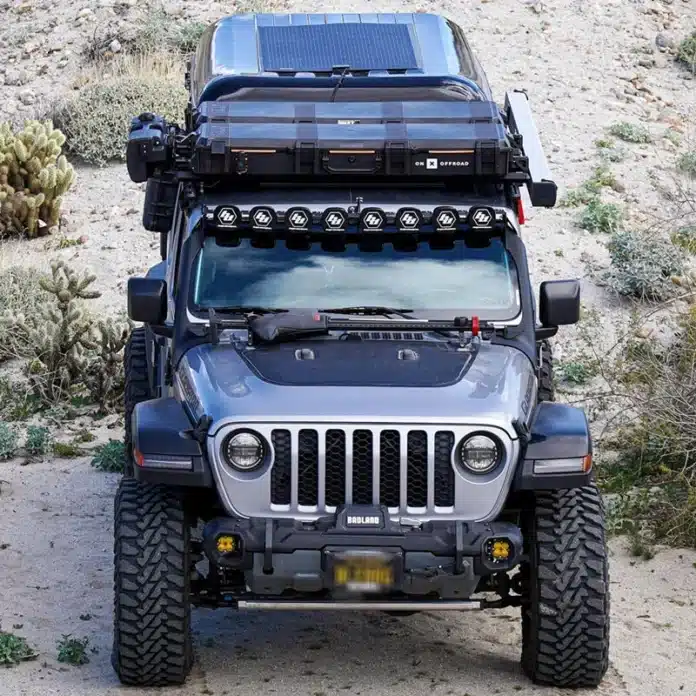

Picture two rigs pulling into the same dispersed campsite after 40 miles of washboard. One carries a glass panel on a roof rack, tilted toward the sun, while the other has a thin panel bonded flat to the hood. Both owners want steady power without a generator, yet they chose opposite technologies. Over a season of trips, one choice pays off more, although the winner depends on your vehicle, your climate, and how you camp.
When I’m thinking about a solar setup, I weigh roof weight, cargo space, and battery limits the same way you do. In this guide, I compare flexible solar panels and rigid panels on weight, heat, lifespan, mounting, and price. Then you’ll know which panel type fits your trips and where each one falls short.
Quick Facts:
- Topic: Flexible solar panels vs. rigid panels for overland use
- Weight: 4 to 8 pounds flexible, 40+ pounds rigid
- Lifespan: 5 to 10 years flexible, 25 to 30+ years rigid
- Heat: Flush-mounted flexible panels run hotter without an air gap
- Hood panel prices: $229 to $504 on 4xSolar’s visible listings
- Gladiator pick: Lensun 90W with MPPT controller, $428
- Sponsor: 4xSolar
- Best for: Overlanders choosing between hood, roof, and portable solar
8 min read
In This Guide
- Why Panel Type Matters Off the Pavement
- Flexible vs. Rigid Solar Panels at a Glance
- Weight and Roof Space: Where Flexible Solar Panels Win
- Heat and Output: Where Rigid Panels Pull Ahead
- How Long Do Flexible Solar Panels Last on the Trail?
- Mounting Options: Hood, Roof Rack, and Ground
- Flexible Hood Panels: What 4xSolar Offers
- Hood Flexible vs. Roof Rigid vs. Portable Panels
- Final Verdict: Which Panel Fits Your Overland Rig?
- Solar Panel FAQ for Overlanders
Why Panel Type Matters Off the Pavement

Flexible solar panels and rigid panels turn sunlight into the same 12V power, yet they behave differently on the trail. A rigid panel uses tempered glass and an aluminum frame, while a flexible panel swaps both for a thin polymer layer. This one change drives every trade-off in this guide, from weight to heat to lifespan.
Overland use adds stress a driveway install never sees. Washboard roads shake every mount, branches scrape the roof, and engine heat soaks into the hood. Every overland rig also has limited roof space, since a rooftop tent, awning, and gear often claim the rack first.
Flexible vs. Rigid Solar Panels at a Glance
The table below summarizes typical ranges. Individual products vary by brand and build quality, so treat these figures as starting points.
| Specification | Rigid Panels | Flexible Panels |
|---|---|---|
| Lifespan | 25 to 30+ years | 5 to 10 years |
| Weight | 40+ pounds | 4 to 8 pounds |
| Efficiency | 20% to 23% | 15% to 20% |
| Heat tolerance | High, with airflow underneath | Low, flush mounting traps heat |
| Warranty | 20 to 25 years | 1 to 5 years |
| Cost per watt | $0.50 to $1.00 | $0.80 to $3.00 |
Notice the pattern. Rigid panels win on lifespan, warranty, and cost per watt, while flexible panels win on weight and installation. Heat tolerance then decides most of the rest.
Buy Direct From 4xSolar
Lensun 90W Flexible Hood Panel for the Gladiator JT
A 3mm panel with a pre-wired 10A MPPT controller for $428. It charges your battery with the engine off.
Weight and Roof Space: Where Flexible Solar Panels Win
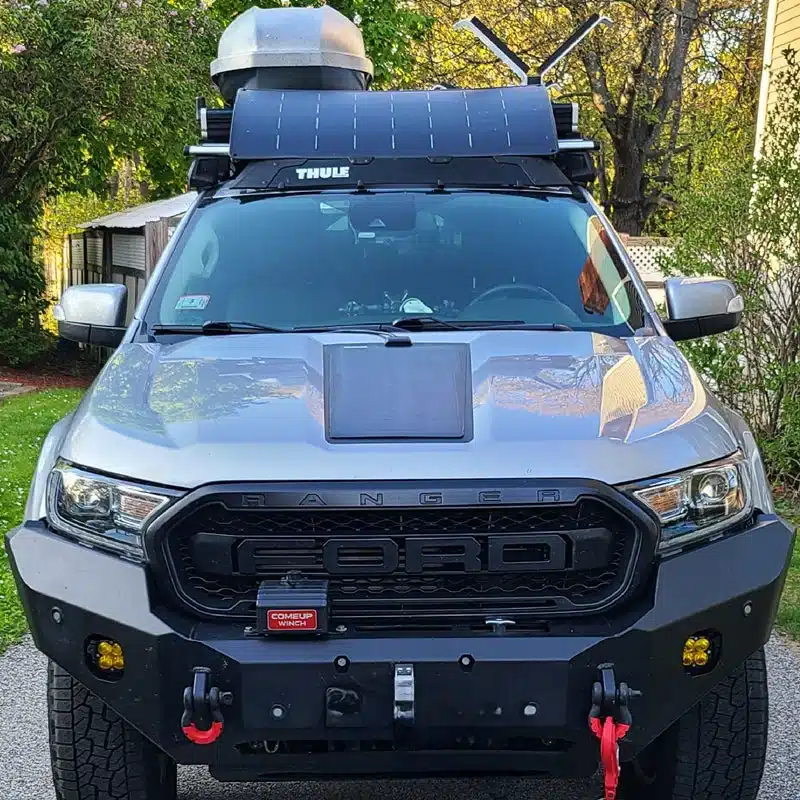
Weight is the clearest advantage. Specifically, Jackery lists rigid panels at 40-plus pounds and flexible panels at 4 to 8 pounds. Renogy says flexible panels typically weigh a quarter of what rigid ones do.
On a Gladiator, the Lensun 90W hood solar panel weighs 6.6 pounds and measures 3mm thick, according to 4xSolar. Because it sits on the hood, it adds no roof load. It also leaves the rack free for a tent, awning, or cargo box.
Rigid panels demand a different calculation. Bluetti lists drilling and brackets as the usual install for rigid panels, while flexible panels go on with adhesive and no holes. Bluetti also points out wind resistance: heavy rigid panels add it, whereas flexible panels lie flat and cut drag.
Heat and Output: Where Rigid Panels Pull Ahead

Heat is the weak spot for flexible panels. All panels lose output as they warm up. For example, Blue Marine puts the loss at roughly 0.3% to 0.5% per degree Celsius above 25°C (77°F). EnergySage explains the same effect in its guide to solar panel temperature.
Rigid panels on a raised mount get airflow underneath, which carries heat away. Flexible panels sit flat, so they absorb heat from the sun and from the surface below. Because of this, flush mounting costs output on hot days.
One published test shows the gap. A Jackery buying guide describes a 35°C summer day in southern France. There, a 200W rigid panel on raised rails produced 172W, while a glued flexible panel produced 128W. This works out to 86% of rating for the rigid panel and 64% for the flexible one. The same guide says a thin aluminum backing sheet with a 2 cm air gap drops panel temperature by 15°C to 20°C. Treat this as one data point, not a rule.
How Long Do Flexible Solar Panels Last on the Trail?
Lifespan favors rigid panels on paper. Jackery lists 25 to 30-plus years for rigid panels and 5 to 10 years for flexible ones. Coule Energy gives a wider range of 5 to 15 years for flexible panels, depending on quality and mounting.
The front sheet matters. Jackery says budget PET-coated panels yellow and delaminate within 3 to 5 years. In contrast, the Lensun hood solar panel uses an ETFE film, which 4xSolar describes as heat, corrosion, and UV resistant.
Impact is the other risk. Jackery warns about micro-cracks if you bend a flexible panel too far or hail hits it. However, 4xSolar says its panel resists snow, ice, mud, and rocks, so treat any maker’s claim as a starting point.
Check the warranty, because it varies by brand. Jackery lists 20 to 25 years for rigid panels and 1 to 5 years for flexible ones. However, Renogy backs its flexible line with the same 25-year power warranty as its rigid line.
Mounting Options: Hood, Roof Rack, and Ground
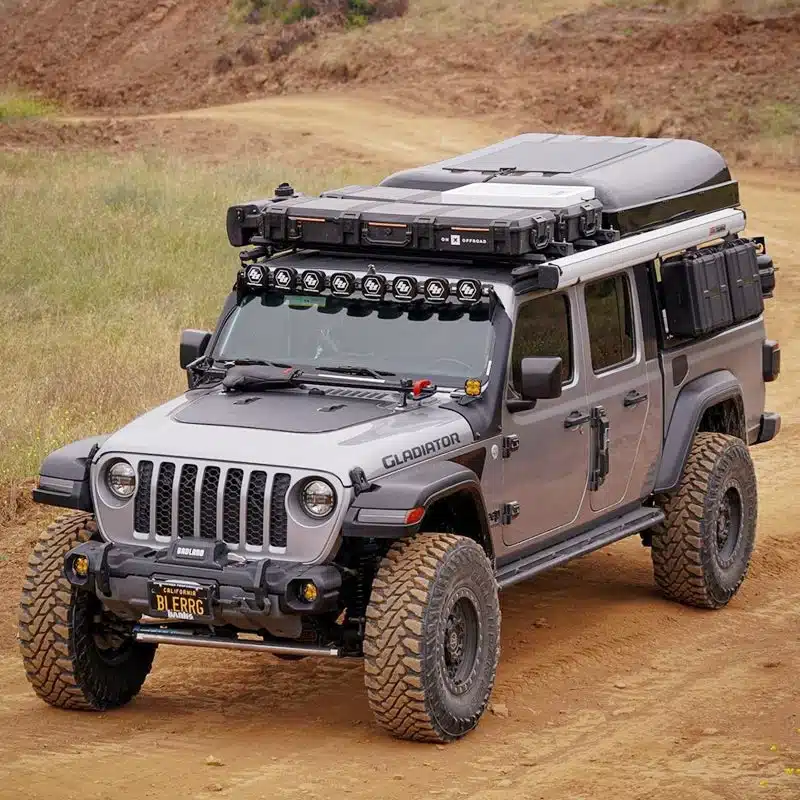
Where the panel goes matters as much as which panel you buy. A hood mount charges while you drive and while you park, with no setup at camp. Roof mounts need rack space and cabling through the body. Ground panels cost you setup time but stay in the sun.
For an install example, one 4Runner owner fitted a Lensun 100W hood panel and wrote it up at Trail4Runner. The owner cleaned the hood with alcohol wipes, then applied 3M double-sided tape in lines about 6 inches apart. Next, the cable ran down the hood hinge, through the passenger-side firewall grommet, and along the door sill to a controller under the seat.
4xSolar recommends an optional vinyl decal between the panel and the hood, which protects the paint. Portable folding panels sit at the other end. Jackery calls them a loophole for heat loss, because a ground panel gets airflow and angles toward the sun.
If you’re building a kit for a short trip, start with our weekend overland setup guide.
Flexible Hood Panels: What 4xSolar Offers
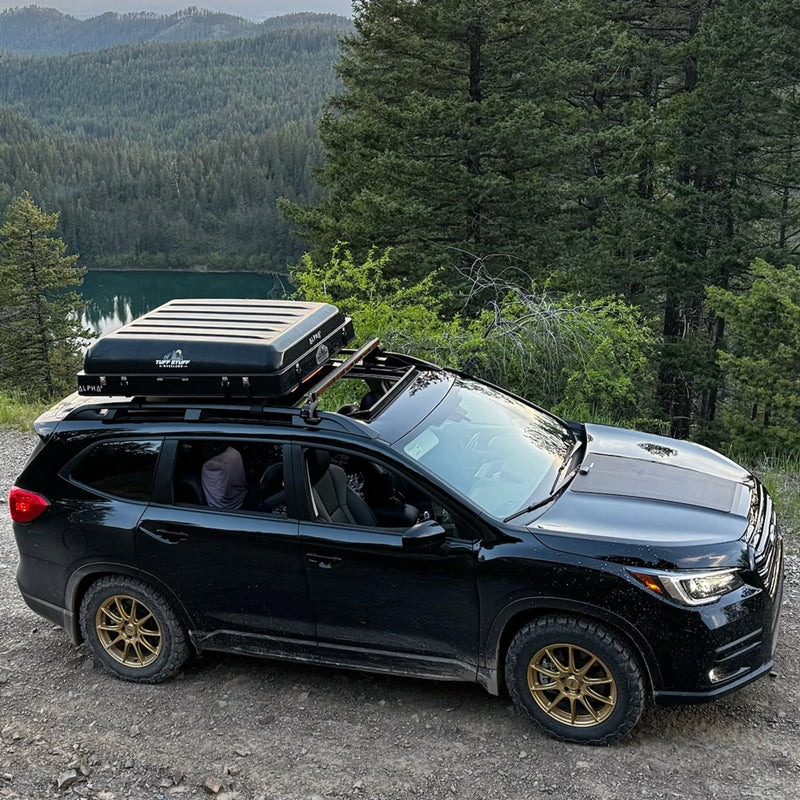
4xSolar’s solar lineup centers on hood-mounted flexible panels, and its hood panel collection shows 148 items. Visible prices run from $229 for a 60W Chevrolet Silverado 1500 panel to $504 for an 80W Silverado 5500 panel, while the price filter tops out at $695.
Mid-range examples include a 65W Ford Bronco Sport panel at $269 and a 110W Dodge Durango panel at $474. Wattage differs by vehicle, so check your model’s listing before you order.
Lensun 90W Specs for the Gladiator JT
For the Jeep Gladiator JT, the Lensun 90W package costs $428 with a 10A waterproof MPPT controller. The panel peaks at 90W, with 17V and 5.29A at maximum power, and 4xSolar lists 23.5% solar cell efficiency. Cell efficiency describes the cells alone, not the finished panel.
The controller works with sealed, AGM, gel, liquid, and lithium-ion batteries. In addition, 4xSolar says it guards against reverse polarity and overcharging.
Estimating Daily Output
In round numbers, 90W over 5 peak sun hours gives 450Wh on paper. Footprint Hero lists 5 to 6 peak sun hours for Arizona and 3.9 to 4.9 for Wyoming, so expect less in the north. Heat and a flat mount trim the total further.
For a small add-on, the flexible collection also includes the Spectre 18W solar panel at $199.99, which the page calls weatherproof. The page doesn’t state weight, size, or folding design, so confirm those details with 4xSolar first.
Ready to Buy?
Find the Hood Panel for Your Vehicle
Browse 148 vehicle-specific options at 4xSolar, with prices starting at $229.
Hood Flexible vs. Roof Rigid vs. Portable Panels
The biggest difference is how each setup behaves when you stop. Hood panels charge while you park and need no setup. Roof-mounted rigid panels also charge unattended, but they add weight and cabling. Portable panels need you to deploy them every time.
Choose a hood panel if you camp in one spot for a night or two and want zero camp chores. Pick rigid roof panels if you run a large battery bank or a fridge for weeks. You need maximum output and a long lifespan there. Go with a portable panel if you park in shade, since you place it in the sun. In deserts, read our guide to camping comfortably in extreme heat, because heat cuts output from every panel type.
Cost per watt favors rigid panels. Jackery lists $0.50 to $1.00 per watt for rigid panels against $0.80 to $3.00 for flexible ones. The Lensun package works out to about $4.76 per watt at $428 for 90W, but the price includes a controller and a hood-specific fit.
Final Verdict: Which Panel Fits Your Overland Rig?
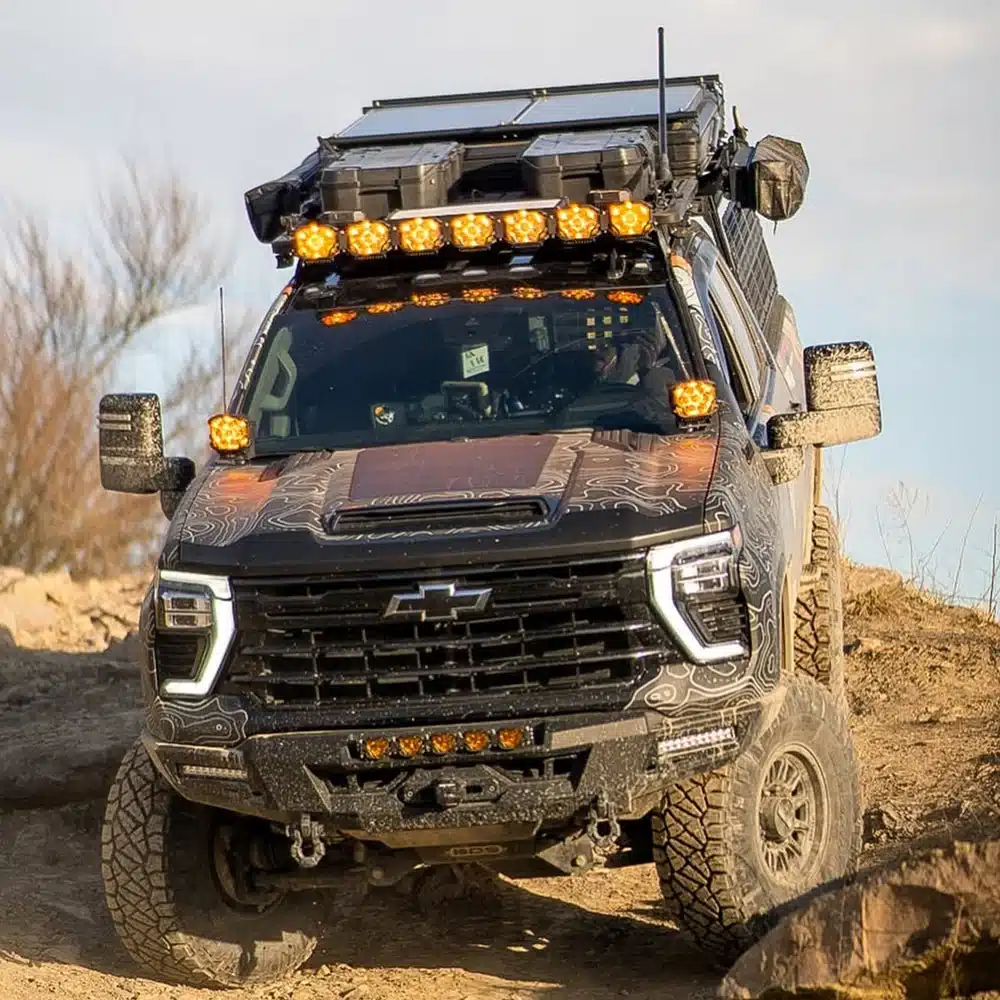
Flexible hood panels suit overlanders who want charging without chores. Their biggest strength is weight, at 4 to 8 pounds for the category and 6.6 pounds for the Lensun 90W. They add no roof load and need no drilling.
However, flexible panels run hotter, last fewer years, and produce less than their rating on a warm hood. If you run a large fridge for weeks, a raised rigid array or a ground panel gives you more energy for the money.
On value, rigid panels win per watt. A hood panel wins on convenience, and the $428 Lensun package includes the controller and a hood-specific fit. As a result, you skip bracket hunting and rack space.
My recommendation: pair a hood panel with a battery monitor for daily charging, then add a portable panel if you park in shade or need more output. If you’re building a permanent, high-output system, choose rigid solar panels on a raised mount instead.
Built for the Gladiator JT
Put 90 Watts on Your Gladiator’s Hood
A 6.6-pound panel, a 10A MPPT controller, and a fit shaped for the JT hood. $428 at 4xSolar.
Solar Panel FAQ for Overlanders
Are flexible solar panels worth it for overlanding?
Yes, when weight and roof space matter more than peak output. Jackery lists flexible panels at 4 to 8 pounds, and they mount without drilling. Expect a shorter life than glass panels, though.
How long do flexible solar panels last?
Published ranges run from 5 to 10 years at Jackery and 5 to 15 years at Coule Energy. Quality and mounting drive the difference. Check the warranty, because it varies by brand.
Do flexible solar panels work on a vehicle hood?
Yes, hood mounting is a common use. Output drops when the hood heats up, and a flat mount also gives up some power when the sun sits low. Plan on battery maintenance and light loads rather than heavy use.
Do rigid panels outperform flexible panels in the heat?
Usually, yes. A raised mount gives rigid panels airflow, while flexible panels sit flat and hold heat. In Jackery’s published test, a rigid 200W panel produced 172W against 128W for a glued flexible one at 35°C.
Does a hood panel charge a power station?
4xSolar says the Lensun panel has standard connectors and uses adapters, sold separately, to charge most power stations. It names Jackery and Goal Zero as examples.
Just so you know, some of the cool stuff we mention comes with affiliate links, meaning we earn a commission if you buy (no extra charge to you!). Plus, we occasionally feature sponsored content, but rest assured, we only shout out products we genuinely stand behind.