


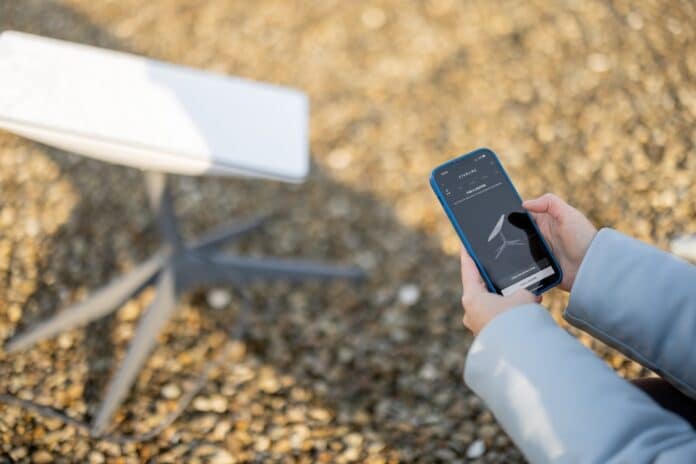
Quick Facts:
- What it is: Starlink Direct to Cell, satellite service delivered to an ordinary phone.
- Hardware needed: None. No dish and no antenna.
- How you get it: T-Mobile’s T-Satellite, on T-Mobile or on an unlocked phone.
- Price: $10 per line each month, or included on T-Mobile’s top plans.
- Emergency texting: Free to anyone with a compatible phone. Sign up first, but no paid plan.
- What it carries: Text, picture and audio messages, location sharing, and data for a fixed app list.
- What it will not carry: Native voice calls, video, or web browsing.
- Coverage: More than 500,000 square miles of United States dead zone.
- The catch: A clear view of the sky. Heavy tree cover blocks the link.
- Best for: Overlanders who want Starlink Direct to Cell as a safety net rather than working internet.
13 min read
In This Guide
- Starlink Direct to Cell: Satellite Service Straight to Your Phone
- What the FCC Grant Changed, and What It Did Not
- What Satellite Texting Does in a Dead Zone Today
- The Three Satellite Networks Behind Your Phone
- Where the Link Breaks: Sky View and Tree Cover
- Starlink Direct to Cell Speeds: The 150 Mbps Headline
- Starlink Direct to Cell Compared to a Starlink Mini Dish
- Phone Service Compared to a Satellite Communicator
- Final Verdict
- Frequently Asked Questions
Starlink Direct to Cell: Satellite Service Straight to Your Phone
Starlink Direct to Cell puts a cell tower in orbit and talks to the phone already in your pocket. No dish, no external antenna, nothing to install. Your phone sees the satellite as an ordinary LTE network, and it hands off when terrestrial towers run out. For overlanders, therefore, this satellite cell service fills the gap between the last bar of signal and the trailhead.
In the United States this satellite phone service reaches you through T-Mobile. It carries the name T-Satellite with Starlink, and it has been live since July 2025. On your screen it shows up as “T-Mobile SpaceX” or “T-Sat+Starlink.” Notably, it covers more than 500,000 square miles of territory where no tower reaches.
On September 17, 2026, the FCC granted SpaceX international common carrier authority. Press coverage has since framed the grant as the moment Starlink goes global. The grant is real. However, the framing is wrong, and the difference matters before your next trip. Below is what the service does today, what the paperwork changed, and where a phone beats a dish.
One thing to settle first. Satellite texting is a safety and coordination tool, not internet. Specifically, T-Mobile describes it in plain terms: “This isn’t high speed data, but it’s built for what matters most off grid.” Therefore, treat it as the backup layer under whatever else you run. Similarly, it belongs in the same mental slot as staying connected without cell service in camp.
Who Needs What: Phone, Dish or Communicator
Two groups get different answers from this page. First, weekend travelers who mostly want a way to say they made camp. Second, people who work from the truck for days at a time. The first group is served well by a phone alone. Meanwhile, the second group needs a dish, with a phone as the backup layer underneath it. Both groups, however, should turn on free emergency texting before the next trip, because it costs nothing.
A third group is covered by neither answer. Solo travelers and anyone leaving the T-Mobile footprint need more than a phone. Specifically, they need a device with its own battery, its own antenna and its own SOS button. A dead phone should not end a trip. Dedicated satellite communicators do this job, and the four below are the ones worth the weight.
| Top Pick | Best Value | Most Reviewed | Best Standalone | |
|---|---|---|---|---|
| Product | TOP PICK Garmin inReach Mini 3 Plus Garmin inReach Mini 3 Plus |  Garmin inReach Mini 2 Garmin inReach Mini 2 | 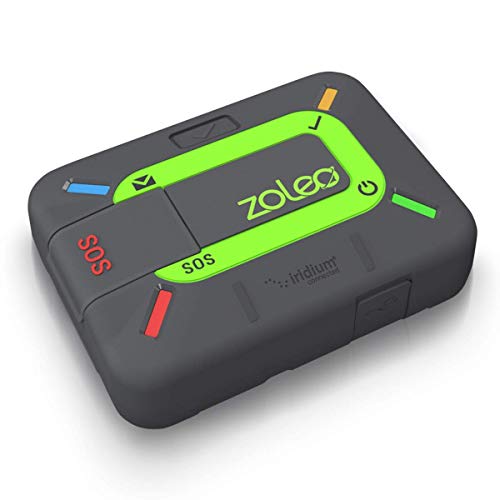 ZOLEO ZOLEO |  SPOT X SPOT X |
| Rating | ★★★★★ 4.7 130 ratings | ★★★★☆ 4.6 1,700 ratings | ★★★★☆ 4.4 3,200 ratings | ★★★★☆ 4.2 700 ratings |
| Battery in tracking mode | 350 hours | 336 hours | 200+ hours | 240 hours |
| Weight | 4.42 oz | 3.5 oz | 5.3 oz | 7.0 oz |
| Typing method | Touchscreen or phone | Phone pairing | Phone pairing | Built-in keyboard |
| Price | $445.75 as of Sep 18, 6:02 pm | $319.99 as of Sep 18, 5:15 pm | $149.00 as of Sep 18, 5:15 pm | $249.95 as of Sep 18, 6:02 pm |
| Check Price → | Check Price → | Check Price → | Check Price → |
What the FCC Grant Changed, and What It Did Not
The September grant is FCC Public Notice DA 26-998, released September 17, 2026. SpaceX received Global Facilities-Based Authority and Global Resale Authority. Together, those two make it an international common carrier under Section 214 of the Communications Act.
In plain English, SpaceX now holds a license to carry telecom traffic between the United States and foreign points. Notably, the notice moved on the FCC’s streamlined track. SpaceX also appears on the same seven-page list as two small Mississippi long-distance companies changing ownership. The words Starlink, satellite, roaming and spectrum appear nowhere in the entry.
What the Starlink Direct to Cell Grant Does Not Give SpaceX
Here is the part the coverage got wrong. A Section 214 authorization gives SpaceX no right to sell service inside any other country. Instead, every foreign regulator licenses the service separately. In its own direct-to-cell order, the FCC required all direct-to-cell operations outside the United States to be duly authorized by the relevant administrations. Consequently, the FCC opened no foreign market, because it holds no power to do so.
The roaming claim is similarly soft. T-Satellite already works abroad through carrier partnerships. Specifically, it runs in Canada with Rogers, in New Zealand with One NZ, and in Japan with KDDI. Crucially, it did so before this grant landed. Nothing in the September notice switches on a feature for your next trip. Worth noting as well, the reconsideration window stays open for 30 days, so the grant is not yet final.
This is the pattern with Direct to Cell, and it repeats below with the speed numbers. The announcements describe a system under construction. The thing in your pocket is the present one, and the two are years apart.
What Satellite Texting Does in a Dead Zone Today
T-Satellite carries more than most people expect. You get SMS, MMS and RCS messages, including picture and audio messages. In addition, you get location sharing and text to 911. Beyond messaging, it also passes limited data for a fixed list of approved apps. Consequently, this satellite messaging layer earns its place in a truck. Satellite messaging, however, is the ceiling of what the link carries.
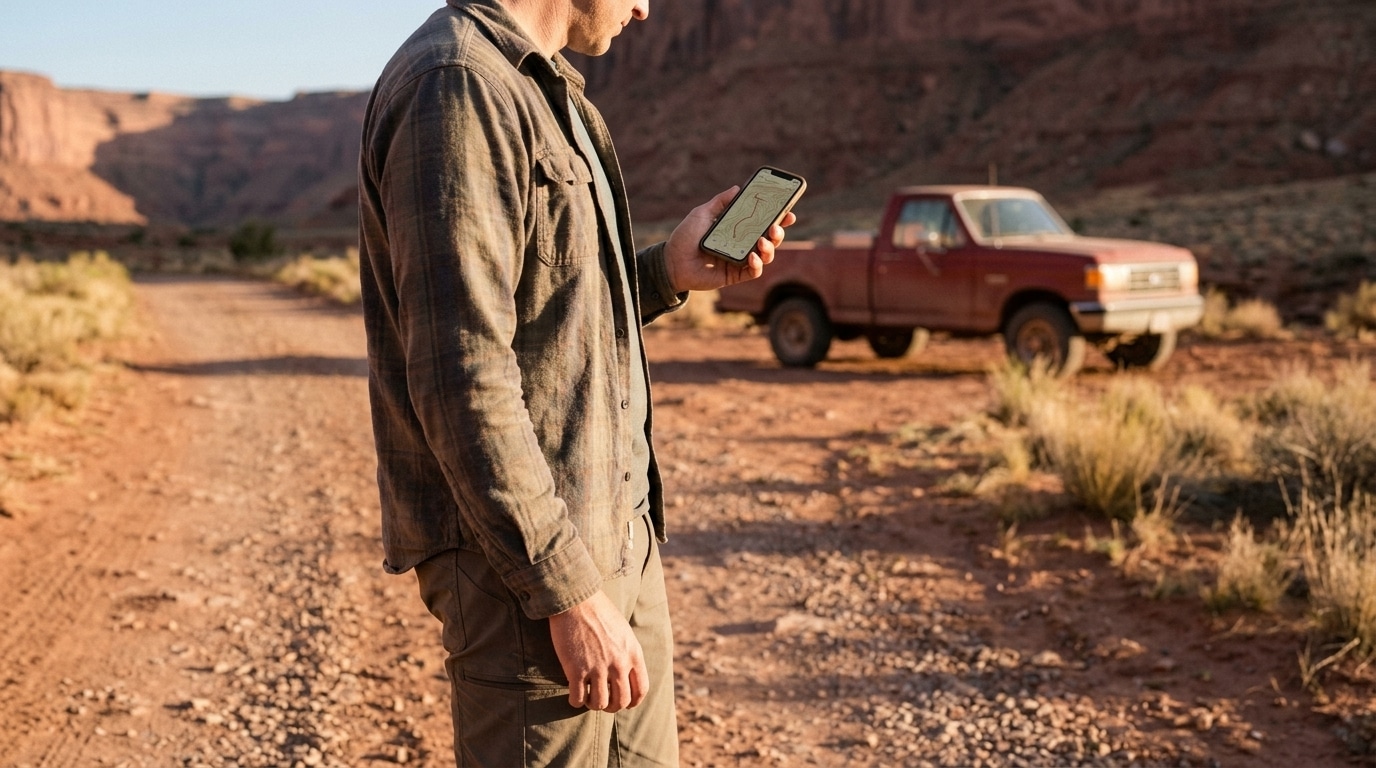
The app list reads like an overlander wrote it. onX Offroad, onX Backcountry, Gaia GPS, CalTopo, AllTrails and Trailforks all work over satellite. Likewise, Apple Maps, Google Maps, AccuWeather and Google Find work. Therefore you are able to pull a weather window from a canyon with no bars. The list also includes Overwatch x Rescue, an SOS service routed to a response center staffed around the clock.
Voice is the clear gap in Starlink Direct to Cell today. Starlink states the position directly: “Voice. Available with apps today. Future service will enable native calling.” While WhatsApp voice chat works, an ordinary phone call does not. Emergency texting is text only as well.
What Starlink Direct to Cell Costs
Pricing splits three ways. First, subscribers on T-Mobile’s top-tier plans pay nothing extra. Next, everyone else on T-Mobile currently pays $10 per line each month. Finally, customers on other carriers pay the same $10 with an unlocked phone and a free eSIM. As a result, you are not required to leave your current carrier. Satellite 911 texting, in contrast, is free to anyone with a compatible phone.
The Three Satellite Networks Behind Your Phone
Starlink Direct to Cell is one of three satellite networks serving American phones. Notably, they are not interchangeable. Starlink powers T-Satellite. Globalstar powers Apple’s iPhone features. Skylo, in contrast, powers Verizon and Google Pixel texting. Because each runs different hardware in orbit, what reaches your screen differs sharply.
| Service | Network | What It Carries | Cost |
|---|---|---|---|
| T-Satellite | Starlink | Text, picture and audio messages, app data, 911. | $10 per line, or free on top plans. |
| Apple satellite features | Globalstar | Emergency SOS, text messages, Find My, roadside help. | Free for two years from activation. |
| Verizon and Pixel texting | Skylo | Basic two-way text, SOS via Garmin Response. | Free on supported Android phones. |
| AT&T first-party service | AST SpaceMobile | Not launched. AT&T points customers elsewhere. | Not applicable. |
Apple’s satellite features run on any iPhone 14 or newer, regardless of carrier. It is also free for two years from activation. Emergency SOS works in 20 countries. The Messages via satellite feature, in contrast, works only in the United States, Canada, Mexico and Japan. It also strips attachments, so it carries plain text alone.
Roadside Assistance via satellite deserves its own line. Specifically, it covers the United States, the United Kingdom and Australia. In the United States, AAA and Verizon handle the calls, while each other country uses its own motoring clubs. For anyone who wheels alone, this is the single most useful satellite phone service feature on the page.
Why the Verizon and Pixel Path Is the Thinnest
Verizon’s Skylo path is the thinnest of the three. It handles basic two-way text and nothing else. Consequently, there is no MMS, no RCS and no attachments. Notably, it also carries no Wireless Emergency Alerts. Therefore a flash flood warning will not reach you over it.
Where the Link Breaks: Sky View and Tree Cover

Physics sets the ceiling here. No plan upgrade moves it. A crowdsourced study of the live network, published by researchers at the Technical University of Madrid, measured median signal strength at -121 dBm. Terrestrial LTE, in contrast, measured -97 dBm. The deficit runs 24 dB. Median signal quality, similarly, sat at 0 dB against 5 dB. In practice, no link margin remains to spend on an obstruction.
Apple publishes the clearest numbers on what obstruction costs you. With a direct view of sky and horizon, a message takes about 30 seconds to send. Under light or medium foliage, however, it takes over a minute. Under heavy foliage the phone might fail to connect at all. Those figures apply to Globalstar, although the sky-view requirement holds across all three networks.
For overlanders the implication is specific. Slot canyons, north-facing timber and steep drainages are exactly where you want a message to go out. Meanwhile, they are exactly where it will not. The same sky-view problem applies to a dish. Consequently, keeping Starlink connected in tree cover takes deliberate site selection. Plan to walk to a clearing, then send.
Three Habits Worth Building Before a Trip
Three more limits deserve a mention. First, satellites move overhead, so your phone drops one and reconnects to the next. As a result, messages sometimes fail and prompt a resend. Second, airplane mode shuts down the cellular radio the satellite link rides on, so leave it off in the backcountry. Third, the link will not carry an app download. Therefore, install and sign into every supported app before you leave coverage. Setting up in the driveway takes ten minutes and saves the trip.
Where it works, though, it genuinely works. The same study found satellite carrying 86 percent of measured connections in Death Valley. Similarly, it carried 80 percent in Yellowstone. Coverage correlated negatively with population density, which is the whole point.
Starlink Direct to Cell Speeds: The 150 Mbps Headline
Every write-up of Starlink Direct to Cell repeats a figure of 150 Mbps. The number traces to SpaceX satellite policy lead Udrivolf Pica, speaking at the ITU Space Connect conference in February 2026. His words: the company is “aiming at peak speeds of 150Mbps per user.” Aiming, and peak.
Read the conditions attached to it. The figure describes hardware nobody has launched. Specifically, it requires exclusive mid-band spectrum and a new constellation flying at 326 to 335 kilometers. Those satellites also need far larger phased arrays. SpaceX anticipates initial testing of the 150 Mbps service in late 2027. Notably, the figure appears nowhere on Starlink’s own website.
Measured reality on today’s network looks different. The same crowdsourced study derived an approximate downlink capacity of 3.1 Mbps per beam. Moreover, it described even this as an upper bound for a single user occupying the full bandwidth. The study put the per-user ceiling at roughly 12.4 Mbps, and even then only once the newly acquired AWS band reaches handsets. Against the network flying today, therefore, the 150 Mbps headline runs nearly fifty times the measured figure.
The 5G claim carries the same tense problem. Today’s satellites run LTE payloads. Meanwhile, Starlink’s own copy says its second-generation hardware “will enable full 5G cellular connectivity.” SpaceX did strengthen its hand by buying EchoStar’s spectrum in 2026, with FCC approval. Even so, the gain depends on phones supporting a band most handsets do not yet include.
Starlink Direct to Cell Compared to a Starlink Mini Dish
Direct to Cell and a Starlink Mini answer different questions. Treating them as rivals leads people to buy the wrong one. Satellite texting keeps you reachable. A dish, in contrast, keeps you working. One costs $10 a month. The other starts at $199 for hardware plus a Roam plan. Therefore the gap in capability should match the gap in price, and it does.
What a Dish Adds Over Starlink Direct to Cell
A Starlink Mini pulls roughly 20 to 40 watts in use, with about 15 watts at idle. It weighs 2.4 pounds bare. Moreover, it delivers real broadband for video calls, uploads and streaming. It also runs in motion up to 100 mph on a Roam plan. Before you size a battery around one, read the detail on Starlink Mini power draw. Similarly, check what Starlink costs each month, because the subscription outweighs the hardware quickly.
From experience: I run a FlagPole Buddy flat mount with the magnet option on my truck roof. It has lived there for months. It comes off for the car wash and goes right back on. This thing is well planted on the roof. I buy the flat mount direct from FlagPole Buddy, because it is not sold on Amazon. Their pole kit in the grid below is a different product, built to lift a dish off an RV ladder.
Starlink Direct to Cell needs nothing but the phone. Running a Mini, in contrast, turns the setup into four small problems. First, the dish needs a mount to survive washboard. Second, it needs a case, because the kit ships without one. Third, it needs 12V power from the truck rather than the AC brick in the box. Finally, it needs a power source for the hours the engine sits off. The gear below solves those four, in the same order.
What it takes to run a Mini from the truck

FlagPole Buddy Starlink Mini Compatible Mounting Kit for RV


When the Phone Is Enough, and When It Is Not
Satellite texting adds no hardware weight. Likewise, it demands no mount, no cable and no power budget. For a weekend trip where the goal is telling your family you made camp, it wins outright. For a two-week remote trip where you file work from the truck, however, it does nothing useful. In those conditions the current Starlink V5 dish or a Mini is the answer instead.
Most people who spend real time out there end up running both. The phone is the layer you never think about. Meanwhile, the dish is the layer you set up when you stop.
Phone Service Compared to a Satellite Communicator
A dedicated communicator such as a Garmin inReach or a ZOLEO does one job. Crucially, it does the job without depending on a carrier. Since the device carries its own battery and antenna, it keeps working when your phone is dead, wet or broken. Those failures are exactly why the device exists.
Starlink Direct to Cell beats a communicator on cost and convenience. You already carry the phone. Moreover, the interface is the messaging app you use daily. Picture messages also go through on T-Satellite, while most communicators send text only. For casual trips inside the covered footprint, therefore, the phone covers it.
A communicator wins on three points. First, global coverage on the Iridium network reaches places T-Satellite does not. Second, a dedicated SOS button with a monitored response center works when you are unable to operate a phone. Third, battery life in the hundreds of hours outlasts any handset. For the full device breakdown, our comparison of a satellite communicator versus GMRS radio covers plans, coverage and SOS behavior.
Where a Dedicated Communicator Wins
The four in the table above split on one question. Do you want the device to work with no phone at all? The SPOT X carries its own keyboard, so it does. Meanwhile the ZOLEO and the inReach Mini 2 lean on a paired phone for anything past a canned message. The inReach Mini 3 Plus sits in the middle with a touchscreen, which is why it is our pick. Its review count runs low against the others only because it is the newest of the four.
Solo travelers should carry the dedicated device. Likewise, anyone working outside carrier coverage should. Groups sticking to the covered footprint, in contrast, are served well by the phone alone.
Final Verdict
Starlink Direct to Cell is the most useful $10 in overlanding right now. Moreover, free emergency texting makes it worth setting up even if you never pay for the full service. The approved app list covers the mapping and weather tools you run anyway. For check-ins, coordination and emergencies, therefore, the service pays for itself.
The trade-offs are real. You get no voice calls, no browsing and no video. Similarly, the link often fails under heavy timber. Anyone who needs working internet from camp should size a dish instead, because these products do not overlap.
On value, the comparison is simple. Compare $10 a month against roughly $200 to $500 for a communicator, plus its own monthly plan. The phone service does not replace a communicator for solo remote travel. Even so, it covers the middle ground where most weekend trips happen.
Our recommendation splits by how you travel. If you wheel with a group inside the United States and want a safety net, turn on T-Satellite and spend nothing else. If you travel solo, work from the truck, or leave the covered footprint, pair a Garmin inReach Mini 3 Plus with a Starlink Mini. Then treat phone texting as the third layer. Either way, the FCC grant changes nothing about the decision this year.
Frequently Asked Questions
Does Starlink have phone service?
Starlink provides satellite cell service through carrier partners rather than selling satellite phone service plans directly. In the United States it reaches customers as T-Mobile’s T-Satellite. The service handles messaging and limited app data. However, it does not support native voice calls yet.
How do you get Starlink Direct to Cell?
T-Mobile customers on the top-tier plans already have it at no extra cost. Other T-Mobile customers add it for $10 per line each month. Meanwhile, customers on other carriers sign up for the same $10 using an unlocked phone and a free eSIM.
What does Starlink Direct to Cell cost?
The service runs $10 per line each month. It is included on T-Mobile’s top plans. Satellite texting to 911, in contrast, is free to anyone with a compatible phone. No paid subscription is required, although you do enroll first.
How do I know if my phone works with Starlink Direct to Cell?
T-Mobile describes support as most smartphones from the last four years. Some Android models support only one eSIM alongside one physical SIM. Therefore you move your primary carrier to the physical SIM first. Check your exact model on T-Mobile’s satellite support page before a trip.
Is satellite texting worth it for camping?
For most campers and overlanders, yes. At $10 a month, Starlink Direct to Cell covers check-ins, weather and mapping apps. It also carries emergency messages from ground with no towers. Anyone traveling solo in remote country should still carry a dedicated satellite communicator.
Does satellite texting work under trees?
Poorly. Apple reports a message taking about 30 seconds with a clear view of the sky. Under light or medium foliage it takes over a minute. Under heavy foliage it might fail entirely. Therefore, walk to a clearing or a ridge with open sky before sending.