



Quick Facts:
- Short answer: A 1,000W pure sine power inverter for truck camping fits most stock alternators.
- Picks: Wagan Pure Line 1000W and 2000W pure sine inverters.
- Battery current: About 93A at 1,000W and 185A at 2,000W on a 12V system.
- Alternator at idle: Roughly 40 to 50% of its rated output.
- Fuse: 100A ANL for the 1000W, 200A ANL for the 2000W, within 1 ft of the battery.
- Cable at 6 ft round trip: 4 AWG for the 1000W, 0 AWG for the 2000W.
- Prices: $300.97 and $496.97 at Wagan, price checked November 11, 2026.
- Best for: Truck owners who want 120V power for coffee, tool chargers and laptops.
9 min read
In This Guide
- Why a Power Inverter for Truck Builds Beats the Factory Outlet
- Key Specs: Wagan Pure Line 1000 and 2000
- How to Size a Power Inverter for Truck Loads
- Your Alternator Sets the Real Power Limit
- Wiring a Power Inverter for Truck Installs
- Why Pure Sine Matters on Chargers and Microwaves
- Wagan Pure Line 1000: The Right Size for Most Trucks
- Pure Line 1000 vs. Pure Line 2000
- Final Thoughts
- FAQ
4wdTalk earns a commission when you buy through links on this page, at no extra cost to you. As an Amazon Associate, 4wdTalk also earns from qualifying purchases.
Quick Picks: Power Inverter for Truck Builds
- Most trucks: Wagan Pure Line 1000W, pure sine with a 2,000W surge, two AC outlets and a USB port. $300.97 (regular $429.95), price checked November 11, 2026. Check price at Wagan.
- Dual-battery builds: Wagan Pure Line 2000W, pure sine with a 4,000W surge and three AC outlets. $496.97 (regular $709.95), price checked November 11, 2026. Check price at Wagan.
Why a Power Inverter for Truck Builds Beats the Factory Outlet
A power inverter for truck builds turns 12V battery power into 120V household power. As a result, you run a coffee maker, tool chargers or a laptop at camp without hauling a generator. The catch sits upstream of the inverter, though. At about 90% efficiency, every 1,000 watts pulls roughly 93 amps from a 12V system.
Factory outlets cover small jobs only. For example, Ford’s base Pro Power Onboard outlet is rated at 400 watts. Silverado and Tacoma owners report the same letdown online: a 400W outlet won’t brew a pot of coffee. One Ram owner also found his factory outlet cycled off every few seconds on a 320W EGO tool charger.
This guide lays out both picks first. Then it sizes the load, the alternator and the wiring before it names a winner. Both picks are Wagan Pure Line pure sine models, rated by Wagan to hold full output for 24 hours. Wagan is a 4wdTalk affiliate partner, and the sizing, alternator and wiring math below applies to any brand you buy. I drive a 2025 Chevy Colorado ZR2, so I’d weigh a midsize truck’s charging system as heavily as the appliance list. For battery, solar and power station options, browse our portable power guides.
Key Specs: Wagan Pure Line 1000 and 2000
Both Wagan picks share one design, so the table below shows where they split. Specs come from Wagan’s product pages and manuals.
| Specification | Pure Line 1000W | Pure Line 2000W |
|---|---|---|
| Continuous output | 1,000W | 2,000W |
| Surge | 2,000W | 4,000W |
| AC outlets | 2, ground fault protected | 3, ground fault protected |
| USB port | 5V, 2.1A | 5V, 2.1A |
| Peak efficiency and distortion | 90%, 3% THD | 90%, 3% THD |
| Low battery alarm and shutdown | 10.5V and 10V | 10.5V and 10V |
| No-load draw | 0.6A | 0.6A |
| Fuse in the manual | 100A ANL | 200A ANL |
| Size and weight | 13.0 x 7.0 x 3.0 in, 6.0 lb | 17.5 x 8.7 x 3.7 in, 11.7 lb |
| Warranty | 2 years | 2 years |
| Price checked Nov. 11, 2026 | $300.97 at Wagan | $496.97 at Wagan |
Each unit also shuts down on overload, overheating and high input voltage. Internal fuses guard against short circuits and reverse polarity. Both carry ETL certification to UL 458. In addition, both accept an optional remote switch, which Wagan sells separately for $29.95.
How to Size a Power Inverter for Truck Loads
Sizing a power inverter for truck use starts with the 120V devices you plan to run at the same time. First, add their running watts. Next, divide the total by 12, then by 0.9 for inverter losses. The result is your battery current, and it climbs fast. For the inverter itself, add about 20% headroom over the total running watts.
| Device | Running watts | Battery current at 12V |
|---|---|---|
| EGO 56V tool battery charger | 320W | About 30A |
| Drip coffee maker (forum owner measured) | 540 to 600W | About 50 to 56A |
| “600W” microwave (input draw) | About 950W | About 88A |
| Hair dryer | About 1,500W | About 139A |
Watch the microwave row closely. Its label lists cooking power, while one Ford Transit owner reports about 950W at the inverter. Surge matters too, because motors pull more at startup than while running. Our breakdown of startup surge versus running draw on diesel heaters shows the same pattern on a 12V circuit.
Cut DC Loads, Then Measure the Rest
Keep DC devices on DC. Run a fridge, a phone or a satellite dish through any 12V inverter, and at least 10% of the power turns to heat. Wagan’s 90% rating is a peak, not an average. For instance, our guide on how to run Starlink Mini on 12V skips the inverter for this reason.
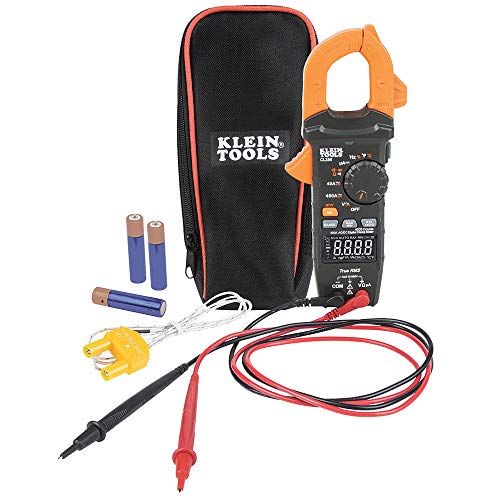
Measure the 120V devices left on your list instead of guessing. A plug-in watt meter at a wall outlet shows each device’s real draw, and a DC clamp meter confirms the amps at the battery.
Measure your loads before you size the wiring

P3 International P4460 Kill A Watt EZ Electricity Usage Monitor

Your Alternator Sets the Real Power Limit
An inverter rating means little once the alternator falls behind. Installers on DIY solar forums put idle output at about 40 to 50% of an alternator’s rating, rising to about 70% in normal driving. A 150A alternator, for example, gives roughly 60 to 75A at idle. Meanwhile, a full 1,000W load needs about 93A, before the truck’s own fans, lights and computers take their share.
Heat sets the second limit. An r/OffGrid commenter called a 100A unit happiest near 50A, with overheating after about 30 minutes at 80A. Consequently, owners run big loads with the engine above idle, or in short bursts. When you size a power inverter for truck camping, I’d check the alternator before the inverter.
Protect the Starter Battery
With the engine off, the battery carries the whole load. Wagan lists a 0.6A no-load draw for both units, or about 14 amp-hours a day if you leave one switched on. Owners on Reddit warn a big load flattens a lead-acid starting battery within minutes. Treat the 10.5V low-battery alarm as a warning, not a plan.
For longer engine-off loads, add a second battery. Our guide on how to wire a second battery correctly compares DC-to-DC chargers and isolators for the job.
Wiring a Power Inverter for Truck Installs
For the wiring itself, Wagan’s manuals give exact numbers. The 1000W calls for a 100A ANL fuse, and the 2000W calls for a 200A ANL fuse. Each fuse mounts within 1 ft of the battery’s positive terminal. Cable size then grows with length. The manuals measure round trip, from battery to inverter and back.
| Round-trip cable length | Pure Line 1000W | Pure Line 2000W |
|---|---|---|
| 6 ft | 4 AWG | 0 AWG |
| 8 ft | 2 AWG | 0 AWG |
| 10 ft | 2 AWG | 00 AWG |
| 12 to 14 ft | 0 AWG | 000 AWG |
| 16 ft | 0 AWG | 0000 AWG |
Both manuals rate the included 3 ft cables for round trips up to 5 ft with the engine running. So mount the inverter close to the battery, then run a heavy-duty extension cord to the bed or cab. Owners on Jeep and van forums describe blown fuses and inverters cutting out under heavy loads.
Safety note: A short on an unfused 12V cable dumps the battery’s full current into the wire, a serious fire risk. Fit the ANL fuse within 1 ft of the battery’s positive terminal, disconnect the battery before you work, and hire an auto electrician if you have never crimped 0 AWG lugs.
Mounting, Grounding and Switching
Mount the unit flat in a dry spot with open air at the front and back, since both models cool with fans. Next, bond the ground terminal to the chassis or the battery negative, as the manuals direct. Finally, add a remote switch or a relay, so the inverter runs only with the engine on. Posters on Tacoma and Jeep forums recommend a relay for this job.
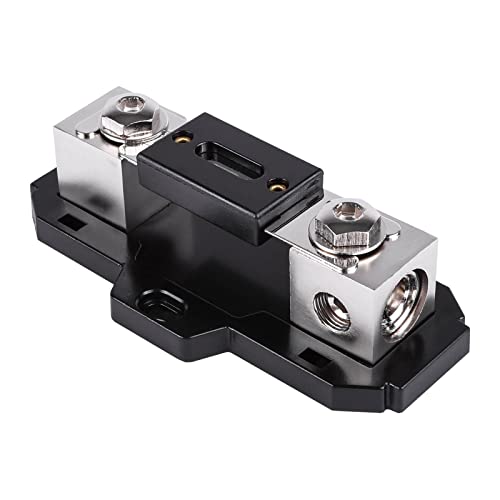
Before install day, buy the parts Wagan leaves out. You need an ANL fuse and holder, cable cut to your run and matching ring lugs.
Install parts Wagan leaves out


TEMCo 1/0 Gauge AWG 10 Ft Black Flexible Pure Copper Made in USA We…

Battery Cable Ends Terminal Connectors Wire Copper Lugs Assortment …
Why Pure Sine Matters on Chargers and Microwaves
Every pure sine wave inverter puts out a smooth wave close to a household outlet. Both Wagan units list 3% total harmonic distortion. In contrast, modified sine and square-wave outputs switch in steps. Ram forum owners trace the EGO charger shutdowns mentioned earlier to the factory square-wave output. One reply warns many plug-in devices need a pure sine source.
For a truck, buy pure sine. One Home Depot reviewer ran fridges, computers and a microwave on a Wagan 1000 with no ill effects. A modified sine 12V inverter costs less, however, and it suits simple resistive loads such as a halogen work light.
Wagan Pure Line 1000: The Right Size for Most Trucks
The Wagan Pure Line 1000 matches what a stock alternator supports with the engine running. It runs a 600W coffee maker or a 320W tool charger with headroom, and its 2,000W surge covers motor starts. At 6.0 lb and 13 x 7 x 3 in, it fits under a rear seat or behind a cab panel.
Owner reports are thin, yet consistent. On Ford Transit forums and Home Depot reviews, owners describe short runs past 1,000W and years of daily use. Several also recommend the optional remote for hidden installs. Small terminal hardware and coil whine each come up once or twice, so check your lugs first. For most trucks, I’d buy this 1000W model as the power inverter for truck camping and spend the savings on proper cable and a fuse.
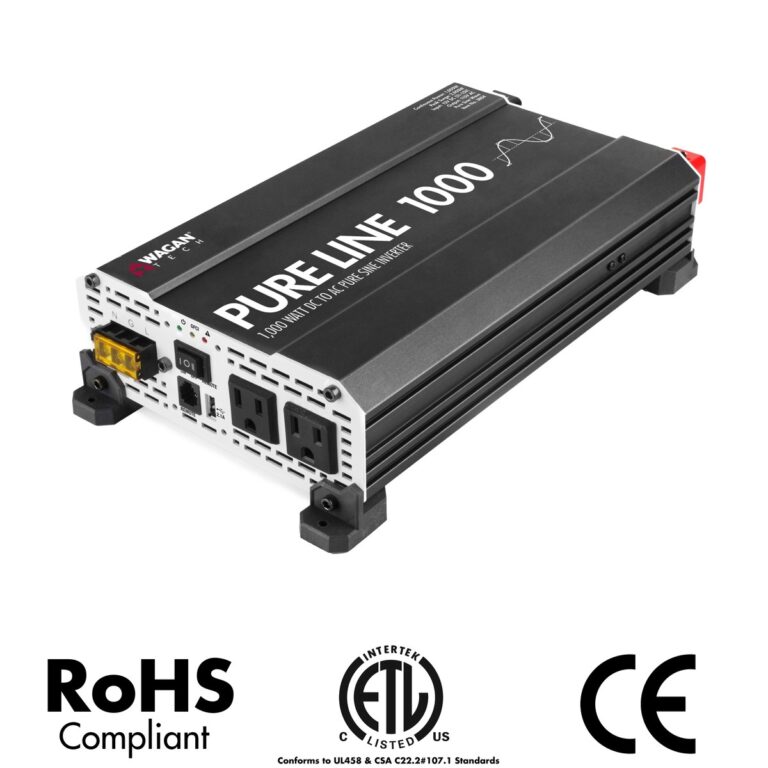
Run 120V Gear Off a Stock Alternator
1,000W TrueRated pure sine output with a 2,000W surge, two grounded AC outlets and a 2.1A USB port. Ships with 6 AWG cables and a 2-year warranty.
Check Price at WaganPure Line 1000 vs. Pure Line 2000
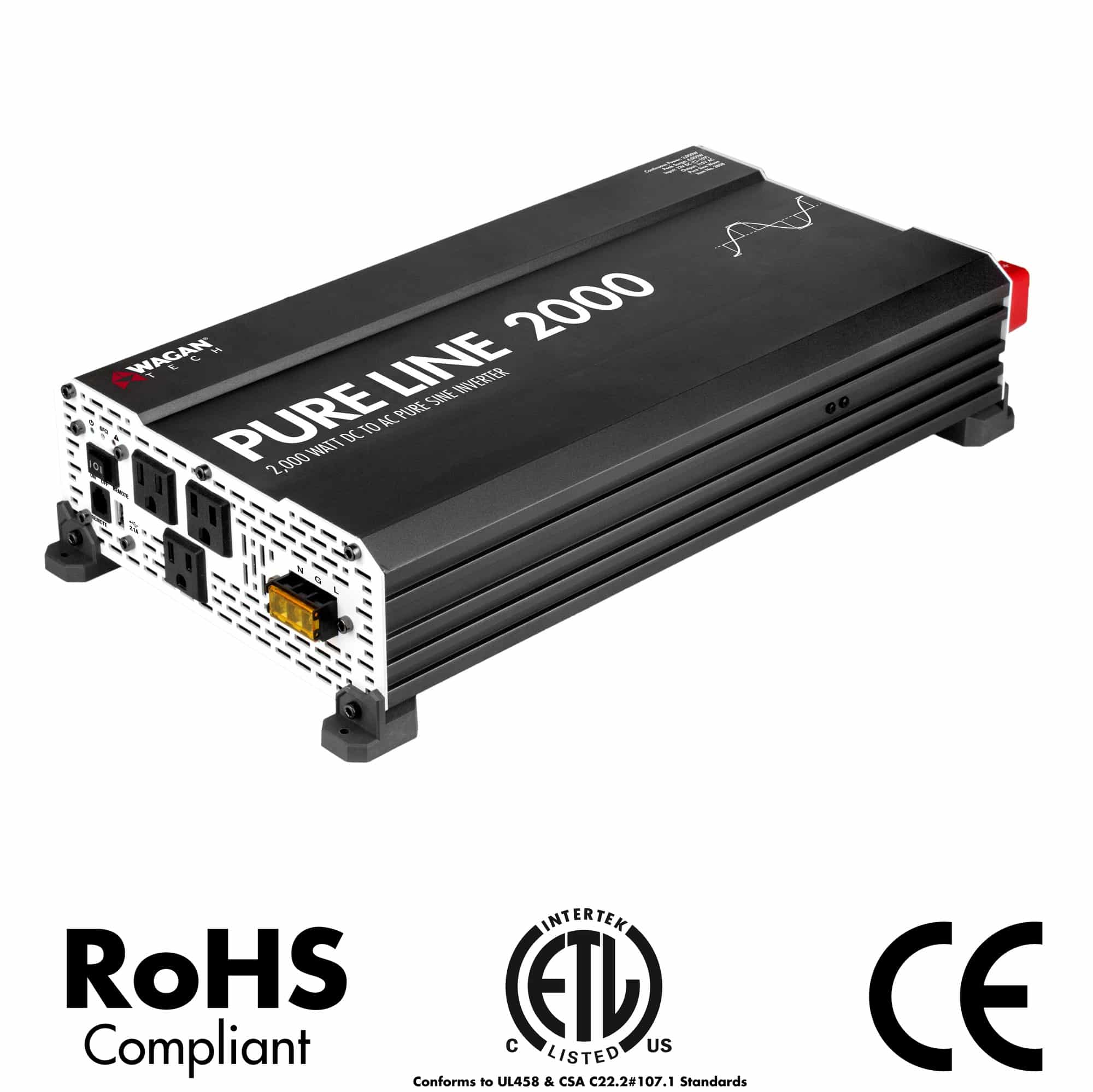
The Wagan Pure Line 2000 doubles continuous output to 2,000W and surge to 4,000W. It also adds a third AC outlet. Both models carry the same high output terminal block. However, it doubles battery current to about 185A at full load. Its manual calls for 0 AWG cable on a 6 ft round trip. It also costs $196 more than the 1000W at prices checked November 11, 2026.
Pick the 2000 watt inverter for a dual-battery or lithium build with a high output alternator, where a microwave or a hair dryer is the goal. Skip it on a stock single-battery truck, since idle output falls far short of 185A. Owner reviews for the 2000W are scarce online, so buyers lean on the shared Pure Line design and the 2-year warranty.
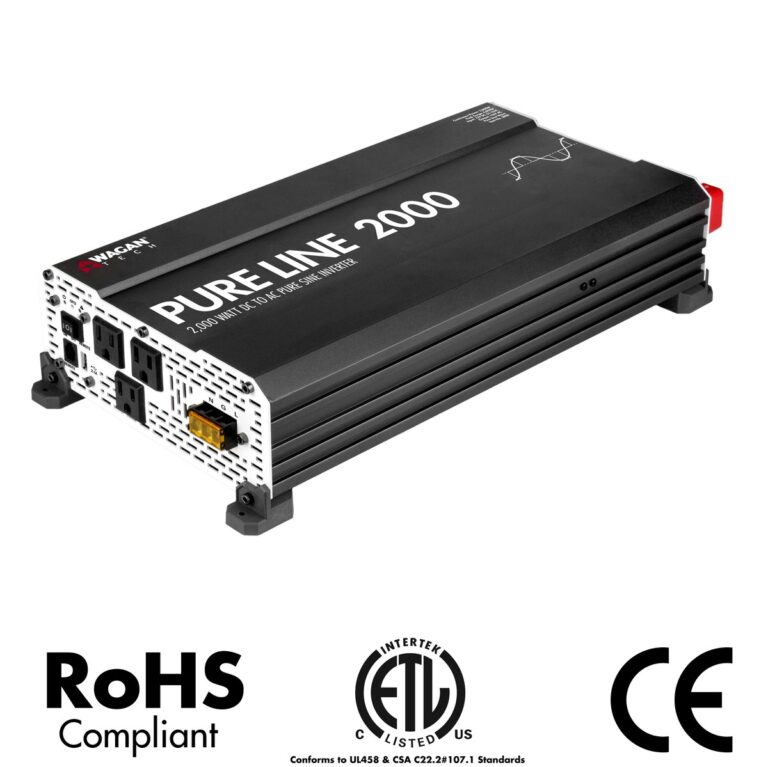
Power a Microwave From a Dual-Battery Build
2,000W TrueRated pure sine output with a 4,000W surge, three grounded AC outlets and a high output terminal block. Backed by a 2-year warranty.
Check Price at WaganFinal Thoughts
A power inverter for truck camping earns its spot once you match it to your charging system. For most trucks, the Pure Line 1000 covers coffee, tool batteries and laptops without straining a stock alternator. It costs $300.97 at Wagan, price checked November 11, 2026. If I wired 120V into my Colorado ZR2 tomorrow, I’d start there, with the fuse and heavy cable in the same cart.
The 2000 watt inverter makes sense only with the battery bank and cable to feed it. Without those, a 185A draw flattens a starter battery fast. If you run a dual-battery build with heavy cable, though, it powers a microwave at camp.
Whichever you pick, budget for the fuse and cable along with the inverter. If you want 120V power with no wiring at all, a power station is the plug-in alternative. Our guide shows how to charge a power station from your alternator while you drive. Either way, respect the alternator math, and your morning coffee at camp comes with a truck ready to start.
FAQ
What size power inverter do I need for my truck?
Add the running watts of everything you plan to run at once, then add about 20% headroom. A 600W coffee maker needs about 720W with headroom. For this load, a 1,000W unit fits a stock alternator best.
What is the largest power inverter suitable for a truck?
With a stock alternator and one battery, about 1,000W is a practical ceiling, since idle output runs 40 to 50% of the alternator’s rating. Larger units, such as a 2,000W model, need a second battery, heavy cable and ideally a high output alternator.
Does a power inverter drain the truck battery?
Yes. A switched-on Wagan Pure Line draws 0.6A with no load, or about 14 amp-hours a day. Under load, 1,000W pulls about 93A, so run big loads with the engine on and switch the inverter off afterward.
What size fuse for a 2000 watt inverter?
Wagan’s manual for the Pure Line 2000W calls for a 200A ANL fuse within 1 ft of the battery’s positive terminal. Pair it with 0 AWG cable for a 6 ft round trip and thicker cable for longer runs.
Is a pure sine wave inverter worth it in a truck?
For tool chargers, laptops and microwaves, yes. A pure sine wave inverter delivers household-style power, and owners report fewer charger shutdowns than on modified sine output. Modified sine still suits simple resistive loads such as a halogen work light.