


Quick Facts:
- Topic: Satellite communicator vs radio for overlanding
- Satellite messengers: Garmin inReach, Zoleo, SPOT (near-global SOS coverage)
- Two-way radios: GMRS handhelds and vehicle-mount units (short-range voice)
- License needed: GMRS requires an FCC license; satellite messengers do not
- Realistic GMRS range: 1 to 5 miles in typical terrain
- Starlink Mini: internet data only, no built-in SOS
- Best for: Overlanders choosing safety and convoy communication gear
8 min read
In This Guide
- Satellite Communicator vs Radio for Overlanding: Two Different Jobs
- Satellite Messengers Compared
- GMRS Radios for Overlanding Compared
- Does a GMRS Radio Need a License?
- Real Range vs. Marketing Claims
- Where Starlink Mini Fits In
- Running Both Together
- Satellite Communicator vs Radio for Overlanding: Choosing What You Need
- FAQ
Satellite Communicator vs Radio for Overlanding: Two Different Jobs
A satellite communicator vs radio for overlanding decision comes down to one question. Are you calling for help, or are you talking to the truck next to you? Satellite messengers and GMRS radios solve different problems. Most experienced overlanders eventually carry both instead of picking one.
A satellite messenger connects to a network of satellites overhead. Notably, it works almost anywhere with sky visibility. This makes it the right tool for solo emergency SOS. It reaches rescue services no matter how far you travel from cell coverage. A GMRS radio broadcasts on the ground, line of sight, which limits its range but delivers real-time voice between vehicles in a convoy.
Neither device replaces the other. A satellite messenger will not coordinate a group crossing a river in real time. A GMRS radio will not reach a rescue helicopter from a canyon fifty miles from the nearest road. This guide compares both categories with current pricing. It then walks through the best satellite communicator for overlanding by use case, plus where Starlink Mini fits in.
Satellite Messengers Compared
Every satellite messenger below runs on the Iridium or Globalstar network and includes an SOS feature monitored around the clock. Coverage stays global as long as the device has a clear view of the sky. Similarly, canyon walls and dense tree cover matter more than distance from town.
| Device | Price | Subscription | Two-Way | SOS |
|---|---|---|---|---|
| Garmin inReach Mini 2 | $349.99 (often near $249.99) | $7.99 to $49.99/mo, Iridium | Yes | Yes |
| Garmin inReach Messenger Plus | $400 | Same Garmin tiers, Iridium | Yes | Yes |
| Garmin inReach Mini 3 Plus | $500 | Same Garmin tiers, Iridium | Yes | Yes |
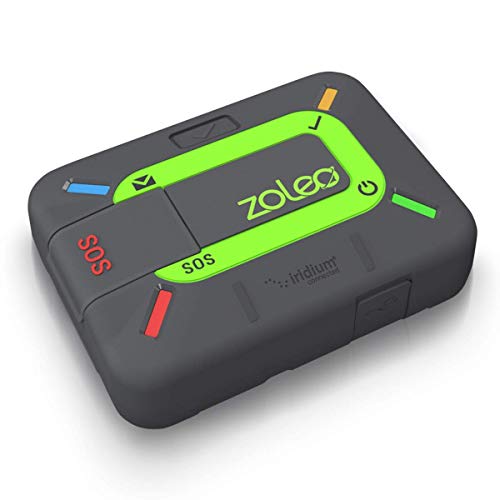
| Zoleo Satellite Communicator | $199 (ZL1500) | $19.99 or $34.99/mo, Iridium | Yes | Yes |
| SPOT X | $250 | $11.95 to $29.95/mo, Globalstar | Yes | Yes |
| SPOT Gen4 | $150 | $11.95 to $16.90/mo, Globalstar | No, one-way only | Yes |
Garmin’s inReach lineup dominates this category. Picking between models mostly comes down to messaging speed and battery life rather than SOS quality, since every device here escalates to a 24-hour monitored response center. The Garmin inReach vs Zoleo debate usually favors Garmin for buyers already using Garmin GPS gear. Zoleo suits buyers who want a lower up-front price with strong messaging reliability. Weigh existing gear ownership as much as raw specs.
SPOT Gen4 stands apart, since it only sends messages one way. It works well as a low-cost tracker for people who mainly want family to see location pings. It cannot receive replies, so it fits poorly as a primary emergency device for solo travel.
What Battery Specs Actually Tell You
Manufacturers test battery life on different intervals, so raw numbers do not compare cleanly across brands. The Garmin inReach Mini 3 Plus runs about 14 days on 10-minute tracking intervals. SPOT X rates around 240 hours of continuous use, while the SPOT Gen4 rates around 156 days at a low-frequency, once-per-hour check-in setting, not daily use. Check each manufacturer’s tracking interval before comparing runtime claims. Longer battery life matters most on extended trips without daily charging access.
Satellite Messengers Featured in This Guide


GMRS Radios for Overlanding Compared
A GMRS radio for overlanding earns its keep during convoy travel, water crossings, and any moment a group needs instant back-and-forth voice communication. Unlike satellite messengers, GMRS radios carry no subscription cost after the one-time license fee covered below.
Transmit power drives most of the real-world range difference between models. The Midland MXT275 pushes 15 watts from a vehicle mount. Handhelds like the Rugged Radios GMR2 Plus and BTECH GMRS-V2 run at 2 to 5 watts instead. Federal rules cap GMRS power at 50 watts. A repeater network extends a signal well beyond a single handheld, especially in mountainous terrain where line of sight breaks up fast.
| Radio | Type | Price | Advertised Range |
|---|---|---|---|
| Midland MXT275 MicroMobile | Vehicle-mount, 15W | $199.99 (street ~$180) | Up to 50 miles (open field) |
| Rugged Radios GMR2 Plus | Handheld, 2W | $85 to $120 | Up to 3 miles |
| BTECH GMRS-V2 | Handheld, 5W | $44.89 to $64.99 | Up to 36 miles (open field) |
Notably, none of these radios include a built-in SOS feature. A GMRS radio only reaches whoever else has a radio on and tuned to the right channel. It depends entirely on your group, not on a monitored emergency network.
Safety note: Do not treat a GMRS radio as an emergency backup for solo travel. Without another radio in range, a distress call on GMRS reaches nobody. Pair it with a satellite messenger for real emergency coverage.
GMRS Radios Featured in This Guide


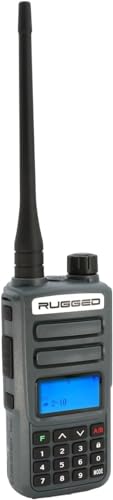
Rugged Radios GMR2 Plus GMRS Handheld Radio for Off-Road & Camping

BTECH GMRS-V2 5W 200 Fully Customizable Channels GMRS Two-Way Radio…
Does a GMRS Radio Need a License?
Yes. The FCC requires a license to operate on GMRS frequencies in the United States. A current application costs $35, down from the historical $70 fee, and the license stays valid for 10 years with no test required.
One license covers your immediate family: a spouse, children, siblings, grandparents, and aunts or uncles. Nobody in this group needs a separate license or per-radio fee. Radios transmitting at 2 watts or below on shared frequencies count as FRS and stay license-free. Anything above 2 watts on those same channels needs the GMRS license. A GMRS radio for overlanding typically transmits well above 2 watts for usable range, so plan on getting licensed before your first trip. Does a GMRS radio need a license for occasional use, too? Yes, the requirement applies regardless of how often you transmit.
Real Range vs. Marketing Claims
Manufacturer range numbers describe best-case, open-field conditions with a clear line of sight, not trail reality. Real-world range reports put realistic handheld GMRS range at 1 to 5 miles in everyday terrain. This falls well short of the 36- to 50-mile claims printed on the box.
Canyon walls, dense forest, and hilly terrain all cut GMRS range further, since the signal travels along the ground and needs a mostly unobstructed path. In contrast, satellite messengers avoid this problem entirely. They connect upward to a satellite instead of sideways to another radio. This is why a satellite messenger, not a radio, remains the right tool for reaching help when nobody else stays in range.

Where Starlink Mini Fits In
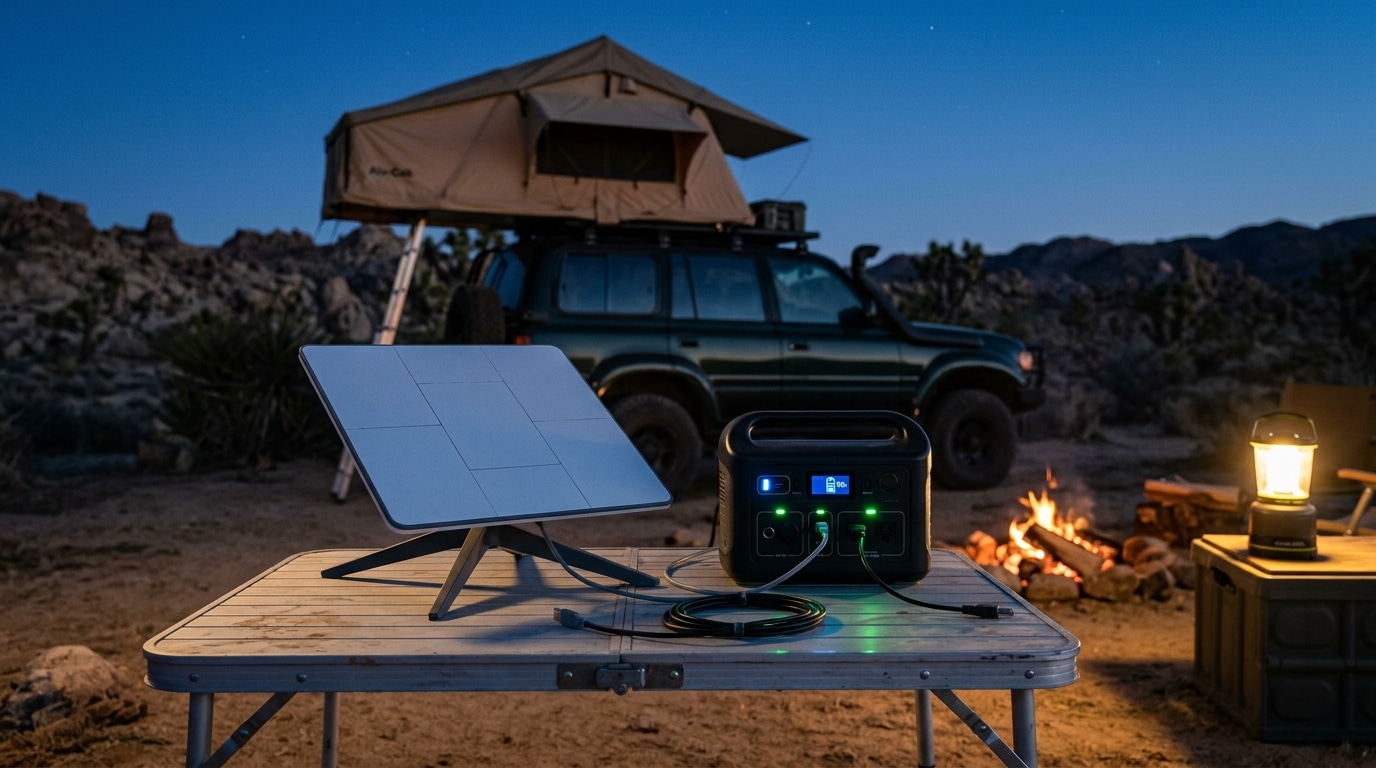
Starlink Mini delivers full internet access from remote camp, including messaging apps, video calls, and email. It carries a current price of $199 with Roam plans starting around $55 per month. It carries no built-in SOS or emergency beacon of any kind, however.
Any emergency use of Starlink Mini depends entirely on a working app, a charged device, and a live connection. If the dish loses power or the connection drops, this safety net disappears at once. A dedicated satellite messenger keeps working through a simple, purpose-built SOS button, independent of any app or data plan. Our Starlink Mini vs. cell booster comparison covers the connectivity side in more depth. Our guide to the best battery packs for Starlink Mini covers keeping it powered off-grid.
Starlink Mini complements a satellite messenger and a GMRS radio rather than replacing either one. Treat it as your internet and convenience layer, not your safety layer.
Running Both Together
Most experienced overlanding groups run a satellite messenger for solo SOS and a GMRS radio for convoy chatter, rather than choosing one system. A typical setup on a self-sufficient remote route pairs one satellite messenger per vehicle with a shared GMRS channel for the group. Our guide to planning a self-sufficient remote route covers how this fits into a broader trip-prep checklist alongside water, fuel, and recovery gear.
This combination costs more than picking a single device. However, it closes the gap each option leaves on its own. Meanwhile, the radio handles routine group coordination. The messenger stays in reserve for the single moment of real value: a genuine emergency far from help.
Satellite Communicator vs Radio for Overlanding: Choosing What You Need
Solo travelers heading into remote terrain need a satellite messenger first. It closes the biggest risk gap, since a solo trip has no convoy to talk to. Every risk scenario assumes you are the only person available to call for help.
Group and club runs benefit most from GMRS radios, since coordinating water crossings, spotting, and trail navigation happens far more often than a true emergency. GMRS range still fails exactly when a real emergency pulls someone out of range from the rest of the group. For this reason, even a well-equipped group should carry at least one satellite messenger.
The best satellite communicator for overlanding usually comes down to Garmin inReach for buyers already inside the Garmin ecosystem. Zoleo suits buyers who want a lower up-front price with comparable SOS coverage. Add Starlink Mini afterward if you want internet access on top of your core safety setup.
FAQ
Do you need a license to use a GMRS radio?
Yes. The FCC requires a $35 license, valid for 10 years with no test, and it covers your immediate family under one license.
What is the realistic range of a GMRS radio compared to a satellite communicator?
Realistic GMRS range runs 1 to 5 miles in typical terrain, far short of advertised 36- to 50-mile claims. A satellite communicator connects to a network overhead instead of another radio, so it reaches help nearly anywhere with sky visibility.
Can a satellite communicator call for help without cell service?
Yes. Satellite messengers like Garmin inReach, Zoleo, and SPOT connect through the Iridium or Globalstar satellite network. Notably, they work independently of cell towers and send an SOS to a monitored response center.
Is Starlink Mini a replacement for a satellite messenger or GMRS radio?
No. Starlink Mini provides internet access only, with no built-in SOS or emergency beacon. It works well alongside a satellite messenger and a GMRS radio, not instead of either one.
Garmin inReach vs Zoleo: which is better for overlanding?
Garmin inReach suits buyers already using Garmin GPS gear, since it shares mapping and account tools. Zoleo offers a lower device price with similar SOS monitoring, a strong pick for buyers prioritizing cost.
Can you run a GMRS radio and a satellite communicator together on the same trip?
Yes, and most experienced overlanding groups do exactly this. First, the radio handles real-time convoy communication. Then the satellite communicator stays ready for a real emergency far from cell coverage.