


Quick Facts:
- Topic: Bypass shocks, remote reservoir shocks and monotube shocks for loaded overland trucks and SUVs.
- Biggest factor: Weight and speed, because heat builds as the damper works harder.
- Monotube cost (October 2026): About $125 per Bilstein 5100 shock.
- Reservoir cost: About $560 per Radflo 2.5 shock, or about $1,750 per pair for the Fox Performance Elite 2.5.
- Bypass cost: About $3,700 for a Fox 3.0 rear kit, or about $5,240 for a Fox 2.5 internal bypass set.
- Service: Fox lists service every 10,000 miles for a 50/50 street and off-road split.
- Best for: Rigs carrying a bumper, winch, drawers, a rooftop tent and water.
8 min read
In This Guide
- Overview: Which Bypass Shocks, Reservoirs or Monotubes Fit Your Rig
- Springs Carry the Weight, Shocks Control the Motion
- Monotube Design: The Value Baseline
- Reservoir Design: More Oil and Cooler Running
- Bypass Shocks: Zones, Tuning and Cost
- Check Shock Heat on Your Own Rig
- Monotube vs. Remote Reservoir vs. Bypass Shocks: Who Needs Which
- Service Intervals and Warning Signs
- Final Thoughts
- FAQ
Overview: Which Bypass Shocks, Reservoirs or Monotubes Fit Your Rig
Bypass shocks, remote reservoir shocks and monotube shocks all promise better control on a loaded truck. Each design solves a different problem, and prices run from about $125 to more than $5,000. Short answer: size the springs to your load first, then pick the shock your driving earns. This guide explains what each design does and which rig earns it.
Weight drives the decision. A bumper, a winch, drawers and a rooftop tent often push a truck beyond its factory shock tuning. Add 20 gallons of water, about 167 pounds at 8.34 pounds per gallon, and the load grows. Our guide to payload capacity and GVWR shows how quickly the total grows.
I drive a 2025 Chevy Colorado ZR2, which ships with Multimatic DSSV spool-valve dampers. For details, see my Colorado ZR2 one-year review. Many trucks ship with conventional dampers, though. Therefore, the sections below explain the shock first, then match each design to the rig carrying it.
To keep the comparison concrete, the grid below shows three rear shocks sold for one truck, the Toyota Tacoma. The Bilstein 5100 is a monotube, and the Monroe OESpectrum 37280 is a twin-tube. Bilstein builds the 5160 with a remote reservoir. Each listing sells a single shock, so a rear axle needs two. Check the fitment on each listing, since the Tacoma is only an example and the sections below define each term.
Three rear shocks for the Toyota Tacoma

Bilstein 24-186728 5100 Series Rear Shock fits 2005 2023 Tacoma 4WD…

Monroe OESpectrum 37280 Suspension Shock Absorber for Toyota Tacoma

Automotive Bilstein 5160 Series 2005-2022 Toyota Tacoma Monotube Sh…
Springs Carry the Weight, Shocks Control the Motion
A shock absorber does not hold up your truck. The spring carries the load, while the damper controls how fast the spring moves. Bilstein says the damper converts motion into thermal energy, so spring movement becomes heat.
This split matters on a loaded rig. ARB, the maker of Old Man Emu suspension, advises choosing springs around constant weight, such as a bumper and winch. As a result, a truck with sag at rest needs springs first. Bolt-in shocks add no lift, although coilovers include the spring and do set ride height.
Weight still changes the damping job. A heavier rig stores more energy in each bump, so the shock turns more energy into heat. Fox notes hotter oil is thinner, which means less damping force and less control. Engineers call this shock fade, and it explains why the three designs below exist.
Monotube Design: The Value Baseline
A monotube uses one tube to hold the oil, the gas and the piston, according to Monroe. Inside, a floating piston separates the oil from the nitrogen, which keeps the gas from foaming the oil. Fox, for example, sets its shocks at 200 psi of nitrogen.
Because the shock body doubles as the cylinder wall, heat leaves faster. Monroe lists cooler running as an advantage over a twin-tube, which nests an inner tube inside an outer tube of reserve fluid. Monotube shocks also mount at any angle, even upside down, while a twin-tube has limits.
The Bilstein B8 5100 is the common entry point, with a 46 mm monotube design. Owners praise its value at about $125 per shock, yet many also describe a stiff low-speed ride on lightly loaded trucks. Bilstein also says the 5100 is sealed and not rebuildable, so you replace it when it wears out.
Reservoir Design: More Oil and Cooler Running
A reservoir builds on the monotube with a separate canister joined to the shock body. One style, the remote reservoir, uses a hose, while a piggyback reservoir mounts directly on the body. Fox says the external reservoir adds oil and nitrogen capacity. More oil gives heat somewhere to go before the fluid thins. As a result, remote reservoir shocks resist shock fade longer on fast, rough roads.
Do not confuse a reservoir with body size. Fox sells 2.5-inch Performance Series shocks with no reservoir and no compression adjusters, while the Performance Elite 2.5 adds both. In addition, Fox says a 2.5-inch body has 23% more surface area than a 2.0-inch body, so it sheds heat faster.
Adjusters earn their keep under load. Low-speed compression controls slow motion such as body roll, while high-speed compression handles sharp hits. Fox says heavy loads such as camping gear call for retuning both. Similarly, many owners keep one setting for an empty commute and a firmer one for a loaded trip.
Expect about $1,750 per pair for the Fox Performance Elite 2.5. A Radflo 2.5 reservoir shock, in contrast, runs about $560 each, as of October 2026.
Bypass Shocks: Zones, Tuning and Cost
Bypass shocks add tubes welded to the outside of the body. According to King Shocks, these tubes let fluid flow around the piston. Each tube also has a valve you set more open or more closed. Because the tubes sit at different points along the stroke, damping changes in zones, softer near ride height and firmer deeper in travel. Many bypass designs also carry a reservoir, so the zones add tuning on top of the extra oil.
This zoning suits fast driving. King says bypass is necessary when you run high speeds over rough terrain. Factory trucks use the idea too. Toyota fitted the 2024 Tacoma TRD Pro with Fox QS3 internal bypass shocks and rear remote reservoirs. Likewise, Jeep fitted the 2024 Gladiator Mojave with Fox 2.5-inch internal bypass shocks and reservoirs. Internal bypass moves the flow channels inside the shock instead of using tubes outside.
Cost climbs fast. A Fox 3.0 bypass rear kit for the Tundra lists near $3,700. For a Tacoma, a Fox 2.5 internal bypass set lists near $5,240, based on October 2026 pages. Moreover, Fox recommends an overhaul each season for non-race bypass shocks, so budget for rebuilds.
Check Shock Heat on Your Own Rig
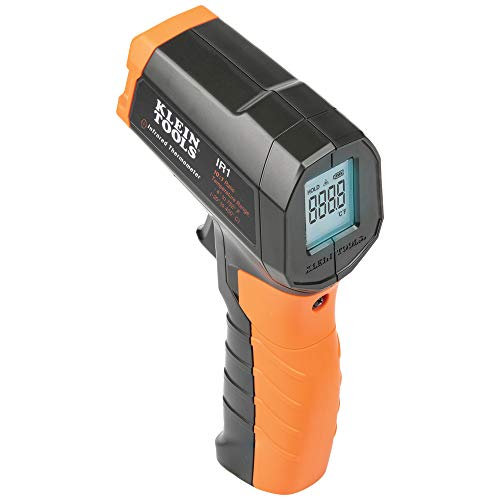
If you already own shocks, heat is one symptom you measure at home. After a stretch of washboard, point a non-contact infrared thermometer at each shock body, always at the same spot. Then compare corners. A shock far cooler than its twin deserves a closer look, since working shocks make heat. If every shock reads hot, ease your pace or revisit your load. Then use the table in the next section to decide what to buy.
Pace plays into this. Our guide to driving washboard roads safely covers pace and tire pressure, and both change how hard your shocks work. Higher speed over the same corrugations means more heat for the same oil.
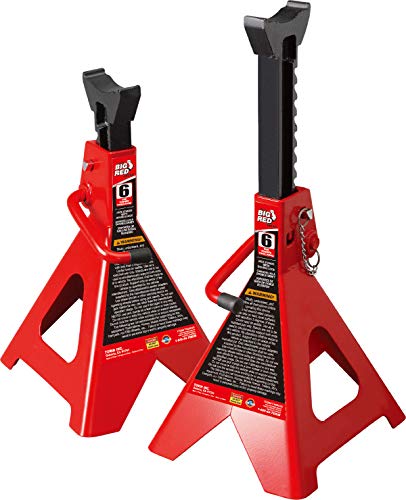
Safety note: Never crawl under a truck held only by a jack. Support the frame on rated jack stands on level ground. Then wait for hot shock bodies to cool before you touch them.
Three tools make the check easier. The Klein Tools IR1 infrared thermometer handles readings. Next, a pair of BIG RED Torin T46002A 6-ton jack stands holds the truck, and the ANYLiGHT 1200LM magnetic rechargeable work light lets you inspect the shaft and seals.
Gear for inspecting your shocks


Monotube vs. Remote Reservoir vs. Bypass Shocks: Who Needs Which
Match the shock to your duty cycle, not your wish list. The table below sums up the three designs, and the paragraphs after it explain the trade-offs.
| Design | Best duty | Heat control | Cost (October 2026) |
|---|---|---|---|
| Monotube | Daily driver, weekend dirt, lighter builds | Single wall sheds heat well | About $125 per shock |
| Remote reservoir | Heavy rigs, long dirt days, towing | Extra oil and surface area | About $300 to $875 per shock |
| Bypass | Fast desert, whoops (closely spaced dips), high-speed washboard | Large bodies plus tunable zones | $3,700 to $5,240 per kit or set |
A daily driver with weekend dirt roads and a light build suits monotube shocks. However, a heavy rig earns remote reservoir shocks, especially with drawers, a rooftop tent and long days on dirt. Before you shop, weigh your overland build, since most rigs weigh more than their owners expect.
Bypass shocks fit fast desert running, whoops and sustained high-speed washboard. For everyone else, owners often call them overkill. Some also report shocks alone did not fix sag under a heavy bumper. Personally, I see the sweet spot for most loaded rigs as a quality monotube or an adjustable reservoir shock, with springs sized to the build first.
Service Intervals and Warning Signs
Fox’s owner’s manual lists service every 50,000 miles for street use and every 10,000 miles for a 50/50 split of street and off-road. Finally, all off-road use calls for service every 1,000 miles. Your own mileage depends on speed and load.
Watch for oil on the shock body, a persistent bounce, nose dive and clunks. Monroe ties clunks to worn shocks or mounting components. A leak softens a twin-tube but stiffens a monotube, according to Bilstein. Thus, a harsh ride does not prove a healthy shock. Bilstein’s academy page explains which shocks are rebuildable.
Final Thoughts
If you carry a lot of gear, start with the weight. Springs hold the truck up, so fix sag first. Then let the shock do its real job of controlling the motion. I would rather see you weigh the rig than spend $3,700 on a bypass set to cover a spring problem.
Each design has an honest trade-off. A monotube is cheap and tough but rides stiff when the truck is empty. Reservoir shocks add heat control, and many add adjusters, though the price and the rebuild bills add up. Bypass shocks reward fast driving, but many weekend overlanders never reach their limit.
If your truck already wears Fox, Bilstein or Multimatic dampers from the factory, drive it loaded before you buy anything. When you do upgrade, take a hard look at your lighter overland rig options, because every pound you remove helps the shocks. Get the weight right, then buy only the shock your driving earns. Spend what you save on fuel and a few more nights at camp.
FAQ
Are bypass shocks worth it for overlanding?
Only if you drive fast over rough ground, such as desert roads and whoops. Many owners call them overkill for casual trips. A monotube or reservoir shock handles most weekend overlanding for a fraction of the cost.
Do bypass shocks or any bolt-in shocks lift a truck?
No. Ride height comes from the springs, so bolt-in shocks add no lift. Coilovers combine the shock and the spring, which is why they set height.
Will bypass shocks fix a sagging rear end?
Not on their own. Sag is a spring problem, and ARB advises choosing springs around constant weight. Shocks then control how fast the sprung weight moves.
Are Bilstein 5100 shocks rebuildable?
No. Bilstein says the B8 5100 is sealed and not rebuildable, so you replace it. Models such as the 8112 and 9200 are rebuildable, per Bilstein.
Do reservoir shocks ride better than a monotube?
Not always. Reservoir shocks control heat better on long, rough days, but owners often report a firm feel on an empty truck. Adjusters, where fitted, help you soften the ride.