


Quick Facts:
- Topic: How a trailer brake controller works, which type to buy, and how to set gain.
- Needed for: Trailers with electric brakes.
- Not needed for: Trailers with surge brakes.
- Two types: Proportional and time-delay.
- Gain test speed: About 25 mph in an open, level area.
- Common legal line: 3,000 lbs of trailer weight in most states.
- Skill level: Beginner.
- Best for: Owners of off-road trailers, campers, and utility trailers with electric brakes.
7 min read
In This Guide
Overview
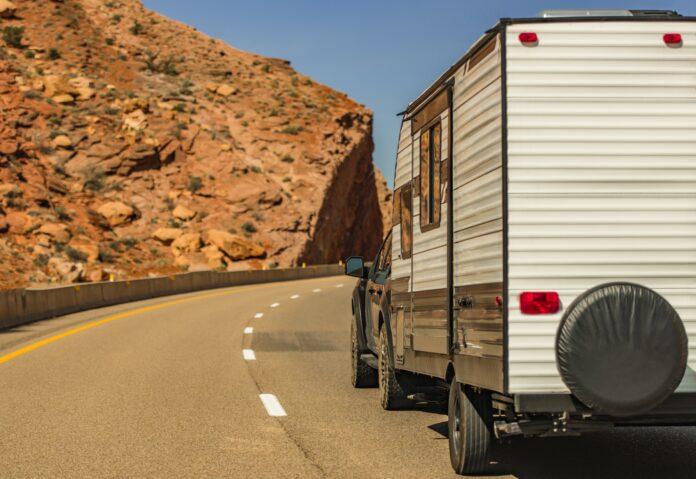
A trailer brake controller sits in your cab and tells your trailer’s electric brakes when to work. When you press the brake pedal, the unit sends power to the magnets in each trailer brake. Electric trailer brakes do not work without one, according to CURT’s towing guide.
Two choices decide how well the setup works: the controller type and the gain setting. The type decides how the unit senses a stop. Gain decides how hard the trailer brakes grab. However, a gain set too low leaves the truck stopping too slowly, while a gain set too high locks the trailer wheels, according to CURT.
This guide covers who needs a controller, how the two types differ, and how to set gain step by step. It also explains what changes when you tow a trailer off-road.
Short answer: buy a proportional unit for trail towing, then set gain with the 25 mph test below. Here is the short version before the details.
| Topic | Answer |
|---|---|
| Needs a controller | Trailers with electric brakes. |
| Needs no controller | Trailers with surge brakes. |
| Controller types | Proportional and time-delay. |
| Gain test speed | About 25 mph. |
| Common legal weight line | 3,000 lbs in most states. |
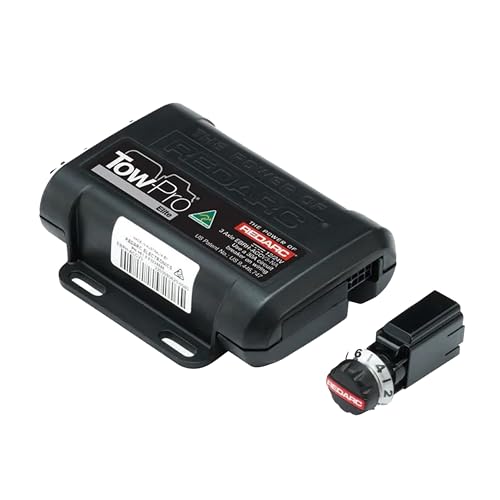
If you already know you need a controller, three are available now. The REDARC Tow-Pro Elite has a proportional everyday mode and a manual off-road mode. Per Lippert, the CURT 51146 TriFlex NEXT is a proportional unit. For phone control, the Tekonsha 90920 Prodigy iD is a smartphone-configured unit for trailers with 1 to 4 axles.
Trailer brake controllers worth a look

CURT 51146 TriFlex Next Proportional Inertia Electric Trailer Brake…

TEKONSHA 90920 Prodigy iD Smart Phone Configured Brake Controller f…
Who Needs a Trailer Brake Controller
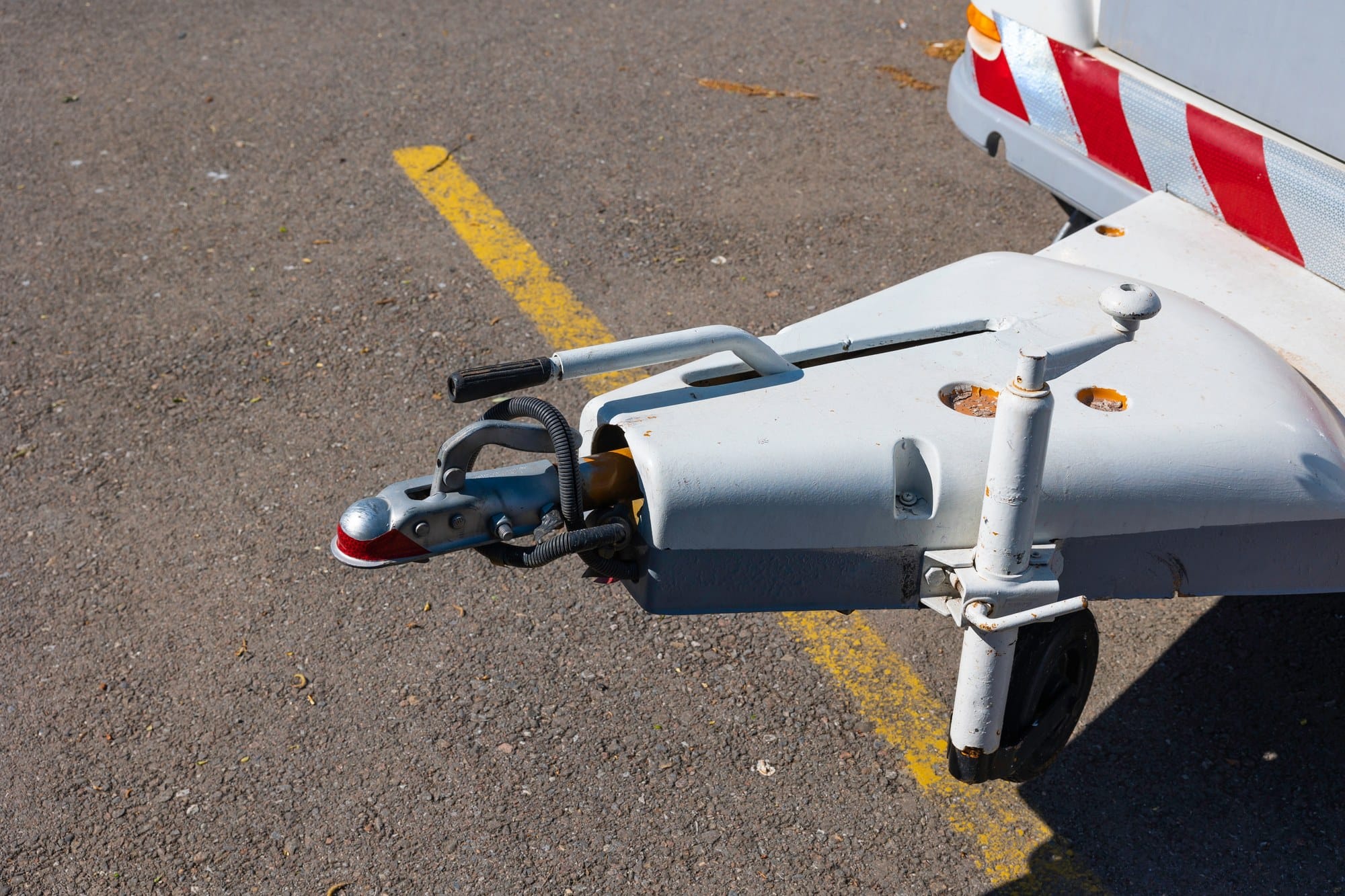
Your trailer’s brake type decides whether you need a controller. Electric brakes need one in the tow vehicle. Surge brakes are hydraulic units run by the trailer’s own momentum, so they need no controller and no electrical link, according to CURT.
State law adds a second reason. RV Travel’s 50-state guide lists 36 states requiring trailer brakes at 3,000 lbs or more, while Kansas and Ohio set the line at 2,000 lbs. The RVIA state table also lists weight limits, stopping distances, and breakaway rules. Check your state before every trip, because the numbers differ.
Some light trailers still use electric brakes. The Hopper Mini squaredrop trailer weighs 1,150 lbs and runs self-adjusting electric brakes, which need a controller in the tow vehicle.
Also, many modern trucks arrive with an integrated controller, as our off-road trailer towing tips explain. First, check the dash and the owner manual before you buy anything. If your truck has none, you need an aftermarket unit and a wiring kit for it.
Proportional vs. Time-Delay Brake Controllers
Lippert and CURT each sort brake controllers into two basic types. Specifically, the difference lies in how the unit senses a stop.
A time-delay brake controller raises power to the trailer brakes over a set period after you press the pedal. It has no internal moving parts, so you mount it at any angle. Cost runs lower too, according to Lippert.
A proportional brake controller uses an accelerometer to sense how hard your vehicle slows. For example, the harder the stop, the more power the trailer brakes get. On a downhill the unit adds power, while on an uphill it applies less, according to CURT.
Lippert recommends a proportional brake controller for heavy loads, fragile cargo, frequent towing, and hilly country. Meanwhile, time-delay units suit light loads and flat roads. Lippert calls the price gap fairly minimal.
| Feature | Time-delay | Proportional |
|---|---|---|
| Braking power | Ramps up over a set time. | Matches how hard the vehicle slows. |
| Hills | No automatic adjustment. | Adds power downhill, less uphill. |
| Internal parts | No moving parts. | Accelerometer. |
| Cost | Lower. | Higher, with a small gap. |
| Best for | Light loads on flat roads. | Heavy loads, hills, frequent towing. |
For me, the choice is easy off-road. Trails mean grades, and grades change what your trailer needs from one stop to the next, so I would buy a proportional unit.
How to Set Gain on a Trailer Brake Controller
Gain is the most power your controller sends to the trailer brakes. CURT advises a higher setting for larger trailers and a lower one for smaller trailers, to avoid brake lockup. The right gain value also changes with your load, so you set it more than once.
Next, read the safety note before step 1, because every test below involves braking at about 25 mph. The steps follow CURT’s procedure.
Safety note: Run every test in a safe, open area with plenty of stopping distance and no other traffic, as CURT advises. Stop the test if the trailer brakes never engage, and check the wiring before you tow.
- Park on level ground at the start of your test area.
- Plug the trailer wiring into the truck, and let the controller calibrate if it self-calibrates.
- Then set gain to the starting value in the manufacturer’s instructions.
- Next, drive forward at about 25 mph and press the brake pedal.
- If the truck stops too slowly, raise gain. If the trailer wheels lock up, lower it.
- Finally, repeat the 25 mph test to set sensitivity, which controls how aggressively the unit applies the brakes.
Also, test the manual button. CURT says most controllers include one, and it applies the trailer brakes without the vehicle brakes. Use it to correct minor trailer sway or to slow gradually on a steep hill.
My advice: set gain on dry pavement, then recheck it with the load you carry. Gear adds weight fast, as our overlanding payload guide shows.

Off-Road Towing With a Trailer Brake Controller
Trail towing adds steep descents, mud, and sand. REDARC built the Tow-Pro Elite with two modes for steep, loose terrain. First, everyday mode is proportional. Second, manual off-road mode gives you user-controlled braking. Thus, you manage the trailer’s speed apart from the vehicle on steep descents, deep snow, mud, and sand, according to REDARC.
The Tow-Pro Elite also mounts in any orientation because of its three-axis accelerometer. REDARC lists it for 12-volt and 24-volt vehicles and 1 to 3 axle trailers, with a 2-year warranty.
A manual button also helps on a grade. For instance, use it to slow gradually on a steep hill or before a stop, as CURT suggests.
Also, a breakaway kit gives you backup braking. If the trailer separates from the truck, the kit applies the trailer brakes automatically. The RVIA state table lists breakaway rules in a separate column from the weight limit, so check both for your state.
A dead connection leaves you with no trailer brakes at all. Test the truck’s 7-way socket with a socket tester before you leave, and carry a spare pigtail made for your controller. Pair the check with your tire routine, since our guide to airing down an off-road trailer covers the tire side.
Three accessories support these steps: the Kohree Trailer Brake Breakaway Kit with a built-in 12V 5AH battery and charger, the CURT 58272 7-pin socket tester, and the Tekonsha 7894 brake control pigtail kit, which Amazon lists for the Tekonsha Prodigy P2 and P3, Primus IQ, Draw-Tite I-Stop IQ and Activator III, and Reese Brakeman Ultra controllers. Match the pigtail to your own controller before you buy.
Trailer brake controller accessories


CURT 58272 7-Pin RV Blade Trailer Wiring Towing Vehicle Socket Tester


Final Thoughts
Thus, a trailer brake controller needs only a correct setup. Set it right, and the trailer brakes match each stop. If gain is wrong, the trailer wheels lock up or the truck stops too slowly.
Lippert recommends a proportional brake controller for heavy loads, hilly ground, and frequent towing, and calls the price gap fairly minimal. A time-delay brake controller still makes sense for a light trailer on flat roads.
The trade-offs are modest. Proportional units cost more, and every unit needs a gain check each time your load changes. However, a short test in an empty lot confirms your gain setting.
For my own taste, I would pick a proportional unit with a manual mode for any trail trailer. Finally, run the 25 mph test before your next trip, so you know your gain setting is right.
FAQ
Do I need a trailer brake controller?
Yes, if your trailer has electric brakes. CURT says electric brakes do not work without a controller. Many states also require trailer brakes at 3,000 lbs or more, so check your state’s rule.
What is the difference between a proportional and a time-delay brake controller?
A proportional unit uses an accelerometer to match trailer braking to how hard your vehicle slows. Time-delay units raise braking power over a set period. Lippert favors proportional units for heavy loads and hills.
What should I set my trailer brake gain to?
Start with the manufacturer’s value. Then test at about 25 mph in an open area. Raise gain if the vehicle stops slowly, and lower it if the trailer wheels lock up.
Does a surge-brake trailer need a controller?
No. Surge brakes are hydraulic and work from the trailer’s own momentum, so they need no controller and no electrical link to the tow vehicle, according to CURT.
How often should I retest trailer brake gain?
Retest whenever your load changes. CURT says to set output based on trailer and load size, so a loaded trailer needs a different setting from an empty one.
Does the REDARC Tow-Pro Elite have an off-road mode?
Yes. REDARC lists a manual off-road mode with user-controlled braking, plus a proportional everyday mode for regular towing.