


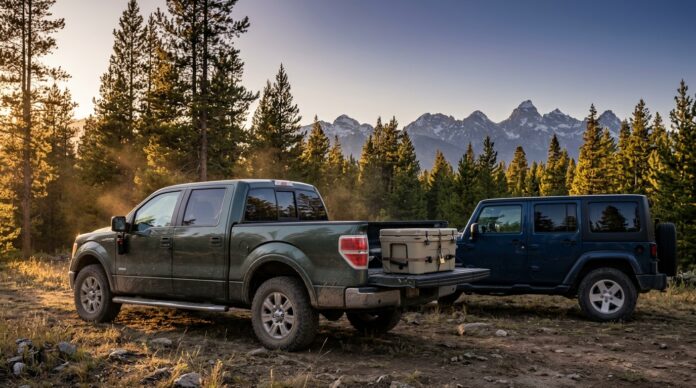

Quick Facts:
- Topic: Bear country food storage for vehicle-based campers
- Legal basis: Forest-issued orders under 36 CFR 261.58(cc)
- Penalty: Class B misdemeanor, up to $5,000 and six months
- Vehicle rule: A closed hard-sided vehicle complies in most grizzly forests
- The exception: The NCDE order names only an RV, trunk, cab, or trailer cab
- Hang standard: 10 feet up, 4 feet out from any support
- Bear spray: 92% effective on brown bears (Smith et al. 2008)
- Best for: Anyone camping off pavement in Montana, Wyoming, Idaho, or Washington
16 min read
In This Guide
- Bear Country Food Storage Is a Legal Question First
- What Bear Country Food Storage Orders Require
- Does a Hard-Sided Vehicle Count?
- Where the Vehicle Rule Breaks Down in Bear Country
- IGBC Certified Bear Containers and What the Test Proves
- Bear Spray: What the Research Shows
- The Rodent Problem You Inherit From Bear Rules
- Clean Camp Practice in Grizzly Bear Country
- What Happens When Bear Country Food Storage Fails
- Vehicle vs. Certified Bear Container
- Final Verdict: Your Bear Country Food Storage Plan
- Frequently Asked Questions
Bear Country Food Storage Is a Legal Question First
Bear country food storage reads like a safety topic. On national forest land, though, it starts as a legal one. Most grizzly-country forests run a standing order issued under 36 CFR 261.58, and breaking it is a Class B misdemeanor. The fine reaches $5,000 for a person and $10,000 for an organization, with up to six months of jail time on the books.
Vehicle campers get off lightly, though. Across the five major grizzly-country orders reviewed here, a closed hard-sided vehicle satisfies the order on its own. No canister, no hang, no locker either. Meanwhile one major order words the allowance narrowly. It matters for anyone sleeping out of a pickup bed, and it covers one of the largest blocks of grizzly forest in the lower 48.
Rules and practice also pull in different directions here. Storing food inside the rig keeps you legal. Agency camp-layout guidance, though, asks you to sleep 100 yards from where food sits. Meanwhile a rooftop tent puts you zero yards away. Both statements are true at once, so this guide names the tension instead of papering over it.
Every rule and figure below comes from an order, a park regulation, or published research, with the gaps named where they exist. If you use our state guides for dispersed camping in Montana, read this alongside them.
What Bear Country Food Storage Orders Require
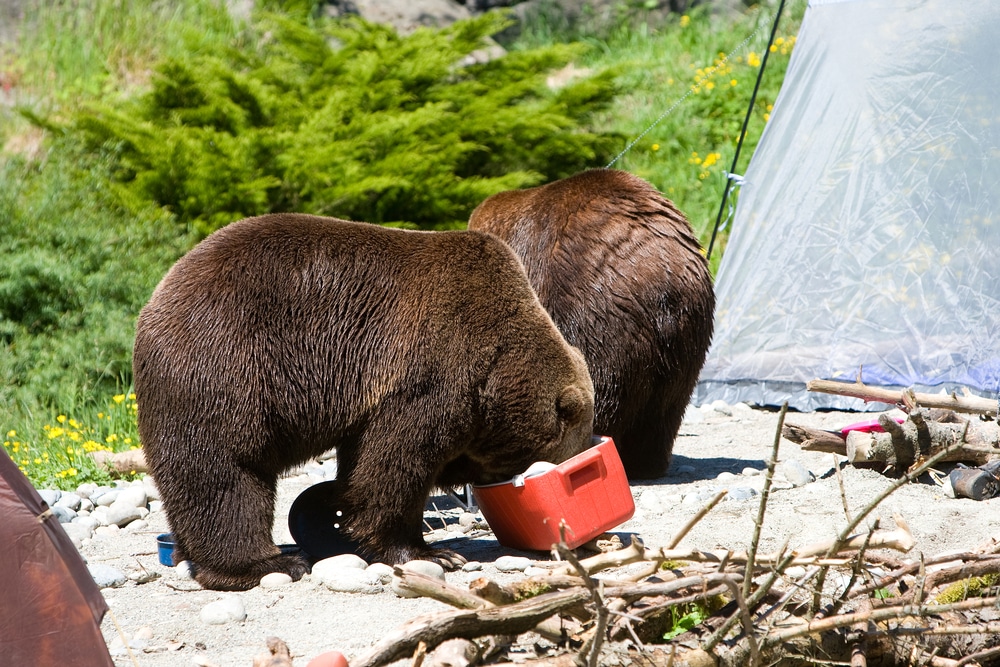
Each forest issues its own order, so boundaries follow ranger districts rather than state lines. The Interagency Grizzly Bear Committee keeps a master index of every order by state. Using it is the fastest way to find the one covering your route. Below are the major orders and their seasonal windows.
| Forest or area | Order | Season |
|---|---|---|
| Flathead, Lolo, Kootenai, Helena-Lewis and Clark, parts of Beaverhead-Deerlodge (Northern Continental Divide Ecosystem) | R1-2023-02 | March 1 to December 31, through 2028 |
| Custer Gallatin (Beartooth, Bozeman, Gardiner, Hebgen Lake, Yellowstone RDs) | 01-11-00-23-02 | March 1 to December 1, annually |
| Bridger-Teton and Shoshone (joint) | 04-03-330 / 16-001 | March 1 to December 1, annually |
| Caribou-Targhee (Teton Basin, Ashton/Island Park, Dubois RDs) | Signed June 2023 | March 1 to December 1, through 2028 |
| Idaho Panhandle, north of the Clark Fork | Forest alert | April 1 to December 1, annually |
The Four Compliant Methods
Every order gives you the same three methods, and several add a fourth. Store attractants in a certified bear-resistant container, hang them at least 10 feet up and 4 feet out from any supporting tree or pole, or keep them in a closed hard-sided vehicle or building. Several orders also accept a properly installed electric fence, which is the compliant method almost nobody uses.
Read the hang standard carefully, because the wording shifts between forests. The NCDE order measures 10 feet from the bottom of the suspended item. Reading it as 10 feet of rope is therefore too loose. Yellowstone adds a practical note. You need at least 35 feet of rope to make a legal hang work.
Attractants Cover More Than Food, and Disposal Has Rules Too
Notably, the attractant definition catches items most campers overlook. The NCDE order names soft drinks, alcohol, personal hygiene products, pet food, and empty food and beverage containers alongside food itself. Livestock feed counts too, although baled or cubed hay without additives is exempt. Similarly, Yellowstone extends the list to coolers, stoves, lip balm, sunscreen, bug spray, and wash basins.
Disposal carries its own rule, and it is a legal requirement rather than a courtesy. Under the NCDE order, attractants shall not be buried, discarded, or burned in an open campfire. Three options remain. Pack them out sealed, burn them in a contained stove fire, or burn them inside a tin over a campfire and pack out the residue.
Safety note: Check the specific order before your trip, since coverage has holes. The Custer Gallatin order covers five ranger districts and leaves out Ashland and Sioux. On the Helena-Lewis and Clark, the Crazy Mountain Range sits outside the NCDE order. In short, boundaries follow districts rather than forest names on a map.
Four certified hard-sided coolers named earlier compare below, with lock points listed since a certified cooler counts as certified only when padlocked.
| Top Pick | Best Compact | Made in USA | Best Capacity | |
|---|---|---|---|---|
| Product | TOP PICK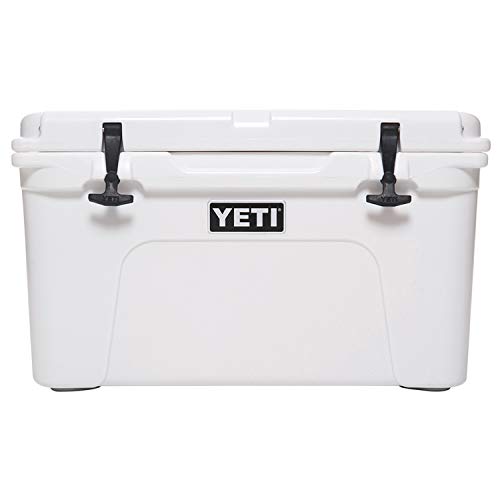 YETI Tundra 45 YETI Tundra 45 |  Canyon PRO45 Canyon PRO45 |  Grizzly G45 Grizzly G45 |  Bison 75 Qt Bison 75 Qt |
| Rating | ★★★★★ 4.8 858 ratings | ★★★★★ 5.0 11 ratings | ★★★★★ 4.8 8 ratings | ★★★★★ 4.9 114 ratings |
| Capacity | 45 qt | 45 qt | 45 qt | 75 qt |
| Lock Points | T-Rex latches, padlock ready | Padlock required, IGBC listing | 2 lock holes, built in | Padlock required, IGBC listing |
| Price | $299.99 as of Sep 20, 11:08 pm | $429.00 as of Sep 20, 11:08 pm | ||
| Check Price → | Check Price → | Check Price → | Check Price → |
Does a Hard-Sided Vehicle Count?
Almost always yes on national forest land, although the exact phrasing varies in ways affecting pickups, camper shells, and trailers. Specifically, three different formulas appear across the major orders, and the difference is not cosmetic. Compare them side by side before you assume your setup complies.
The Broad Wording, Used by Four Forests
Custer Gallatin and Caribou-Targhee use word-for-word identical language, and it is the most vehicle-friendly wording found. Attractants stay legal inside a closed vehicle, trailer, building, or facility built of solid, non-pliable material. The order adds a test: no openings, hinges, lids, or coverings a bear opens by breaking, bending, tearing, biting, or pulling with its claws. Finally, any windows must be closed.
Bridger-Teton and Shoshone narrow it slightly, keying the rule to the storage compartment rather than the whole vehicle. They also drop the trailer, building, and facility language the other two carry. Custer Gallatin and Caribou-Targhee add a livestock-trailer condition instead. Specifically, openings stay under 10 inches in two dimensions, with contents kept more than three feet from any opening.
The Narrow Version Overlanders Should Read Twice
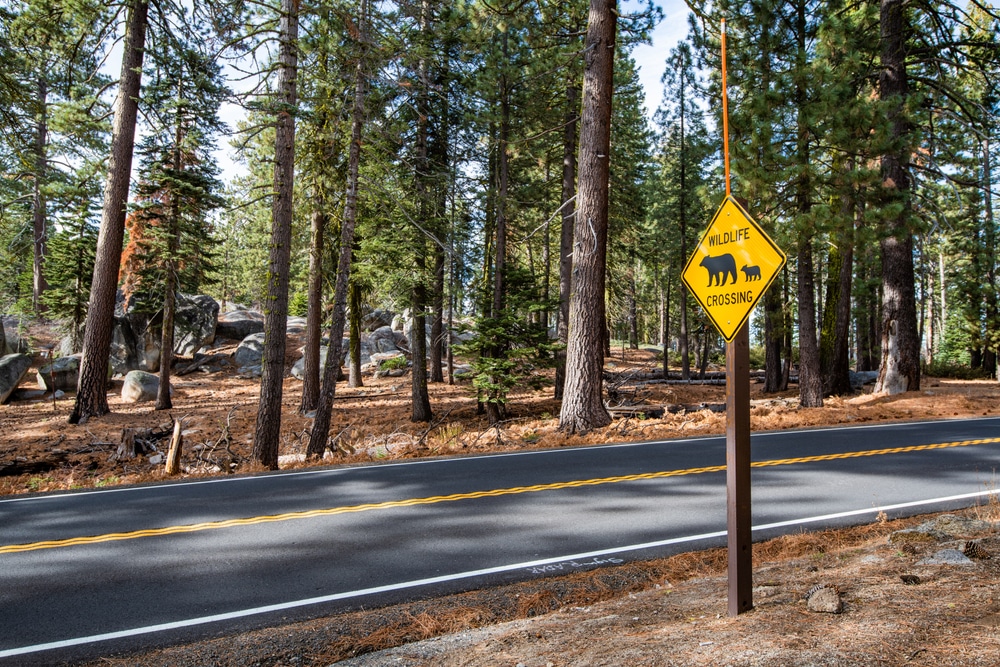
The NCDE order does not use a general hard-sided vehicle formula at all. Instead it enumerates four places: a hard-sided Recreational Vehicle, a vehicle trunk, a cab, or a trailer cab. Nothing in the list describes an open pickup bed, and nothing in it describes a bed under a soft tonneau. The Idaho Panhandle forests use the same enumerated approach. They tell readers plainly to store items in the trunk when camped near a vehicle.
The NCDE covers the Flathead, Lolo, Kootenai, Helena-Lewis and Clark, and part of the Beaverhead-Deerlodge. Together they form one of the largest blocks of grizzly-country forest in the lower 48. A camper shell probably satisfies the broader orders, since it is solid and non-pliable. Under the enumerated list, though, no published agency answer names camper shells either way. Therefore call the district office rather than guessing.
Configuration by Configuration
Run your own setup down this table before the trip. The verdict column reflects the order wording, while the basis column names the source behind it.
| Setup | Verdict | Basis |
|---|---|---|
| SUV cargo area or sedan trunk, windows closed | Complies everywhere examined | All five orders |
| Truck cab | Complies | NCDE names the cab directly |
| Open pickup bed | Does not comply | Not closed; Yosemite bans it outright |
| Soft tonneau over a bed | Does not comply | Fails solid, non-pliable on its face |
| Hard camper shell | Likely under broad orders, unclear under NCDE | No published agency answer either way |
| Pop-up or soft-sided camper | Does not comply | Grand Teton names canvas-sided pop-ups directly |
| Enclosed cargo trailer | Complies under the broad orders | Custer Gallatin names trailers |
| Cooler sitting out in camp | Attractant in its own right | Yellowstone lists coolers as attractants |
The Rooftop Tent Question in Bear Country
No agency guidance specifically addresses rooftop tents, so anyone claiming otherwise is guessing. What holds up is narrower, though. Storing food in a closed hard-sided vehicle satisfies every Forest Service order reviewed here, subject to the NCDE wording above. Notably, nothing in those orders prohibits sleeping above the rig holding the food.
Camp-layout guidance still pulls the other way. Yellowstone tells backcountry campers to sleep at least 100 yards from where they cook, eat, and store food, preferably upwind. A rooftop tent over a loaded galley is zero yards. Compliance and best practice therefore diverge here, and pretending otherwise helps nobody.
Here is the call. Store food in the cab or trunk, sleep above it, and accept the compliance win, since the orders ask for exactly this and most overlanders already do it. On nights with strong-smelling food, fresh fish, or an active bear report nearby, buy the separation back by moving food into a certified container placed well away from the rig. The rig handles the legal problem, while distance handles the odor problem, and they are not the same problem.
Where the Vehicle Rule Breaks Down in Bear Country
Five places break the pattern, and three of them sit on routes overlanders drive regularly. Learn them before you rely on the rig as your storage plan.
Yosemite prohibits food in a vehicle after dark, full stop. During daylight only, you store food inside the car out of sight with windows closed. After dark, though, it goes in a locker. Failure then brings a fine up to $5,000, plus possible impoundment of your food or your car. Yosemite has no grizzlies, so this is a black bear behavior problem rather than a grizzly rule.
Two Parks That Restrict Containers Instead
Grand Teton goes the other way and restricts containers instead. In front country areas, certified canisters, panniers, coolers, and containers fail as stand-alone storage, even when secured as the maker prescribes. Instead, food goes in a locker or inside a hard-sided vehicle with doors locked and windows closed. Pop-up trailers with canvas sides also fail the hard-sided test.
Yellowstone accepts only hard-sided containers from the certified list. Soft-sided products hold certification too, and Yellowstone excludes them anyway on the hard-sided rule. Olympic runs its own approved list. Anything not on the list is not permitted, regardless of what makers or product testers claim. Rocky Mountain requires all coolers secured when a site sits unattended, and it names Yeti specifically as an example.
Safety note: BLM land is a live question right now. At the Interagency Grizzly Bear Committee meeting on July 21, 2026, BLM said it will issue an informal food storage advisory rather than formal orders. Its director had raised concerns about punitive fines. BLM manages roughly 8.3 million acres in Montana, so read local signage. Assume the biological rules apply even where the legal ones do not.
IGBC Certified Bear Containers and What the Test Proves
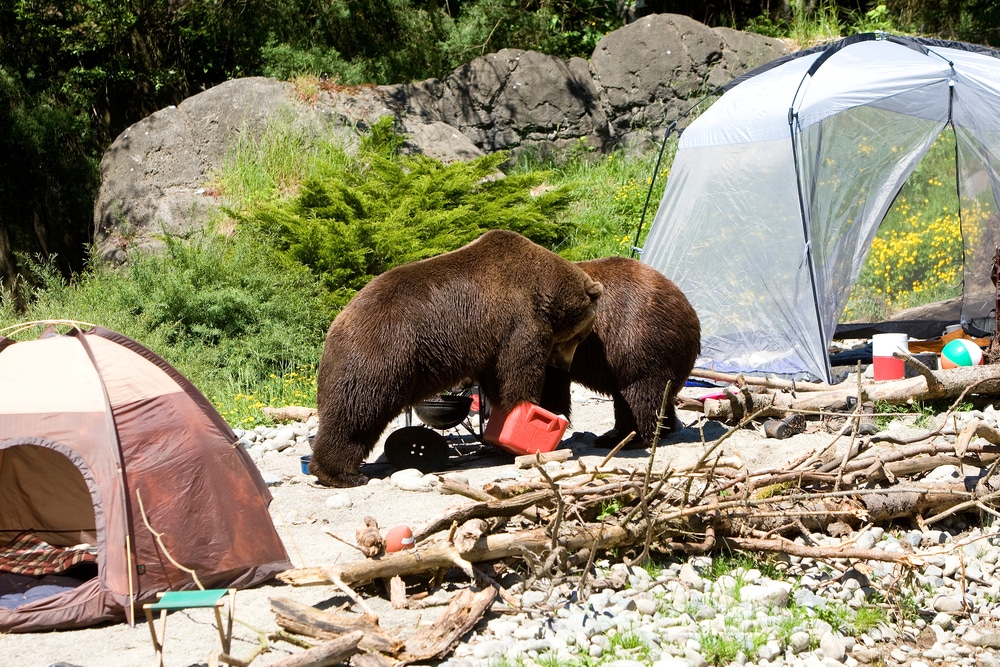
Certification is not a marketing badge. Testing happens at the Grizzly and Wolf Discovery Center in West Yellowstone and at the bear center in Pullman, using live grizzlies. Roughly 500 products from more than 100 makers hold a listing, and the certified product list is public.
The live test runs until the product fails, until the bear loses interest, or until 60 minutes of bear contact time has passed. Contact time counts biting, clawing, pounding, rolling, flipping, compressing, chewing, and scratching. Licking and sliding along the ground, however, do not count. The clock also stops if the bear drags the product into water.
Passing means no gaps, tears, or holes of a quarter inch or more at any point during the test, measured through the inner layer for coolers. Attractants go inside and also outside at seams, gaps, and latches. Therefore the test rewards a design with no exploitable edge. Metal boxes qualify under the same standard, including a spec calling for 12-gauge aluminum or 14-gauge steel.
The Padlock Requirement Most Buyers Miss
Notably, a certified cooler is only certified when locked. The certified list header states it directly: coolers require bolts and nuts or appropriately sized padlocks. Meanwhile the testing protocol adds the reason. If lock shanks run long enough to open a quarter-inch gap between lid and body, the cooler automatically fails.
Buying a certified cooler and leaving the latches unlocked therefore gives you an expensive box with no legal standing. The number of padlocks varies by model rather than by rule. Instead, follow the maker’s spec for the model you own. Our roundup of the best coolers for overlanding and truck camping flags which models carry the listing.
What Does Not Carry Certification
Meanwhile drawer systems are the honest gap. No aluminum drawer brand appears on the certified list. Buildable designs do appear, including a Shoshone National Forest steel bear box and a modified ammo box, so a shop-built unit is not automatically out. IGBC also runs a free courtesy inspection program for personal-use builds, which gives a one-off box an opinion without a formal cert.
Brand assumptions also fail here, since certification is model-specific. YETI, Canyon, Grizzly, Bison, Blue, Cold Bastard, GoatBox, Lone Mountain, and Wyld Gear appear on the confirmed list. Several familiar cooler brands, however, do not. Therefore check the list rather than the marketing copy, since a rugged cooler and a certified cooler are separate claims.
Bear Spray: What the Research Shows
Bear spray carries the strongest evidence base of anything in this article. For example, Smith and colleagues analyzed 83 incidents in Alaska between 1985 and 2006. Spray stopped the undesirable behavior in 92% of brown bear cases, 90% of black bear cases, and both polar bear cases. Notably, 98% of people carrying spray came through uninjured. The IGBC summarizes the same finding.
Notably, the firearms comparison is the part worth reading twice. A companion study of 269 incidents found handguns successful 84% of the time and long guns 76%. Notably, no statistically significant difference separated them. More telling, firearm bearers suffered the same injury rates whether they used the firearm or not. Bears, in contrast, died in 61% of those incidents.
Practical details from the same research matter on the trail. Wind interfered with accuracy in 7% of cases, although the spray reached the bear every time. Bears resumed threatening behavior after the first burst in 18% of cases. Repeated spraying is therefore normal rather than a failure. For context, mean distance at the moment of spraying was about 4 meters.
Heat, Storage, and the Mistake Vehicle Campers Make
Bear spray ruptures at 120 degrees Fahrenheit. Yellowstone states the storage rule bluntly: keep it out of the passenger compartment of vehicles and away from heat sources. One maker repeats the same 120-degree limit and names an enclosed vehicle as the example to avoid. In short, a dash-mounted canister in July is the exact failure mode.
Shelf life runs roughly three to four years from purchase. The Alaska researchers recommend discarding a canister once contents fall below 90% of the original weight. Therefore weigh it rather than shake it. Carry it in a hip or chest holster instead of a pack, and keep a second canister in the cooking area.
Safety note: Bear spray is not a repellent. The IGBC and the Park Service both state it works only as an airborne deterrent sprayed as a cloud at an aggressive animal. It should never go on people, tents, packs, or gear, because residue draws bears in. Also note Yosemite prohibits bear spray outright, and FAA hazmat limits keep it off commercial aircraft in both the cabin and checked baggage.
The Rodent Problem You Inherit From Bear Rules
Complying with the order creates a second problem nobody warns you about. Food in the cab is the legal place for it. It also draws mice, pack rats, and marmots into the vehicle. Once inside, they chew wiring. No agency source connects these two facts, so treat the link as our reading rather than published guidance.
The marmot problem at Mineral King in Sequoia and Kings Canyon is the best documented case. For example, marmots eat radiator hoses and car wiring, and the park says plainly they disable vehicles. Several have ridden out of the park inside engine compartments, with a few reaching southern California.
The Chicken Wire Advice Has Been Withdrawn
Notably, this is a genuine reversal worth knowing. The park now advises against wrapping chicken wire around the vehicle, since marmots learned to get around it. Instead, rangers recommend driving onto a tarp and wrapping it around the whole vehicle, covering the wheel wells, from early spring to mid-July.
The Pre-Start Engine Bay Check
The park also publishes a pre-start inspection sequence, and it is the most useful checklist in this section. First, look under the hood before starting. Check hoses, belts, wiring, insulation, and coolant level. Next, look underneath for coolant or brake fluid leaks. Turn the key to on without starting and confirm every indicator light comes on, since dark lights point to damaged wiring. Then start the engine and listen.
The Soy Wiring Lawsuits, Accurately
You will read claims about soy-based wire insulation attracting rodents. The litigation record is thinner than the headlines. A class action against Toyota was dismissed in 2018. In 2020 the Ninth Circuit affirmed dismissal of the fraud and consumer claims, noting the infrequency of reported damage, while reviving only warranty claims on a pleading point. To date, no court has found soy insulation attracts rodents.
Repair cost figures deserve the same caution. Published ranges run from a few hundred dollars to well over $5,000. Those come from vendors with a product to sell rather than from independent data. Comprehensive auto insurance generally covers rodent damage as non-collision loss, subject to your deductible. Liability-only coverage, in contrast, does not.
The lock below fits directly on cooler latches, since an unlocked certified cooler holds no legal standing under an order.
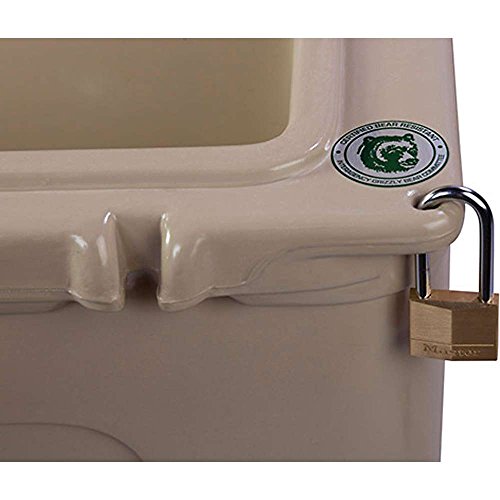
YETI Bear Proof Locks
Two solid brass padlocks tested with wild grizzly bears, sized to fit YETI Tundra and Roadie cooler latches.
Clean Camp Practice in Grizzly Bear Country
Legal compliance and low risk overlap without being identical. The habits below all carry agency sourcing, and they cost nothing beyond attention. Our Leave No Trace camping guide covers the wider ethic behind them.
First, separate the three zones. Yellowstone says sleep at least 100 yards from where you cook, eat, and store food, preferably upwind. Meanwhile the Idaho Panhandle forests say uphill instead. Both agencies qualify it as a preference rather than a rule. In vehicle camping the triangle collapses, so buy back what distance you have. For example, cook away from the rig and eat there too.
Next, keep cooking clothes out of the tent. Yellowstone tells campers never to cook in a tent and never to sleep in clothing worn while cooking. The Idaho Panhandle forests add a detail worth copying. Never use tent or sleeping bag stuff sacks for food, garbage, cooking gear, or cosmetics, since the smell transfers to your sleeping kit.
Finally, handle water and scraps deliberately. Yellowstone directs campers to strain food particles from dish water and scatter the liquid at least 100 yards from the tent site. Food scraps come out of fire pits too. Olympic, in contrast, uses 200 feet from a campsite or water source. The Idaho Panhandle forests also direct campers to pack out used menstrual products sealed in a plastic bag rather than burying or burning them. Our guide to camp cooking and food storage solutions covers the kit side.
What Happens When Bear Country Food Storage Fails
The numbers make the stakes concrete. In the Northern Continental Divide Ecosystem during 2024, managers responded to at least 206 human-grizzly conflict incidents. Another 95 reports came in without conflict behavior. In addition, they applied 631 tools or actions to prevent conflict and took 48 more involving captured bears.
Mortality follows conflict directly. The same report documented 36 known or probable grizzly deaths in or near the NCDE in 2024. Among 28 independent-bear deaths, agency removal over human-bear conflict was the single largest cause at 10 animals. Three cubs, in addition, lost their mother to a defense-of-life killing. Two more lost theirs to an agency removal.
The Greater Yellowstone Ecosystem tells a similar story at larger scale. Preliminary study team data reported in late 2025 put grizzly deaths there at 72, tying the record. Consequently the count runs roughly a third above the ten-year average of 54. Specifically, of those 72, 50 were human-caused. Eighteen died over conflicts such as raiding garbage cans, property damage, and habituation to people and food.
What Agencies Do With a Food-Conditioned Bear
Agencies say the consequence plainly. Park Service incident reporting describes food-conditioned bears as usually removed from the population, by placement in zoos or by euthanasia. The phrase about a fed bear being a dead bear comes from exactly this. Similarly, Glacier states bears seeking human food must be removed from the park to protect human life and property.
From experience: The camps I see doing this well are not the ones with the most expensive gear. They are the ones with a routine: food goes in the cab, the cooler gets locked, and somebody walks the site for wrappers, every night in the same order. Almost every sloppy camp I have walked past in grizzly bear country was sloppy because nobody owned the job, not because somebody lacked a certified box. Assign it like you assign the fire.
Vehicle vs. Certified Bear Container
Both satisfy the orders in most grizzly forests. The decision therefore turns on where you camp and how your rig is built. Your rig costs nothing, since it is already there. A certified container costs real money and takes up space you were using for something else.
Your rig wins with a hardtop SUV or a truck with a usable locking cab, as long as your routes stay inside forests using the broad wording. It also wins on convenience, because compliance means closing the windows and locking the doors. Nothing else in camp has to change either.
A certified container wins in three situations. First, when your food lives in a pickup bed under a soft cover or in an open bed. Second, when you travel through the NCDE forests, where the enumerated list leaves camper shells unresolved. Third, when you want the sleeping and storage zones genuinely separated. A container carried 100 yards out delivers the distance Yellowstone asks for, while a loaded galley under the rooftop tent does not.
Final Verdict: Your Bear Country Food Storage Plan
First, start with the order covering your specific ranger district rather than the forest name. The IGBC index lists every order by state, and district boundaries decide which wording applies to you. Reading the order takes five minutes, and it settles questions no forum thread will.
For most vehicle campers, therefore, the rig is the answer. A closed hard-sided vehicle with windows up satisfies the order across the Custer Gallatin, Caribou-Targhee, Bridger-Teton, and Shoshone. It also satisfies the trunk-and-cab wording of the NCDE and Idaho Panhandle orders, as long as the food rides in the cab rather than the bed.
Buy a certified container when your build leaves food outside a sealed compartment. Consider one too when you want distance between where you sleep and where food sits. Then lock it, because an unlocked certified cooler is not a certified cooler. Skip the assumption about drawer systems, since none of them carry a listing.
Then handle the two things the orders do not cover. Carry bear spray on your body rather than in the vehicle, and keep the canister out of the passenger compartment in summer heat. Seal food inside the cab to blunt the rodent problem you inherit, and check our state guides for dispersed camping in Washington for the local rules. Then run the engine bay check before starting, every morning after a night in rodent country.
Frequently Asked Questions
Does storing food in my vehicle satisfy a food storage order?
In most grizzly-country forests, yes. Custer Gallatin, Caribou-Targhee, Bridger-Teton, and Shoshone all accept a closed vehicle built of solid, non-pliable material with windows closed. The NCDE and Idaho Panhandle orders are narrower. Specifically, the NCDE names a hard-sided Recreational Vehicle, vehicle trunk, cab, or trailer cab, while the Idaho Panhandle names a hard-sided camper instead of an RV. Food in an open bed complies under neither.
Is a rooftop tent safe over a vehicle holding food?
Legally, yes in the forests covered here, since storing food in a closed hard-sided vehicle complies and nothing prohibits sleeping above it. On safety, no agency has ruled either way. Camp-layout guidance asks for 100 yards between sleeping and food storage, so a rooftop tent trades the distance for compliance. Move food to a container away from the rig on high-odor nights.
What is the fine for violating a food storage order?
Violating a forest order under 36 CFR 261.58 is a Class B misdemeanor. Penalties reach $5,000 for an individual and $10,000 for an organization, with up to six months of imprisonment. Yosemite separately warns of a $5,000 fine plus possible impoundment of your food or your vehicle.
Do I need padlocks on an IGBC certified cooler?
Yes. The certified product list states coolers require bolts and nuts or appropriately sized padlocks. Moreover the testing protocol fails any cooler whose lock shanks allow a quarter-inch gap between lid and body. An unlocked certified cooler gives you no legal standing under an order.
Where should I store bear spray in a vehicle?
On your body in a hip or chest holster whenever you are out of the rig. In camp, keep it in the shade at ground level, in a cargo box or under the vehicle rather than on the dash or in the cab. Bear spray ruptures at 120 degrees Fahrenheit, and Yellowstone tells visitors directly to keep it out of the passenger compartment.