


Quick Facts:
- Topic: Jeep Wrangler storage sorted by how often you reach for each item.
- The three tiers: every drive, every trail and emergency only.
- Why it matters: loose cabin gear turns into a projectile in a hard stop, crash or rollover.
- Cargo space behind the rear seat: 12.9 cu ft on the 2-door, 31.7 cu ft on the gas 4-door.
- Featured organizers: Adventure Ready 1, 2 and 3 Seat Organizers by Overland Gear Guy, sold by 4XSolar.
- Key fit number: keep seat-back pockets about 3 inches deep if you fold the rear seat.
- Best for: Wrangler owners who want trail gear off the floor and secured.
9 min read
In This Guide
Why Jeep Wrangler Storage Starts With Access
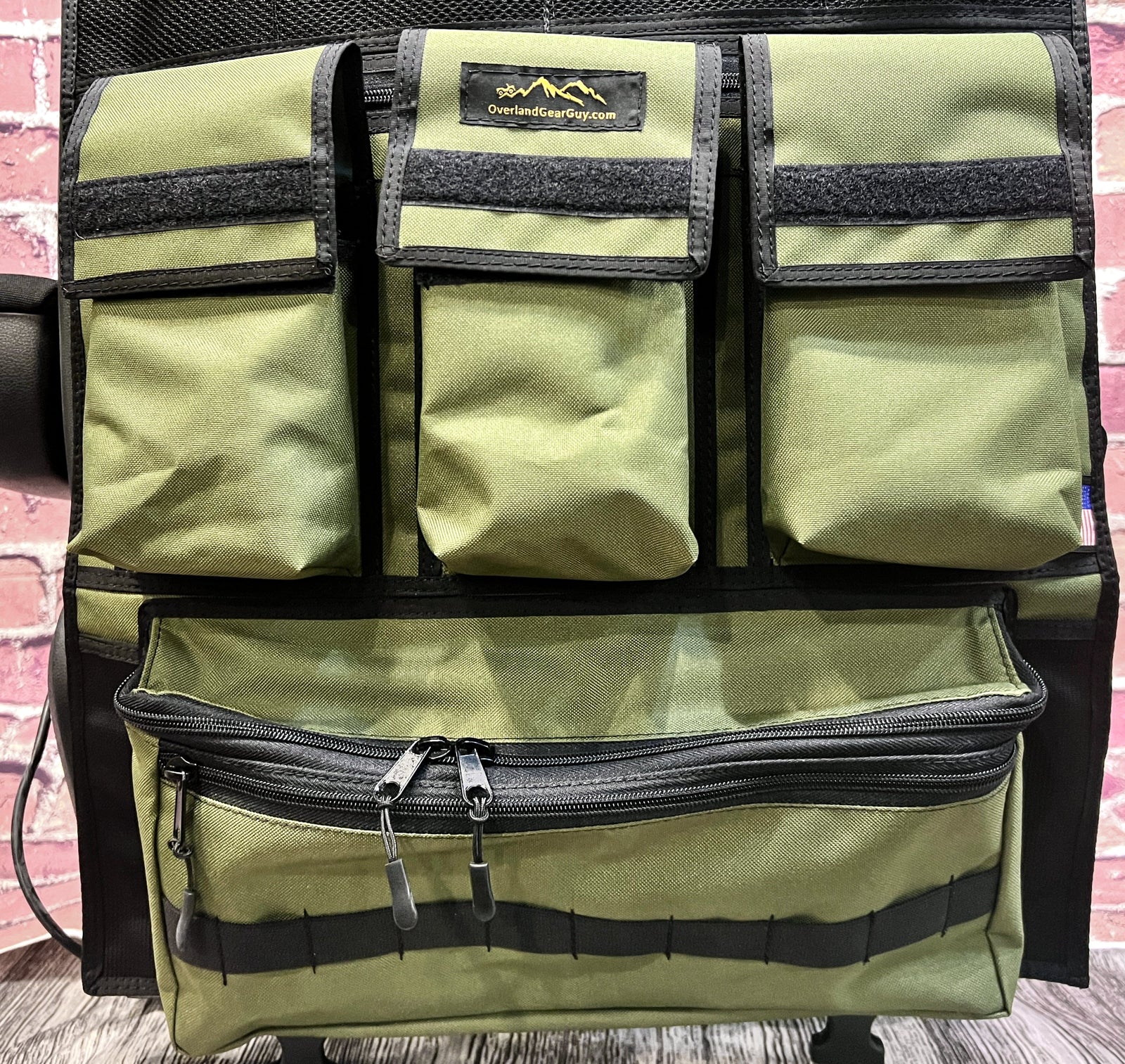
Good Jeep Wrangler storage starts with one question: how often do you reach for each item? The answer tells you where it belongs, from the console to the cargo floor.
Your Wrangler’s cabin adds a few hurdles. First, owners on the JL forums call the glovebox too small for much beyond the manual. Second, owners flag catches under the front seats, from floor vents to a passenger seat sensor. Third, the Jeep Wrangler cargo space behind the rear seat measures 12.9 cu ft on the 2-door, according to Jeep’s own spec sheet. The gas 4-door gets 31.7 cu ft.
I’ve owned five Jeeps, including a couple of Wranglers, and I have a lot of love for the brand. Still, cabin storage is the first thing I’d tell you to plan, and Wrangler owners raise it often. For me, the back of the front seat is the most useful storage space left in the cabin.
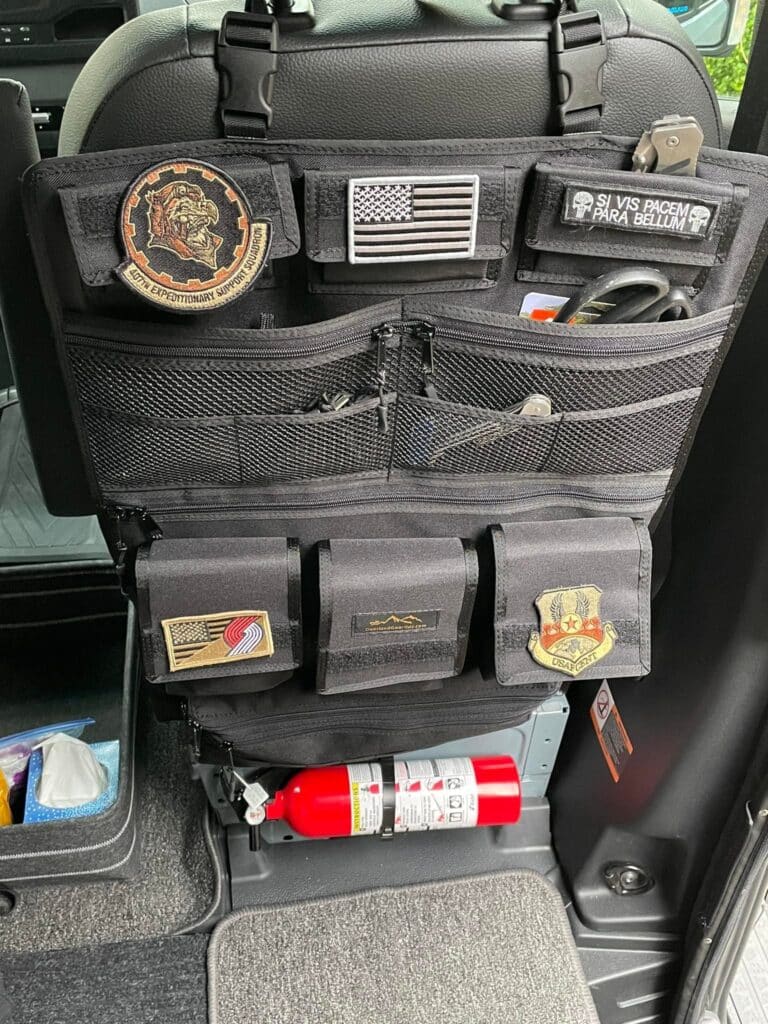
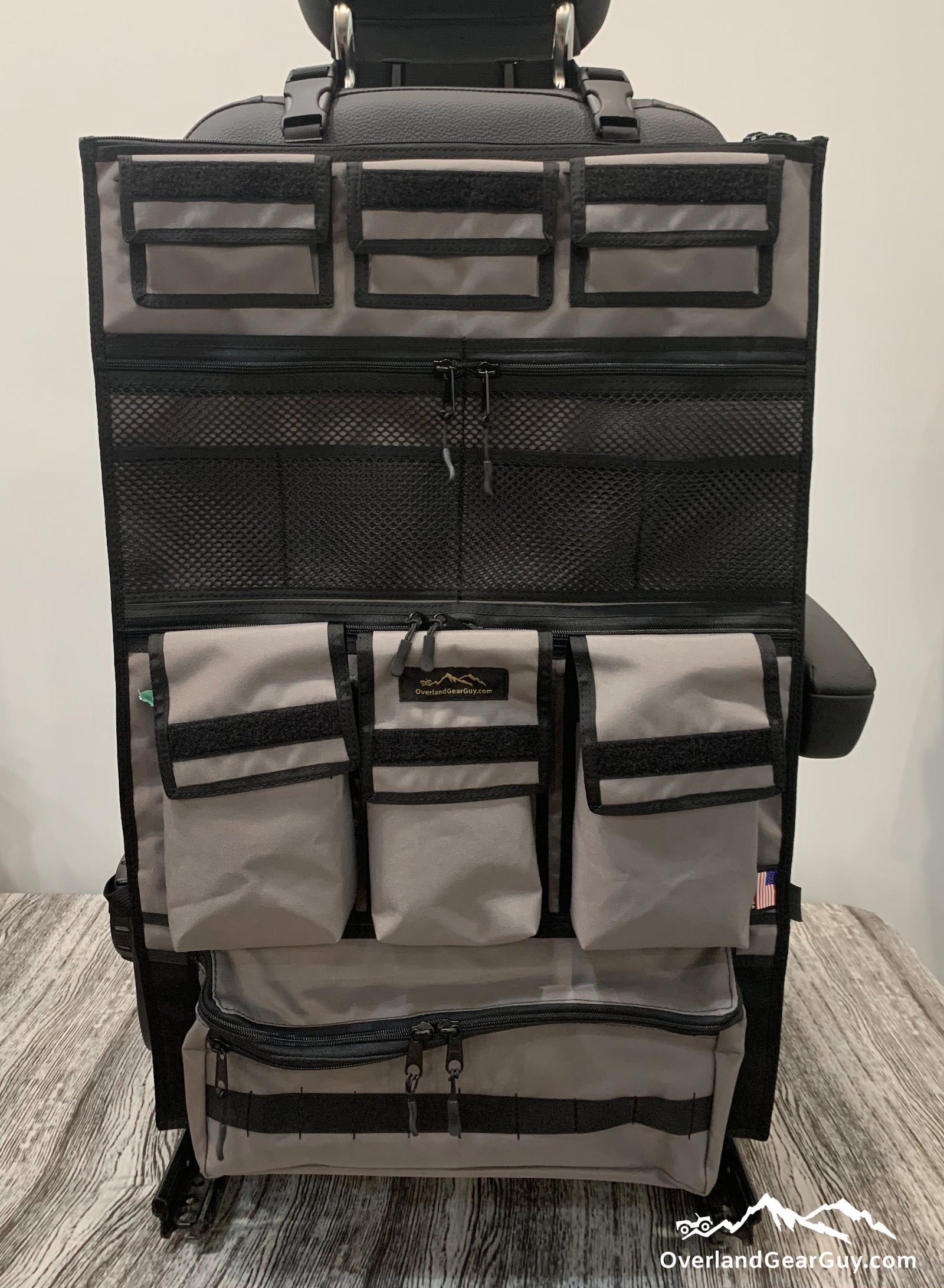
We read Wrangler forums and owner reviews to learn what people keep within reach. As a working example, we mapped the results to the Adventure Ready seat organizers from Overland Gear Guy, which 4XSolar sells. Each one measures 19 by 29 inches and mounts with quick-release buckles.
Adventure Ready Organizers at a Glance
| Specification | 1 Seat | 2 Seat | 3 Seat |
|---|---|---|---|
| Overall size | 19 x 29 in. | 19 x 29 in. | 19 x 29 in. |
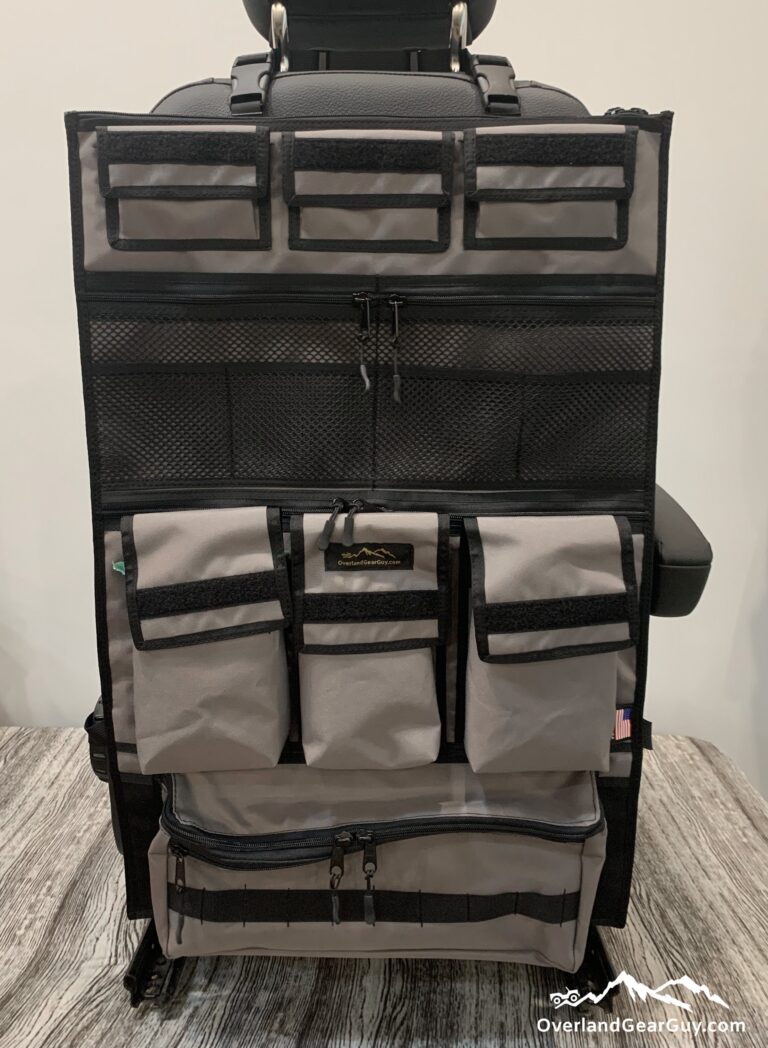
| Main cargo pocket | 10 x 8 x 5 in. | 15 x 8 x 3 in. | 15 x 8 x 3 in. |
| Other pockets | 7 x 7 x 5 in. utility pocket, mesh zip pocket | Three 5 x 9 x 2.5 in. box pockets, mesh pocket, three flat pockets | Same as 2 Seat |
| Top zip pocket (about 19 x 12 in.) | Yes | No | Yes |
| MOLLE webbing panel | Yes, plus Velcro loop | Not listed | Not listed |
| Weight | 2 lb | 2 lb | 2.5 lb |
| Price (solid colors) | $259.99 | $249.99 | $259.99 |
The Adventure Ready 3 Seat Organizer pairs three box pockets with the large top zip pocket. Next, the Adventure Ready 2 Seat Organizer keeps the box pockets but drops the top pocket. Finally, the Adventure Ready 1 Seat Organizer swaps them for a MOLLE panel and deeper 5-inch pockets.
Adventure Ready Seat Organizers at 4XSolar
Why Loose Gear Becomes a Projectile
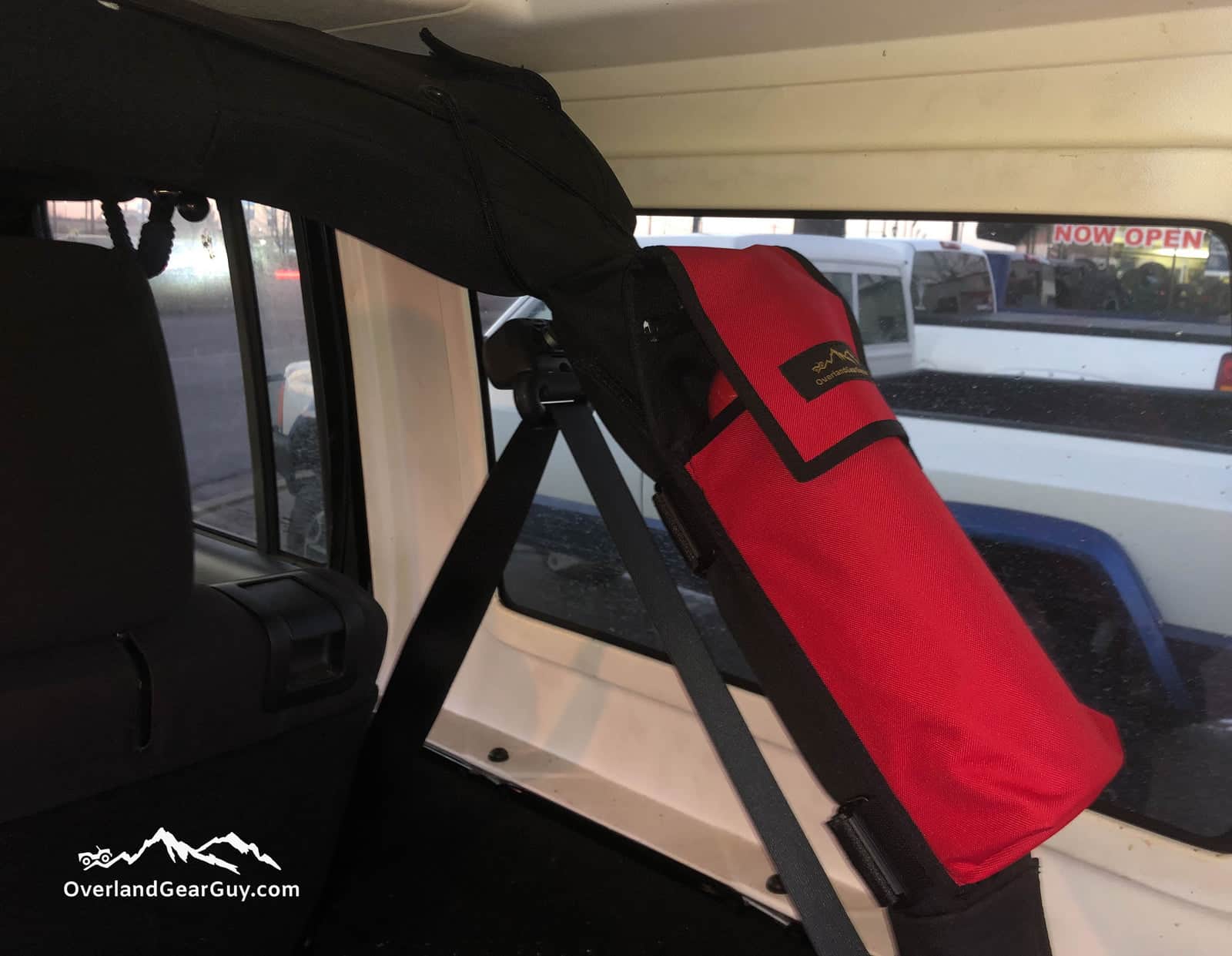
Clutter is the smaller problem, and physics is the bigger one. The Montana Department of Transportation states a simple rule for people in a crash: crash force equals weight times speed. Applied to cargo as a rule of thumb, a 3 lb fire extinguisher sliding around at 40 mph hits with roughly 120 lb of force.
Federal agencies agree. OSHA, for example, warns loose objects in a vehicle become high-speed projectiles in a crash. A USDA Forest Service tech tip calls loose cabin objects deadly projectiles in a crash or sudden stop. The same tip also points to small cargo bags on doors or seats as a safe place for those items.
Rollovers add risk for SUV owners. According to IIHS fatality data for 2024, rollovers accounted for 33 percent of SUV occupant deaths. Off-camber trails also tip gear sideways long before any crash. Forum posts describe cargo sliding around the back and items blowing out with the doors off.
Safety note: Keep anything heavier than a few pounds off the seat back and strapped low in the cargo area. A closed, buckled pocket beats an open bin, because an open bin empties itself in a rollover.
The fix is simple. Give every item a closed spot, and put the heaviest items lowest. The three tiers below sort your gear by how often you reach for it, then match each tier to a secured spot.
Tier 1: Gear for Every Drive
Tier 1 covers what you touch on every trip, trail or not. Your phone, keys, wallet and sunglasses belong in the console, door pockets or visor, since a seat-back organizer faces the rear seat. Instead, the seat back takes the every-drive overflow you grab at a stop or hand to a passenger.
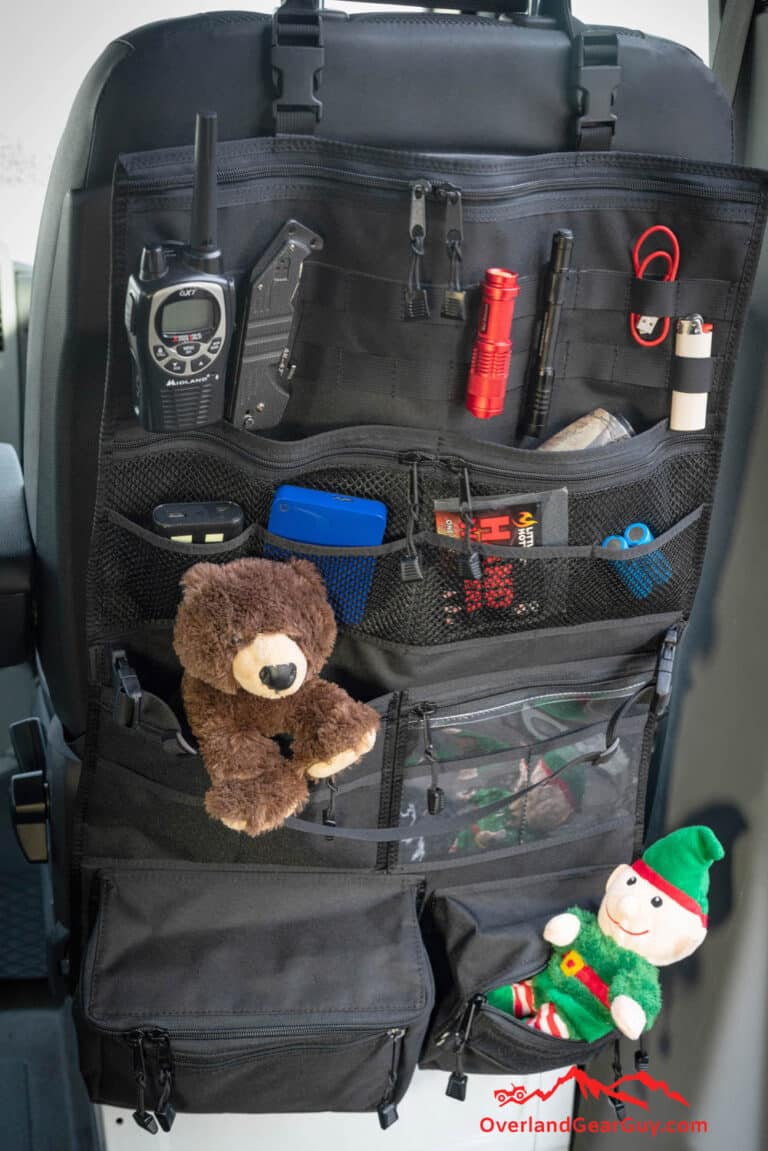
For example, charging cables and a power bank fit the mesh zip pocket. The roughly 19-by-12-inch top pocket on the 1 Seat and 3 Seat holds your registration, insurance card, owner’s manual and a road atlas. Moving the manual there frees the small glovebox for a toll pass or parking permit.
Then add a water bottle, snacks, a small trash bag and a flashlight. Families benefit too, because kids in the back seat reach tablets, drinks and toys on their own.
Tier 2: Gear for Every Trail
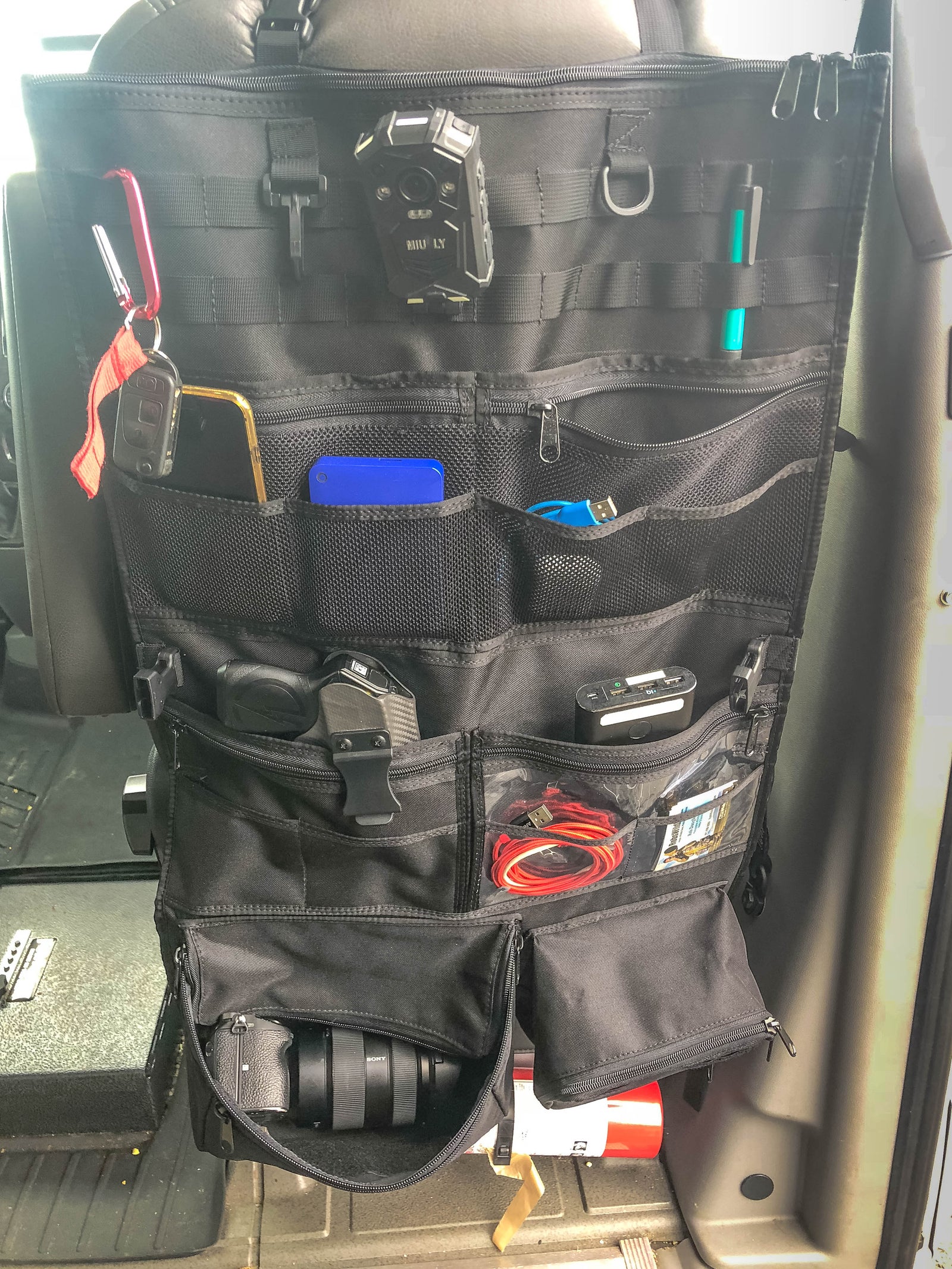
You use Tier 2 gear at every trailhead and every stop. Specifically, JL owners keep an air-down kit close: a tire deflator, a pressure gauge and an air hose. Next come work gloves, a headlamp, soft shackles and a tire plug kit. Our guide to plugging a tire on the trail covers the repair.
These items are light, and you want them without unloading the cargo area. As a result, they belong on the seat back. The box pockets on the 2 Seat and 3 Seat, at 5 by 9 by 2.5 inches each, suit a gauge, gloves and a headlamp. Pick a compact Jeep tool kit for the larger cargo pocket, and keep the load light.
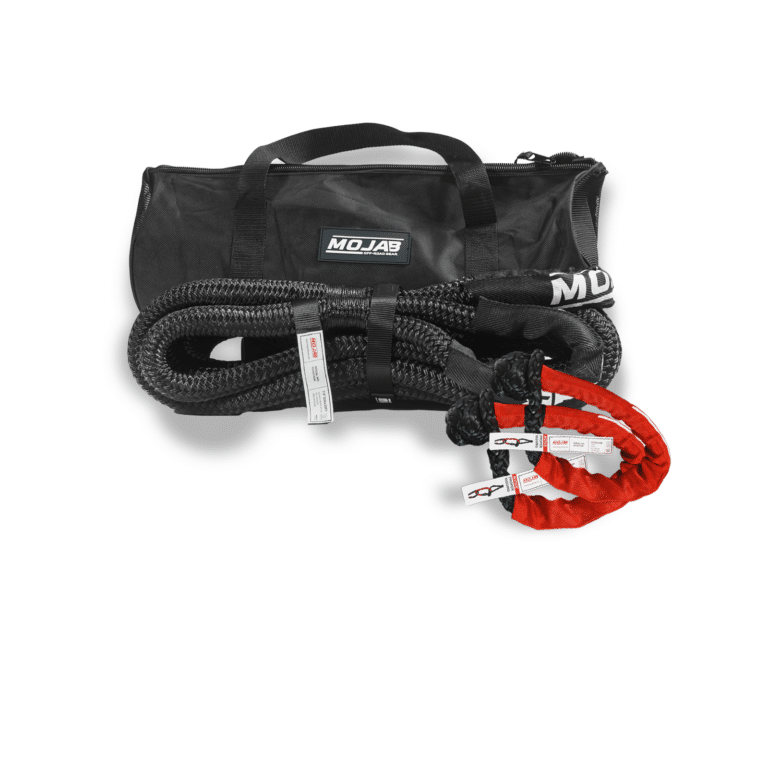
Heavy recovery gear is different. An off-road recovery kit with a 7/8-inch kinetic rope and two soft shackles belongs low, in its own bags, strapped to the cargo tie-downs. For a full checklist, our off-road packing list guide sorts the rest of your overlanding essentials by trip type.
Tier 3: Emergency-Only Gear
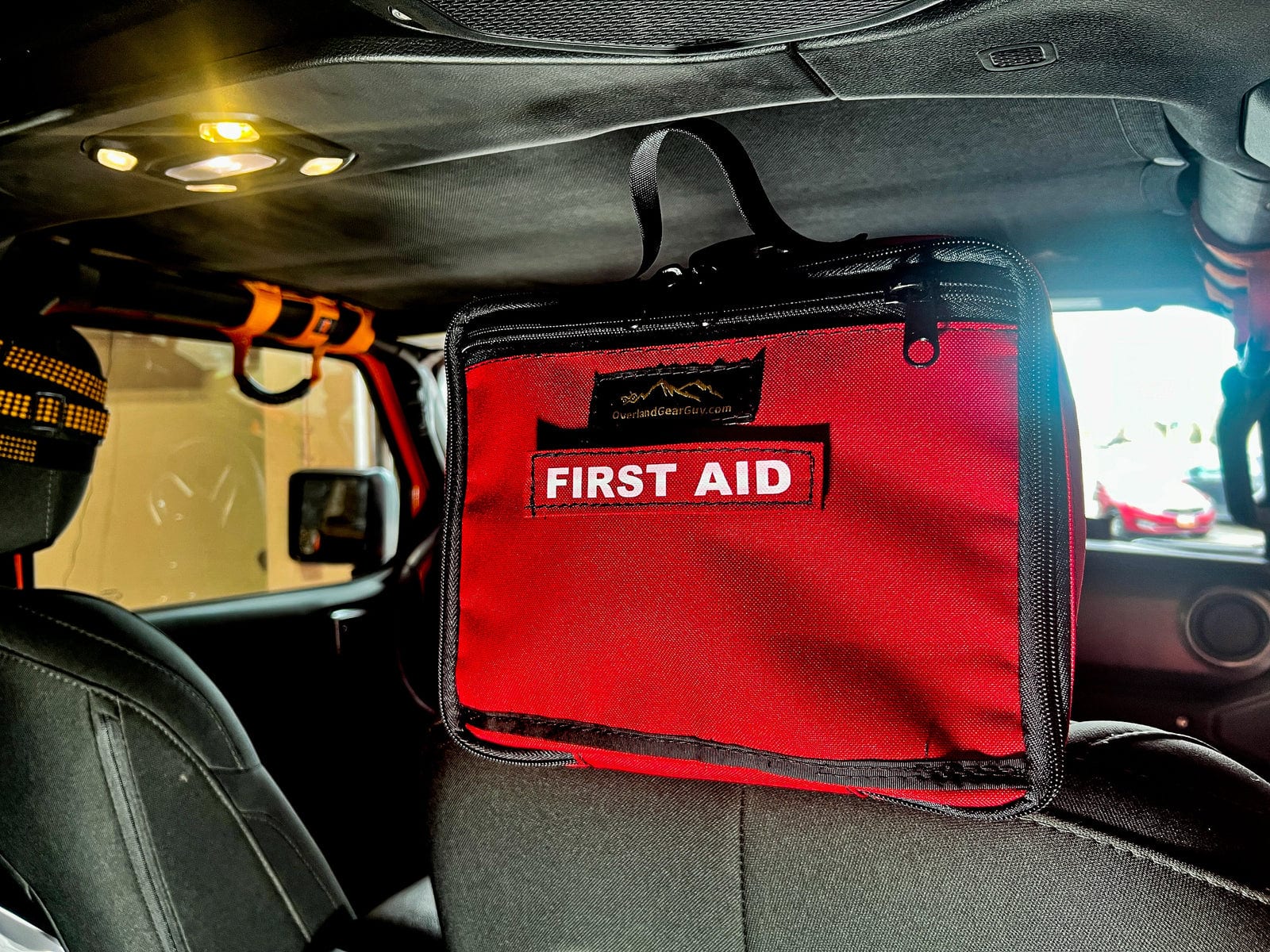
You hope never to touch Tier 3 gear: a fire extinguisher, a first aid kit and a jump starter. Because you need the first two in seconds, they must stay reachable. However, they also have to stay mounted, since a loose extinguisher is the classic cabin projectile.
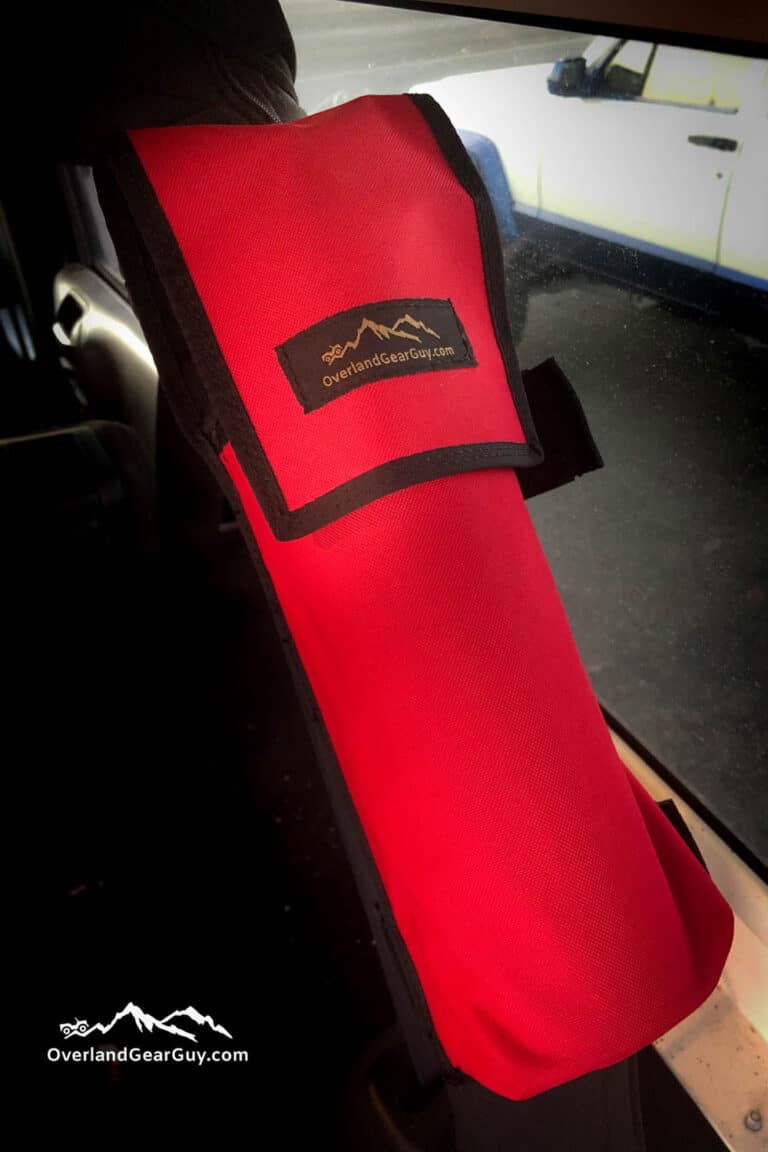
For the extinguisher, a roll bar mount keeps it within the driver’s reach and off the floor, ready for a small fire once everyone is out. The Jeep Fire Extinguisher Pouch from Overland Gear Guy wraps roll bars up to 3 inches in diameter and holds a 3 lb extinguisher. In a vehicle fire, though, follow U.S. Fire Administration advice: get everyone out, never go back in, and leave the fire to firefighters.
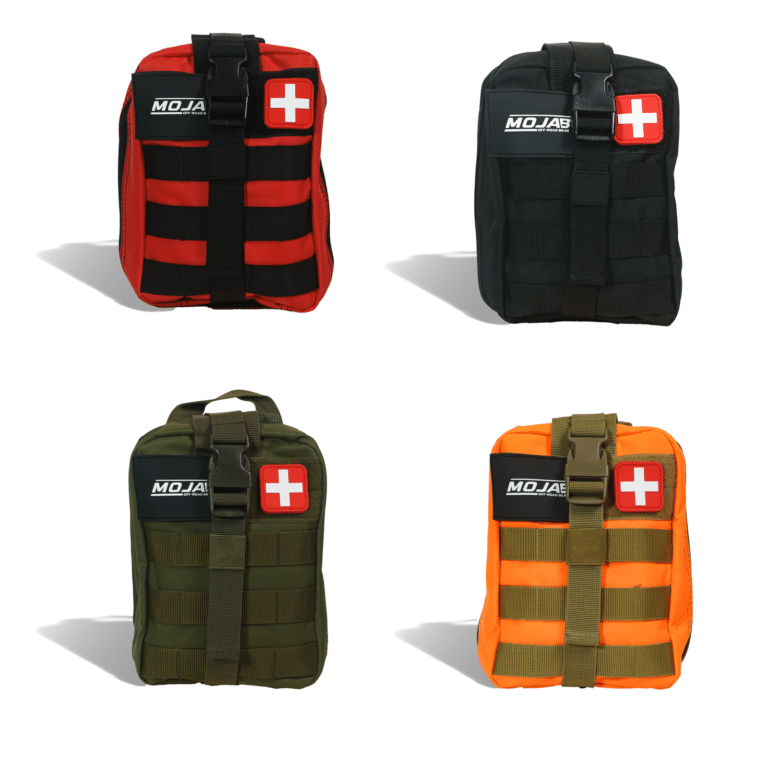
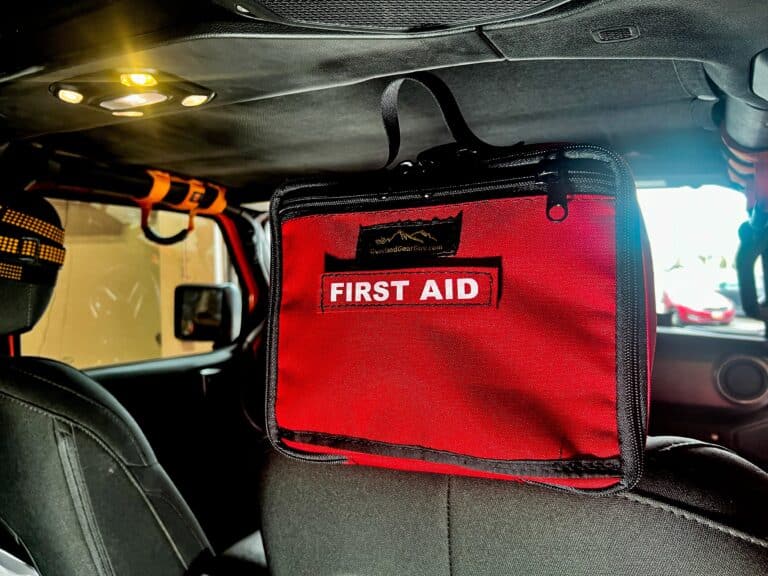
For first aid, pick a kit with a secure mount. The 151-piece First Aid Kit from MOJAB OFFROAD, also sold by 4XSolar, uses a Velcro back and comes with a MOLLE pouch. For a headrest mount, the First Aid Kit Headrest Pouch from Overland Gear Guy holds the supplies you pack.
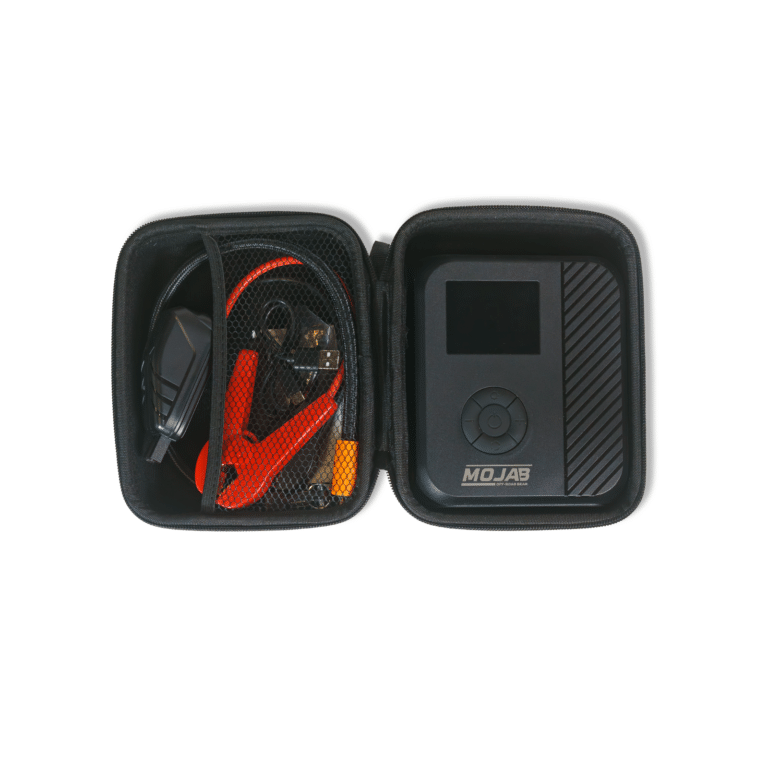
A dead battery rarely needs a fix in seconds, so the jump starter rides in the console or strapped low in the cargo area. For example, the PowerPro Jump Starter and Tire Inflator from MOJAB OFFROAD weighs about 4 lb and also inflates tires to 160 psi. Our overland emergency preparedness checklist covers what else belongs in this tier.
Match Jeep Wrangler Storage to Pocket Sizes
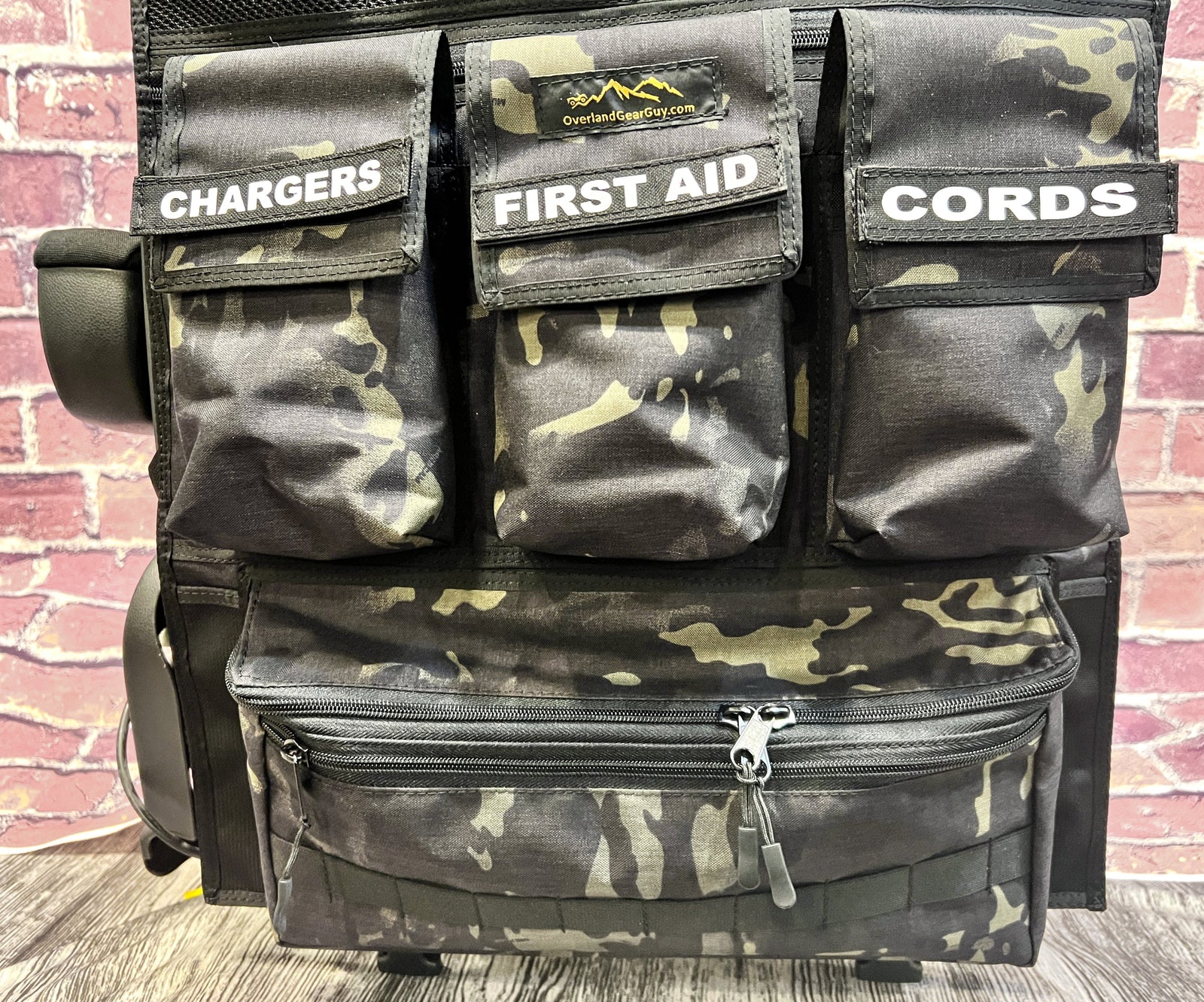
Once you sort your gear into tiers, match each item to a pocket by size and weight. With only 12.9 cu ft of Jeep Wrangler cargo space in a 2-door, every pocket counts. This step keeps Jeep Wrangler storage tidy over time, because every item returns to the same spot.
- Top zip pocket, about 19 x 12 in.: registration, manual, road atlas, tablet.
- Mesh zip pocket: charging cables, power bank, spare headlamp batteries.
- Box pockets, 5 x 9 x 2.5 in.: tire gauge, work gloves, headlamp, sunscreen.
- Main cargo pocket: a compact Jeep tool kit, tire plug kit, snacks.
- MOLLE panel on the 1 Seat: add pouches for small, often-used tools.
On the 1 Seat, you add MOLLE pouches where you want them. For instance, the 7×3 MOLLE pouch from Overland Gear Guy measures 7 by 3.5 by 2 inches, sized for small, often-used trail tools. In contrast, the 2 Seat and 3 Seat give you fixed pockets and a flatter profile.
Weight matters as much as size. Owners report the factory MOLLE panel on JL Rubicon seat backs slipping down under load. Reserve any seat-back organizer for light gear, and keep the recovery kit on the floor.
Add-Ons for the Rest of Your Kit
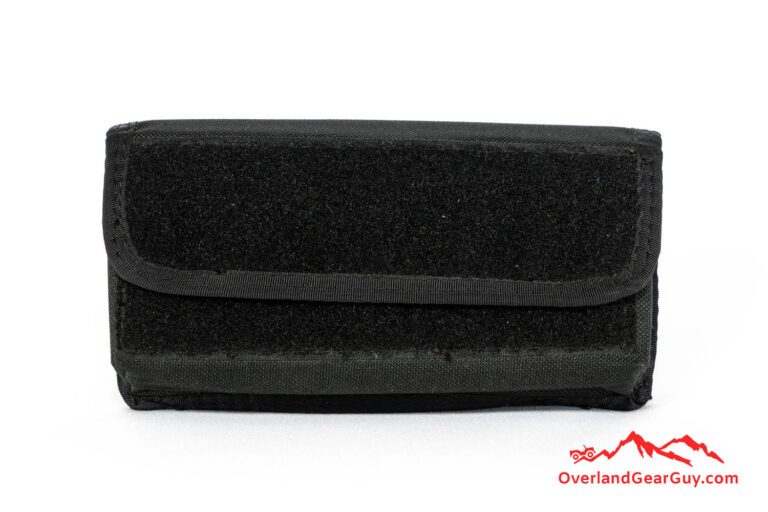
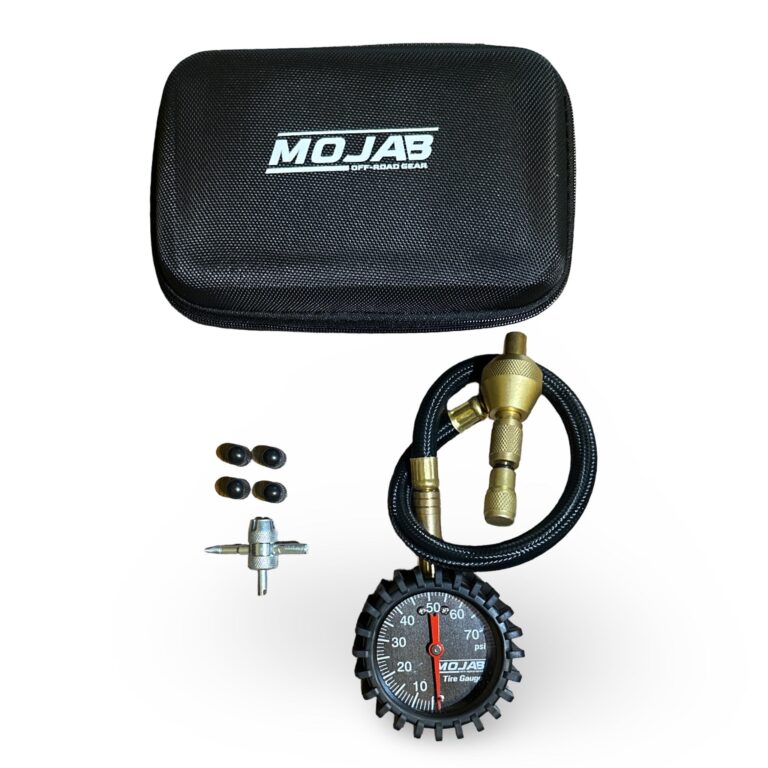
A few add-ons round out the three tiers. The 7×3 MOLLE pouch fits the 1 Seat panel, and the MOJAB Tire Deflator and Pressure Gauge reads 0 to 80 psi. For heavier gear, 4XSolar carries the Advanced Recovery Kit with storage bags and the PowerPro Jump Starter and Tire Inflator. Emergency picks include the 151-piece First Aid Kit, the First Aid Kit Headrest Pouch and the Jeep Fire Extinguisher Pouch for roll bars.
Trail and Emergency Add-Ons at 4XSolar

Measure Your Wrangler Seat Back First
Measure before you order. Overland Gear Guy lists fit for full-size seats in rigs such as the Sprinter, Tacoma, Ram and Grenadier. The list does not name the Wrangler. A missing name doesn’t rule the Jeep out, so check three numbers yourself.
First, check width. The organizers measure 19 inches wide, and a JK owner on the forums measured the widest part of his front seat back at 19.5 inches. Second, check length. The organizer hangs 29 inches below the upper buckle, so measure from the top of the seat back down toward the floor.
Third, check depth, which matters most in a Wrangler. A JL 4xe owner measured about 3.5 inches of clearance between the seat back and the folded rear cushion. With the front seats all the way back, his 5- and 6-inch pouches hit the folded rear cushion. The seat still folded, but the cushion no longer stood upright. For this reason, the 2 Seat and 3 Seat, whose deepest pockets measure 3 inches, suit a Wrangler better than the 1 Seat’s 5-inch lower pockets.
Rear legroom points the same way. The 2-door offers about 35.7 inches of rear legroom, compared to 38.3 inches in the 4-door. If your numbers look close, ask 4XSolar to confirm the fit before you buy.
Final Thoughts
Sort by how often you reach for something, then give it a closed spot. Your Wrangler offers little closed cabin storage, so use the seat back. A light, buckled organizer there keeps your trail gear handy and off the floor.
The trade-off is space in the back. Deep pockets cut into rear knee room and fight the folding rear seat, especially in a 2-door. Because of this, I’d point most Wrangler owners toward the slimmer 2 Seat or 3 Seat, and I’d measure first.
For the money, the 3 Seat gives you the most, since it pairs the small pockets with the big top pocket for about $10 more than the 2 Seat. On the other hand, if you run MOLLE pouches and rarely fold the rear seat, the 1 Seat’s panel makes sense. Either way, keep heavy recovery gear strapped down low, and mount the extinguisher where your hand finds it fast. Those habits matter more than any single product among your overlanding essentials.
After five Jeeps, I still love the brand, cramped cabin and all. Sort your gear into three tiers, measure your seat back, and keep nothing loose in the cabin.
Frequently Asked Questions
What should I keep in my Jeep Wrangler at all times?
Keep your registration, insurance card, a flashlight, a first aid kit, a fire extinguisher and a jump starter in the Jeep at all times. Mount the extinguisher and first aid kit so they stay put in a hard stop.
How do I get more storage in a Jeep Wrangler JL?
Use the space you already have first: the backs of the front seats, the doors and the roll bars. A seat-back organizer adds closed pockets without taking cargo floor space. Then add low, strapped bins in the cargo area for heavy gear.
What happens to loose objects in a car crash?
Loose objects keep moving at the vehicle’s speed when it stops, so they fly forward. Montana DOT’s rule of thumb says crash force equals weight times speed. By this rule, a 3 lb object at 40 mph hits with about 120 lb of force.
Will a seat-back organizer fit a Jeep Wrangler JL front seat?
Check width, length and depth before you buy. The Adventure Ready organizers measure 19 by 29 inches, and their maker does not list the Wrangler. Keep pockets about 3 inches deep or less if you fold the rear seat often.
Where should a first aid kit go in a Jeep Wrangler?
Put it where you reach it in seconds and where it stays mounted. A headrest pouch, or a Velcro or MOLLE mount on a roll bar, works well. Avoid the loose cargo floor, since the kit slides out of reach there.