


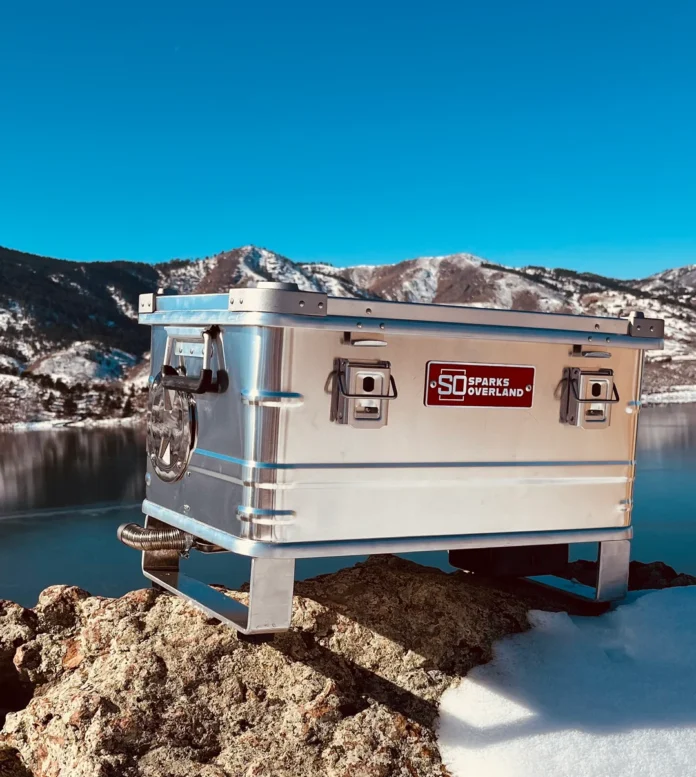

Cold mornings at elevation test every piece of camp gear you own, and a gas heater for overlanding is one of the few items to change how the night feels. I’ve camped for the majority of my life, and here recently, I’ve done a lot of overlanding. Over the years, I’ve learned to judge a heater by a short list of specs and in-the-field performance, not by marketing copy.
This guide opens a series on choosing the right heater for your outdoor adventures. Throughout this article, I use the Sparks Overland 2kW Mini Gasoline Heater as a working example, so you see each spec beside real numbers.
Quick Facts:
- Topic: What to look for in a gas heater for overlanding
- Example product: Sparks Overland 2kW Mini Gasoline Heater
- Heat output: Up to 2.2kW, with a minimum near 0.8kW
- Fuel burn: About 0.10 to 0.28 liters per hour
- Running draw: About 0.7 to 2.8 amps at 12V
- Tank: 1.9-gallon stainless steel
- Weight: About 36 lb (16.3 kg)
- Price: $1,649, with a $250 reservation deposit
- Best for: Rooftop tents, small shelters, vans and trailers
8 min read
In This Guide
- Why Choose a Gas Heater for Overlanding
- Sparks Overland 2kW Heater Specs at a Glance
- Match Output to Your Space
- Check Power Draw and Noise
- Inspect the Fuel System and Burn Rate
- Confirm Safety, Altitude and Setup
- Gas Heater vs. Diesel Heater for Overlanding
- Pros and Cons of a Gas Heater for Overlanding
- Final Verdict on the Sparks Overland 2kW Heater
- Gas Heater for Overlanding FAQ
Why Choose a Gas Heater for Overlanding
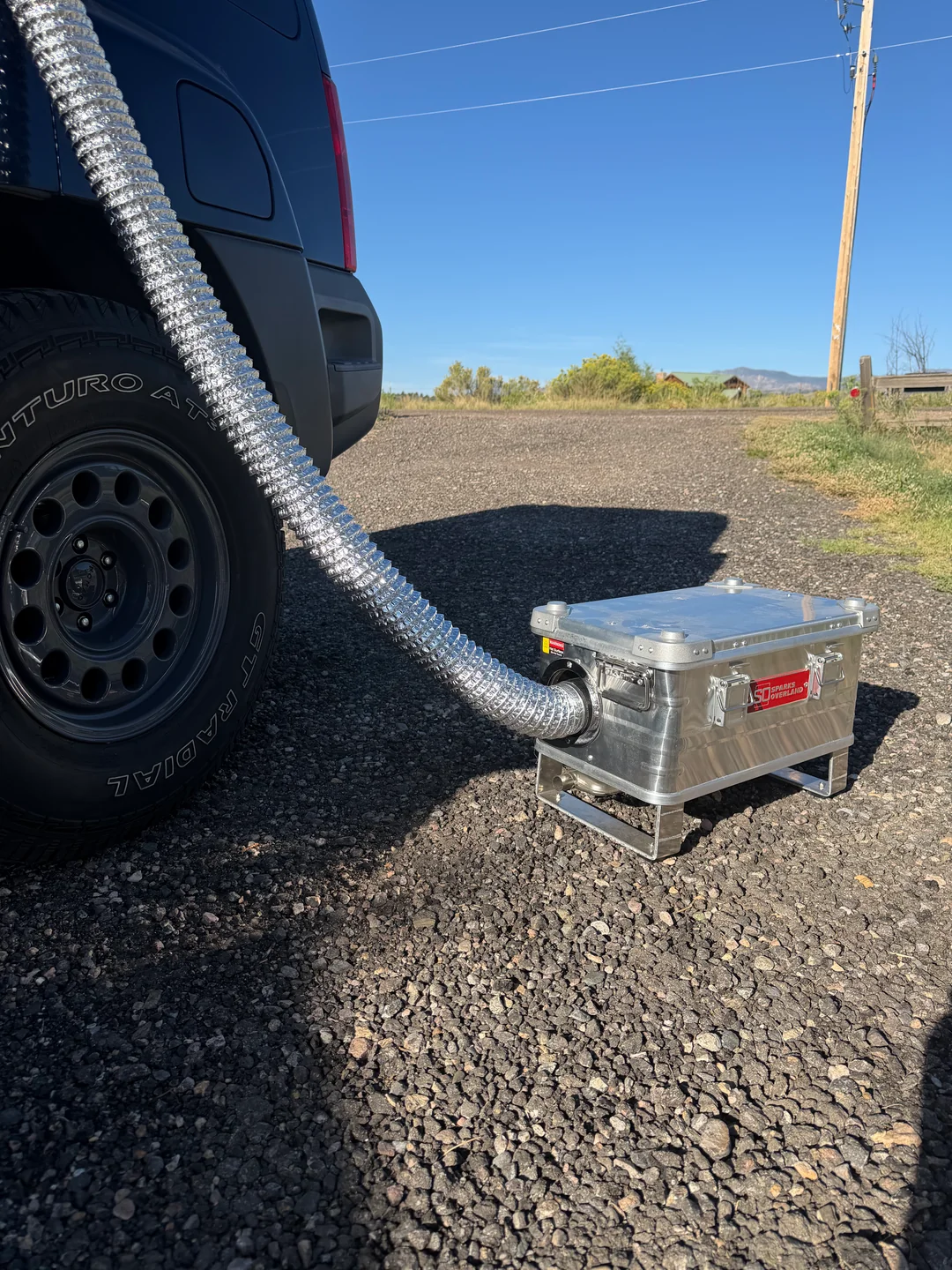
A gas heater for overlanding burns gasoline in a sealed chamber and pushes warm air through a duct into your tent, van or trailer. Gasoline is the fuel in my 2020 Jeep Gladiator Rubicon, so a gas model means one fuel type at the pump. Because many overlanders already buy gasoline, this style of portable gas heater adds no second fuel to the plan.
The Sparks Overland 2kW Mini fits rooftop tents, small ground tents, vans, trailers and ice-fishing shelters. Sparks Overland recommends it for standard, large and hardshell rooftop tents. Its low output range lets the unit run steadily instead of cycling off every few minutes.
Price and availability also matter. Sparks Overland lists the heater at $1,649. Specifically, a $250 reservation deposit holds your unit, and Sparks Overland estimates 4 to 6 weeks for delivery.
Diesel is the nearest alternative, and the next article in this series covers it. Next, the sections below walk through the checks I’d run before buying any rooftop tent heater.
Sparks Overland 2kW Heater Specs at a Glance
| Specification | Details |
|---|---|
| Heat output | Up to 2.2kW (minimum about 0.8kW) |
| Fuel | Gasoline |
| Fuel consumption | About 0.10 to 0.28 L/hr |
| Heated airflow | Up to 70 m³/h |
| Power | 12V DC, plus an included 110V wall adapter |
| Running draw | About 0.7 to 2.8 amps |
| Fuel tank | 1.9-gallon stainless steel |
| Dimensions | About 20 x 12 x 12.5 inches |
| Weight | About 36 lb (16.3 kg) |
| Controls | Bluetooth app plus a physical controller |
| Altitude | Automatic compensation |
Buy Direct From Sparks Overland
Reserve the 2kW Mini Heater
A $250 deposit holds your unit in the production queue. The 110V adapter and Load Out Cube come standard.
Match Output to Your Space
Start with output, because it drives every other choice. While the Sparks Overland 2kW produces up to 2.2kW, or about 7,500 BTU per hour, it drops to roughly 0.8kW, or about 2,700 BTU per hour, at its lowest setting.
The floor matters as much as the ceiling. A rooftop tent heater with too much output cooks you out, then shuts down and restarts. Because Sparks Overland designed the low range to prevent this short-cycling, the heater holds a steady temperature in small sleeping spaces.
However, bigger spaces need more heat. For example, a 2.2kW unit falls short in a wall tent or a group shelter. Sparks Overland also sells a 4kW BASECAMP gasoline model for those setups, so check both options before you commit.
Check Power Draw and Noise
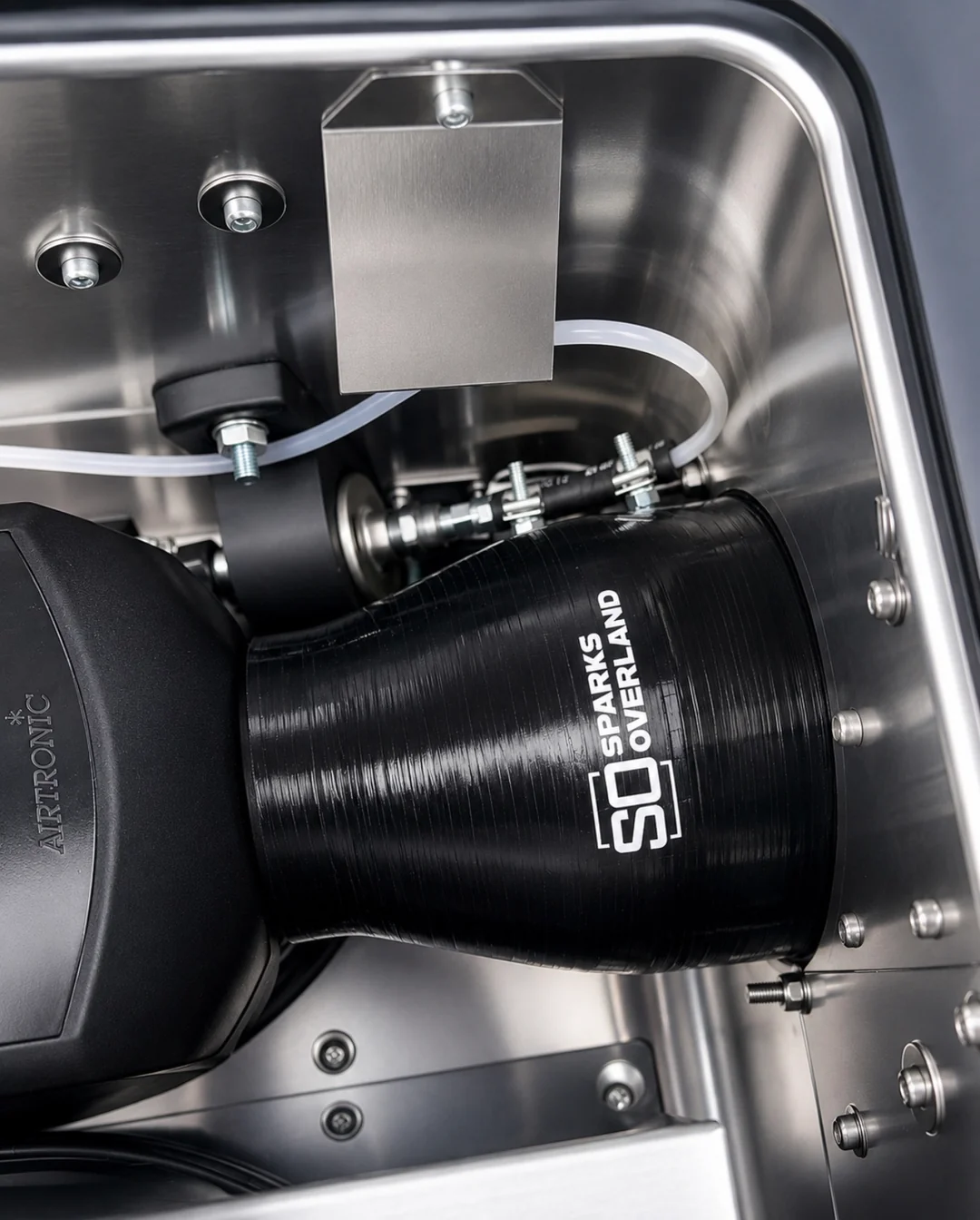
Because your battery pays for every hour of heat, check the running draw. The Sparks Overland 2kW pulls about 0.7 to 2.8 amps at 12V. At the low end, the heater pulls about 8 watts, while full output reaches about 34 watts.
These numbers suit a portable power station or a small auxiliary battery. However, startup draws more than running, so size your battery with some margin. The included 110V adapter also lets you run the heater from a wall outlet at a powered campsite or in a garage.
Noise deserves equal attention when the heater sits six feet from your head. Specifically, Sparks Overland pairs a brushless motor with refined fan control and a low-noise metering pump. This combination targets fan noise, vibration and the repetitive pump ticking common on portable fuel heaters. Since the product page gives no decibel figure, judge noise by design and read owner reports.
Inspect the Fuel System and Burn Rate
Fuel burn sets your runtime. Because the 2kW Mini uses about 0.10 to 0.28 liters per hour and its tank holds 1.9 gallons, or about 7.2 liters, you get roughly 26 hours at full output. On the lowest setting, runtime stretches to about 72 hours.
Tank material counts too. Sparks Overland uses a stainless steel tank with a dedicated fill point and a pressure-management system, instead of an external plastic tank. Likewise, the fuel line, metering pump and filtration are all gasoline-specific.
Look for a system built around gasoline from tank to burner, as this one is. The kit also includes a silicone funnel, which helps with refills on a cold night. In addition, stainless exhaust parts, a stainless muffler and sealed electrical connectors round out the build.
Confirm Safety, Altitude and Setup
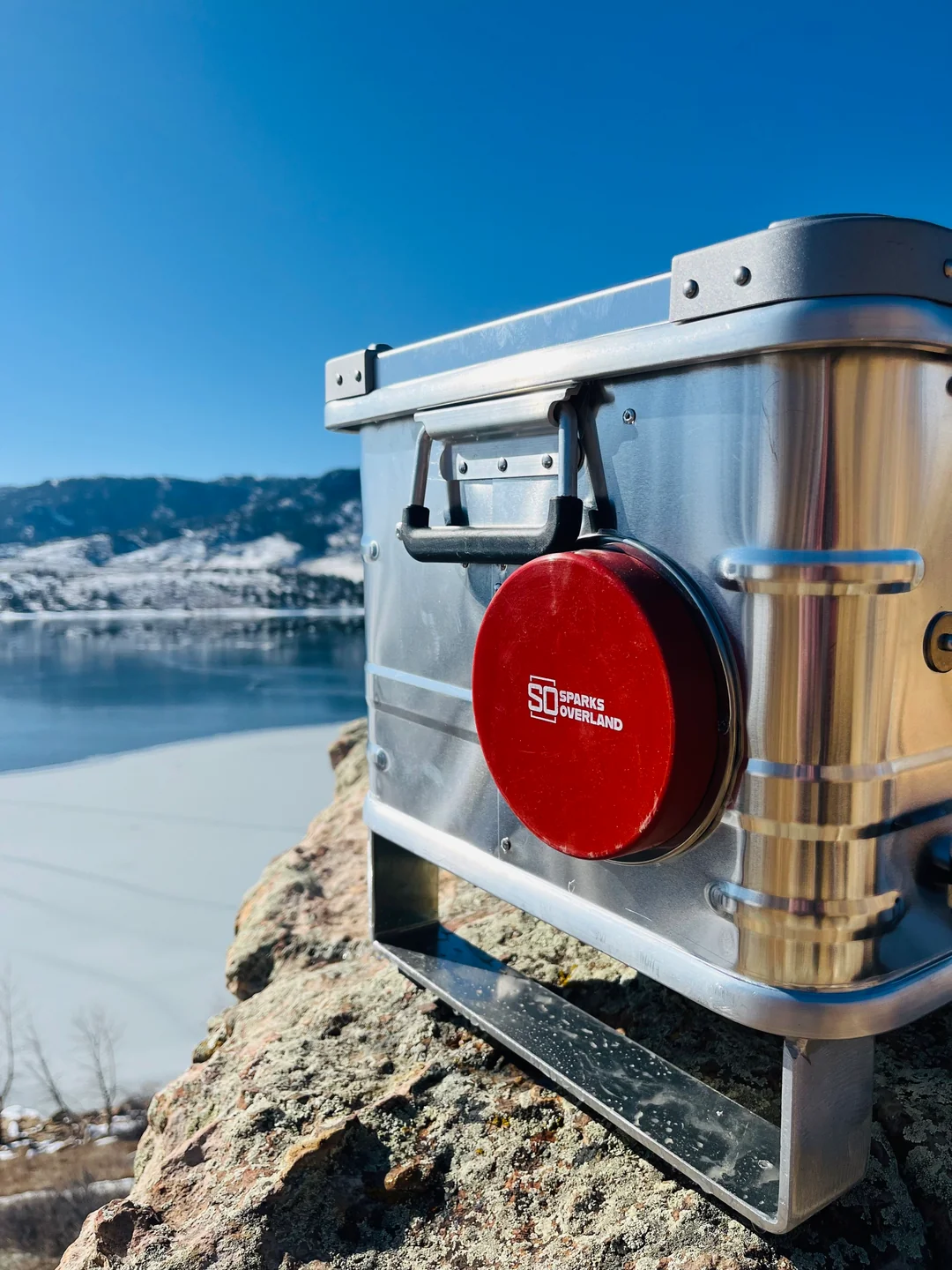
First, safety starts with a sealed combustion circuit. The Sparks Overland design draws combustion air from outside the heated space and routes exhaust outside. The air you breathe never passes through the combustion chamber. Also, keep the intake and exhaust outside the occupied space, and follow the supplied instructions.
Altitude performance comes next. Specifically, automatic altitude compensation adjusts the burn as the air thins. Because I’ve camped at elevation across Wyoming, Utah and the Sierra Nevada, I treat this feature as a requirement, not a bonus.
Setup speed matters after a long drive. For example, the quick-connect duct system attaches and detaches in seconds, with no hose clamps. The expandable aluminum duct packs down for transport. In addition, you control the heater from your phone over Bluetooth, and the physical controller stays on the unit as a backup.
Ready to Buy?
Built for Rooftop Tents and Small Shelters
Assembled and tested in Colorado, with a stainless tank, Bluetooth control and quick-connect ducting.
Gas Heater vs. Diesel Heater for Overlanding
The biggest differences are fuel and output class. The 2kW gasoline Mini tops out at 2.2kW. Sparks Overland’s diesel line starts higher, as the Sparks Overland Mini Diesel Heater first impressions article shows with its compact 4kW unit. Compared to the gas Mini’s 36 pounds and 1.9 gallons, our best diesel heaters roundup lists the 4K diesel at 33 pounds with a 2.3-gallon metal tank.
Your choice comes down to fuel and space. Therefore, pick gasoline if you already carry it and sleep in a rooftop tent, van or small shelter. Pick diesel instead if you already carry it or need more heat for a larger space. Our diesel heater buying guide covers the other side in depth, and part two of this series does too.
Pros and Cons of a Gas Heater for Overlanding
The list below uses the Sparks Overland 2kW as the example. However, the strengths outweigh the trade-offs for small-space camping.
Pros
- A 0.8kW to 2.2kW output range suits small spaces without short-cycling
- Running draw of 0.7 to 2.8 amps works with portable power stations
- Roughly 26 to 72 hours of runtime from the 1.9-gallon tank
- Stainless steel tank, exhaust and muffler for repeated field use
- Bluetooth app control plus a physical controller on the unit
- Ships with a 110V adapter, 12V cable, quick-connect duct and Load Out Cube
Cons
- The 2.2kW output might be too low for large wall tents and group shelters
- Delivery runs 4 to 6 weeks
From experience: Cold and altitude show up on nearly every trip I take, so I check altitude compensation, power draw and noise before I look at anything else on a heater.
Final Verdict on the Sparks Overland 2kW Heater
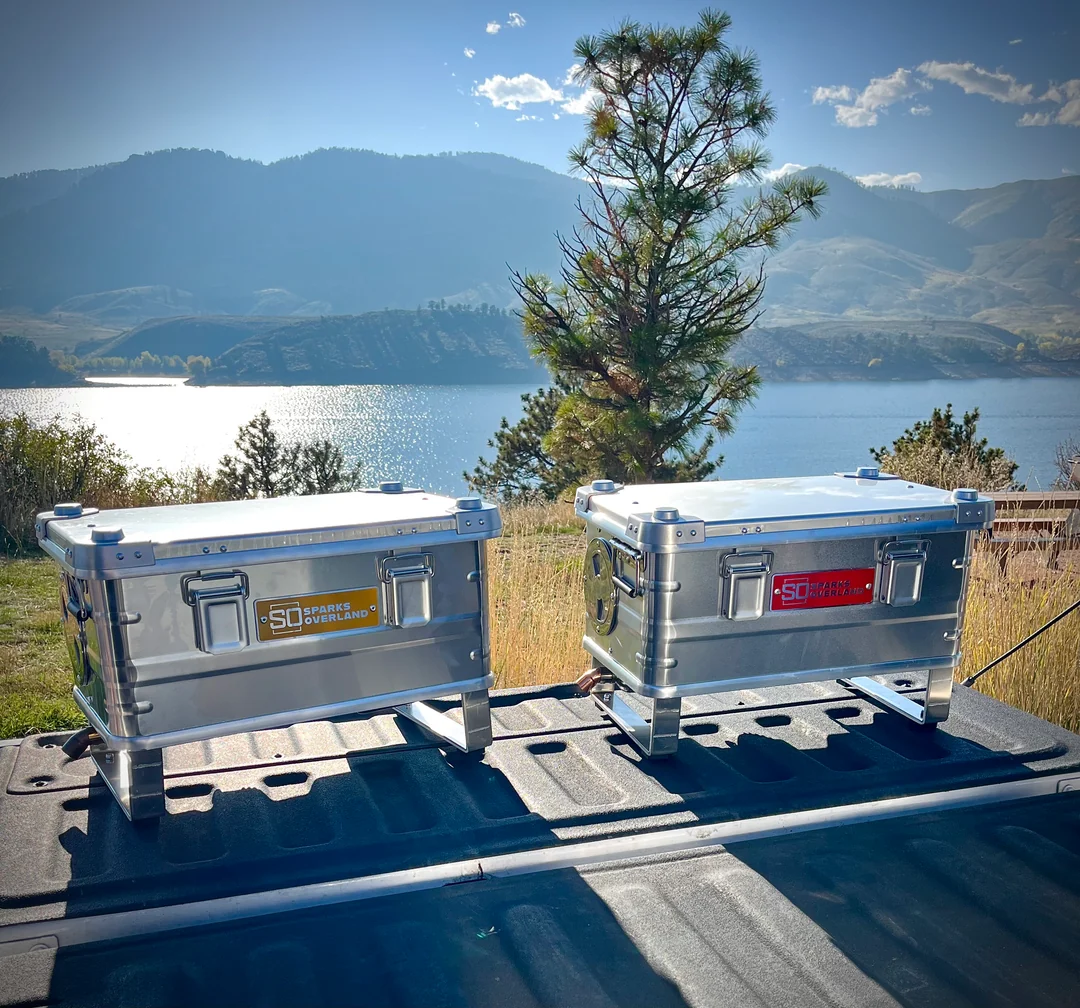
The Sparks Overland 2kW Mini suits overlanders who sleep in a rooftop tent, van, trailer or small shelter. Its biggest strength is the wide output range, which holds a steady temperature in tight spaces. In addition, low power draw and a stainless fuel system add to the appeal.
The trade-offs are modest. Because the unit weighs 36 lb, plan its spot in your cargo area. Anyone heating a wall tent or a large group shelter should look elsewhere, starting with the 4kW BASECAMP gasoline model or a diesel heater.
Value looks strong on paper. The listed price includes a 110V adapter, a 12V cable, quick-connect ducting and the Load Out Cube. Since few portable heaters ship with the full support kit, you avoid piecing together parts later.
My recommendation is simple. If you drive a gasoline rig and camp in a small space, put the 2kW Mini on your short list. However, if you prefer diesel or need more heat, read the Sparks Overland 4K diesel heater review before you decide.
Reserve Your Heater
Quiet, Low-Draw Heat for Camp
Hold your 2kW Mini with a $250 deposit. Your deposit applies to the final balance.
Gas Heater for Overlanding FAQ
How long does a gas heater run on a 1.9-gallon tank?
The tank holds about 7.2 liters. The Sparks Overland 2kW burns about 0.10 to 0.28 liters per hour. As a result, you get roughly 26 hours at full output and up to about 72 hours on low.
How much battery power does a portable gas heater need?
The Sparks Overland 2kW pulls about 0.7 to 2.8 amps at 12V while running. However, startup draws more, so leave some margin. A portable power station or a small auxiliary battery suits this load.
What size rooftop tent heater do you need?
Sparks Overland recommends the 2.2kW Mini for standard, large and hardshell rooftop tents. Specifically, its lower output range prevents short-cycling, which keeps the temperature steady in a small sleeping space.
Is a gas heater safe inside a tent?
Safety depends on the design and on your setup. The Sparks Overland unit uses a sealed combustion circuit, so heated air never passes through the combustion chamber. Also, keep the intake and exhaust outside the occupied space, and follow the manual.
Does a gas heater work at high altitude?
The Sparks Overland 2kW includes automatic altitude compensation. Specifically, it adjusts the burn as the air thins, so you don’t need to retune the heater when you gain elevation.
Friendly disclaimer: Our articles may contain affiliate links that support us without costing you more, and sometimes we spice things up with sponsored content—but only for products we truly stand behind!