


Quick Facts:
- Where to apply: Two FCC websites, CORES for your FRN, then ULS for the GMRS license.
- Exam: None. You fill out one online form.
- Fee: $35, paid online to the FCC.
- Term: 10 years, with a $35 renewal.
- Who qualifies: Anyone 18 or older who is not a foreign government representative.
- Who it covers: You plus your immediate family, at any age.
- Time required: One online sitting, then one to two business days for the grant.
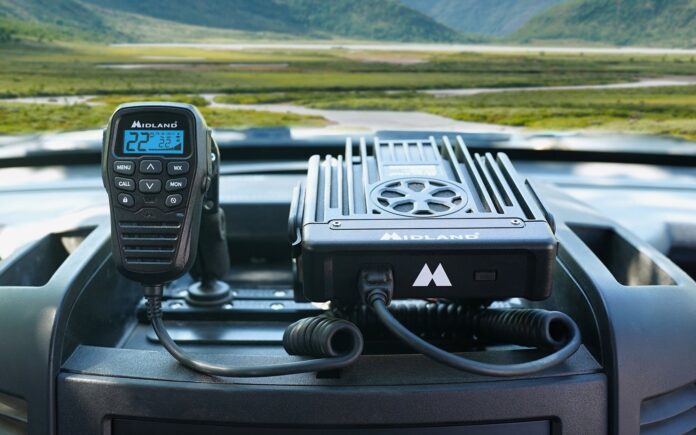
- First radio: A 15-watt mobile unit suits most trail groups.
9 min read
In This Guide
- GMRS License Overview
- Do You Need a GMRS License? FRS vs GMRS
- Who One License Covers on a Group Trail Run
- Step 1: Get Your FCC Registration Number
- Step 2: Apply and Pay in the FCC License Manager
- Step 3: Find Your GMRS Call Sign and Use It
- The First GMRS Radio to Buy
- MXT275 vs. MXT575
- Final Thoughts
- FAQ
4wdTalk earns a commission when you buy through links on this page, at no extra cost to you. As an Amazon Associate, 4wdTalk also earns from qualifying purchases.
GMRS License Overview
A GMRS license lets you and your immediate family talk on the General Mobile Radio Service, the band overlanders use to talk rig to rig on group runs. The FCC charges $35, asks no test questions, and grants the license for 10 years. You apply online, and most people finish the form in one sitting.
This guide is for truck, Jeep and SUV owners who want a mobile radio on the dash before the next group run. It walks through the two FCC websites in order, because the process trips up first-timers. Finally, the guide explains who your license covers, since friends in the convoy need their own.
The nearest alternative is FRS, which needs no license but caps power at 2 watts. Ham radio is the other option, though it requires an exam. Budget $35 for the license and about $200 for a good first mobile radio, such as the MXT275 from Midland. As an example, one license covers a family of four running two rigs on a weekend trail.
What You’ll Need
Tools
- A computer or phone with a web browser.
- An email address you check daily, including its spam folder.
- A credit card, debit card or bank account for the $35 fee.
Materials
- Your Social Security number or taxpayer ID for the FRN.
- Your legal name and a mailing address.
| Key Fact | Details |
|---|---|
| Application fee | $35 (new license or renewal) |
| License term | 10 years |
| Minimum age | 18 for the licensee; family members of any age operate under it |
| Who is covered | You plus immediate family; friends need their own license |
| Radio service code | ZA (General Mobile Radio Service) |
| Typical wait | One to two business days after payment |
| Station ID rule | Call sign at the end of a transmission series and every 15 minutes |
| Maximum power | 50 watts on the main GMRS channels |
Do You Need a GMRS License? FRS vs GMRS
You need a license the moment you transmit on a GMRS radio. On FRS and GMRS channels, any radio over 2 watts counts as GMRS. The FRS vs GMRS split comes down to power. FRS radios share 22 channels with GMRS, but FRS caps output at 2 watts and needs no license. Consequently, many blister-pack handhelds at sporting goods stores fall under FRS. Check the package for a GMRS label.
GMRS radios run up to 50 watts on the main channels, and they work through repeaters. Therefore, both mobile radios in this guide fall under GMRS. Listening is free; the license only matters when you press the talk button.
Ham radio is the other path for overlanders. However, the Technician license requires a 35-question exam, and a ham license does not cover GMRS transmissions. Our guide to GMRS vs ham radio for overlanding covers which one fits your trips. If you outgrow GMRS later, getting your ham radio license uses the same FRN you create below.
Who One License Covers on a Group Trail Run
One GMRS license covers you and your immediate family. Under FCC rule 47 CFR 95.1705, family means your spouse, children, grandchildren, stepchildren, parents, grandparents, stepparents, siblings, aunts, uncles, nieces, nephews and in-laws. Age does not matter for family members, so a 12-year-old in the back seat talks legally on your call sign.
Friends are a different story. For example, if three families run a trail together, each family needs its own license. Meanwhile, a friend who only owns FRS handhelds talks with your group on the shared channels with no license at all.
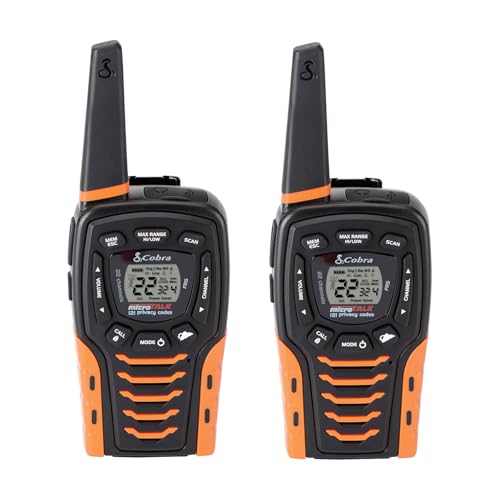
If a friend rides along without a license, a pair of license-free FRS handhelds keeps them on your channel. Expect less range than a mobile radio, since FRS caps power at 2 watts.
License-free FRS handhelds


Most groups settle on one GMRS channel in the pre-trip message, then use unit numbers for each rig. Our guide to off-road hand signals and radio protocol lays out channel habits and spotter calls. Next, the license itself takes three short steps.
Step 1: Get Your FCC Registration Number
Every FCC license starts with a 10-digit FCC Registration Number, known as an FRN. You create it in the FCC’s CORES system at apps.fcc.gov/cores. First, register a username with your email address. Next, choose “Register New FRN” and select the individual option.
CORES asks for your Social Security number or taxpayer ID, your name and a mailing address. Your FCC registration number appears on screen as soon as you submit. Write it down, because the next step asks for it.
Your name and address on the license become public in the FCC database. As a result, some applicants list a PO box as their mailing address.
Step 2: Apply and Pay in the FCC License Manager
The application lives in a second system, the Universal Licensing System. Log in at the ULS License Manager with your FRN and password. Then click “Apply for a New License” on the left menu.
From the radio service dropdown, pick “ZA – General Mobile Radio Service (GMRS)”. It sits near the bottom of a long list, so keep scrolling. From there, answer the basic qualification questions, confirm your contact details and certify the form.
The final screen sends you to pay the $35 fee by card or bank transfer. Pay right away, because the FCC dismisses applications without payment after 10 calendar days. GMRS forum threads describe a common snag: an unpaid form sits as pending, and no call sign arrives.
If you get stuck, the FCC Licensing Support Center answers at (877) 480-3201, weekdays from 8 a.m. to 6 p.m. Eastern. The FCC GMRS service page lists the eligibility rules.
Step 3: Find Your GMRS Call Sign and Use It
Most grants arrive one to two business days after payment, though holidays stretch the wait. The FCC no longer mails paper licenses. Instead, it emails a link to your official license in the License Manager.
Until the grant posts, listen only and program your group’s channel. Check your spam folder first. Also, search your name in ULS License Search, since the grant often shows there before the email lands. Your GMRS call sign follows a four-letter, three-digit pattern, such as WRXX123.
FCC rule 95.1751 sets the ID habit. You say your GMRS call sign at the end of a transmission series and at least every 15 minutes. The rule does not require it on every keypress. For instance, a short sign-off works well: “WRXX123, unit two, clear.” Family members use your call sign. Add a unit number so the group knows which rig is talking.
The First GMRS Radio to Buy
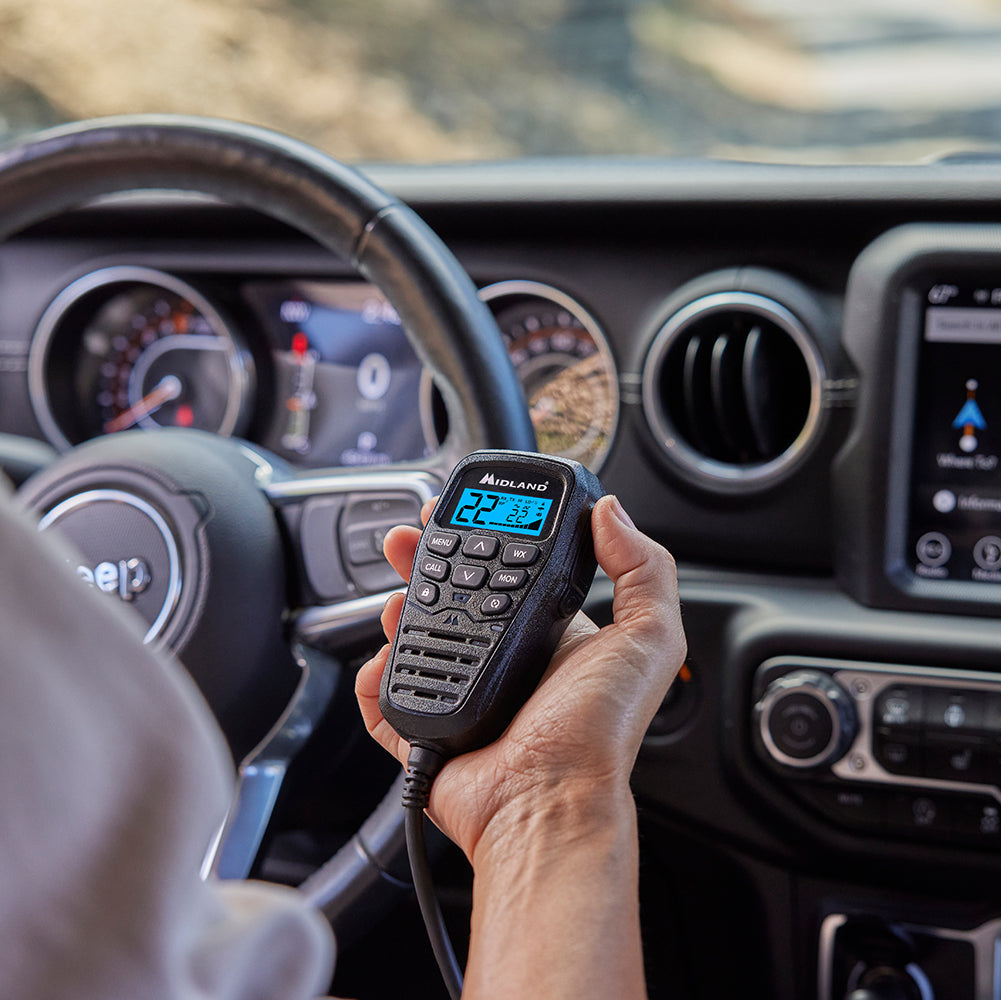
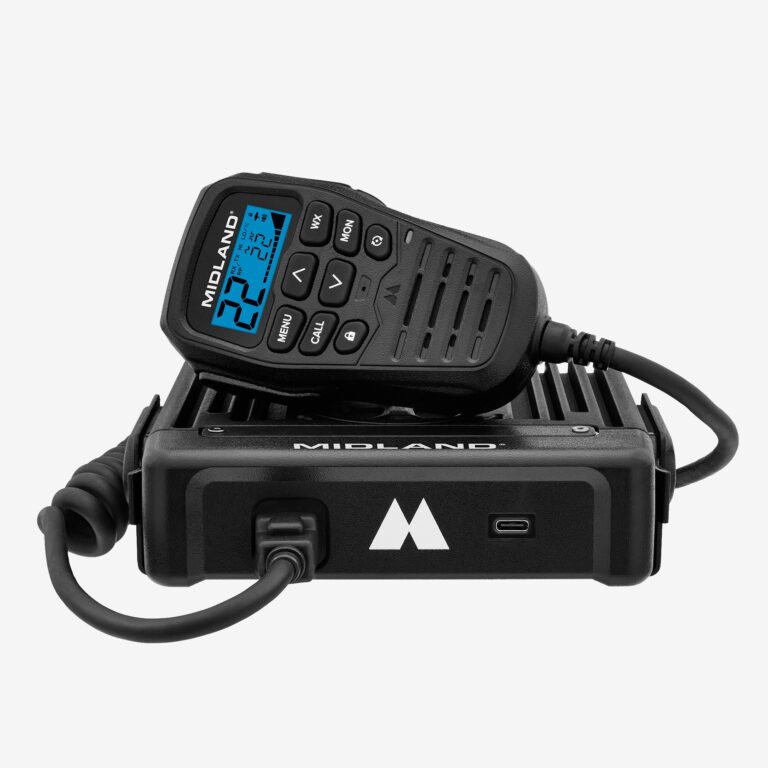
For most trail groups, the first radio to buy is the Midland MXT275 MicroMobile. It puts 15 watts into a body about 4.25 by 5 inches with its bracket. Every control and the display sit in the handheld microphone. As a result, you tuck the radio body under the dash and leave only the mic in view.
The Midland MXT275 has 15 high-power channels, 8 repeater channels and NOAA weather alerts. It ships with a 2.1 dB magnet-mount antenna and a 12V plug, so the first install takes an evening, not a weekend. Amazon lists it at $199.99, price checked November 3, 2026.
Owners on the trail forums agree on one upgrade. The stock antenna and its thin coax hold the radio back, and a taller whip mounted high on metal adds range. Our GMRS antenna mounting guide covers magnet, NMO and ditch light mounts. In my view, the Midland MXT275 with a better antenna is the smartest first setup for a trail group. Owner reports keep pointing to antenna height over extra wattage.
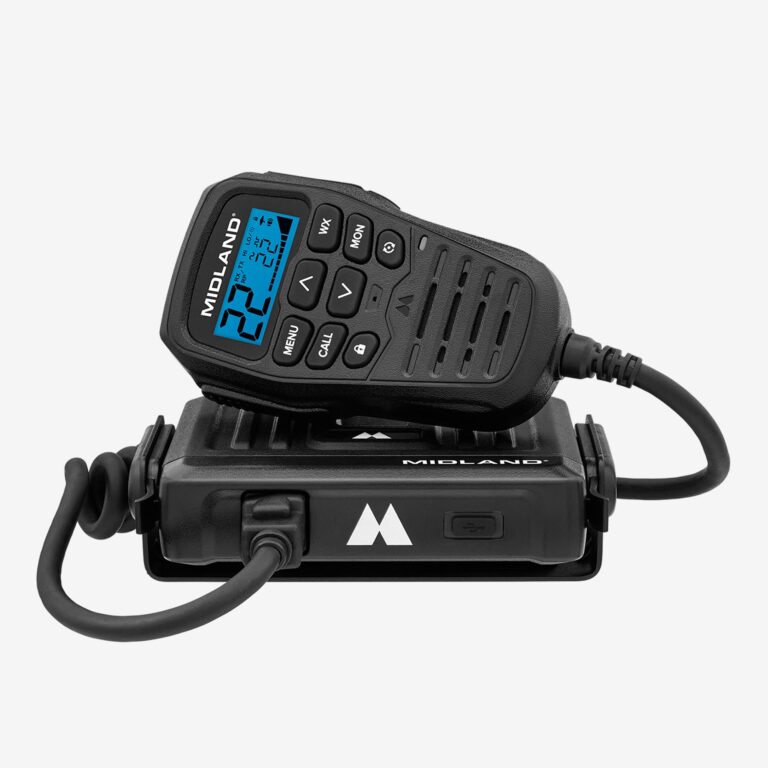
Midland MXT275 15W MicroMobile GMRS Radio
All controls sit in the handheld mic, so the radio body hides under the dash. It has 15 high-power channels, 8 repeater channels and NOAA weather alerts, and it runs from a 12V socket.
Check Price at AmazonMXT275 vs. MXT575
The step-up pick is the Midland MXT575 MicroMobile, which runs 50 watts, the legal maximum for GMRS. It keeps the same mic-mounted controls and channel layout. However, the body grows to 5.5 by 7.3 inches, and owners often find it will not fit the under-dash spots where a 275 hides.
| Spec | MXT275 | MXT575 |
|---|---|---|
| Transmit power | 15 watts | 50 watts |
| Channels | 15 high-power plus 8 repeater | 15 high-power plus 8 repeater |
| Radio size | 4.25 x 5.06 x 1.44 in (with bracket) | 5.5 x 1.5 x 7.3 in |
| Power hookup | 12V socket plug included | Hardwired cord to the fuse block or battery |
| Best for | First radio for most trail groups | Solo travel and convoy leaders |
| Price | Check MXT275 price on Amazon | Check MXT575 price on Amazon |
When 50 Watts Pays Off
The extra 35 watts pay off when convoys stretch out on highways, when trees block the line of sight, or when you reach a distant repeater. In contrast, receive performance stays the same, since both radios hear only as well as their antennas. Solo backcountry drivers get the most from the 575.
Safety note: The MXT575 pulls up to 10 amps on high power, per Midland. Midland specs a 15-amp fuse and 14-gauge wire for runs up to 10 feet. Disconnect the negative battery cable first. Then run the fused red lead to the fuse block or battery post. If you are not comfortable wiring near the battery, have a shop install it.
The MXT575 lists at $439.99 on Amazon, price checked November 3, 2026. Some MXT275 owners report alternator whine, and running power straight to the battery is the fix they mention most. I think the 575 earns its price for solo drivers and convoy leaders who must reach the last rig. Everyone else is better served by the 275 and a good antenna.
Midland MXT575 50W MicroMobile GMRS Radio
It runs 50 watts, the most GMRS allows, with the same mic-mounted controls as the MXT275. It has 15 high-power channels and 8 repeater channels, and it hardwires to the fuse block or battery.
Check Price at AmazonInstall Parts That Decide Range
Whichever radio you pick, three parts decide range and reliability: a taller antenna on an NMO mount, low-loss coax and a fused power lead. The fuse kit below ships with 30-amp fuses, so buy 15-amp fuses for the MXT575 lead.
Antenna and power install parts


Browning® 200-Watt 450 MHz to 470 MHz 3-dBd-Gain UHF Antenna with S…

Newdeli Waterproof Inline Fuse Holder 12V with Cover 6 Pack
Final Thoughts
Getting your GMRS license is one of the cheapest upgrades to a trail setup. It costs $35, takes one sitting, and covers your whole immediate family for a decade. Above all, the license lets the kids in the back seat call out a turn without breaking a rule.
The one honest trade-off is the FCC website itself. Two logins and a buried dropdown confuse almost everyone the first time. Follow the three steps above in order, pay the fee the same day, and check your spam folder for the grant.
For the radio, I would start with the MXT275 and spend the savings on a taller antenna. If you drive solo or lead big convoys, the Midland MXT575 gives you the full 50 watts. For the wider picture, our hub on radios for off-roading and overlanding compares GMRS with CB and ham. After five Jeeps and a Colorado ZR2, my view is simple: clear rig-to-rig talk makes a group run safer. Once your call sign arrives, you are ready for the next one.
FAQ
How much is a GMRS license?
The FCC charges $35 for a new license. Renewal costs another $35 every 10 years. There are no other FCC fees for individual applicants.
Is there a test for a GMRS license?
No. GMRS has no exam. You fill out the online form in the FCC License Manager, certify it, and pay the fee.
How long does it take to get a GMRS license?
Most applicants see a grant one to two business days after payment. Holidays and FCC backlogs stretch the wait to a week or more. Search ULS License Search for your name if the email has not arrived.
Does a GMRS license cover my family?
Yes. Your spouse, children, grandchildren, stepchildren, parents, stepparents and grandparents qualify. So do siblings, aunts, uncles, nieces, nephews and in-laws. All of them operate under your call sign at any age. They do not need to live with you.
Do my friends need their own GMRS license?
Yes. Friends outside your immediate family need their own license. Alternatively, they use license-free FRS radios on the shared channels and still talk with your group.
Do I need a GMRS license for a Midland MXT275?
Yes. The MXT275 transmits at 15 watts, well above the 2-watt FRS limit. Therefore, you need a GMRS license before you press the talk button.