


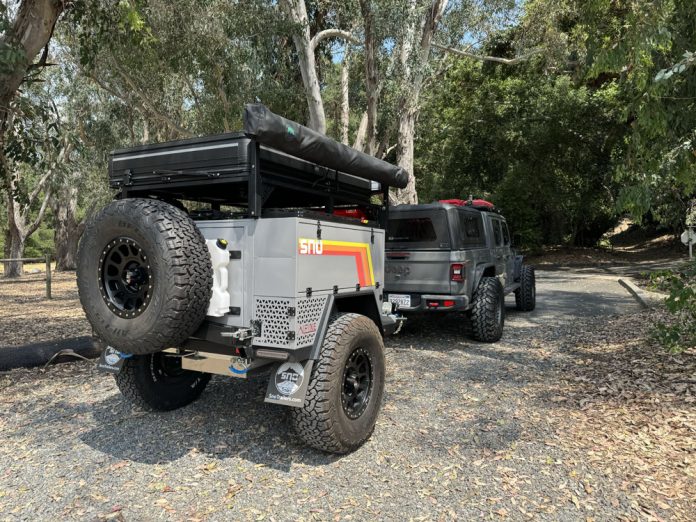

I’ve overlanded the American West in every season, and the best time to overland depends on where you’re headed. From my home base in Wyoming, I’ve chased snowmelt, dodged monsoon storms, and waited out early blizzards. In that time, I’ve learned the right window comes from matching region, elevation, and trip style.
I’ve toured the SNO Trailers facility and towed the Alpine through desert heat and mountain cold. So this guide pairs my seasonal field notes with what the Alpine’s onboard water, power, and shower add to each one. Use it to pick your window before you book a single campsite.
Quick Facts:
- Mountains: July through October, with September and October the sweet spot
- Deserts: October through April, avoiding summer heat
- Main summer risk: Southwest monsoon flash floods
- Main winter risk: Road closures and short days
- Alpine dry weight: 1,500 lbs
- Alpine starting price: Around $29,995
- Alpine systems: 30-gal water option, Joolca HOTTAP shower, 100Ah Renogy AGM, twin 10-lb propane
8 min read
In This Guide
- Best Time to Overland at a Glance
- SNO Trailers Alpine at a Glance
- Spring: Desert Peak Season and Mountain Mud
- Summer: High Country Opens and the Desert Closes
- Fall: The Sweet Spot for Most Trips
- Winter: Desert Trips and Cold-Weather Planning
- Best Time to Overland by Region
- Match the Season to Your Trip Style
- Prepare Your Rig and Trailer for Each Season
- Common Timing Mistakes to Avoid
- Pros and Cons
- Final Verdict
- Frequently Asked Questions
Best Time to Overland at a Glance

The best time to overland the American West is usually September and October for the mountains. For the deserts, it’s late fall through spring. Summer favors high country, while winter favors the low desert. Shoulder seasons bring fewer crowds and milder weather, but conditions are less predictable.
Elevation sets the calendar. A trail at 9,000 feet and a trail at 2,000 feet seldom share a good season. So pick your region first, then pick your month. If you’re still choosing a rig, my guide on what to look for in an overlanding camper trailer covers the gear side.
Seasons also shift year to year. Heavy snow winters delay passes into July, while dry winters open them early. Consequently, treat every date in this guide as a starting point, then confirm conditions locally.
SNO Trailers Alpine at a Glance
I use the Alpine as my seasonal example because its onboard systems matter in every kind of weather. My SNO Trailers Alpine review covers the full build.
| Specification | Details |
|---|---|
| Length | 12’2″ |
| Width | 6’3″ |
| Height | 5’9″ |
| Dry Weight | 1,500 lbs |
| Suspension | Fabtech fully-integrated |
| Wheels | Method wheels with 275/70/R17 tires |
| Departure Angle | 40 degrees |
| Water Capacity | Up to 30 gallons |
| Kitchen | Integrated zone with twin 10-lb propane |
| Shower | Joolca HOTTAP essentials kit standard |
| Power | 100Ah Renogy AGM |
| Starting Price | Around $29,995 |
Buy Direct From SNO Trailers
See the Alpine at SNO Trailers
Starting around $29,995, the Alpine ships factory-direct with onboard water, power, kitchen, and shower.
Spring: Desert Peak Season and Mountain Mud
Spring splits the West in two. Low deserts in Arizona, Utah, and southern California hit their best weather, with mild days and cool nights. In contrast, high country still holds snow. Trails turn to mud as it melts.
Many high passes stay closed into early summer. So check the land agency’s road status before you commit to a route. Also, skip soft, rutted trails. Driving them wet damages the track and strands rigs. The Alpine’s Fabtech suspension and 40-degree departure angle handle desert washes well, but no trailer fixes a bad timing choice.
Spring also brings wildflowers, runoff, and swollen creeks. For example, a crossing you’d drive easily in September becomes dangerous during peak melt. Moreover, cold nights linger up high, so pack for freezing temperatures even when days feel warm. Wind also whips through open desert, which makes setting up camp harder than it looks.
Summer: High Country Opens and the Desert Closes

Summer is prime time for the Rockies, the Sierra, and the Cascades. Snow clears from most passes by July, and cool air at elevation makes camping pleasant. Meanwhile, low deserts often top 100 degrees, which makes midday driving miserable.
The Southwest monsoon arrives from July through September. Afternoon storms bring flash floods, so avoid washes and low crossings. Also, watch for fire restrictions and wildfire smoke. The Alpine’s 30-gallon water option and 100Ah Renogy AGM battery help in hot, dry camps, and the Joolca HOTTAP shower rinses off trail dust.
Summer crowds gather at popular trailheads and lakes. Therefore, arrive early on weekdays or push deeper into less-visited forest roads. In addition, thunderstorms build over peaks most afternoons, so plan summits and exposed ridges for the morning. Altitude helps too, since every thousand feet of climb cools the air by several degrees.
Fall: The Sweet Spot for Most Trips

Fall is my favorite season, and it’s not close. Nights turn cool, bugs fade, crowds thin, and aspens glow across the Rockies. Fire risk also drops once the weather cools. Consequently, September and October reward almost every mountain route.
Plan for early snow on high passes, and expect shorter days. Warm meals matter more as temperatures fall. Twin 10-lb propane tanks keep the Alpine’s kitchen running, and a hot shower ends a cold evening well. This comfort is the heart of what I call luxury backcountry camping.
Winter: Desert Trips and Cold-Weather Planning
Winter belongs to the low desert. Southern Arizona and southern California offer mild days and clear skies. In contrast, mountain roads close, and snow buries many trailheads until spring.
Cold-weather trips demand real planning. Days are short, batteries lose capacity in the cold, and propane output drops in deep freezes. Therefore, carry spare fuel and keep the battery charged. Additionally, check road conditions each morning before you roll out.
Winter desert camping rewards patience. Nights drop below freezing even in the south, so layer up and keep water from freezing. Still, the quiet and the star-filled skies justify every extra layer.
Best Time to Overland by Region

Regions follow their own calendars. The Southwest desert runs best from October through April. The Rocky Mountains in Colorado, Wyoming, and Montana run best from July through September. Meanwhile, the Pacific Northwest enjoys its driest weather in the same summer window.
The Great Basin in Nevada and Utah sits in between. Late spring and early fall work best, since summer heat and winter cold both bite. From my home base in Wyoming, I plan big mountain trips for late summer and save desert trips for the cold months.
Coastal Pacific Northwest roads stay wet through spring, so plan for rain. Meanwhile, inland routes dry out earlier, which opens the door to June trips.
Match the Season to Your Trip Style
Your trip style matters as much as the calendar. Weekend travelers have flexibility, so they chase the best forecast. In contrast, long expeditions face weather swings, so they build buffer days into every itinerary.
Families should favor mild seasons with predictable weather. For example, early fall in the mountains or spring in the desert both deliver. Solo travelers should add margin for road closures. Finally, remember the best weather draws crowds, so book popular campsites early. Budget also shapes timing, since weekdays beat weekends in every season.
Prepare Your Rig and Trailer for Each Season

Seasonal prep keeps small problems small. In spring, inspect tires, bearings, and seals after winter storage. In summer, check your cooling system and water supply. By fall, test your heater and stock extra fuel.
Pack for the full range of conditions you’ll meet. In spring and fall, bring layers, rain gear, and traction boards. During summer, bring extra water, shade, and sun protection. Come winter, bring insulated clothing, spare fuel, and a battery charger.
Check the forecast with the National Weather Service before every trip. Then check it again each morning, because mountain weather shifts fast. As a result, you’ll know when to stay put and when to move.
Ready for Any Season
Explore the Alpine Build
See configuration options and current pricing straight from the factory.
Common Timing Mistakes to Avoid
Most timing mistakes repeat. First, travelers trust a single forecast and ignore altitude changes. Second, they book summer desert trips because school is out. Third, they chase fall color without checking pass closures. Finally, they underestimate how fast daylight shrinks in late fall, then drive unfamiliar roads after dark.
Each mistake is easy to avoid. For example, review road status and forecasts a week out, then again the day before. Also, build a backup route into every plan, and tell someone your itinerary before you leave. A flexible plan beats a perfect one when weather turns.
Pros and Cons
Alpine Pros Across Seasons
- Up to 30 gallons of water supports dry desert trips
- 100Ah Renogy AGM runs lights and charging in any season
- Twin 10-lb propane tanks keep meals going in the cold
- Joolca HOTTAP shower rinses off dust and warms you up
- Fabtech suspension and 40-degree departure angle suit rough routes
Alpine Cons Across Seasons
- Starting around $29,995
- 1,500-lb dry weight needs a capable tow vehicle
- 6’3″ width limits tight forest roads
- Snow and mud still demand careful driving
- Winter trips need extra fuel and battery planning
Final Verdict

The best time to overland is the season matching your region. Chase September and October in the mountains. Chase October through April in the desert. Avoid summer heat and monsoon storms in the low country, and avoid snow in the high country.
The Alpine earns its place across all four seasons through its water, power, propane, and shower. Consequently, I recommend it for travelers who want one rig for many windows. Still, good timing beats good gear every time, so plan your window first.
Ready to Buy?
Check Today’s Price on the Alpine
SNO Trailers ships factory-direct with configuration support before your build begins.
Frequently Asked Questions
What is the best time to overland the American West?
September and October work best for the mountains. The deserts shine from late fall through spring. Match the season to your region and elevation.
When do high mountain passes open?
Most open between late spring and midsummer, depending on snowpack. Check the land agency’s road status before you go.
Is summer a bad time to overland in the desert?
Often, yes. Temperatures top 100 degrees, and monsoon storms bring flash floods from July through September.
Is winter overlanding worth it?
Yes, in the low desert. Mountain roads close, so plan around mild southern routes and short days.
How do I avoid crowds?
Travel on weekdays, choose shoulder seasons, and book popular campsites early.
What does the SNO Trailers Alpine add in different seasons?
It carries up to 30 gallons of water, a 100Ah Renogy AGM battery, twin 10-lb propane tanks, and a Joolca HOTTAP shower. Those systems help in desert heat and mountain cold.
Friendly disclaimer: Our articles may contain affiliate links that support us without costing you more, and sometimes we spice things up with sponsored content—but only for products we truly stand behind!