


Quick Facts:
- Topic: How to buy wheel and tire packages without fitment mistakes.
- Specs to check: Lug pattern, center bore, offset, wheel width, tire size, load rating, lug seat and TPMS.
- Biggest owner complaint: Highway vibration on a set sold as pre-balanced.
- Lifted rigs: Wheel Hero’s fitment guarantee covers stock suspension only.
- Sample wheel prices: $161.50 to $369.99 per wheel at Wheel Hero, price checked October 28, 2026.
- After install: Re-torque the lug nuts after the first 50 miles.
- Best for: Truck, Jeep and SUV owners ordering a mounted and balanced set online.
9 min read
In This Guide
- Why Wheel and Tire Packages Go Wrong
- The 8-Point Wheel Fitment Checklist
- Wheel Bolt Pattern and Center Bore
- Wheel Offset, Backspacing and Rubbing
- Wheel Width, Tire Size and Load Rating
- Lug Nuts, TPMS and Balancing
- Read the Fitment Guarantee Before You Pay
- Two Wheels to Start a Package
- Wheel and Tire Packages vs. Buying Separately
- Final Thoughts
- FAQ
4wdTalk earns a commission when you buy through links on this page, at no extra cost to you. As an Amazon Associate, 4wdTalk also earns from qualifying purchases.
Why Wheel and Tire Packages Go Wrong
Wheel and tire packages often arrive mounted, balanced and ready to bolt on, so you skip the tire shop and often save money. However, one wrong spec turns a ready-to-install set into a box of parts you cannot run. Tacoma, Jeep, 4Runner and Ram forums repeat the same problems: vibration, rubbing, wrong lug nuts and TPMS lights.
Below are eight checks to run before you order, each tied to a mistake owners describe. For example, the Mayhem 8015 Warrior comes in widths and offsets from 22×12 at -44 mm to 17×7.5 at +40 mm. Because of this range, the same wheel fits one truck well and rubs on another.
I have owned five Jeeps and now drive a 2025 Chevy Colorado ZR2. My rule matches every forum: check specs before style. The KALON Falcon shows why the lug pattern comes first. It ships in 4-lug and 5-lug patterns only, so it never fits a 6-lug truck.
The 8-Point Wheel Fitment Checklist
Run every line in this table against your vehicle before you add wheel and tire packages to a cart. Your door jamb placard, owner’s manual and the retailer’s fitment tool cover most of it.
| Spec | What to Check | Common Mistake |
|---|---|---|
| Bolt pattern | Lug count and bolt circle, such as 5×127 or 6×139.7. | Ordering by look, not by pattern. |
| Center bore | Wheel bore equal to or larger than the hub. | Oversize bore with no rings. |
| Offset | Millimeters from the mounting face to the wheel centerline. | Low offset plus bigger tires. |
| Wheel width | Inside the tire maker’s approved rim range. | Wide tire on a narrow wheel. |
| Tire size | Clearance at full lock and full compression. | Testing clearance on flat pavement only. |
| Load rating | Load index and load range at or above the placard. | P-metric tires on a loaded truck. |
| Lug seat | Conical, ball or flat seat, plus thread size. | Reusing factory lug nuts. |
| TPMS | Sensor type, pressure range and relearn method. | Skipping sensors to save money. |
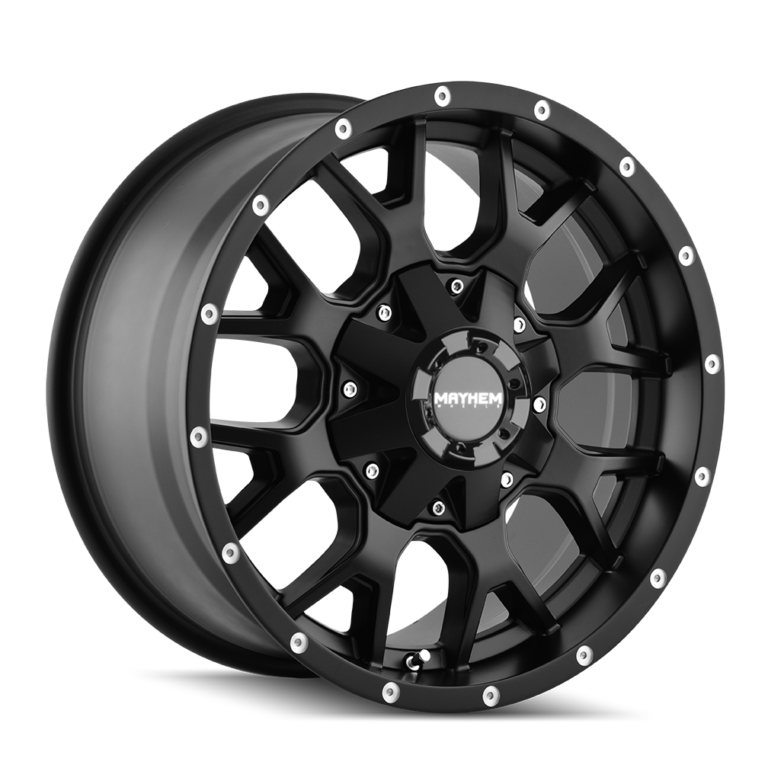
Mayhem 8015 Warrior, 17 to 22 Inch
Sizes run 17x7.5 to 22x12 with -44 to +40 mm offsets. Enter your vehicle first so the builder filters lug pattern and offset.
Check Price at Wheel HeroWheel Bolt Pattern and Center Bore
The bolt pattern is the first filter, because nothing else matters if the studs do not line up. Each pattern reads as lug count times bolt circle diameter. A Jeep Wrangler JL uses 5×127 mm, also written 5×5 inches. In contrast, a Toyota Tacoma uses 6×139.7 mm, or 6×5.5 inches.
Next, check the center bore. Aftermarket truck wheels often carry a larger bore than the hub, so they fit many vehicles. When the bore exceeds the hub, the lug nuts alone center the wheel. As a result, vibration shows up on the highway, and owners chase it through several balances. Tacoma World and Cummins Forum threads describe fixes with correct hub centric rings or shanked lug nuts.
Hub centric rings are cheap plastic or aluminum spacers sized to your hub and the wheel bore. Before you order, confirm the package includes rings matched to both numbers. Wheel Hero’s optional install kit adds rings when your vehicle needs them.
To check, measure the hub and wheel bore with a NEIKO digital caliper. A GoldenSunny lug pattern gauge then confirms 4, 5, 6 or 8 lug layouts. After install, the Amazon Basics 1/2-inch torque wrench covers 20 to 150 ft-lb for lug nuts.
Tools to Measure and Torque

NEIKO 01408A 8” Electronic Digital Caliper Extra Large Display | 0-…

GoldenSunny Wheel Stud Bolt Pattern Measuring Tool/PCD Ruler | 4 5 …

Wheel Offset, Backspacing and Rubbing
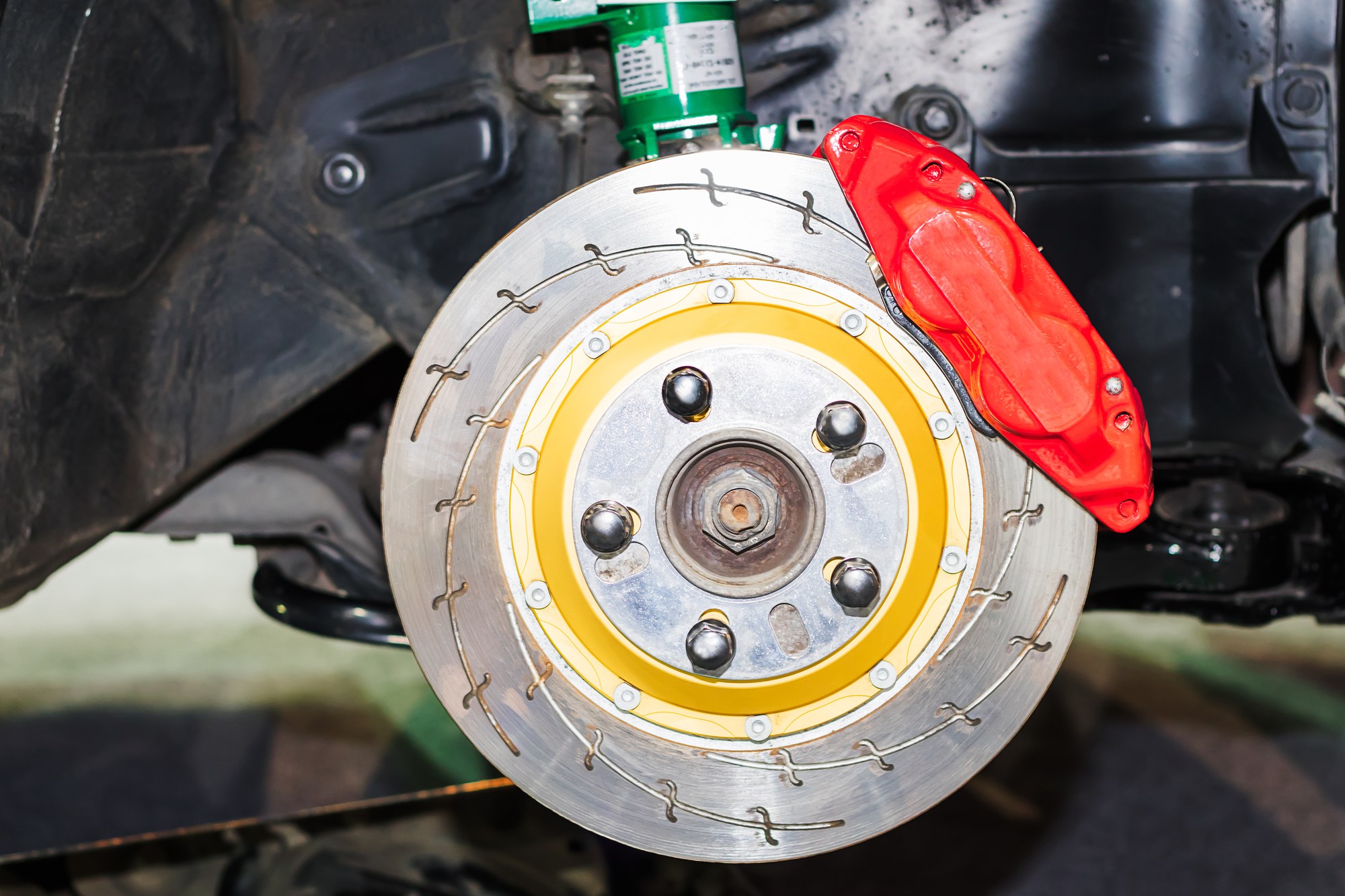
Offset decides where the tire sits in the wheel well, and it causes most rubbing complaints. Measured in millimeters, offset runs from the mounting face to the wheel centerline. Positive offset tucks the wheel in, while negative offset pushes it out. For more depth, read how wheel offset affects clearance.
Backspacing measures the same idea in inches, from the mounting face to the inner lip. For example, a 17×9 wheel at -12 mm has about 4.5 inches of backspacing. The same wheel at +18 mm has about 5.7 inches. Consequently, the 30 mm change moves the tire face out about 1.2 inches.
Moving the tire out adds stance and clears suspension parts. However, it also pushes the tread toward the fender. Jeep owners running 35s report rub on the lower control arm at full lock. Similarly, a 4xe owner reports rub with 315s on a -12 mm wheel. If you plan a lift, read our guide to choosing a Jeep lift kit before you pick an offset.
Wheel Width, Tire Size and Load Rating
Every tire carries an approved rim width range, and wheel and tire packages should stay inside it. For example, BFGoodrich and Falken list 8 to 11 inches for LT315/70R17. Meanwhile, an LT285/70R17 approves a 7.5-inch wheel. Test clearance at full lock and full compression, not on flat pavement. Our guide to choosing the right tire size covers clearance by platform. Bigger tires also change gearing, so check whether you need to regear before you jump to 35s.
Check the Tire Load Index
The tire load index is a number on the sidewall tied to a maximum load per tire. For instance, a load index of 121 rates about 3,195 pounds per tire. Compare it to your door placard, then add margin for a loaded overland build. LT tires also carry a load range letter, and load range E tires run up to 80 psi.
On Overland Bound and Tacoma World, owners treat load range as a choice. Midsize rigs often ride harsher on E-rated tires, while 3/4-ton and 1-ton trucks need them. Therefore, match the tire load index to your real weight, not to the heaviest option.
Lug Nuts, TPMS and Balancing
Lug nuts, sensors and balance are where correct wheel and tire packages still fail on day one. Wheel Hero lists lug nuts and TPMS sensors as add-ons, so they do not ship unless you add them.
Order the Right Lug Nuts
Most aftermarket wheels need a 60-degree conical seat, while many factory alloy wheels use a flat seat. Tacoma owners report factory nuts do not fit, and thicker wheel pads leave too little stud for them. The fix is the correct thread, such as M12x1.5 on a Tacoma, in a longer or extended-thread nut. In my view, the install kit is the smartest add-on in the whole order.
Safety note: Torque lug nuts to your owner’s manual spec with a torque wrench, in a star pattern. Wheel Hero advises a re-torque after 50 miles, since new wheels seat against the hub. Never trust an impact gun for the final torque.
Plan Your TPMS Setup
According to NHTSA’s tire safety page, passenger cars, light trucks and vans from model year 2008 on come with TPMS. Forum threads show three problems: missing sensors, failed pairing and a relearn requiring a tool or dealer visit. Heavy-duty owners add a fourth. Some aftermarket sensors top out near 60 psi while the rear placard calls for about 80 psi, so the light never clears. Confirm the sensor psi range and relearn method before checkout.
Check the Wheel Balance
The most common complaint is a pre-balanced set vibrating at 60 to 75 mph. A local rebalance or a road force test fixed it, and sometimes revealed an out-of-round tire or wheel. Also, inspect where the weights sit, because owners report thick weights hitting a brake caliper or rotor.
For example, the Autel MaxiTPMS TS408S activates and relearns aftermarket pressure sensors. Next, an AstroAI digital gauge checks the psi range against your placard. Finally, a Rhino USA plug kit handles trail punctures on the new tires.
Install Day and Road Gear



Read the Fitment Guarantee Before You Pay
A fitment guarantee protects you only inside its terms. Wheel Hero advertises a 100% Fitment Guarantee, which covers orders built through its vehicle search on stock suspension. Therefore, a lifted overland rig falls outside it. If a guaranteed order does not fit, Wheel Hero first offers spacers or hub rings, then covers transit costs for the right product.
Returns run 30 days from delivery, and products must be unused and not driven on. Wheel and tire packages carry a 35 percent restocking fee, round-trip freight and a $75 labor charge. Report shipping damage to the carrier when the box arrives. Bronco6G and Ranger5G owners describe scratched wheels and inward-facing white letters, so inspect every wheel first.
Two Wheels to Start a Package
These two wheels show how far apart fitment ranges run in wheel and tire packages. The Mayhem fits Jeeps and trucks, while the KALON fits crossovers.
| Wheel | Fits | Sizes and Offsets | Price per Wheel |
|---|---|---|---|
| Mayhem 8015 Warrior Matte Black | Jeeps, midsize and full-size trucks, 8-lug HD trucks. | 17×7.5 to 22×12, -44 to +40 mm. | $197.31 to $369.99, price checked October 28, 2026. |
| KALON Falcon Gloss Black | Crossovers and small SUVs with 4-lug or 5-lug hubs. | 16×7 to 20×8.5, +38 to +40 mm. | $161.50 to $225.25, price checked October 28, 2026. |
For a stock or mildly lifted truck, the Mayhem Warrior works best in its +18 mm sizes. Its -12 mm and -25 mm sizes push the tire out, so pair them with the clearance checks above. In contrast, the KALON Falcon is a street-oriented wheel for a crossover on all-terrain tires. Stock varies by size, so confirm availability before checkout.
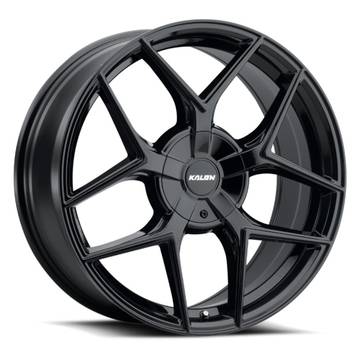
KALON Falcon, 16 to 20 Inch
A street-style alloy for crossovers on all-terrain tires, in 4-lug and 5-lug patterns with +38 to +40 mm offsets. Not a truck wheel.
See Sizes at Wheel Hero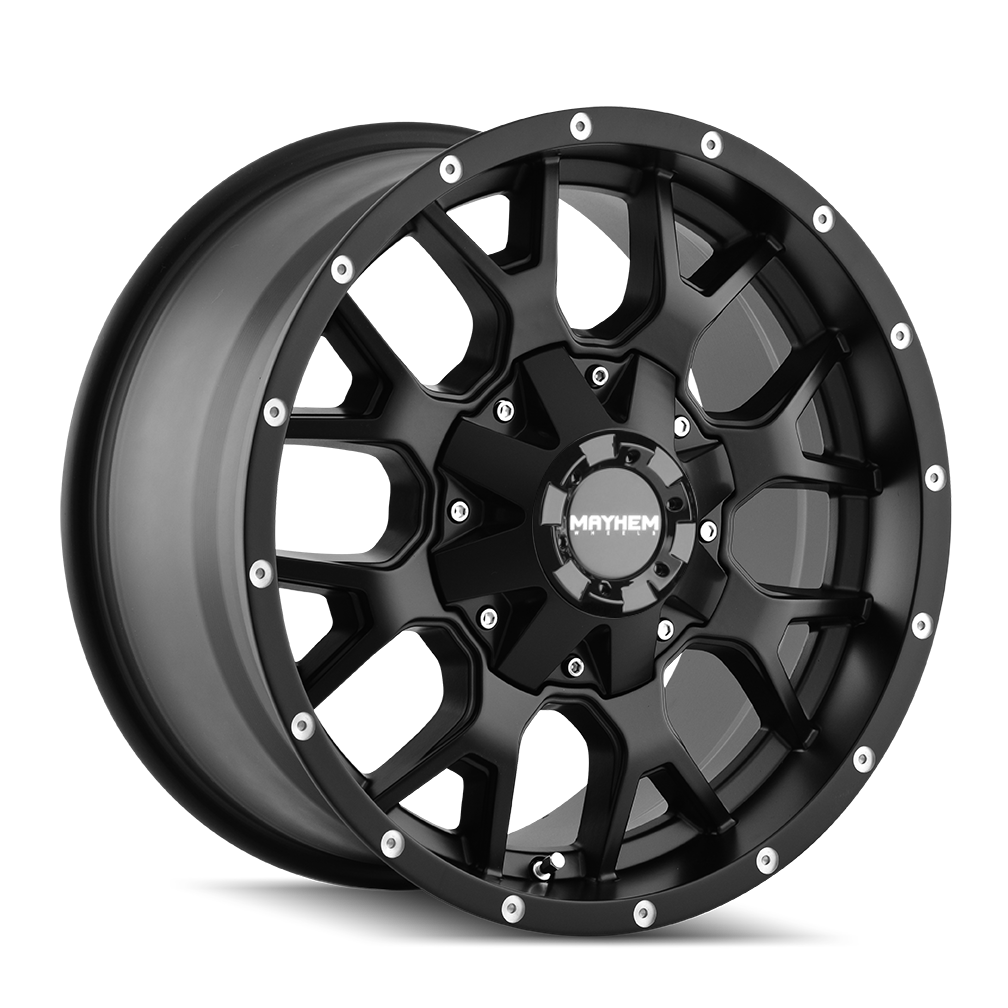
Wheel and Tire Packages vs. Buying Separately
Wheel and tire packages win on convenience and, often, on price. Savings near 30 percent against local quotes show up in JL Wrangler Forums threads. In addition, Wheel Hero ships packages free to the continental US, usually within 2 to 5 working days.
Buying separately wins when you want a local shop to handle damage checks, road force balancing and rotations. Some owners take the online quote to a shop for a price match. Others ship the package to an installer, who then inspects it for damage.
Pick a package if you run a stock or mildly lifted rig and trust your specs. Instead, buy separately if you run a big lift, a heavy-duty truck with high-pressure TPMS, or a size outside the guarantee.
Final Thoughts
Wheel and tire packages make sense for most truck, Jeep and SUV owners, because the set shows up ready to bolt on. My take: for a stock or mildly lifted rig, a package is the right call. Style sells the wheel, but specs decide how it drives.
The trade-offs are real, though. Balance problems, wrong lug nuts and TPMS pairing rank among the top owner complaints. Also, lifted rigs fall outside Wheel Hero’s fitment guarantee, so you carry the risk on offset and clearance. If your build sits on a 3-inch lift with 37s, buy from a local shop where someone checks the fit on the truck.
For everyone else, run the eight checks, add the install kit and TPMS sensors, and plan a re-torque at 50 miles. Next, add a lug nut check to your post-trail inspection checklist. For more tire and wheel guides, browse our wheels and tires hub.
FAQ
Is it cheaper to buy tires and rims together?
Often, yes. Owners on JL Wrangler Forums report savings near 30 percent against local quotes. However, local shops often include rotations and rebalances.
How much do 4 new tires and rims cost?
Wheels alone run $161.50 to $369.99 each in the examples above, price checked October 28, 2026. A set of four Mayhem Warrior wheels starts at $789.24 before tires. Add four tires, lug nuts and TPMS sensors for the full package price.
What is wheel offset?
Offset is the distance in millimeters from the mounting face to the wheel centerline. Positive offset tucks the wheel in, and negative offset pushes it out.
Do I need hub centric rings?
You need them when the wheel’s center bore is larger than your hub. Order rings sized to both the hub and the wheel bore.
Do bigger tires affect the speedometer?
Yes. A jump from 31.5-inch to 35-inch tires makes the speedometer read about 58.5 mph at a true 65 mph. On many vehicles, a dealer or a plug-in programmer recalibrates it.