


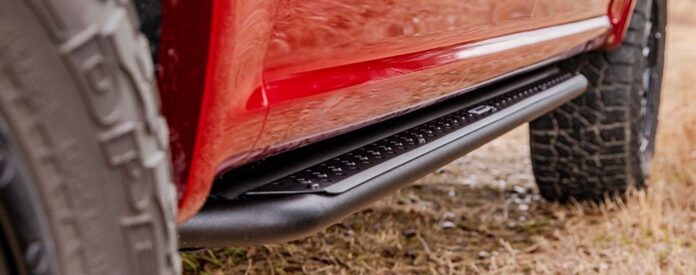
Quick Facts:
- Topic: Rock sliders vs. running boards vs. powered steps for trucks and SUVs.
- Best for protection: Frame-mounted sliders, which take rock contact instead of the body.
- Best for easy entry: Powered steps, which drop low when you open the door.
- Lowest cost: Fixed running boards, usually a few hundred dollars.
- Slider price: About $800 to $1,400 for a quality set.
- Powered step price: About $1,250 to $1,500 or more at RealTruck.
- Step width: 2 inches on the Go Rhino Dominator DSS pad, 5.5 to 6 inches on Go Rhino running boards.
- Warranty examples: Go Rhino sliders carry a limited lifetime structural warranty; the AMP Research PowerStep carries 5 years.
8 min read
In This Guide
Overview
Rock sliders, running boards, and powered steps all mount along the rocker panel, yet each one solves a different problem. Sliders protect the body from rocks. Running boards, meanwhile, give you a place to stand, and powered steps drop low when you open the door.
The right pick depends on what each part does on the trail, so start there. Owners on Tacoma and 4Runner forums report a bolt-on board folding at the first real rock contact. A powered step, however, sometimes jams when mud and ice pack the hinges. Likewise, a slider makes a tall, narrow step, which is hard on kids and short adults on a lifted rig.
This guide compares the three on protection, step width, ground clearance, weight, and cost. Then it shows which one fits a daily driver, a weekend trail rig, and a rock crawler. I have owned five Jeeps, including a Gladiator, and I lean toward protection first on any rig bound for rocks.
Grip Tape for Tall Slider Steps
A tall slider step is hard on short legs, and wet boots make it worse. Grip tape adds traction to a step pad or a slider tube because bare metal gets slick. 3M Safety-Walk Slip Resistant Tape, Lockport Anti Slip Tape, and LLPT Grip Tape are three rolls to compare.
Grip tape for steps and slider tubes


LLPT Grip Tape 2" x 16.5 Ft Black Heavy Duty Anti Slip Tape | 80 Gr…
How Rock Sliders Protect Your Rockers
Rock sliders are armor first and steps second. A true slider is a thick steel or aluminum tube mounted to the frame or to reinforced points on the body. Because it lets the vehicle pivot or slide off an obstacle, the panel stays intact instead of denting. Owners on Tacoma, 4Runner, and Ranger forums say a slider takes the hit while a thinner board crumples.
Mounting matters as much as tube size. RealTruck says rocker-mount steps suit daily driving and mild wheeling, while frame-mount designs suit serious off-road use. Expedition Portal, Pirate4x4, and JL Wrangler forums add a warning: body-mounted sliders flex into the rocker and leave rail-shaped dents. Frame-mounted, plated, or gusseted sliders resist this better.
Plan on about $800 to $1,400 for a quality set. Our list of upgrades to install first names the top buys. Among them are tires, a 2 to 3 inch lift, and sliders in this range. For skid plates, diff covers, and bumpers, read our off-road armor buying guide.
Step Height and Rock Rails
Some makers sell sliders as rock rails. Because the tube sits high and tight to the body, clearance stays protected, but the step is tall. Owners describe kids and short passengers who struggle to climb in. Common fixes include step-style sliders, flat designs, grip tape, and a removable step. Gladiator, 4Runner, and Bronco owners who fit step-style sliders say the family still climbs in while the rig keeps trail protection.
The Go Rhino Dominator DSS is one example. It pairs a full-length slider and rub rail with a removable 2 inch step pad, from $574.99 at RealTruck. The kit also bolts on with no drilling. RealTruck itself says the DSS is not as durable as dedicated sliders. Still, a frame-mount kit is available for select Bronco, Gladiator, Wrangler, 4Runner, and Tacoma applications.
Where Running Boards Fit
Running boards flip the slider trade-off, with wide, flat steps built for access. They also shield the rocker from road debris and rock chips. RealTruck says most side steps, including nerf bars, guard rockers against mild impacts and kicked-up rocks, but they do not match impact-resistant sliders.
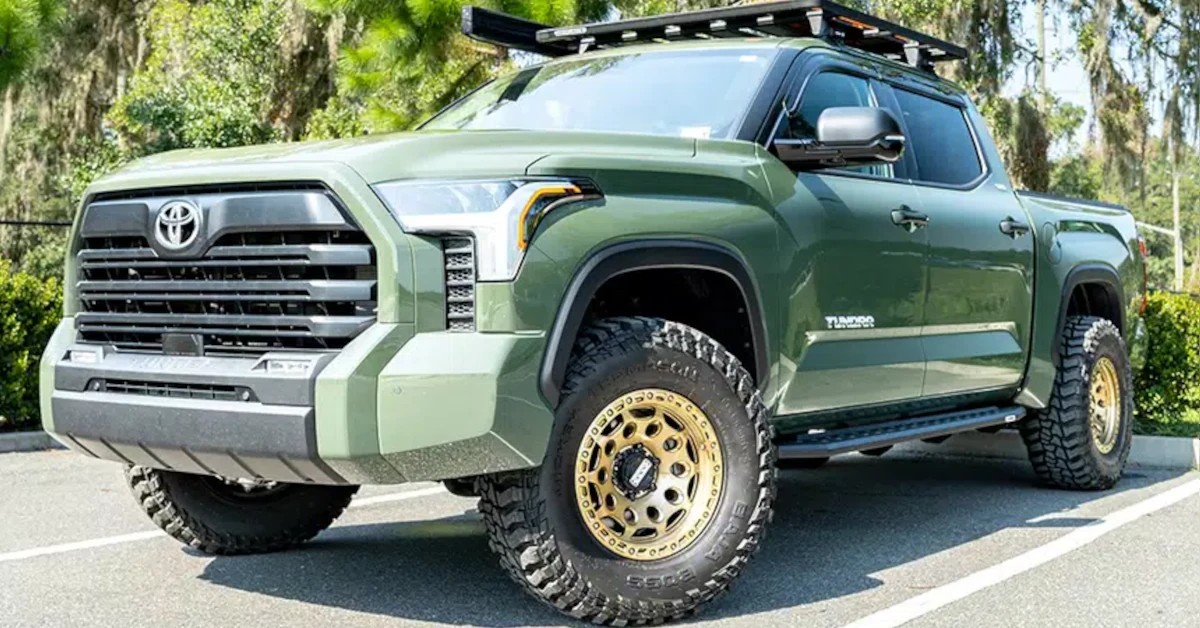
Step width is the clear strength here, especially for kids and short passengers. The Go Rhino RB10 has an extra-wide 6 inch step in 16-gauge galvanized steel. Meanwhile, the slimmer RB20 measures 5.5 inches at its widest. The board’s foothold is roughly three times wider than the 2 inch pad on the Go Rhino DSS.
Fixed boards also cost less. RealTruck lists Go Rhino running boards at starting prices from about $180 to $520, and no motors exist to fail. Then the trade-off shows up on the trail. Tacoma and 4Runner subreddits describe boards held to the body by a few bolts. In practice, those boards fold under real rock contact and drag the rocker along. The rocker guard section of our 4×4 armor basics guide makes a similar point about side steps.
What Powered Steps Add
Fixed boards sit at one height all the time. Powered steps deploy when you open a door and retract when you close it. The AMP Research PowerStep has a 6 inch wide, cab-length step with LED courtesy lights and a 5-year warranty. RealTruck says premium electric models such as this one drop over a foot. For this reason, many owners of lifted trucks buy them.
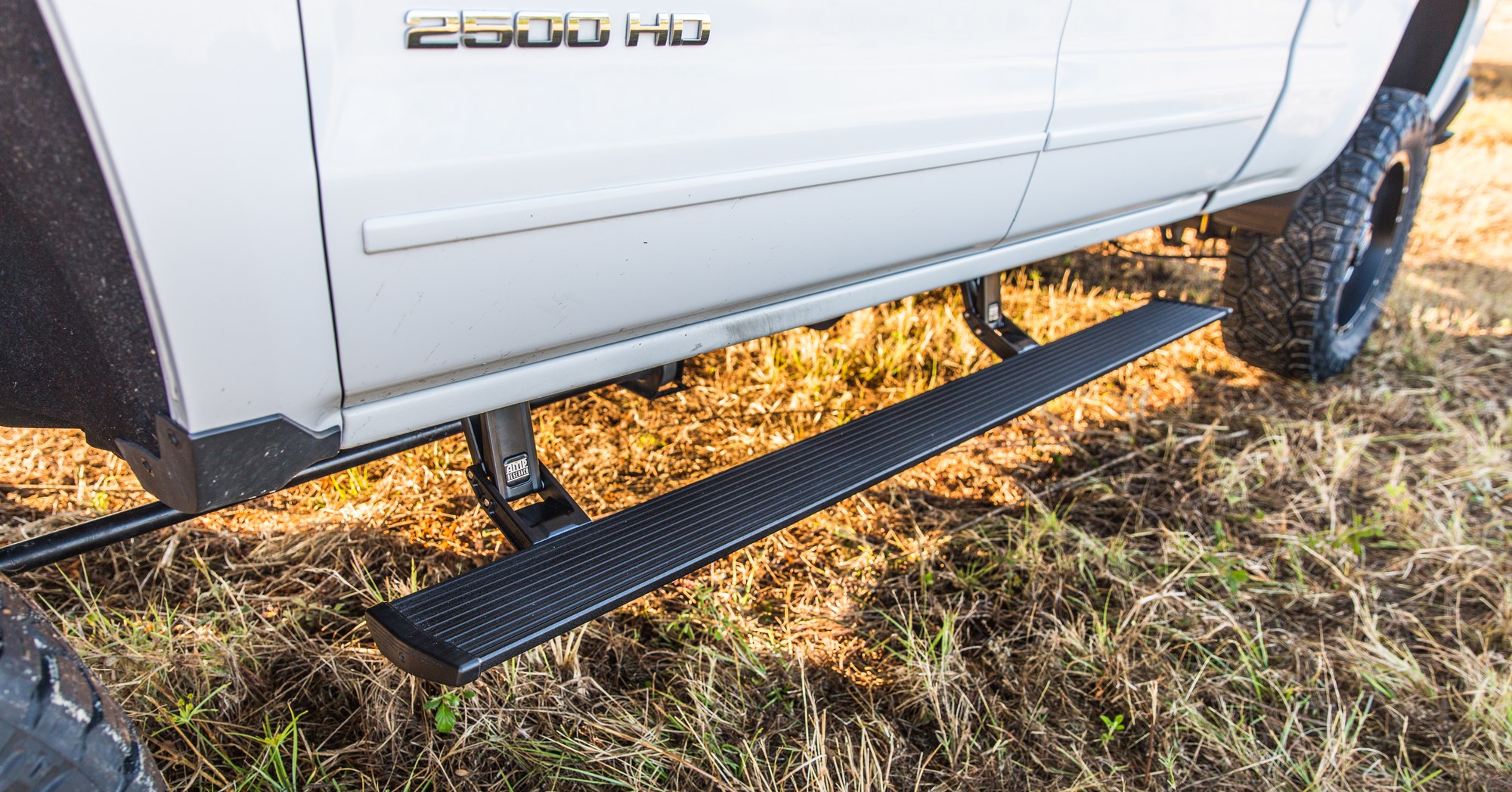
The RealTruck VoltStep uses dual motors on each board, a 6 inch aluminum step, and an interior bypass switch for car washes and cargo loading. RealTruck recommends professional installation for both brands. Owners call installs fiddly, especially the wiring and door-switch kits. RealTruck lists the AMP PowerStep from $1,249.99 and the VoltStep from $1,499.99. Retraction timing differs too. Go Rhino owners say the boards retract the moment the door closes, and some wish for a delay. One AMP owner reports a two second wait.
Powered steps are conveniences, not armor. Since retracted steps stay tucked up by the rocker, they snag less often than fixed boards. Deployed, though, they expose moving arms to mud, slush, and ice. Ford Tremor and Bronco forums carry reports of steps sticking, freezing, or failing to deploy when mud and ice pack the hinges. Others describe years of trouble-free use, mostly on AMP steps. Few long-term reports exist for other brands, so treat their reliability as unproven. In snow country, owners suggest mud flaps and regular lubrication.
A hybrid option exists. For example, our powered step sliders on a Gladiator write-up covers Rock Slide Engineering R-SE sliders. They are built from 3/16 inch steel and add a powered step for entry.
Ground Clearance, Weight, and Cost
Ground clearance separates the three more than any spec sheet number. Owners say sliders and retracted powered steps keep more clearance than fixed boards, which hang below the rocker. Go Rhino designed the DSS slider step to sit high, because a higher step has less risk of hanging up on an obstacle.
Weight adds up fast. Our breakdown of how much armor weighs lists the sliders in one overland build at 146 lb. It also finds aluminum sliders save only about 19 percent, because the legs and mounting plates stay steel. The makers I checked do not publish consistent weights for boards or powered steps, so no fair weight comparison exists here. Compare spec sheets for your vehicle before you buy.
This table summarizes the trade-offs. Notably, running boards cost least and give a wide step, while powered steps add convenience but no trail protection.
| Type | Trail protection | Step width | Clearance | Typical price |
|---|---|---|---|---|
| Sliders, frame-mounted | High | Varies, 2 inch on the Go Rhino DSS | Tucked high and tight to the body | $800 to $1,400 |
| Running boards | Low, mild impacts only | 5.5 to 6 inches | Hangs below the rocker | A few hundred dollars |
| Powered steps | None | 6 inches | Tucked up when retracted | $1,250 to $1,500 or more |
Hinge Care for Powered Steps
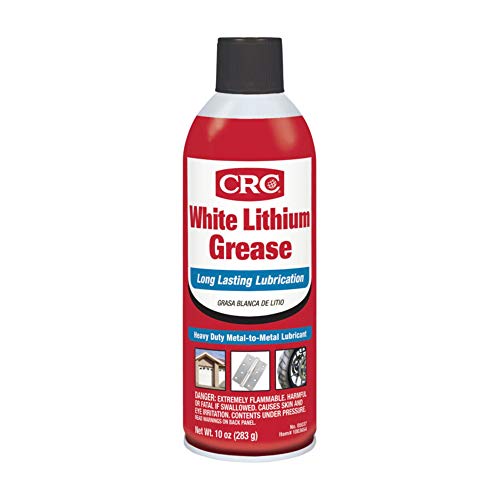
Powered steps cost the most of the three, and mud and ice pack their hinges in snow country. Owners clean and lubricate those pivots because a stuck step is useless. Choices include CRC 5037 White Lithium Grease, CRC 05074 Heavy Duty Silicone Lubricant, and 3-IN-ONE Garage Door Lubricant.
Hinge lubricants for powered steps


3-IN-ONE Garage Door Lubricant with SMART STRAW SPRAYS 2 WAYS
Rock Sliders vs. Running Boards vs. Powered Steps
Choose running boards if your truck stays on pavement and gravel. A few hundred dollars buys a wide, simple step. Still, skip them for real trail work, because owners say they bend and pull the rocker with them.
For weekend trail runs on moderate terrain, a step-style slider gives you rocker protection and a step in one set. Match it to light trails, since RealTruck describes the DSS as less durable than dedicated sliders.
On a rock crawler or a loaded overland rig, buy frame-mounted rock sliders and accept the tall step. Then add grip tape or a removable step if your passengers are short.
Powered steps fit buyers whose problem is entry. A lifted truck, kids, and a short spouse make the drop step easier to justify at $1,000 or more. If you also wheel, look at powered step sliders, which combine both jobs in one set.
Final Thoughts
Start with rock sliders if you wheel even a few times a year. Rockers are the part to armor before the first hard trail, and I would tell a friend the same. Frame-mounted sliders cost more than boards. However, they are the only one of the three built for rock contact.
Fixed running boards still make sense for a truck driven on pavement. They give a wide, simple step, and nothing in them needs a battery. Keep them off the trail.
Powered steps suit buyers who want a low step more than armor. The trade-off is moving parts, so budget time for cleaning and lubrication. I drive a 2025 Chevy Colorado ZR2. Notably, RealTruck lists it among the factory-lifted trucks forcing passengers to climb into the cab. For this reason, I understand why the drop step appeals.
If you need both protection and a low step, buy the sliders first, then add a powered step or a removable step pad later. Spending in this order protects the body while you decide how much entry help your family needs. Buy for the trail you plan to drive, then make the climb in easy for the people riding along.
FAQ
What are rock sliders?
Rock sliders are heavy steel or aluminum tubes mounted along the rocker panel, ideally to the frame. They take rock contact so the body does not. Makers also call them rock rails.
Are rock sliders better than side steps?
For trail protection, yes. Running boards and nerf bars guard against kicked-up rocks and road debris, but they fold under heavy impact. For daily entry, however, running boards usually give a wider step. Go Rhino boards measure 5.5 to 6 inches versus 2 inches on the Go Rhino DSS pad.
Do running boards work as rock sliders?
No. Most running boards mount to the body with brackets and are not built for heavy impact. Owners report they bend and drag the rocker with them. Instead, look at step-style sliders if you want one product for both jobs.
What are the downsides of running boards?
Fixed boards hang below the rocker, bend on rocks, and protect little beyond road debris. Owners say a bent board drags the rocker along with it. A board also sits at one height, so a tall lifted truck still has a long climb.
Do powered steps hold up in snow and mud?
Not always. Owners report steps sticking or freezing when mud, slush, and ice pack the hinges. Still, some AMP owners describe years of trouble-free use with occasional lubrication. Mud flaps and regular hinge cleaning also help.
Related Reading